Venomous Gold Hangs Over Tennessee And Time Is Running Out
A spider the size of a child’s palm begins life as a spiderling that can float across a valley on a single thread of silk.
That trick lets newborn spiderlings ride the wind for miles, and it helps explain a newcomer now hanging over Tennessee porches, fences, and power lines.
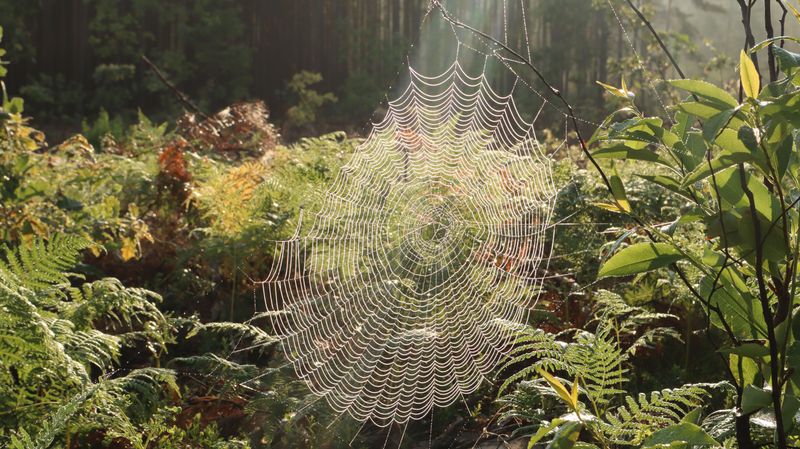
The webs shine with a yellow, almost metallic tint in morning light. Some stretch several feet wide and stack into layers that look like messy golden curtains. I stopped mid-step the first time one caught the sun near my tomato cages.
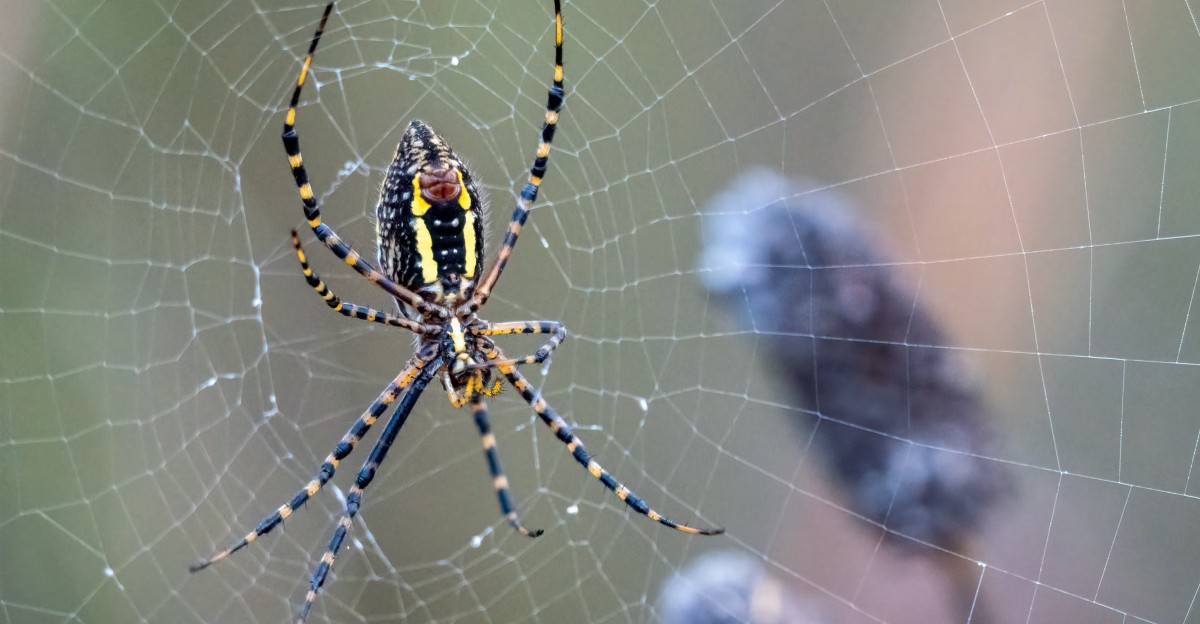
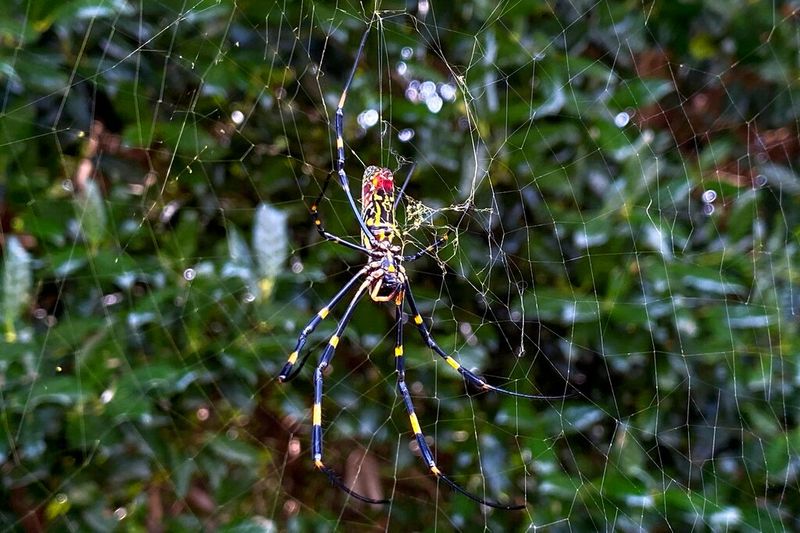
You might notice the builders are mostly females, banded in yellow and blue-black with a red spot underneath. Males are tiny and brown, and they often lounge on the edge of her web like quiet roommates.
Scientists are still sorting out what this arrival means for gardens. One clock is ticking louder than the rest, though, and it starts when the leaves turn. What happens to that gold across Tennessee after the first hard frost?
Those Shimmering Yellow Webs Belong to a Recent Arrival
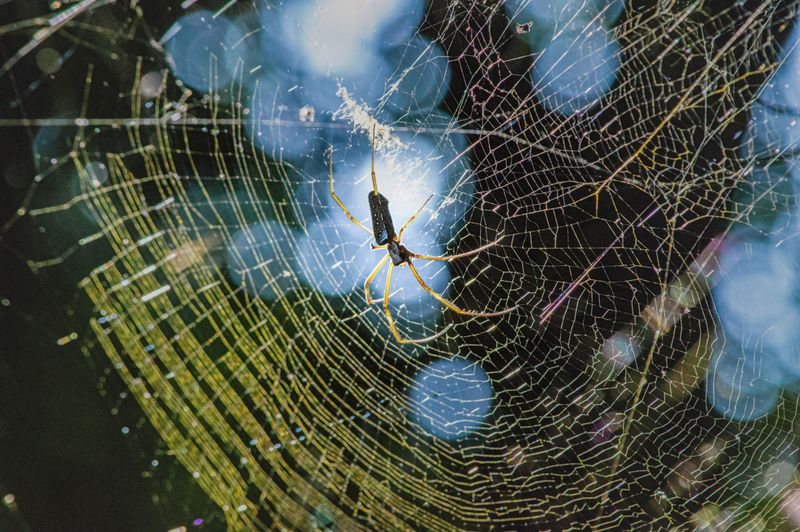
Golden silk is the giveaway. The Joro spider, Trichonephila clavata, spins orb webs with a yellow tint you can see from across the yard when sunlight hits them just right.
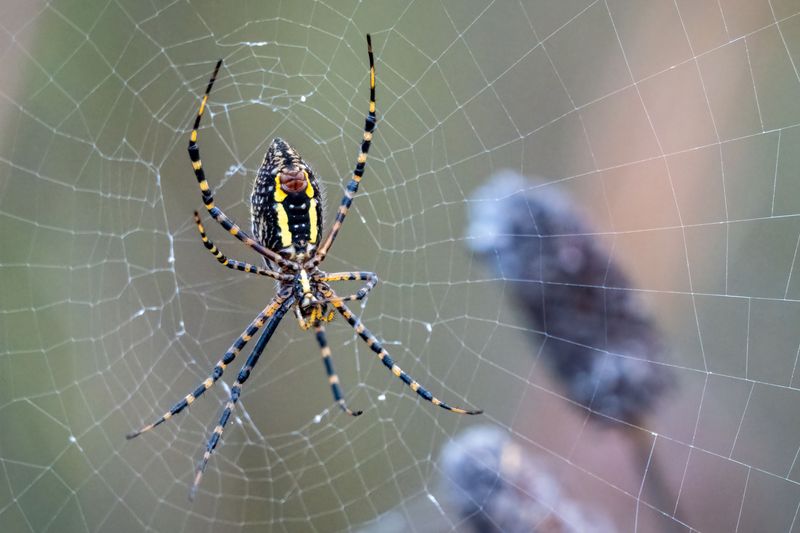
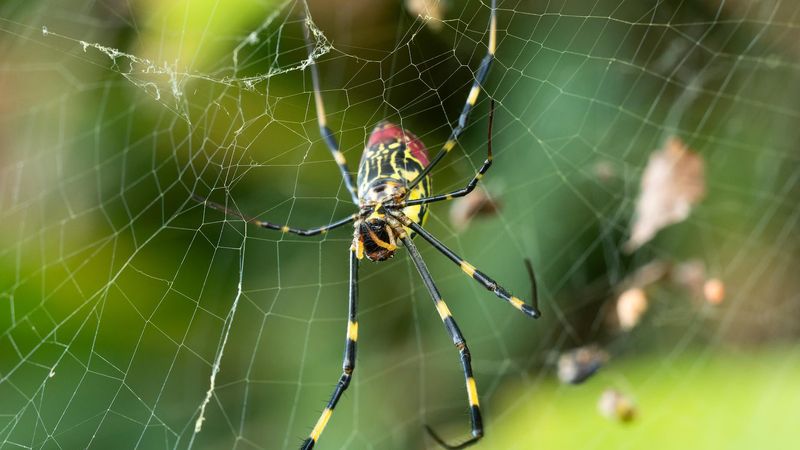
Females are the showstoppers. Their legs can span up to about three inches, and their abdomens carry bold yellow and blue-black bands with a red patch underneath. Males stay small and brown, so most folks overlook them.
The webs themselves are three-dimensional and messy compared with a neat garden spider web. They often sit high, strung between trees, porch rafters, fences, or even utility lines. Some reach several feet across, and neighbors may build right next to each other.
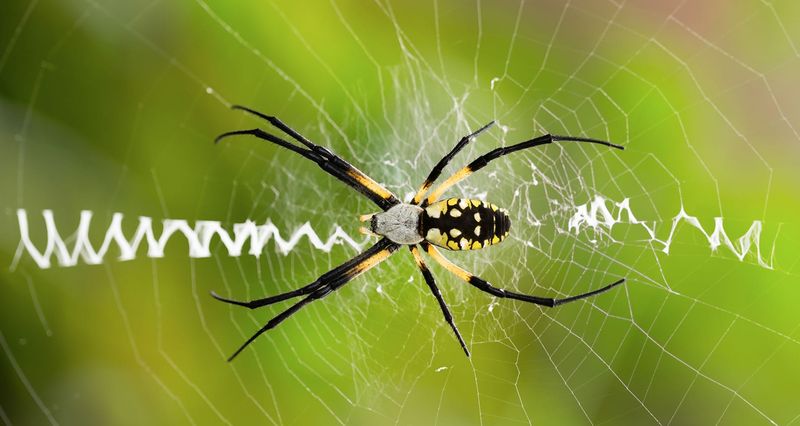
I mixed one up with our native yellow garden spider at first. That native species has a zigzag stripe of silk in the middle of its web and a black-and-yellow body that looks quite different up close.
Snap a clear photo of the top and bottom of the abdomen if you can. Experts use those markings to confirm identification, and good photos make reports far more useful.
Knowing what you are looking at removes a lot of worry. Once you can name it, the next question gets easier to answer.
That Big Banded Spider Is More Bluff Than Bite
Venom sounds scary, yet nearly every spider has some. The Joro spider uses its venom on insects, and researchers at the University of Georgia describe it as no real threat to people or pets, including those across Tennessee.
Its fangs are small and struggle to pierce human skin. In the rare event of a bite, reports compare it to a bee sting or mosquito bite, with brief redness and mild soreness.
People with insect sting allergies should still use normal caution. Personality helps too. A 2023 study from the University of Georgia found Joro spiders are unusually shy.
When researchers puffed air at them, they froze and stayed still for over an hour on average, far longer than related species.
That calm habit means they rarely chase, jump, or lunge. Most just hang in place while you walk by, which honestly made me relax around them faster than I expected, even on my Tennessee porch.
So that word in the headline deserves context. The venom is real, but the danger to your family is low.
Teach kids to look but not grab, and you can enjoy watching these big weavers safely. Curiosity tends to replace fear once people see how sleepy they act, and that is true for any Tennessee household.
Fall Egg Sacs Set the Clock for Next Spring
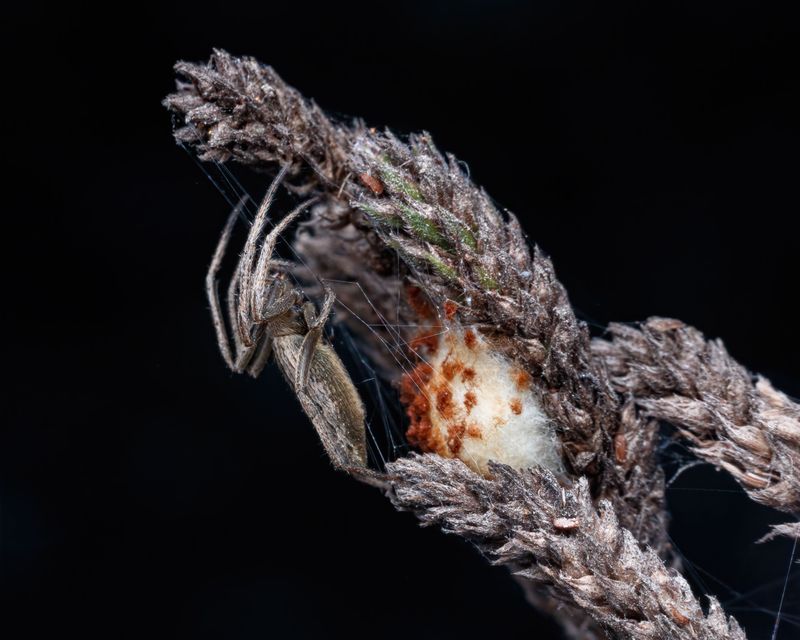
Late October changes everything for these weavers. Adult females lay egg sacs from roughly mid-October into November, and each sac can hold several hundred eggs.
The sacs look like small fluffy pads of silk, white to yellowish, tucked against bark, siding, eaves, leaves, or fence boards. They often sit close to where the old web hung.
Then comes the real turning point. Adults fade away with hard freezes, so the golden webs disappear by early winter. Only the eggs carry the population through the cold months.
Spiderlings typically hatch in spring and emerge around May or June. Many climb up high and release silk to drift on the breeze, a behavior called ballooning, which spreads them to new yards.
That gives gardeners a short window. Scraping egg sacs off structures in late fall and winter is a simple, chemical-free way to reduce how many spiders appear near your home next year.
Wear gloves and use a putty knife or stiff brush. Drop the sac into a sealed bag and toss it in the trash, or place it in the freezer for a few days first. Patience on a cold afternoon pays off later.
September and October Webs Look Bigger for a Reason
Spring spiderlings are tiny and easy to miss. All summer they eat, molt, and grow, mostly out of sight.
By late summer the females reach full adult size. That growth spurt is why sightings tend to peak in September and October, when bodies are large and webs are stretched wide to catch plenty of food before egg laying.
Dew makes things even more dramatic. A foggy fall morning lights up every strand, and suddenly a yard that looked empty seems full of golden nets.
Weather plays a part too. Cooler mornings and lingering insects keep spiders busy repairing webs, so they stay put in prominent spots instead of hiding.
Not every bump in sightings means a population boom. More people now know the name, share photos, and report what they find, which also raises the count.
You can use this season wisely. Walk your yard, note where the webs cluster, and mark likely egg sac spots on porches, sheds, and fences for later in fall.
Bring a coffee and enjoy the show while it lasts. Those glowing webs fade out fast once the hard frosts arrive.
From Chattanooga to Knoxville These Golden Weavers Keep Spreading
Georgia logged the first known Joro spider around 2013 to 2014, near Hoschton northeast of Atlanta. The species is native to East Asia and likely arrived on shipping cargo.
Tennessee confirmations followed in 2021 in the southeast corner of the state, including Hamilton and Bradley counties. Reports have since popped up across East Tennessee, including around Chattanooga and Knoxville, with sightings creeping westward.
Two travel methods do the heavy lifting. Spiderlings balloon on wind currents, and adults or egg sacs hitch rides on cars, trucks, campers, and freight.
Researchers think the spider handles cooler weather well. One study found it has higher metabolism and heart rate than its relatives, which may help it tolerate brief freezes better.
Western parts of the state may see fewer spiders for now. Mapping is still catching up, so local reports matter. Before road trips in fall, give your vehicle a quick look.
Check mirrors, wheel wells, and trailer hitches for spiders or silky egg sacs, especially if you have been parked near wooded areas. A two-minute check can keep you from carrying unexpected passengers to a new county.
Native Orb Weavers May Feel the Squeeze
Ecologists honestly do not have the full picture yet. That uncertainty is part of what makes this spider worth watching.
Some studies raise flags. Research has found that in areas packed with Joro spiders, certain native orb weavers, like the golden silk and banded garden types, appear less often, though cause and effect remain unclear.
Other findings paint a mixed scene. Joro spiders eat many insects, including some pests like stink bugs and flies. Their large webs also catch prey that natives might miss, so diets may overlap only partly.
Birds seem to accept them as food, too. Observers have watched native birds pluck Joro spiders from webs, which could help keep numbers in check over time.
I find this middle ground useful. The spider is neither a garden hero nor a disaster, just a newcomer whose long-term effects scientists are still measuring.
You can help natives directly. Plant native flowers, skip broad pesticide sprays, and leave some leaf litter and tall stems through winter for insects that feed native spiders.
Learning to tell the native yellow garden spider apart also prevents mix-ups. Its zigzag web stripe is a reliable clue.
A Broom, an App, and a Little Patience Handle Joro Webs
Calm, simple tools work best here. Experts at several universities suggest leaving webs alone when they are out of the way, since the spiders eat lots of flying insects.
Webs blocking doors, walkways, or the mailbox are another story. Use a broom or long stick to move the spider and silk elsewhere, and expect a rebuild sometimes, since they are persistent.
Skip heavy pesticide sprays. They rarely solve the problem for long and can harm pollinators, native spiders, and other helpful insects in your beds.
Reporting matters too. Upload clear photos to iNaturalist so researchers, including teams tracking spread near Great Smoky Mountains National Park, can map where the spiders show up in Tennessee.
Winter brings your best chance to make a dent. Scrape off egg sacs from siding, eaves, sheds, and fences, then bag them for the trash.
My own plan is simple. I leave the backyard webs for the show, clear the porch path, and spend one cold weekend hunting egg sacs.
Knowledge beats panic every time. With a few easy habits, you can share the yard without letting golden webs take over your doorway.