7 Venomous Virginia Animals That Could Cross Your Path on a Winter Hike
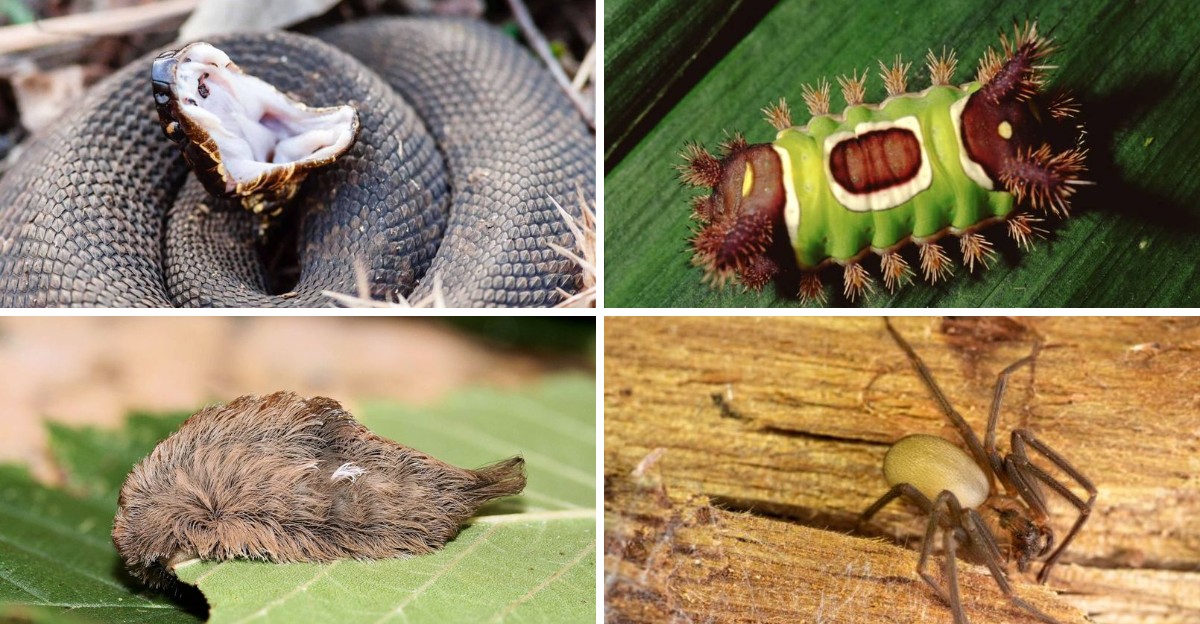
Certain snakes in the Virginia mountains sometimes leave their winter dens to bask on a mild January afternoon. A park ranger told me that fact years ago, and my trail snack nearly slipped right out of my hand.
Cold weather slows most creatures down, but it does not switch off every bite or sting out there. Some spiders tuck into woodpiles for the season, while certain fuzzy caterpillars spend winter wrapped in hidden silk cocoons.
Take it from someone who gathers firewood and leaf mulch every winter, a little knowledge keeps your hands much happier. I have to admit that I once grabbed a log without gloves and found a glossy black surprise underneath.
Most of these neighbors want nothing to do with you, and they rarely go looking for trouble. So which ones deserve a second glance before you sit on that sunny rock for a rest?
1. Copperheads Bask On Sunny Winter Rocks
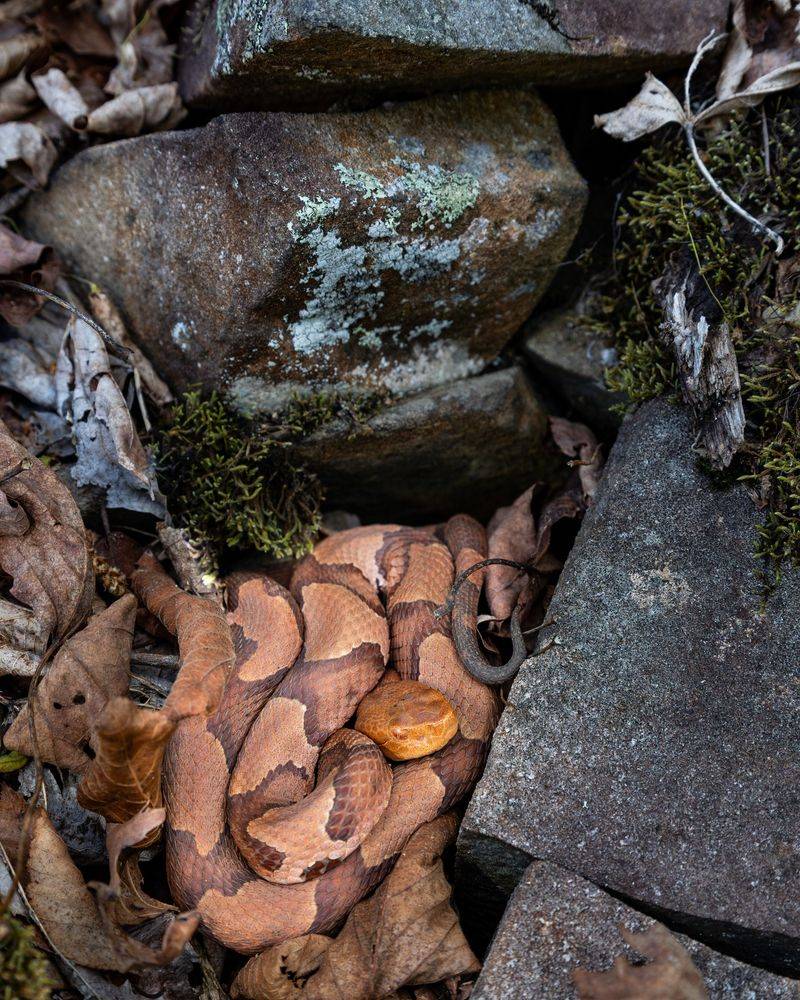
Copperheads wear a pattern of tan and chestnut hourglass bands that blends perfectly into a carpet of fallen oak leaves. I have stepped within a foot of one before noticing it, and my heart still remembers that moment.
These pit vipers live across the whole state, from mountain ridges to suburban backyards near the coast. Most spend late fall through early spring tucked into rocky dens, sometimes sharing space with other snake species.
Warm winter days can tempt a few of them outside, especially on south-facing slopes that catch afternoon sun. A sluggish snake near a den entrance may stay perfectly still, trusting its camouflage instead of moving away.
That freeze response explains why so many bites happen when someone steps on or reaches near a hidden snake. Watch where you put your hands while climbing over rocks, and look before you sit on any sunny ledge.
Young copperheads carry a bright yellow tail tip, which they wiggle like a tiny worm to lure frogs closer. That sulfur-colored tip fades as they grow, so adults look plainer but stay just as well hidden.
Bites hurt a lot and need medical care, though healthy adults rarely face life-threatening outcomes from this species. Skip the old tricks like cutting the wound or using ice, and head straight to the nearest hospital.
For what it is worth, I now carry trekking poles and tap the path ahead on mild winter outings. Most copperheads would rather slide quietly under a log than spend any energy arguing with your boots.
2. Timber Rattlesnakes Doze In Mountain Rock Dens
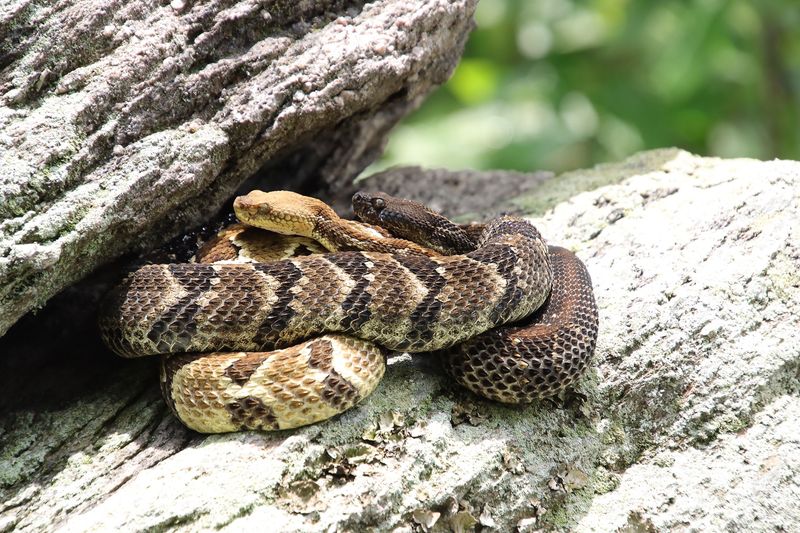
Few sounds clear a trail faster than the dry buzz of a timber rattlesnake shaking its tail beneath a ledge. Truth be told, my first encounter left me frozen for a full minute, admiring and backing away at once.
In Virginia, these heavy snakes mostly live in the western mountains, with a separate population in the far southeast. That coastal group, often called the canebrake rattlesnake, is listed as state endangered and protected by law.
Look for dark chevron bands across a lighter body, often with a rusty stripe running down the back. The tail usually ends in solid black, topped by that famous rattle made of interlocking keratin segments.
Timber rattlers usually den from October until late April, often sharing rocky crevices with copperheads and black rat snakes. During an unusually warm spell, a few may slip out to bask near the den opening.
Those rocky south-facing slopes are worth extra caution, even when frost still clings to the shady side of the ridge. Give any rattlesnake you spot plenty of room, at least several feet, and simply walk around it.
Bites are rare because these snakes prefer warning you over striking, but their venom is serious business. Anyone bitten should slip off rings or tight items, then get to emergency care as quickly as possible.
If you ask me, spotting one from a safe distance is a real treat for any mountain hiker. Snap a photo with your zoom, then let the snake go back to its sunny nap.
3. Cottonmouths Lurk Near Southeastern Swamps
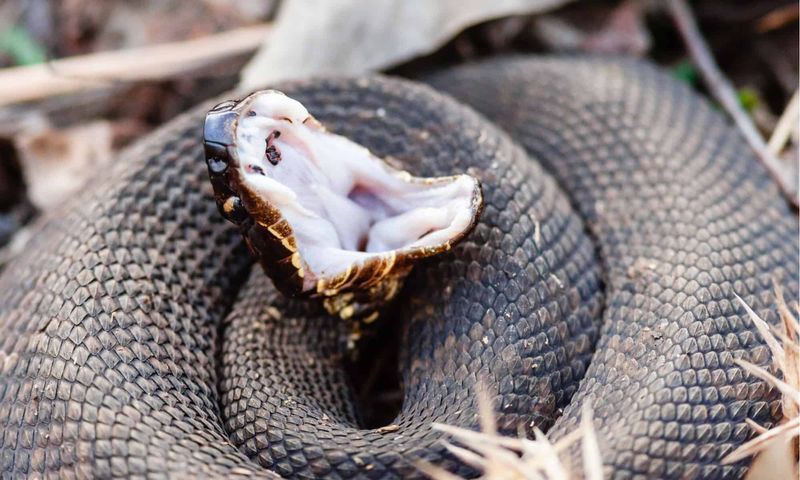
A wide-open mouth lined in cotton-white tissue is the famous warning signal of this swamp-loving pit viper. Seeing that pale gape on a muddy bank once made me rethink my shortcut through a cypress marsh.
Northern cottonmouths in Virginia stick to the southeastern corner of the state, mostly south and east of Petersburg. Places like the Great Dismal Swamp and wetlands around Norfolk offer the slow water these snakes love.
Winter sends them into stump holes and root tangles, where they stay mostly inactive until spring warms the water. On a mild afternoon, though, you might spot one basking on a log beside a canal or pond.
Their bodies are thick and dark, usually brown or olive with faint crossbands that blur together as they age. A blocky head that looks much wider than the neck is another clue worth remembering on swampy trails.
Many harmless water snakes get mistaken for cottonmouths, and plenty of them suffer for that confusion every year. Northern water snakes are slimmer and quicker to flee, often diving underwater the moment you approach.
Cottonmouth venom is strong, yet these snakes are not the aggressive chasers that campfire stories describe. Most will hold their ground and gape in warning, biting mainly when someone steps on or grabs them.
Stick to boardwalks when you can, and wear sturdy boots if your route skirts muddy shorelines. Between you and me, a pair of binoculars makes swamp snake watching far more relaxing for everybody.
4. Black Widows Hide In Woodpiles And Sheds
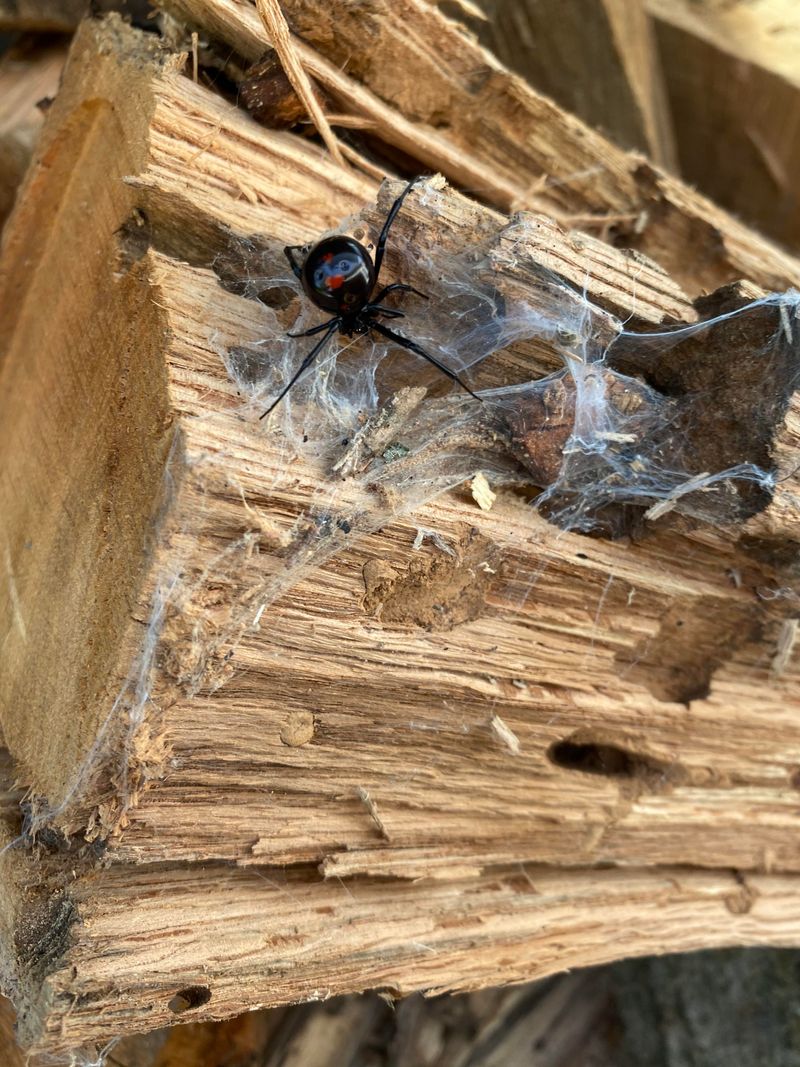
That shiny black spider with a red hourglass looks almost like jewelry until you remember what it can do. Let us just say I now wear thick gloves every single time I restock the firewood rack.
Two species live in Virginia, the southern black widow and the northern black widow, and both carry neurotoxic venom. Northern females often show a broken hourglass, sometimes just two red spots, instead of one solid shape.
Cold weather pushes these spiders into quiet corners like stacked logs, brush piles, sheds, and crawl spaces. Trail shelters and old stone walls along hiking routes can also hide them beneath loose boards or rocks.
Webs look messy and tangled rather than neat, and they usually sit low near the ground or tucked inside openings. In my own backyard, I have found them under overturned flowerpots and inside the handles of old tools.
A bite can cause sharp pain within minutes, followed by muscle cramps that sometimes spread to the belly or back. Some people also feel sweaty or nauseated, so getting medical care quickly makes a big difference.
Children and older adults face higher risk from the venom, so keep curious little hands away from woodpiles. Wash the bite gently with soap and water, then call a doctor or poison control right away.
Black widows are shy and rarely bite unless pressed against skin, like when you grab a log blindly. Before sitting on a shelter bench or stacking wood, take a quick peek underneath with a flashlight.
5. Brown Recluse Spiders Shelter Under Loose Bark
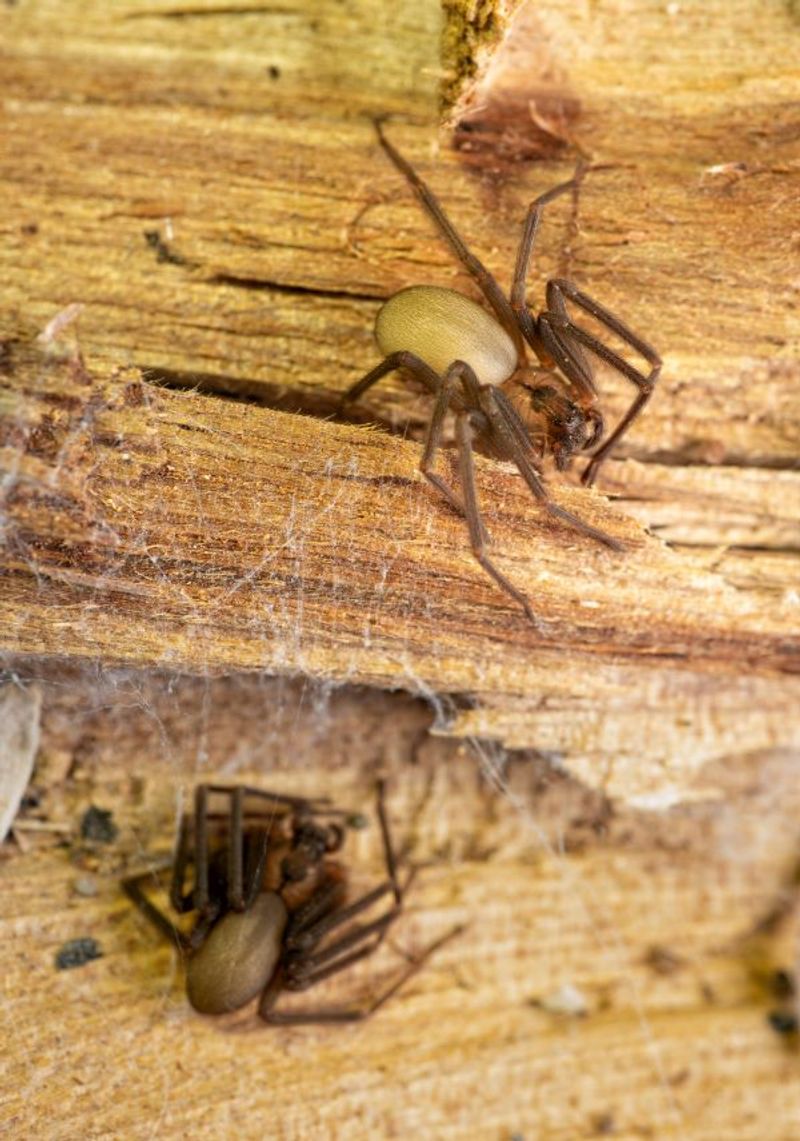
A tiny violin shape on its back gives this spider the nickname fiddleback, and it is surprisingly hard to spot. I have to confess that I spent years calling every brown spider a recluse before learning otherwise.
The native range of the brown recluse barely touches the far southwestern tip of Virginia near the Tennessee border. Isolated populations have turned up elsewhere in the state, likely hitching rides inside moving boxes or stored furniture.
Outdoors, these spiders tuck under rocks and loose bark, though they much prefer dry, undisturbed spots indoors. Old cabins and storage sheds near trailheads make far better recluse habitat than a chilly open forest.
Look for six eyes arranged in three pairs, plus uniform tan legs without any bands or spines. Many harmless look-alikes get blamed, so a clear photo helps experts confirm what you actually found.
Bites are uncommon and often painless at first, which means people may not notice them for hours. Some bites heal on their own, while others form a slow sore that needs a doctor’s attention.
Fever or unusual weakness after a suspected bite is a strong signal to get checked promptly instead of waiting. Many skin wounds blamed on recluses turn out to be infections, so a proper diagnosis really matters.
Shake out any gloves or boots stored in a shed before slipping them on for a winter walk. That quick habit takes only seconds, and it keeps hidden spiders from getting pressed against your skin.
6. Puss Caterpillars Hide Stinging Spines Under Fluffy Hair
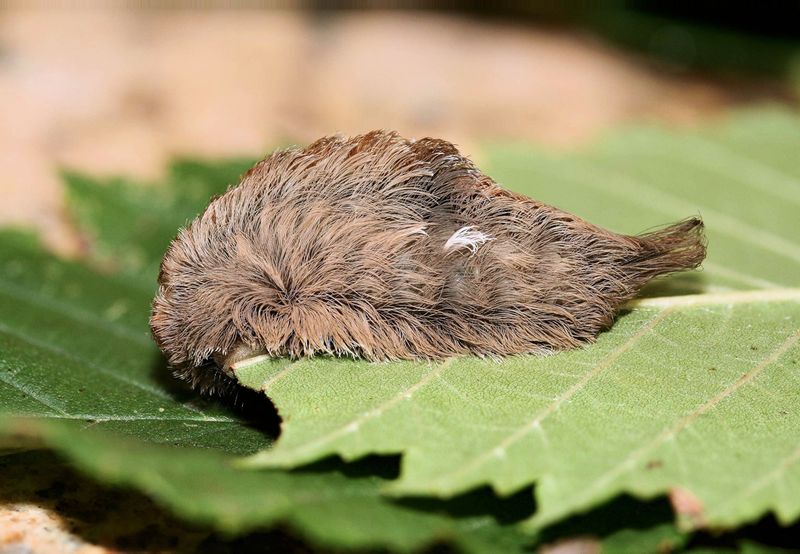
With its fluffy coat and swirled hairdo, the puss caterpillar looks like a tiny toupee crawling along an oak twig. Do not pet it, because hidden under that soft fuzz are venomous spines that pack a fierce sting.
This larva grows up to become the southern flannel moth, and it has been reported in eastern Virginia. Experts often rank it among the most venomous caterpillars in North America, which surprised me the first time.
Caterpillars feed mainly in late summer and fall on oak and elm leaves, often near houses and parks. By winter, most have spun tough cocoons on bark or tucked into sheltered spots to wait for spring.
That means a winter run-in is unlikely, but raking leaves or handling firewood can still bring surprises. Leave any odd fuzzy cocoon on a tree trunk alone, since curiosity is how most hands get hurt.
A sting brings sudden burning pain that can travel up the arm, along with redness and swelling. Some people also develop nausea or muscle cramps afterward, which makes a call to the doctor a smart move.
Press clear tape gently against the skin and lift it away to pull out embedded spines. Afterward, wash the area with soap and water, and seek medical help if symptoms grow worse.
My garden taught me to wear gloves whenever I clear leaf litter around oaks, no matter the season. Kids love fuzzy critters, so a quick lesson about this little troublemaker is worth sharing before your next hike.
7. Saddleback Caterpillars Wear A Bright Green Saddle
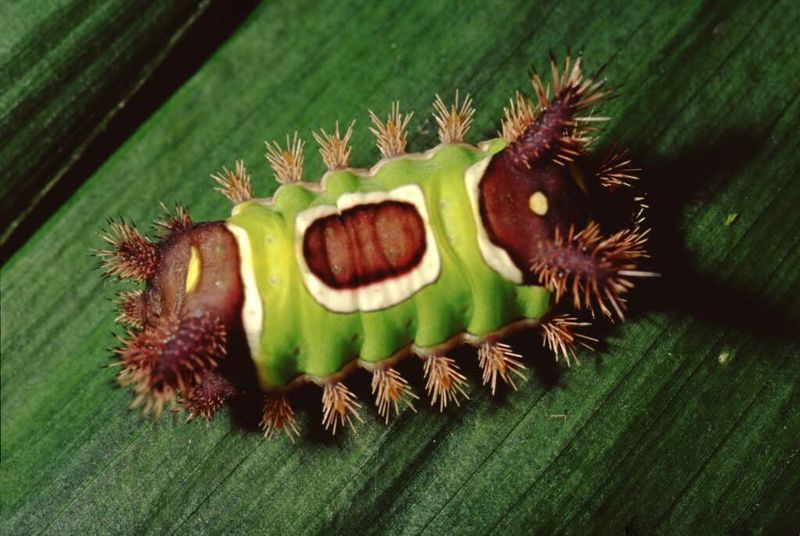
Nature dressed this caterpillar like a cowboy’s horse, complete with a brown saddle resting on a lime-green blanket. Those cute fleshy horns at each end bristle with spines that can deliver a surprisingly painful jolt.
Saddleback caterpillars show up across much of the eastern United States, including gardens and woodlands throughout Virginia. They munch on many plants, from oaks and maples to corn and ornamental shrubs in backyard beds.
The caterpillars feed in late summer and fall, then spin tough oval cocoons for the colder months. Inside those cocoons, they wait through winter as prepupae, finally emerging as fuzzy brown moths the next summer.
So a winter hiker is far more likely to meet an empty-looking cocoon than a crawling caterpillar. Still, I suggest wearing gloves when sorting through fallen branches or leaf piles in the garden this season.
A sting feels like a hot, sharp burn that can spread outward and leave a swollen, itchy rash behind. Sensitive people sometimes get nausea or headaches, and rare allergic reactions need emergency care right away.
Pull broken spines out with tape, then wash the spot and cool it with an ice pack. A baking soda paste or an antihistamine may ease the itch, though ask a pharmacist if unsure.
I have to say, these little critters earn my respect every time I spot one on a sunflower leaf. Admire their wild costume from a step away, and let birds and wasps handle the pest control.