What Virginia Law Says About Clearing a Neighbor’s Vines Growing Over Your Fence
Until 2007, Virginia courts mostly told frustrated homeowners to grab their own clippers and stop complaining. Then a single lawsuit over tree roots cracking a townhouse foundation changed the rules for every plant crossing a property line.
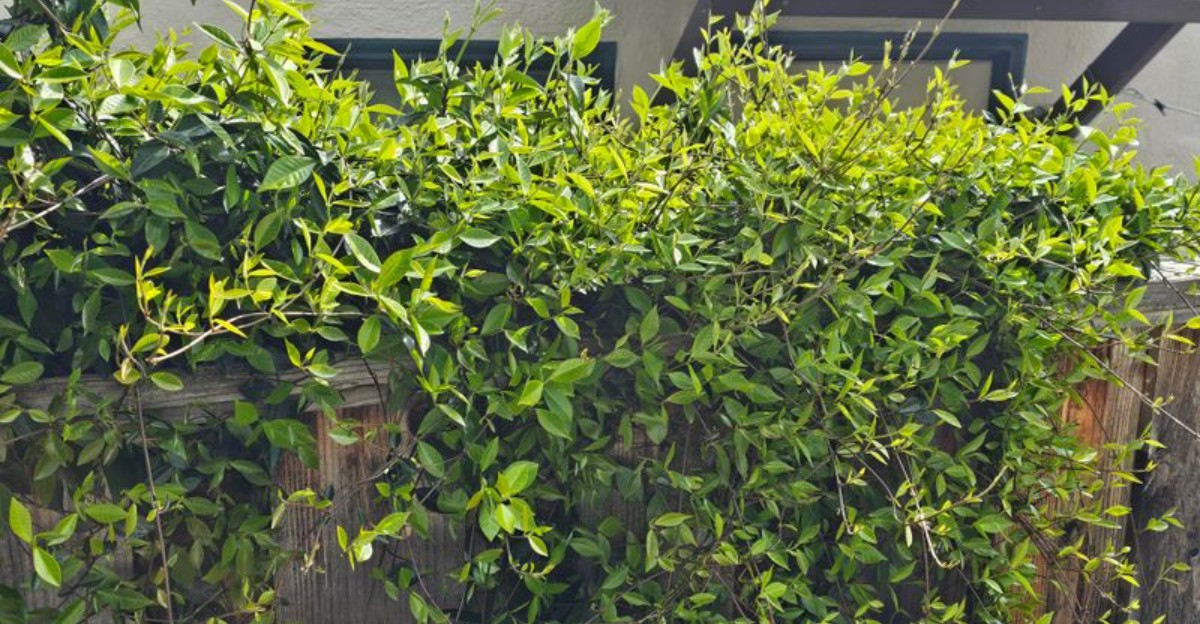
I once watched a leafy climber from next door swallow half my fence in one humid summer. My first instinct was to rip it all down, roots and all.
Looking back, I am glad I paused. The line between trimming your side and harming your neighbor’s plant is thinner than most of us realize. A careless afternoon of cutting can turn a friendly wave over the fence into a bill for damages.
So how far can your shears legally travel? The answer involves an old common-law right, a landmark court case, and one surprising detail about where your fence really sits.
That Leafy Vine on Your Fence Comes With a Surprising Legal Right
Old English common law still shapes your backyard today. Virginia follows a long-standing idea called the self-help rule, and it works quietly in your favor.
Under this rule, you may trim vines, branches, and roots that cross from a neighbor’s yard onto your property. You do not need your neighbor’s permission first, and you usually do not need a court order.
The part hanging over your side is yours to manage.
For what it’s worth, many gardeners have no idea this right exists. They spend months stewing over a tangle of greenery while believing their hands are tied.
In reality, the law gives you a clear starting point.
That said, this right is about trimming, not punishing. Courts see it as a way for you to keep your own space usable.
It does not give you permission to go after the whole plant.
Think of it like sweeping a neighbor’s leaves off your porch. You can clean up what landed on your side, but you cannot march next door and rake their lawn.
Keeping that picture in mind will guide almost every decision you make with those vines.
Pruning Shears Stop Exactly at the Property Line
Picking up the clippers is the easy part. Knowing where to stop is what keeps you out of trouble.
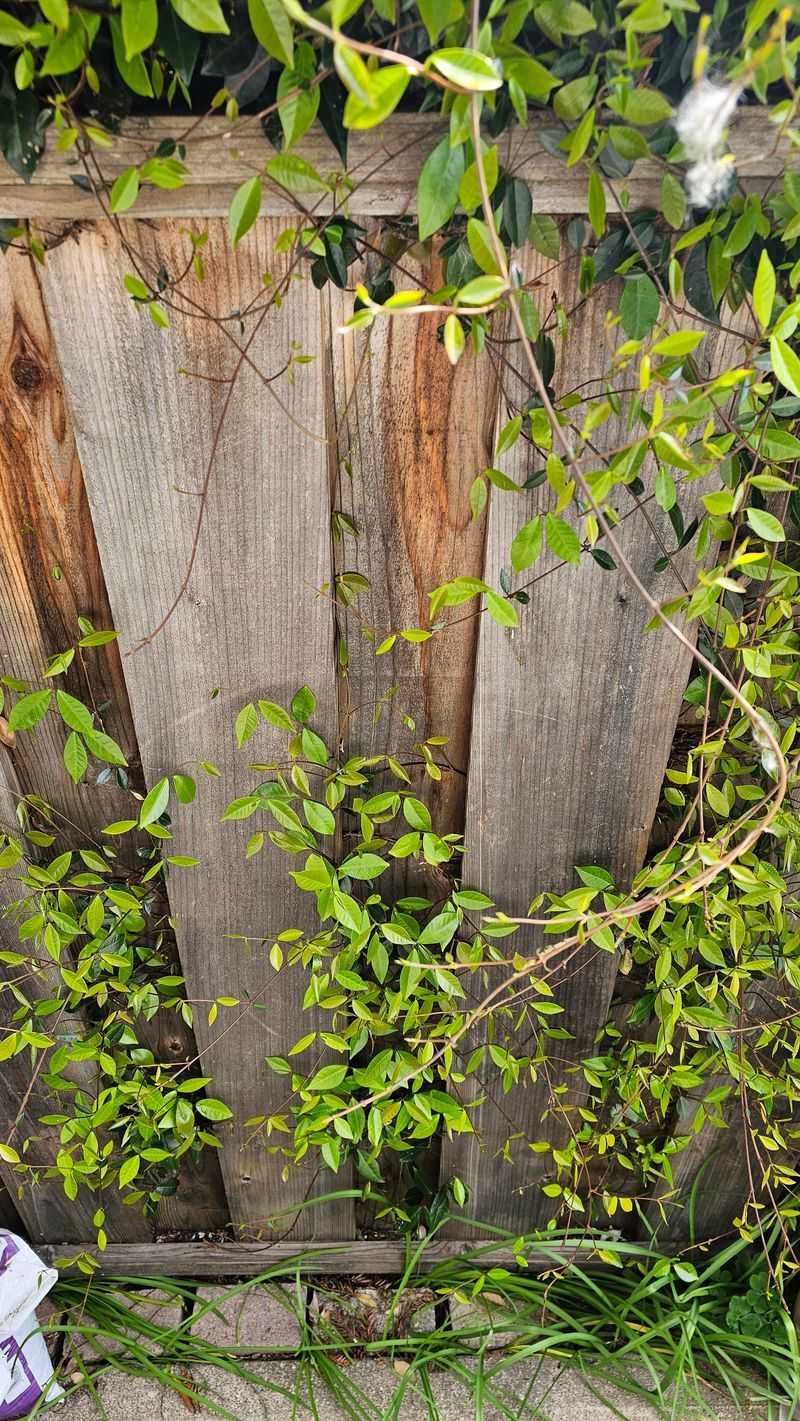
Your self-help right covers only the growth on your side of the boundary. You may cut back the vine to the property line, but not one step past it.
Leaning over, climbing onto the fence, or walking into your neighbor’s yard to keep cutting can count as trespassing.
Between you and me, the cleanest approach is to work from your own ground with simple hand tools. Bypass pruners handle thin stems well, and loppers help with thicker woody growth.
A small pole pruner reaches the top of a tall fence without any climbing.
Toss the clippings in your own yard waste bin. Tossing them back over the fence might feel fair, but it can spark a feud fast and may break local littering rules.
A few practical habits help:
Cut stems cleanly rather than yanking, which can tear the plant on the far side. Pull vines gently off the fence boards instead of ripping them away.
Work slowly, so you can see where the line sits as you go.
A Townhouse Tree Case Changed How Virginia Treats Damaging Plants
Here’s a slice of legal history every gardener should know. In 2007, the Supreme Court of Virginia decided Fancher v.
Fagella, a dispute between townhouse neighbors in Fairfax County.
A sweetgum tree’s roots and branches were damaging a neighbor’s foundation, retaining wall, and drainage. Before this ruling, Virginia mostly followed the self-help rule alone.
Owners were expected to trim and handle problems themselves, with few options in court.
The court changed that. It ruled that encroaching trees and plants can be treated as a nuisance when they cause actual harm or pose an imminent danger of actual harm to a neighbor’s property.
In those situations, the affected owner may ask a court for damages or an order requiring the plant owner to remove the problem.
Vines fit into this picture too. Heavy woody climbers can loosen fence posts, pull siding, clog gutters, or wedge into masonry joints over time.
If you ask me, this case is the most useful legal fact in the whole topic. It means you are not stuck with serious damage just because the plant started next door.
Photos and repair estimates become your best friends here.
Falling Leaves and Afternoon Shade Rarely Count as Real Harm
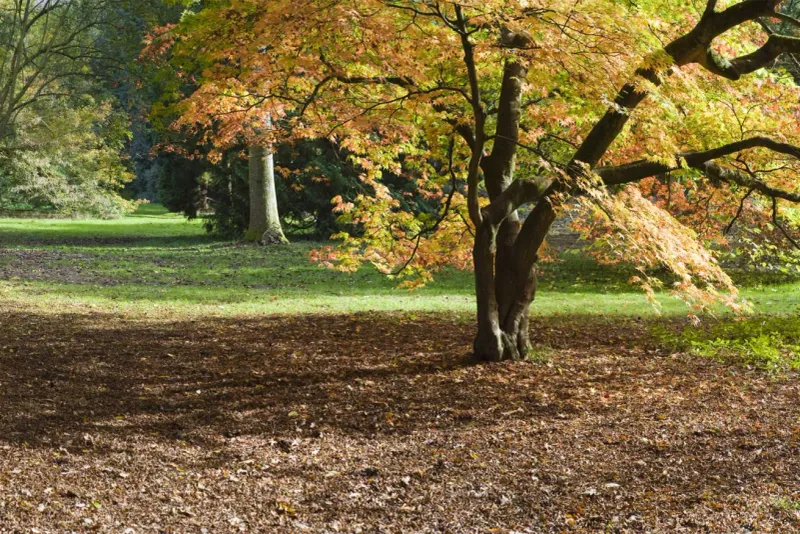
Let’s just say the courts are not interested in every annoyance. Not each stray leaf is a legal matter, even when it feels personal.
Virginia courts generally view shade, falling leaves, dropped flowers, berries, and pollen as normal parts of living near plants. These are considered ordinary nuisances of property ownership rather than actual harm.
A vine that shades your tomato bed or drops petals on your patio usually will not support a lawsuit.
So what does that mean for you? Your best tool for small annoyances is still trimming on your side and regular cleanup.
A rake, a gutter scoop, and a little patience go a long way.
Of course, shade can matter to a gardener. If a climber blocks sun from your vegetable plot, trim the growth on your side and consider moving sun-hungry crops to a brighter spot.
Don’t make my mistake of assuming a messy plant equals a legal case. I once considered calling a lawyer over leaf drop, and a friend gently laughed.
Save legal steps for damage you can measure, like a leaning fence, broken boards, or a cracked wall.
Your Fence Might Not Mark the Real Boundary
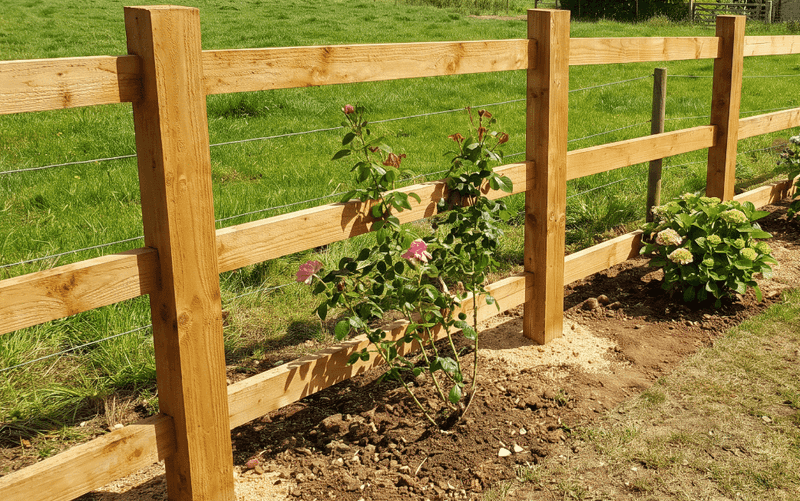
Quick surprise for many homeowners: fences are often built a little inside the true property line. Builders sometimes set them back a few inches or even a few feet to avoid mistakes.
That small gap matters a lot. If your fence sits inside your line, some vines growing on it could be on your property even on the far side.
If the fence sits on your neighbor’s land, the boards themselves may belong to them.
Take it from someone who learned this the slow way. Before any big cleanup, look at your plat, which is a map of your lot often included in closing papers.
Your county land records office may also have a copy.
Look for metal survey pins at your lot corners too. They are usually buried just under the soil.
For disputes or heavy cutting, a licensed land surveyor gives the clearest answer. A survey costs money, but it costs far less than a court fight over who cut what.
Once you know the real line, mark it with small garden stakes. Those markers will guide your pruning for years.
Cutting Vine Roots Too Hard Can Leave You Paying Up
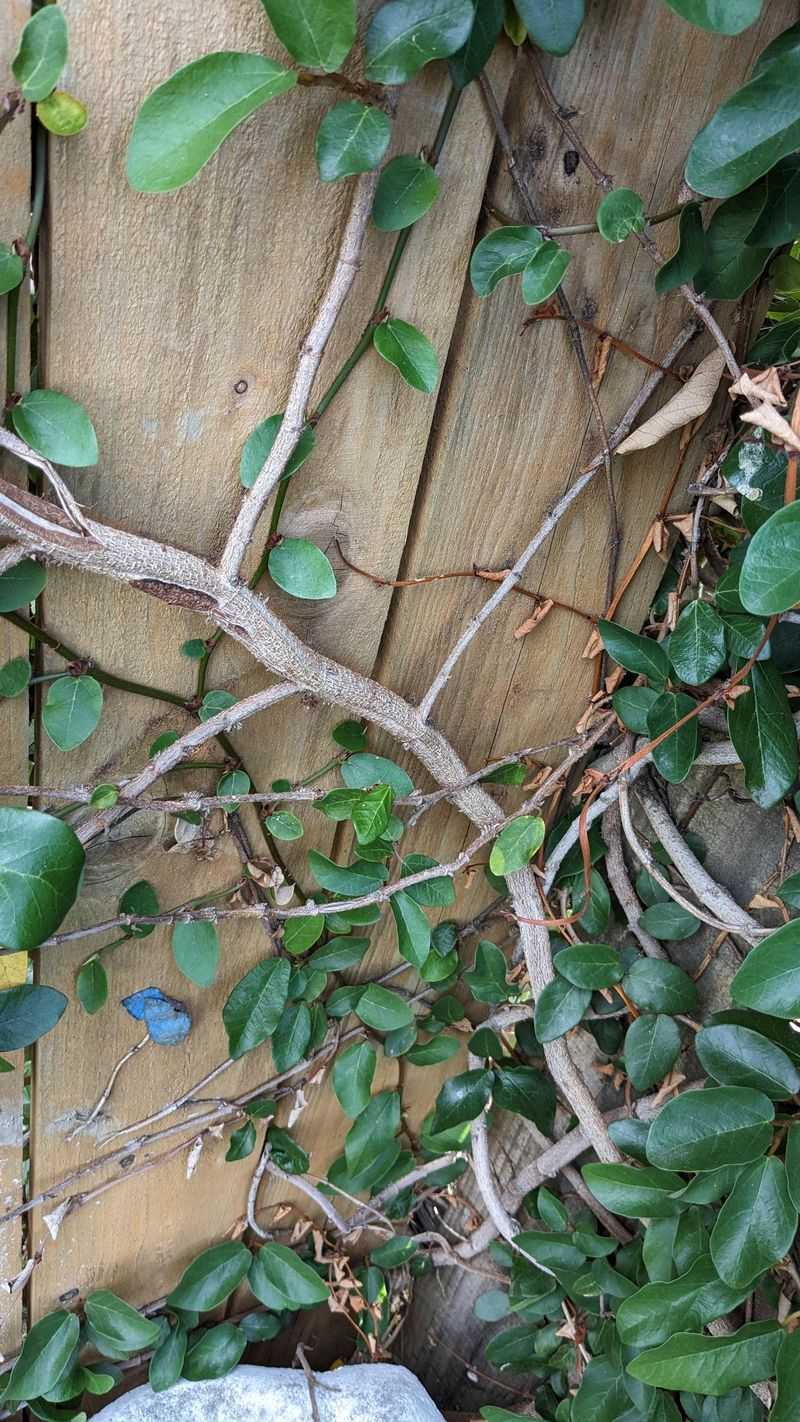
Overzealous pruning has a price tag. Your right to trim comes with a duty to avoid harming the plant itself.
If your cutting causes a neighbor’s vine, shrub, or tree to fail, you could be liable for its value. Heavy root cuts are the usual culprit.
Spraying herbicide along the fence is another risky move, since chemicals can travel through stems and roots into the neighbor’s plant.
Many states, including parts of Virginia law dealing with trespass to trees, allow damages tied to the value of plants. Mature landscape plants can be surprisingly expensive to replace.
My garden taught me that restraint works better than force. Trim back to the line in stages instead of all at once.
Leave the main woody trunk alone if it sits on the neighbor’s side.
Avoid weed treatment products near shared boundaries entirely, unless your neighbor agrees in writing. Even a light spray can drift on a breezy day.
If roots are the issue, call a certified arborist before digging. They can judge which cuts the plant can tolerate.
That expert opinion also protects you if a dispute ever comes up later.
Invasive Climbers Like Kudzu and English Ivy Change the Conversation
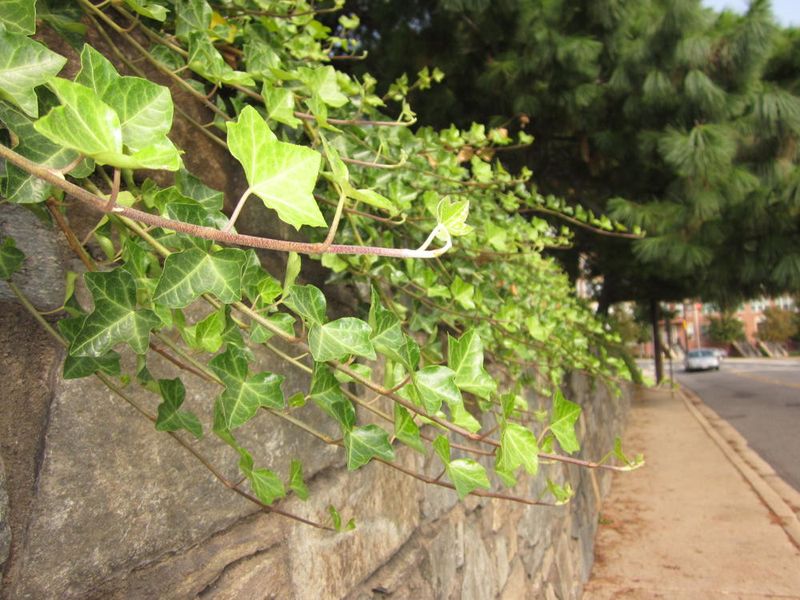
Some vines are more than a nuisance. Virginia’s Department of Conservation and Recreation lists kudzu, English ivy, Japanese honeysuckle, porcelain berry, and oriental bittersweet as invasive plants.
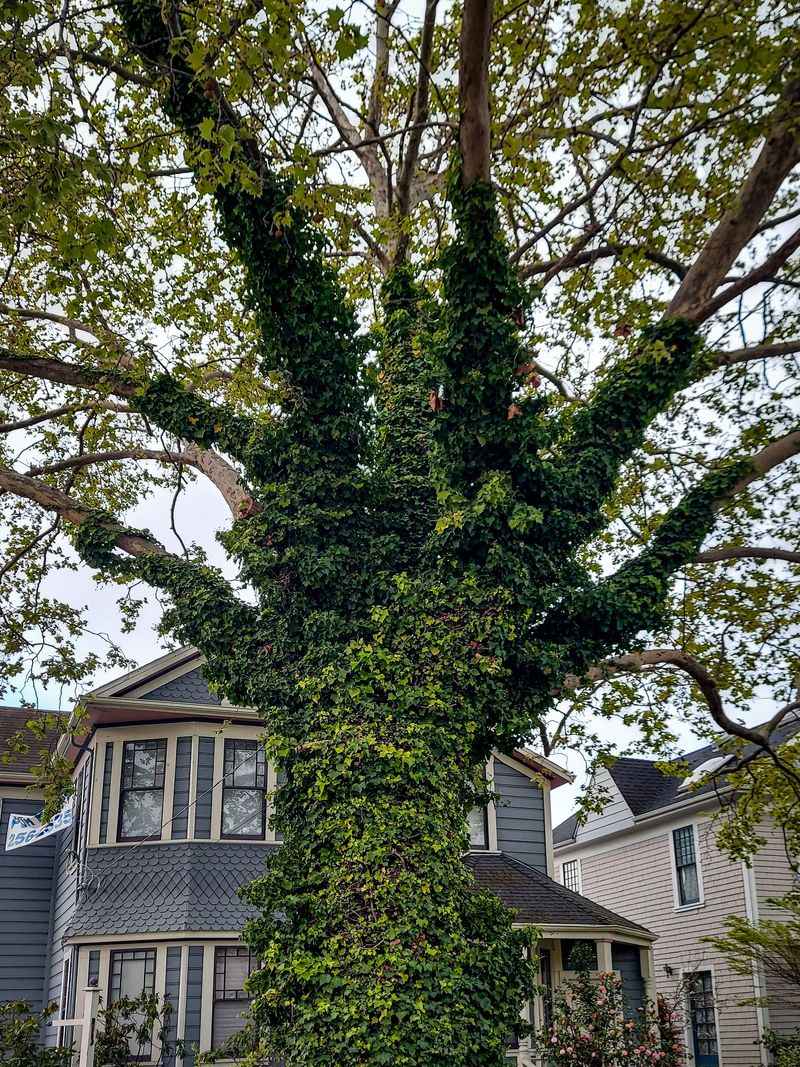
These climbers spread fast, smother native plants, and can weigh down fences and trees. Oriental bittersweet can girdle young trees by wrapping tightly around trunks.
English ivy holds moisture against wood and siding.
Knowing the plant’s name helps your conversation with a neighbor. Many people grow English ivy without realizing it escapes into woods.
Sharing a Virginia Cooperative Extension fact sheet feels friendlier than a complaint.
Your trimming rules stay the same, though. Even with invasive species, you can only remove growth on your side unless the neighbor agrees to more.
For your side, cut vines near the ground and pull runners before they root. Repeat often, since these plants bounce back quickly.
Bag seed-bearing stems so birds do not spread berries around.
If both neighbors agree, working together on removal gives the best results. In my own yard, a shared Saturday with a neighbor cleared more ivy than months of solo trimming.
A Friendly Chat Over the Fence Beats a Courtroom Every Time
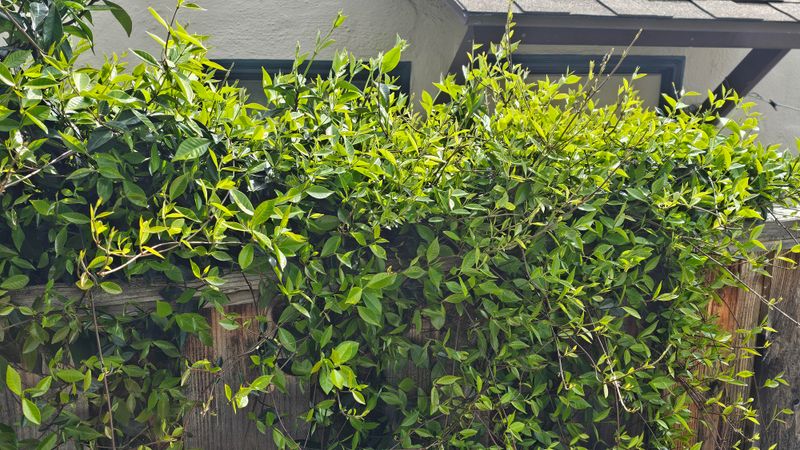
Most vine disputes end with a conversation, not a judge. A polite knock on the door is often the smartest legal strategy you have.
Start by mentioning the vines casually and asking if your neighbor minds you trimming your side. Many people will happily agree, and some will offer to help.
Agreement on a shared plan also protects you if questions arise later.
If damage is happening, keep things calm and documented. Take dated photos of the fence, siding, or wall.
Gather repair estimates and save copies of any letters or texts.
A short, friendly letter can follow if talking stalls. If nothing changes, Virginia has community mediation centers that help neighbors settle disputes without court.
Homeowner association rules may apply too, so check your covenants.
When real damage keeps growing, a real estate attorney can explain your options under the Fancher ruling. Legal action should come last, not first.
Here’s my takeaway after years of fence-line gardening. Know your boundary, trim only your side, protect the plant, and talk early.
Your garden stays tidy, and those neighborly waves stay warm all season long.