What Curling Cucumber Leaves In North Carolina Mean When It Isn’t Just Lack Of Water
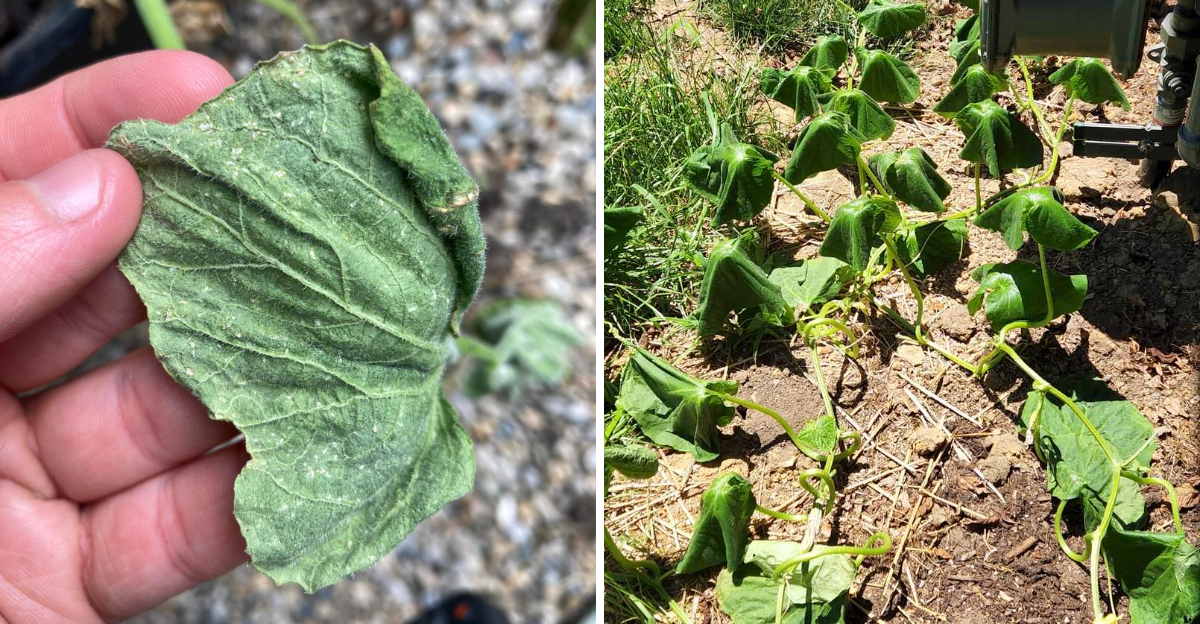
Cucumber leaves curl for plenty of reasons besides thirst, and North Carolina gardeners often reach for the hose too fast. Heat stress is a common culprit, especially during those sticky July afternoons when humidity traps warm air around the plant.
Leaves curl inward to protect themselves from losing too much moisture through their pores. Pests like aphids or spider mites can also cause curling, so flip the leaves over and check for tiny bugs or sticky residue.
Another overlooked cause is herbicide drift from nearby lawn treatments, which can twist and cup leaves in odd directions. Overwatering compacts the soil and suffocates roots, leading to the same wilted look as drought.
Before grabbing the watering can, check soil moisture with your finger first. Sometimes the fix has nothing to do with water at all.
1. Afternoon Heat Stress Despite Moist Soil
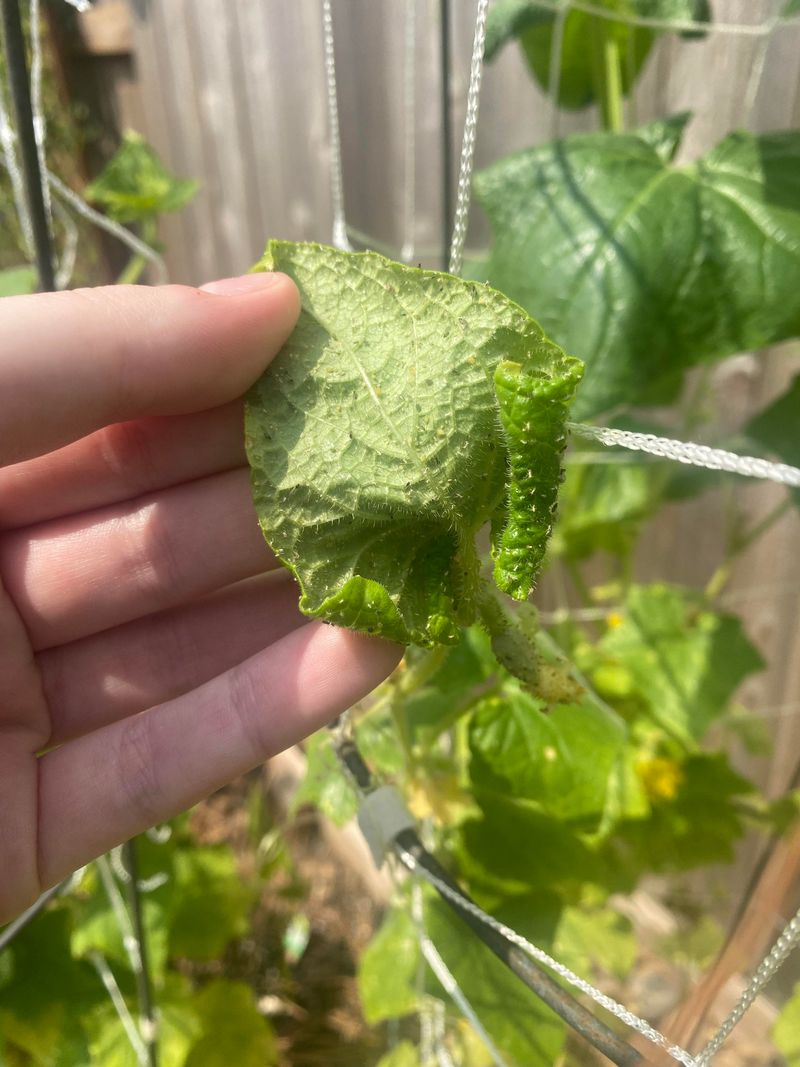
North Carolina summers are no joke. Even when your soil holds plenty of moisture, the intense afternoon heat can push cucumber plants into a protective curl that looks alarming but is actually a survival response.
Cucumbers roll their leaves inward to reduce the surface area exposed to direct sunlight, which helps slow down water loss through a process called transpiration.
Gardeners across the Coastal Plain, Piedmont, and mountain regions all deal with this, though the timing and intensity vary. In the Coastal Plain, afternoon temperatures can stay brutal well into early evening.
Piedmont gardens often face reflected heat from driveways, walls, and dark-colored containers, which can push temperatures even higher than the air around them.
Mountain gardeners may get a break sooner, but midsummer afternoons still bring enough heat to trigger this response.
Before reaching for the hose, check your soil moisture a few inches below the surface. If it feels damp, your plants are likely just responding to heat rather than drought.
Watch them again after sunset. Leaves that perk back up by evening are giving you a clear signal that heat, not thirst, is the culprit.
Morning irrigation keeps roots supplied before the heat peaks. A thick layer of organic mulch around the base of each plant holds soil moisture and keeps root temperatures lower.
If a particular spot in your garden gets punishing afternoon sun, a temporary shade cloth stretched overhead during the hottest hours can make a real difference for your plants.
2. Melon Aphids Feeding Beneath The Leaves
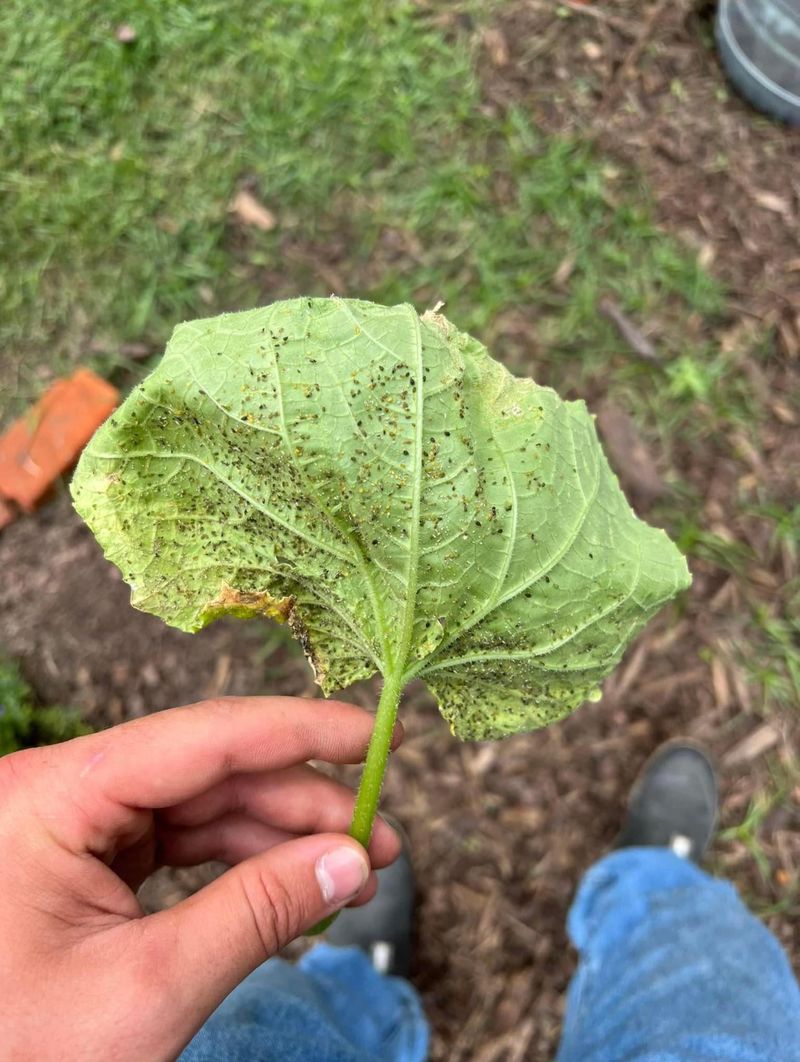
Flip over a curling cucumber leaf and you might find the real troublemakers hiding in plain sight.
Melon aphids are tiny, soft-bodied insects that cluster on leaf undersides and tender growing tips, sucking plant sap and leaving behind a sticky substance called honeydew.
As they feed, the leaf loses its firm structure and begins to curl downward and pucker in ways that can look a lot like other problems.
One of the most helpful clues is checking for secondary signs. Ants moving up and down the plant stem are often farming aphids for their honeydew, which is a fascinating but frustrating relationship for gardeners.
Black sooty mold growing on the sticky residue is another strong indicator that aphids have been active for a while. Stunted or misshapen new growth also points in this direction.
Your North Carolina Garden Changes Every Week. Your Plan Should Too.
Gardening in North Carolina changes quickly throughout the season. Every Friday you’ll receive a simple weekly plan showing exactly what to plant, prune, fertilize, harvest, and protect so you never miss the right timing.
Beneficial insects like ladybugs, lacewings, and parasitic wasps naturally keep aphid populations in check. Encouraging these helpers by avoiding broad-spectrum pesticides gives your garden a built-in defense system.
A firm stream of water aimed at leaf undersides can physically knock aphids off the plant and reduce their numbers quickly without harming beneficial insects.
When populations are heavy and natural controls are not enough, carefully labeled garden products designed for aphid management can help. Always read the label fully before applying anything.
Melon aphids occur throughout North Carolina and commonly target cucumbers, so inspecting your plants every few days during the growing season is one of the smartest habits you can build.
3. Spider Mites During Hot Dry Weather
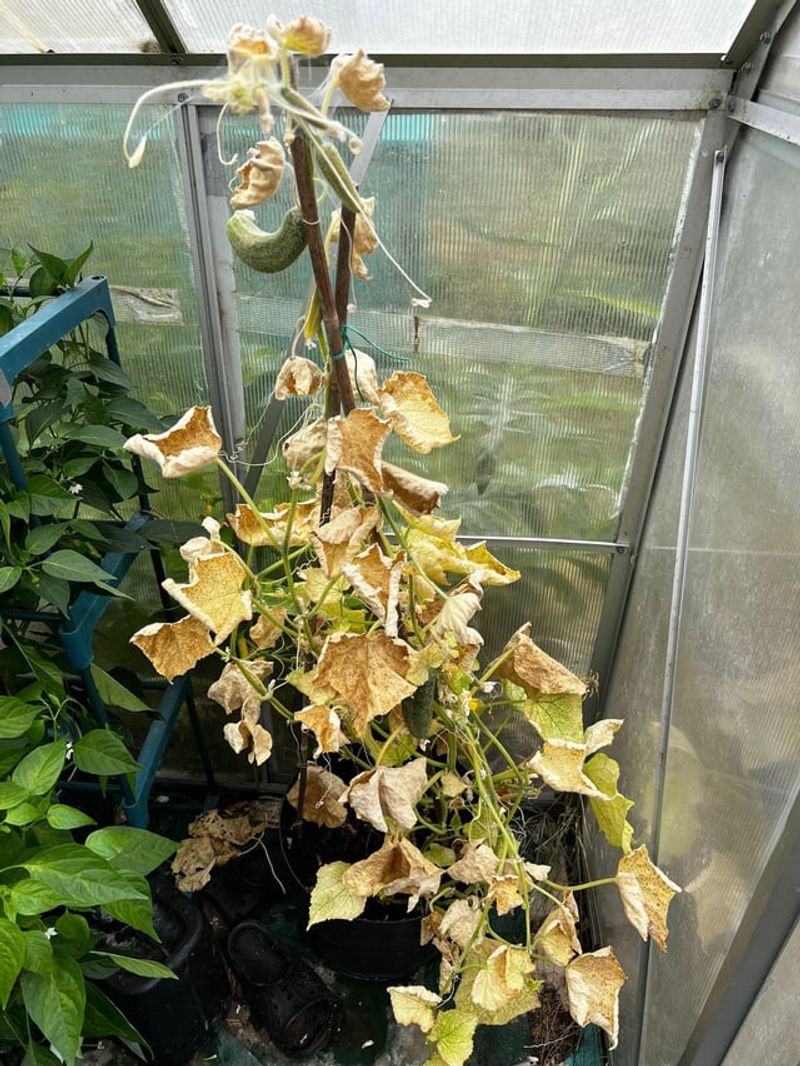
Tiny but destructive, twospotted spider mites thrive when North Carolina summers turn hot and dry. These microscopic pests pierce individual plant cells and drain their contents, leaving behind pale, speckled damage called stippling.
As feeding pressure builds, cucumber foliage can take on a silvery or bronze cast, and the leaves may begin to curl and fade in ways that mimic other problems entirely.
Spotting spider mites requires a closer look than most gardeners expect. Hold a magnifying lens to the underside of a suspicious leaf and you may see tiny moving dots, fine silky webbing, or both.
Another reliable trick is to tap a leaf firmly over a sheet of white paper. If small specks begin moving around on the paper after a moment, spider mites are almost certainly present.
Mite damage differs from aphid feeding in a few important ways. Aphids tend to cause more obvious puckering and distortion of new growth, while spider mites produce a more uniform, dusty stippling across older leaves first.
Moisture stress alone usually causes uniform wilting rather than the speckled texture that mites create. Knowing these differences saves time and prevents unnecessary treatments.
Responsible management starts with protecting the beneficial predatory mites and insects that naturally limit populations. Avoiding broad-spectrum pesticides keeps these helpers alive and working.
Miticidal sprays labeled for edible gardens can be effective when populations are high, but always follow product labels carefully and apply during cooler morning hours to avoid additional plant stress during peak heat.
4. Thrips Damaging Tender New Growth
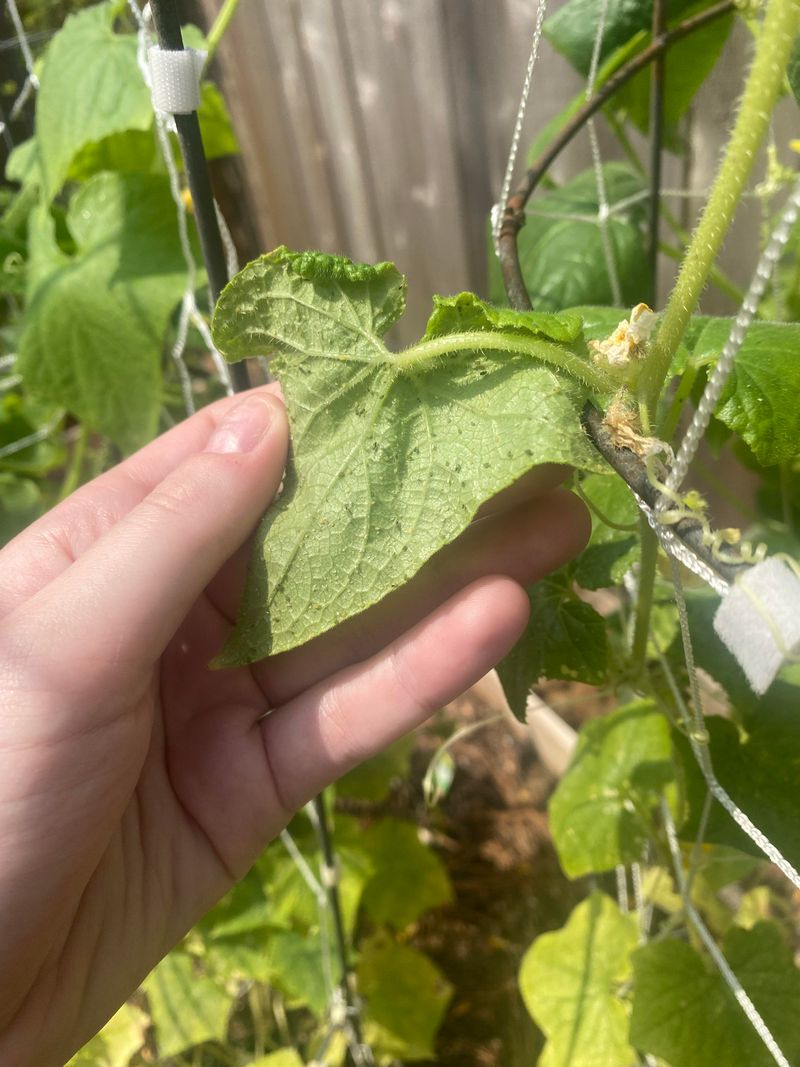
Something feels off when the newest leaves on your cucumber plant look twisted and irregular before they even have a chance to unfold properly. Thrips are often behind this kind of early distortion.
These slender, nearly invisible insects rasp and scrape plant tissue to feed, leaving behind pale flecks, silvery streaks, and tiny dark specks that are actually their waste deposits.
Young, tender growth is where thrips cause the most visible damage because the tissue is still developing.
A leaf that forms while thrips are actively feeding may emerge already curled, puckered, or oddly shaped rather than developing normally afterward.
Flowers can also show damage, which affects fruit set and overall plant productivity during the season.
Inspecting for thrips takes patience. Unfold a curled leaf carefully and look for movement among the creases.
Check open flowers closely, as thrips often shelter inside blooms. A hand lens makes this much easier.
Because these insects are so small, gardeners sometimes assume curling is caused by something else entirely before ever confirming what is actually present.
Curling alone should never be enough to assume thrips are the cause. Careful inspection and confirmation are essential before taking any action. Integrated pest management approaches work well here.
Encouraging natural predators, removing heavily infested plant material promptly, and using labeled products only when necessary keeps the situation manageable without disrupting the rest of your garden ecosystem.
North Carolina Extension resources can help you confirm thrips presence and choose appropriate responses for your specific situation.
5. Cucumber Mosaic Virus And Related Viruses
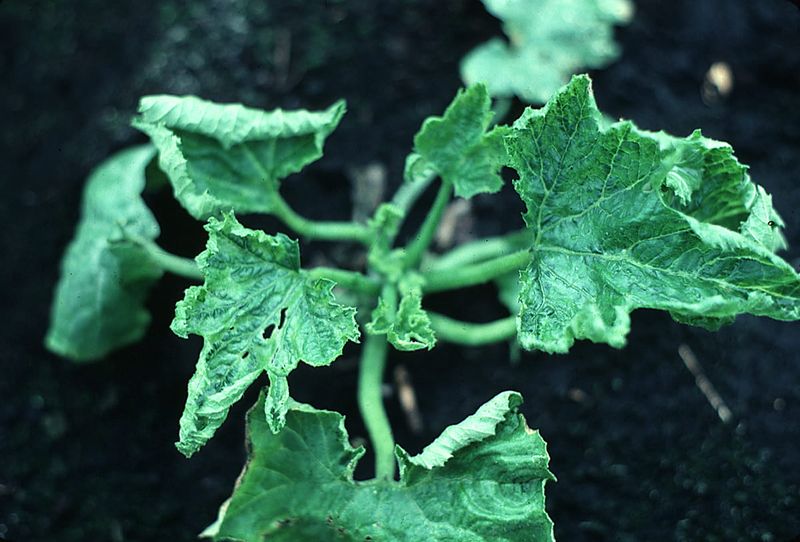
Some cucumber problems go deeper than insects or weather. Cucumber mosaic virus and related cucurbit viruses produce diverse symptoms, including leaf curling, puckering, mottled yellow-green patches, and narrow leaves.
These viral infections ultimately result in noticeably reduced overall plant growth. Fruit quality often suffers too, with bumpy, discolored, or poorly formed cucumbers developing on infected plants.
What makes viral symptoms tricky is how much they can resemble other issues at first glance. A plant showing mottled coloring and curled leaves might look like it needs water or fertilizer, but those treatments will not help if a virus is the actual cause.
The pattern tends to be more complex and irregular than simple heat curl or drought stress, and it often appears on new growth rather than older leaves.
Aphids and cucumber beetles can spread certain plant pathogens as they move from plant to plant throughout the garden. Managing these insect vectors early in the season reduces the risk of viral spread, though it cannot eliminate it entirely.
Removing and disposing of heavily symptomatic plants helps limit further spread to healthy ones nearby.
Before pulling plants or making major garden decisions based on suspected viral infection, reaching out to your county Extension office or submitting a sample to the NC State Plant Disease and Insect Clinic is genuinely worthwhile.
Getting a confirmed diagnosis saves time, money, and effort. North Carolina gardeners have access to excellent diagnostic resources that can identify the specific pathogen and guide your next steps with real accuracy.
6. Herbicide Exposure From Nearby Applications
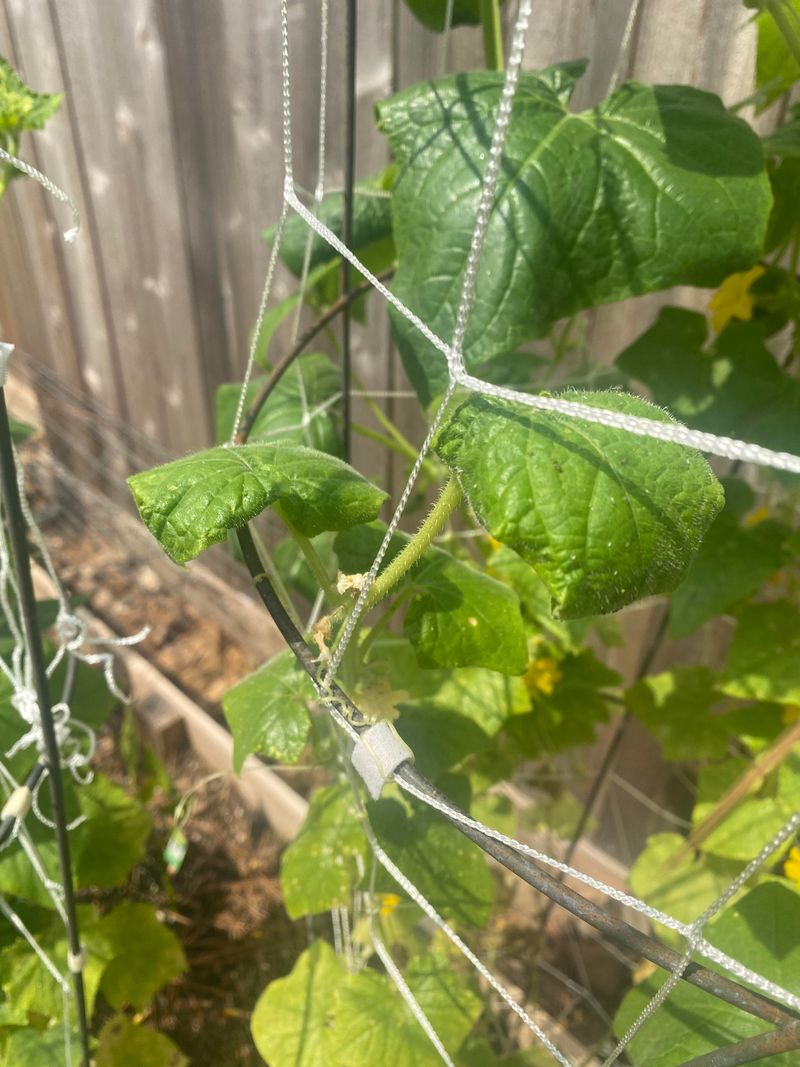
Twisted leaves, cupped edges, unusually narrow new growth, and curling that appears on multiple broadleaf plants at the same time can all point toward something gardeners rarely suspect first: herbicide exposure.
Cucumbers are sensitive to many common herbicides, and exposure does not require direct spraying to cause real damage.
Drift from nearby lawn treatments, pasture spraying, roadside maintenance, or neighboring agricultural fields can carry herbicide particles surprising distances, especially on windy days.
Reused sprayers that previously held herbicide products are another common source of accidental exposure, even when rinsed.
Contaminated compost made from treated grass clippings has also caused documented herbicide damage in vegetable gardens across North Carolina, which catches many gardeners completely off guard. One useful clue is the pattern of damage.
Symptoms appearing mainly on one side of the garden, or affecting several different broadleaf plants rather than just cucumbers, makes herbicide exposure more likely than a pest or disease that typically targets one crop.
Cucumbers, tomatoes, peppers, and beans can all show distortion from certain herbicide compounds, so looking across your whole garden matters.
Document any recent spray activity nearby, photograph the symptoms in detail, and avoid adding any new treatments to affected plants while the cause is still unclear.
Contacting a North Carolina Extension professional is a smart move when the source of exposure is uncertain.
They can help you evaluate the pattern of damage, review possible sources, and advise on whether the plants are likely to recover as new growth emerges over the coming weeks.
7. Saturated Soil And Reduced Root Function
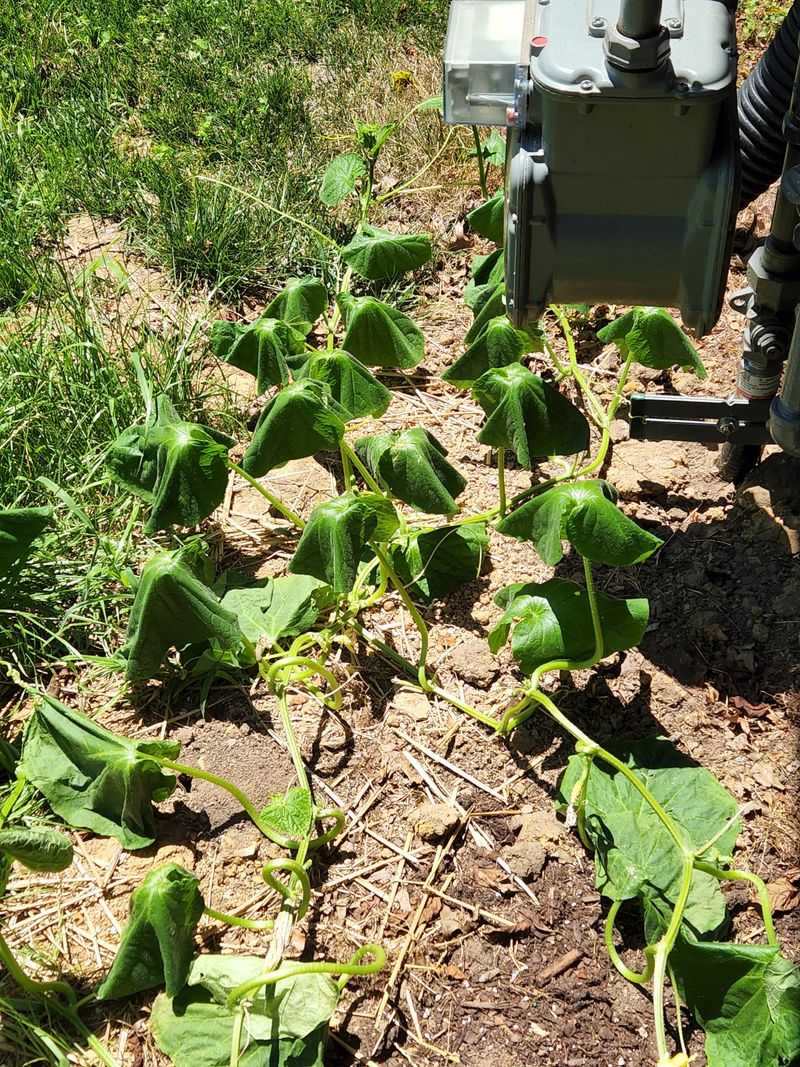
Here is a gardening paradox that trips up even experienced growers: a cucumber plant can show signs of stress and leaf curling even when the ground around it looks completely soaked. Roots need oxygen to function properly, and saturated soil pushes that oxygen out.
When roots cannot breathe, they struggle to move water and nutrients upward through the plant, creating a situation where the soil is wet but the plant behaves as if it is struggling anyway.
North Carolina gardeners deal with this more often than you might expect. Heavy clay soils, compacted garden beds, low-lying areas that collect runoff, and containers with blocked drainage holes are all common setups for waterlogging problems.
After periods of heavy spring or summer rainfall, even well-prepared beds can stay saturated long enough to stress roots significantly.
Persistent wetness combined with yellowing lower leaves, weak or slow growth, and afternoon curling despite wet soil are the clues that point toward this issue. Checking soil moisture a few inches below the surface helps you tell the difference.
Dry soil crumbles and feels powdery at depth, while saturated soil feels cold, dense, and almost spongy when you squeeze a handful.
Improving drainage through raised planting areas, loosening compacted soil, and incorporating organic matter helps prevent this problem from recurring. Adjusting watering frequency during rainy periods is equally important.
Containers need drainage holes that stay clear throughout the season. Taking these steps early in the season gives cucumber roots the well-aerated environment they need to thrive through North Carolina’s unpredictable weather patterns.
8. Chilling Stress After Cool Spring Nights
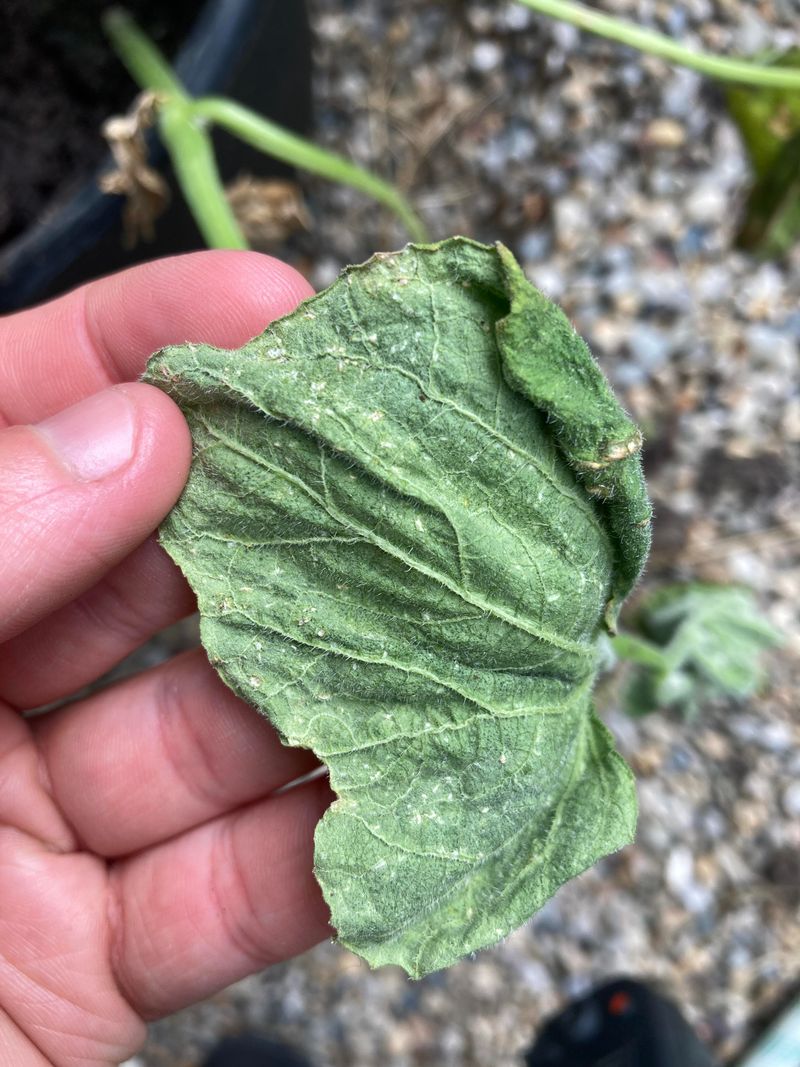
Cucumbers have strong opinions about temperature.
Plant them too early in a North Carolina spring and they will tell you about it through wrinkled, pale, or curled leaves that look worrying but are actually a response to cold soil and chilly overnight temperatures.
Cucumbers are warm-season vegetables that genuinely struggle when soil temperatures drop below around 60 degrees Fahrenheit, and they can show visible stress even when daytime conditions feel comfortable to you.
Spring weather in North Carolina is famously unpredictable. A stretch of warm days can tempt gardeners into planting earlier than local conditions truly support, and then a cold front rolls through and brings nights that dip into the low 50s or even the 40s.
Young transplants are especially vulnerable during this window because their root systems are not yet established enough to handle the added challenge of cold soil.
Chilling stress produces symptoms that can look similar to viral infection or herbicide damage at first glance. The key difference is timing and recovery.
If the distortion appeared after a cold snap and new growth coming in after warmer conditions looks healthy and normal, chilling stress is the most likely explanation.
Viruses tend to produce progressive symptoms that worsen on new growth regardless of temperature changes.
Consulting planting calendars specific to your North Carolina region helps you time transplanting more accurately. The NC State Extension office publishes regional guidelines that account for local frost dates and soil temperature patterns.
Covering young plants with row cover fabric during unexpected cool nights gives them meaningful protection and can make a noticeable difference in how quickly they establish and begin growing strongly.