What Curling Leaves On Michigan Peach Trees Reveal Before The Fruit Even Sets
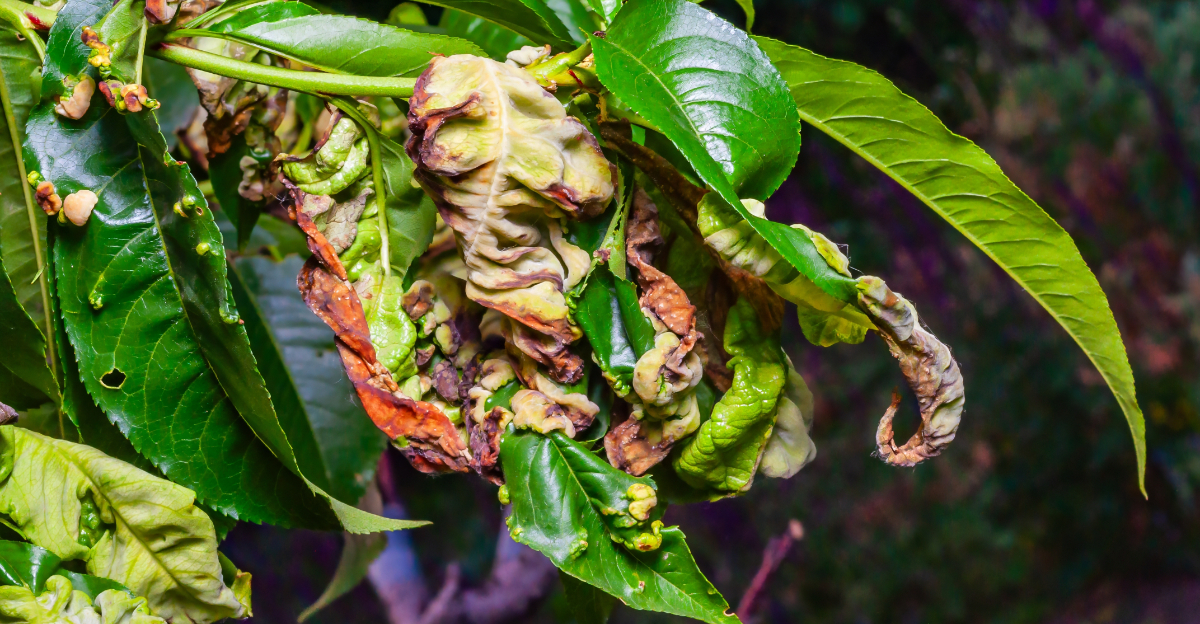
Leaf curl appearing on peach trees before fruit even sets is often an early sign of peach leaf curl, a common fungal disease in Michigan orchards.
This condition causes leaves to pucker, curl, and sometimes develop a reddish tint shortly after they first emerge in spring.
Left untreated, the disease can significantly weaken the tree by reducing its ability to photosynthesize effectively during this critical early growth stage.
Fungal spores typically overwinter on bark and buds, making dormant season treatment far more effective than trying to address active infections later.
Checking new growth closely in early spring helps catch this issue before it spreads across the entire canopy. Removing and disposing of severely affected leaves can help slow the disease’s progression through the current season.
Applying a fungicide during the following dormant season offers the best long term prevention against recurring infections. Understanding this early sign helps protect both this year’s harvest and the tree’s overall health going forward.
1. Peach Leaf Curl Strikes Early
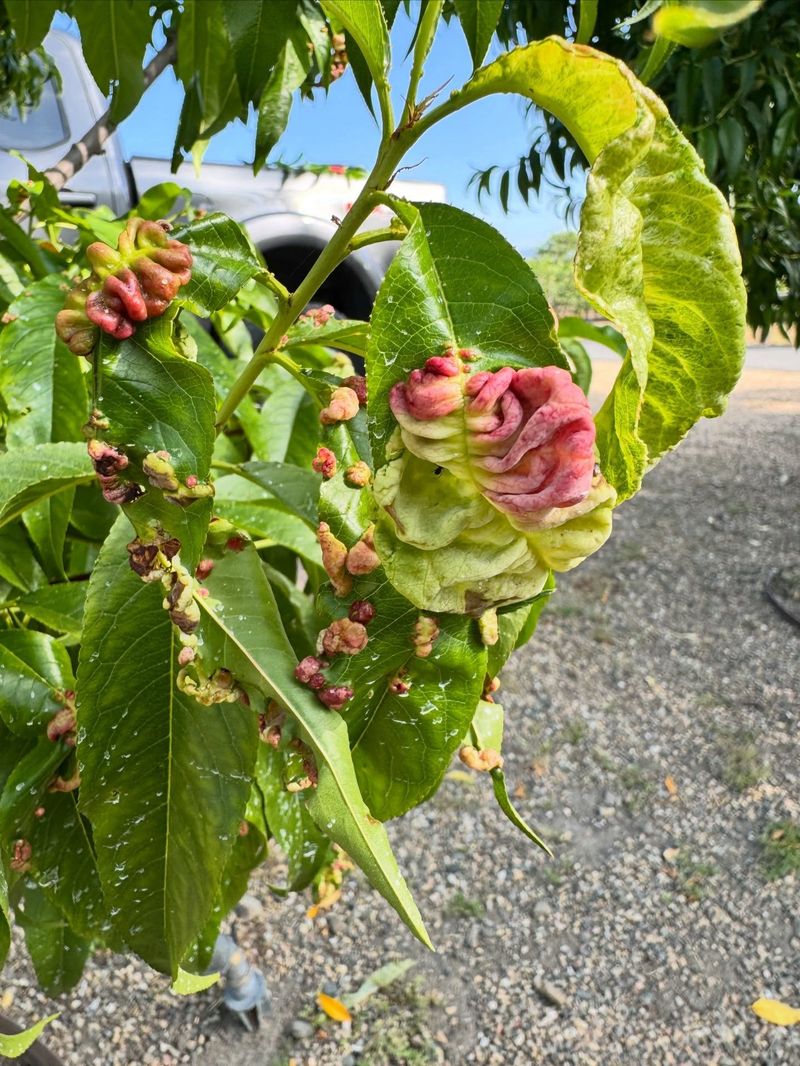
Thick, rubbery leaves in shades of red and purple are the classic calling card of Taphrina deformans, the fungus behind true peach leaf curl.
Spores hide in bud scales and bark cracks all winter, then swim into swelling buds during cool, wet Michigan springs.
Infection happens before you ever see damage. By the time leaves look blistered and warped, the fungus has already finished its sneak attack, which is why spraying in May does almost nothing.
Timing is everything here. Growers in Van Buren and Berrien counties apply a dormant fungicide such as chlorothalonil, copper, or lime sulfur in late fall after leaf drop, or in very early spring before buds swell.
One well timed dormant spray usually handles a whole season. Skip it two years in a row, and infections stack up, weakening shoots and cutting into next year’s fruit buds.
Wet weather makes the problem worse, so orchards near Lake Michigan with heavy spring humidity see it more often than inland plantings on breezy hillsides.
Affected leaves eventually drop, and the tree pushes a second flush of healthy foliage. That regrowth costs the tree stored energy, which means smaller peaches later or fewer flower buds for next spring.
Raking and removing fallen curled leaves helps a little, though the real control stays in that dormant application.
Fun bit of history: this fungus was described in the 1800s and has trailed peach growers around the world ever since, making it one of the oldest recognized stone fruit troubles.
2. Green Peach Aphids Cluster Underneath Leaves
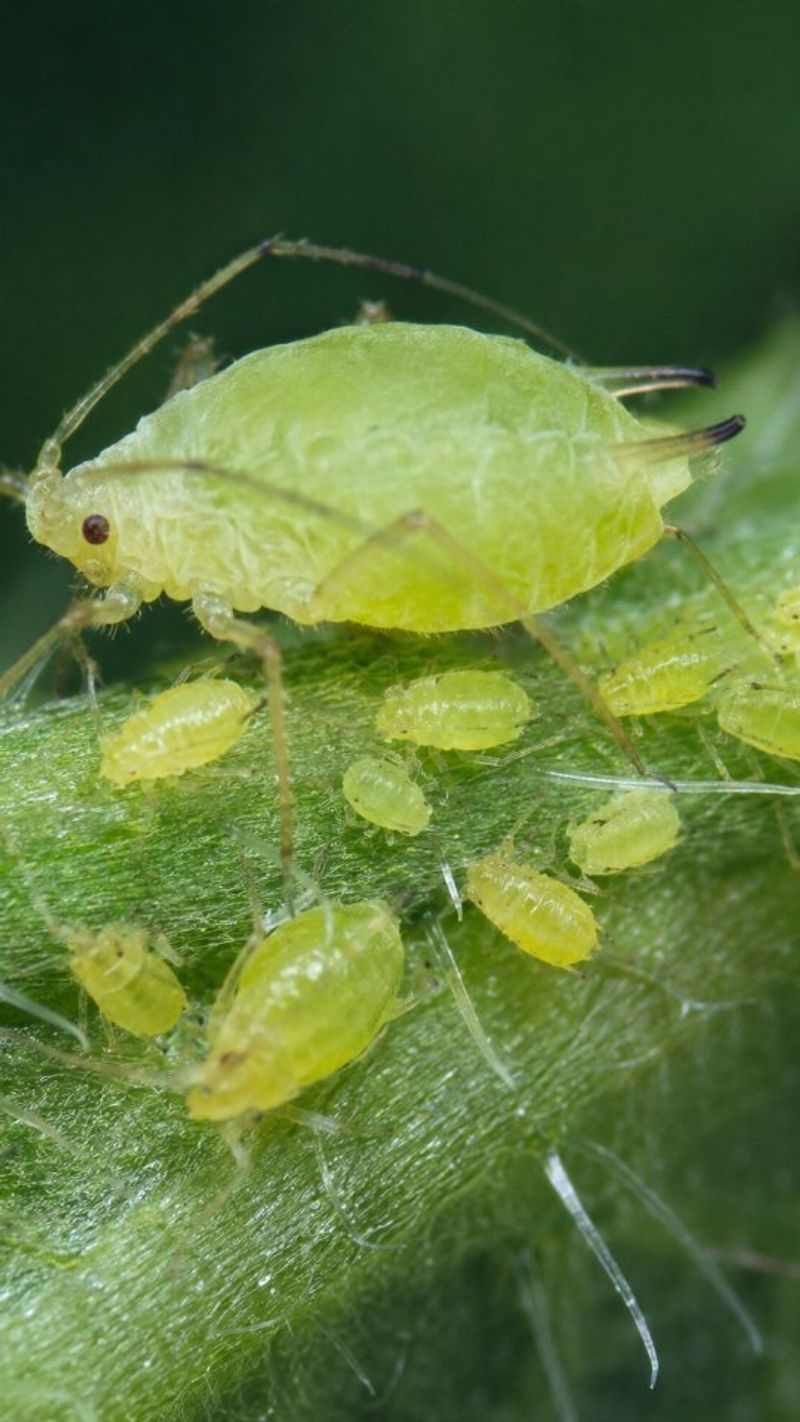
Flip a curled leaf over and look closely. If you spot tiny pale green or yellowish insects packed along the veins, green peach aphids are the culprit, and they are extremely common in Michigan orchards and backyards.
Aphids feed by pushing a straw-like mouthpart into soft tissue and drinking sap. That feeding pulls the leaf inward, so it cups, curls downward, and sometimes puckers along one edge.
Sticky honeydew is another clue. Shiny leaves, black sooty mold, or ants marching up the trunk all point to an aphid colony working overtime.
Your Michigan Garden Changes Every Week. Your Plan Should Too.
Gardening in Michigan changes quickly throughout the season. Every Friday you’ll receive a simple weekly plan showing exactly what to plant, prune, fertilize, harvest, and protect so you never miss the right timing.
Cool spring weather actually favors them, and populations explode fast because females give birth to live young without mating. A handful in early May can become hundreds by June.
Good news first: ladybug larvae, lacewings, syrphid fly maggots, and tiny parasitic wasps love aphids.
Natural enemies such as lady beetles, lacewings, syrphid flies, and parasitic wasps can help suppress aphid populations, so unnecessary broad-spectrum insecticide treatments are best avoided.
When numbers climb, a strong spray of water knocks colonies off young shoots. Insecticidal soap or horticultural oil works well too, as long as you coat the undersides of leaves where the aphids hide.
Avoid heavy nitrogen fertilizer in spring. Lush, fast-growing shoots are exactly what aphids prefer, so a lighter feeding schedule makes your tree less appealing.
Green peach aphids also spread plant viruses, so keeping them in check protects more than just the shape of your leaves.
3. A Sudden Late Spring Freeze Can Scorch Tender Tissue
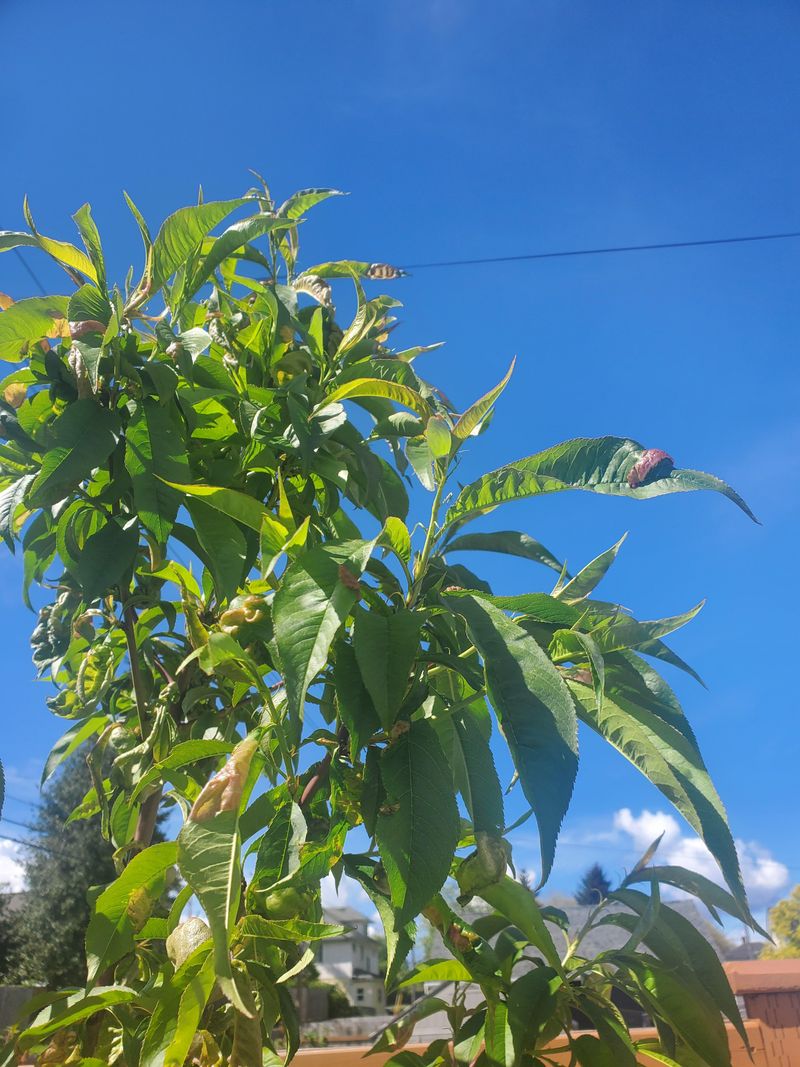
Michigan springs love a good plot twist. Warm weather can push buds into sensitive stages, and a subsequent freeze may injure new leaves, flowers, or developing buds.
Cold injured foliage often curls at the tips or edges, looks slightly water stained, then turns tan or brown along the damaged margins. The curl is usually uneven, showing up on the outside of the canopy and the south side where growth started earliest.
Unlike fungal curl, frost damage does not spread. Whatever got hit is hit, and new growth that emerges later comes out flat and normal colored.
Peach flower buds are even more sensitive than leaves, so a frost that curls foliage may also cut your crop before fruit sets. Slicing a few buds open reveals brown centers if they were injured.
Backyard growers can help by planting on a slope where cold air drains away instead of pooling in a low spot. Air movement makes a real difference on borderline nights.
Watering soil the day before a freeze helps too, since moist ground holds daytime warmth and releases it slowly overnight. Old sheets or frost blankets draped over small trees trap a couple of protective degrees.
Resist the urge to prune damaged shoots right away. Wait two or three weeks to see exactly which buds push new growth, then trim what stays bare.
Patience usually pays, because peaches recover from cold snaps faster than most people expect.
4. Poor Drainage In Heavy Clay Soil Essentially Drowns Roots
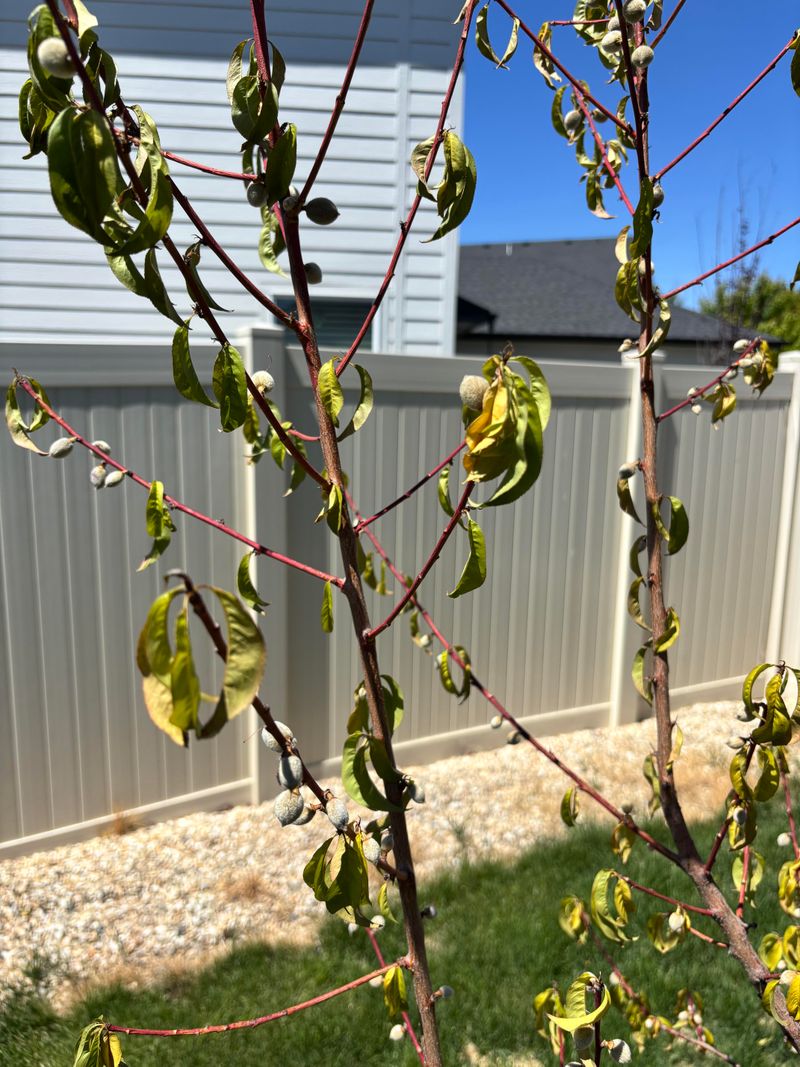
Peaches hate wet feet more than almost any other fruit tree. Their roots need oxygen, and saturated soil shuts that supply off within a couple of days.
Curling then shows up as a slow, whole-tree pattern. Leaves cup or roll lengthwise, edges go pale, and growth stalls even though the ground is plenty moist.
Lots of Michigan yards sit on heavy clay or a compacted layer left behind by construction equipment. Spring rain and melting snow pile up, and the tree essentially drowns while looking thirsty.
Confusing part: overwatered peaches and underwatered peaches look similar. Check moisture several inches below the surface and look for persistent saturation, standing water, poor drainage, or other signs of waterlogged soil before adding more water.
Waterlogged roots also invite Phytophthora root rot and crown rot. Scraping bark near the soil line reveals orange-brown discolored tissue when that infection takes hold.
Best fix starts before planting. Choose a raised spot, build a low berm eight to twelve inches high, or plant on a gentle slope so water keeps moving.
For trees already in the ground, pull mulch back from the trunk, avoid piling soil around the base, and consider a shallow swale to redirect runoff.
Rootstock choice can influence soil tolerance, but even relatively adaptable peach rootstocks perform poorly in chronically waterlogged soil.
Growers along the fruit belt often plant on sandy loam ridges for exactly this reason. Sandy ground drains fast, and peaches reward that with clean, flat, healthy foliage.
5. Twig Borer Caterpillars Cause Branch Ends To Wither
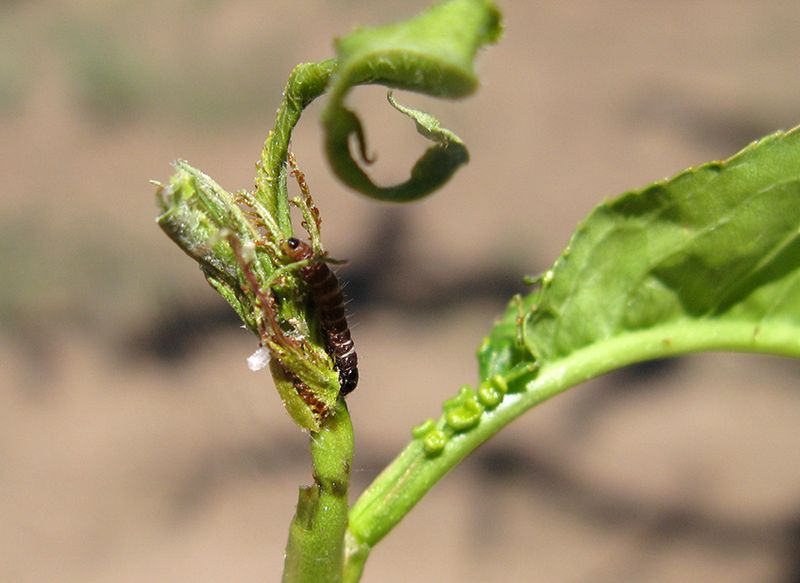
Some curled leaves come with a wilted, drooping shoot tip that flags in the breeze. That combination usually means peach twig borer larvae are chewing inside the stem.
Tiny caterpillars overwinter in small cells tucked into bark crevices and pruning wounds. When spring warms up, they crawl out and bore straight into the tender growing point of new shoots.
Damage looks dramatic because the tip beyond the tunnel loses its water supply. Leaves at the end curl, wither, and hang while the rest of the branch stays green.
Snapping off a flagged tip and splitting it open often reveals a small grayish-brown larva with darker bands. Finding one confirms the diagnosis instantly.
Young trees suffer most, since losing a leader or a scaffold tip messes up the shape you are trying to build. Mature trees shrug off a few flagged shoots without much trouble.
Michigan growers track this pest with pheromone traps and time treatments to the first generation in late spring. Bacillus thuringiensis, spinosad, or a dormant oil application all help, and beneficial insects handle low numbers.
Cultural steps matter too. Clean pruning cuts, removing prunings from the orchard floor, and scraping loose bark reduce the cozy spots where larvae wait out winter.
Later generations attack fruit instead of shoots, boring near the stem end. Catching the spring flagging stage early cuts down on wormy peaches in August, which makes this one worth watching closely.
6. Herbicide Drift From The Lawn And Reach The Canopy
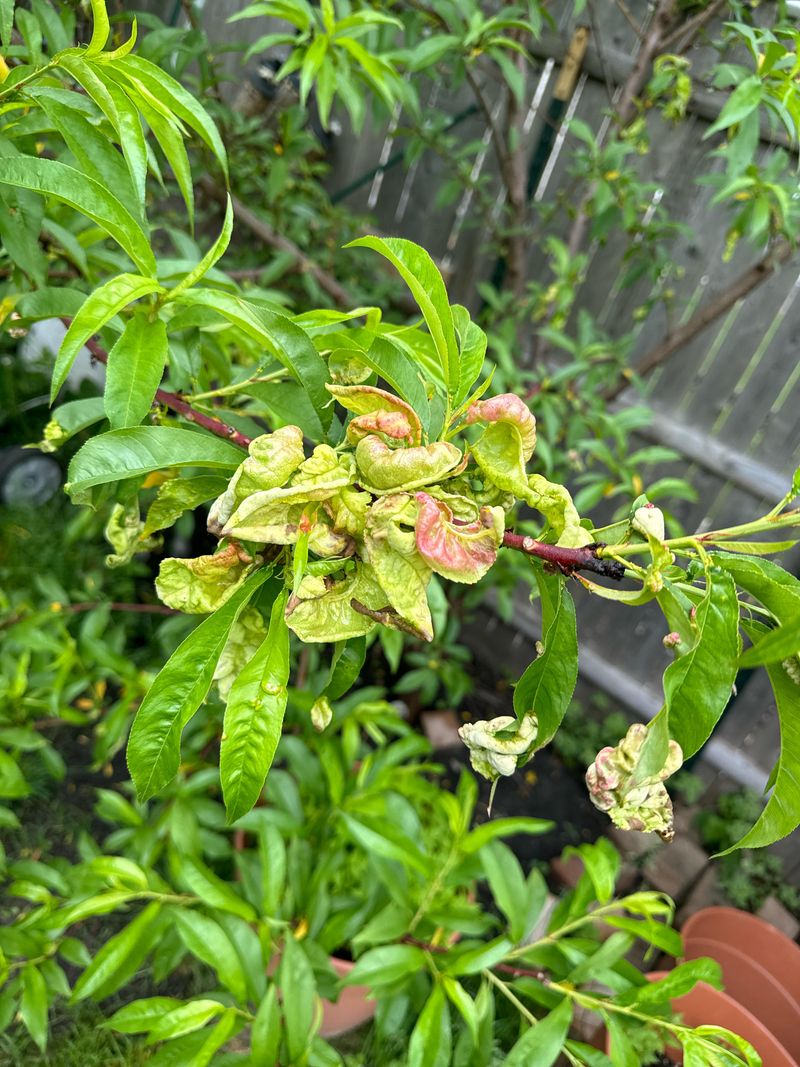
Strangely twisted leaves that look stretched, narrow, or fan-shaped rarely come from a bug or a fungus. That distorted look points to herbicide drift, and peaches are unusually sensitive to it.
Broadleaf herbicides containing 2,4-D or dicamba are the usual suspects. A neighbor spraying dandelions on a breezy afternoon, or a weed-and-feed product spread near the drip line, sends enough active ingredient to warp new growth.
Symptoms show up on the newest leaves first. Veins run parallel instead of spreading out, edges roll tightly, and shoots may grow in odd zigzag patterns.
Damage often appears on one side of the tree, the side facing whatever got sprayed. That lopsided pattern is a strong clue, since fungal problems spread more evenly.
Dicamba can also move through soil, so applying it over shallow peach roots causes trouble even without visible drift. Reading labels for tree and shrub warnings saves a lot of heartache.
Recovery depends on the dose. Light exposure fades as the season goes on and new leaves come out normal, while heavy exposure can cut fruit set and stunt shoot growth for a year or more.
Keep a grass buffer or mulch ring around the trunk instead of spraying close to it. Hand pulling weeds within eight feet of the tree removes the temptation entirely.
Spraying only on calm mornings, using coarse droplets, and talking with neighbors about timing prevents most cases before they start.
7. Bacterial Spot Can Get An Early Start On Wet Foliage
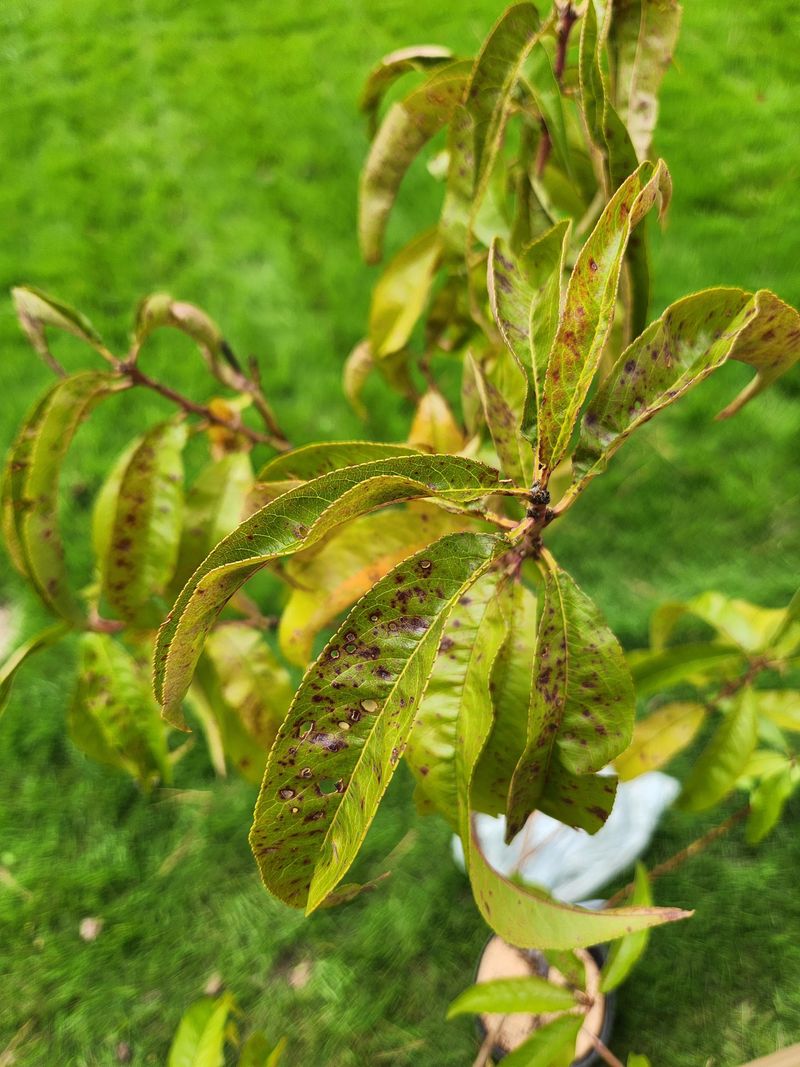
Windy rain plus warm nights is the recipe bacterial spot loves, and Michigan delivers that combo almost every spring. The bacterium Xanthomonas arboricola pv. pruni sneaks in through natural openings on wet leaves.
Early damage looks like small, dark, angular spots between veins. Those spots dry out and drop through, leaving shot-hole gaps, and the leaf pulls slightly out of shape as tissue tightens.
Curling here is subtle compared with fungal leaf curl. Look for the tell-tale peppering of tiny lesions rather than thick puckered blisters.
Sandy sites with poor water holding capacity and trees under nutrient stress get hit hardest. A healthy, evenly fed tree resists infection much better.
Variety choice makes a huge difference. Redhaven and Harrow varieties show good resistance, while some older cultivars spot up badly year after year.
Copper sprays applied at low rates during dormancy help reduce overwintering bacteria in twig cankers. Once leaves are out, high copper rates cause their own burn, so growers switch to products like oxytetracycline.
Windbreaks earn their keep against this one. Blowing sand scratches leaf surfaces and creates entry wounds, so a row of evergreens on the windward edge cuts infection dramatically.
Severe cases lead to heavy leaf drop by midsummer, which weakens the tree and leaves fruit sunburned. Fruit lesions also show up as sunken dark pits that ruin the fresh market look, so early attention pays off in August.
8. Missing Key Soil Nutrients Like Potassium Or Zinc Will Crinkle Leaves
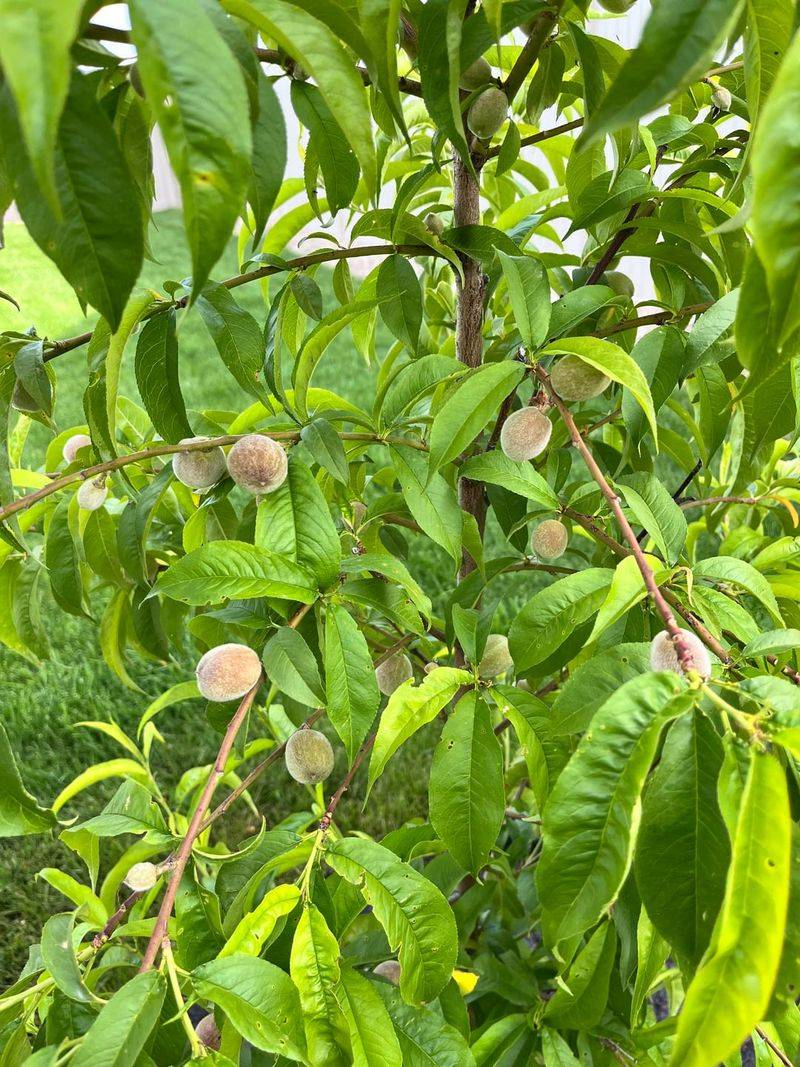
Soil chemistry writes itself all over peach foliage. Potassium shortage is the big one, and it makes leaf edges crinkle, curl upward, and fade to yellow while veins stay green.
Michigan’s sandy fruit belt soils leach nutrients quickly. Heavy spring rain washes potassium and magnesium down past the root zone, and trees show it in the newest growth.
Zinc shortage creates a different look. Leaves come out small, narrow, and slightly rolled, with shoots crowding into tight rosettes near the tips.
Nitrogen excess flips the problem around. Too much feeding produces floppy, dark green, cupped leaves on shoots that grow faster than they can support, and aphids pile onto that soft tissue.
A soil test through Michigan State Extension takes the guesswork out completely. Pair it with a summer leaf tissue test, and you get an exact reading of what the tree actually absorbed.
Peaches prefer soil pH between 6.0 and 6.5. Outside that range, nutrients sit in the soil in forms roots cannot pick up, so correcting pH often fixes a deficiency without adding anything else.
Sulfate of potash works well for potassium, applied in early spring around the drip line rather than against the trunk. Chelated zinc sprays fix zinc issues fast.
Compost and a two inch mulch ring build the organic matter that holds nutrients between rains. Fed properly, a peach tree pushes flat, glossy, deep green leaves that set the stage for a heavy crop.