What Deep Watering Really Means For Pennsylvania Trees During This Heat
When a heat wave settles over Pennsylvania and trees start showing signs of stress, the advice to water deeply comes up quickly. It sounds simple enough.
Water the tree, water it deeply, and the tree will be fine. But for most Pennsylvania homeowners, the practical reality of what deep watering actually means for a tree, as opposed to a garden bed or a container plant, is genuinely unclear.
And the difference between shallow watering and true deep watering for a tree under heat stress is significant.
A tree that gets water applied to the surface and a tree that receives moisture penetrating to the depth where its active roots actually live are having two very different experiences.
Surface watering can look productive and feel responsible while doing almost nothing for a large tree whose root system extends far beyond what most homeowners account for.
Understanding what deep watering actually means in practical terms for Pennsylvania trees, where to apply it, how long it takes, and how to know when you’ve done enough changes how effective your efforts during a heat event actually are.
1. Soak The Soil 6 To 9 Inches Deep
Most people think watering a tree means wetting the ground around it. But surface moisture evaporates fast, especially during Pennsylvania’s summer heat waves.
To actually help your tree, the water needs to reach 6 to 9 inches below the surface, where the main feeder roots live.
Feeder roots are the small, hair-like roots that absorb most of the water and nutrients a tree uses. When moisture only reaches the top inch or two of soil, those feeder roots stay thirsty even if the surface looks damp. Your tree can struggle without you even realizing it.
After watering, you can check how deep the moisture went by pushing a long screwdriver or thin metal rod into the soil. It should slide in easily through moist soil and become harder to push once it hits dry ground.
This simple test tells you exactly how far the water traveled. A good deep watering session might take 30 minutes to an hour depending on your soil type. Clay soil absorbs water more slowly than sandy soil, so adjust your timing based on what you have in your yard.
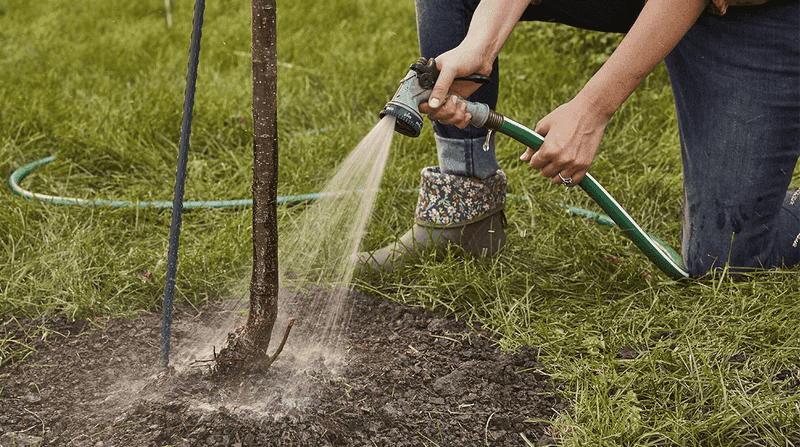
Never rush the process by blasting water too fast, because it will just run off instead of soaking in.
Aim for deep watering sessions two to three times per week during extreme heat rather than quick daily watering. Spacing out your sessions gives the soil time to absorb moisture properly.
Your tree roots will grow deeper over time when they learn that water is available below the surface, making them stronger and more resilient overall.
2. Water The Whole Root Zone
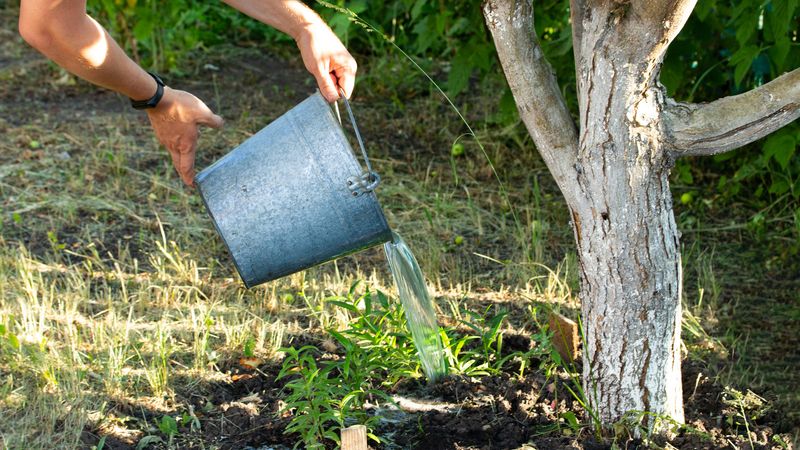
A common mistake homeowners make is watering only right next to the trunk. The trunk itself does not absorb water, and the roots closest to it are large structural roots, not the ones drinking in moisture.
Watering in the wrong spot wastes time and leaves your tree thirsty. The root zone of a tree extends outward, often reaching as far as the edge of the canopy and sometimes even beyond it. Roots spread wide and flat beneath the soil, searching for water across a large area.
Your Pennsylvania Garden Changes Every Week. Your Plan Should Too.
Gardening in Pennsylvania changes quickly throughout the season. Every Friday you’ll receive a simple weekly plan showing exactly what to plant, prune, fertilize, harvest, and protect so you never miss the right timing.
Knowing this changes where you should be pointing your hose. Picture an imaginary circle on the ground that follows the outer edge of the tree’s canopy. That outer ring is called the drip line, and the area beneath it is prime real estate for feeder roots.
Watering along and beyond that drip line puts moisture exactly where your tree needs it most.
Try to spread your watering evenly across the entire root zone rather than focusing on one spot. Moving a soaker hose in a wide arc or repositioning it partway through helps cover more ground.
Even coverage means more roots get what they need, which leads to a healthier and more stable tree.
Keeping water away from the base of the trunk also helps prevent bark rot and other moisture-related problems. Trees are not designed to have standing water pressed against their trunks for long periods.
A little distance between your water source and the trunk goes a long way toward protecting the tree’s overall health during a long, hot Pennsylvania summer.
3. Let Water Soak In Slowly
Speed is the enemy of deep watering. When water hits the ground too fast, it runs off the surface instead of sinking in, especially on sloped yards or compacted soil.
Slowing things down is the secret to getting moisture where it belongs. Soaker hoses are one of the best tools for deep watering trees. They release water in a slow, steady drip along their entire length, which gives the soil time to absorb every drop.
You can coil one around the root zone and let it run for 30 to 60 minutes without worrying about runoff.
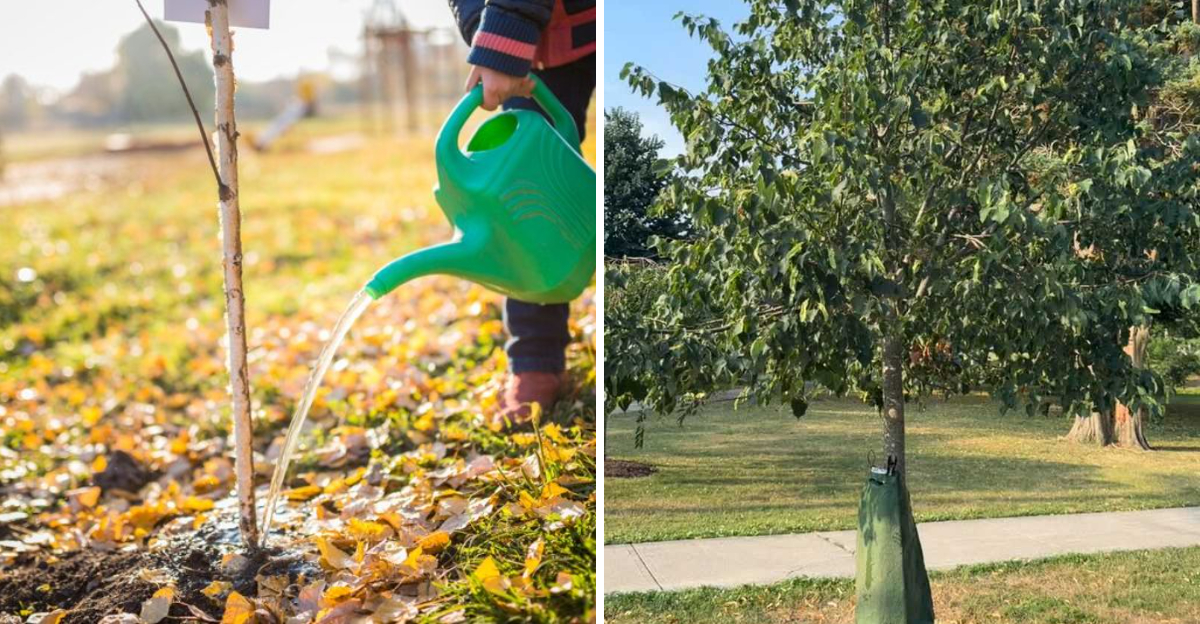
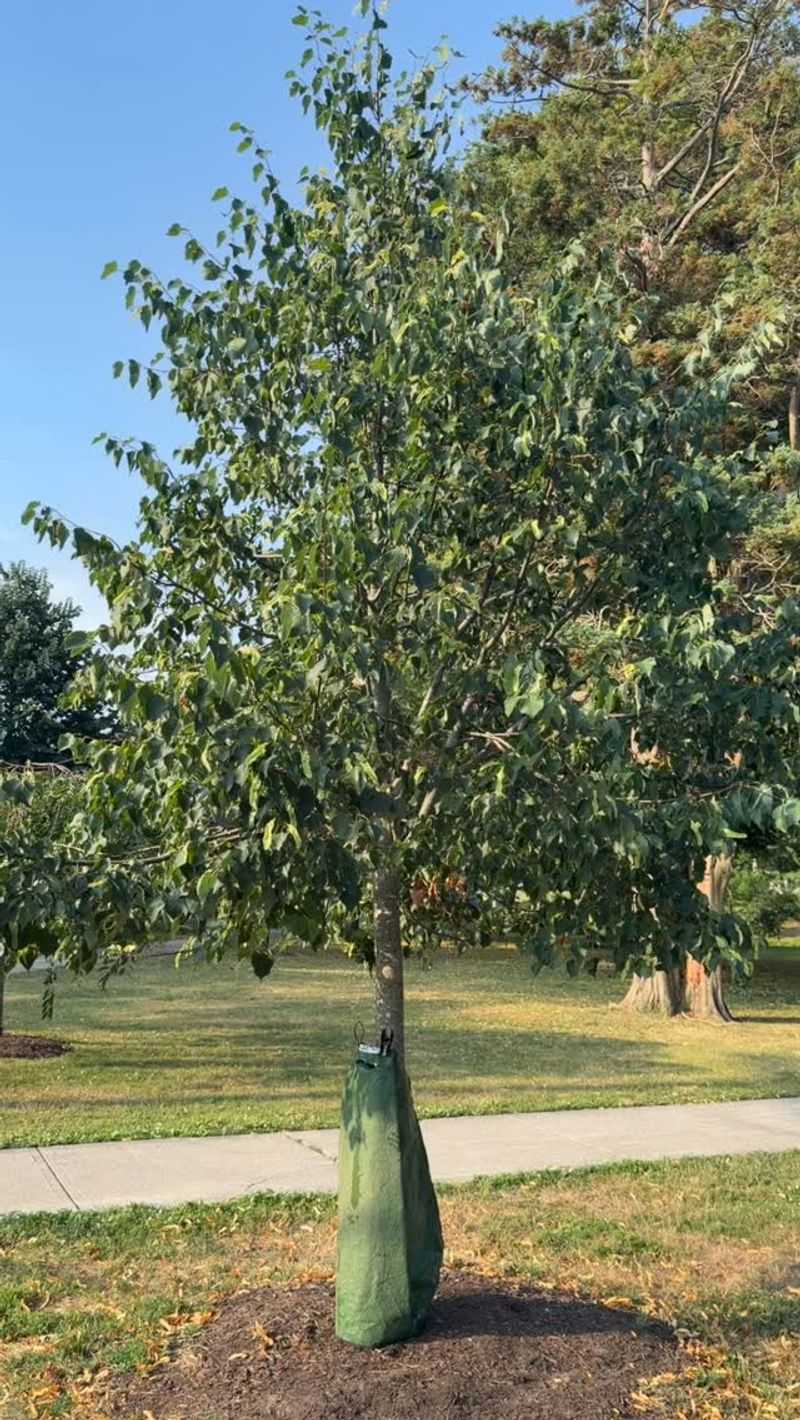
Watering bags are another great option, especially for younger or newly planted trees. You fill the bag with water and it slowly releases moisture over several hours.
Many Pennsylvania tree care professionals recommend these bags because they deliver water at exactly the right pace for deep soil penetration.
A regular garden hose set to a slow trickle works well too. Just lay it near the drip line and move it to a few different spots around the tree as you water.
The key is patience. Letting it run gently for longer periods beats blasting the ground with full pressure for a few minutes.
Mulch can also help slow things down naturally. A 3 to 4 inch layer of wood chip mulch spread across the root zone holds moisture in the soil and slows evaporation on hot days.
It also keeps the soil temperature cooler, which reduces stress on the roots. Pairing mulch with slow watering creates an ideal environment for your tree to stay well-hydrated through even the most intense summer heat.
4. Give Young Trees Extra Attention
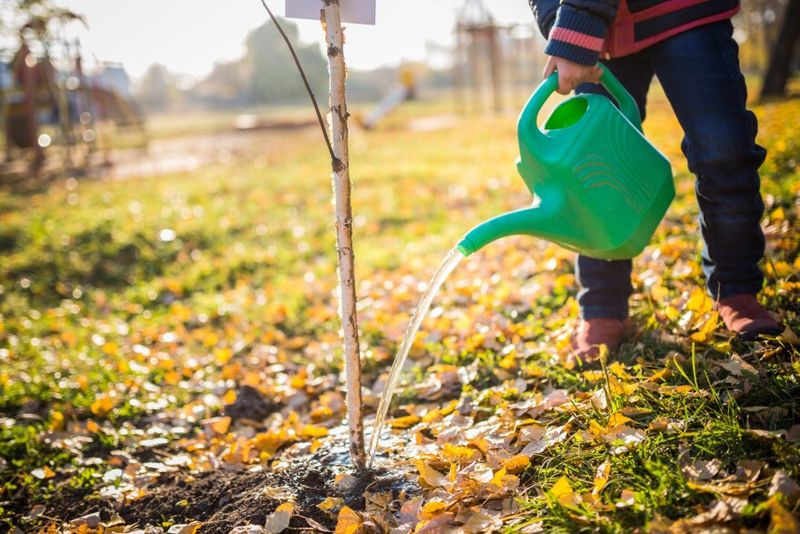
Young trees have a tough time during Pennsylvania heat waves. Unlike mature trees with roots that stretch deep and wide, newly planted trees have small, shallow root systems that are still getting established.
That limited reach means they can run out of moisture much faster when temperatures rise.
Most tree experts recommend watering newly planted trees two to three times per week during hot stretches.
Each session should be slow and thorough, giving the root ball and the surrounding soil time to absorb plenty of moisture. Skipping even one session during a heat wave can set a young tree back significantly.
Pay special attention to trees planted within the last one to three years. Their roots have not yet spread far beyond the original planting hole, so all of your watering efforts should focus tightly on that area.
As the tree grows, you can gradually widen your watering zone to match its expanding root system.
Checking the soil around a young tree every day or two during extreme heat is a smart habit. Stick your finger about two inches into the soil near the root ball.
If it feels dry at that depth, the tree probably needs water soon. Moist but not soggy is the sweet spot you are aiming for.
Mulching around a young tree makes a big difference during summer. A generous ring of mulch, kept a few inches away from the trunk, slows evaporation and keeps roots cooler.
Combine that with consistent deep watering and your young tree has a much better chance of thriving through even the hottest Pennsylvania summers without skipping a beat.
5. Don’t Replace Deep Watering With Daily Sprinkles
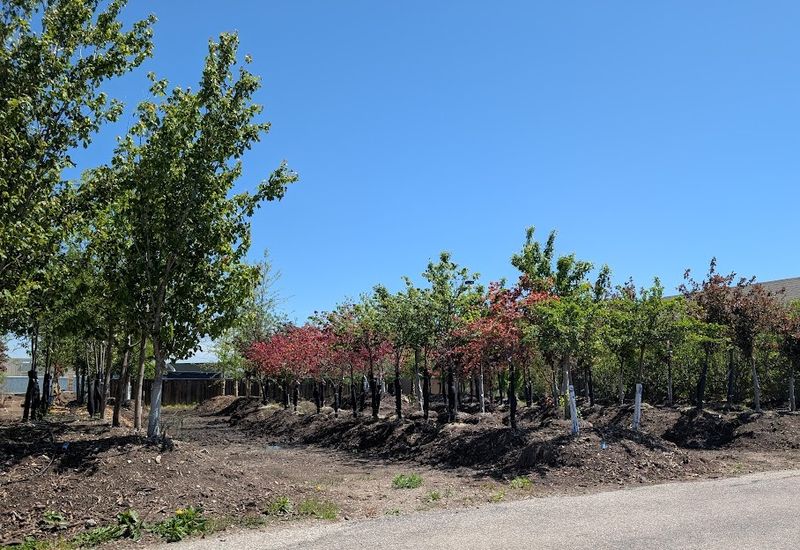
Daily light watering might feel like you are helping your tree, but it can actually work against you over time. When only the top inch or two of soil gets wet each day, roots have no reason to grow deeper.
They stay close to the surface where the moisture is, which makes them more vulnerable to heat and drought.
Shallow roots are risky roots. During a heat wave, surface soil dries out fast, sometimes within hours of watering.
A tree depending on surface moisture can go from looking fine to showing serious stress very quickly when conditions get extreme. Deeper roots have access to cooler, more stable moisture reserves underground.
Lawn sprinkler systems are a good example of a watering method that often falls short for trees. Sprinklers are designed for grass, which has very shallow roots.
Running your sprinkler system over your trees might keep the grass green beneath them, but it rarely delivers enough water deep enough to truly benefit the tree’s root system.
Breaking the habit of daily sprinkles and switching to deeper, less frequent sessions is one of the best things you can do for your trees. Twice or three times a week with a soaker hose or slow-running hose beats daily sprinkles every time.
Your trees will respond by sending roots deeper into the ground, which makes them naturally more drought-tolerant.
Think of deep watering as training your tree to be tougher. Over time, a tree with deep roots handles heat, wind, and dry spells far better than one that has been babied with shallow daily watering.
The investment of time and patience now pays off with a stronger, more self-sufficient tree in the seasons ahead.
6. Check The Soil Before Watering Again
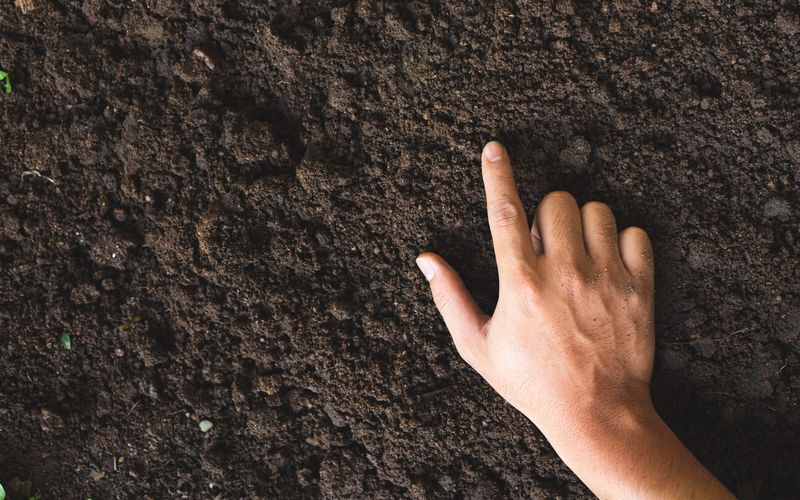
Sticking to a strict watering schedule without checking the soil first is one of the most common tree care mistakes. Soil conditions change constantly based on rainfall, temperature, humidity, and tree size.
What worked last week might not be right for this week. Before you water again, take 30 seconds to check the soil. Push a screwdriver or your finger 3 to 4 inches into the ground near the root zone.
If the soil feels moist at that depth, your tree probably does not need more water yet. If it feels dry, it is time to water.
Wilting leaves can be misleading. Some trees wilt during the hottest part of the day even when the soil has plenty of moisture.
This is a natural response to heat, not always a sign of drought. Checking the soil gives you a much more reliable picture of what your tree actually needs.
Soil type plays a big role in how often you need to water. Sandy soils drain quickly and may need watering more often.
Clay soils hold moisture longer but can also become compacted and hard for roots to penetrate. Knowing your soil type helps you build a smarter watering routine.
Rainfall also changes the equation. Pennsylvania can get sudden afternoon thunderstorms during summer, and even a brief heavy rain can add meaningful moisture to the root zone.
Always check the soil after a rain before assuming your tree still needs a full watering session. Overwatering is just as harmful as underwatering, so letting the soil guide your decisions keeps your trees in the best possible shape all season long.