What Happens To Pennsylvania Evergreens That Go Into Winter Thirsty
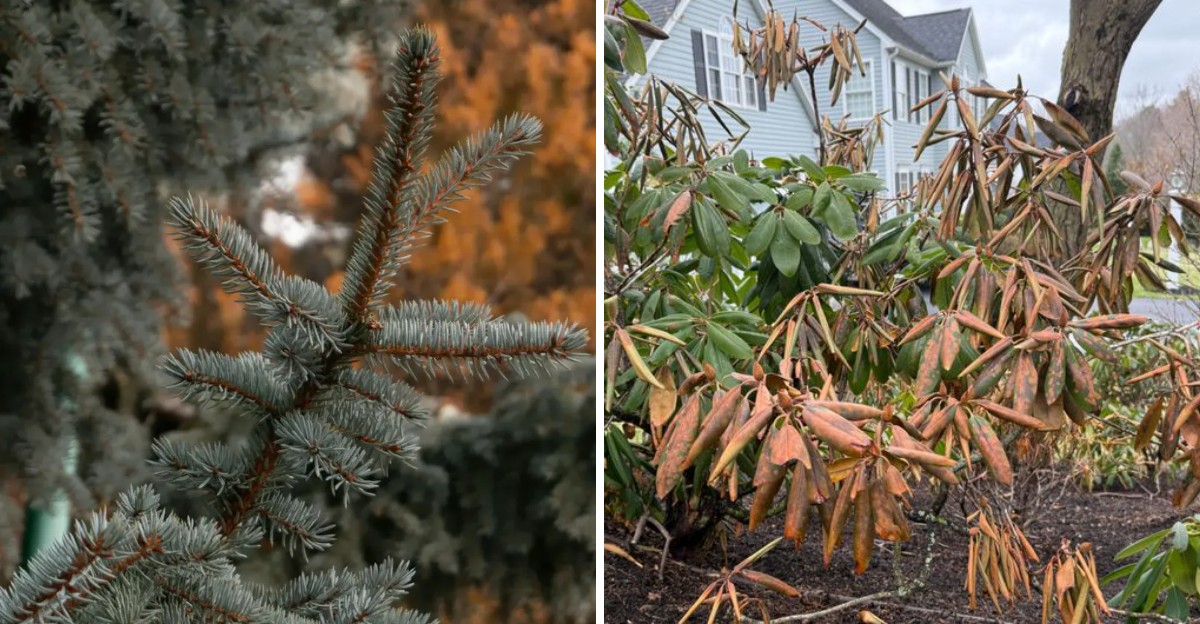
A spruce can lose water on a frozen January afternoon almost the same way it does on a hot summer day. That surprised me the first time I read it from Penn State Extension.
The needles keep breathing out moisture all winter. Meanwhile, the roots sit locked in icy soil with no way to sip a refill.
I used to think my yard went to sleep after Thanksgiving. Then one March, my favorite shrub by the driveway turned the color of a paper bag on its windy side.
You’re in for a big surprise if you assume snow alone keeps these plants happy in Pennsylvania.
The damage often hides for months before it shows. So what is really going on inside those green branches while you’re shoveling the walk?
1. Those Green Needles Keep Working Long After Your Garden Hose Goes Away
Most of us coil up the hose in October and call it a season. Evergreens didn’t get that memo, though.
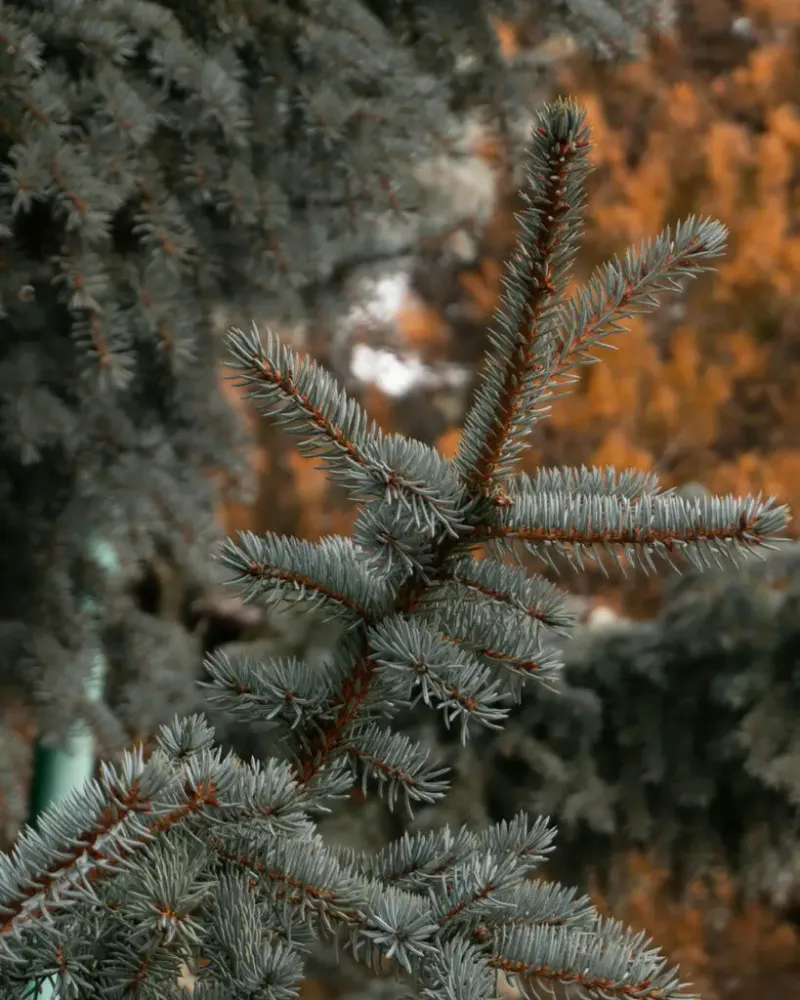
Unlike maples and oaks, which drop their leaves and slow way down, evergreens hold onto their foliage all year. Those needles and leaves have tiny pores called stomata.
Water slips out through them in a process called transpiration, and it keeps happening on cold days, especially sunny or breezy ones.
Here is the tricky part. When the ground freezes, roots can’t pull up fresh water to replace what’s lost.
Penn State Extension calls the result winter injury or winter desiccation, which simply means the plant dries out.
I like to compare it to a person sipping from a water bottle that slowly empties with no faucet nearby. The plant keeps spending moisture it can’t earn back until the soil thaws.
A plant that starts winter with dry roots begins that long stretch already behind. Its tissues have less stored water to spare, so damage shows up sooner and spreads farther.
Both needled types, like pines and spruces, and broadleaf types, like rhododendrons and hollies, can suffer. Knowing this changes how you treat fall chores in your yard.
2. A Slow, Deep Fall Soak Around Arborvitae and Spruce Roots Changes Everything
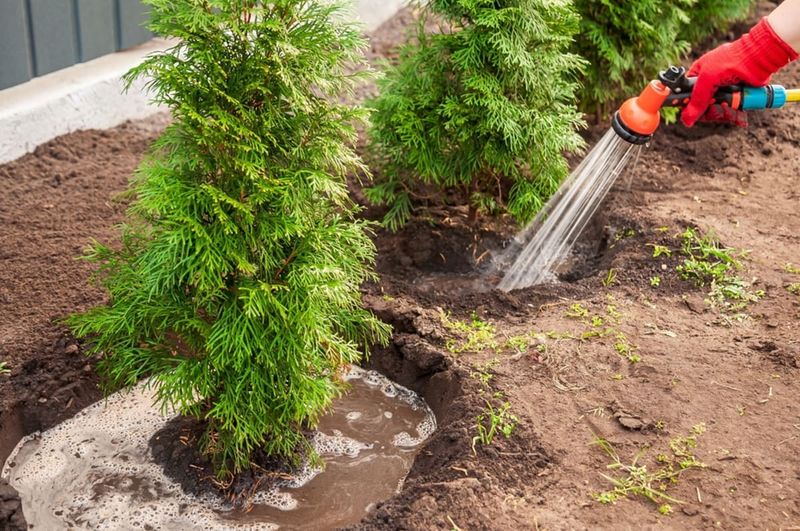
Ask any extension horticulturist for the single best fix, and you’ll hear the same answer. Water deeply in fall before the ground freezes.
The goal is to soak the root zone, not just wet the surface. Aim for moisture reaching about 12 inches down, where most feeder roots live.
A soaker hose or a slow trickle from the garden hose works far better than a quick spray.
Keep going roughly once a week whenever rain falls short of about an inch. In most of Pennsylvania, that means watering through October and into November, stopping once the soil starts to freeze.
Personally, I set a kitchen timer and leave the hose barely running at the base of each shrub for 20 to 30 minutes. Then I poke a long screwdriver into the soil to check how deep the water went.
Spread the water out to the drip line, the edge of the branches, since roots extend at least that far. Big trees may need several spots.
Newly planted evergreens deserve extra attention. Their root systems are small and haven’t spread into surrounding soil yet, so they dry out fast and benefit the most from a thorough autumn drink.
3. Bronze and Brown Foliage on the Windy Side Tells the Story
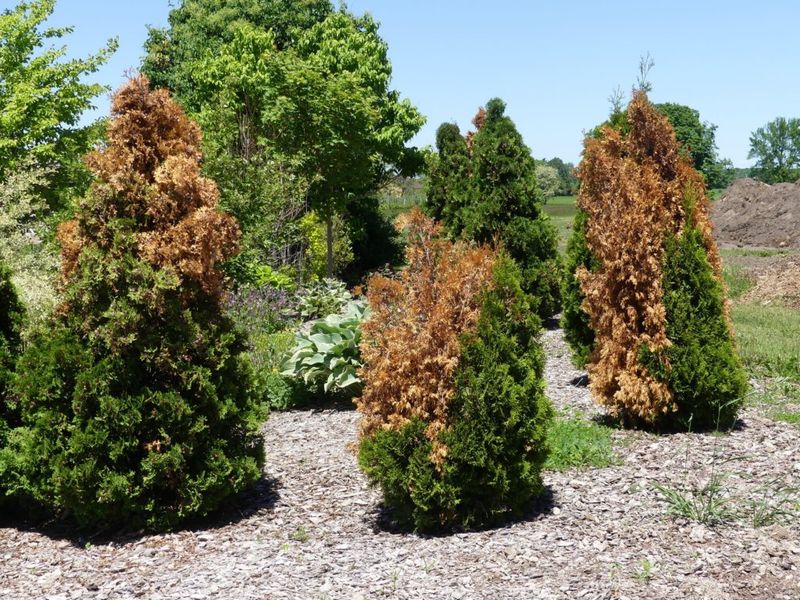
Late February is when the clues usually appear. You walk past a hedge and notice one side looks toasted while the other still looks fine.
That pattern is a classic sign of winter burn. Damage often shows up first on the south, southwest, or west side, where winter sun and prevailing winds hit hardest.
Needles may turn brown, reddish, bronze, or yellow, often starting at the tips.
Broadleaf evergreens give their own signals. Rhododendron leaves curl tightly on cold days as a normal defense, but scorched brown edges or margins that stay crispy point to drying injury.
Boxwoods may bleach to an orange or straw color.
Plants near roads and sidewalks can show similar browning from de-icing salt. Look at which side faces the pavement before blaming dryness alone.
Severe cases can mean whole branches turning brown, or a young plant declining overall. Usually, though, the trouble sits in the outer foliage while buds underneath stay healthy.
I snap a quick phone photo of any browned shrub in March. Comparing it to a June picture shows whether it bounced back, which tells you a lot about how hard the winter really hit.
4. Mild Winter Days Are Your Chance to Water Thirsty Hemlocks and Hollies
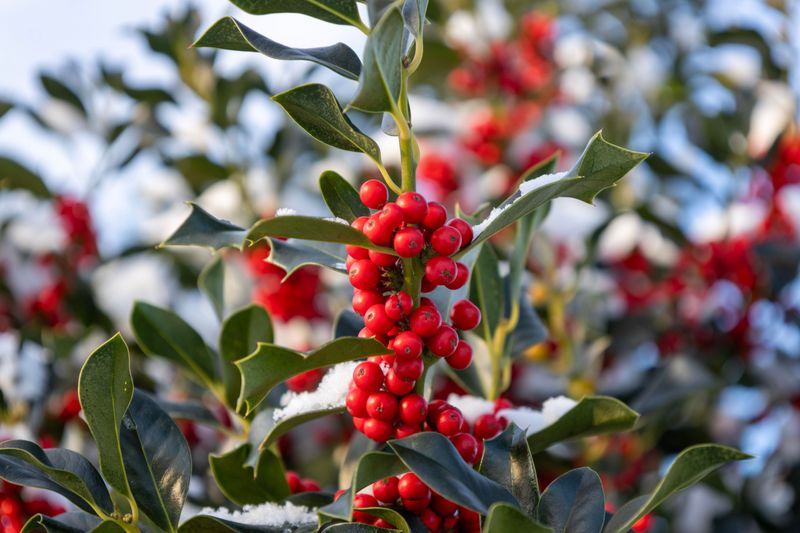
January thaws are a gift in disguise. When the soil softens and the snow melts off, your evergreens can actually drink again.
Many extension sources suggest watering during winter when the ground isn’t frozen and temperatures climb above about 40 degrees. Water around midday so the moisture soaks in before nighttime cold returns.
Go slowly and give the root zone a good soak.
This matters most during dry winters without much rain or snow. Southeastern Pennsylvania, around Philadelphia, tends to see more thaws than the colder northern tier near Potter or Tioga counties, so opportunities vary across the state.
You don’t need to do this often. Once or twice a month during a dry spell is plenty, and skip it entirely if the soil is soggy or frozen solid.
A quick tip from experience: drain your hose afterward and bring it inside. A frozen hose cracks easily, and an outdoor spigot left dripping can freeze and split.
Focus on the plants that need it most. Young evergreens, shrubs planted in the last year or two, and anything growing in sandy soil or beside a warm south-facing wall will thank you.
5. A Blanket of Shredded Bark Mulch Helps Pine and Yew Roots Hold Moisture
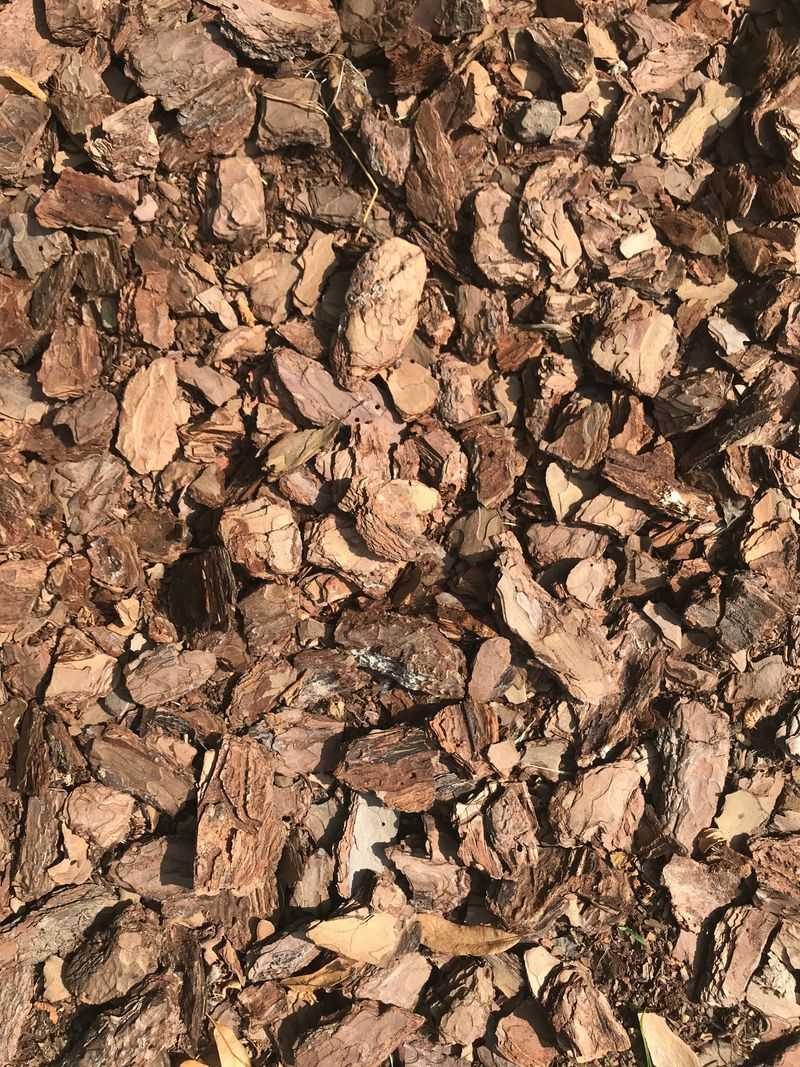
Mulch is the unsung helper of winter care. A simple ring of shredded bark does more than make a bed look tidy.
A layer about 2 to 4 inches deep helps the soil hold onto water from your fall soakings. It also slows how quickly and deeply the ground freezes, which can give roots a longer window to absorb moisture.
Shredded hardwood bark, wood chips, and pine needles all work well. Spread the mulch out to the drip line if you can, since a tiny circle won’t cover much of the root system.
Watch out for the dreaded mulch volcano. Piling mulch against the trunk traps moisture against the bark and invites rot, insects, and rodents.
Leave a few inches of bare space around the base.
I usually add fresh mulch after my last deep watering in November. That way it locks in the moisture rather than soaking up rain before the soil does.
One more perk is worth mentioning. Mulch keeps the soil temperature steadier, reducing the freeze and thaw cycles that can heave shallow roots of young shrubs right out of the ground.
6. Burlap Screens Can Shield Boxwoods From Drying Wind and Sun
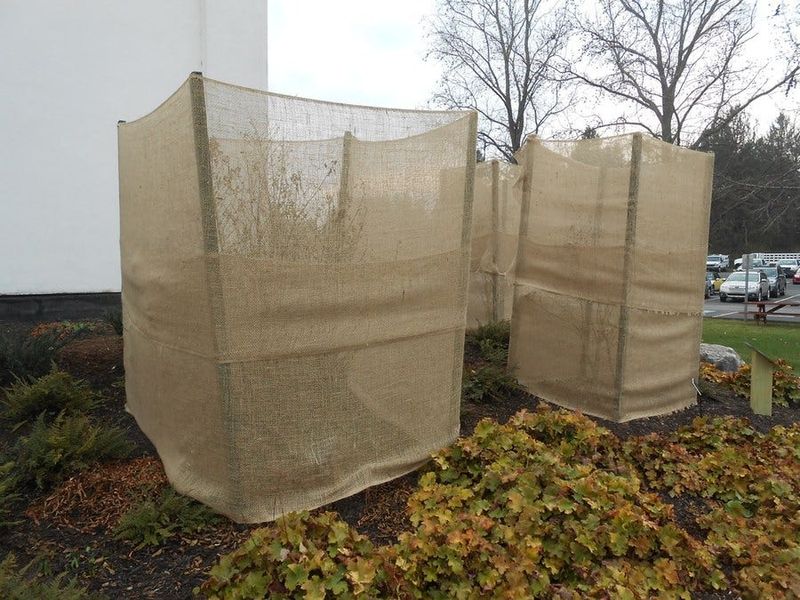
Wind is the sneaky thief in this story. Every gust pulls a little more moisture from leaves that can’t easily replace it.
A burlap screen offers a simple defense. Drive a few wooden stakes on the windward or sunny side of the plant, then staple burlap across them.
Leave some space between the fabric and the foliage so air can move and branches don’t rub.
Avoid wrapping shrubs tightly in plastic. Plastic traps heat on sunny days and can cause more harm than it prevents.
Anti-desiccant sprays are another option. These waxy coatings are applied on a dry day above freezing, usually in late fall.
Research results are mixed, so think of them as a backup rather than a replacement for watering.
Boxwoods, young arborvitae, and broadleaf evergreens in open spots are the best candidates for screening. A tall, established spruce in your backyard rarely needs it.
I’ll admit burlap isn’t the prettiest winter decor. Still, after watching an exposed boxwood scorch two winters in a row, I happily traded a few months of looks for a green shrub every spring.
7. Hold Off on Pruning Those Browned Rhododendron Branches Until New Buds Appear
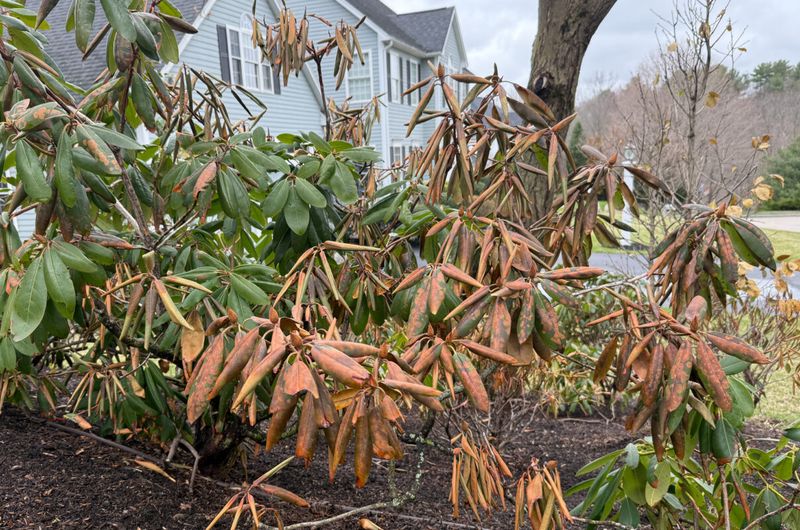
Patience pays off in spring. Those brown branches look awful, but many of them are still alive underneath.
Winter-burned foliage often hides healthy buds. Penn State and other extension experts recommend waiting until new growth begins, usually in May across most of Pennsylvania, before deciding what to cut.
Once fresh shoots appear, you can see clearly which stems pushed out green growth and which stayed bare. Scratch a stem lightly with your fingernail.
Green tissue underneath means it’s still alive, while brown and brittle wood can be pruned back to a healthy bud or branch.
Pines and spruces deserve a gentle reminder. Many conifers don’t sprout new growth from old bare wood, so shaping options are more limited than with yews or hollies.
Skip the heavy fertilizer while plants recover. A stressed shrub needs steady water during the growing season more than a big nutrient boost, and late-summer feeding can push tender growth that struggles the next winter.
I find it oddly rewarding to watch a scorched rhododendron fill back in by midsummer. The plant usually does most of the healing work if you give it time.
8. Smart Planting Spots Give Young Evergreen Trees a Head Start
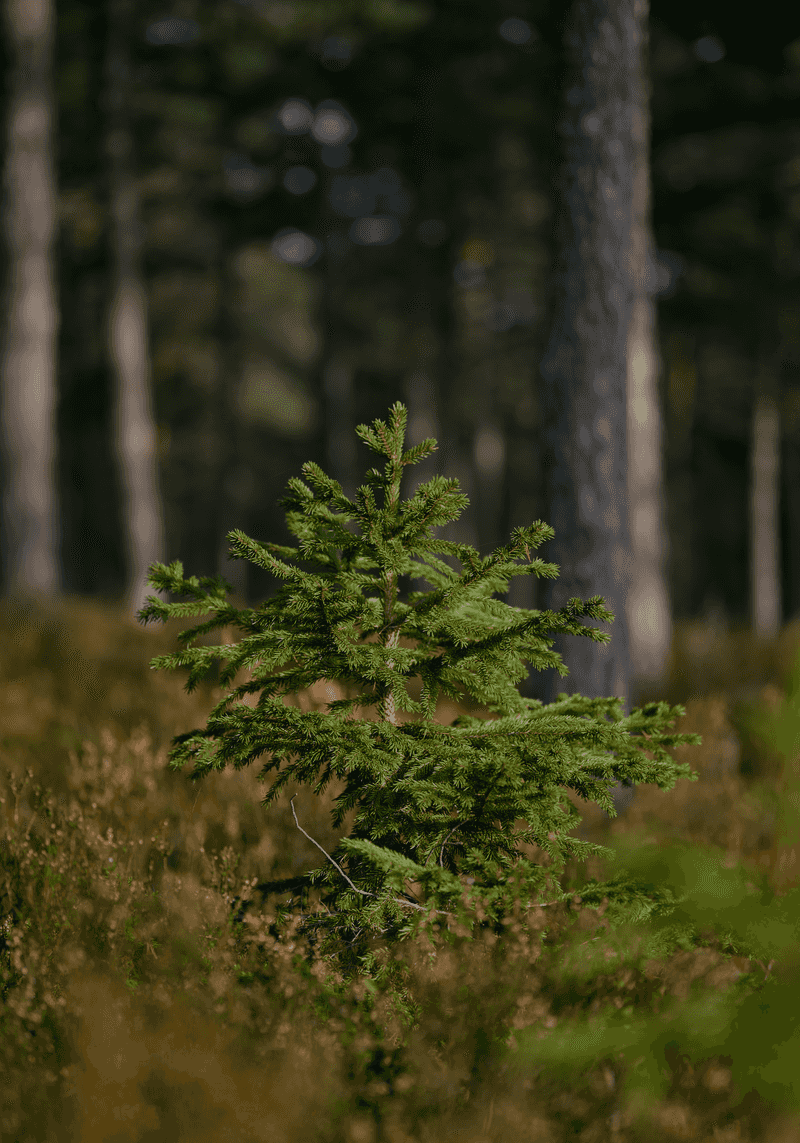
The easiest winter rescue is the one you never need. Where you plant an evergreen shapes how it handles every cold season ahead.
Open spots facing strong northwest winds, or beds next to bright south-facing walls, put extra stress on foliage. Sheltered locations with some protection from winter sun and wind give plants an easier time.
An east-facing spot often works nicely for broadleaf types like rhododendrons and mountain laurel.
Soil matters too. Roots need good drainage to stay healthy, yet they still need enough moisture to draw from.
Heavy clay that stays waterlogged can damage roots just as dryness does.
Choosing well-adapted plants helps a lot. Natives such as eastern white pine, eastern red cedar, American holly, and mountain laurel, which happens to be the state flower, are suited to Pennsylvania conditions.
Fall planting is fine, but finish early, ideally by mid-October, so roots can grow before the ground freezes. Then keep the watering going.
So here is my takeaway. Water deeply in autumn, mulch well, block the harshest wind, and stay patient in spring.
Your evergreens will greet March looking green instead of toasted.