What It Actually Means When A Rat Snake Shows Up Near Your Florida Garage
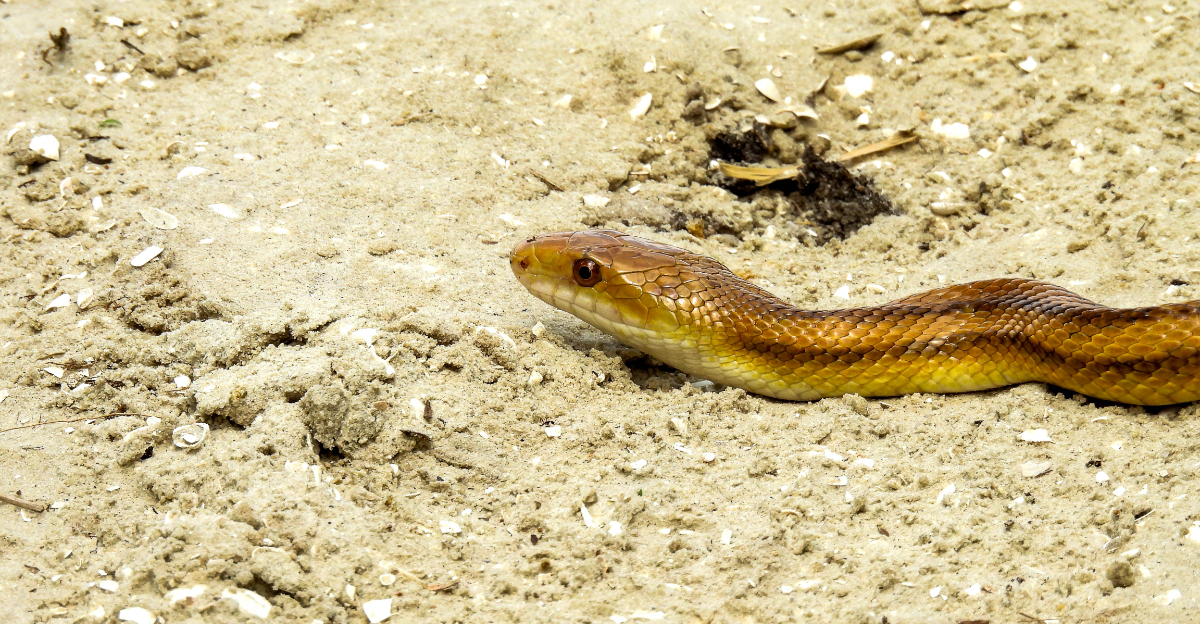
Something drew a rat snake to your Florida garage. It was not curiosity.
It was not coincidence. Rat snakes follow one thing with a precision that makes them better at finding rodent problems than any inspection ever conducted from the outside of a structure.
They found yours. That snake near the garage is not the situation.
It is the signal. A living indicator that something worth hunting has already established itself close enough to the house to attract a predator built specifically for tracking it down.
The snake gets relocated. The rodents stay.
The next snake arrives on schedule because nothing about the situation actually changed. Before anything gets moved, the garage deserves the same attention the snake was already giving it.
Whatever that snake found in there is the conversation worth having.
1. That Rat Snake Is Probably Following The Food
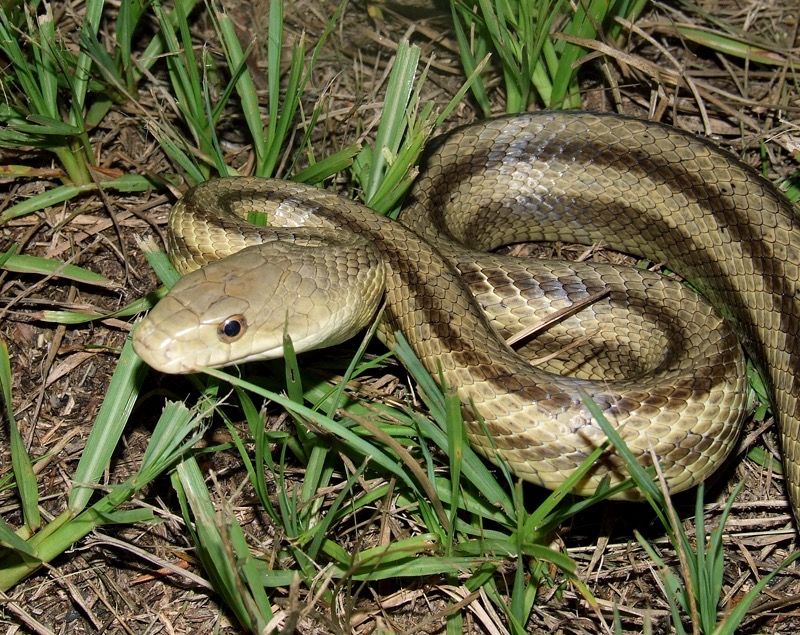
A snake doesn’t wander into your driveway by accident. Rat snakes are active hunters that track prey using their tongue to pick up scent trails, and they are very good at following those trails right to the source.
According to the University of Florida IFAS Extension, rat snakes feed primarily on mice, rats, and other small mammals. If one has shown up near your garage, there is a reasonable chance that rodents have been active in the same area.
The snake is essentially pointing you toward a food source it has already detected.
One snake sighting does not automatically mean you have a serious infestation. Rat snakes cover a lot of ground and may pass through without finding anything.
But a snake that lingers near a structure, or one you see more than once in the same spot, is worth paying attention to.
Rodents leave scent trails that persist even after they move on, so a snake may be investigating an area that had recent activity rather than current activity.
Treating the snake sighting as useful information rather than just a scare is the smarter move. Think of it as an early warning system.
Something nearby has caught a predator’s attention, and that detail alone can motivate a closer look at what may be going on around your property.
2. Your Garage May Be Offering A Rodent Buffet
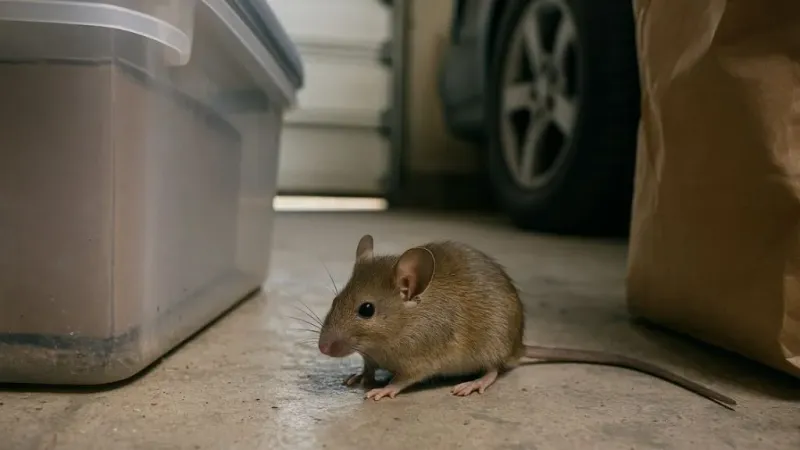
Garages quietly become some of the most rodent-friendly spots on a property. They tend to collect bags of dog food, wild bird seed, grass seed, potting soil, and other materials that mice and rats find extremely appealing.
Improperly stored food is one of the most reliable attractants for rodents near any structure. A bag of pet food left open on a shelf or a container of bird seed with a loose lid is essentially an open invitation.
Rodents have a sharp sense of smell and can locate accessible food sources from a surprising distance.
The University of Florida IFAS Extension notes that reducing food availability is one of the most effective ways to reduce rodent pressure. This is especially important around structures.
Switching to hard-sided, sealed containers for pet food, bird seed, and animal feed can make a measurable difference. Spilled seed or crumbs on the garage floor should be swept up regularly rather than left to accumulate.
Your Florida Garden Changes Every Week. Your Plan Should Too.
Gardening in Florida changes quickly throughout the season. Every Friday you’ll receive a simple weekly plan showing exactly what to plant, prune, fertilize, harvest, and protect so you never miss the right timing.
A garage that offers consistent, easy meals will keep rodents coming back. And a location with consistent rodent activity will eventually attract predators that are tuned into those same scent signals.
Cleaning up food sources is not just good housekeeping. It directly addresses one of the main reasons that area became interesting to a hunting snake in the first place.
3. A Rat Snake Sighting Can Reveal A Bigger Pest Problem
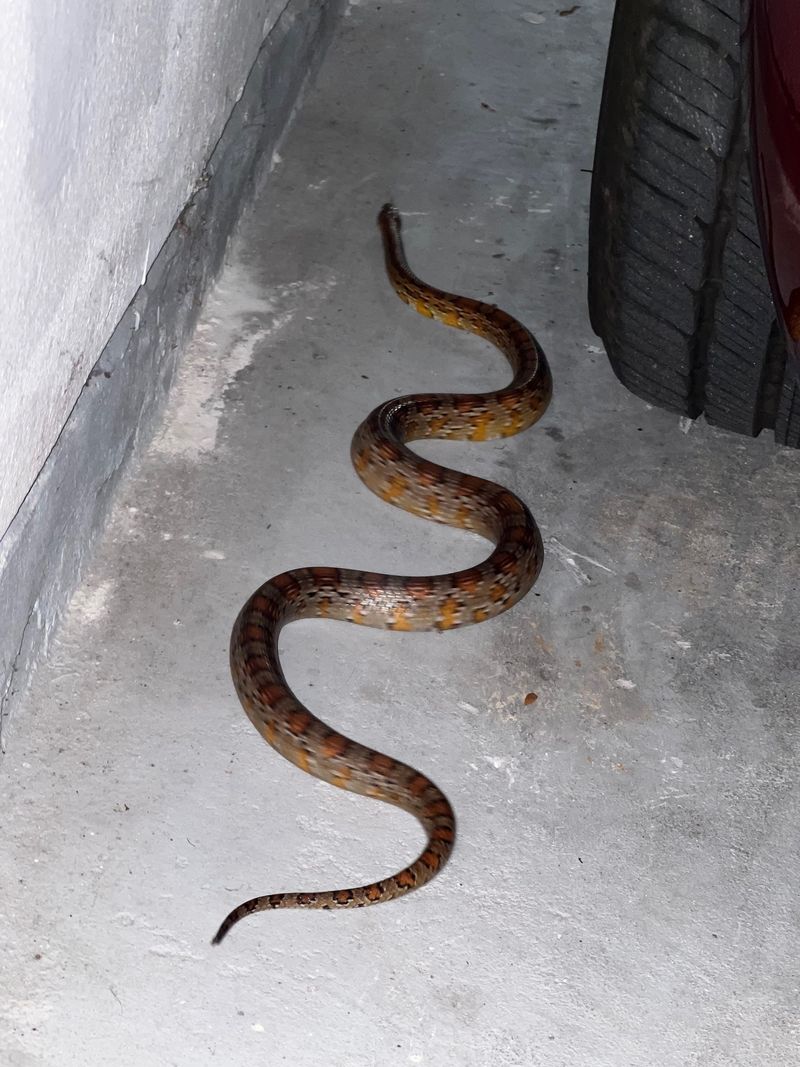
Seeing a snake near your garage is one data point. What you find when you actually look around the garage is far more useful.
A single snake passing through tells you relatively little on its own, but physical evidence of rodents tells you a great deal.
Look for droppings along walls and behind stored items. Gnaw marks on bags, boxes, wood trim, or wiring are another strong indicator.
Shredded paper, fabric, or insulation tucked into corners can signal nesting activity. Scratching or rustling sounds at night, especially near walls or the ceiling, suggest rodents are actively using the space.
These signs carry more weight than a snake sighting alone because they confirm that rodents have been present and active. A snake may detect a scent trail and investigate without finding anything.
But droppings, gnaw marks, and nesting material mean rodents have actually been living and feeding in the area.
Florida homeowners should also check areas beyond the garage itself. Attic spaces above a garage and crawl spaces beneath nearby structures can harbor rodents.
Dense vegetation nearby can also support activity that eventually spreads into or around the building. Connecting those signs to the snake sighting gives you a clearer picture of what you are actually dealing with, and where to focus your attention first.
4. Small Garage Gaps Can Roll Out The Welcome Mat
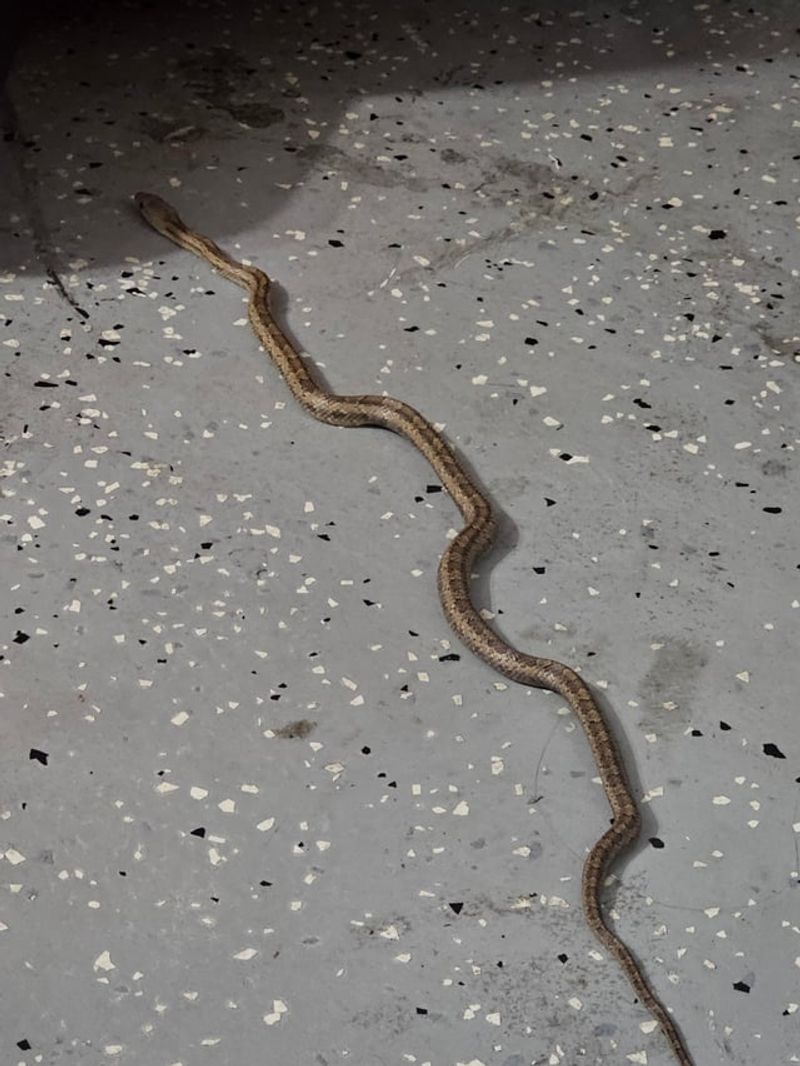
Mice can squeeze through a gap as small as a quarter of an inch. Rats need only about half an inch.
Snakes, depending on their size, can navigate surprisingly narrow openings as well. A garage that has not been carefully sealed is often more accessible than homeowners realize.
Common entry points include gaps beneath garage doors and spaces around utility pipes or conduit. Damaged vents, torn screens, and cracks in the foundation or lower walls can also provide access.
These openings serve both rodents and the predators that follow them.
The Florida Fish and Wildlife Conservation Commission recommends sealing gaps and cracks around structures. This is part of a broader approach to reducing unwanted wildlife encounters.
Replacing worn door sweeps, installing properly fitted weather stripping, and covering vents with fine-gauge hardware cloth are practical starting points.
Utility penetrations can be sealed with appropriate caulk or steel wool packed into gaps before a permanent patch is applied.
Closing off rodent entry points has a layered benefit. Fewer rodents getting inside means less food available in that space, which in turn makes the area less attractive to predators scouting from outside.
A rat snake cannot follow prey that has no way in. Exclusion work does not need to be complicated, but it does need to be thorough to make a real difference.
5. Clutter Gives Snakes And Their Prey More Places To Hide
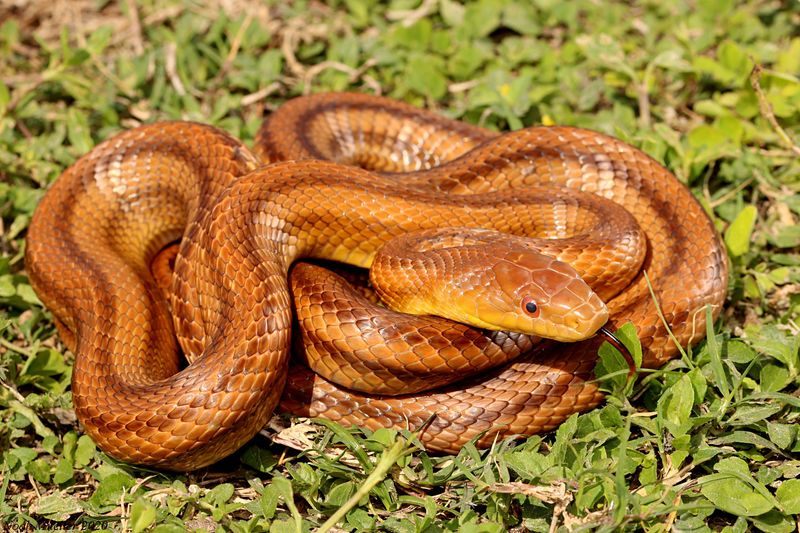
Stacked boxes, old furniture, coiled hoses, and piles of lumber create exactly the kind of broken, sheltered terrain that both rodents and snakes prefer. Mice and rats nest in undisturbed spaces, and clutter provides plenty of them.
A snake hunting in such an environment has cover, too.
Cardboard boxes are a particular problem. Rodents chew them for nesting material and use them as shelter.
Stacks of boxes left on the floor give mice a layered environment that is hard to inspect and easy for them to move through undetected. Switching to hard-sided plastic bins with lids removes that advantage almost entirely.
Dense vegetation along the outside of a garage wall functions similarly. Overgrown shrubs, ground cover pressed against the foundation, or piles of mulch near the building provide cover for rodents moving between the yard and the structure.
Keeping a clear zone of a foot or two between plants and the garage wall can reduce that sheltered pathway.
Reducing clutter is not about achieving a perfect showroom garage. A few stored items are completely normal.
The goal is to eliminate the long-undisturbed piles that give rodents a place to nest without being noticed. Periodic reorganization, even just pulling stored items away from the walls to check behind them, makes it easier to spot signs of activity before they escalate.
6. Pet Food And Bird Seed Can Keep The Food Chain Going
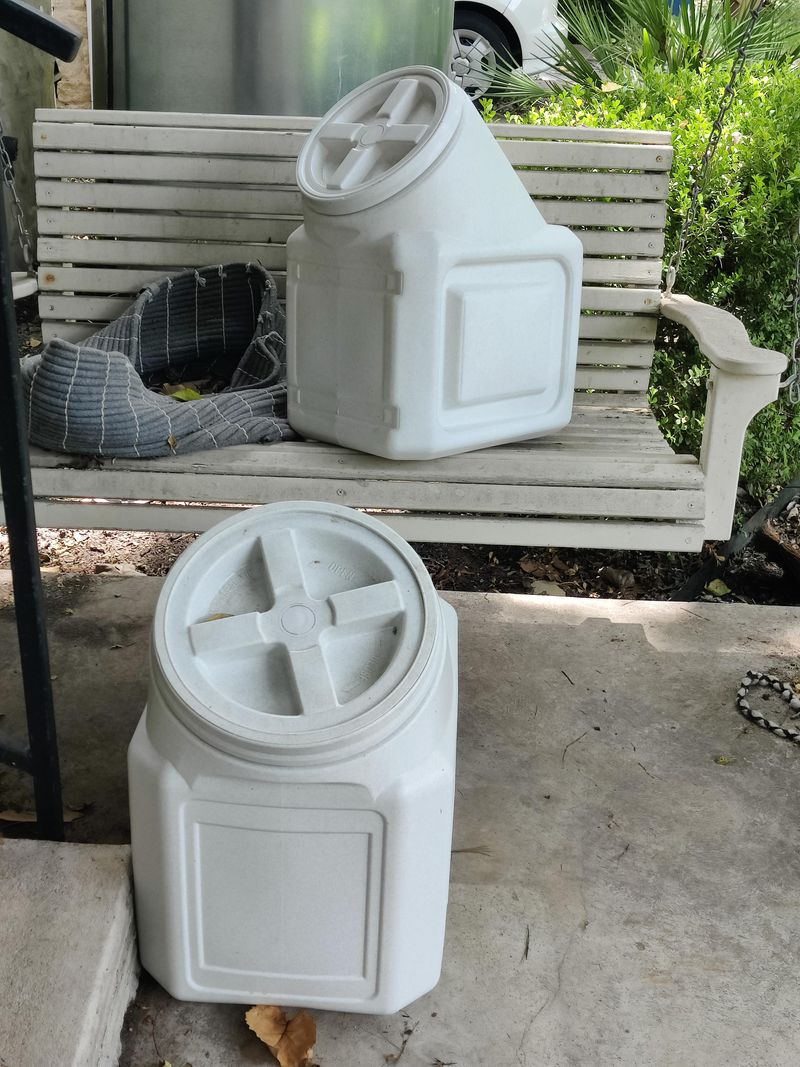
Bird feeders are genuinely wonderful for wildlife watching, but they have an unintended side effect. Seed that spills to the ground, or that accumulates in feeders that are not regularly cleaned, attracts mice and rats.
Those rodents, in turn, attract predators that are perfectly happy to follow the food chain right into your yard.
Rat snakes do not eat bird seed or pet food. But they absolutely eat the rodents that come looking for it.
A bird feeder placed near a garage can create a reliable food source for rodents. Storing large quantities of seed without a sealed container can do the same and may draw snakes toward the area.
Practical adjustments can break that chain. Use feeders with baffles or trays that catch fallen seed.
Store bulk seed in metal or hard plastic containers with tight-fitting lids. Avoid leaving pet food out overnight, especially in a garage or on a porch.
These steps reduce the rodent attraction without requiring you to give up feeding birds entirely.
The University of Florida IFAS Extension advises that removing or securing food sources is one of the most direct ways to reduce rodent pressure around a home. Less rodent activity in a specific area means fewer reasons for a hunting snake to patrol that space.
Adjusting how and where you store food is one of the most practical changes available to any homeowner.
7. Giving The Snake An Exit Is Better Than Cornering It
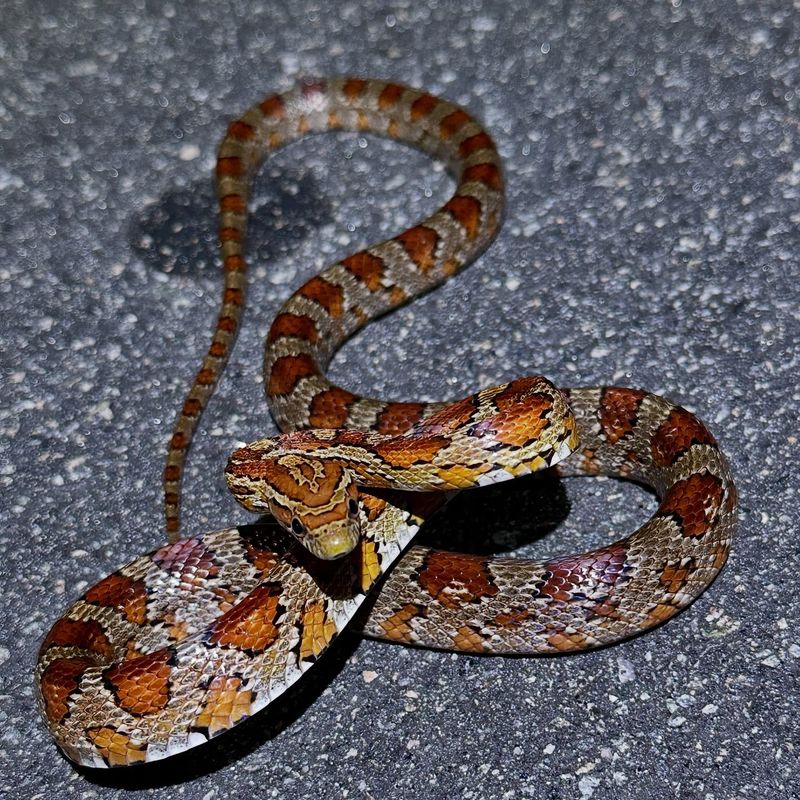
Cornering any snake, even a nonvenomous one, raises the chances of a defensive bite. Rat snakes are not aggressive by nature, but they will defend themselves if they feel trapped or threatened.
The safest response when you find one in or near your garage is to give it space and a way out.
Open the garage door fully if it is safe to do so. Step back and give the snake a clear, unobstructed path toward the outside.
Most rat snakes will move on their own once they sense an open route. Avoid making fast movements toward the animal, and keep children and pets out of the area until it has left.
The Florida Fish and Wildlife Conservation Commission advises against attempting to handle, capture, or relocate snakes unless you have specific training to do so safely. Even experienced handlers get bitten.
An untrained person trying to pick up or move a snake significantly increases the risk of a bite and can also injure the animal.
Rat snakes are not venomous, but a bite can still break the skin and cause a wound that needs cleaning. If a snake is inside a structure and will not leave on its own, contacting a licensed wildlife removal professional is the appropriate next step.
Letting the animal leave naturally is always the preferred outcome when that option is available.
8. Rodent Proofing Your Garage Can Make Repeat Visits Less Likely
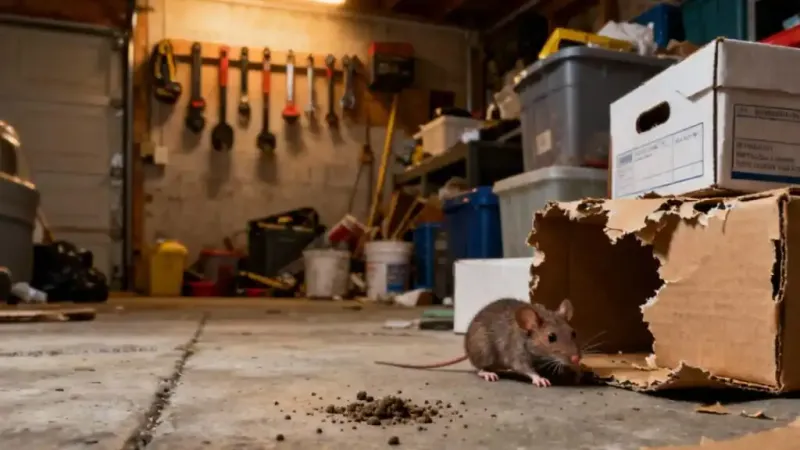
Pulling all the prevention strategies together gives you a much stronger result than any single fix alone. Sealing entry points keeps rodents from getting inside.
Removing food sources reduces the reason they come close. Reducing clutter eliminates the sheltered spots where they nest and hide.
Each step reinforces the others.
Start with a walk around the outside of your garage. Look at the bottom of the door, the corners where the wall meets the foundation, and anywhere a pipe or wire enters the building.
Fill gaps with appropriate materials and replace weather stripping that has cracked or compressed over time. Then move inside and address food storage and clutter with the same methodical approach.
Keeping up with these habits over time matters more than a single deep-clean session. Rodent populations can rebuild quickly if attractants return.
Check food containers periodically and sweep up spills as they occur. A quick inspection behind stored items every few months also helps keep the environment less hospitable.
No approach can guarantee that a rat snake will never pass through your property again. These are wide-ranging animals that move through entire neighborhoods.
But a garage that offers no food, no shelter, and no easy entry is a much less compelling destination than one that provides all three. A rat snake that finds nothing to hunt near your garage is a rat snake that keeps moving.
That is a reasonable and realistic outcome for any homeowner willing to put in a little consistent effort.