What It Means When A Harris’s Hawk Perches On Your Arizona Roof
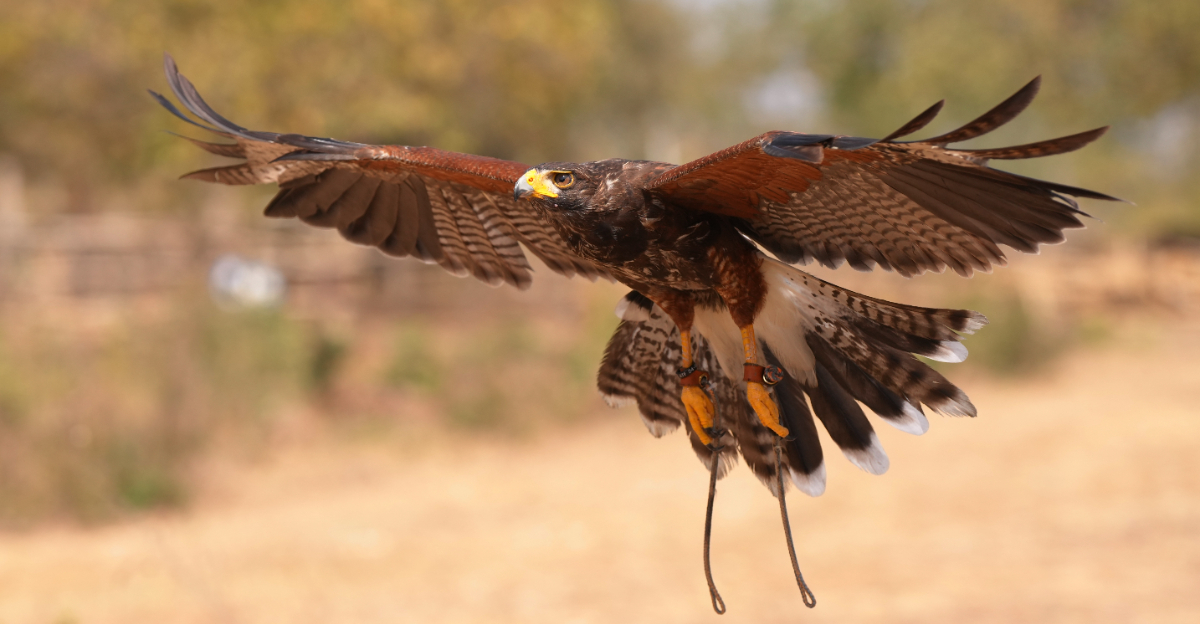
Few backyard visitors command attention quite like a Harris’s hawk sitting above your home. Its arrival can turn an ordinary glance outside into something memorable.
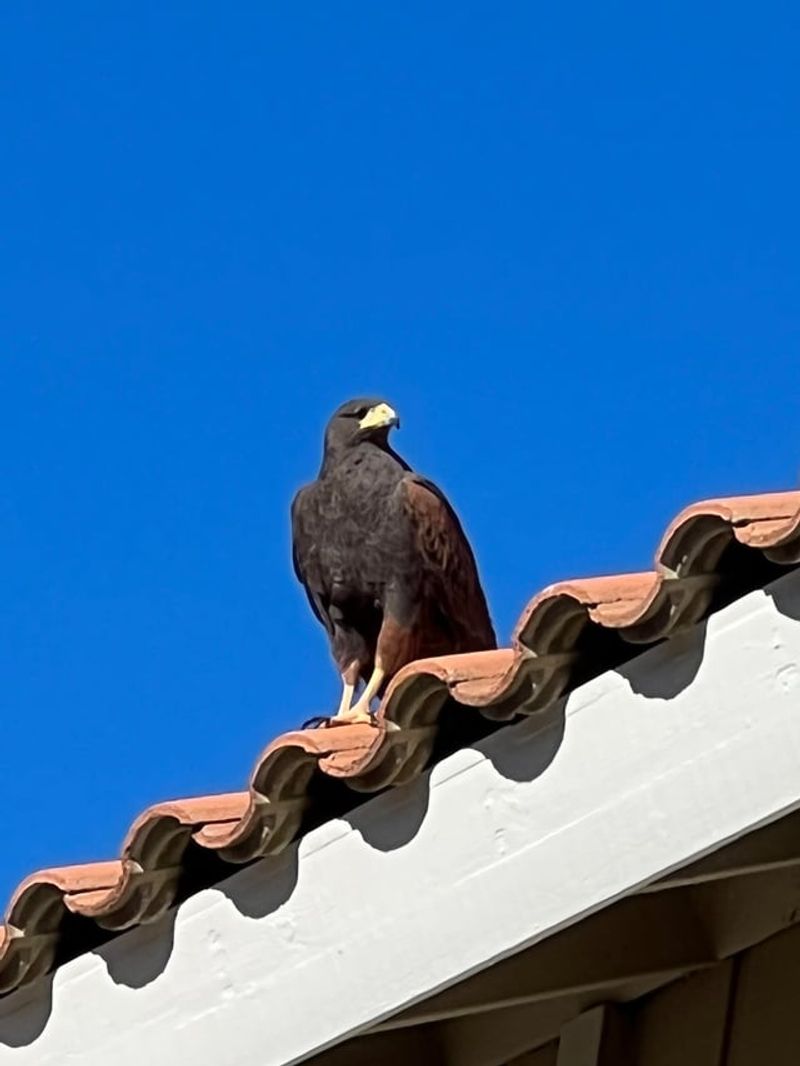
Perching on a roof gives this desert hunter a useful view of everything happening below. That choice is rarely about the building being especially appealing.
Around Arizona homes, fences, poles, and rooftops can become convenient observation points. What catches the hawk’s attention from there is the more interesting part.
Resist the temptation to chase it away simply because such a large bird feels intimidating. Watching from a distance can reveal clues about its visit.
Its presence may say more about the surrounding area than your roof itself.
Understanding why Harris’s hawks choose elevated perches makes these dramatic visits easier to appreciate when one suddenly settles overhead.
1. Your Roof Can Give The Hawk A Good Place To Hunt
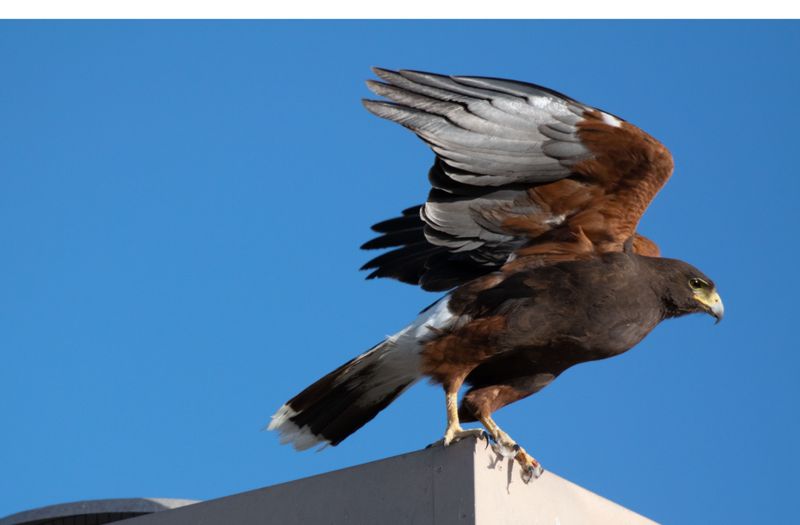
A rooftop is basically a hunting platform for a Harris’s Hawk. From that height, the bird gets a wide, clear view of the ground with almost nothing blocking its sightlines.
Yards, driveways, and open desert nearby all become visible at once.
Harris’s Hawks eat small animals like lizards, mice, rabbits, and quail. Your roof puts them in a great position to spot movement below before swooping in fast.
Flat or low-pitched roofs work especially well because the bird can walk around and adjust its angle.
Suburban neighborhoods near open desert land often attract these hawks more than dense urban areas. If your yard has low ground cover, rock landscaping, or open dirt patches, prey is easier to spot from above.
Tall block walls can actually help too, since prey tends to move along edges.
Watching a Harris’s Hawk hunt from a roof is a real experience. You might see it drop suddenly, then return to the same spot.
Repeated visits usually mean the area has been productive for the bird before. Keeping your yard tidy and free of clutter does not chase the hawk off, but it does make the hunt more efficient for it.
2. High Spots Help It Watch The Area Below
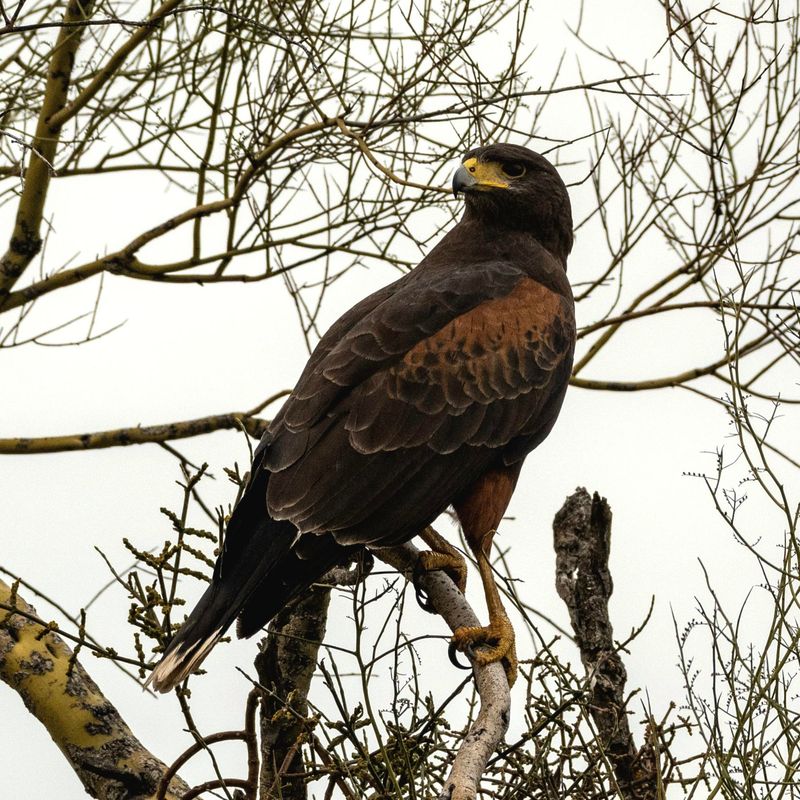
Height is everything for a bird of prey. A Harris’s Hawk sitting on a roof peak has a commanding view of the entire block.
What looks like a quiet bird from below is actually a focused, scanning predator.
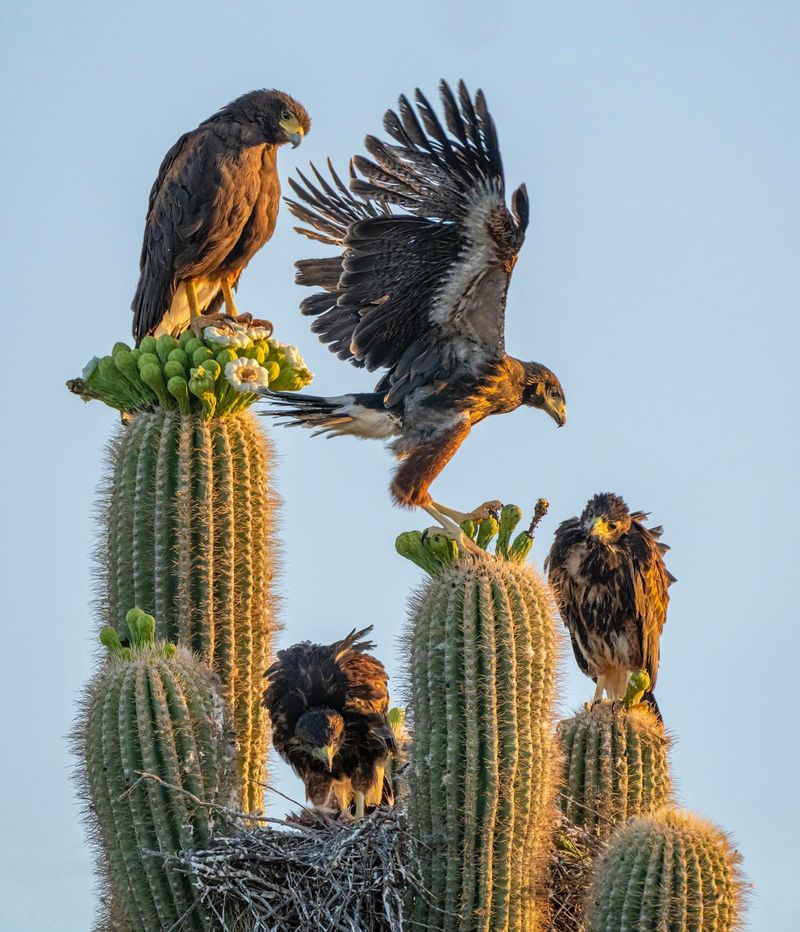
In the wild, these hawks use saguaro cacti, utility poles, and tall shrubs as perches. Rooftops fit right into that pattern.
A two-story home gives an even better vantage point than most natural perches in a flat desert neighborhood.
Elevation helps the hawk judge distance and timing before it moves. Prey spotted from a high perch gives the bird time to calculate its approach.
That split-second advantage makes rooftop perching a real tactical choice, not just a random stop.
Neighbors may notice the same hawk using several rooftops in a row. Harris’s Hawks sometimes rotate through a set of perches as they work a hunting area.
Spotting one on your roof does not mean it lives there. It may simply be working through its regular patrol zone.
Your Arizona Garden Changes Every Week. Your Plan Should Too.
Gardening in Arizona changes quickly throughout the season. Every Friday you’ll receive a simple weekly plan showing exactly what to plant, prune, fertilize, harvest, and protect so you never miss the right timing.
Watching the pattern over a few days can tell you a lot about how the bird moves through your block.
3. Nearby Prey Can Bring The Hawk Closer To Homes
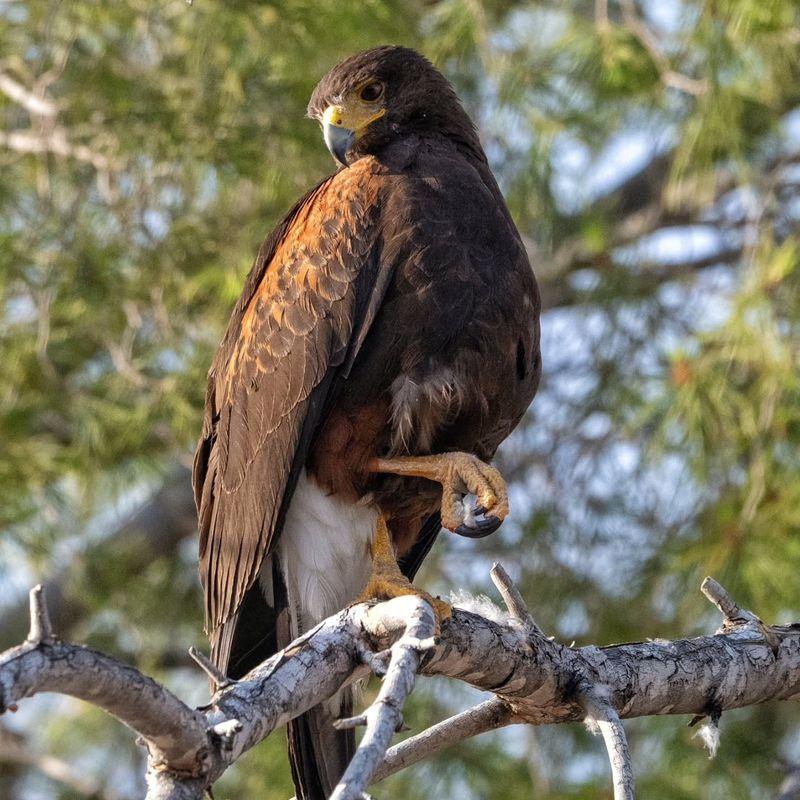
Prey availability is one of the biggest reasons a Harris’s Hawk gets close to a home. If your yard or the surrounding area has mice, pack rats, lizards, or rabbits, the hawk has a reason to show up.
Food draws these birds in more reliably than anything else.
Pack rats are a big one in Arizona. They nest under cacti, in wood piles, and near block walls.
A Harris’s Hawk can spot their movement from a rooftop and move in quickly. Homeowners who have rodent activity near their property may notice hawk visits that line up with that.
Bird feeders can also be a factor. Feeders attract small birds, which in turn attract hawks that hunt them.
Sparrows and doves that gather under feeders can become easy targets. That does not mean you need to remove your feeder, but it does explain why the hawk keeps coming back.
Water features and drip systems can draw quail and doves into yards. Harris’s Hawks follow that food chain right to your property.
If prey is consistent and easy to find near your home, expect the hawk to return on a somewhat regular basis. Reducing obvious food sources can reduce hawk visits over time, though results vary depending on the surrounding habitat.
4. Harris’s Hawks Often Spend Time In Groups
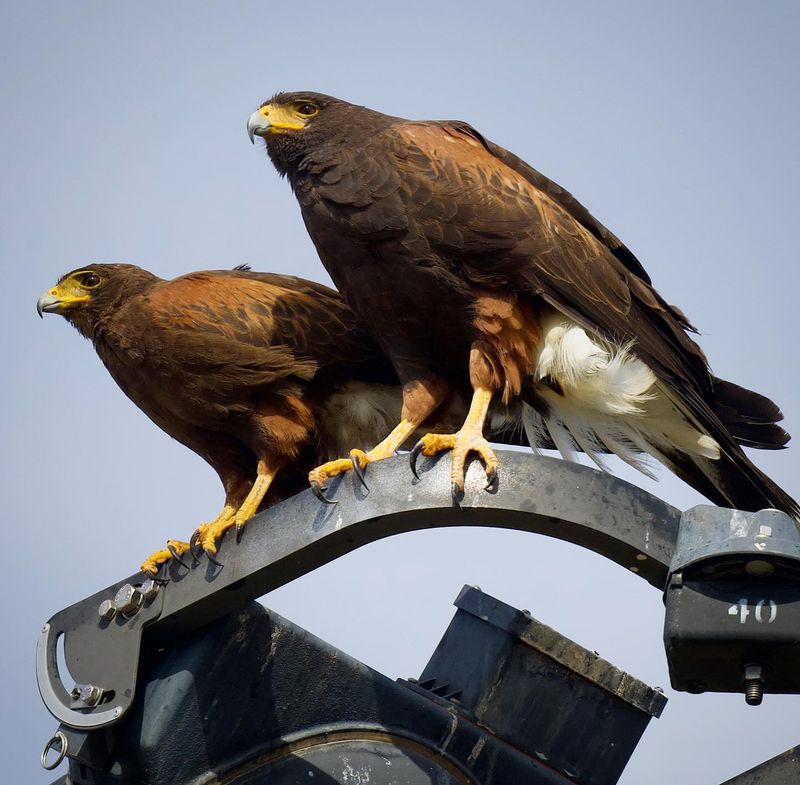
Most hawks are loners. Harris’s Hawks are a clear exception to that pattern.
You might look up and see two or three of them sitting near each other on your roof or along a nearby wall. That group behavior is not random.
Harris’s Hawks are one of the few raptor species known to hunt cooperatively. A group will work together to flush prey out of cover and into the open.
One bird flushes a rabbit, another cuts off its escape, and a third moves in. Rooftops give the group a shared elevated position before the hunt begins.
Seeing multiple hawks near your home at once is not a cause for worry. It just means a family group or hunting team is passing through or working your block.
Harris’s Hawks often include younger birds from previous seasons that stay with the group for a year or more.
Groups may split up across several nearby rooftops and then regroup. If you notice hawks on your roof and on a neighbor’s roof at the same time, that is likely a coordinated hunting party.
It is a fascinating behavior that sets this species apart from most other raptors. Watching them communicate through movement and positioning is genuinely worth a few minutes of your time.
5. Homes Can Offer Useful Perches In Desert Areas
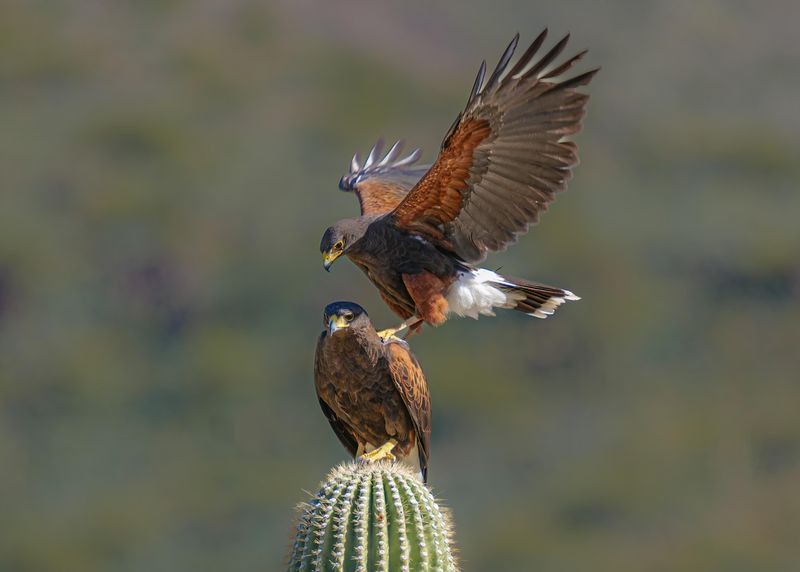
Flat desert land does not offer many natural high points. Saguaros are tall, but they are not always in the right spot.
Utility poles work, but rooftops are often the tallest structure in a residential block. A Harris’s Hawk will use whatever is available and useful.
Neighborhoods that have expanded into desert habitat often become regular hunting grounds for these birds. As open land gets developed, the hawks adapt.
Rooftops, fence posts, and block walls become substitutes for the natural perches they would use in undeveloped areas.
Phoenix, Tucson, and other desert cities have seen Harris’s Hawks integrate into suburban areas over the years. The birds are flexible and opportunistic.
A well-placed rooftop in a neighborhood near open wash land or desert preserve is prime real estate from a hawk’s perspective.
Homes near dry washes, undeveloped lots, or desert parks tend to see more hawk activity than homes in dense urban cores. The hawk needs open ground nearby to hunt effectively.
Your roof might just be the most convenient high point between two hunting zones. Structures that stay warm from sun exposure may also attract hawks looking for a comfortable resting spot between hunts.
It is a practical choice for the bird, not a mysterious one.
6. Regular Visits Do Not Always Mean There Is A Nest
Seeing a hawk on your roof more than once can make you wonder if it is trying to nest there. Repeat visits are common, but they do not automatically mean a nest is being built.
Hawks return to productive perches the same way you might return to a good parking spot.
Harris’s Hawks nest in trees, tall cacti, or utility structures with good cover. A bare rooftop is not a typical nesting site.
If you notice the bird carrying sticks or grass, that is worth paying attention to. Otherwise, repeat visits are more likely about routine hunting patterns.
Nesting season in the desert Southwest runs roughly from late winter into summer, and sometimes a second clutch follows. Outside of that window, a hawk on your roof is almost certainly just resting or hunting.
Even during nesting season, perching on a roof does not confirm a nest is nearby.
Check nearby trees, tall saguaros, and any utility structures on your street if you are concerned about a nest. Harris’s Hawks prefer spots with some shelter and a strong base for their nests.
A smooth rooftop edge does not fit that profile well. If you are genuinely unsure, local wildlife agencies or birding groups in your area can help you assess the situation without disturbing the bird.
7. Give The Hawk Space Until It Moves On
Watching a Harris’s Hawk from a distance is perfectly fine. Getting too close or trying to scare it off is not a good idea, and in most cases it is also unnecessary.
These birds are protected under federal law, and harassing them can carry real consequences.
Most rooftop visits are short. The hawk scouts the area, maybe hunts, and then moves on.
Trying to rush that process by making noise or waving objects at it tends to stress the bird without actually solving anything. Patience is the better approach here.
Pets are worth keeping in mind. Small dogs and cats left outside unsupervised could attract a hawk’s attention.
A Harris’s Hawk is capable of targeting small animals. Bringing pets inside or supervising them during a hawk visit is a reasonable precaution, not an overreaction.
Children should be encouraged to watch quietly from a window or a comfortable distance. It is a rare and interesting wildlife encounter worth appreciating.
If the hawk is still on the roof after several days and you have genuine concerns, contact a local wildlife organization for guidance. Professionals can assess the situation and advise you without putting the bird or your family at risk.
Most of the time, the hawk moves on naturally once it has worked the area.