These 7 Pruning Mistakes Are Keeping Your Texas Hydrangeas From Blooming
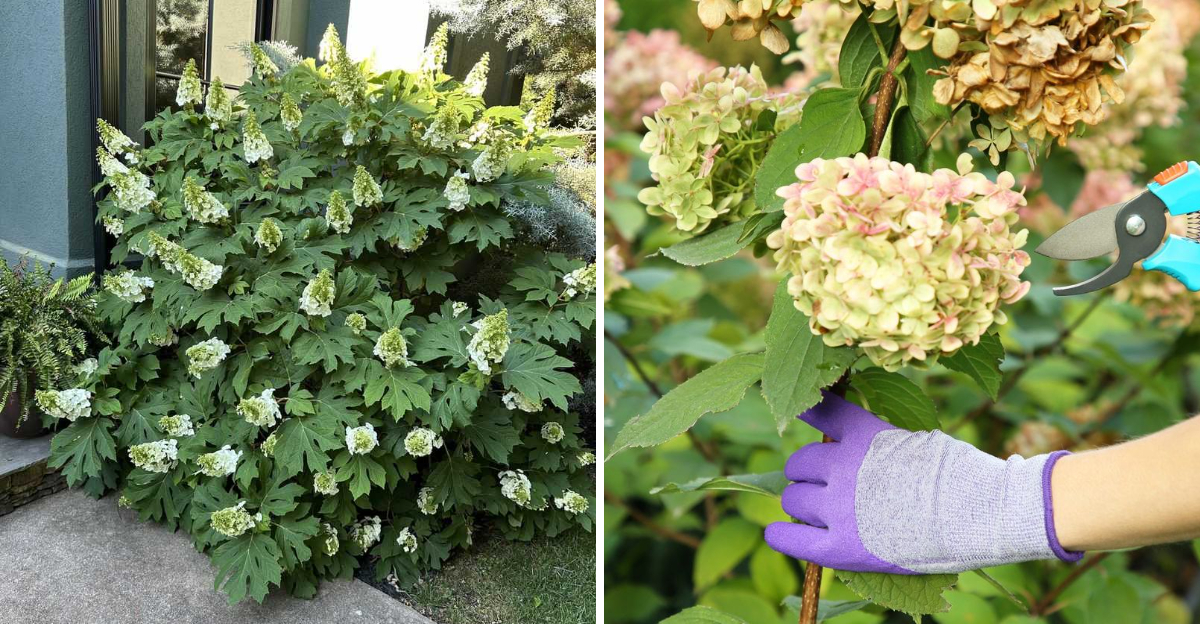
A hydrangea can look almost perfect and still refuse to put on the flower show you expected.
The leaves may be full. New stems may look strong. The shrub can even grow larger every year while producing only a handful of blooms, or none at all.
That usually sends gardeners searching for fertilizer, sunlight problems, or winter damage.
But the real issue can happen much faster.
A few cuts made at the wrong moment can quietly remove months of work before spring growth even begins.
The tricky part is that the same pruning routine can help one plant and completely sabotage another sitting only a few feet away.
So how do you know when the shears are helping instead of erasing next season?
The answer starts with understanding what your shrub is doing before you touch a single stem.
Once that becomes clear, those disappointing green bushes suddenly make a lot more sense, and the path back to flowers becomes surprisingly simple next season. For gardeners tired of waiting endlessly.
1. Pruning Every Hydrangea On The Same Schedule
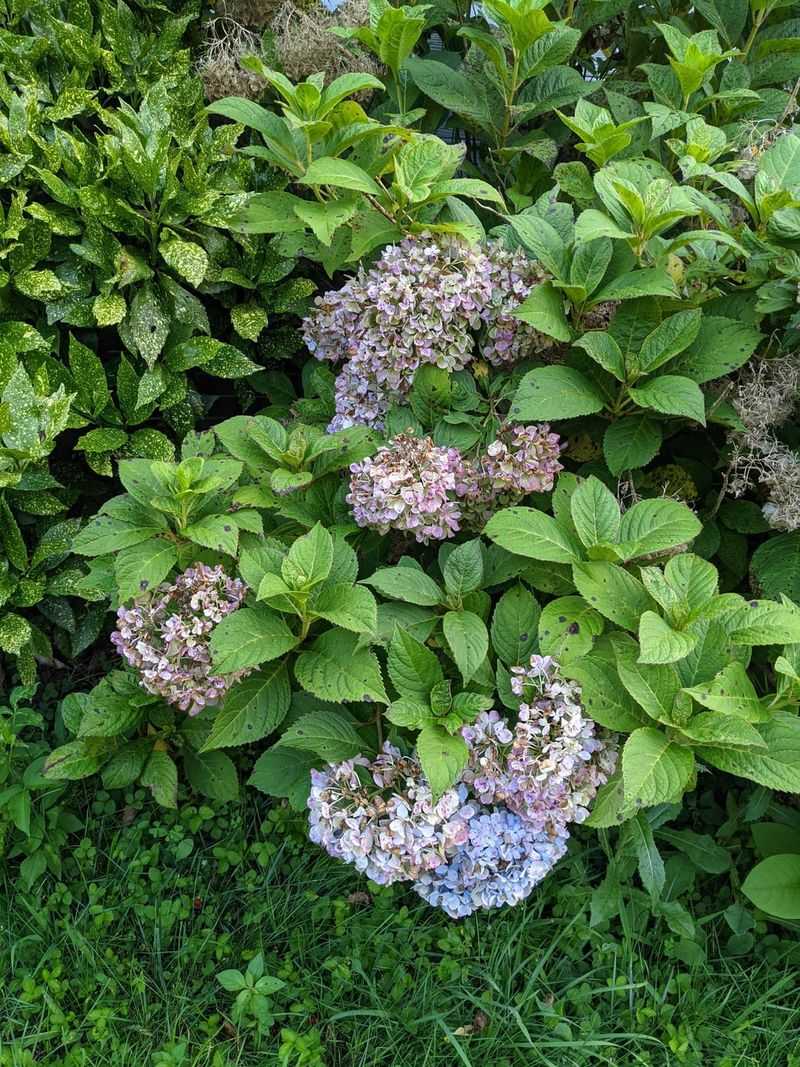
Late winter cleanup can turn expensive when every shrub gets the same haircut.
Hydrangeas do not all form flower buds on the same kind of growth. Bigleaf and oakleaf types generally bloom on old wood, meaning stems produced the previous season.
Panicle and smooth hydrangeas bloom on new wood that develops during the current growing season.
Treat those groups alike and the timing quickly goes wrong.
A late-winter cut can work beautifully for a panicle hydrangea because its flowers will form on fresh spring growth. Make that same cut on an old-wood bigleaf, and you may remove buds that have been sitting on the stems since late summer or fall.
Identification has to come before pruning.
Look at leaves, flower shape, growth habit, and plant labels when available. Bigleaf hydrangeas usually carry broad leaves with mophead or lacecap flowers.
Oakleaf types have deeply lobed foliage. Panicle hydrangeas produce cone-shaped flower clusters, while smooth hydrangeas often carry rounded heads on flexible stems.
Once you know the type, match the pruning window to the wood that carries its buds.
Do not make one date responsible for every shrub in the yard.
The mistake is not simply pruning too early or too late.
It is assuming every hydrangea follows the same blooming schedule. That matters on older Texas properties, where plant labels disappeared years ago and several types may share one border.
Take photos during bloom, note flower form and leaf shape, and keep that identification somewhere useful before the next pruning season begins.
2. Cutting Bigleaf Hydrangeas After Buds Form
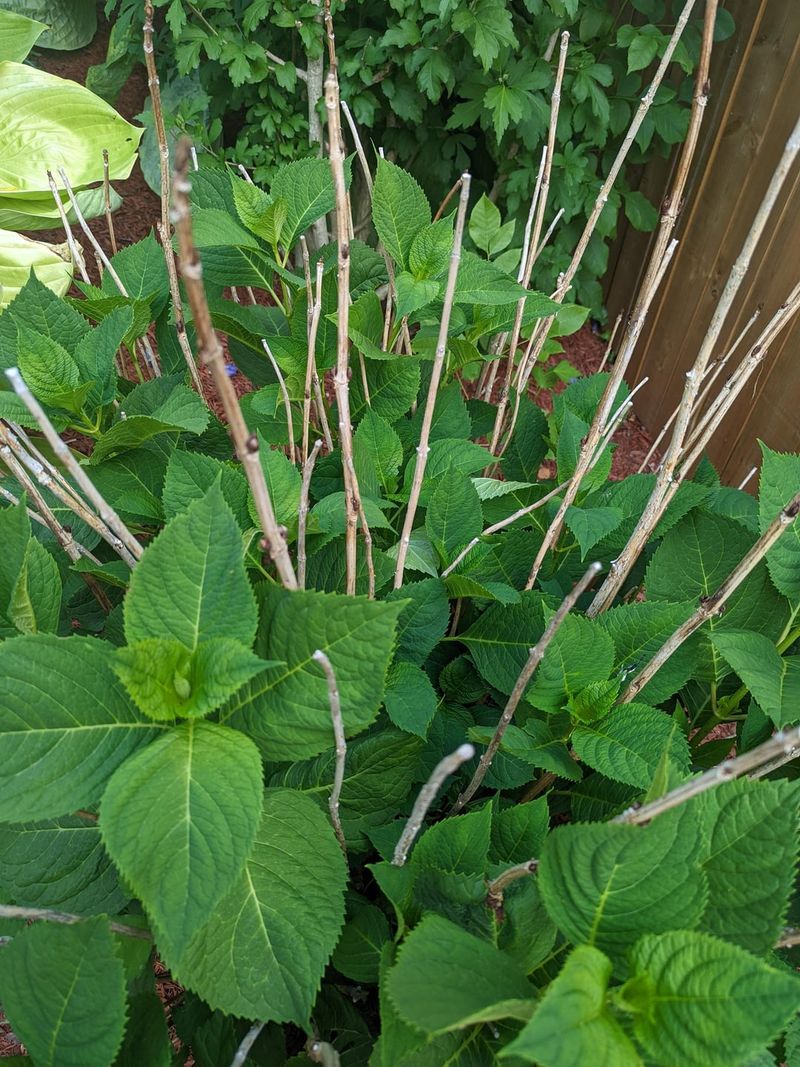
A bare-looking stem in early spring can be carrying an entire summer’s flower display.
That is what makes late pruning so risky on bigleaf hydrangeas in Texas gardens. Mophead and lacecap types commonly form flower buds on old wood during the previous growing season.
By fall, much of next year’s bloom potential is already sitting along those stems.
Cut them back during fall cleanup or early spring shaping, and those buds disappear with the clippings.
Your Texas Garden Changes Every Week. Your Plan Should Too.
Gardening in Texas changes quickly throughout the season. Every Friday you’ll receive a simple weekly plan showing exactly what to plant, prune, fertilize, harvest, and protect so you never miss the right timing.
The safest routine is usually to prune shortly after flowering finishes, before the next round of flower buds develops.
That window gives you time to remove spent blooms, damaged stems, or awkward growth without sacrificing the following season.
Keep the cuts selective.
Take out wood that is broken, weak, crossing, or clearly unwanted rather than reducing every stem to one uniform height. Bigleaf hydrangeas naturally look fuller and more relaxed when their branching structure is preserved.
Spring cleanup deserves extra caution.
Old stems can look lifeless before growth fully resumes, so wait until you can clearly distinguish truly damaged wood from healthy stems carrying buds. Cutting first and checking later is how flower buds vanish.
Reblooming cultivars complicate the picture because some can flower on both old and new wood, but even those generally benefit from conservative pruning.
When the ideal window has passed, skipping the haircut is often the better choice.
An oversized shrub for one season is easier to forgive than a perfectly trimmed plant with no flowers. A cautious pause protects more blooms than guesswork.
3. Trimming Oakleaf Hydrangeas Too Late
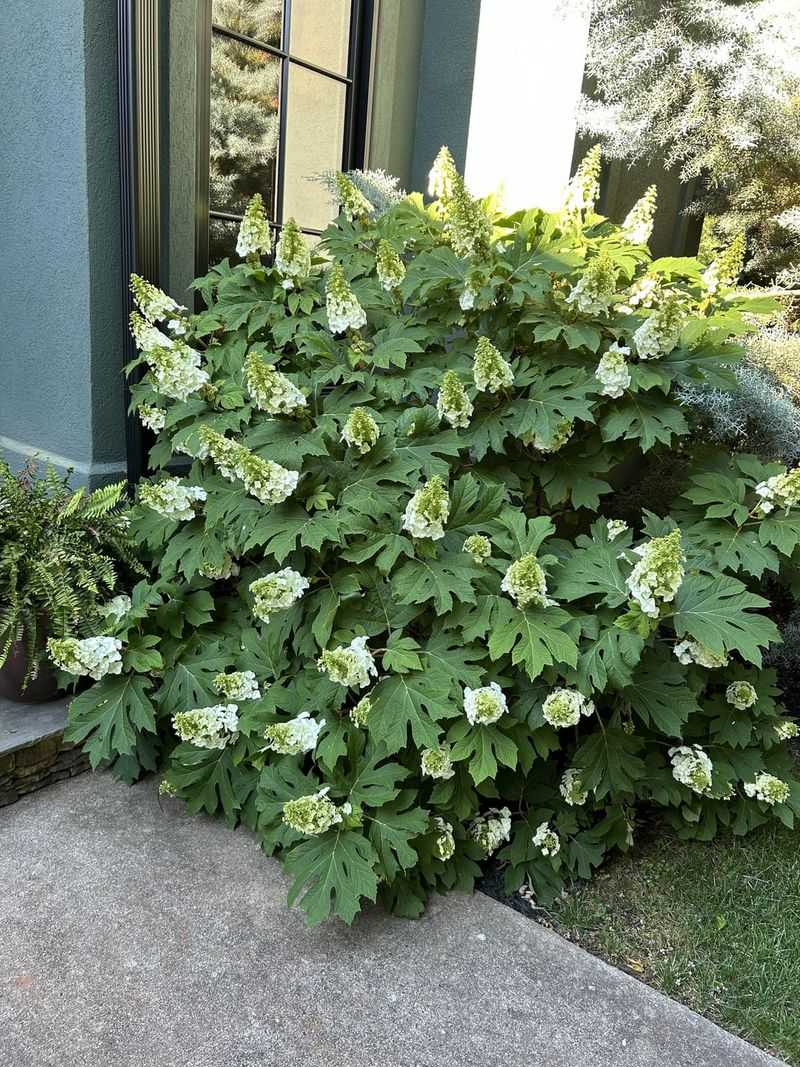
Fall color can make oakleaf hydrangea feel like a natural candidate for end-of-season cleanup in a Texas landscape.
That timing is exactly where gardeners get into trouble.
Oakleaf hydrangeas bloom primarily on old wood. Their stems formed during the previous season carry the buds responsible for the next flower display.
Once those buds develop, a late-summer, fall, winter, or early-spring trim can remove them before they ever open.
Do major shaping soon after flowering instead.
That is the useful window for shortening an awkward branch, removing crossing stems, or gently reducing size. The goal is not to shear the shrub into a ball.
Oakleaf hydrangea has a naturally layered form, and selective cuts preserve both that structure and the wood needed for future flowers.
Bud awareness matters.
As the season advances, look closely at stem tips before cutting. Swollen buds and compact growth points are a warning that the plant has already started preparing for the next year.
Leave those stems alone.
Older plants that need renovation can be handled gradually rather than chopped back all at once. Removing a small number of the oldest stems near the base over several seasons keeps more flowering wood intact while encouraging replacement growth.
Late pruning may make the shrub look tidier for winter, but the trade can be a much quieter summer.
Oakleaf hydrangea rarely needs aggressive annual pruning anyway.
Once flowering has finished and the safe window closes, putting the pruners away is usually the move that protects the next show. Restraint usually wins here.
4. Pruning Panicle Hydrangeas During Active Bloom
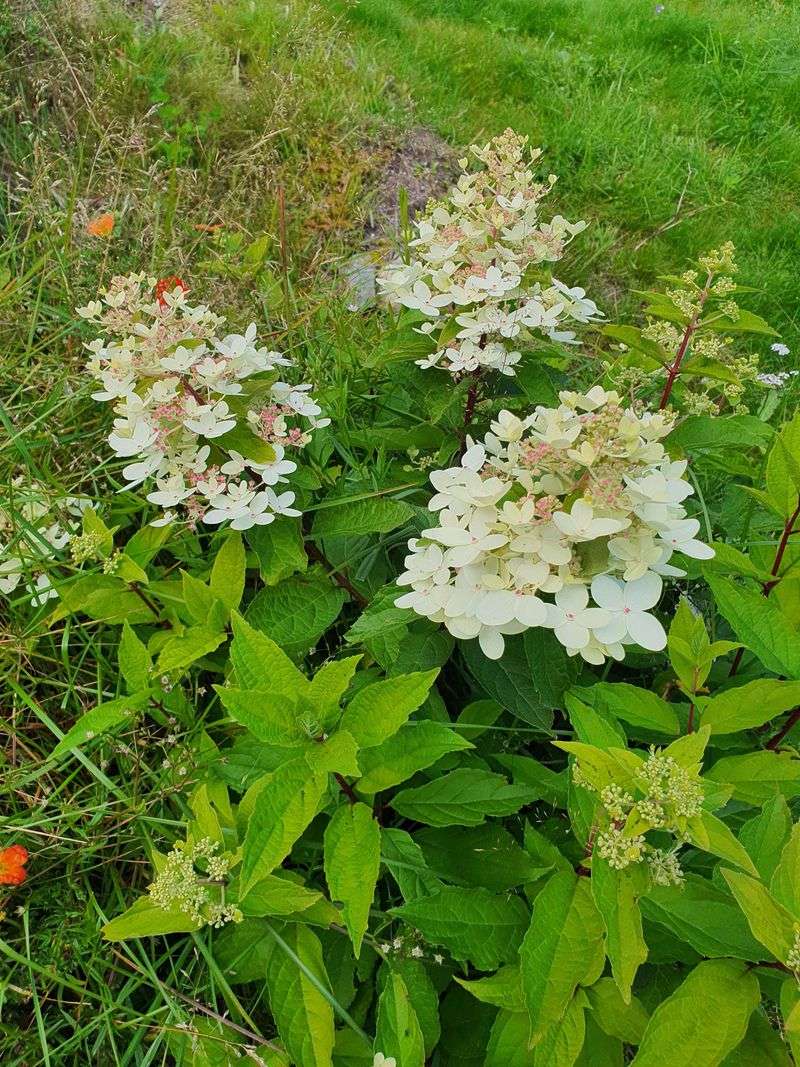
Seeing cone-shaped flowers everywhere can tempt a gardener to tidy a panicle hydrangea while it is still putting on its best display.
That cut is unnecessary at the exact moment the plant is doing what you wanted.
Panicle hydrangeas bloom on new wood, so they are much more forgiving than old-wood types. Their flower buds develop on growth produced during the current season, which means late winter or very early spring is usually the better time for substantial pruning.
Wait until the plant is dormant and before vigorous new growth begins.
At that point, remove weak stems, crossing branches, or growth that makes the shrub too crowded. You can also shorten stems to shape the plant and encourage a sturdy framework for coming flower clusters.
Avoid assuming that harder pruning always produces a better display.
Severe cuts can push vigorous shoots with oversized blooms that bend under their own weight. A moderate approach often produces stronger stems and a more balanced plant.
During active flowering, leave the structure mostly alone.
Light deadheading for appearance is different from cutting major stems while the shrub is covered in flowers.
Large cuts at that stage remove blooms you could have enjoyed and force the plant to spend energy replacing foliage and shoots.
Panicle hydrangeas give Texas gardeners a generous pruning window.
Use that flexibility before spring growth takes off rather than during the middle of the flower show.
The shrub has done the hard part by producing the blooms.
Let it finish before cutting.
5. Cutting Smooth Hydrangeas At The Wrong Time
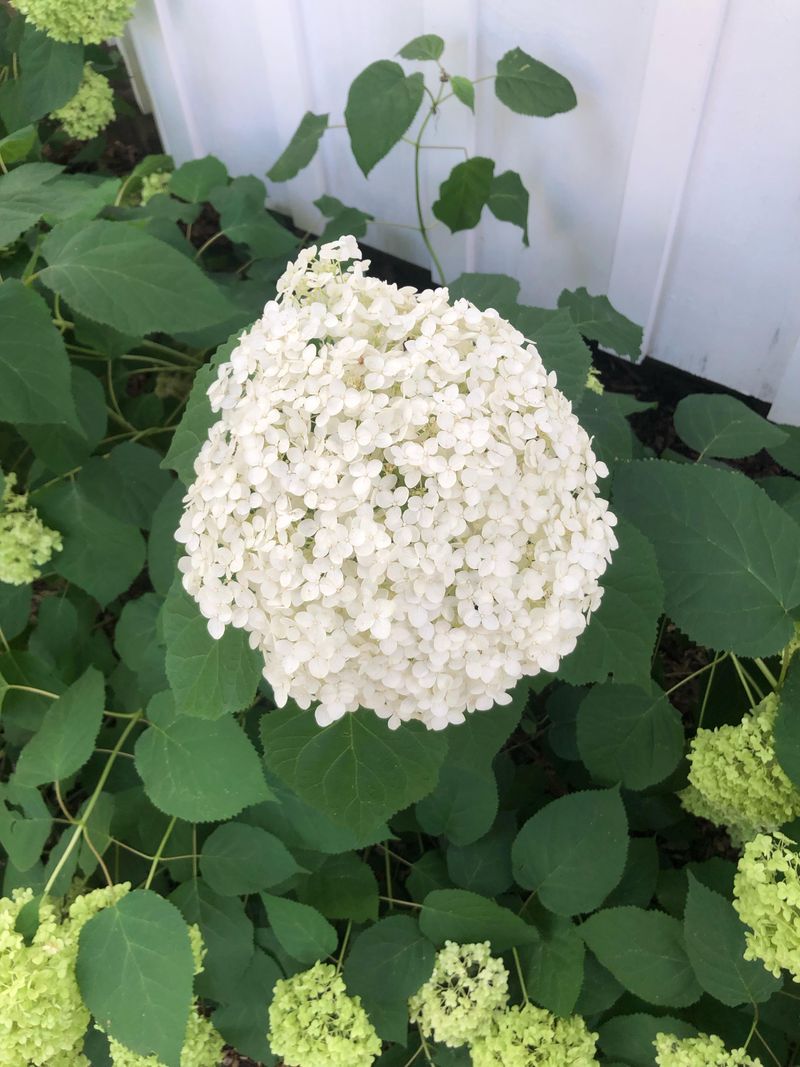
Fresh spring shoots make smooth hydrangeas look ready for shaping, but waiting too long can waste growth the plant has already paid for.
Smooth hydrangeas, including familiar selections such as ‘Annabelle,’ flower on new wood. That means the season’s blooms develop on stems produced after dormancy rather than on buds carried through winter.
Late winter to early spring is the useful pruning window for smooth hydrangeas in Texas, with the exact timing shifting somewhat by region.
Cut while the plant is still dormant or just before strong new growth begins. Weak, damaged, or crowded stems can come out, and older growth can be shortened without removing preformed flower buds.
How far you cut deserves some restraint.
Smooth hydrangeas can tolerate substantial pruning, but cutting every stem almost to the ground is not automatically the best choice. Very hard pruning can produce large flower heads on soft, vigorous stems that flop after rain.
Leaving more framework can create stronger support.
A moderate reduction often balances bloom size with stem strength, especially on mature plants that already have a useful structure. The exact amount depends on cultivar, age, and how the shrub performed the previous season.
Avoid heavy pruning immediately after flowering in fall simply because the plant looks finished.
Leaving stems through winter can provide structure, and delaying major cuts until the dormant-season window keeps the timing straightforward.
New-wood bloomers are forgiving, not timing-proof.
The mistake is waiting until spring growth is well underway, then removing inches of fresh stems the plant just spent energy producing.
Make the important cuts before that investment begins.
6. Shearing Before Identifying Old Wood Or New Wood
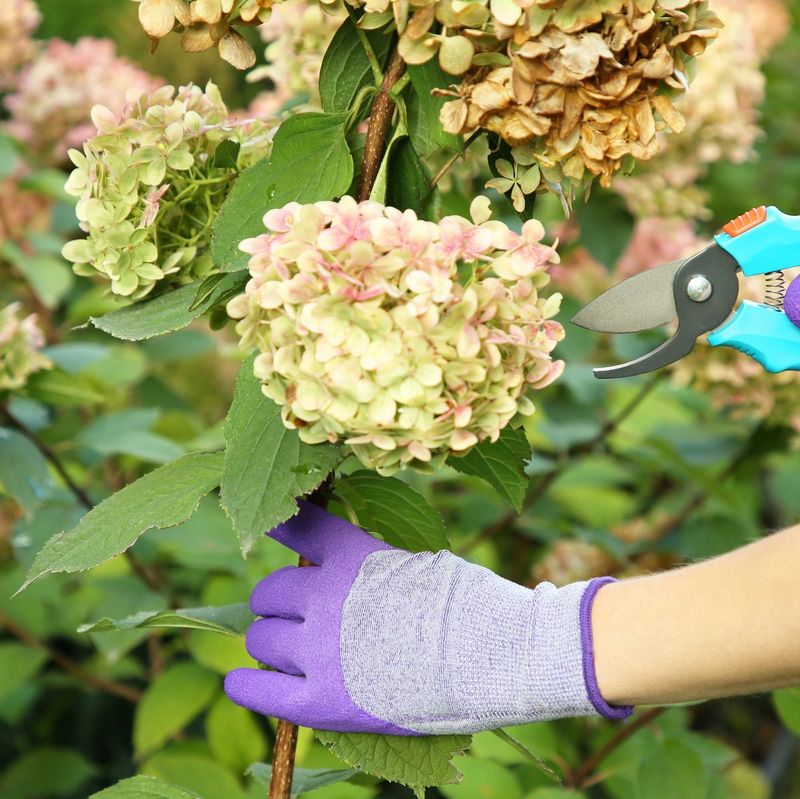
A perfectly rounded hydrangea can be a warning sign rather than a pruning achievement.
Hedge shears remove whatever happens to be sticking out, without distinguishing between a useful flowering stem, a developing bud, or growth that genuinely needs to go.
On old-wood hydrangeas, that indiscriminate approach can erase a large share of the next bloom before anyone realizes what happened.
Hand pruners give you control.
Start by identifying the hydrangea, then look at individual stems. Remove damaged wood, weak growth, crossing branches, or an occasional older stem that needs renewal. Leave healthy stems alone when there is no clear reason to cut them.
This preserves the plant’s natural shape too.
Bigleaf, oakleaf, panicle, and smooth hydrangeas each have different branching habits. Forcing all of them into the same tight globe can create dense outer growth, awkward interior structure, and repeated pressure to shear again.
Selective pruning solves the actual problem instead of creating a maintenance cycle.
For old-wood bloomers, use the post-flowering window when shaping is truly necessary. For new-wood types, make larger structural cuts during dormancy before spring growth begins.
A hedge can tolerate routine shearing because that is often the design goal.
A flowering hydrangea needs its stems managed with more intention.
The mistake is treating flower-bearing wood like excess foliage.
Put down the hedge shears, pick up hand pruners, and make every cut answer a specific problem.
Fewer cuts often lead to a much better-looking shrub and far more flowers. That is precision pruning at its best.
7. Removing Too Much Healthy Wood At Once
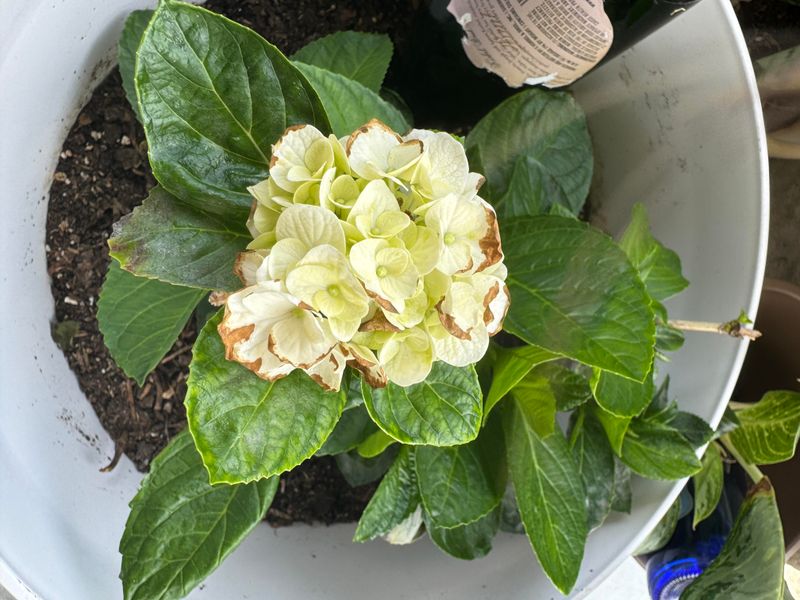
An overgrown hydrangea in a Texas garden can make one drastic afternoon with the pruners feel incredibly satisfying.
The plant may disagree much longer.
Removing a large amount of healthy wood at once strips away stored energy, useful structure, and, on old-wood bloomers, stems that may already carry future flower buds.
The immediate result looks clean, but the next season can bring vigorous leaves with a disappointing number of blooms.
Renovate gradually instead.
When an established shrub truly needs thinning, remove a portion of the oldest or least useful stems near the base and leave the rest intact. Spread major renewal over multiple seasons rather than trying to rebuild the entire plant in one day.
That approach matters especially for bigleaf and oakleaf hydrangeas.
Their old stems are not simply clutter. Much of the flowering potential is tied to that older growth, so a severe reduction can take away a large part of the next display.
Panicle and smooth hydrangeas recover from harder cuts more readily because they flower on new wood, but restraint still helps. Excessively vigorous replacement shoots can be weak, floppy, or poorly arranged.
Watch how the shrub responds after each season.
A plant that flowers well and holds its shape does not need a dramatic annual reset.
Pruning should solve a reasoned problem, not satisfy the urge to make the plant smaller.
Hydrangeas reward a lighter hand.
Keep enough healthy framework to support flowers, then renew aging stems slowly.
The best pruning job often leaves plenty of healthy structure behind.