What It Means When Acorn Woodpeckers Swarm Your California Yard In Late September
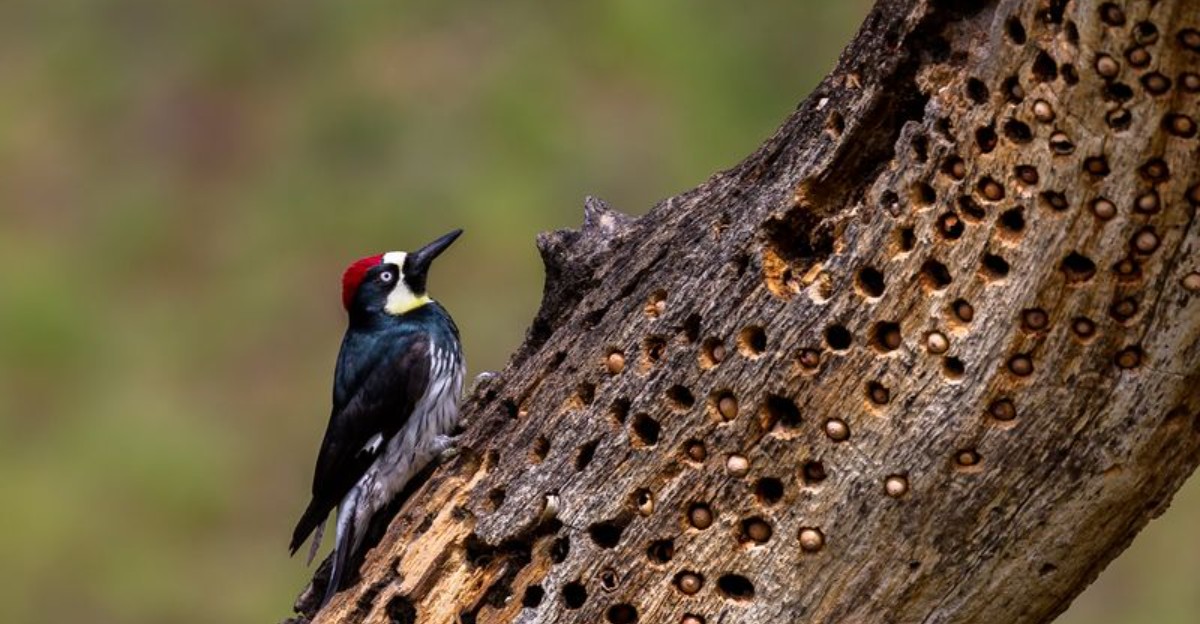
A sharp knocking sound pulls you straight out your back door, rhythmic and deliberate against the wood. Dozens of small red-capped visitors cling to your fence like they hold a lease you never signed.
California yards shaded by old oak trees seem to draw this same commotion every fall, without warning. Something round keeps vanishing into a hole in your wooden post, tucked in with strange precision.
Your neighbor might call it mischief, though the culprits clearly treat your yard as prime real estate. Every trip back to that hole comes with a burst of noise, loud enough to wake the block.
Somewhere between confusion and curiosity, you start counting how many return each hour. Across California, mornings like this turn ordinary homeowners into reluctant detectives standing on their own porch.
An Acorn Harvest Crew At Work
Those noisy visitors are not lost, and they are not angry at your house or your cat. They are a family crew clocking in for the busiest shift of their year.
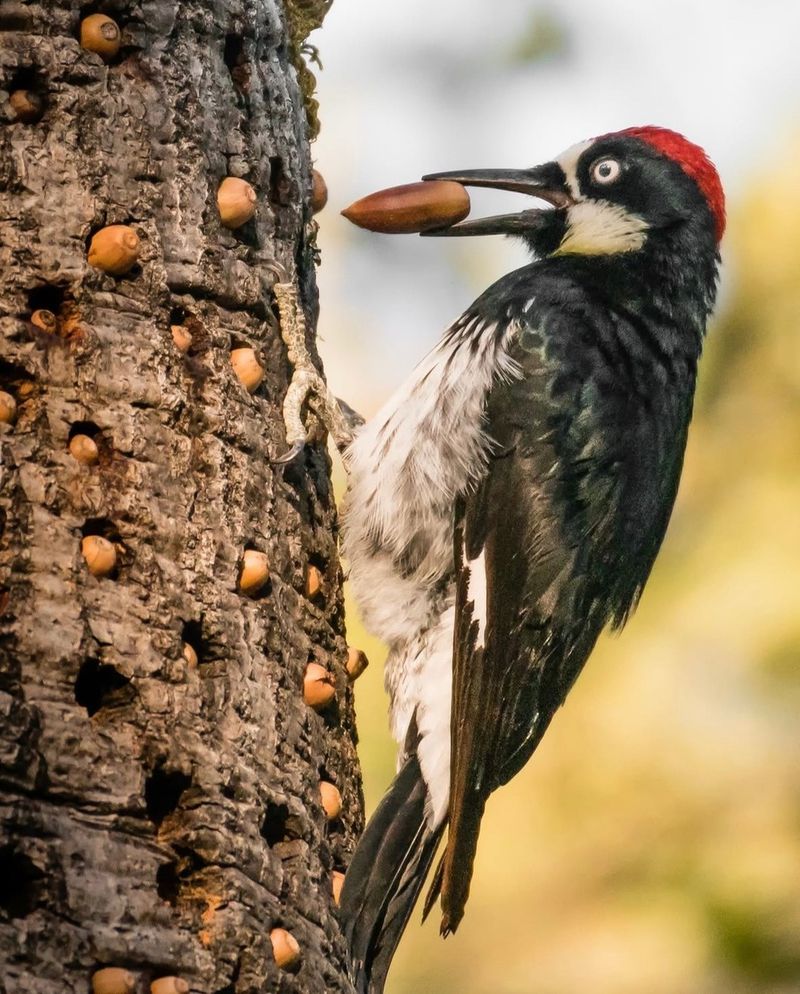
Acorn woodpeckers live in groups of up to fifteen birds, sharing one territory and one giant pantry. Parents, grown kids, aunts, and uncles all pitch in to fill it before winter.
That pantry is called a granary, and it is usually a tree or pole drilled with thousands of snug holes. Each hole holds one acorn, pressed in tight so squirrels and jays rarely manage to steal it.
Late September is when valley oaks and coast live oaks start dropping ripe nuts across California. So a sudden swarm in your yard usually means harvest season has officially begun.
The birds may be grabbing acorns from your oak, checking your fence posts for storage space, or both. Some groups travel a short distance when their home trees have a weak crop.
Watch closely and you will spot a pattern in the chaos. A few birds stand guard while others fly back and forth with acorns in their beaks.
Here is a fun fact to share at the dinner table tonight. One famous granary tree in California held an estimated 50,000 acorns, each in its own hole.
So take a deep breath before you grab the garden hose in a panic. Your yard has simply landed on the map of a very organized, very loud family business.
The Late September Acorn Drop
Oak trees in California run on a pretty reliable clock. Most acorns ripen from mid-September through November, and the first heavy drops often land right around the fall equinox.
Woodpeckers pay attention to that schedule better than most of us track our own calendars. They start raiding the branches before the nuts even hit the ground.
That clock also explains the sudden noise level. More food means more trips, and every trip seems to come with a round of excited chatter.
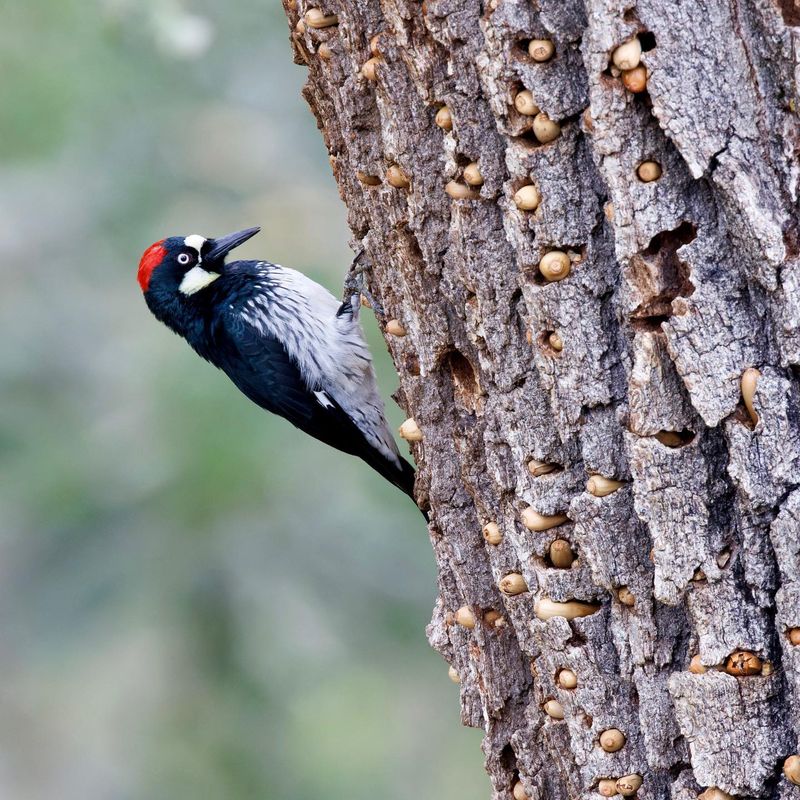
Timing matters because fresh acorns are plump and full of moisture. As they dry out over the following weeks, they shrink and rattle loose inside their holes.
So the birds spend much of autumn moving acorns into smaller holes that fit better. It looks like a busy game of musical chairs, played with nuts instead of people.
Your California Garden Changes Every Week. Your Plan Should Too.
Gardening in California changes quickly throughout the season. Every Friday you’ll receive a simple weekly plan showing exactly what to plant, prune, fertilize, harvest, and protect so you never miss the right timing.
Early birds also get the best real estate. The first family to claim your fence or eaves in September tends to guard it fiercely until spring.
Weather can nudge the calendar a little each year. A hot, dry summer may push the harvest earlier, while a cool one can delay it.
Oak crops also swing wildly from year to year, a pattern scientists call masting. In a boom year, you might see far more birds than last fall.
Keep a simple notebook by the window and jot down the first day the flock arrives. After a few seasons, you can predict the return almost to the week.
A Common Mistake With Noisy Neighbors
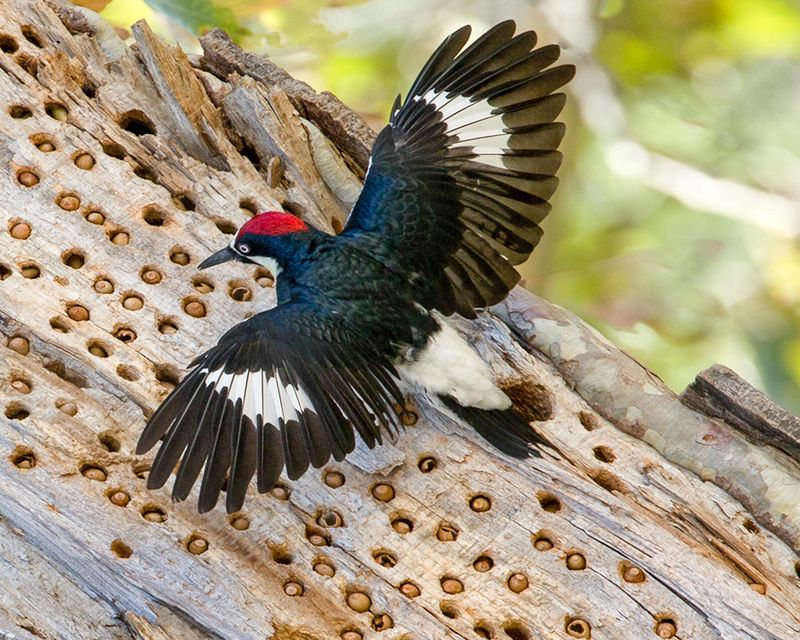
Plenty of frustrated homeowners reach for a trap or a harsh deterrent the moment holes appear in their siding. That reaction is understandable, but it can land you in serious legal trouble.
Acorn woodpeckers are protected under the federal Migratory Bird Treaty Act. Harming them, trapping them, or tearing out an active nest without a permit can bring heavy fines.
Another popular misstep is patching holes in late September while the birds are still busy. They often drill a fresh row right beside your patch within days.
Ultrasonic gadgets are another money pit that many hopeful buyers regret. Birds hear differently than rodents, and research suggests these beeping boxes rarely change woodpecker behavior.
Shouting or waving a broom at the birds is harmless, but it rarely works for long. A family that has claimed your eaves will simply wait until you go back inside.
The smarter move is to watch first and act later. Figure out exactly which boards or poles they favor before spending a dime on repairs.
Snap a few photos, note the time of day, and check if they are storing food or digging for insects. Those clues point straight to the right fix.
Insect digging is a special warning sign worth noticing. Random, messy holes may mean carpenter bees or beetle larvae are hiding in your wood.
Neat rows of round holes packed with nuts tell a different story. That pattern means your house has been chosen as a pantry, not a buffet.
Simple Fixes For Pecked Siding
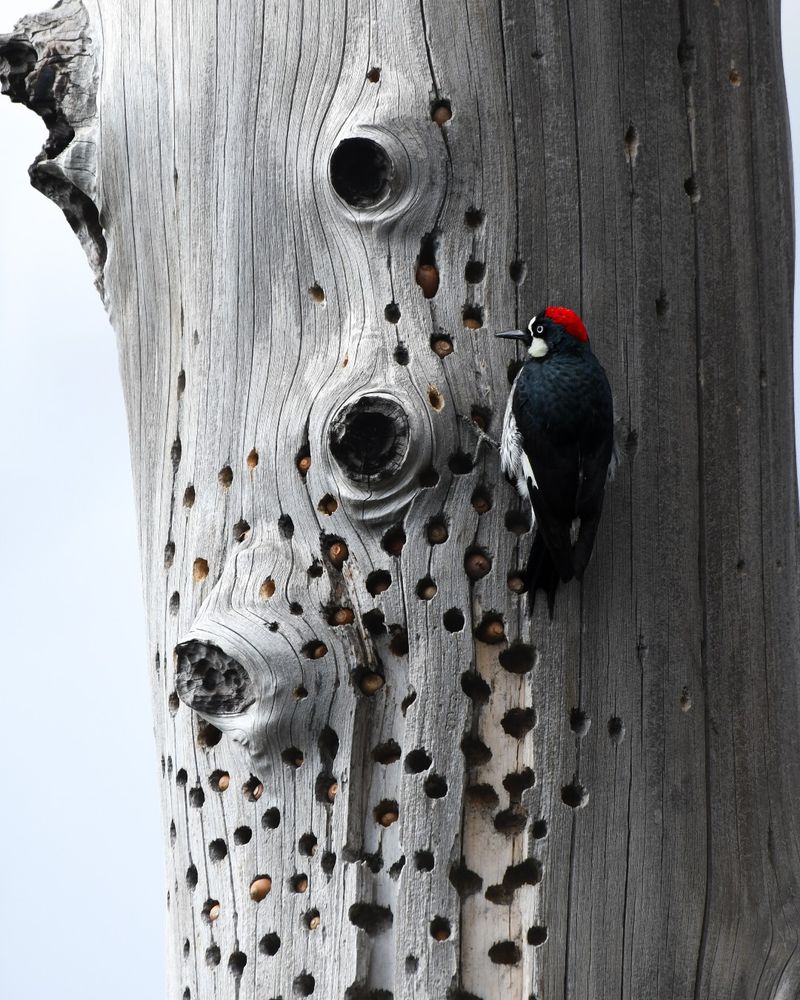
Got a row of acorns wedged into your cedar trim? Most of the damage is cosmetic and surprisingly cheap to repair with basic hardware store supplies.
Start by covering the favorite spots with lightweight bird netting or metal flashing. Leave a few inches of space between netting and wall so beaks cannot reach through.
Hardware cloth with quarter-inch openings works well on fence posts, sheds, and wooden poles on your property. Paint it to match the wood, and most visitors will barely notice it.
Shiny scare tape and hanging pinwheels can help too, especially when you move them every few days. Birds get used to anything that stays in one place for long.
Here is a handy trick for anyone on a tight budget. A strip of old window screen stapled over the target area can buy you a peaceful season.
Save the big repairs for the quiet months after the harvest rush. Patching mid-season often means fixing the same board three times before Thanksgiving.
Once the pantry is emptied, often by early spring, you can pull out any leftover acorns. A flathead screwdriver or needle-nose pliers makes quick work of the job.
Fill each hole with exterior wood filler, sand it smooth, and add a coat of matching paint or stain. Fresh paint also makes the wall look less like a used pantry.
Larger gaps may need a wooden patch or a replacement board. Check behind the damage for soft or damp wood, since moisture can sneak in through old holes.
A Yard Full Of Wild Entertainment
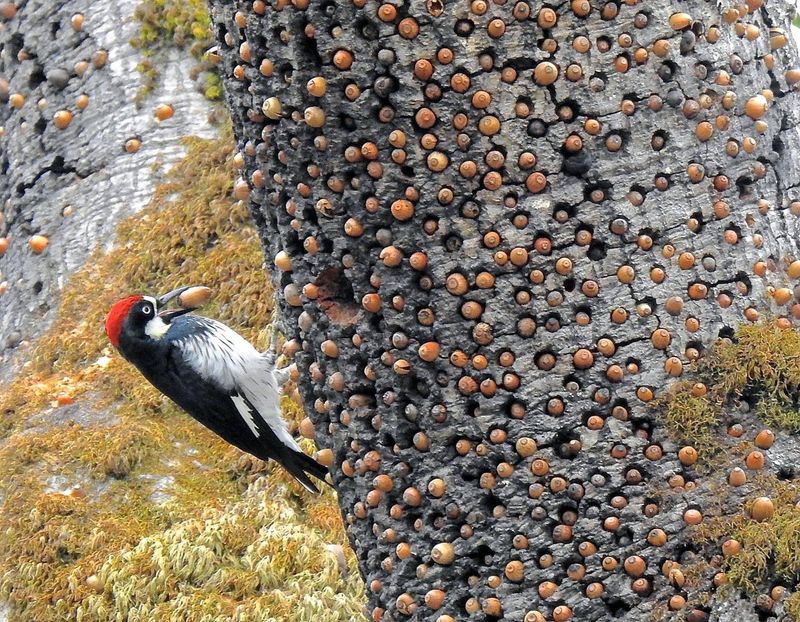
Give the flock a little room, and your backyard turns into a nature show with no subscription fee. Every morning brings new drama, comedy, and the occasional daring rescue of a dropped acorn.
Acorn woodpeckers are one of the few birds that raise chicks as a team. Several adults may share one nest, taking turns feeding the young ones.
Kids love spotting their goofy faces, with bright red caps, white foreheads, and pale staring eyes. Hand them a pair of binoculars and watch their screen time shrink.
You may also catch them snatching flying insects in midair like tiny outfielders. On warm afternoons, they sip sap from small wells they drill in tree bark.
Listen for their famous ‘waka-waka’ call, which sounds a bit like a squeaky laugh. Once you learn it, you will hear it at picnics, parks, and school yards across California.
Their presence says good things about your neighborhood, too. A busy woodpecker family signals healthy oaks nearby and plenty of open space for foraging.
Some families use the same granary tree for generations, adding new holes each fall. A single tree can end up looking like a giant cribbage board.
Birders from out of state sometimes travel just to see this behavior. You get front-row seats without buying a plane ticket or packing a single snack.
Start a family tally of how many birds show up each day. By Halloween, you might have a fiercely competitive household of amateur scientists.
Smart Protection Before Next Fall
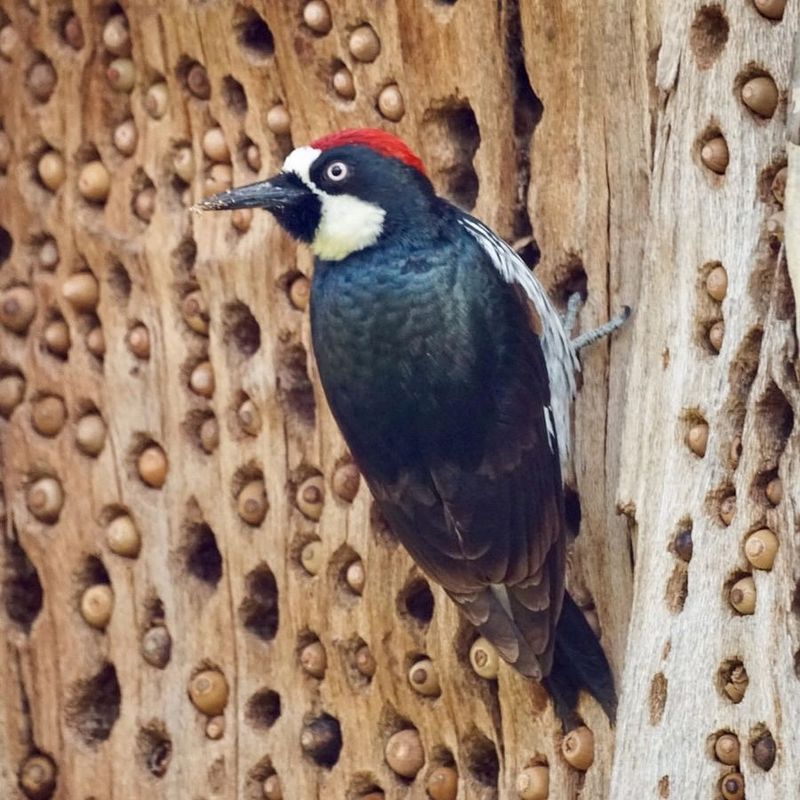
Summer is the secret season for staying one step ahead of next year’s harvest crew. Birds are busy raising chicks then, so they pay less attention to your siding.
Walk around your home in July and look for soft trim, bare wood, or old holes. Any spot that sounds hollow when tapped is a likely target come September.
Seal and paint those areas well before the acorns ripen. A smooth, freshly painted surface is harder to grip and less tempting to drill.
Oak trees near the house deserve a quick look too. Trimming branches that touch your roof removes a handy launching pad for curious beaks.
Wildlife experts suggest a clever trick that feels a little like bribery. Give the birds a better option, like an old tree snag or a sacrificial wooden post far from the house.
Some homeowners even pre-drill a few starter holes to make the post more inviting. A happy family with its own granary has little reason to bother your walls.
Planning a remodel in the next year or two? Fiber cement, vinyl, or stucco siding resists drilling far better than soft cedar or redwood.
Keep netting and scare tape stored in the garage, ready to hang by early September. A quick setup before the first flyover beats chasing damage all autumn.
With a little planning, you can keep your house intact and still enjoy the show. Your yard stays lively, your siding stays smooth, and the birds stay well fed.