What It Means When An Indigo Bunting Shows Up In Your Massachusetts Garden This Summer
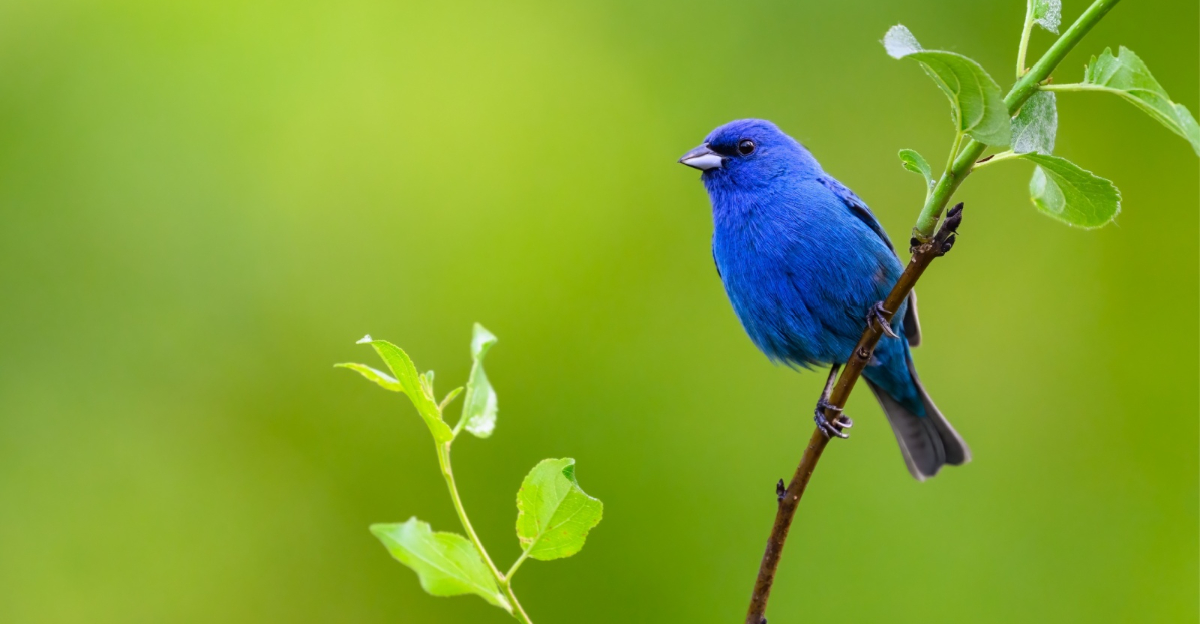
Electric blue just appeared across your quiet feeder. Nothing about that color usually belongs in a New England summer sky.
Massachusetts gardens rarely host a visitor this vivid. Songbirds like this usually stay south long before summer arrives. Yet here it sits, calm, unbothered, glowing like liquid sapphire.
Birders wait years for a moment exactly like this one. Rarity isn’t even the strangest part of this whole story. Behind that stunning color hides a real migration mystery.
Few realize how far this visitor just traveled to reach you. Every feather carries evidence of shifting weather and instinct. Scientists actually track sightings like this across entire regions.
Your backyard, oddly enough, just joined a much larger pattern. Right now, Massachusetts sits at the edge of this species’ typical range.
Curiosity alone cannot fully explain what happens after this sighting. Answers are waiting, and they demand your full attention right now.
What An Indigo Bunting Sighting Means
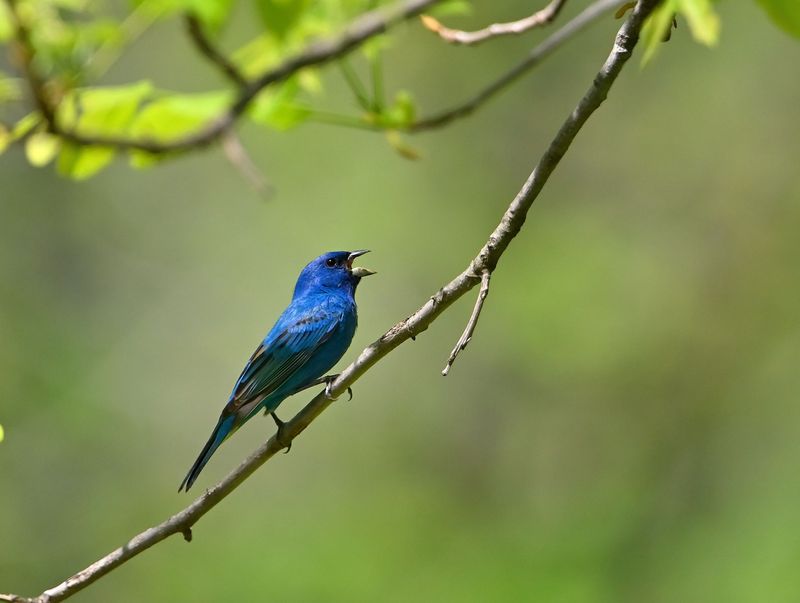
That flash of blue is not your imagination playing tricks. An indigo bunting sighting in your garden is a genuine moment worth pausing for.
These birds breed across the eastern United States, and Massachusetts sits comfortably inside their summer range.
Spotting one means your yard already has something going for it, whether that is dense shelter, reliable food, or nearby woodland edges. Few visitors arrive without a reason.
Male indigo buntings are completely blue, which is genuinely unusual in the bird world. Most blue birds carry only patches of color, but the male bunting is covered head to tail in that electric hue.
Female buntings, by contrast, are a warm brown with faint streaking, easy to overlook entirely. Many gardeners never realize they host a breeding pair, since only the male grabs attention while the female moves quietly nearby.
A sighting also signals healthy habitat, not simple luck. These birds prefer areas where open fields meet shrubby edges and scattered trees, a landscape that quietly supports a wide range of other wildlife.
If an indigo bunting shows up in your Massachusetts garden this summer, take it as a quiet compliment. Your outdoor space is doing something right, more than most people ever realize.
Pay close attention to where the bird lands and what it actually eats. Those small clues reveal exactly how to keep it coming back all season long, and noticing them turns one lucky visit into a lasting pattern worth watching closely.
Why This Bird Appears In Massachusetts Gardens
Indigo buntings do not just wander into any yard at random. They show up where conditions match what they need to survive and raise young.
Massachusetts offers a mix of open fields, forest edges, and overgrown roadsides that these birds find highly attractive. Suburban gardens that border wooded areas hit that sweet spot almost perfectly.
The birds arrive in late spring after migrating from wintering grounds in Mexico, Central America, and parts of the Caribbean.
That journey covers thousands of miles, often completed in short nighttime flights. They navigate partly by the stars, a fact that makes every sighting feel a little more extraordinary.
Your Massachusetts Garden Changes Every Week. Your Plan Should Too.
Gardening in Massachusetts changes quickly throughout the season. Every Friday you’ll receive a simple weekly plan showing exactly what to plant, prune, fertilize, harvest, and protect so you never miss the right timing.
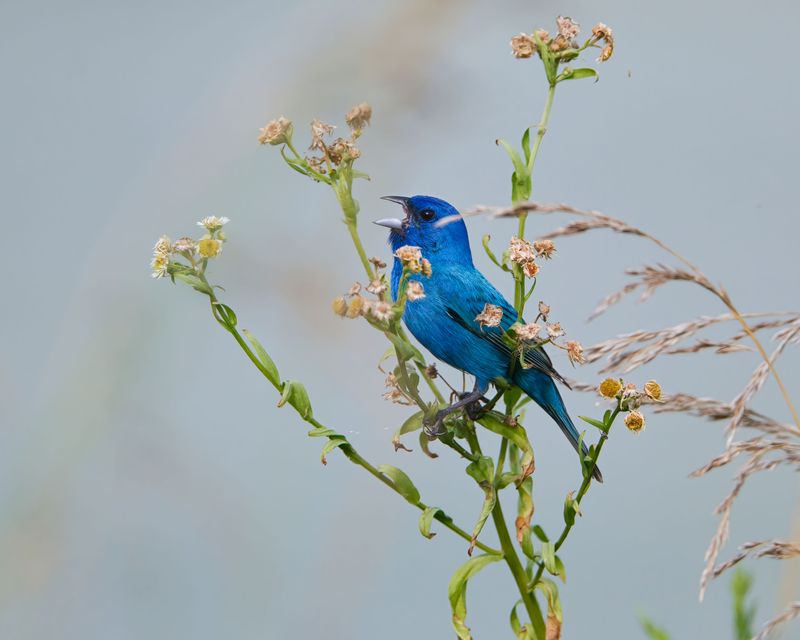
Once here, males stake out territory and begin singing from high perches. That loud, cheerful song is often the first sign a bunting is nearby, even before you spot the bird itself.
Gardens with native plants tend to draw buntings in more consistently. Native grasses and wildflowers produce the seeds these birds rely on during the breeding season, offering a more dependable food source than ornamental plantings alone.
Proximity to brushy edges or hedgerows also plays a big role. Buntings nest low to the ground in dense shrubs, so a yard with layered plantings gives them options they genuinely need.
When an indigo bunting appears in your Massachusetts garden this summer, your neighborhood landscape is likely supporting more biodiversity than you realize. That is a genuinely encouraging sign for local ecosystems.
When You’re Most Likely To Spot One
Timing matters a lot when it comes to bunting sightings. These birds follow a fairly predictable seasonal schedule once you know what to look for.
Arrivals in Massachusetts generally begin around mid-May, based on regional migration patterns, though exact timing can shift from year to year.
Males typically show up a few days before females, staking out territory and advertising their presence with non-stop singing.
June and July are peak activity months. Males sing most aggressively during early morning hours, so getting outside within an hour or two after sunrise gives you the best chance of hearing and seeing one.
Activity slows noticeably by August as breeding winds down. The birds become quieter and more secretive, spending more time foraging low in vegetation rather than singing from open perches.
Most buntings generally leave Massachusetts by late September, with a few lingering into October in years when conditions allow.
Overcast mornings can actually improve your odds. Buntings tend to visit feeders more often on cloudy days, possibly because lower light makes them feel less exposed to predators.
Keep a pair of binoculars near a window that overlooks your feeder. The moment you catch movement at dawn, you will be ready to confirm whether that brilliant blue shape is exactly who you think it is.
How To Attract Indigo Buntings To Your Yard
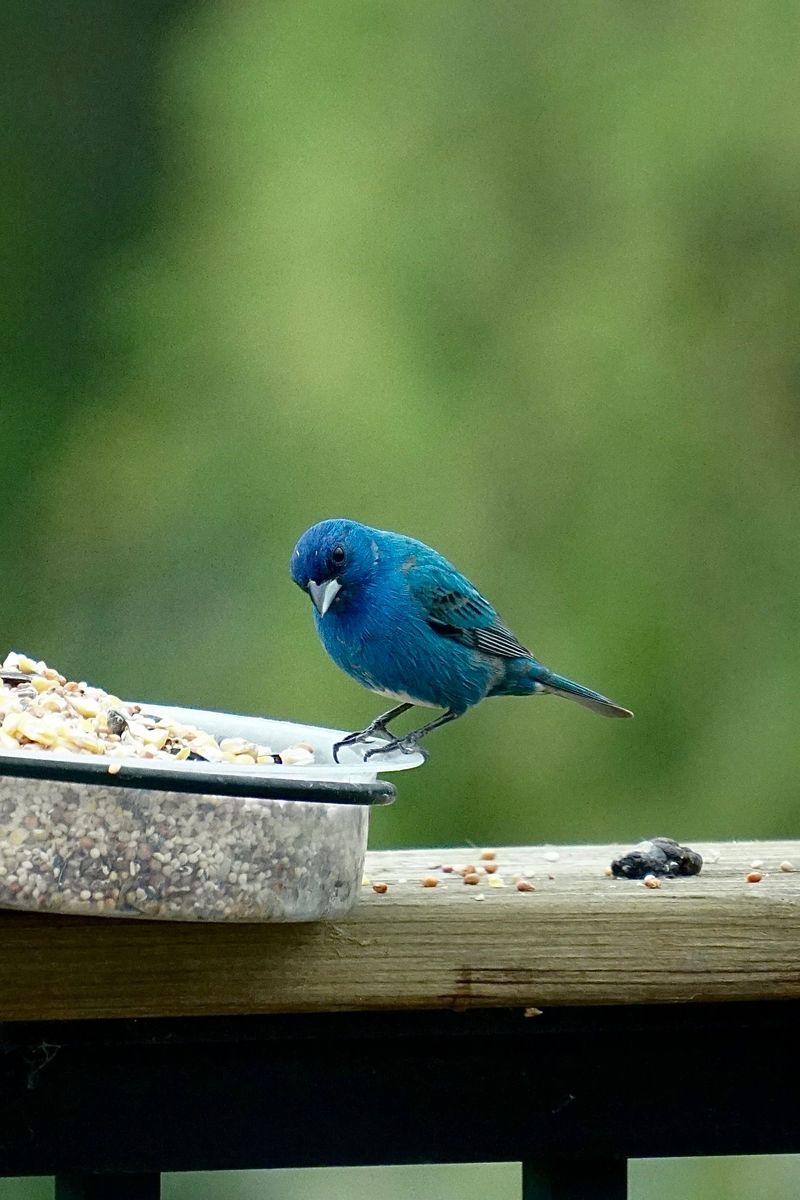
Getting a bunting to visit once is lucky. Getting one to return regularly takes a little intentional effort on your part.
Millet is one of the most commonly recommended seeds for attracting these birds. White proso millet, in particular, is a favorite choice among birders.
Sunflower seeds work too, but millet is generally considered the more reliable draw for this species. Mixing both in one feeder covers your bases and attracts a wider range of songbirds at the same time.
Fresh water matters just as much as food. A shallow birdbath placed near shrubby cover gives buntings a place to bathe and drink, which is especially appealing during hot July afternoons.
Native plantings make your yard feel like home territory to these birds. Grasses like little bluestem and wildflowers like coneflower produce natural seeds that supplement feeder offerings throughout the summer.
Reduce pesticide use as much as possible. Buntings feed insects to their nestlings, and a yard with healthy bug populations supports the full breeding cycle, not just casual visits.
Place feeders near shrubby borders rather than in the middle of open lawn. Buntings feel safer when cover is close, and that sense of security is often what turns a one-time sighting into a regular summer routine.
Symbolic Meanings Behind This Seasonal Visitor
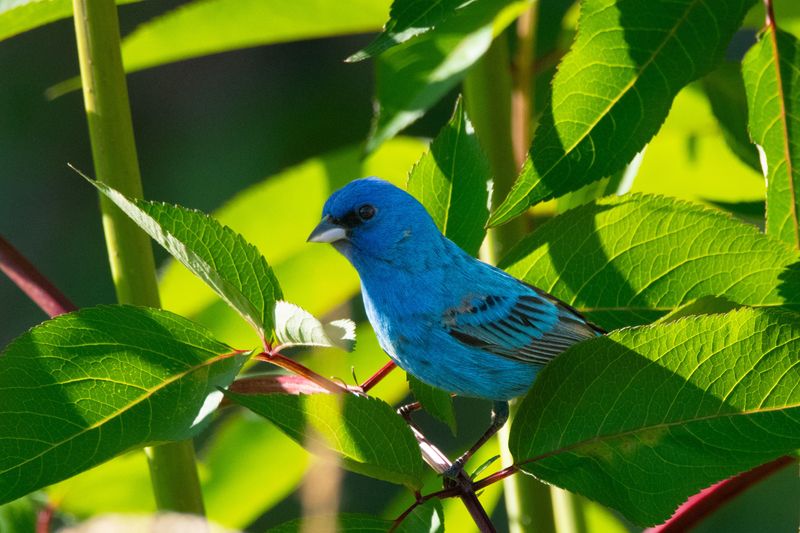
The meanings below draw on folklore and popular interpretation rather than documented cultural record, and are offered as a lens for reflection rather than established fact.
Birds have carried symbolic weight across cultures for thousands of years. The indigo bunting is no exception, and similar themes appear across several traditions.
In many folk traditions, blue is often loosely associated with clarity and calm. A bird that is entirely blue, like the bunting, carries that symbolism in an especially concentrated form.
In some folk traditions, blue birds are loosely associated with happiness and hope, and spotting one has sometimes been treated as a good omen.
In more modern, informal spiritual interpretations, the bunting is sometimes linked to self-expression and confidence. Its song is loud and persistent, and many people interpret that energy as encouragement to speak up or pursue something meaningful.
The bird is also sometimes associated with transformation in certain belief systems. It migrates enormous distances each year, navigating by starlight, which gives it a symbolic connection to guidance through darkness.
Whether or not you follow any spiritual tradition, there is something genuinely moving about this creature appearing in your garden. It traveled a long distance to land specifically in your yard, and that journey alone is worth noting.
When an indigo bunting visits your Massachusetts garden this summer, let it mean something personal to you. Sometimes the most powerful symbols are the ones we assign ourselves, quietly, over morning coffee.
Tips For Identifying Indigo Buntings Correctly
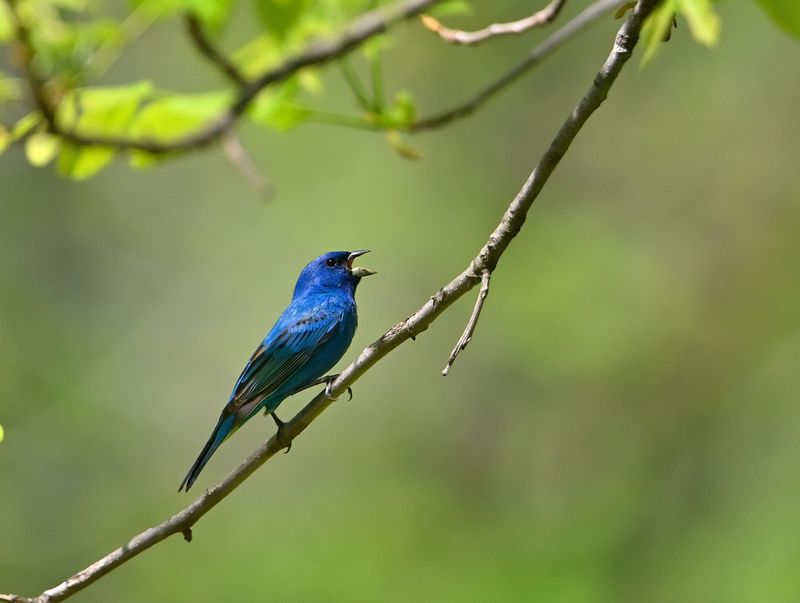
Not every blue bird at your feeder is an indigo bunting. A few lookalikes can cause real confusion, especially for newer birdwatchers.
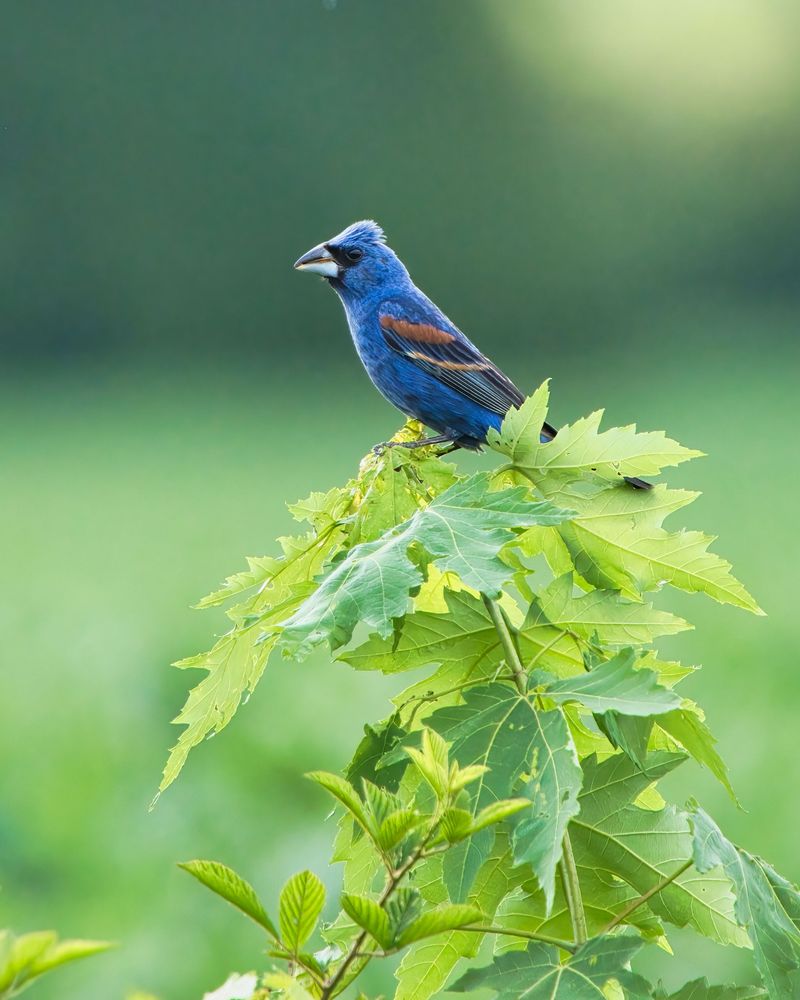
The blue grosbeak is the most common mix-up. It is larger than the bunting and has two rust-colored wing bars that the bunting completely lacks.
Eastern bluebirds are another source of confusion at a distance. Up close, though, bluebirds show an orange-red breast and a much stockier build compared to the slim, all-blue bunting.
Male indigo buntings appear slightly different depending on light conditions. In shadow, they can look almost black, which surprises many first-time observers who expected a brighter bird.
Full sunlight is when the true color emerges. That iridescent, deep blue shimmers strikingly in direct sun.
Female buntings are plain brown with faint streaking on the breast. They resemble female house sparrows but are slightly smaller and lack the heavy streaking seen on sparrow backs.
Behavior is another helpful clue for identification. Buntings often flick their tails nervously and tend to perch in exposed spots while singing, a habit that sets them apart from shyer species in similar habitats.
When an indigo bunting shows up in your Massachusetts garden this summer, trust your instincts and reach for your field guide. Confident identification makes every sighting more satisfying.