What It Means When Goldfinches Suddenly Crowd Your Ohio Feeders
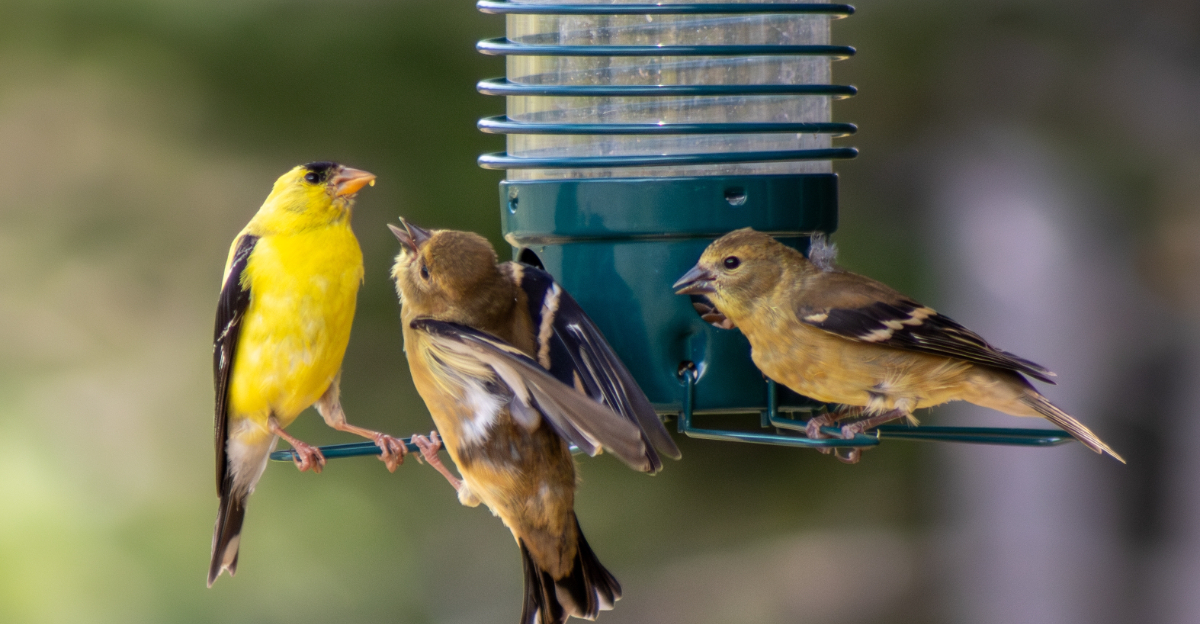
Thirty goldfinches on an Ohio feeder where there were three last week is not a coincidence. It is a calendar event, and the calendar is running right on schedule.
Something shifts in late summer that goldfinches respond to before most Ohio gardeners notice anything has changed at all.
The crowd at the feeder is the visible edge of a much larger movement happening across the region, and the yard sitting at the center of it earned that position in ways worth understanding.
Goldfinches do not mob feeders randomly. The yards they concentrate in are offering something beyond seed.
The surrounding plants, the seed heads going untouched in the garden, the overall habitat built through the season all factor into why certain Ohio yards become the destination while others get passed over entirely. Thirty goldfinches chose this yard.
That choice is worth examining before they move on and take the answer with them.
1. Late Summer Is When Goldfinch Family Activity Can Suddenly Pick Up
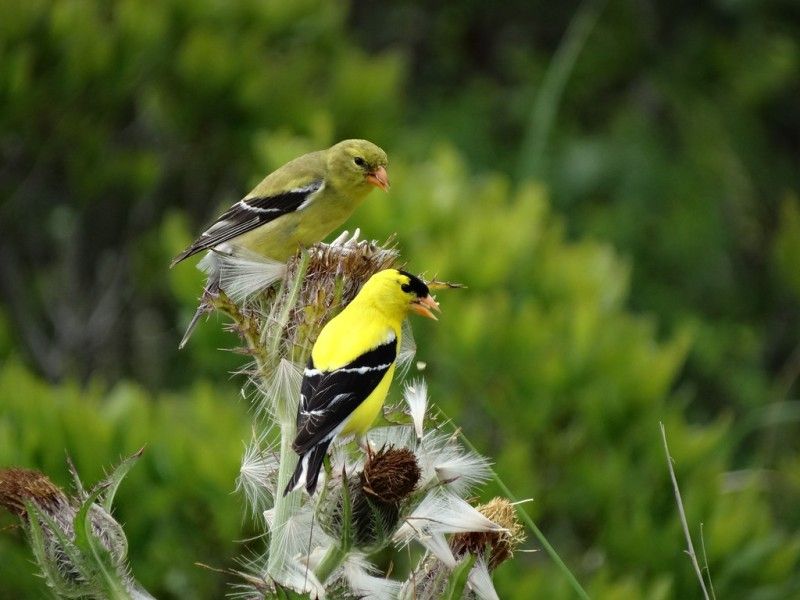
American Goldfinches have an unusually late nesting season. Their breeding can still be underway after many familiar Ohio backyard songbirds have already finished.
According to Cornell Lab of Ornithology, goldfinches nest considerably later than many other common songbirds. Breeding can continue well into July and sometimes into August, depending on the pair and local conditions.
That late schedule is connected to the seasonal availability of plant fibers and seeds. Goldfinches commonly use milkweed, thistle fibers, and other plant materials to construct their tightly woven nests.
Those plants tend to mature later in the growing season. Nesting timing can vary from pair to pair, so different families in the same neighborhood may be at completely different stages during the same week.
One pair might still be incubating eggs while another is already feeding nestlings. A third pair could be tending recently fledged young near a local feeding area.
Goldfinch nestlings receive an unusually seed-heavy diet compared with many other songbirds. That reflects how strongly this species depends on seeds throughout its life cycle.
That family activity can continue for several weeks. It may contribute to more movement and more birds appearing near yards and feeding stations as summer progresses.
2. Young Birds May Be Joining The Adults At Your Feeders
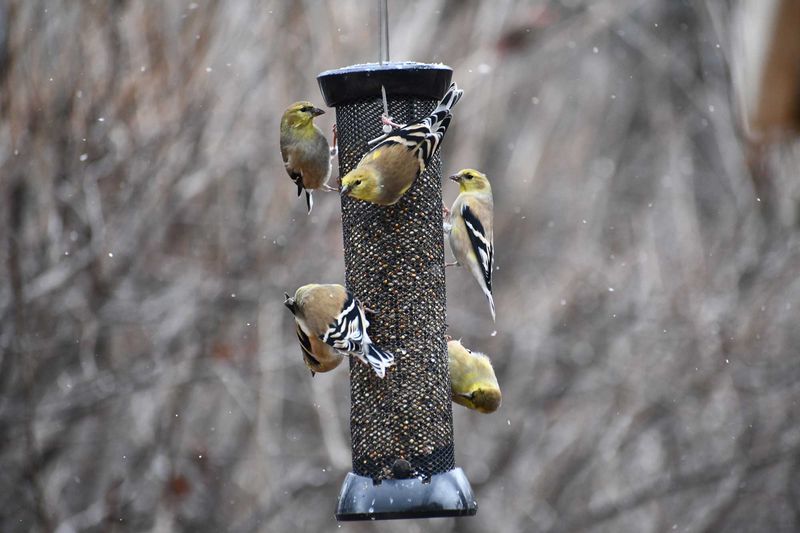
A dull bird landing beside a bright adult male can raise an obvious question about who exactly is showing up at the feeding station. Not every bird with muted coloring is a juvenile, and that distinction matters when trying to read a late summer flock.
Female goldfinches are naturally less vivid than breeding males, showing a yellowish-olive tone rather than the bold yellow of an adult male in peak plumage.
Immature birds from the current breeding season may also appear in late summer, and their plumage can look similar to that of adult females. According to Cornell Lab of Ornithology, recently fledged goldfinches may continue associating with adults after leaving the nest.
Some begging behavior can persist during that period. Confirming a bird is a fledgling based on color alone is not reliable without supporting behavioral clues.
A group of eight birds at a feeder might include adult males and females. It may also include independent or partly dependent young from recent nests nearby.
That mix can inflate the apparent count without any new arrivals entering the area from elsewhere. Begging postures or food-passing behavior between birds can offer useful clues about age.
However, one brief observation rarely tells the complete story.
3. Sunflower And Nyjer Can Pull A Feeding Flock Into One Small Spot
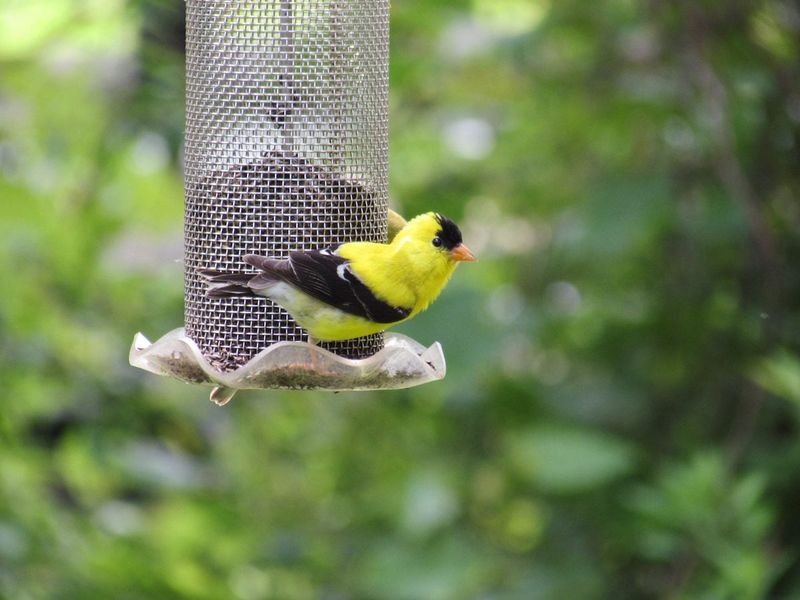
Several feeding ports filling at once gives a vivid sense of how concentrated a feeder can make bird activity look. In a natural setting, goldfinches spread across many individual seed heads scattered through a field or garden.
A single feeder compresses that same feeding interest into one compact location, which makes the group appear much larger than it might seem across an open landscape.
Cornell Lab of Ornithology notes that American Goldfinches commonly use nyjer and sunflower at feeding stations. Nyjer is a small, oil-rich seed that works well in tube feeders with small ports.
Black oil sunflower and sunflower chips are also well-accepted options. Neither is the only food goldfinches eat, and offering them does not replace the value of natural seed plants growing nearby.
Nyjer freshness can matter. Seed that has been sitting in an Ohio feeder through heat and humidity may be less appealing, so refreshing the supply periodically and keeping feeders dry can help.
A feeder crowded with birds also accumulates more droppings and discarded seed shells quickly. Project FeederWatch recommends routine cleaning of feeders and the ground beneath them to reduce the buildup of material that can affect bird health.
Adding a second feeder nearby may spread activity across a wider area rather than concentrating every bird at one spot.
4. Ripening Seed Crops Can Shift Goldfinches Between Yards From Day To Day
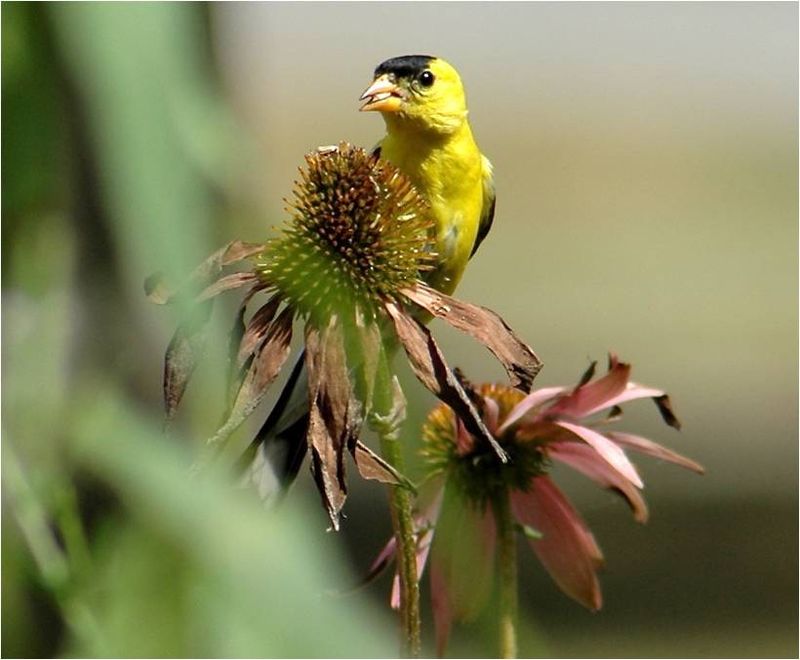
A patch of wild seed heads ripening at the edge of a yard or in a nearby Ohio field can pull birds away from a feeding station with no warning. Goldfinches are closely associated with seed-producing plants throughout the growing season.
Cornell Lab of Ornithology identifies seeds from plants such as native sunflowers, asters, and coneflowers as natural food sources the species regularly uses.
When a productive patch of natural food becomes available, birds may spend more time there and less time at a feeder. That shift can make a previously busy feeder look quiet, even if the local bird population has not changed at all.
The reverse is also true. When a natural seed supply is exhausted or not yet ripe, feeder traffic may increase without any change in the number of birds living in the area.
Feeder counts on any given day reflect local food conditions more than they reflect total population size. A quiet feeder does not mean the birds have left the region, and a crowded one does not mean more goldfinches have entered the area from somewhere else.
Leave native seed-bearing plants like coneflowers or native asters standing through late summer. They extend natural foraging opportunities and give birds more options than a single feeding station can provide.
5. Goldfinches Naturally Feed Together So A Few Can Quickly Become A Crowd
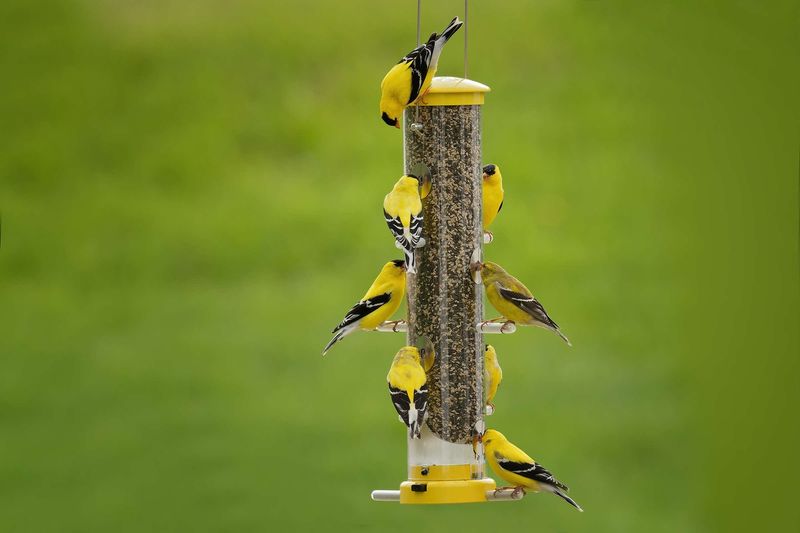
Watching a single goldfinch at a feeder one moment and then six the next is not unusual, and the explanation comes down to how this species naturally feeds. American Goldfinches are social birds that commonly gather in groups outside the active nesting period.
Even during breeding season, they may feed near other birds at productive food sources.
ODNR notes that goldfinches are frequently seen in flocks, particularly as the breeding season winds down and family groups begin to merge with other birds in the area. Cornell Lab of Ornithology also describes their tendency to feed socially.
Several birds using the same food source at once is normal behavior, not a sign that something unusual has happened in the neighborhood.
Flock composition and size can shift from day to day and even hour to hour. A group of a dozen birds in the morning may shrink to three by afternoon.
It may also grow if other goldfinches moving through the area stop at the same feeding spot. Goldfinches regularly use vocal contact calls in flight and while feeding.
These may help birds stay aware of where others are foraging, although their precise role in coordinating group movement is not fully settled.
What is clear is that the social nature of this species means feeder numbers can change rapidly without any dramatic cause behind the shift.
6. A Busy Feeder Does Not Mean Natural Food Has Disappeared
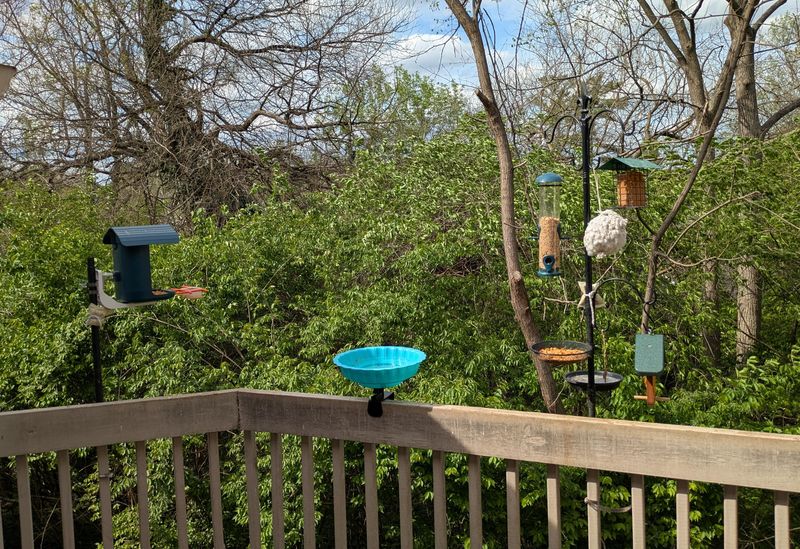
A feeder busy with activity despite abundant Ohio flowers blooming nearby is a useful reminder that heavy feeder use and natural food scarcity are not the same thing.
Birds may visit a concentrated seed source even when natural food remains available in the surrounding area.
Convenience, the presence of other birds at a familiar spot, and local flock movement can all influence when and how often goldfinches stop at a feeding station.
Project FeederWatch and Cornell Lab of Ornithology suggest that supplemental feeding can be part of a healthy habitat. It does not replace the value of natural food sources.
Yards with native seed-producing plants such as coneflowers or native asters offer additional foraging options. They spread birds across a wider area and reduce pressure on any single feeder.
That kind of habitat variety supports birds in a more complete way than seed alone.
Feeder traffic is not a reliable measure of how much wild food exists nearby. A homeowner who sees ten goldfinches at the feeder cannot conclude from that count alone that the surrounding fields are empty of seed.
Likewise, a yard with little feeder activity is not automatically less suitable habitat. Watch where birds go after leaving the feeder and note whether they move toward open areas with seed heads.
That can provide more context than the feeder count alone.
7. Patchy Feathers Can Signal The Late Summer Molt Is Getting Underway
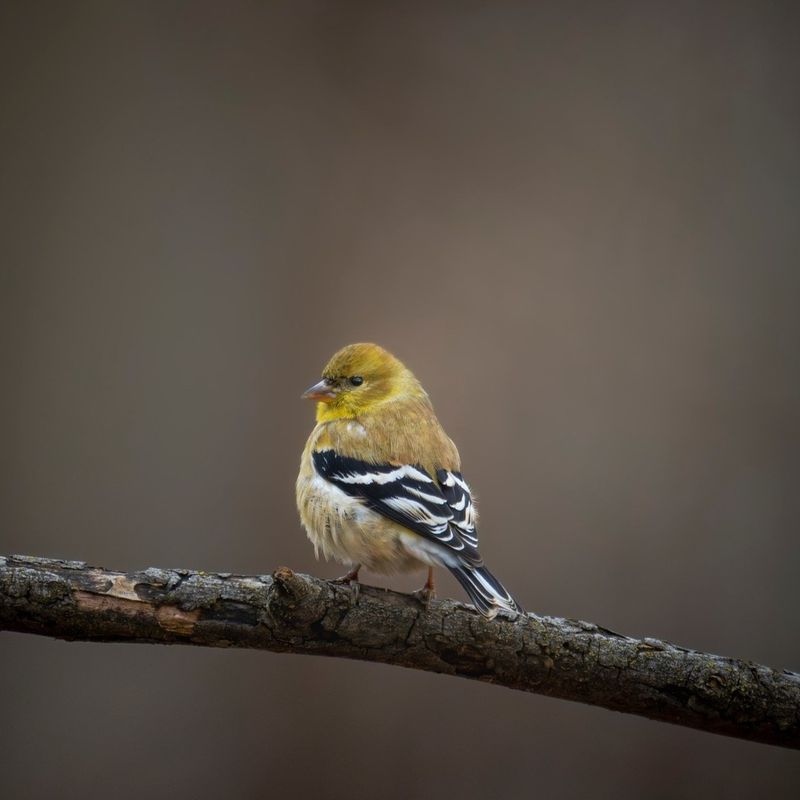
A male whose bright summer feathers look uneven or less vivid than they did in June is not necessarily in poor health. American Goldfinches undergo a complete molt in late summer, replacing their body feathers as the season changes.
Cornell Lab of Ornithology describes this process for adult males as a shift from the bold yellow breeding plumage toward a more muted, olive-tinged winter coat.
That transition does not happen overnight. Individual feathers are replaced gradually, which means a bird may look patchy or scruffy for a period as old feathers drop and new ones grow in.
The timing varies among individuals, so some birds at a feeder may still look crisp while others appear noticeably duller. Adult females and immature birds already carry less vivid plumage year-round, which makes molt harder to spot in those individuals.
Patchy plumage alone is not a diagnosis of illness. Poor feather condition can result from normal molt, juvenile plumage, or female coloring, and none of those require any intervention.
A bird showing other signs, such as lethargy, swollen eyes, or difficulty moving, is a different matter. Project FeederWatch recommends checking its current guidance if visibly unwell birds appear at a feeding station.
The appropriate response can depend on the situation and current regional conditions. Increased feeder activity and changing plumage often simply overlap in the same part of the season.
8. The Crowd May Thin Again As Food And Seasonal Movements Change
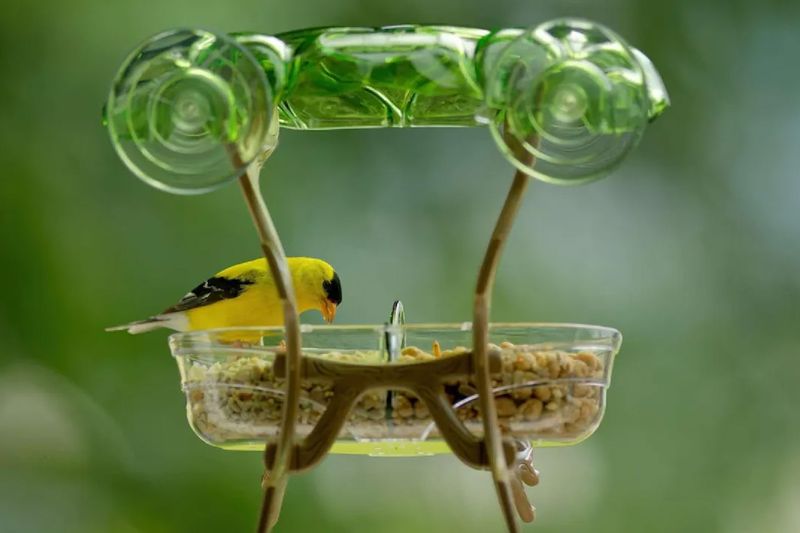
A feeder that grows quieter several weeks after a busy stretch is not sending a distress signal. Feeder counts are snapshots of activity at a specific place and time, not a complete picture of how many birds are living in the surrounding area.
Numbers at any one feeding station can rise and fall based on natural food availability, shifting flock movements, and changes in local habitat conditions.
ODNR describes American Goldfinches as permanent residents in Ohio, meaning the species is present in the state year-round. That designation applies to the species as a whole, not to every individual bird.
Local and seasonal movements do occur. Birds that regularly visited a yard through late summer may spend more time elsewhere as seed crops and flocking patterns change.
Concluding that a quieter feeder means the birds have left the region entirely is not supported by the resident status of the species.
Keeping a feeder clean and stocked with fresh seed is worthwhile regardless of how many birds appear on a given day. Remove spoiled or wet seed and clean the feeder regularly according to Project FeederWatch guidance.
Clearing debris from the ground below the feeder is also good practice throughout the year. What the feeder count on one afternoon cannot tell you is how many goldfinches are foraging across the broader landscape just beyond your yard.