What It Means When Sandhill Cranes Show Up In Your Florida Yard This Fall
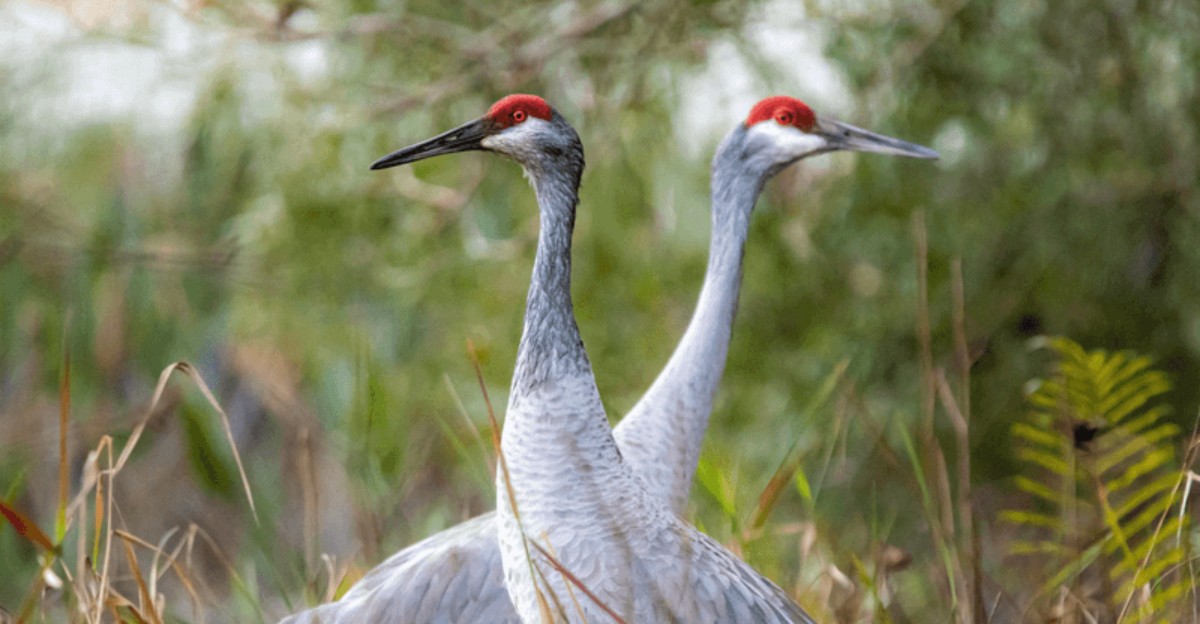
A pair of tall gray birds strolls across your lawn like they own the property, and you’re not about to argue.
Sandhill cranes don’t pick yards at random, and Florida gets more of them each fall as snowbirds from the north join the locals. Some are year-round residents.
Others just flew in after a very long trip. Telling the two apart takes a sharp eye, and the difference matters.
Their visit says plenty about your property, and about what’s happening far from it. Folks who read the signs right tend to enjoy the show.
Folks who don’t often end up with a muddy mess and a few frayed nerves.
A few simple habits keep both sides comfortable.
Watch them for a few minutes before you step outside. These birds reward patience.
1. Florida Has Two Kinds Of Sandhill Cranes
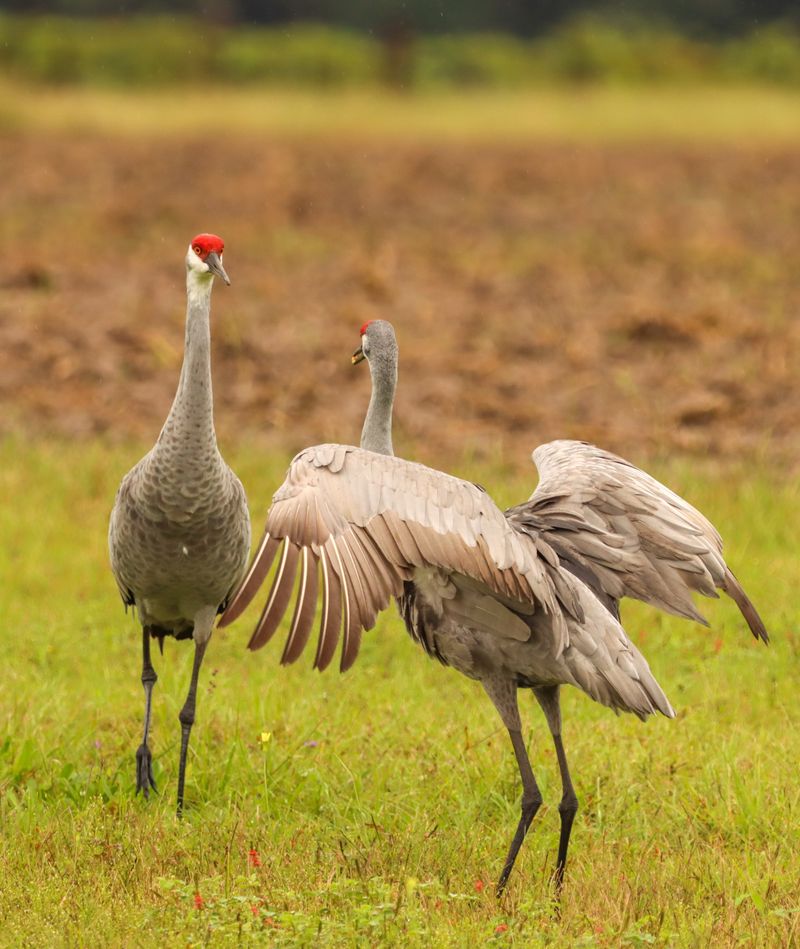
Picture a family reunion where the cousins look almost exactly alike. That is pretty much what happens in the state every fall.
Two different groups of sandhill cranes end up sharing the same fields and lawns.
Scientists call them subspecies, which means they are the same kind of bird with small differences. One is the Florida sandhill crane, known by the science name Antigone canadensis pratensis.
The other is the greater sandhill crane, or Antigone canadensis tabida.
Both have long gray bodies, long legs, and that famous red patch on the head. Both make the same loud, rolling calls that can carry for a long way.
If you have ever been woken up by one, you know just how strong those voices are.
Why does this matter to you? Knowing there are two kinds helps explain why you might suddenly see more cranes in your neighborhood.
It also explains why rules and protections can seem a little confusing at first.
Here is a fun way to think about it. One group is the hometown crowd that stays put.
The other group is the seasonal visitors who show up with the cooler weather, a bit like snowbirds from up north.
Next time you spot a crane, ask yourself which group it might belong to. You may not know for sure, but guessing is part of the fun.
2. Some Live Here Year-Round
Some neighbors never move away, and Florida sandhill cranes fit that description well. These birds do not migrate at all.
They spend every season, from steamy summer to mild winter, right here in the Sunshine State.
Experts think there are about 4,000 to 5,000 of these resident cranes. That might sound like a lot, but it is a small number for a whole state.
Your local pair could be part of a pretty exclusive club.
Because they stay all year, these cranes raise their families in the state too. Most nesting happens in late winter and spring.
Parents build nests in shallow marshes and wetlands, then guard their eggs with serious dedication.
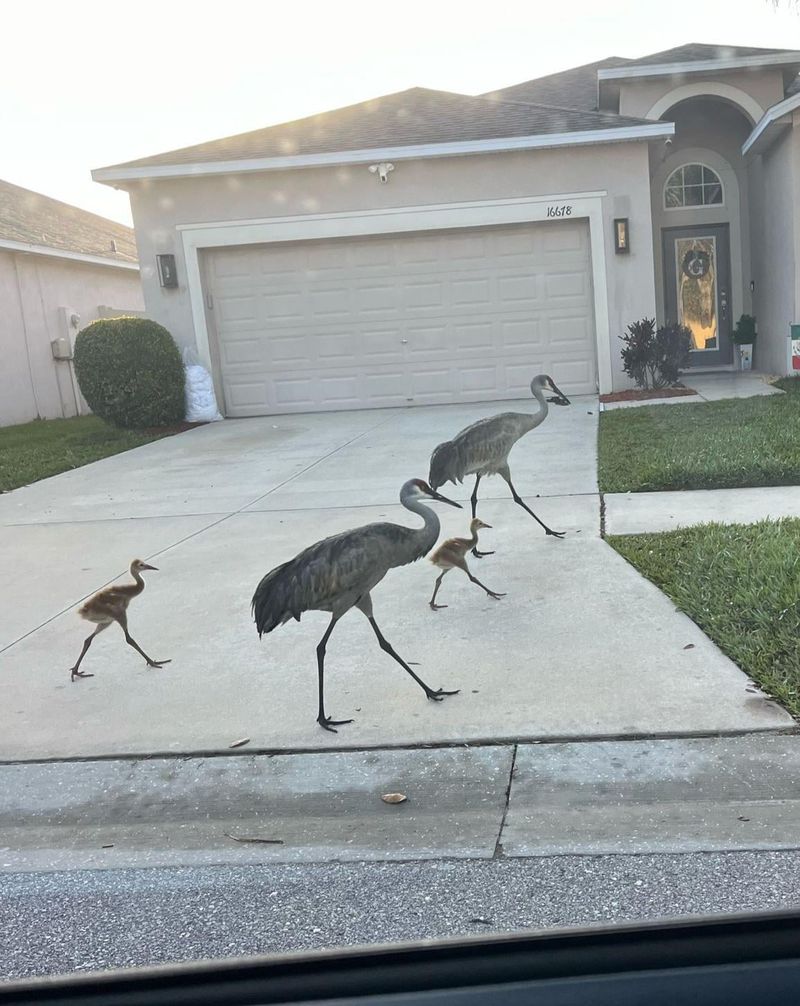
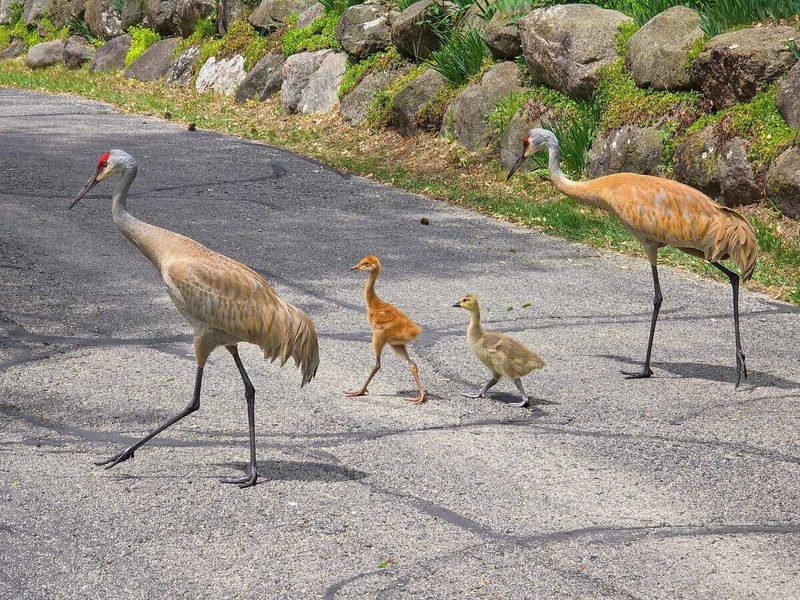
Once the chicks hatch, you might see them trailing behind mom and dad. The babies, called colts, are fluffy and cinnamon colored.
They can walk and follow their parents within a day of hatching, which is pretty impressive.
If cranes show up in your yard during summer, they are almost surely residents. Many pairs stay together for years and return to the same areas.
Some homeowners even give their regular visitors nicknames.
Fun fact: sandhill cranes are among the oldest bird species still around today. Fossils suggest they have been walking the earth for millions of years.
Your yard guests have quite a family history.
3. About 25,000 More Fly In From The North Each Fall
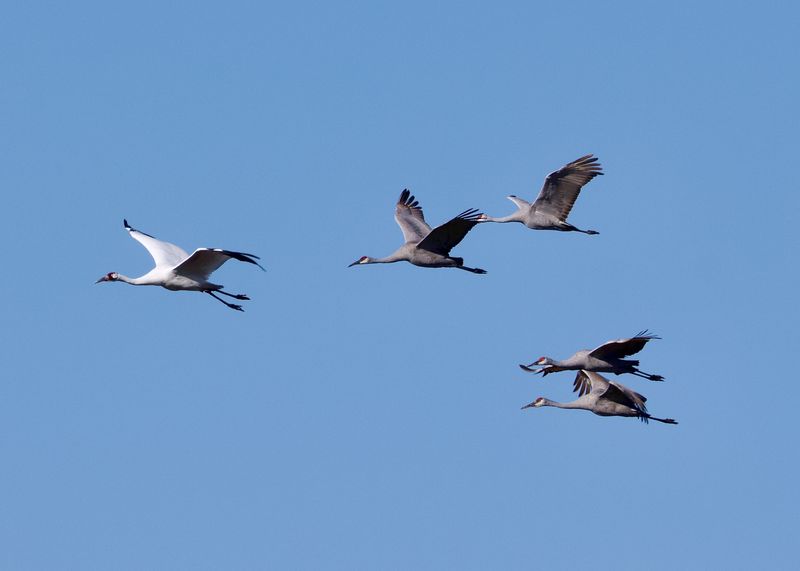
Look up on a crisp fall afternoon and you might catch a wavy line of birds high overhead. Their calls drift down long before you can see them clearly.
Those travelers are greater sandhill cranes heading south for the winter.
Roughly 25,000 of them make the trip to the state each year. Most come from nesting grounds around the Great Lakes, in places like Michigan and Wisconsin.
That is a journey of many hundreds of miles.
Why come here? Northern winters freeze the ground solid, which makes finding food tough.
Florida offers warm weather, open fields, and soft soil full of tasty snacks.
The cranes ride warm air currents, called thermals, to save energy. They circle upward like they are on an invisible elevator, then glide forward.
It is a clever trick that lets them cover long distances without tiring out.
For you, this means fall and winter are prime crane season. A yard that had two cranes in summer might suddenly have a small crowd by December.
The visitors usually head back north around late winter or early spring.
Want to enjoy the show? Keep binoculars near a window and listen for that rattling call.
Watching a big flock land in a field is one of the coolest free shows the state has to offer.
4. The Two Are Often Impossible To Tell Apart
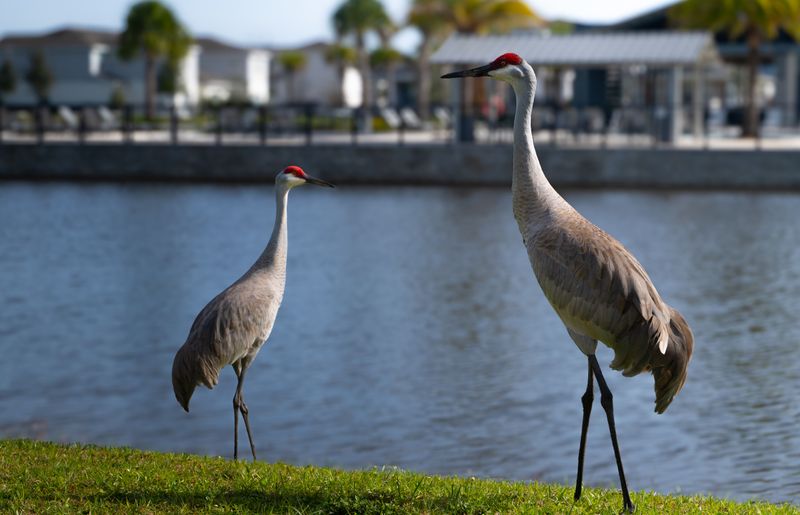
Honestly, even bird experts sometimes shrug at this one. Standing in your yard, a resident crane and a migrating crane can look like twins.
Telling them apart by sight is a real challenge.
The greater sandhill crane is usually a bit larger. Experts also check small details like head shape and how light or dark the feathers look.
But without the two birds side by side, those clues are hard to use.
Size can be tricky too. A big Florida crane and a smaller greater crane might be nearly the same height.
Feathers can also look different depending on light, mud, or even staining from soil.
So what can a regular person do? Timing is your best hint.
A crane seen in June or July is almost surely a Florida resident. A big group in January could include plenty of northern visitors.
Behavior gives clues as well. Residents often hang around in pairs or small family groups.
Migrants tend to gather in larger flocks, especially in farm fields and open prairies.
Here is a quirky detail: cranes sometimes paint themselves. They rub mud on their feathers, which can turn them a rusty brown color.
So if you see a brownish crane, it is not a new species, just a bird with a fancy mud makeover.
5. Your Lawn Is Serving Up Grubs And Mole Crickets
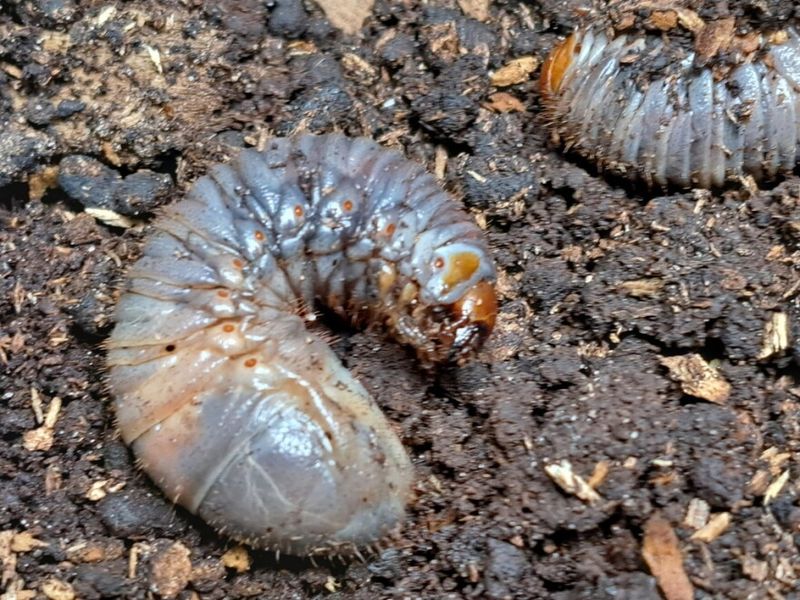
Think of your lawn as a buffet with the food hidden under a green tablecloth. Cranes have figured out exactly where the good stuff is.
When they keep coming back, your soil is probably packed with snacks.
Sandhill cranes eat both plants and animals, so they are not picky. Favorites include beetle grubs, mole crickets, earthworms, snails, and even small frogs.
Lawns, golf courses, and neighborhood greens make easy hunting grounds.
Mole crickets are a big deal in the state. They tunnel through the soil and chew on grass roots, leaving brown, spongy patches.
Grubs do similar damage by munching roots from below.
Watering habits can play a role too. Lawns that get too much water stay soft and damp, which bugs love.
Soft soil also makes it easier for cranes to poke their beaks in.
Want a quick test? Pour a bucket of soapy water over a small patch of grass.
If mole crickets pop up within a few minutes, you have found what the cranes have been hunting.
A steady crane visit is like a free yard report card. It tells you something is happening underground.
You can use that info to adjust watering and keep an eye on brown spots before they spread.
6. Their Digging Works As Natural Pest Control
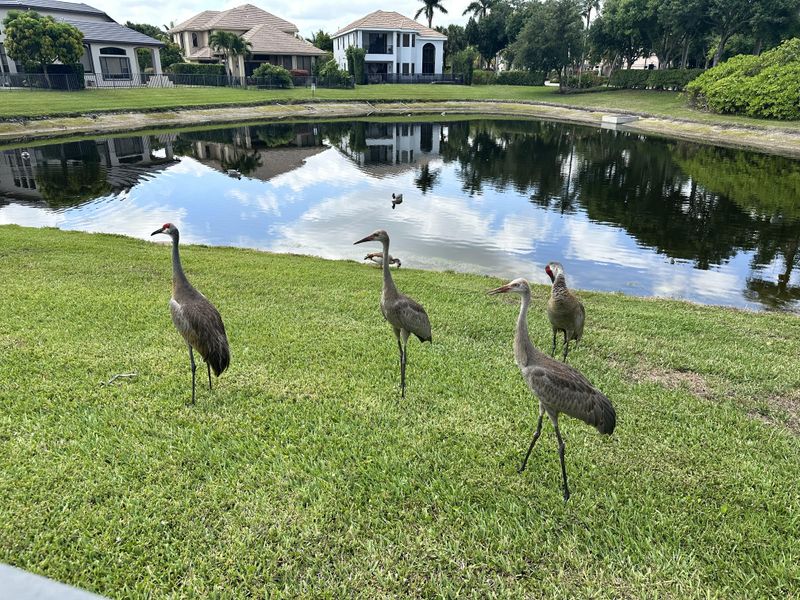
Sure, a few torn-up patches of grass can be annoying. But before you get upset, consider what your feathered workers are doing.
They are hunting the very bugs that wreck lawns.
Scientists call this biological control. It simply means using living things, instead of chemicals, to keep pests in check.
Cranes gobble up mole crickets and beetle grubs one beak-poke at a time.
There is a bonus, too. All that probing opens tiny holes in the ground.
Those holes let air, water, and nutrients reach grass roots more easily, kind of like a free aeration service.
Of course, the digging can look messy for a while. Small divots usually fill back in as the grass grows.
Lightly pressing loose patches down with your foot helps speed things along.
If the damage feels like too much, focus on the real cause. Fewer underground pests means fewer reasons for cranes to dig.
Cutting back on extra watering is a simple first step.
Many homeowners find a happy middle ground. They accept a little lawn mess in exchange for fewer bugs and fewer chemical treatments.
Plus, they get front-row seats to watch some of state’s most impressive birds at work, which beats any sprinkler system.
7. Feeding Them Is Against Florida Law
Tossing a handful of bread to a friendly crane might seem harmless. In the state, though, it can land you in legal trouble.
Feeding sandhill cranes on purpose has been against the law since 2002.
The rule comes from the Florida Fish and Wildlife Conservation Commission, often called FWC. It falls under Florida Administrative Code 68A-4.001(6).
A first offense can bring a civil penalty, and repeat offenses can lead to stiffer consequences.
Here is the sneaky part. Spilled birdseed under a feeder can count as feeding too.
FWC suggests cleaning up seed on the ground or moving feeders where cranes cannot reach.
Why so strict? Cranes that get handouts lose their natural fear of people.
They may start approaching folks, pecking at doors, or acting pushy around kids and pets.
Hand-fed cranes also spend more time near roads and driveways. That puts them at greater risk from cars.
Human food can also pull them away from the healthy diet they find in fields and marshes.
The best way to show some love is to keep your distance. Enjoy the view, snap photos, and let them forage on their own.
A wild crane that stays a little wary of people is a crane with a much better shot at a long life.
8. Cover Windows And Cars If They Attack Their Reflection
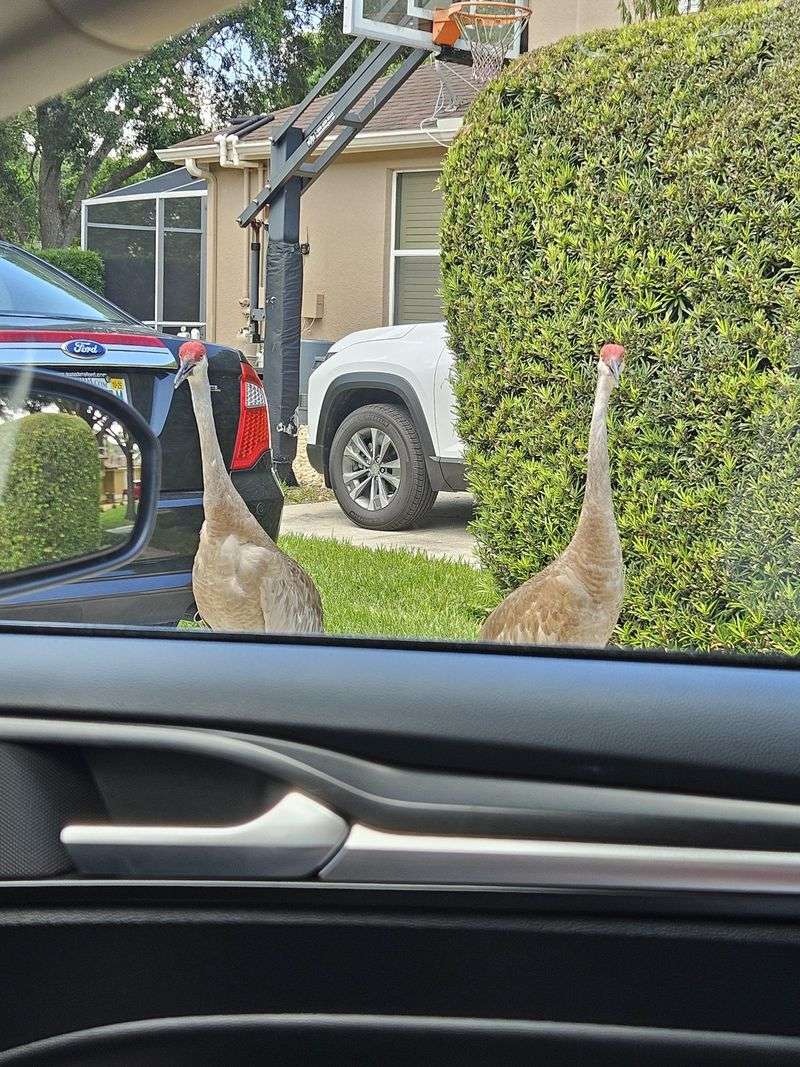
Tap, tap, BANG. One homeowner woke to find a crane boxing with its own reflection in a sliding glass door.
It sounds funny until you see the scratches it leaves behind.
Cranes can be very protective of their space, especially during nesting season. When one sees its reflection, it thinks a rival has moved in.
So it pecks, kicks, and flaps to chase off the pretend intruder.
Cars are common targets too. Shiny doors, mirrors, and bumpers make perfect mirrors.
A determined crane can leave dents and scratched paint in a single morning.
Luckily, the fix is fairly simple. Cover lower windows or glass doors with something that blocks reflections.
Old sheets, cardboard, or window film all work as short-term solutions.
For vehicles, park in a garage when you can. If that is not an option, a car cover does the trick.
Folding mirrors in can help as well.
Another handy trick is setting up stakes with string or fishing line around problem spots. Cranes do not like stepping over these lines, so they tend to stay back.
Most of the time, this behavior fades once the season changes. Be patient, keep things covered, and your crane will likely return to bug hunting instead of shadowboxing.
9. Florida’s Resident Cranes Are A State-Threatened Species
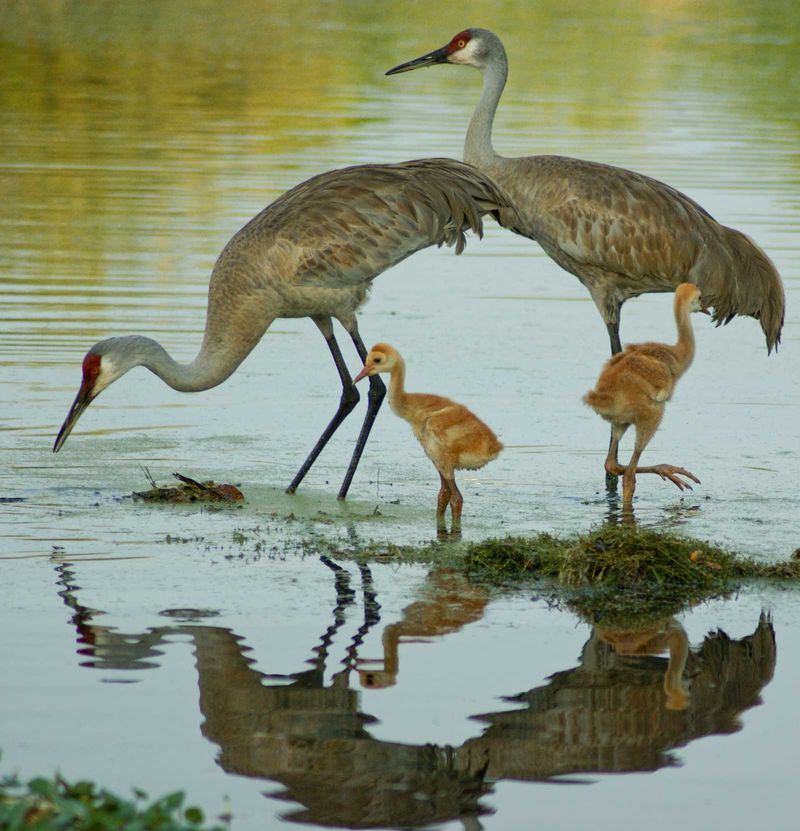
Spotting one in your yard is a bigger deal than you might think. The Florida sandhill crane is listed as a State-Threatened species.
That label means its numbers are low enough to worry wildlife experts.
The listing comes from Florida’s Endangered and Threatened Species Rule. On top of that, the U.S.
Migratory Bird Treaty Act protects all sandhill cranes. Harming them or their nests is against the law.
So what is pushing their numbers down? The biggest problem is losing places to live.
Wetlands get drained, and open prairies turn into neighborhoods, shopping centers, and farms.
Cars are another serious danger. Cranes often walk slowly across busy roads, sometimes with chicks in tow.
Drivers who are not paying attention can strike them.
You can help in small but real ways. Slow down in neighborhoods where cranes hang out, and give them time to cross.
Keep pets leashed so they do not chase the birds.
Supporting wetland protection makes a difference too. Local parks, nature preserves, and conservation groups all work to save crane habitat.
Even planting native plants can help the wider ecosystem.
Every crane strolling through your grass is a small piece of Florida’s wild story. Treating them with respect helps make sure kids years from now still hear that ancient bugling call.