The August Mistake That Leaves Georgia Camellias With Fewer Blooms Next Year
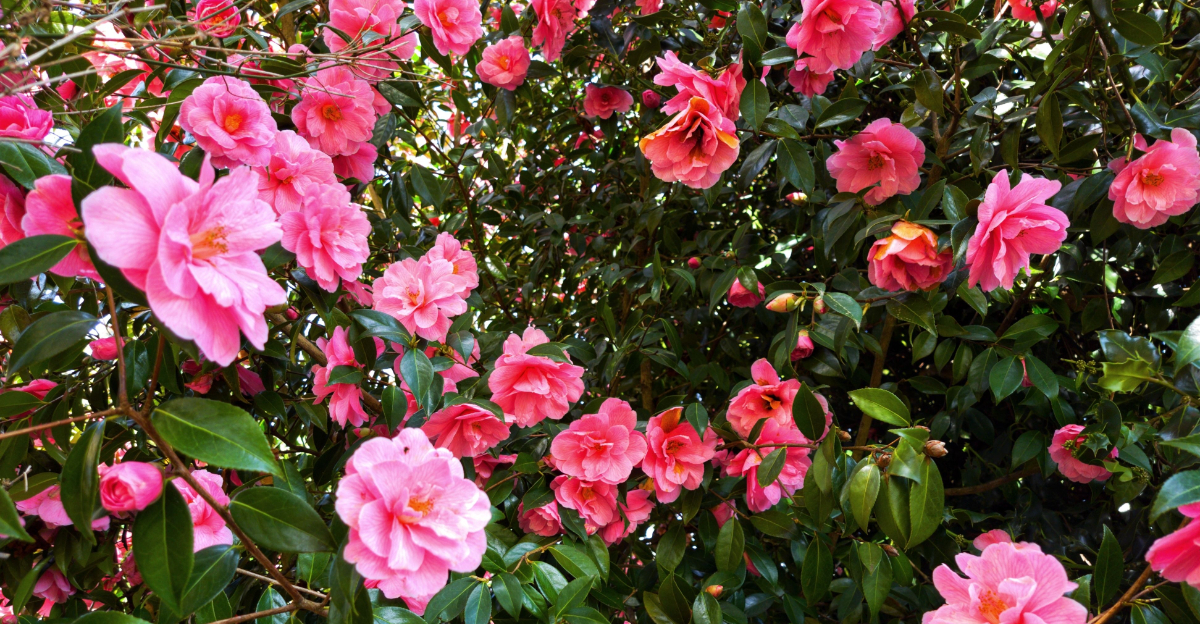
Camellias do not wait for spring before deciding how well they will bloom. The work begins much earlier, even while summer is still holding on.
August is one of the easiest months to overlook because the shrub seems calm and unchanged. That quiet appearance hides an important stage that can influence next year’s flowers.
One common mistake slips by without drawing any attention at first. You may not notice anything is wrong until blooming season returns months later.
The remaining weeks of summer give camellias valuable time to prepare for the season ahead in Georgia. What happens now can shape how full and colorful those spring blooms become.
Now is the perfect time to give your camellia a closer look and make sure it is heading into the coming months in the best possible condition.
A little attention this month can make the difference between an average flowering season and a shrub covered with beautiful blooms next spring.
1. Flower Buds Begin Forming During August
August is not downtime for camellias. Behind every leafy branch, something important is quietly happening.
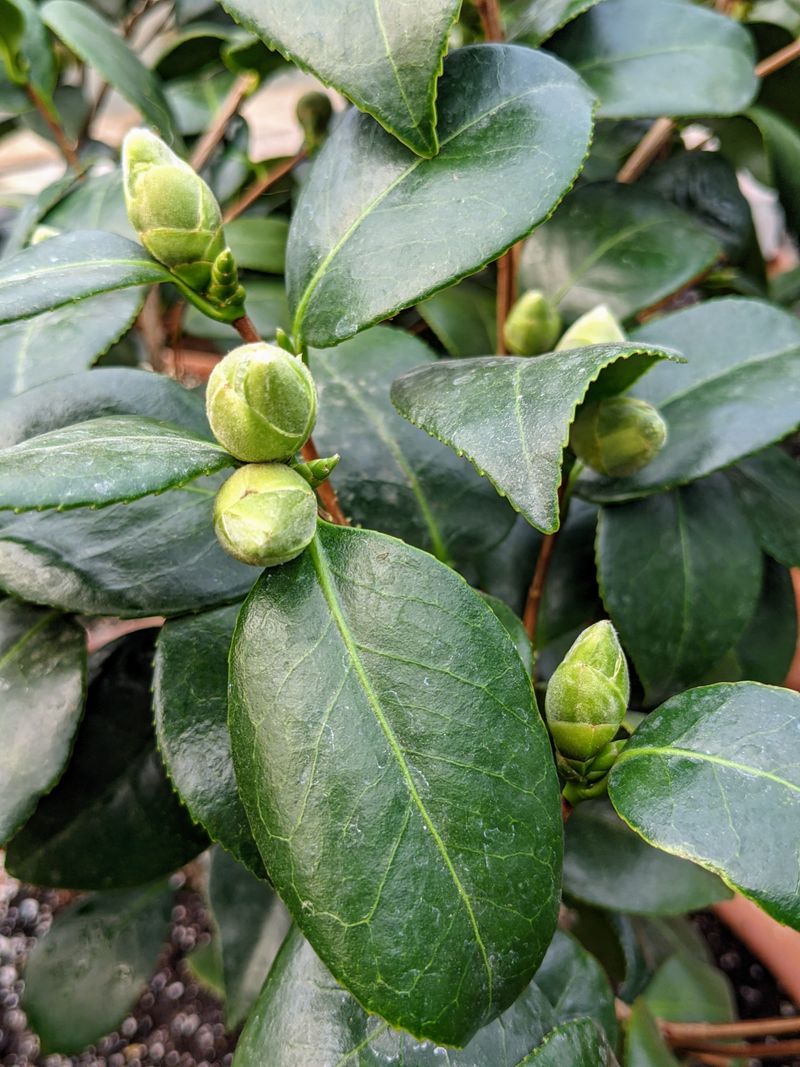
Flower buds start forming on camellia plants in midsummer. By August, many of those buds are already visible as small, rounded swellings along the stems.
They look almost identical to leaf buds at first glance, which is part of why so many gardeners miss them.
Camellias set their buds earlier than most flowering shrubs. While other plants are still blooming, camellias are already building next season’s flowers.
Cut a stem in August, and you are removing buds that took weeks to develop.
Bud development timing can vary slightly depending on the variety and local conditions. Japonicas and sasanquas follow different schedules, so knowing your specific plant helps.
Sasanquas tend to set buds a bit earlier than japonicas in most Southern gardens.
Warm nights and long days in August actually support bud initiation. Disrupting the plant during this window, through heavy cutting or stress, can reduce bud count noticeably.
Not every cut causes damage, but heavy pruning at this stage carries real risk.
Watching for those small bud swellings before reaching for shears is a smart habit. Once you know what forming buds look like, you will think twice about pruning in late summer.
2. This Year’s Growth Carries Next Year’s Blooms
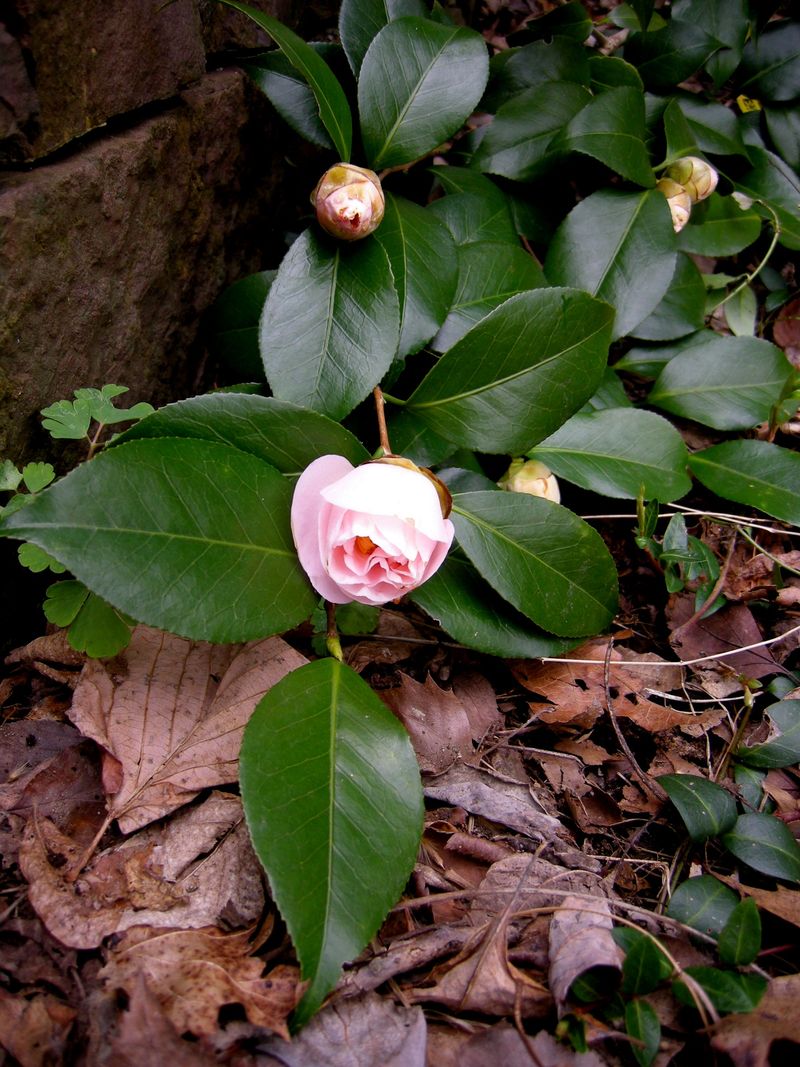
New growth and next year’s flowers are directly connected on a camellia plant. Cut the new growth, and you cut the blooms along with it.
Camellias bloom on wood that grew during the current season. Stems that pushed out in spring and early summer are the same stems carrying developing buds by August.
Removing that wood removes your flower potential for the following year.
Gardeners sometimes assume old, woody stems are the problem areas. Older wood does occasionally need attention, but the fresh green growth is where next season’s action lives.
Targeting new stems for removal in August is one of the most common and costly pruning mistakes.
Your Georgia Garden Changes Every Week. Your Plan Should Too.
Gardening in Georgia changes quickly throughout the season. Every Friday you’ll receive a simple weekly plan showing exactly what to plant, prune, fertilize, harvest, and protect so you never miss the right timing.
Healthy new growth looks lush and full by midsummer. Pruning it back can feel productive, especially when plants look bushy.
But that fullness is a sign the plant is doing exactly what it should be doing before fall arrives.
Bud development on new wood follows a fairly predictable pattern in established plants. Younger plants or recently transplanted camellias may behave slightly differently as they settle in.
Even so, the general principle holds across most varieties grown in Southern landscapes.
3. Heavy Pruning Removes Developing Buds
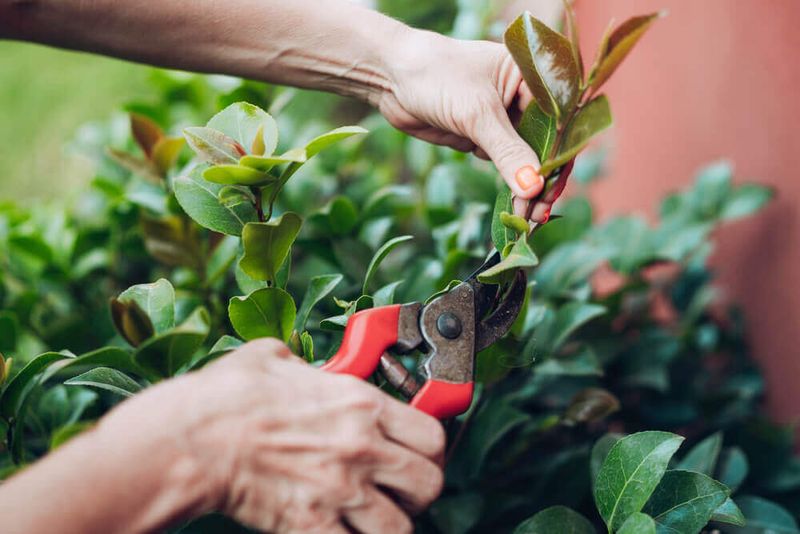
Grabbing the shears and going hard on a camellia in August feels satisfying. The results the following spring, however, tend to be disappointing.
Heavy pruning in August removes a significant portion of the buds already forming on the plant. Those buds were weeks in the making.
Once the stem is cut, the buds go with it, and no amount of care afterward brings them back for that season.
Light trimming is a different matter. Snipping a stray branch here or there causes minimal disruption.
Heavy shaping, however, where large sections of the canopy are removed, is where bud loss becomes a real problem.
Some gardeners prune camellias in August because the plants look wild or uneven. That concern makes sense, but timing matters more than appearance in this case.
Waiting just a few months allows buds to mature before any reshaping takes place.
Varieties with dense growth habits often tempt gardeners into heavy summer cuts. Thick, layered branches can look like they need thinning.
But underneath that density, buds are quietly developing on nearly every new stem.
Bud count directly affects how full the bloom display looks in winter or spring. Fewer buds mean fewer flowers, plain and simple.
Heavy August pruning is one of the most straightforward ways to reduce next year’s bloom count without realizing it until it is too late.
4. Late Fertilizer Can Delay Stem Hardening
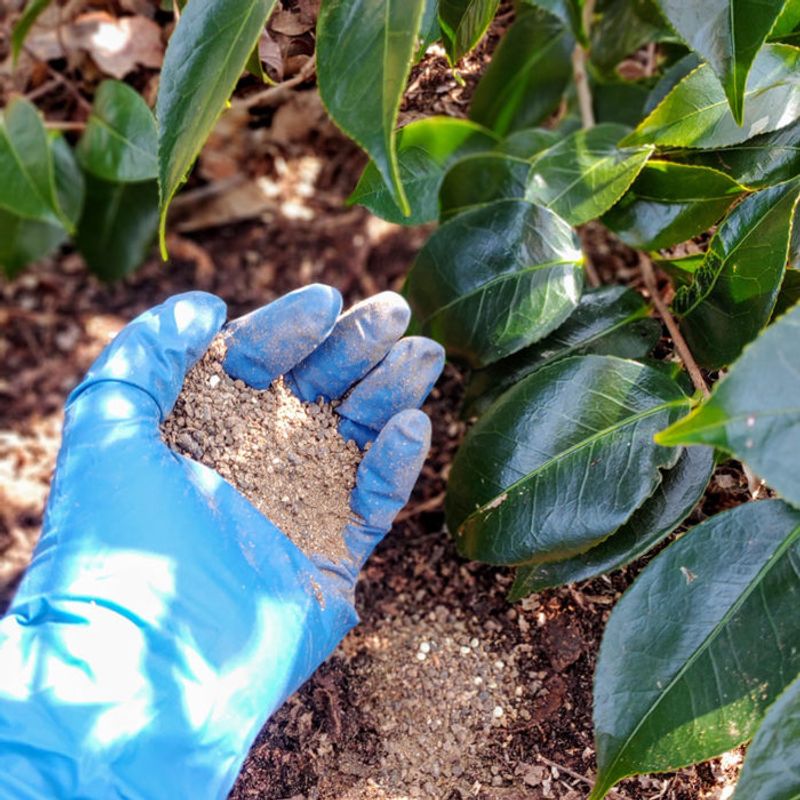
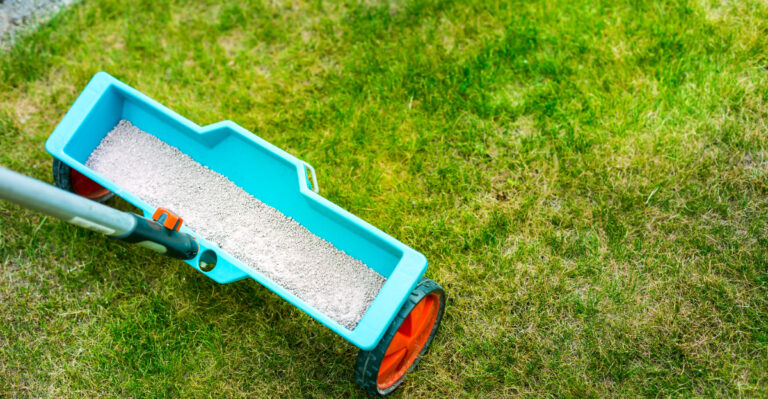
Fertilizer in August sends the wrong message to a camellia. Instead of slowing down for fall, the plant pushes out fresh, tender growth at exactly the wrong time.
Late-season fertilization encourages new shoots to emerge when the plant should be shifting focus toward bud development and preparing for cooler temperatures. Soft, actively growing tissue takes longer to harden off before winter arrives.
In Georgia’s climate, winters are mild but not without cold snaps that can damage vulnerable stems.
Stem hardening is a natural process where plant tissue toughens up as temperatures drop. Fertilizer applied in August, especially nitrogen-heavy products, can interrupt or delay that process.
Stems that stay soft heading into fall face a higher risk of cold injury during unexpected freezes.
Timing fertilizer applications correctly matters as much as choosing the right product.
Most camellia growers recommend finishing fertilization by early to mid-summer, giving plants enough time to process nutrients before late-season growth becomes a concern.
A slow-release fertilizer applied in spring causes far fewer problems than a quick-release product applied in August. Soil conditions and plant health also influence how strongly a camellia responds to late feeding.
Well-established plants in good soil may show less reaction than younger or stressed ones.
5. Soft Growth Faces Greater Winter Damage
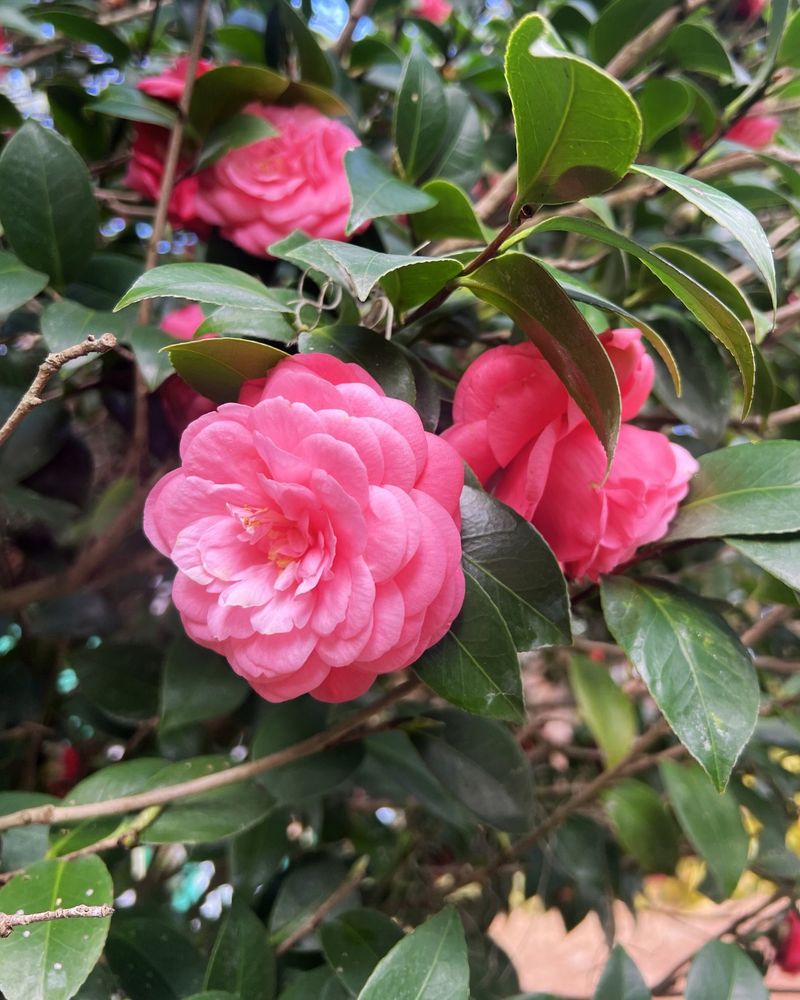
Soft, immature stems on a camellia going into winter are a liability. Cold air hits tender growth harder than hardened wood, and the damage shows up fast.
When camellias push new growth late in the season, that tissue does not always have enough time to toughen before cold weather arrives. In most parts of the South, temperatures can drop sharply between November and February.
Soft stems exposed to those drops can suffer browning, tissue damage, or bud loss.
August pruning and late fertilizing both contribute to the problem. Cutting stimulates new growth, and fertilizer feeds it.
Both actions together can push a camellia into producing soft, immature tissue well into fall, leaving it poorly prepared for winter conditions.
Established camellias with hardened wood handle cold snaps much better than plants with fresh, soft growth. Hardened stems have had weeks or months to build up natural protections.
Soft growth skips that process and goes into cold weather vulnerable.
Not every winter in the South brings damaging cold. Mild years may pass without obvious harm to soft stems.
But in colder years, the difference between hardened and unhardened growth becomes very clear, and the plants with soft tissue show it first.
Avoiding late-season disruptions, including August pruning, gives stems the full window they need to harden properly before temperatures drop in late fall and early winter.
6. Broken Limbs Are The Only Summer Exception
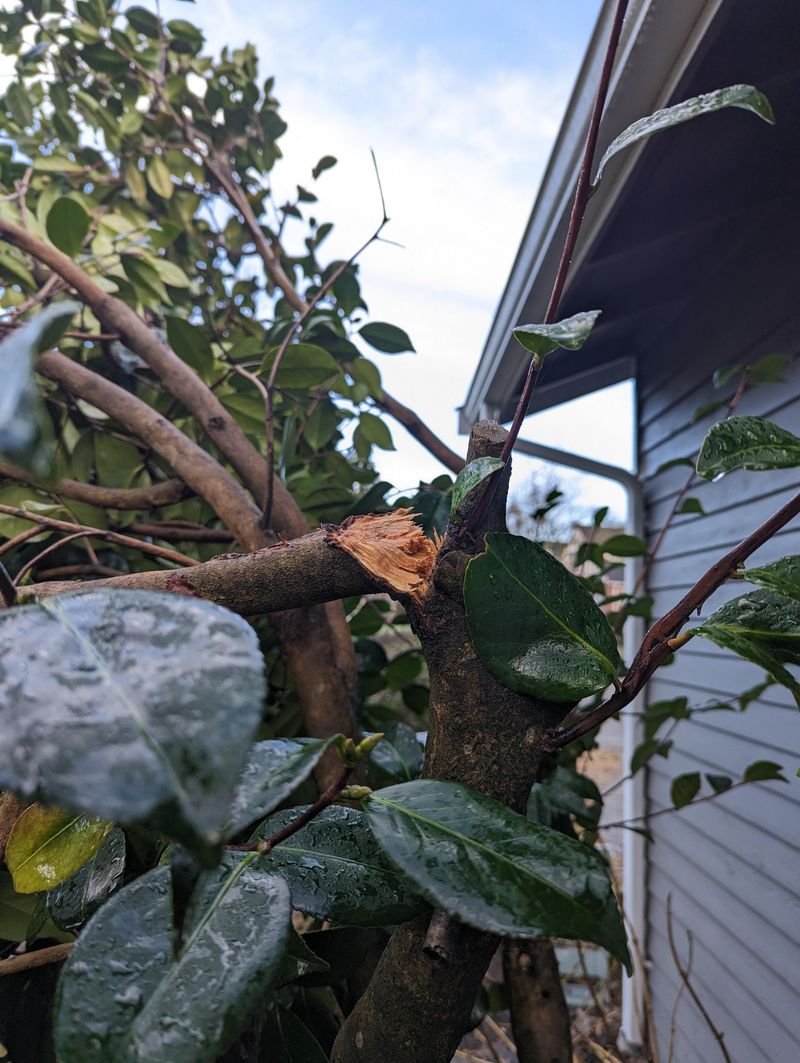
Strict rules about pruning timing have one reasonable exception. Broken, cracked, or badly damaged limbs should not stay on the plant regardless of the season.
Storm damage, pest pressure, or physical accidents can break camellia branches at any point during the year. Leaving damaged wood attached creates more problems than removing it.
Broken limbs can introduce disease, attract pests, and pull down neighboring healthy branches if left in place.
Removing only the damaged portion is the key. Clean cuts just above a healthy node limit the amount of healthy tissue lost.
Targeted removal of a single broken branch is very different from a broad shaping session across the whole plant.
Summer storms are common across the South, and camellias planted near structures or high-traffic areas are occasionally at risk. Keeping a close eye on plants after heavy wind or rain makes sense.
Catching a broken limb early and removing it cleanly reduces stress on the rest of the plant.
Using clean, sharp tools for any summer cut matters more than many gardeners realize. Ragged cuts or dirty blades can introduce problems to a plant that is actively growing and somewhat vulnerable.
A quick wipe of the blades before cutting is a simple precaution.
7. Major Reshaping Belongs After Flowering
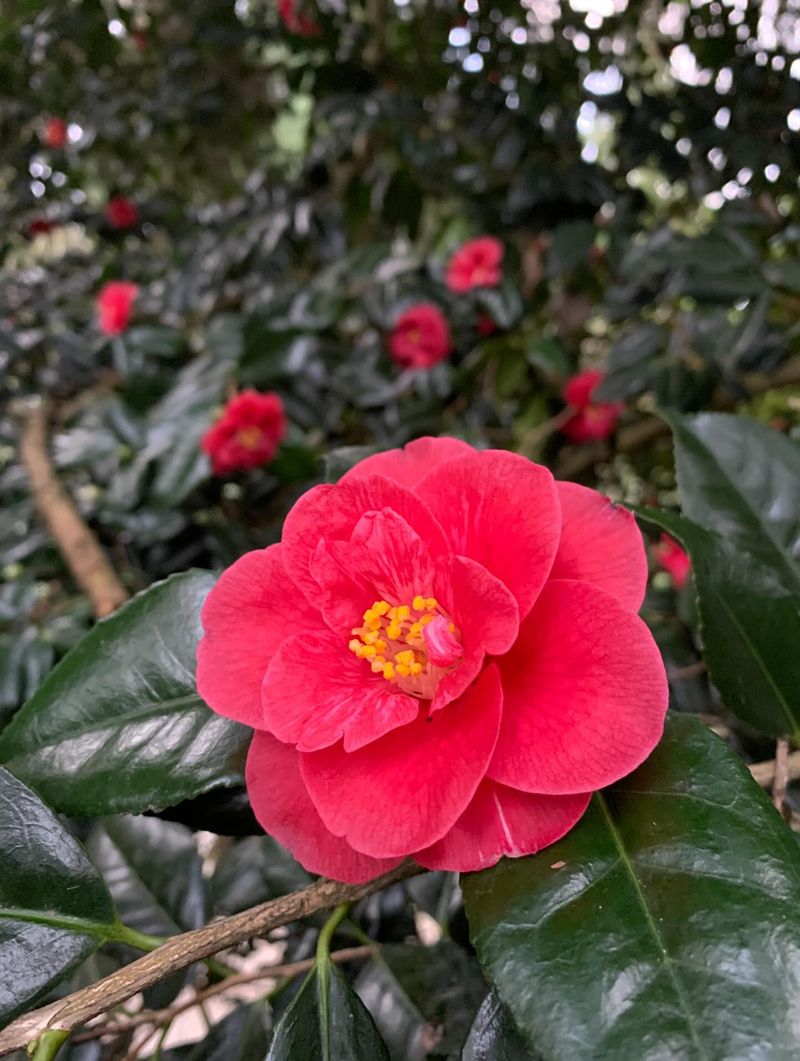
Waiting until after flowering is the simplest fix for most camellia pruning problems. Timing the cut correctly protects buds, preserves blooms, and still gives the plant time to recover before summer growth begins.
Camellias that bloom in fall and winter, like most sasanquas, can be pruned shortly after their flowers fade. Spring-blooming japonicas follow the same logic.
Once the last flower drops, the plant is ready for shaping without the risk of cutting into developing buds.
Pruning right after bloom gives the plant a full growing season to recover and set new buds. Cuts made in late winter or early spring heal quickly as temperatures warm and growth resumes.
New stems pushed out after pruning have the entire summer to mature and form buds for the following year.
Major reshaping, reducing overall size, correcting uneven growth, or removing crossing branches, fits naturally into the post-bloom window.
Gardeners in Georgia who wait for this timing tend to see much fuller bloom displays the following season compared to those who prune in summer.
Patience is the main skill required. Camellias that look a little overgrown in August are not causing harm.
Letting them hold their shape through bloom season and pruning afterward is a straightforward approach that protects next year’s flower count without much extra effort.