What It Really Means When A Fox Shows Up In Your Florida Yard
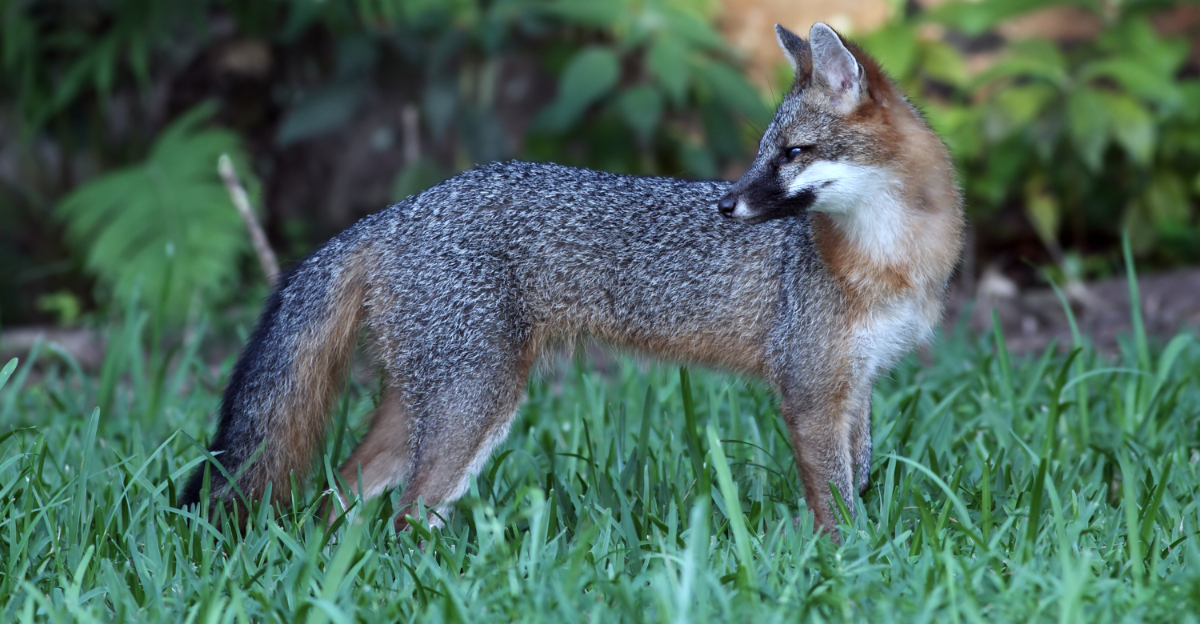
A fox in a Florida yard stops the morning routine cold. That unhurried trot across the grass, the pause, the direct look before it moves on.
Most people reach for their phone and spend the next hour wondering what to make of it. Foxes in Florida are not random.
They show up where conditions suit them, where prey is available, and where the habitat offers enough cover to move through comfortably. A fox crossing your yard is reading the property in ways most homeowners never consider.
The meaning behind that visit pulls from more than one direction. The ecological story is straightforward and worth knowing.
The cultural layer runs deeper, drawn from Indigenous tradition across the Southeast and Florida folklore that has followed this animal for generations. What that fox was actually doing in your yard is a more layered story than most people expect.
1. A Fox Visit Usually Means Food Or Shelter Is Nearby

That rust-colored visitor did not wander into your yard by accident. Foxes are highly observant animals, and when one shows up, the yard or surrounding area almost always offers something useful.
Food is usually the first draw. Rodents like rats and mice are a top target, and most residential yards quietly support a healthy rodent population without homeowners ever noticing.
Insects, frogs, lizards, and small birds also attract foxes looking for an easy meal.
Beyond food, foxes look for cover and calm. Dense shrubs, low decks, brush piles, and quiet corners near fences or sheds can all signal safety to a traveling fox.
Water sources like birdbaths, puddles, or drainage areas add to the appeal. A yard that offers food, water, and cover is essentially a welcome sign for local wildlife.
Some people feel a fox visit carries personal meaning, and that response is completely understandable. Many cultures associate foxes with cleverness, adaptability, and sharp awareness.
Those are meaningful qualities to reflect on. Still, the most grounded explanation starts with habitat.
Seeing a fox does not mean danger or a supernatural message. It usually means your yard has something worth checking out.
2. Your Yard May Sit On A Nighttime Wildlife Route
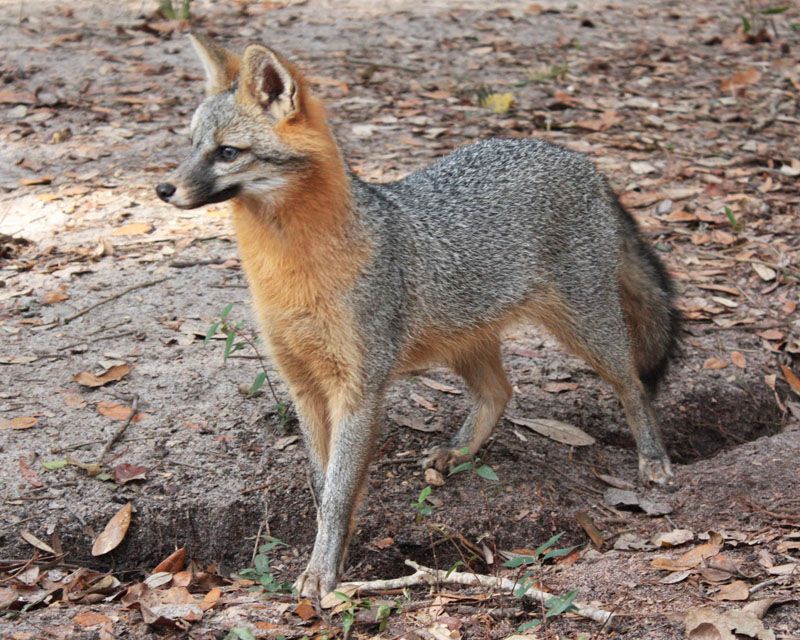
Picture a quiet neighborhood just after midnight. Most lights are off, traffic has slowed, and a gray fox slips through a gap in a fence, trots along a drainage canal, and disappears into a hedge three yards down.
That fox was not lost. It was following a route it probably uses several times a week.
Foxes move through neighborhoods as part of regular travel patterns. Fence lines, wooded lot edges, drainage ditches, golf course borders, empty lots, and even alleyways serve as natural corridors connecting patches of habitat.
Your yard may simply sit along one of those routes. The fox is not necessarily targeting your property.
It may just be passing through on the way to a hunting area or resting spot nearby.
Gray foxes are especially common in central and northern regions of the state, often near mixed forest edges. Red foxes tend to favor open areas, pastures, and suburban edges.
Your Florida Garden Changes Every Week. Your Plan Should Too.
Gardening in Florida changes quickly throughout the season. Every Friday you’ll receive a simple weekly plan showing exactly what to plant, prune, fertilize, harvest, and protect so you never miss the right timing.
Both species are most active around dawn, dusk, and during nighttime hours, though activity can shift depending on weather, season, and food availability.
If you see a fox moving quickly without stopping, your yard is likely just a waypoint on a much larger nightly map.
3. That Daytime Sighting Is Not Always A Red Flag

Catching a fox trotting across the yard in broad daylight can feel alarming, especially if you have heard that daytime movement signals illness. The reality is more nuanced.
Healthy foxes do sometimes move during daylight hours, and context matters a great deal when deciding whether to be concerned.
A fox raising pups has extra demands on its time. Nursing mothers and active parents often hunt during the day to keep up with the feeding schedule of a growing litter.
Foxes may also shift their activity during periods of disturbance, moving when the neighborhood is quieter rather than strictly following a nocturnal schedule. A fox crossing the yard calmly, alert, and moving with purpose is usually not cause for alarm.
What does deserve closer attention is behavior that looks off. A fox stumbling, circling without purpose, dragging a limb, appearing severely thin, or approaching people without hesitation may be showing signs of illness or injury.
Rabies is a real public health concern. Disoriented or unusually bold behavior warrants a call to the Florida Fish and Wildlife Conservation Commission, local animal services, or a licensed wildlife professional.
Observe from a safe distance and avoid approaching the animal. Let trained professionals make the assessment.
4. Pet Food And Trash Can Turn One Visit Into A Habit
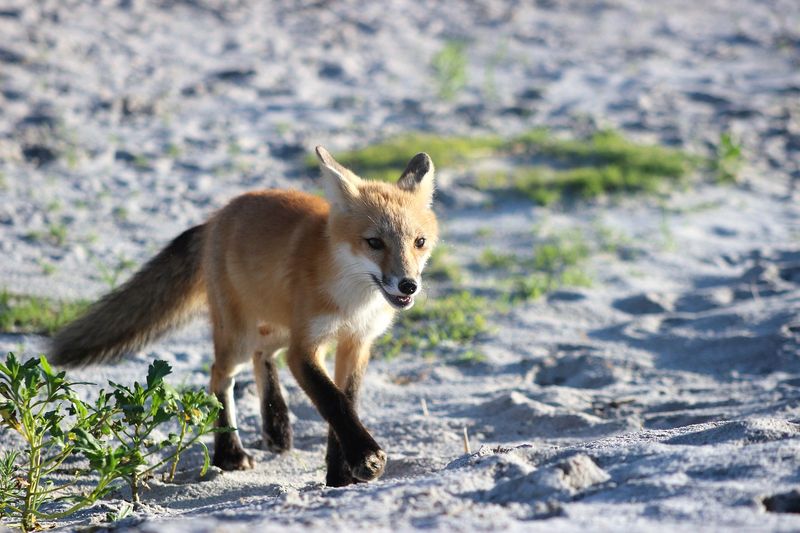
One visit from a fox is a wildlife moment. Repeated visits from the same fox can become a genuine management challenge.
The difference often comes down to what the yard is offering. Easy, reliable food is one of the fastest ways to teach a wild animal to return to a specific location.
Outdoor pet bowls left out overnight are a common attractant. Unsecured garbage cans, compost bins with food scraps, fallen citrus or other fruit, and spilled birdseed can all draw foxes back.
Open poultry feed containers and leftover grill grease can bring them back night after night too. Over time, a fox that associates your yard with food becomes bolder and less likely to move on naturally.
The fix is straightforward. Bring pet food indoors each evening before dark.
Use trash cans with locking or weighted lids. Pick up fallen fruit regularly.
Move birdfeeders to locations that are harder for ground animals to access. Clean grills after use and store them covered.
These steps reduce attractants without harming the fox. Intentionally feeding a fox is not recommended by wildlife professionals.
It disrupts natural behavior, increases human contact, and can create safety risks for both the animal and the household.
5. Small Pets And Chickens Need Extra Protection

A fox moving through a yard full of free-range chickens or small outdoor pets is not being mischievous. It is doing what predators do: responding to opportunity.
Understanding that distinction makes it easier to focus on practical protection rather than frustration.
Backyard chickens are especially vulnerable without the right setup. Standard chicken wire is not enough to stop a determined fox.
Hardware cloth with small openings, reinforced coop floors, secure latches, and fully enclosed runs offer far better protection. Close chickens in each evening before dusk and do not open the coop until after sunrise.
Motion-activated lights near the coop can also discourage nighttime visits.
Small dogs, cats, and outdoor rabbits face real risk as well. Cats allowed to roam freely overnight are particularly vulnerable in areas where foxes are active.
Walking small dogs on a leash during dawn and dusk hours adds a layer of protection during peak fox activity times. Rabbits and guinea pigs kept in outdoor hutches need the same reinforced enclosure standards as chickens.
The goal is not to eliminate the fox from the neighborhood. It is to remove easy access so the animal has no reason to linger near your home or pets.
6. A Den Nearby Can Make Fox Activity Feel Personal
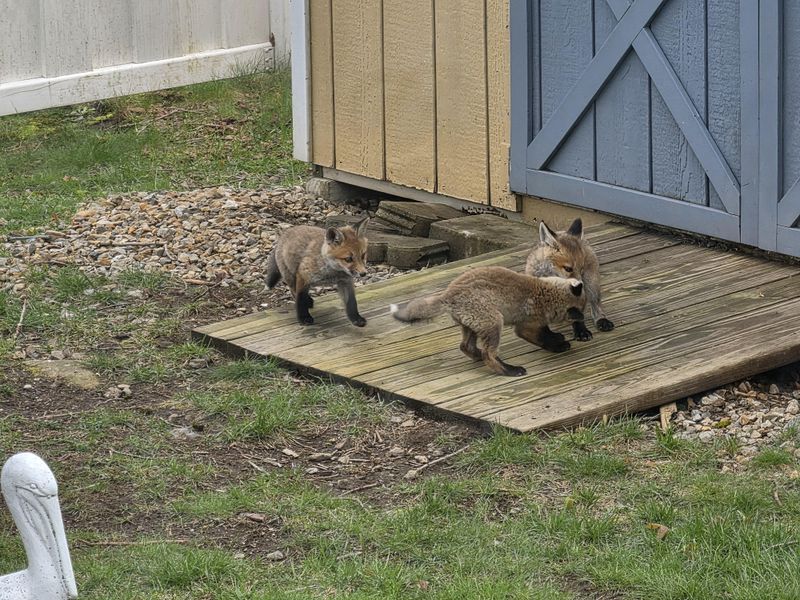
When fox sightings start happening every day, or when you notice an adult carrying food in its mouth near a quiet corner of the yard, a den may be closer than you think.
Foxes typically breed in late winter and raise pups through spring and early summer in this state.
During that period, activity around a den increases significantly.
Common denning spots include brush piles, spaces beneath sheds or low decks, and natural ground depressions covered by vegetation. Quiet corners of fenced yards with little foot traffic can also appeal to foxes.
Gray foxes occasionally use hollow logs or low tree cavities. Red foxes more often use ground burrows.
Both species prefer undisturbed, sheltered areas where pups can stay hidden.
Resist the urge to investigate or disturb a den. Approaching young wildlife or interfering with a denning site can cause the adults to abandon or relocate pups, which creates more stress for the animals.
If a den is located in a spot that poses a genuine safety concern near your home, children, or pets, do not disturb it. Contact the Florida Fish and Wildlife Conservation Commission or a licensed wildlife removal professional.
They can assess the situation and offer guidance that is safe for both the animals and your household.
7. Sick Or Bold Behavior Needs A Careful Response
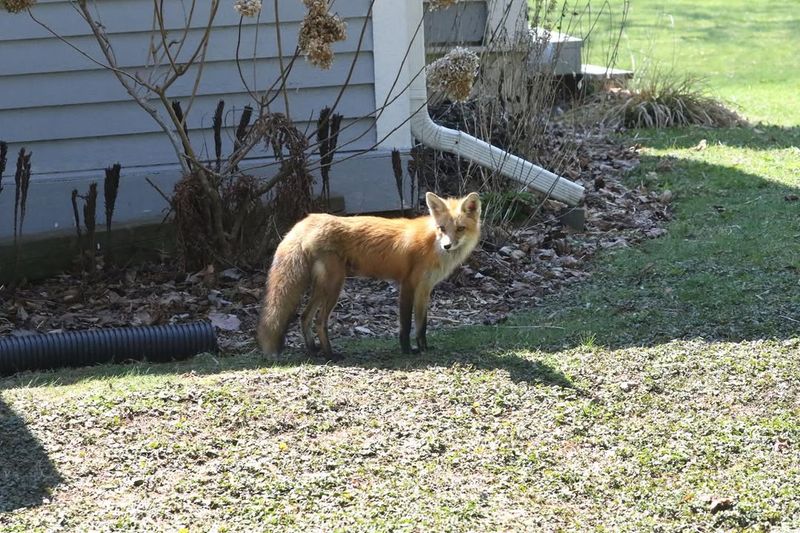
Most fox encounters are uneventful. The animal moves through, pauses briefly, and continues on its way.
Occasionally, though, a fox behaves in ways that warrant more careful attention and a prompt call to the right people.
Signs that something may be wrong include stumbling, circling in place, dragging a limb, appearing severely underweight, or showing no fear when approached by a person.
A fox that walks directly toward people or enters an enclosed space and cannot seem to leave deserves attention.
Aggressive behavior without provocation also goes beyond normal curiosity. Rabies, distemper, and mange are among the diseases that can affect fox behavior and health.
Rabies in particular is a serious public health concern that requires immediate professional response.
Do not attempt to capture, corner, or handle the animal yourself. Keep children and pets indoors until the animal has moved on or been addressed by trained responders.
Call your local animal services agency or the Florida Fish and Wildlife Conservation Commission at their Wildlife Alert Hotline. A licensed wildlife rehabilitator in your area may also be able to help.
Providing a clear description of the behavior and location helps responders arrive prepared. Quick, calm action protects everyone, including the fox.
8. The Real Message Is To Make Your Yard Less Inviting

When a fox shows up in the yard, the most practical takeaway is a prompt to look around and ask what might be drawing it close. Think of the visit as a gentle nudge to do a quick property check rather than a cause for concern or a mystery to decode.
Start with food. Secure trash cans with tight-fitting lids.
Bring pet food and water bowls inside each evening. Pick up fallen fruit from trees.
Store poultry feed in sealed containers. Clean up birdseed that has dropped to the ground.
Each of these steps removes a reason for the fox to return.
Next, look at shelter. Close off gaps under sheds, porches, and low decks using hardware cloth buried a few inches into the ground to prevent digging.
Remove or reduce brush piles near the house. Trim dense ground-level vegetation close to the home’s foundation.
None of these changes harm the fox. They simply make the yard less rewarding to revisit.
The fox will move on to areas that better meet its needs, which is exactly the outcome that works best for everyone. A fox passing through a yard is a remarkable thing to witness.
With a few thoughtful adjustments, it can stay that way.