What It Really Means When A Hawk Starts Hunting In Your Pennsylvania Yard
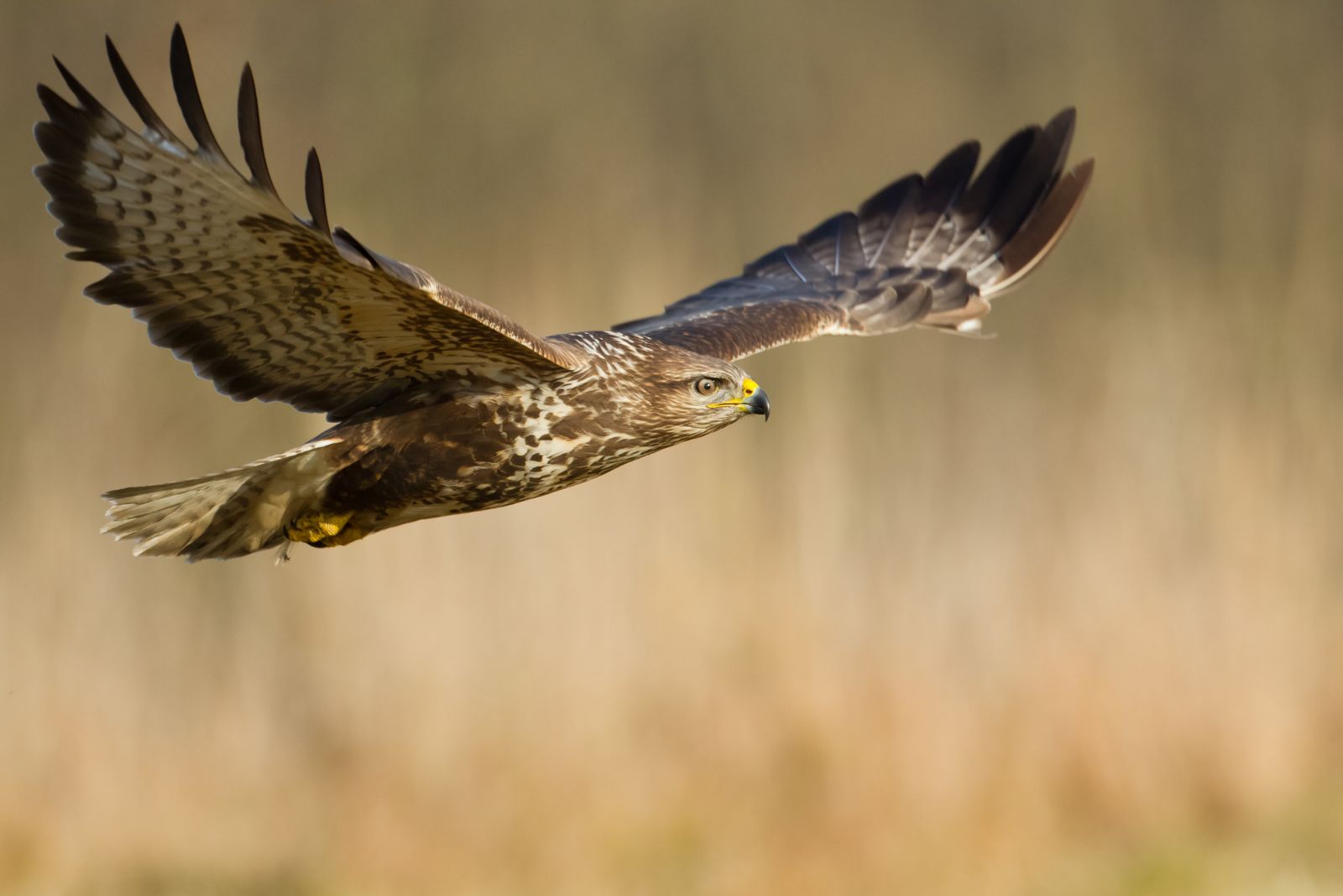
A hawk dropping into your Pennsylvania yard to hunt is one of those wildlife moments that demands your full attention. There’s something about the speed and precision of it, the sudden stillness that follows, that makes everything else stop for a second.
Whether it’s a Cooper’s hawk threading through the tree line or a red tailed hawk watching from a fence post with total focus, a hunting hawk in your yard is not an everyday occurrence.
Or at least it shouldn’t be. When a hawk starts returning to hunt in your yard regularly, it’s responding to something very specific about what your property is offering. These are not random patrols.
Hawks hunt where the prey is reliable, and a yard that keeps bringing one back is a yard that is consistently providing what it needs.
Their presence tells you something real and worth knowing about your local ecosystem, your bird feeders, and the small mammal activity in and around your property. Here’s what a hawk hunting regularly in your Pennsylvania yard is really telling you.
1. Your Yard Contains A Dependable Source Of Prey
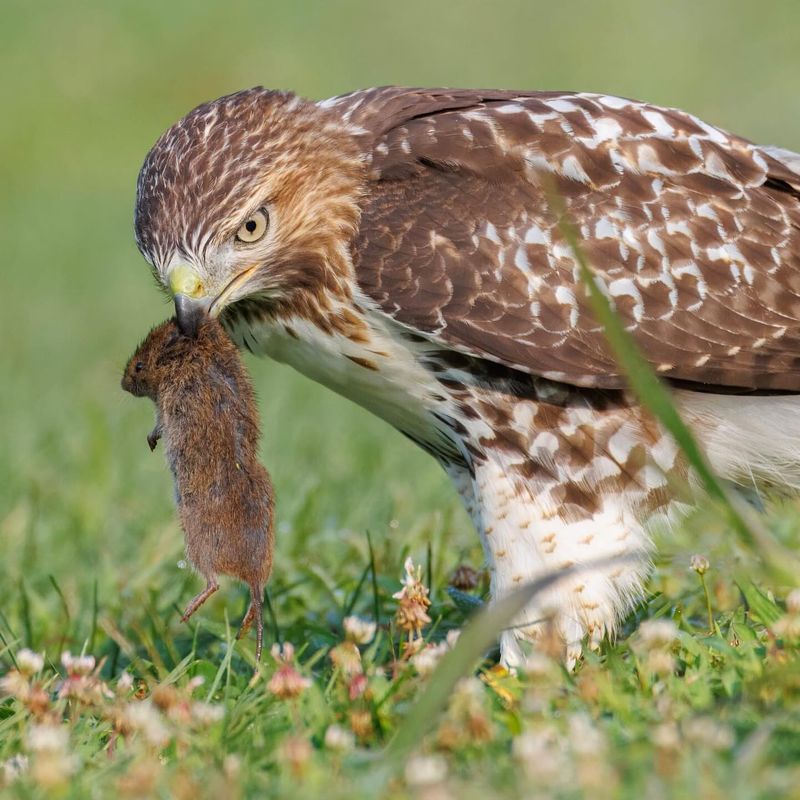
Hawks do not wander into yards randomly. When a hawk shows up in your Pennsylvania backyard and starts hunting, the very first thing it signals is that your yard is full of food.
A hunting hawk has almost certainly spotted something worth chasing, whether that is a songbird, a mouse, a vole, a squirrel, or a rabbit.
Pennsylvania is home to several hawk species, including the red-tailed hawk, the Cooper’s hawk, and the sharp-shinned hawk. Each of these birds is a skilled hunter with excellent eyesight.
They can spot a mouse moving through grass from hundreds of feet in the air, which is pretty remarkable when you think about it.
Hawks use a few different strategies to hunt. Some sit quietly on a perch like a fence post or a bare tree branch and watch for movement below.
Others soar high over open ground, scanning with their sharp eyes. Some, like the Cooper’s hawk, are built to chase prey through dense vegetation and wooded areas.
If your yard regularly attracts small animals, it will regularly attract hawks. Things like tall grass, brush piles, garden beds, and compost areas can all shelter mice and voles.
Bird feeders bring in sparrows and finches. Squirrels and rabbits are active year-round in Pennsylvania neighborhoods.
So when a hawk lands and starts scanning your yard, think of it as a sign that your outdoor space is thriving with wildlife. Your yard has become a reliable grocery store for a wild predator, and that is actually a meaningful ecological signal worth paying attention to.
2. Your Bird Feeder May Have Become A Hunting Station
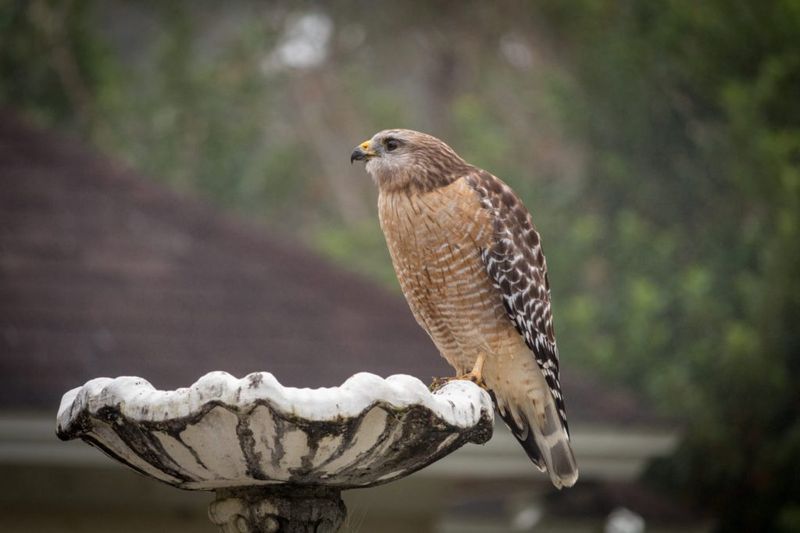
Bird feeders are wonderful for attracting colorful songbirds to your yard. But here is something many backyard birders do not expect: feeders can also attract hawks. Not for the seed, but for the birds eating the seed.
Your Pennsylvania Garden Changes Every Week. Your Plan Should Too.
Gardening in Pennsylvania changes quickly throughout the season. Every Friday you’ll receive a simple weekly plan showing exactly what to plant, prune, fertilize, harvest, and protect so you never miss the right timing.
When you set up a feeder, you are essentially creating a predictable gathering spot for small birds. Sparrows, finches, chickadees, and juncos all crowd together in one place at the same time each day.
For a hunting hawk, that is an incredibly easy target. Cooper’s hawks and sharp-shinned hawks are the two species most commonly seen taking advantage of this kind of situation in Pennsylvania yards.
Both of these hawks are built for speed and agility. They have long tails and rounded wings that help them maneuver quickly through trees and shrubs.
They are sometimes called “accipiter” hawks, and they specialize in chasing and catching other birds in flight. Seeing one perched near your feeder or swooping through your yard is a strong sign it has figured out your feeding schedule.
Interestingly, some hawks will visit the same feeder area repeatedly at the same time each morning, almost like they have set their own internal alarm clock based on when the most birds show up.
That level of intelligence is part of what makes these birds such effective hunters. If you notice fewer small birds coming to your feeder after a hawk starts visiting, that is normal. The songbirds are simply being cautious.
Taking the feeder down for a few days can help the small birds scatter and break the hawk’s routine, giving everyone a chance to reset.
3. The Yard Provides Useful Perches And Clear Attack Routes
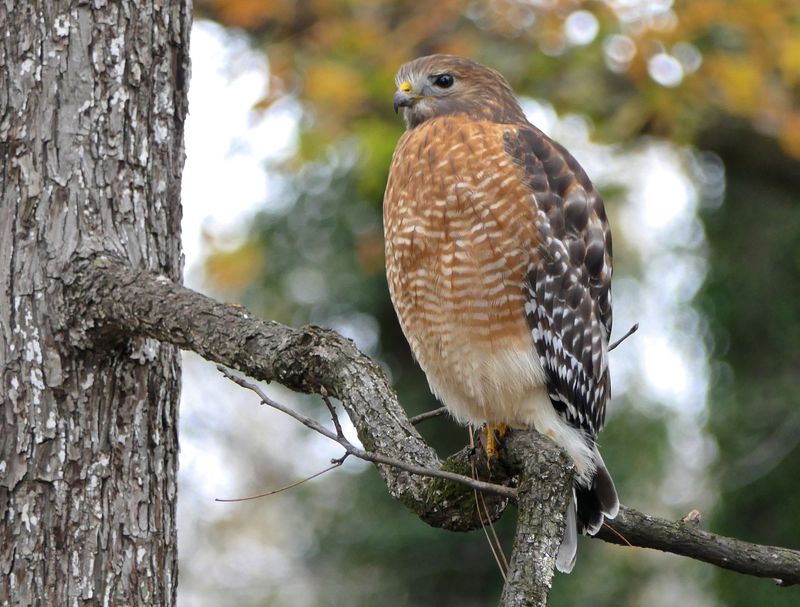
Hawks are not just looking for food when they visit your yard. They are also sizing up the layout.
A good hunting spot needs more than just prey. It needs high perches to watch from and clear open paths to launch from quickly. Your yard may be offering exactly that.
Fence posts, bare tree branches, rooflines, and utility lines all serve as natural watchtowers for hawks.
From these elevated spots, a hawk can sit perfectly still and survey the ground below without being noticed by smaller animals. The higher the perch, the wider the view, and the more effective the hunt.
Open lawns are particularly attractive to larger hawks like the red-tailed hawk. These birds prefer wide, grassy areas where they can spot mammals like rabbits and squirrels moving through the open.
If your backyard has a big stretch of mowed lawn, do not be surprised to see a red-tail circling overhead or sitting on a nearby post.
On the other hand, wooded or shrubby suburban yards are prime territory for Cooper’s hawks. These birds thrive in areas with a mix of trees and open space because they need room to maneuver at high speed while still having cover to approach from.
Neighborhoods with mature trees and garden shrubs offer exactly the kind of environment they prefer.
So if your yard has both open areas and woody cover, along with good perch spots like a tall fence or a dry tree, you have essentially built the perfect hawk hunting ground. The bird is not just passing through.
It has done a quick assessment and decided your yard has the right setup to make hunting worth the effort.
4. Repeated Visits Mean The Hawk Has Learned That Hunting There Pays Off
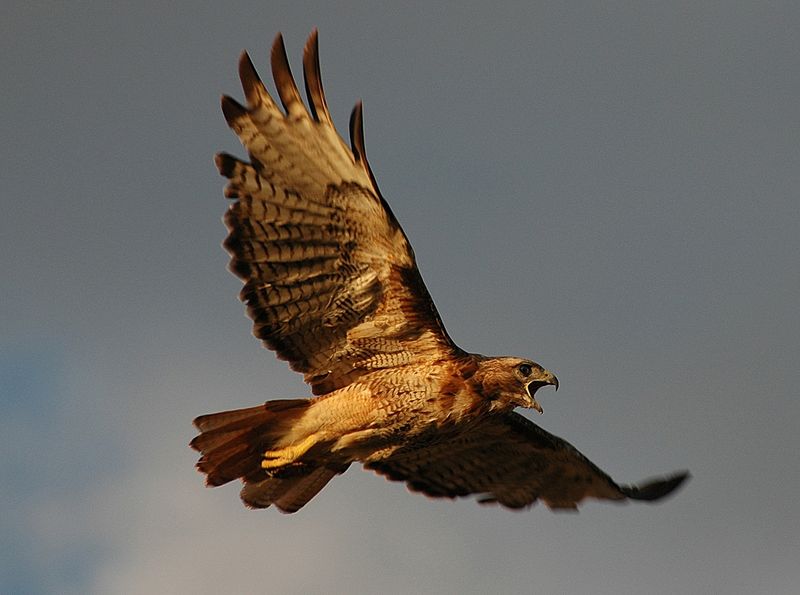
Seeing a hawk once is interesting. Seeing the same hawk return to your fence, your roofline, or your favorite tree several days in a row is something more significant.
When a hawk keeps coming back to the same location, it has almost certainly added your yard to its regular hunting route.
Hawks are highly intelligent birds with excellent spatial memory. They remember where they found food before, and they revisit those spots regularly.
Researchers who study raptor behavior have documented this pattern over and over, especially in suburban areas where bird feeders create consistent prey concentrations.
Your yard has essentially passed the hawk’s personal inspection, and now it is on the weekly schedule.
One thing worth knowing is that a returning hawk does not necessarily mean it is nesting on your property. Many hawks have wide home ranges and patrol multiple locations throughout the week.
A Cooper’s hawk, for example, may visit your yard every few days as part of a larger loop through the neighborhood. It is showing up because hunting there has worked before, not because it has moved in permanently.
You might also notice the hawk arriving at similar times of day. Hawks often hunt during the morning hours when small birds are most active at feeders.
If you see the same bird at 8 a.m. several mornings in a row, that is a clear sign it has figured out your feeder birds’ routine.
Breaking that pattern is possible. Removing feeders temporarily, trimming favorite perch branches, or adding visual deterrents can encourage the hawk to move on and look elsewhere.
But it takes consistency, since hawks are patient and willing to wait for conditions to improve.
5. The Hawk Is Performing A Natural Ecological Role
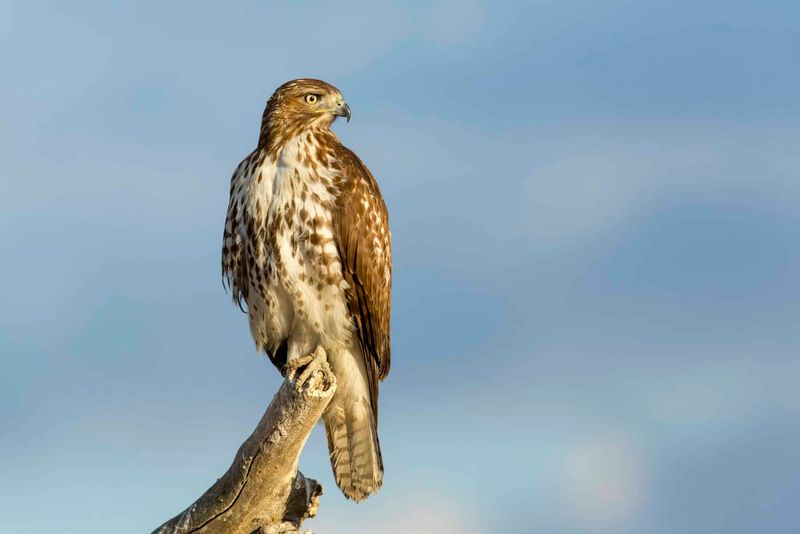
It is easy to feel uneasy when a hawk starts hunting in your yard, especially if you love watching your backyard birds. But stepping back and looking at the bigger picture can change how you feel about the whole situation.
Hawks are a natural and important part of Pennsylvania’s ecosystem, and their presence in your yard is actually a sign of a healthy environment.
Raptors like hawks help regulate populations of small mammals. Without natural predators, mice, voles, and rabbits can multiply quickly and cause real problems in gardens and neighborhoods.
Hawks keep those numbers in check in a way that is completely natural and does not require any human involvement. Think of them as free pest control with wings.
As for songbirds, the impact of hawk predation on their overall populations is much smaller than many people assume.
Studies have shown that common feeder birds like house sparrows, dark-eyed juncos, and house finches maintain stable populations even in areas with active hawk predators.
Habitat loss, window collisions, and outdoor cats actually pose far greater threats to backyard bird populations than hawks do.
Hawks also play a role in removing sick or weak animals from the local population, which helps keep prey species healthier overall. It is a cycle that has been working in nature long before suburban neighborhoods existed.
So rather than seeing the hawk as a threat, try viewing it as a sign that your yard is part of a functioning local food web.
Having a hawk visit your property means your outdoor space supports enough wildlife to attract a top-level predator. That is something worth appreciating, even if it feels a little intense to watch up close.
6. Vulnerable Birds May Need Temporary Protection, Not Hawk Removal
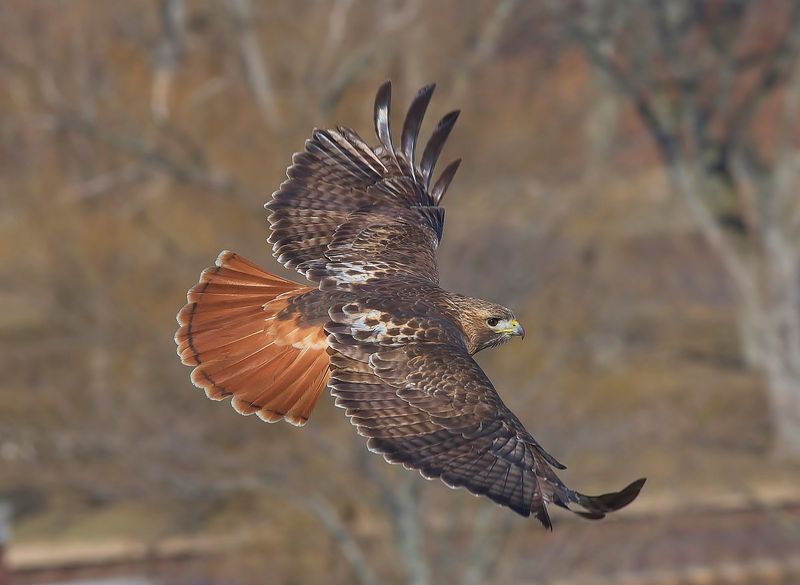
Watching a hawk swoop through your yard can feel alarming, especially if you keep backyard chickens, have small pets, or just really love your feeder birds.
The good news is that there are practical steps you can take to protect vulnerable animals without harming the hawk or breaking the law.
One of the simplest and most effective things you can do is temporarily remove your bird feeders. When feeders come down for several days, the small birds that normally gather there will spread out and find food elsewhere.
Without a concentrated group of easy targets, the hawk loses its main reason to keep visiting. Most of the time, it will move on to a more productive hunting location within a week or so.
If you keep backyard chickens or other small poultry, a covered run is your best protection. Hardware cloth or sturdy wire mesh draped over the top of the enclosure will keep hawks from swooping in.
Netting works well too, as long as it is secured tightly so the hawk cannot find a way underneath or around it. Poultry that free-ranges without overhead cover is genuinely vulnerable, so this step really matters.
Small pets like rabbits kept outdoors should also have a covered, secure enclosure when they are outside. Hawks can and do target small animals left unattended in open spaces.
One thing homeowners should always keep in mind is that hawks are federally protected under the Migratory Bird Treaty Act. That means it is illegal to capture, injure, or remove a hawk without proper authorization from wildlife officials.
Working around the hawk with smart protective measures is always the right approach, and it keeps both the bird and your animals safe.