What It Really Means When Blue Jays Keep Visiting Your Georgia Yard
Some visitors never lose their ability to grab your attention, no matter how many times they appear. One quick visit turns into another, and before long you start wondering if it means something.
That question crosses a lot of minds because certain birds seem too confident to be there by accident. Curiosity grows each time they come back.
It is easy to notice the pattern, but much harder to understand the reason behind it. The answer is often more interesting than most expect.
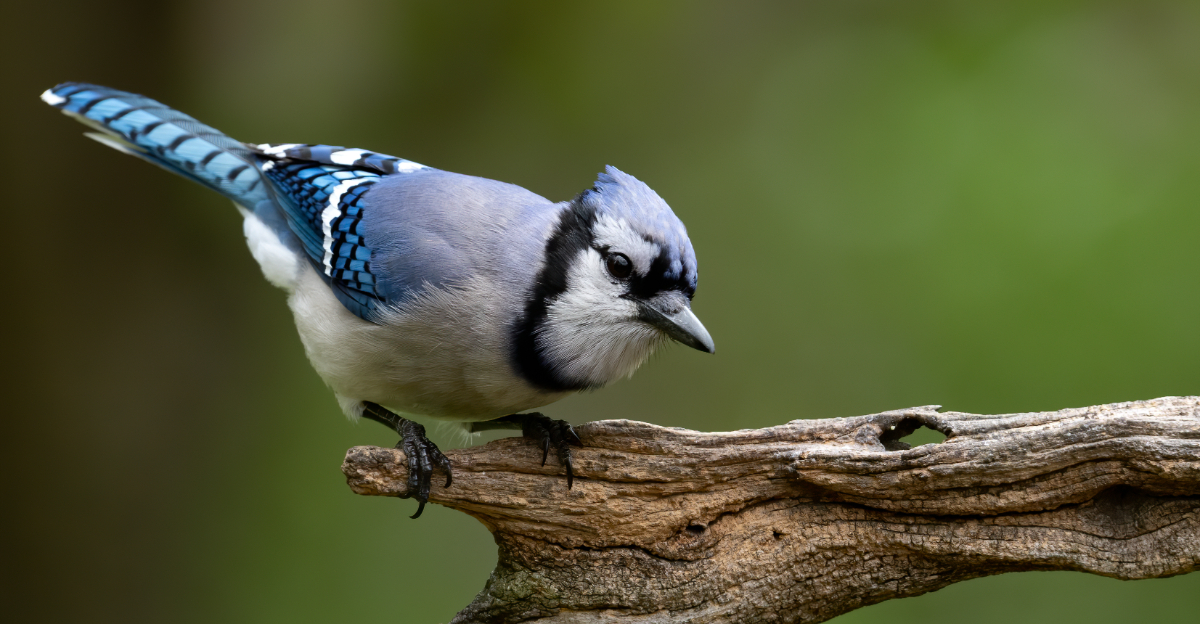
Blue jays are one of those birds that leave a lasting impression.
Their repeated visits to a yard in Georgia are usually connected to food, shelter, or seasonal behavior, but there is often more going on than first meets the eye.
That is why the same visitor can keep returning again and again.
1. Acorns And Other Natural Food Sources Attract Blue Jays
Blue jays and oak trees go together like peanut butter and bread. If you have oaks dropping acorns in your yard, blue jays will find them.
Acorns are one of their absolute favorite foods, and they will cache hundreds of them each fall to eat later.
Beyond acorns, blue jays eat a wide variety of natural foods. Berries, seeds, insects, and even small vertebrates make up their diet depending on the season.
Dogwood berries, wild grapes, and elderberries are all fair game.
Blue jays are smart foragers. They remember where they stash food, and they return to those spots reliably.
If your yard has mature fruit-bearing shrubs or seed-producing plants, expect repeat visits.
Native plants are especially attractive to them. Plants like American holly, sumac, and serviceberry produce fruit that blue jays actively seek out.
Landscaping with native species gives them more reason to stick around.
Seed-eating insects also draw blue jays in. Caterpillars, beetles, and grasshoppers are all on the menu during warmer months.
A yard with healthy plant diversity tends to support more insect life, which in turn supports more birds.
If your yard has a mix of food sources throughout the year, blue jays may treat it as a reliable feeding ground.
2. Mature Trees Offer Safe Nesting Areas
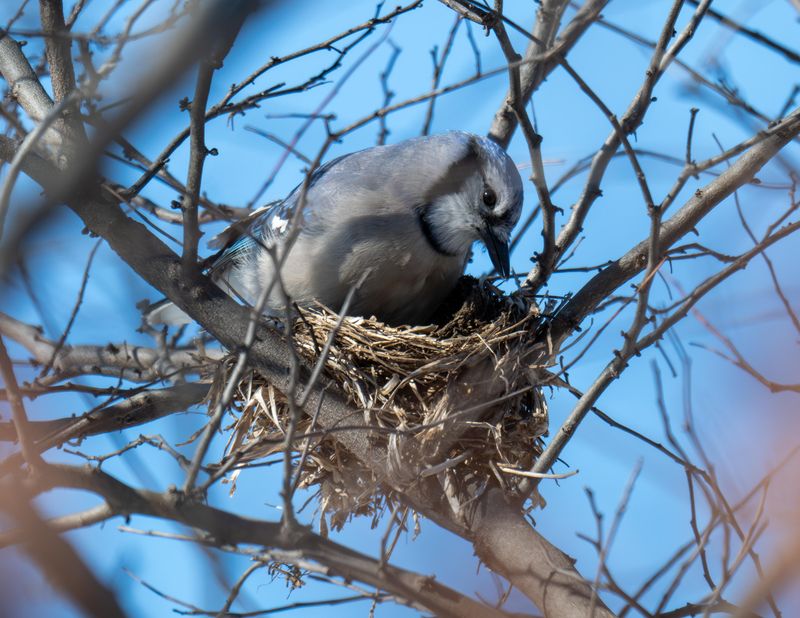
Nesting real estate matters to blue jays. Mature trees with dense canopies give them the height and cover they need to raise a family without too much disturbance from predators or foot traffic.
Blue jays typically nest between 10 and 25 feet off the ground. They prefer the crotch of a tree, where two branches fork, because it offers a stable base for their bulky cup-shaped nest.
Oak, beech, and pine are all popular choices.
A yard full of young, thin saplings rarely attracts nesting pairs. Blue jays want structure and stability.
Big, established trees signal safety, and that matters when you are raising young birds.
Nesting season runs roughly from March through July in the Southeast. During that window, blue jays become territorial and vocal.
If you hear a lot of loud calling near a specific tree, a nest is probably nearby.
Both parents take turns incubating eggs and feeding nestlings. Keeping the area around nesting trees calm and free of heavy human activity can help the pair feel secure enough to stay.
Your Georgia Garden Changes Every Week. Your Plan Should Too.
Gardening in Georgia changes quickly throughout the season. Every Friday you’ll receive a simple weekly plan showing exactly what to plant, prune, fertilize, harvest, and protect so you never miss the right timing.
Preserving mature trees in your yard does more than add shade. It provides critical habitat for cavity-nesting and canopy-nesting birds alike.
3. Fresh Water Keeps Birds Coming Back
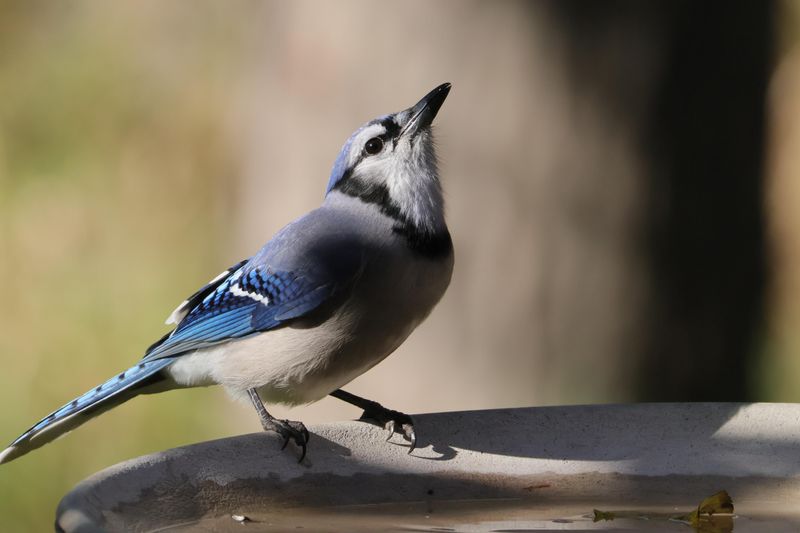
Water is often the missing piece in a bird-friendly yard. Food and shelter get most of the attention, but a reliable water source can be just as powerful a draw, especially during hot, dry stretches of summer.
Blue jays visit birdbaths regularly for both drinking and bathing. They tend to prefer shallow basins where they can stand comfortably.
Around two inches of water depth works well for most backyard birds, including jays.
Moving water is even more attractive. A small dripper, fountain, or wiggler attachment creates sound and ripple that birds detect from a distance.
That gentle movement can pull in birds that might otherwise pass your yard by.
Placement matters too. Birdbaths set near shrubs or low branches give blue jays a quick escape route if they sense danger while bathing.
Completely open spots with no cover nearby can make birds hesitant to linger.
Cleaning the birdbath every few days helps keep water fresh and reduces the risk of algae or bacteria buildup. Standing water in warm weather can become unappealing fast, and birds will simply move on to a cleaner source.
In winter, a heated birdbath or a simple de-icer can keep water accessible when temperatures drop. Blue jays are year-round residents, so providing water through the colder months gives them one more reason to stay close to your yard.
4. Bird Feeders Provide An Easy Meal
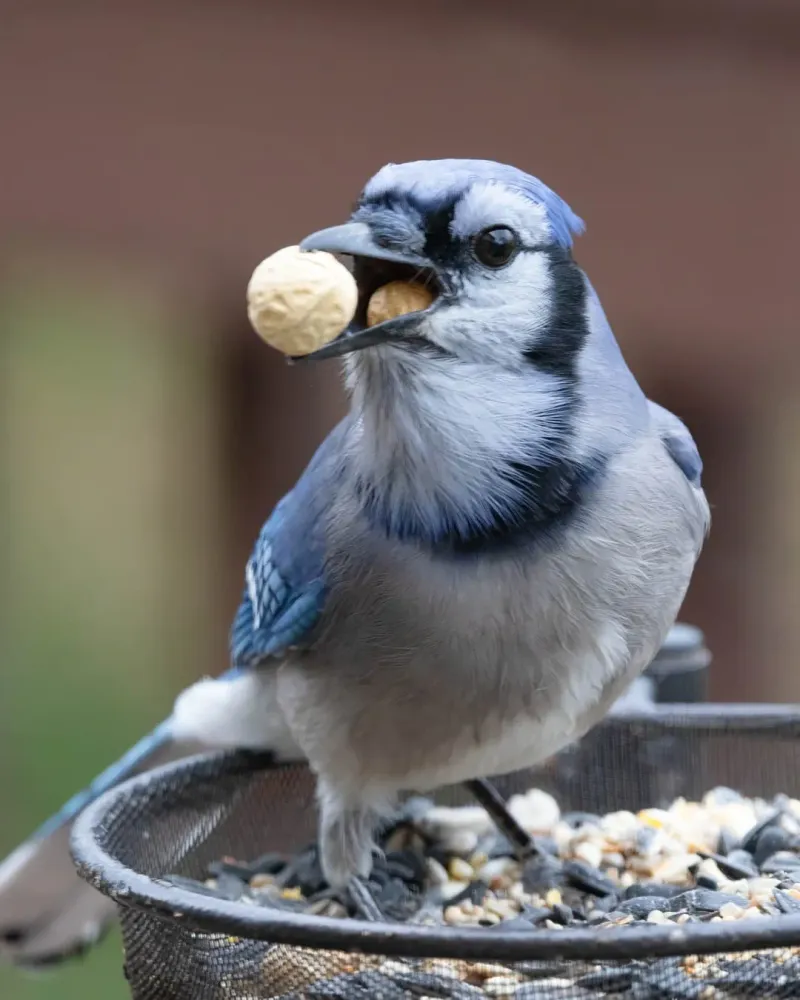
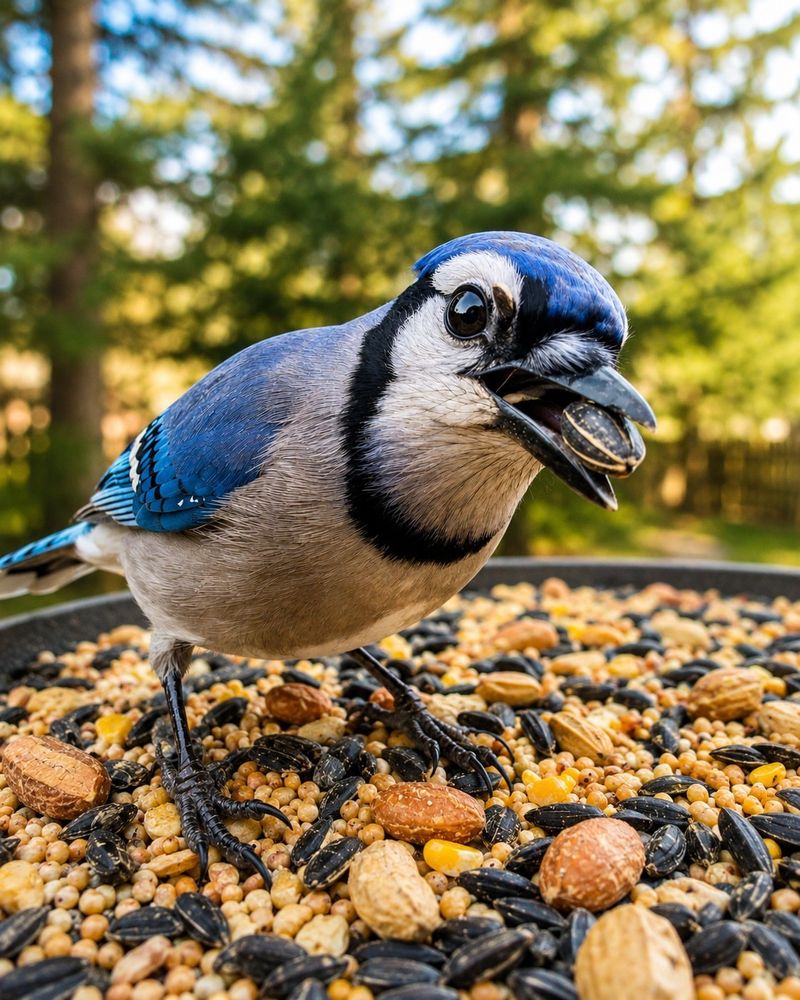
Put out the right food and blue jays will show up fast. Whole peanuts in the shell are a top choice.
Blue jays grab them, fly off, and cache them nearby, sometimes returning multiple times in a single morning.
Sunflower seeds also rank high on their preference list. Black-oil sunflower seeds are easy for them to crack and offer solid nutrition.
Striped sunflower seeds work too, though they take a bit more effort to open.
Platform feeders tend to work better than tube feeders for blue jays. Their size makes tube feeders awkward to use.
A wide, flat surface lets them land comfortably and sort through food without struggling.
Blue jays can be assertive at feeders. Smaller birds may back off when a jay arrives.
Placing multiple feeders at different heights and locations can help spread activity out and reduce competition at any single spot.
Placement near trees gives jays a quick retreat with their food. They rarely eat at the feeder itself for long.
Most of the time they grab something and fly to a perch or caching spot nearby.
Keeping feeders clean and stocked consistently is key. Blue jays are smart birds with good memories.
5. Dense Shrubs Give Them Quick Cover
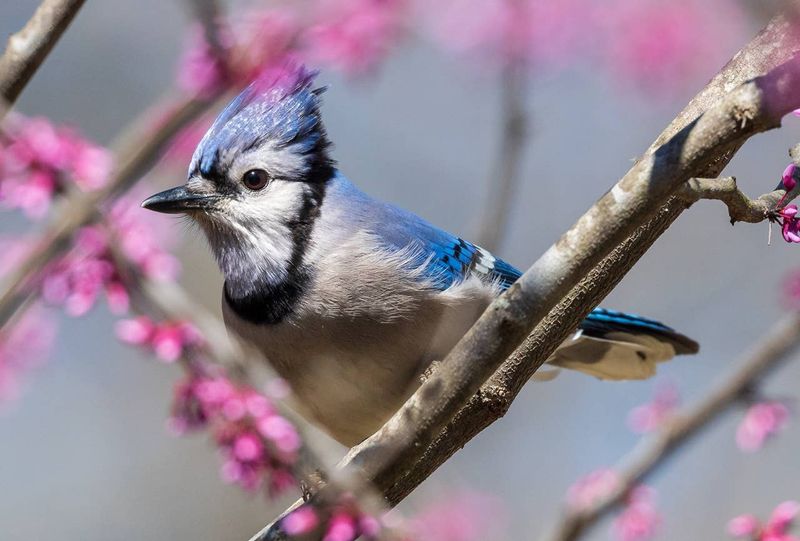
Blue jays are bold, but they are not reckless. Fast cover matters to them, and dense shrubs deliver exactly that.
When a hawk passes overhead or a neighborhood cat creeps into view, a nearby shrub can mean the difference between a close call and a real problem.
Native evergreen shrubs are especially useful. American holly, wax myrtle, and yaupon hold their leaves through winter, giving birds year-round protection.
Deciduous shrubs help during warmer months but leave gaps in cover once the leaves drop.
Layered plantings work best. A mix of low shrubs, mid-height bushes, and taller shrubs creates a tiered structure that supports more bird activity.
Blue jays tend to use the mid and upper layers most often.
Shrubs planted in clusters rather than scattered individually create better shelter. A tight grouping of three or four plants forms a denser barrier than a single large shrub standing alone in open ground.
Berry-producing shrubs pull double duty. They offer both food and cover in one spot.
Beautyberry, possumhaw, and inkberry are all native options that attract blue jays and many other bird species simultaneously.
Letting shrubs grow a bit fuller and less manicured than typical landscaping standards can actually benefit birds more.
6. Woodland Edges Fit Their Natural Habitat
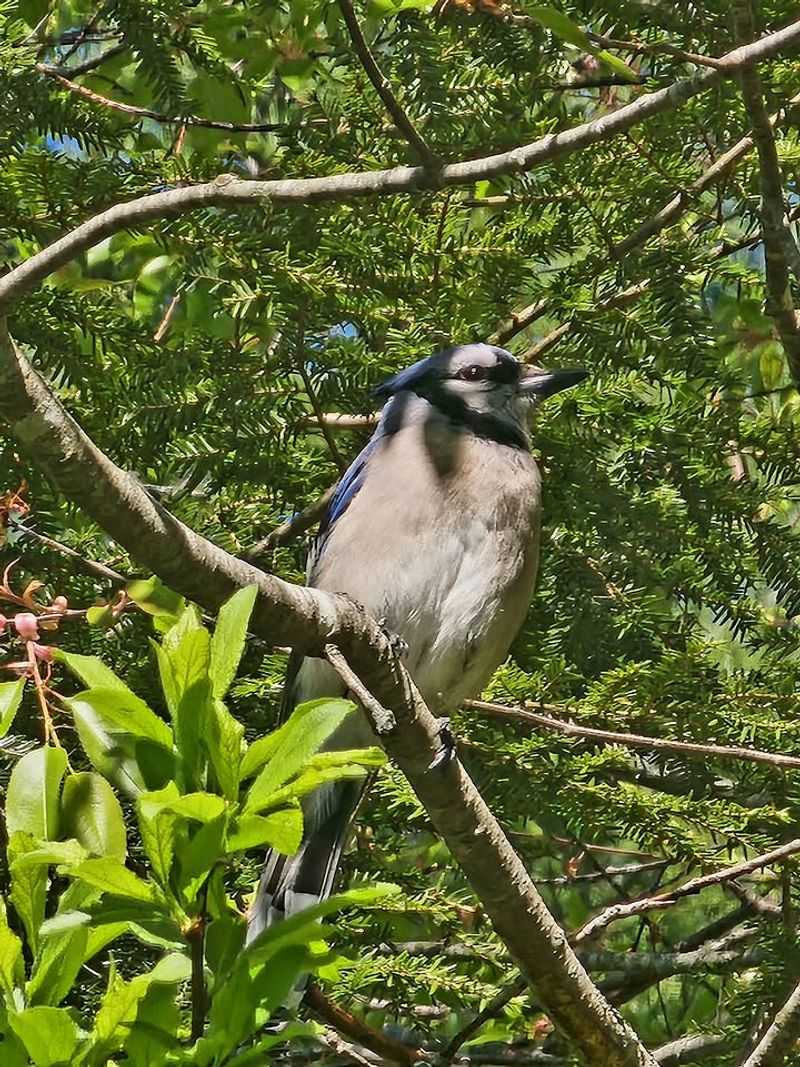
Blue jays thrive at the edge. Not deep forest, not wide-open lawn, but that in-between zone where trees meet open space.
If your yard backs up to a wooded area or sits near a tree line, you are sitting in prime blue jay territory.
Woodland edges offer a combination of resources that blue jays rely on. Tall trees provide nesting sites and lookout perches.
Open ground makes foraging easier. Shrubby understory plants supply food and quick cover all at once.
Yards that mimic this edge habitat naturally attract more blue jays. A mix of open lawn, scattered trees, and native plantings along the borders creates the kind of variety that suits their lifestyle.
Georgia’s mix of pine forests, hardwood stands, and suburban development creates a patchwork of habitat that blue jays navigate well. They are adaptable birds, but they still gravitate toward areas with that classic edge structure.
Maintaining a natural buffer zone along your property line can help. Letting native plants grow along fence lines or back borders adds that transitional layer blue jays prefer over purely manicured spaces.
Even small changes make a difference. Adding a few native trees or shrubs along the edge of your yard can shift it closer to the woodland-edge habitat blue jays seek.
7. Your Yard Offers Suitable Year-Round Habitat
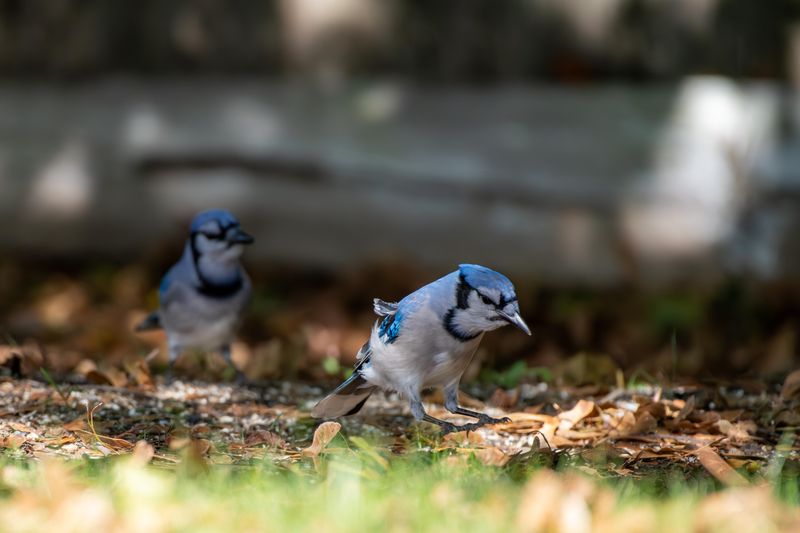
Some birds pass through briefly. Blue jays are not that kind of visitor.
Across most of the Southeast, they are year-round residents, and if your yard keeps showing up on their radar in every season, something consistent is working in your favor.
Year-round habitat means your yard delivers across multiple needs simultaneously.
Food sources, water, cover, and nesting sites all need to be available at different times and in different combinations throughout the year.
Spring brings nesting activity. Summer means active foraging for insects and berries.
Fall triggers heavy acorn caching. Winter pushes blue jays to rely more heavily on stored food and dependable feeders.
A yard that serves blue jays well in all four seasons becomes a core part of their home range.
Planting a mix of native trees and shrubs that produce food at different times of year helps maintain that appeal.
Staggering bloom and fruiting seasons across plant species extends your yard’s usefulness well beyond a single month or two.