What It Really Means When Wasps Start Building Nests Around Your Ohio Porch This Summer
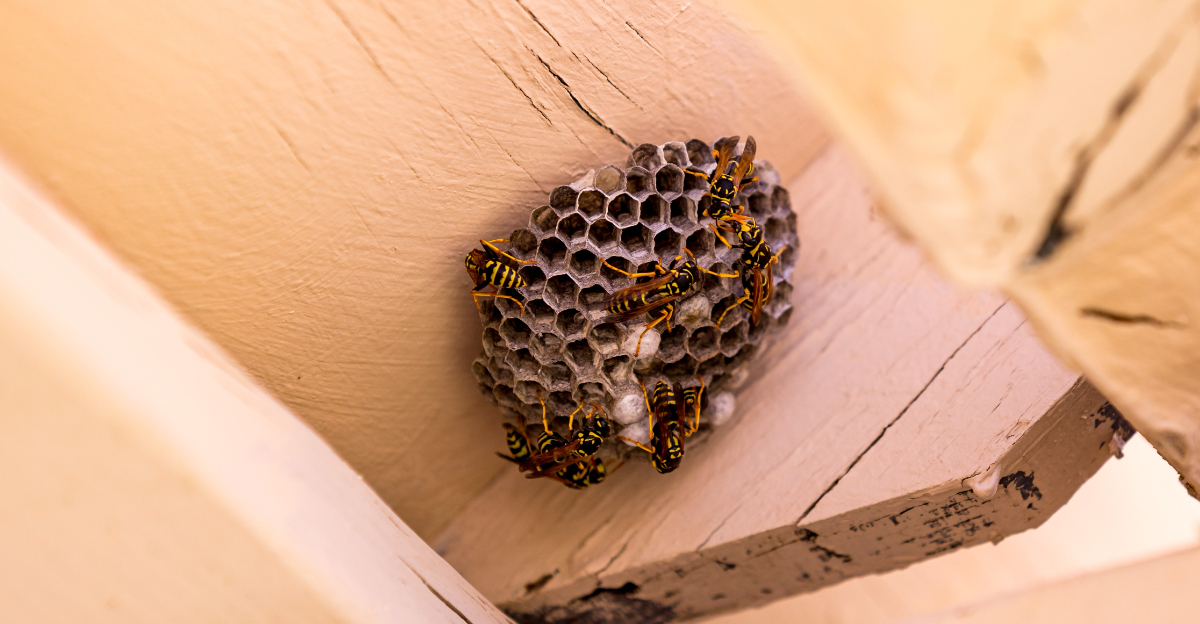
A wasp nest appearing on your Ohio porch feels like a problem that needs solving immediately. Most homeowners reach for the spray before they ask any questions.
That instinct is understandable, but it skips over something worth knowing first. Wasps do not choose a location randomly.
A nest on or near your porch is a response to specific conditions your property is providing. Those conditions say something real about what is happening in your yard this summer.
Wasps are also doing something most people never consider while they are busy being annoyed by them. Their presence near a porch, the timing of nest construction, the species involved, all of it points to a more layered story than a simple pest problem.
What a wasp nest near your Ohio porch actually means is worth understanding. Whether removal is always the right call is a more interesting conversation than most homeowners expect to be having.
1. A New Wasp Nest Means Your Porch Offers Shelter
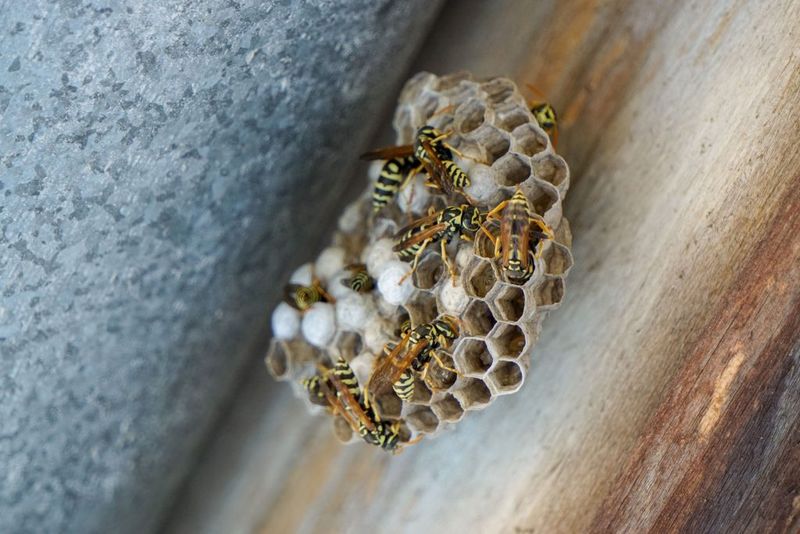
A tiny paper comb under a porch ceiling rail can feel alarming, but it usually tells a simple story. The porch gave a queen wasp exactly what she needed: a dry, protected surface that stays out of direct rain and wind.
Porches naturally offer this kind of coverage. That is why nests show up under eaves, ceiling corners, porch railings, and shutters more often than almost anywhere else on a property.
Wasps are not drawn to a porch because something is wrong with the home. They look for physical conditions that support nest building, and a covered porch checks most of those boxes.
Shelter from weather is the primary pull. A porch ceiling acts almost like a natural overhang that keeps a nest dry through summer storms.
Recognizing this helps shift the response from alarm to practical thinking. A nest in a low-traffic corner may not need immediate action.
A nest right above a door, seating area, or high-use step is a different situation. Location matters more than the nest itself.
Staying calm and observing where the nest sits helps you decide what step makes the most sense next.
2. Early Summer Is When Small Nests Grow Fast
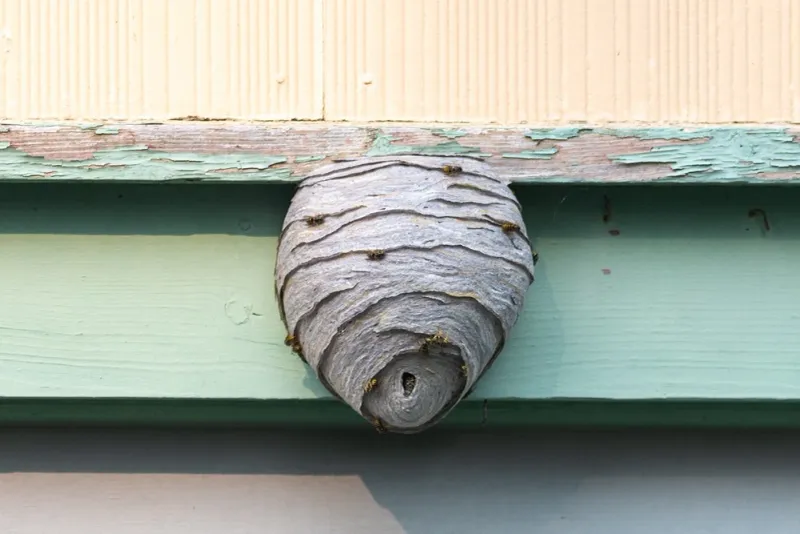
A nest the size of a golf ball in late May can become the size of a grapefruit by mid-July. Social wasp colonies start small because only a single overwintered queen begins the work.
She builds the first few cells, lays eggs, and tends the larvae alone until the first workers emerge. Once those workers arrive, the pace of nest growth picks up noticeably.
Early summer is the window when most people first spot a nest forming on their porch. At this stage, the colony is small and the nest is easier to assess from a safe distance.
Catching a nest early gives homeowners more options, including contacting a pest professional before the colony reaches its peak size in late summer.
Not every early-summer nest turns into a large, active colony by August. Some nests are abandoned.
Your Ohio Garden Changes Every Week. Your Plan Should Too.
Gardening in Ohio changes quickly throughout the season. Every Friday you’ll receive a simple weekly plan showing exactly what to plant, prune, fertilize, harvest, and protect so you never miss the right timing.
Some belong to solitary species that never grow a colony at all. Still, watching a nest from a safe distance over a few days can reveal a lot.
Regular flight activity and new comb growth are signs the colony is active and building. Spotting it early simply means you have more time to make a thoughtful decision.
3. Open Gaps And Eaves Can Invite Nest Building
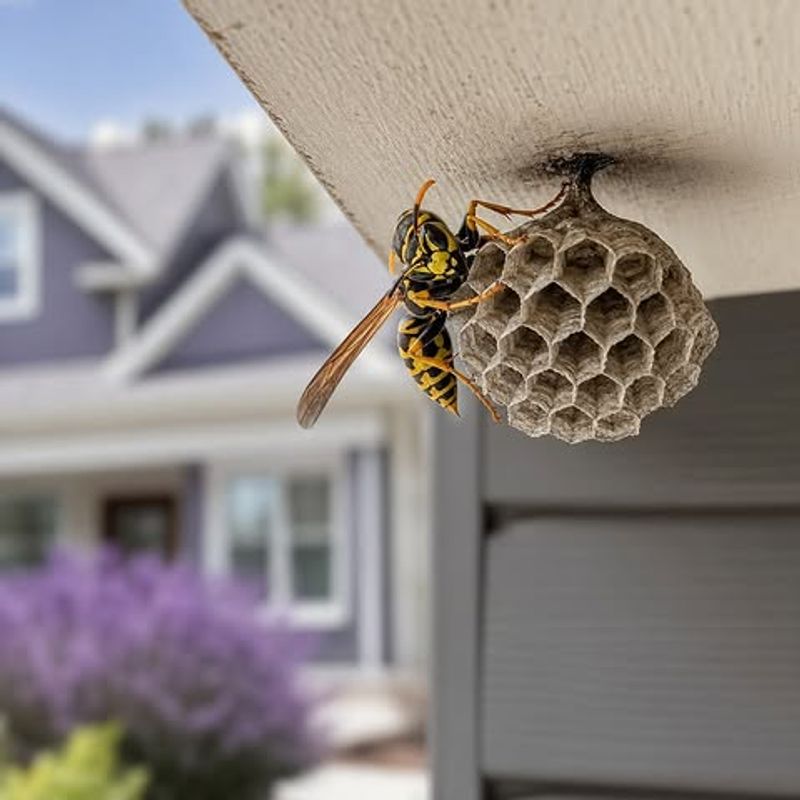
Loose trim along a porch soffit, a gap behind a hollow railing post, or a small crack near a window frame can all become entry points for nesting wasps. Yellowjackets in particular look for enclosed, cavity-style spaces to start a nest.
A gap that looks minor to an Ohio homeowner can look like a ready-made shelter to a wasp colony searching for a protected site.
Porch structures develop small openings over time through normal weathering, wood shrinkage, and seasonal expansion. These gaps often go unnoticed until a wasp flight path draws attention to them.
Watching where wasps enter and exit a structure is one of the most useful ways to find a hidden nest location before it grows larger inside a wall or under a floor.
Sealing gaps and cracks is a good long-term prevention step, but timing matters. Sealing an opening that connects to an active nest can trap wasps inside a wall, which often makes the situation worse.
Always confirm that no active nest is present before closing off any gap. A pest professional can help with this if there is any doubt about what is behind the trim or inside a hollow structural space.
4. Sweet Drinks And Food Scraps Keep Wasps Returning
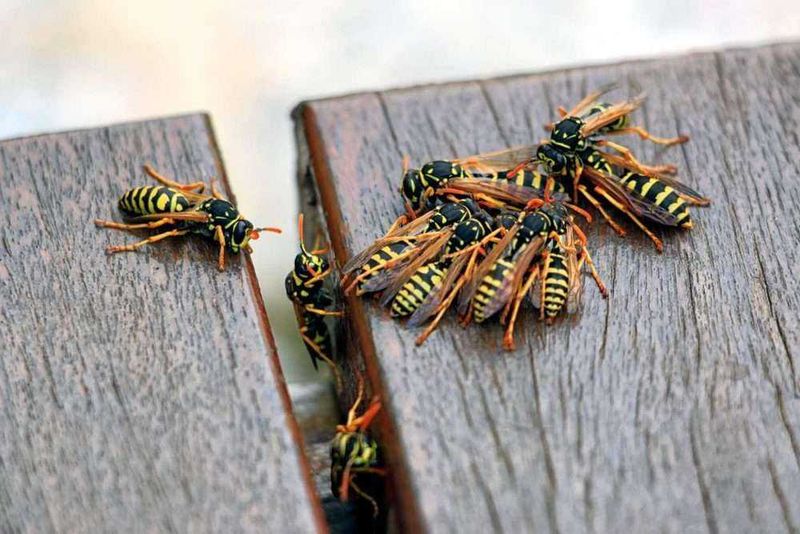
A forgotten soda can on the Ohio porch railing or a sticky spill on the table can pull wasps in closer than anyone wants. A bowl of pet food left out in the afternoon heat can do the same.
Late summer is when this becomes most noticeable. As the season advances, wasp colonies shift their focus from protein-based food to sugary sources, which means outdoor eating areas become more attractive to them.
Yellowjackets are especially drawn to sweet drinks and food waste. They are persistent foragers and will return to a food source repeatedly once they find it.
Covering drinks, wiping down surfaces after meals, and securing trash lids are practical steps that reduce what draws them to porch areas in the first place.
Pet food left outdoors is another overlooked attractant. Even dry kibble can draw foraging wasps, particularly in warm weather.
Bringing pet bowls inside after feeding times is a simple habit that makes a real difference. Compost bins near the porch should also have secure lids.
Reducing food access does not remove an existing nest. However, it lowers the frequency of wasp visits and makes the porch feel more manageable during the busiest part of summer activity.
5. Paper Wasps May Be Using Protected Corners
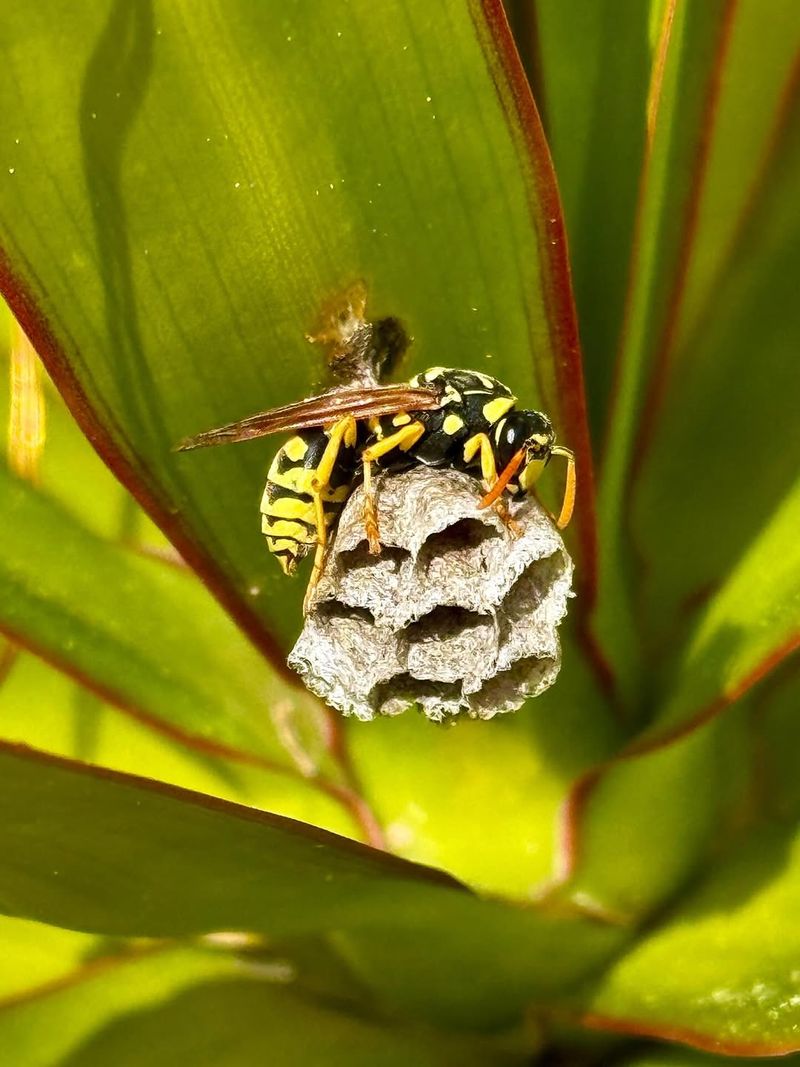
A paper-wasp comb hanging from a porch ceiling corner looks different from other nests. The cells are open and arranged in a flat, umbrella-like cluster.
There is no outer paper covering, so you can see the individual cells clearly. This open design is a reliable field clue that you are looking at paper wasps rather than yellowjackets or hornets.
Paper wasps are common across this state and tend to favor sheltered spots that are elevated and protected from direct weather. Porch ceilings, the undersides of railings, behind shutters, and inside open light fixtures are all places they use regularly.
They are generally less aggressive than yellowjackets when they are not near heavy foot traffic. However, a nest directly above a door or chair is still a concern worth addressing.
Watching the nest from a comfortable distance can tell you a lot about activity level. A few wasps moving slowly in and out of cells is normal colony behavior.
A nest that is frequently disturbed by door movement or vibration is more likely to prompt a defensive response.
Paper wasps are not something to fear in every situation, but placement near high-use spots on the porch does call for a practical and careful response plan.
6. Yellowjackets Could Be Nesting Nearby, Not On The Porch
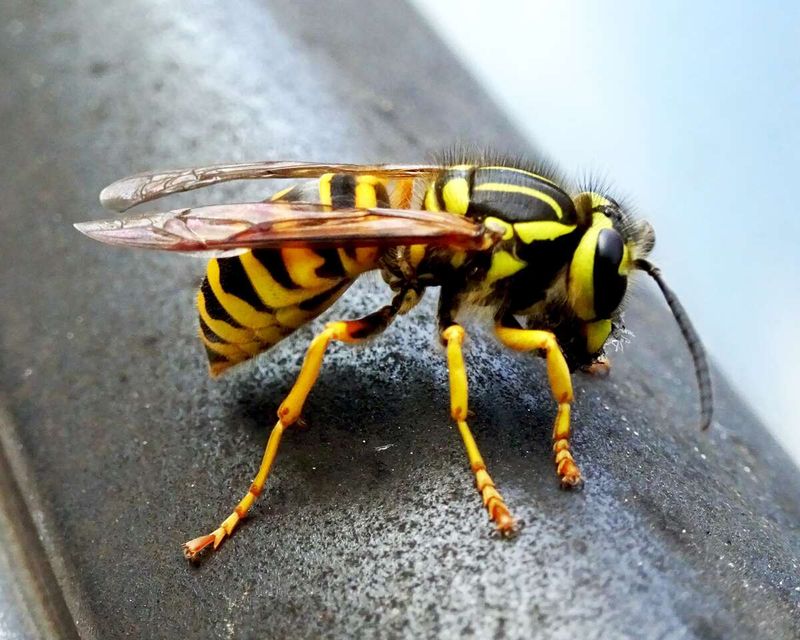
Not every wasp hovering around the porch is building a nest on it. Yellowjackets often nest underground, inside wall voids, or in other enclosed cavities near the Ohio home rather than on exposed porch surfaces.
If you notice wasps flying in and out of a low spot near the foundation, a gap in the lawn, or a crack in the steps, pay attention. The nest may be several feet away from where you are seeing the activity.
Following a consistent yellowjacket flight path is one of the most useful ways to find a hidden nest. Yellowjackets tend to travel in fairly direct lines between the nest entrance and foraging areas.
Watching that path from a safe distance, without getting close to the suspected entry point, can help you pinpoint the general nest location.
Yellowjackets are more defensive than paper wasps and are more likely to respond aggressively when a nest entrance is disturbed. Ground nests are especially easy to disturb accidentally with lawn equipment, foot traffic, or digging.
If you suspect a yellowjacket nest near the porch or in the yard, avoid the area and contact a pest professional. This is particularly important for anyone with known allergies to stings or when children or pets regularly use the area nearby.
7. Mud Daubers Usually Signal A Different Kind Of Nest
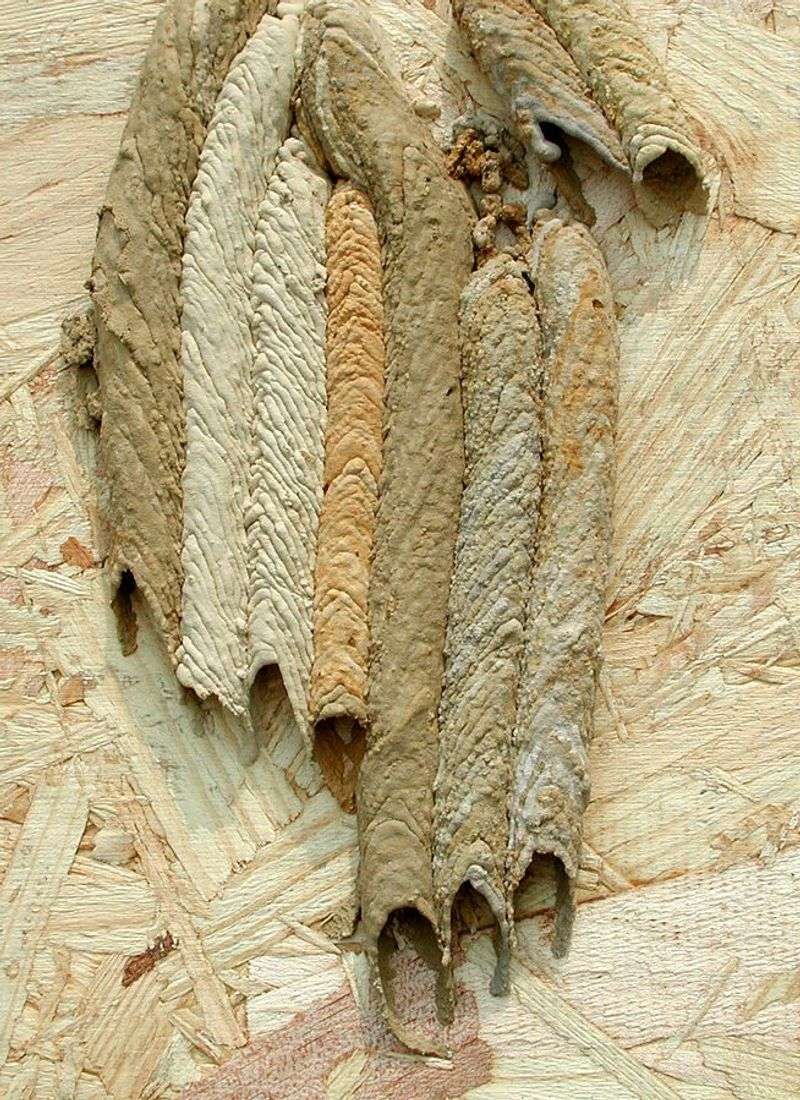
A row of small mud tubes on a porch wall or under an overhang can look alarming at first glance. However, mud daubers are a very different story from yellowjackets or paper wasps.
These solitary wasps build individual mud nests to house their eggs, not to support a large social colony. A mud-dauber nest does not have a defending worker population the way a paper-wasp or yellowjacket colony does.
Mud daubers are known for hunting spiders, which they paralyze and place inside mud cells as food for their larvae. This behavior actually makes them useful in some home landscapes, since they help reduce spider populations around the porch and garden.
They rarely sting people and tend to go about their work without much interaction with humans nearby.
Old, hardened mud tubes that appear empty are typically inactive nests from a previous season. Fresh mud tubes with a smooth, moist appearance are more likely to be active.
Even active mud-dauber nests carry very low risk for most people. If the tubes are in a spot that causes concern, scraping them off after confirming they are inactive is straightforward.
For anyone uncertain about identification, a pest professional or local extension office can help confirm what species is present before any action is taken.
8. Safe Removal Depends On Nest Size And Location
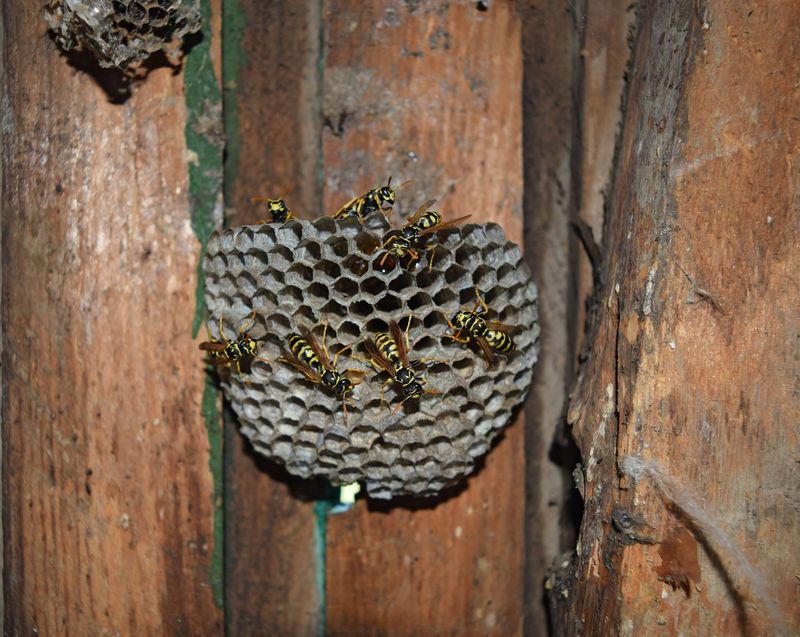
A small, early-season paper-wasp comb in a low-traffic corner is a very different situation from a large, active nest tucked inside a wall void near the front door. Response should always match the actual conditions.
Species, nest size, location, and how close the nest is to regular human or pet activity are all factors worth thinking through before deciding on a next step.
For nests that are small, early stage, and not near high-use areas, watchful waiting or a careful call to a pest professional for advice may be enough.
For nests that are large, hidden inside a structure, or located near a door or seating area, professional removal is the safer path.
The same applies to any nest in a spot that requires ladder work to reach. Attempting to remove an active nest without proper equipment or experience carries real risk.
Anyone with a known allergy to wasp stings should not attempt removal of any active nest. The same caution applies when children or pets are regularly in the area.
Some pest management professionals in this state offer inspections that help identify the species and recommend the most appropriate approach.
Acting thoughtfully rather than reactively almost always leads to a better outcome, and getting expert input costs far less than managing a sting-related emergency.