These California Plants Look Lush In Dry Shade Under Fences And Walls
Dry shade under fences and walls can feel like the place plants go to give up. The soil stays thirsty, the light is weak, and the space often looks bare no matter how much the rest of the yard shines.
Still, that tough strip can become one of the best looking parts of a California garden with the right plants.
The secret is choosing varieties that do not need rich sun or constant water to look full.
A good pick can soften hard edges, cover awkward ground, and bring a cooler feeling to narrow side yards or back corners.
Once these plants settle in, they can turn a dull shadowy spot into something lush, calm, and surprisingly easy to love.
1. Hummingbird Sage Looks Lush In Dry Shade
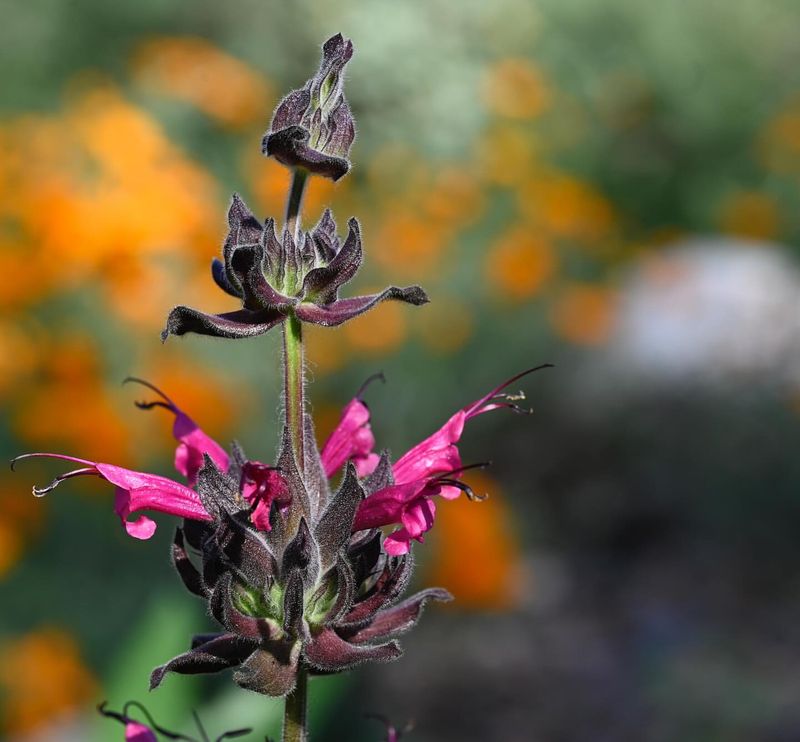
Few plants put on a show quite like hummingbird sage. Its bold, wrinkled leaves spread wide and low, creating thick ground cover even in spots where other plants give up.
The leaves have a strong, pleasant smell that fills the air when you brush against them.
Salvia spathacea is the botanical name, and it earns its common name fast. Hummingbirds flock to its tall, rosy-pink flower spikes in spring.
Even after the blooms fade, the big green leaves keep the area looking full and alive through summer and fall.
This plant handles dry shade with ease. It spreads slowly by underground runners, filling in gaps along fence lines over time.
You do not need to water it much once it gets settled, usually after the first season.
Plant it along a north-facing fence or under a wall where the sun rarely reaches. It pairs well with other low-water natives and needs very little care once established.
Trim back the old flower stalks in late fall to keep it tidy.
One fun detail most people do not know is that native tribes in our state used hummingbird sage leaves for cooking and medicine.
It is a plant with deep roots in the land and a long history of being useful. Adding it to your yard connects you to that history.
2. Island Alum Root Brightens Dark Wall Edges
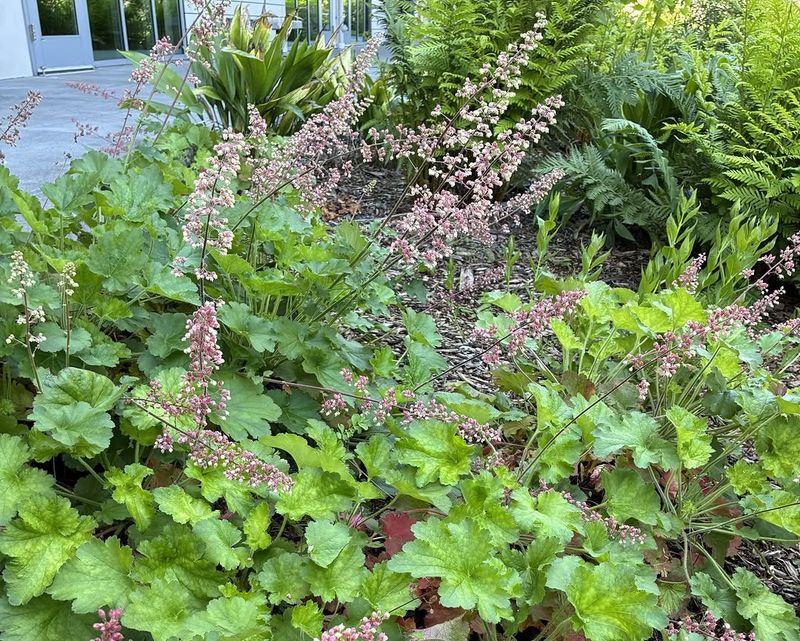
Along the shadowed base of a block wall, most plants look sad and stretched. Island alum root does the opposite.
Its rounded, scalloped leaves stay low and full, forming a tidy mound that looks great all year long.
Heuchera maxima comes from the Channel Islands off our state’s coast. It evolved in rocky, shaded spots with very little water, which makes it perfectly suited for dry edges along walls and fences.
The leaves have a slightly ruffled texture that catches even low light beautifully.
In late winter and early spring, slender flower wands rise above the foliage. They carry small white or cream-colored blooms that attract native bees and hummingbirds.
The flowers are delicate but plentiful, giving the plant a soft, airy look.
Planting is straightforward. Set it along a shaded wall edge, give it deep watering a few times in the first season, and then step back.
Your California Garden Changes Every Week. Your Plan Should Too.
Gardening in California changes quickly throughout the season. Every Friday you’ll receive a simple weekly plan showing exactly what to plant, prune, fertilize, harvest, and protect so you never miss the right timing.
It does not need much fussing. A light trim of old leaves in late winter keeps it fresh going into spring.
What makes this plant stand out is how it handles neglect. It does not sulk when conditions get tough.
Gardeners who have struggled with bare, dry wall edges often say island alum root was the first plant that actually worked. That kind of reliability is hard to beat in a difficult spot.
3. Yerba Buena Softens Shady Fence Lines
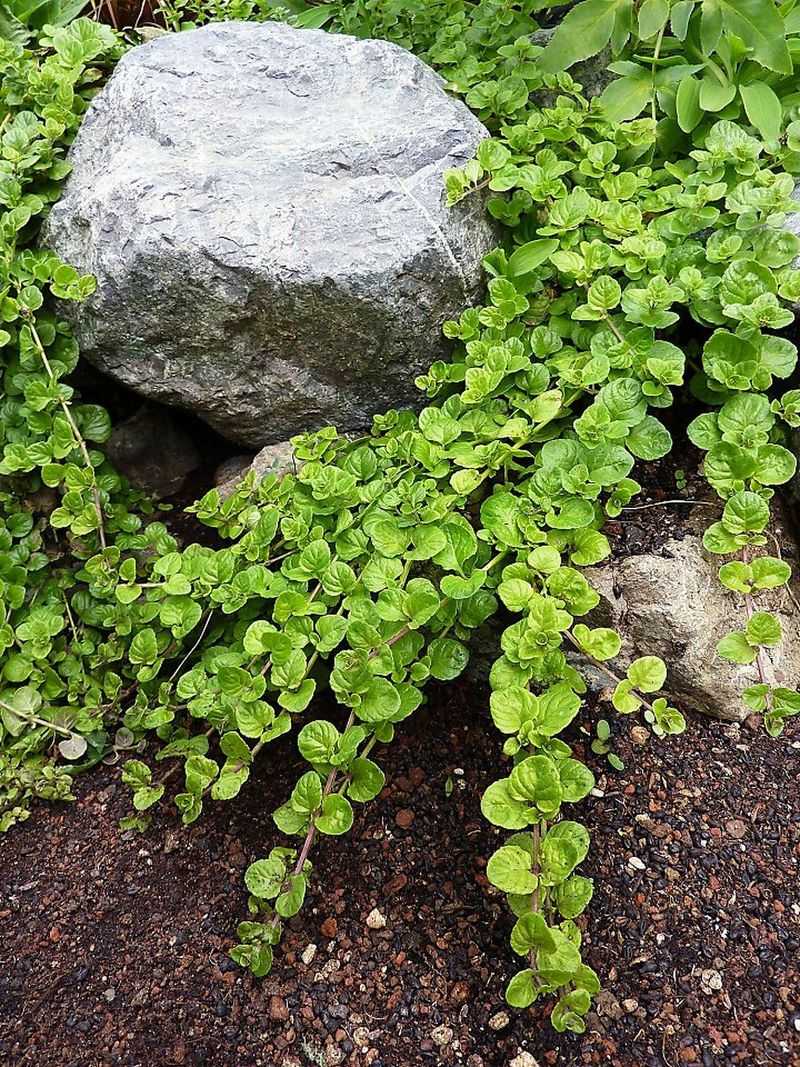
There is something almost magical about yerba buena. Run your fingers across its tiny, round leaves and a fresh, minty scent rises instantly.
It is one of the most pleasant native groundcovers our state has to offer, and it thrives right where most plants fail.
Clinopodium douglasii, once called Satureja douglasii, is a low-growing, trailing plant that spreads gently along the ground.
It does well in dry shade, making it a natural fit for the narrow strips along fences and under walls where water rarely reaches.
The stems root as they spread, slowly filling in bare soil without becoming aggressive or invasive.
Small white flowers appear in spring and early summer, adding a delicate detail to an otherwise simple groundcover. Bees love those tiny blooms.
Yerba buena has a rich history in our state. Spanish missionaries named it, which means good herb.
Native peoples used it as a tea and remedy for centuries before that. Planting it in your yard keeps that history alive in a very real, living way.
For best results, plant it in a spot with morning shade and filtered afternoon light. Water it regularly for the first season, then ease off.
Once established, it needs very little water to stay green and lush. It is a quiet, hardworking plant that makes shady fence lines look intentional and beautiful.
4. Douglas Iris Gives Dry Shade A Clean Green Look
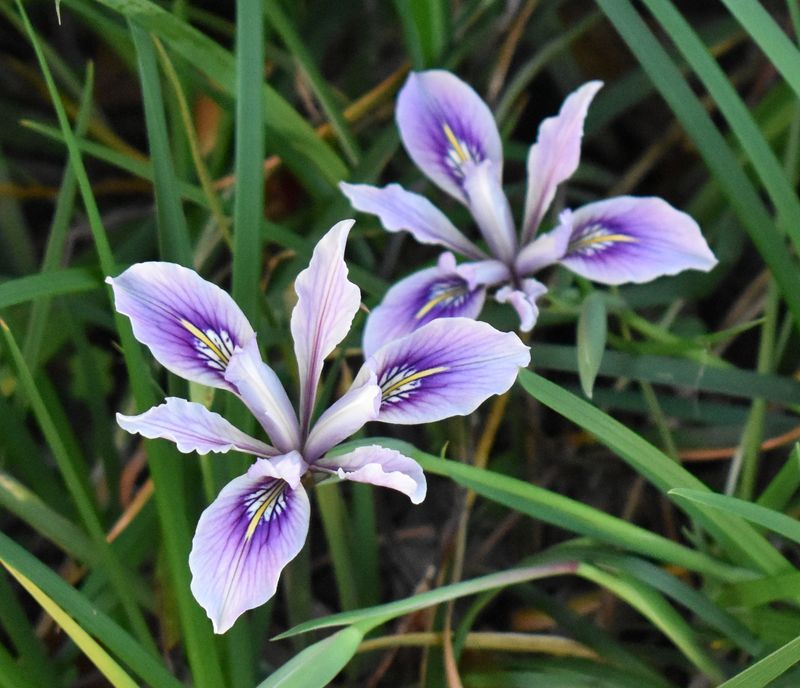
Bold, upright, and undeniably striking, Douglas iris brings structure to spots that usually look messy or bare.
Its dark green, strap-like leaves stay evergreen through most of the year, giving shaded fence lines a clean, organized look even when nothing is blooming.
Iris douglasiana grows naturally along the coast and in shaded woodland edges across our state. It is built for dry summers and mild, wet winters.
That makes it one of the most reliable native plants for dry shade conditions near fences and walls.
The flowers appear in late winter through spring, ranging from deep purple to lavender to creamy white.
Each bloom is intricate and beautiful, with delicate veining that looks like it was painted by hand.
A row of Douglas iris in bloom along a fence is genuinely stunning.
After flowering, the foliage continues to look neat and tidy. Trim old leaves occasionally to encourage fresh growth.
Divide clumps every few years to keep plants vigorous and to spread them to new areas of the garden.
One thing worth knowing is that Douglas iris hybridizes easily with other native iris species. Nurseries often sell Pacific Coast hybrid iris, which are crosses involving this species.
Those hybrids are equally tough and come in an even wider range of colors. Either way, you get a plant that handles dry shade with quiet, confident grace and looks sharp doing it.
5. California Polypody Fills Tough Shady Corners
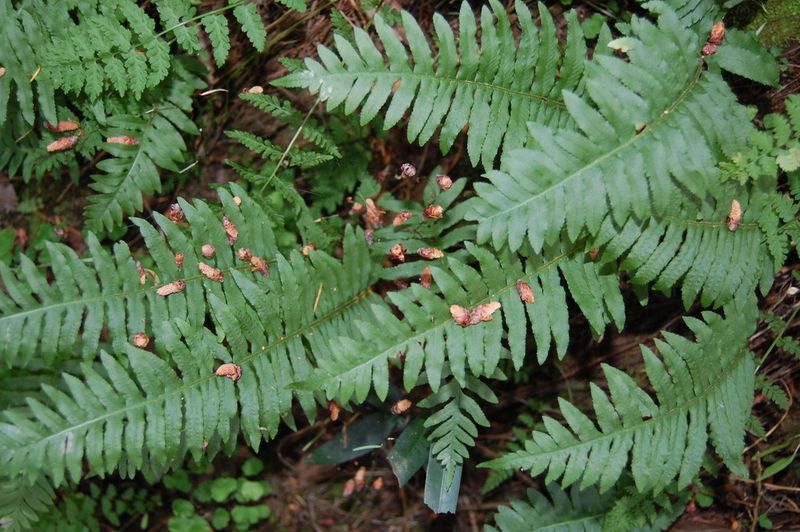
Most ferns demand constant moisture. California polypody breaks that rule completely.
This tough little fern goes dormant in summer, curling up and waiting patiently for fall rains. When the rain comes, it bounces back fast, unfurling fresh green fronds almost overnight.
Polypodium californicum grows naturally on shaded, rocky outcrops and canyon walls across our state. It clings to surfaces with almost no soil, which tells you everything about how adaptable it really is.
Under a fence or along a shaded wall, it thrives with minimal care. The fronds are bright green and deeply divided, giving the plant a lacy, decorative look.
During its active season, from fall through late spring, it creates a lush carpet of green that looks surprisingly tropical.
That contrast with the dry surroundings makes it feel like a small miracle.
Plant it in a shaded corner where the soil drains well. It does not like sitting in wet soil for long periods.
A few rocks nearby can help mimic its natural rocky habitat and improve drainage at the same time.
What makes this fern special for gardeners is the honest trade it offers. Give it shade and decent drainage, and it gives you lush green fronds for most of the year.
It asks for almost nothing in summer because it simply rests. That kind of low-maintenance beauty is rare and worth celebrating in any dry-shade garden.
6. Catalina Currant Adds Leafy Structure Under Walls
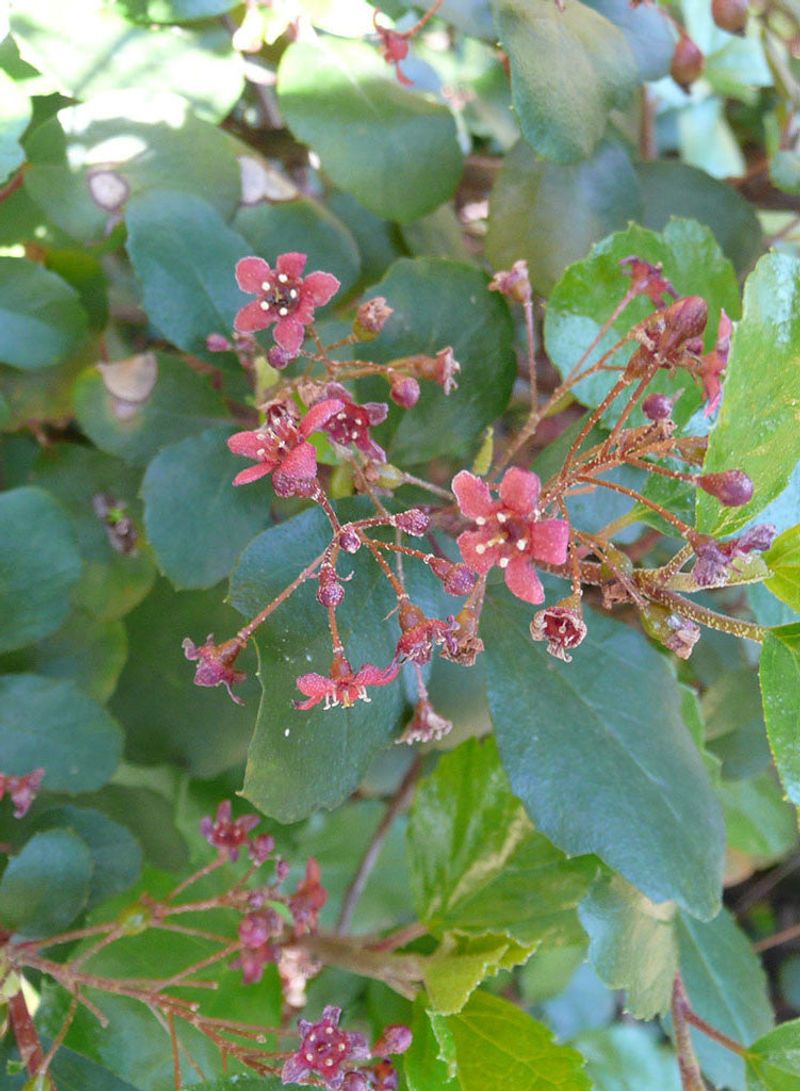
When you need a plant that brings real presence to a shaded wall, Catalina currant delivers without question.
Its large, glossy leaves create a bold, layered look that turns a bare wall edge into something that feels lush and intentional. This is not a subtle plant.
Ribes viburnifolium is native to Catalina Island and a few coastal areas of our state. It spreads low and wide, with arching stems that can reach six feet or more across.
That spreading habit makes it excellent for covering large, dry, shaded areas under walls and along fences.
Small pinkish-red flowers appear in late winter, offering early-season food for native bees and other pollinators. After the flowers, small red berries follow.
Birds enjoy those berries, making this shrub a genuine wildlife plant as well as a good-looking garden specimen.
The leaves have a pleasant, resinous fragrance when crushed. Walking past a row of Catalina currant on a warm day, you catch that smell on the breeze.
It is earthy and a little sweet, like a forest after rain.
Water it well through the first two summers to help it establish deep roots. After that, it needs little to no irrigation in most coastal and inland areas.
Prune lightly after flowering to shape it and encourage fresh growth. For large, dry, shaded spaces under walls, very few plants offer this level of coverage and beauty with so little upkeep required.
7. Fuchsia-Flowered Gooseberry Handles Dry Shade With Color
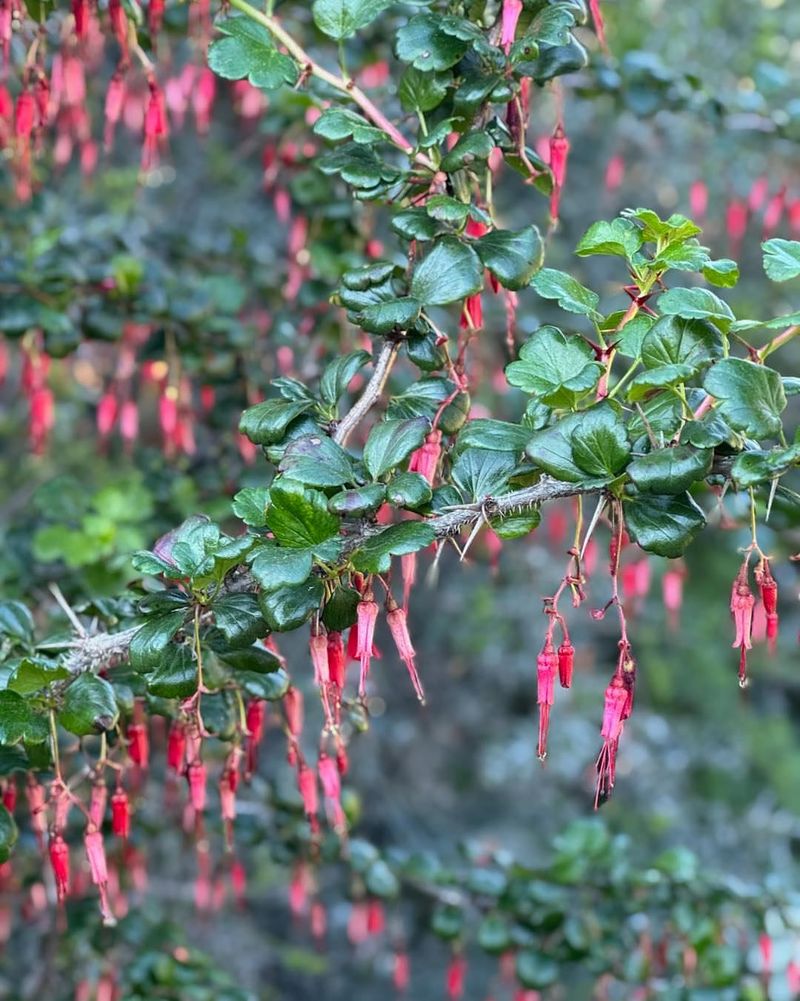
Bright red, dangling flowers on a plant that actually wants dry shade? That sounds too good to be true, but fuchsia-flowered gooseberry delivers exactly that.
It is one of the most visually exciting native shrubs our state offers for shaded, low-water spots.
Ribes speciosum blooms in late winter and early spring, right when the garden needs color most.
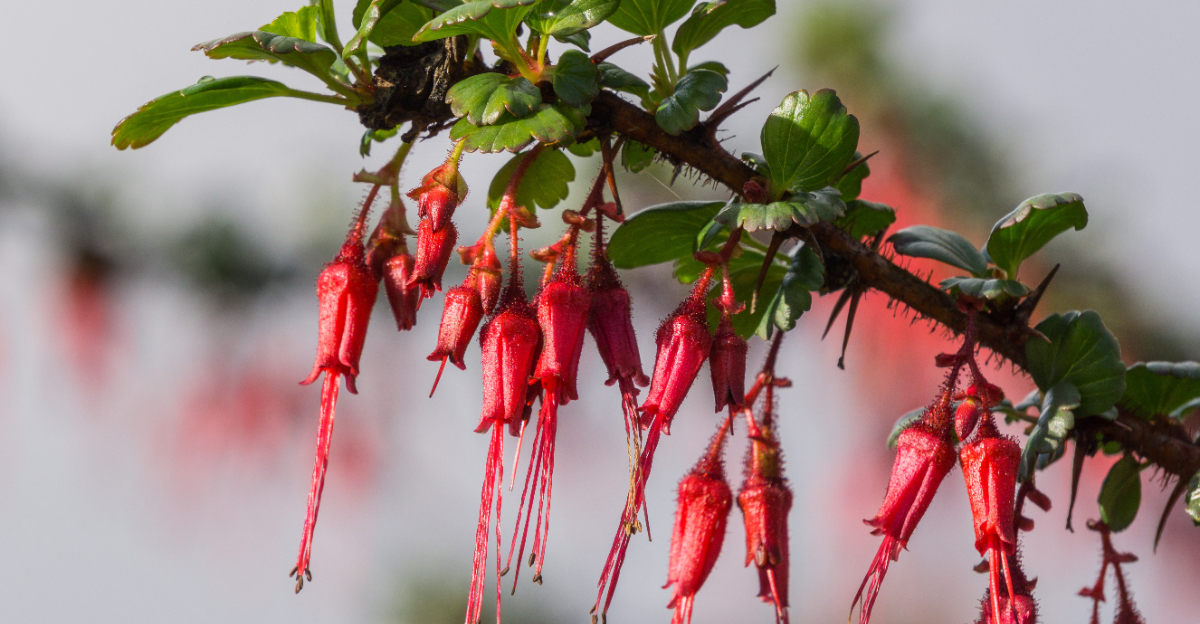
The flowers are long, tubular, and vivid red, hanging in clusters from arching branches covered in sharp spines. Hummingbirds absolutely cannot resist them.
The spines are worth mentioning upfront. This plant is thorny, so wear gloves when planting or pruning near it.
On the positive side, those thorns make it an excellent barrier plant along fence lines where you want to discourage foot traffic or neighborhood animals from cutting through.
After flowering, the plant goes semi-dormant in summer. The leaves may drop or look sparse during the hottest, driest months.
That is completely normal. When fall rains arrive, fresh foliage returns quickly and the plant looks full again before the next bloom season begins.
Plant it in a spot with morning shade or full shade. It handles reflected heat poorly, so avoid hot south-facing walls.
Once established, it needs almost no supplemental water in coastal areas and very little in drier inland gardens.
For a combination of wildlife value, barrier function, and jaw-dropping winter color, this plant earns a top spot in any native planting scheme.
8. Foothill Sedge Covers Bare Soil In Shady Strips
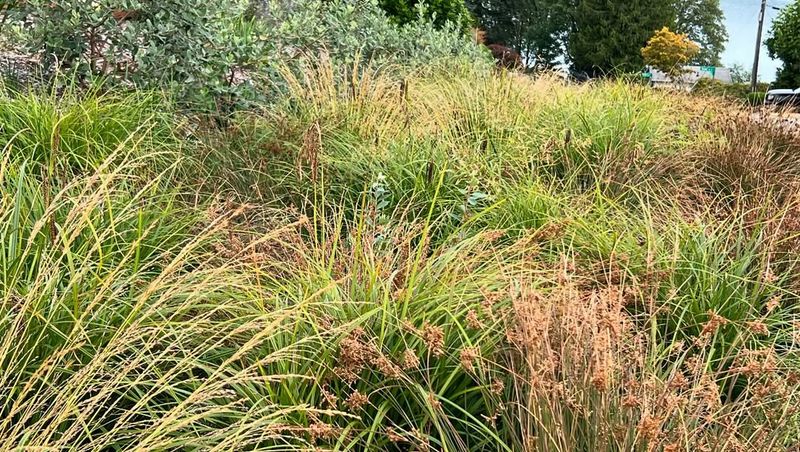
Bare soil in a shady strip along a fence is one of the most frustrating problems in a garden. Foothill sedge fixes that problem quietly and efficiently.
It forms soft, arching clumps of fine green blades that cover bare ground without spreading out of control. Carex tumulicola is native to shaded woodland areas and stream banks across our state.
It handles dry shade better than most sedges, making it one of the go-to choices for gardeners dealing with tough fence-line conditions.
The foliage stays green through most of the year in mild climates.
Each clump grows about one to two feet tall and wide. You can space plants about eighteen inches apart for fairly quick coverage, or closer together for faster fill.
Either way, they knit together over time into a soft, flowing carpet of green that looks natural and relaxed.
Foothill sedge works beautifully as a lawn substitute in small, shaded areas. It does not need mowing often, if ever.
A light trim once a year in late winter keeps it fresh and encourages new growth from the base of each clump.
Birds use the seed heads for food, adding a small wildlife benefit to an already practical plant. It pairs well with Douglas iris, hummingbird sage, and other native plants on this list.
For shady strips where nothing else seems to take hold, foothill sedge is often the simple, sturdy solution that finally works.
9. Canyon Sunflower Lights Up Bright Dry Shade
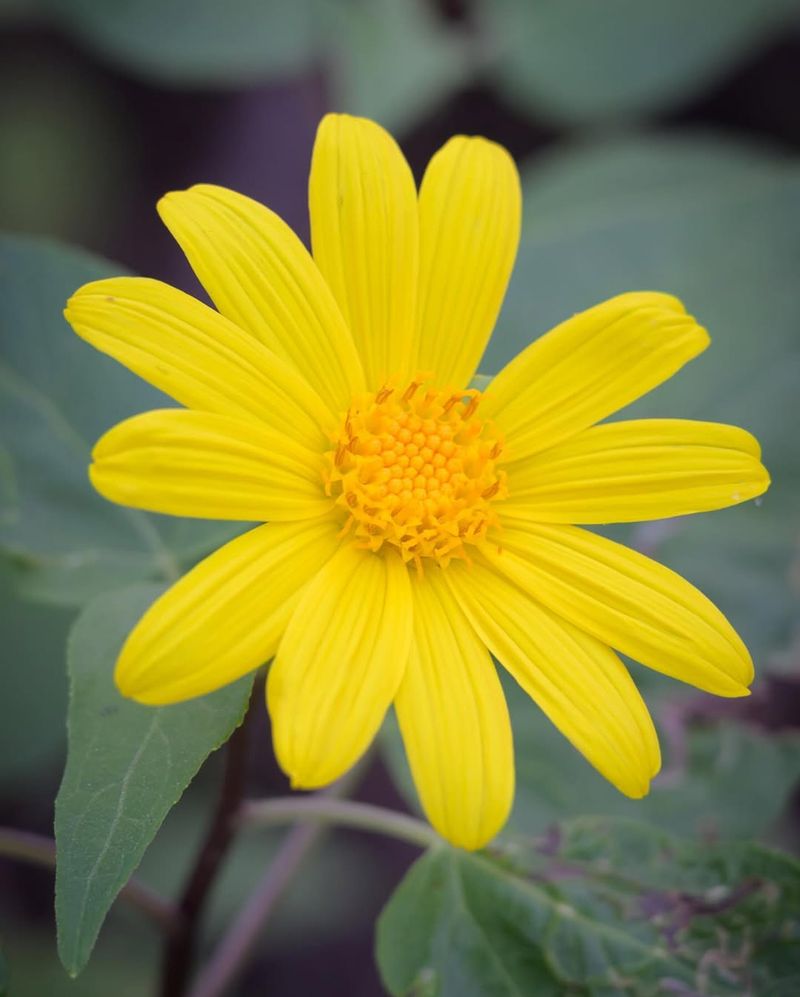
Not all dry shade is pitch dark. Some spots get a few hours of filtered light or bright indirect sun, and that is exactly where canyon sunflower shines.
It brings cheerful, yellow daisy-like flowers to those in-between spots that are too shady for most sun lovers but too bright for deep-shade plants.
Venegasia carpesioides is a soft-wooded shrub native to shaded canyon slopes and coastal sage areas of our state. It grows three to five feet tall and wide, with bright green leaves and a relaxed, open form that suits informal garden styles very well.
Flowers appear from late winter through spring, and sometimes again in fall with a little encouragement. Deadheading spent blooms can trigger a second flush of flowers.
Each bloom is simple and sunny, like a small, cheerful daisy nodding in a gentle breeze.
This plant appreciates some summer shade to protect it from intense heat. A spot under a tall fence or along an east-facing wall is ideal.
Water it deeply but infrequently once established, allowing the soil to dry out between waterings.
Canyon sunflower is not widely known outside of native plant circles, which is a shame. It fills a specific niche, bright dry shade, better than almost anything else available.
Gardeners who discover it often say it changed how they think about shaded corners. Give a tough spot some sunshine in plant form, and watch the whole area come alive.