What Michigan Gardeners Should Do To Irises The Moment They Finish Blooming
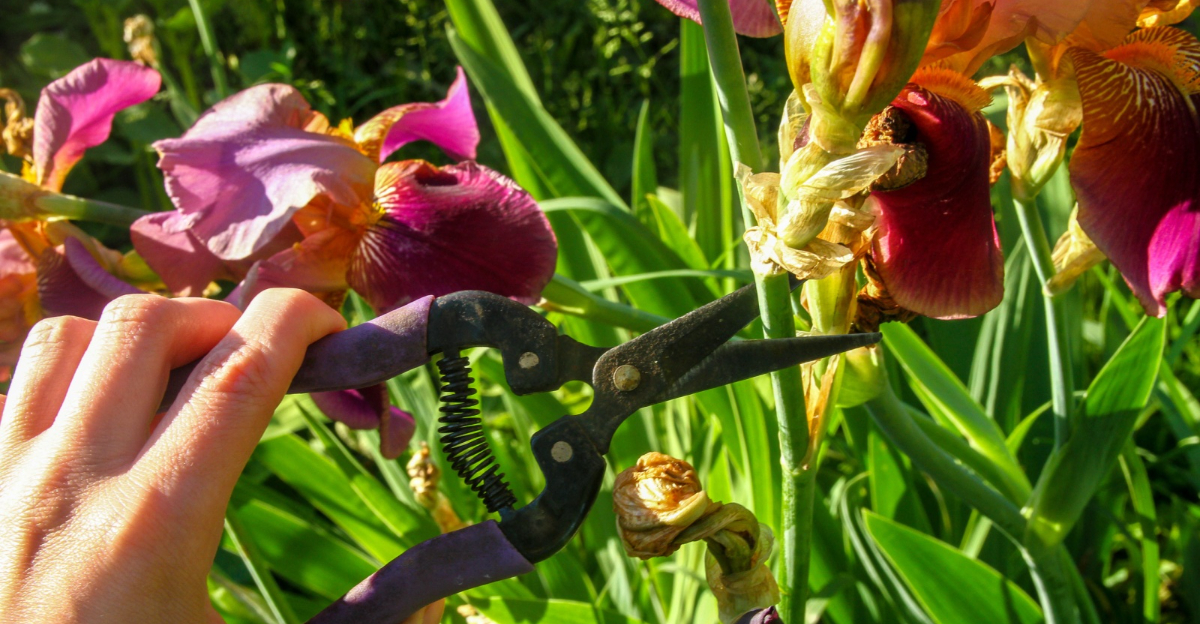
Bearded irises in Michigan have one job in June, and they absolutely nail it. Bold colors, dramatic blooms, a real moment in the garden spotlight.
Then the petals drop and suddenly the whole plant looks like it forgot why it was there in the first place. This is exactly the point where well-meaning Michigan gardeners tend to make a mistake.
The flower stalks need to go, no argument there, but those long sword-shaped leaves should stay put and keep doing their job all summer.
They are quietly feeding the rhizome for next year’s show, and cutting them back too early is basically firing your best employee right after the big project wraps.
Removing spent stalks while leaving the foliage alone is the move that sets up another great June.
1. Remove Spent Flower Stalks First
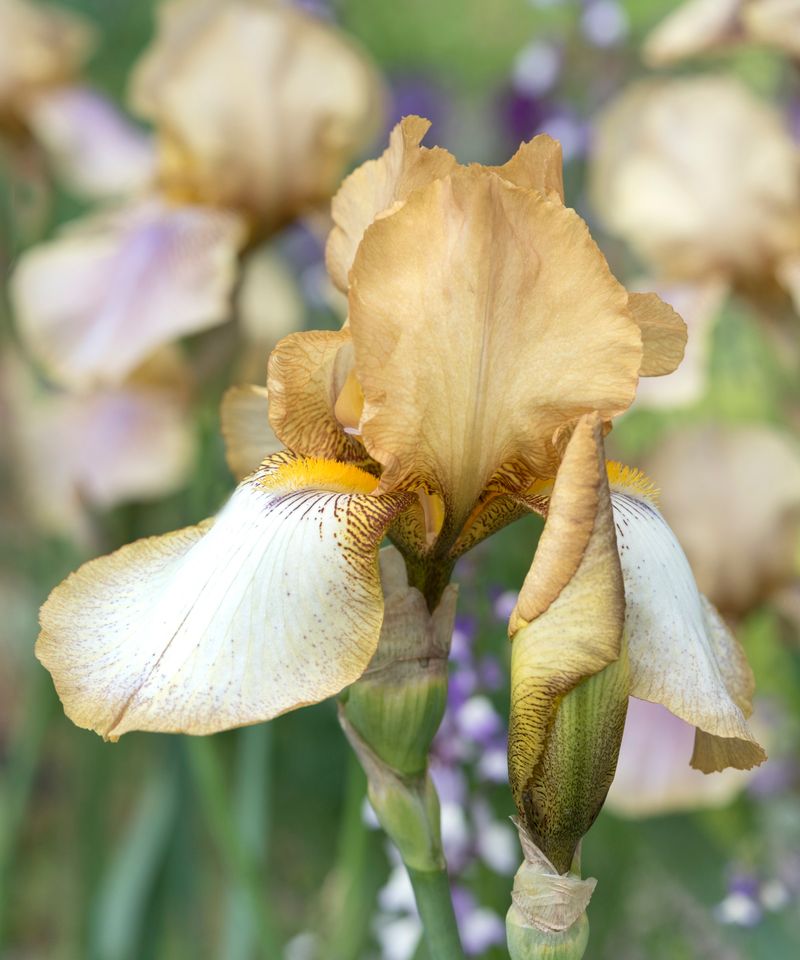
Bare flower stalks standing in a perennial bed after the blooms drop are one of the most familiar sights in Michigan gardens every June. Once the last flower on a stalk has faded, that stalk no longer serves any useful purpose for the plant.
Removing it promptly is one of the simplest and most helpful things you can do for your irises after the blooming season ends.
The stalk itself is hollow and will begin to look ragged and brown as the weeks pass. Leaving it in place does not help the rhizome, and it can actually make the bed look messy and unkempt.
Most Michigan gardeners find that a quick pass through the iris bed with clean pruners right after bloom makes the whole planting look much more cared for.
Cutting the spent stalk is not the same as cutting back the leaves. The leaves are green, upright, and still actively supporting the plant, so they stay.
Only the flowering stalk gets removed at this stage. This step is simple, quick, and sets a clean foundation for the rest of your summer iris care.
It also removes one potential hiding spot for iris borers, which are a real concern in many Michigan landscapes.
A few minutes of cleanup now can make a noticeable difference in how your bed looks and how your plants recover heading into the warmer months ahead.
2. Leave The Green Leaves Alone
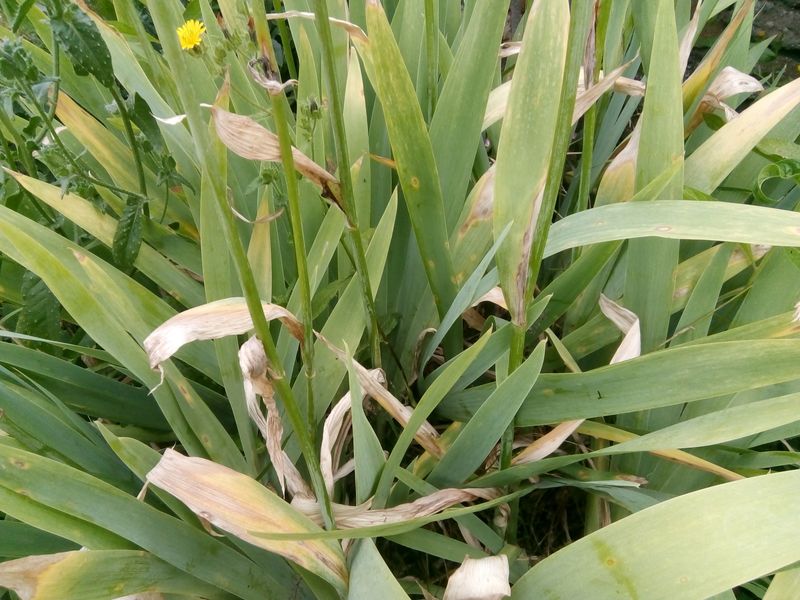
After the flowers fade, those tall, sword-like iris leaves can look almost too tidy to touch, and that instinct to leave them alone is exactly right. Green iris foliage is still actively working even when the blooms are long gone.
Through photosynthesis, the leaves are capturing sunlight and sending energy down into the rhizomes, helping the plant build up what it needs for next year.
A common mistake in Michigan home gardens is cutting the leaves back too soon, often because they can look a little untidy as summer goes on. Cutting healthy green foliage in June or early July interrupts this energy-storing process at a critical time.
The rhizomes depend on the leaves to keep fueling growth during the summer months, and removing that foliage early can leave the plant less prepared for the following bloom season.
Your Michigan Garden Changes Every Week. Your Plan Should Too.
Gardening in Michigan changes quickly throughout the season. Every Friday you’ll receive a simple weekly plan showing exactly what to plant, prune, fertilize, harvest, and protect so you never miss the right timing.
Some gardeners trim the leaf tips into a neat fan shape to tidy the appearance without removing too much surface area. This is a reasonable compromise if the foliage starts to look a little ragged at the tips.
The goal is to preserve as much green leaf surface as possible through summer so the rhizomes can do their job. Michigan summers can be warm and humid, and keeping the foliage intact helps the plant manage that seasonal stress more effectively.
Healthy leaves mean healthier rhizomes, and healthier rhizomes are what produce reliable blooms the following spring.
3. Seed Pods Take Energy From Rhizomes
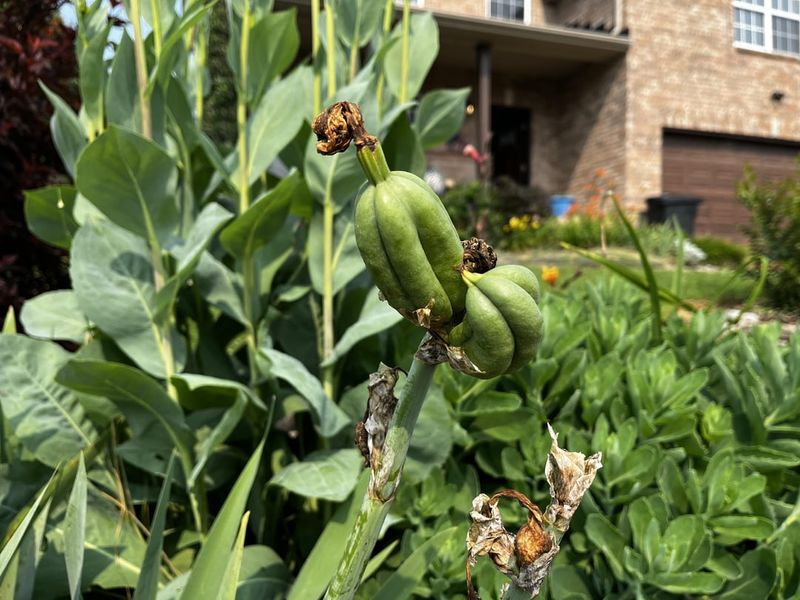
Once a bearded iris flower finishes blooming, a seed pod can begin forming right at the base of where the flower sat on the stalk. That pod looks harmless enough, but it draws a surprising amount of energy away from the rhizome as it develops.
For gardeners who want their irises to focus on building strong roots rather than producing seeds, removing the spent stalk before a pod can mature is a practical step.
Seed production is a resource-heavy process for any plant. When an iris puts energy into developing seeds, that energy is not going toward the rhizome, which is where next year’s bloom potential is stored.
In a Michigan perennial bed where you want consistent, reliable flowering from your established iris clumps, letting seed pods form and ripen is generally not the most beneficial choice.
Unless you are intentionally trying to grow new iris seedlings, which is a slow process and produces plants that may not look like the parent, removing the stalk early prevents the pod from forming in the first place. This is not about stressing the plant.
It is about redirecting the plant’s resources toward the parts that matter most for a home gardener focused on flowers.
Catching the stalk early, before the pod swells and begins to develop, makes this step easy and low-effort for most Michigan gardeners working in smaller residential beds and borders.
4. Cut Stalks Close To The Base
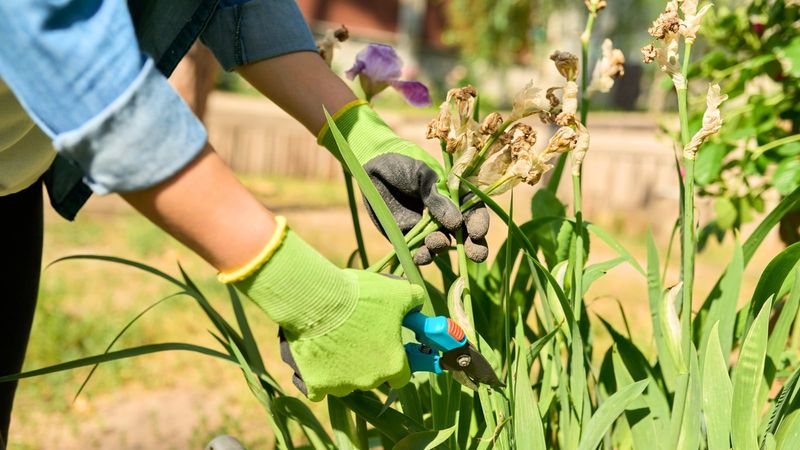
When it comes time to remove a spent iris stalk, where you make the cut matters more than many gardeners realize.
Cutting the stalk close to the base, just above the soil level or just above where the stalk meets the foliage, gives the cleanest result and reduces the amount of spent plant material left behind in the bed.
Leaving a long stub of stalk sticking up from the bed is a common habit, but those stubs can collect moisture and become a place where fungal issues or iris borers find an easy foothold. A clean, low cut removes most of that risk.
It also makes the bed look much neater, since a short cut stalk at soil level is nearly invisible once the surrounding leaves fill in around it.
Most Michigan gardeners find that a pair of sharp bypass pruners does this job cleanly and quickly. Bypass pruners cut with a scissors-like action that leaves a cleaner cut than anvil-style pruners, which can sometimes crush the plant tissue slightly.
The cut does not need to be perfectly flush with the ground, but getting it as low as reasonably possible is the practical goal.
Working carefully around the base of the stalk, especially in beds where rhizomes may be partially exposed near the soil surface, helps avoid accidentally nicking or scraping the rhizome itself during the process.
5. Clean Tools Help Protect The Clump
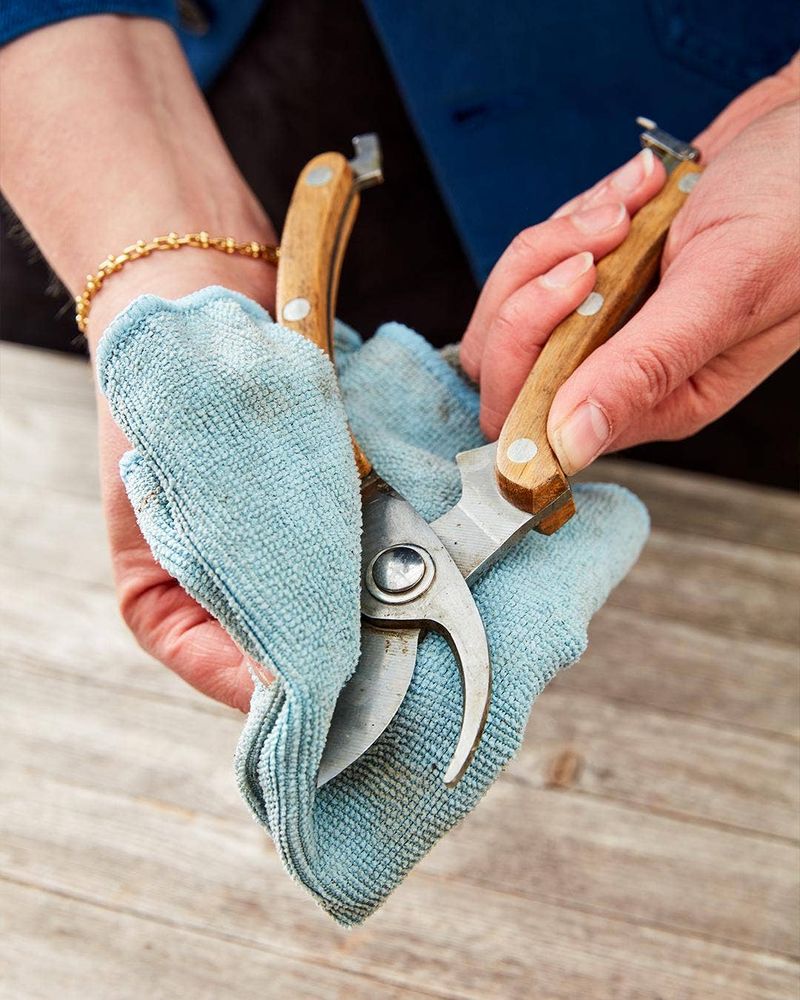
Pruning shears that move from plant to plant without being cleaned are one of the quieter ways that problems spread through a perennial bed.
For irises, this matters because some of the issues that affect these plants, including certain bacterial and fungal concerns, can travel on the cutting edges of dirty tools.
Taking a moment to wipe down pruners between uses is a simple habit that costs very little time.
A cloth moistened with rubbing alcohol works well for wiping blades between cuts, especially if you are moving through a larger iris planting or if you noticed any soft, discolored, or odd-smelling rhizome tissue while working.
Michigan gardens deal with a range of summer humidity and moisture conditions that can encourage certain plant health issues, so a little extra care with tools is worthwhile.
Keeping tools sharp is just as useful as keeping them clean. A dull blade tends to tear rather than cut, leaving rougher plant tissue that can be slower to recover.
Many Michigan gardeners find that a basic blade sharpener and a small bottle of alcohol kept in the garden kit makes it easy to maintain good tool hygiene without interrupting the flow of garden work.
Clean, sharp tools make the whole after-bloom cleanup process go more smoothly, and they help protect the clumps you have spent years building up in your perennial borders and foundation beds.
6. Yellowing Leaves Can Be Removed Later
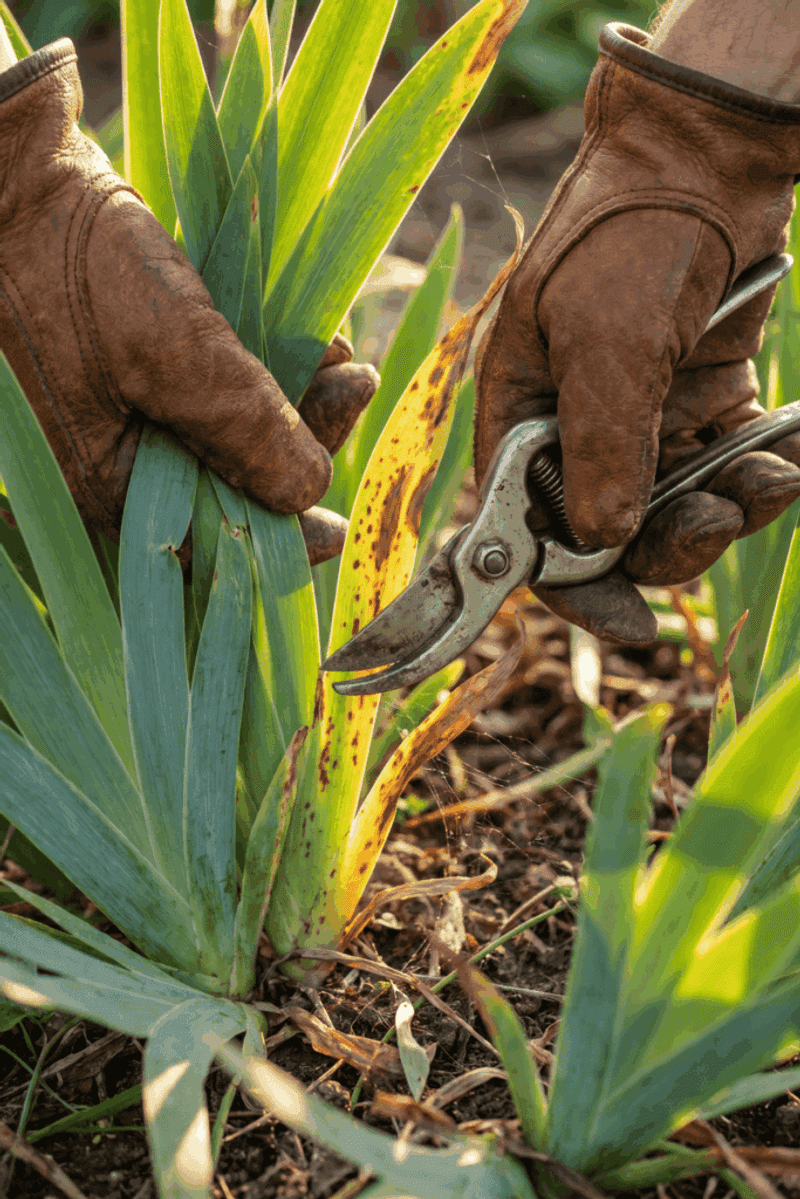
Not every leaf on an iris clump stays green and fresh all summer long. By midsummer or late summer, some of the older, outer leaves may begin to turn yellow or brown at the tips or along the edges.
This is a natural part of the plant’s seasonal cycle, and it does not mean the whole clump is struggling.
The difference between yellowing leaves and healthy green leaves matters here. Green leaves should stay in place through summer because they are still doing useful work for the rhizome.
Yellowing or fully browned leaves, on the other hand, are no longer contributing much to the plant’s energy needs and can be gently pulled away or trimmed off as needed.
In Michigan gardens, this kind of light grooming often happens naturally in late July or August rather than right after bloom.
Pulling away a yellowing leaf is usually as simple as grasping it near the base and giving a gentle downward tug. If it comes away easily, it was ready to go.
If it resists, leaving it a little longer is fine. There is no need to rush this part of iris care.
The goal is simply to keep the bed looking tidy and to remove any foliage that could trap moisture against the rhizome over time. A little patience with this step keeps the cleanup feeling manageable rather than overwhelming for most home gardeners.
7. Crowded Clumps May Need Dividing
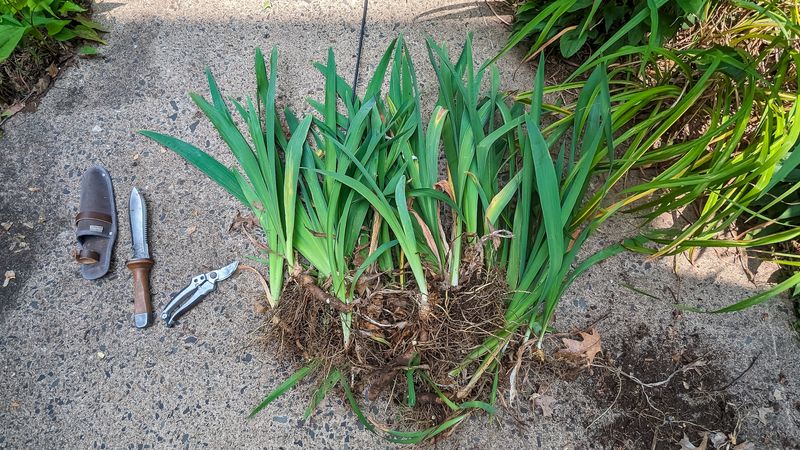
Over a few years, bearded iris clumps tend to spread outward from the center, and the middle of the clump can become crowded with older rhizomes that are less productive.
When a once-reliable iris planting starts producing fewer blooms despite looking full and leafy, crowding is often the reason.
Michigan gardeners who notice this pattern may want to consider dividing their clumps.
Late summer, typically from late July through August in Michigan, is generally considered a reasonable window for dividing bearded irises. This timing allows the divided rhizomes to settle and establish some root growth before the ground cools in fall.
Dividing is not something every clump needs every year, and a planting that is still blooming well and not visibly overcrowded can usually be left alone for another season or two.
When dividing does make sense, the process involves digging up the clump, shaking off loose soil, and separating the newer, firm rhizomes from the older, more spent ones in the center.
Replanting the healthy pieces at the right depth, with the top of the rhizome just at or slightly above the soil surface, gives them the best start.
Bearded irises in Michigan need good sun exposure on those rhizomes to support strong blooming, so choosing an open, sunny spot when replanting divided sections makes a real difference in how well they perform the following spring.
8. June Care Sets Up Next Year’s Blooms
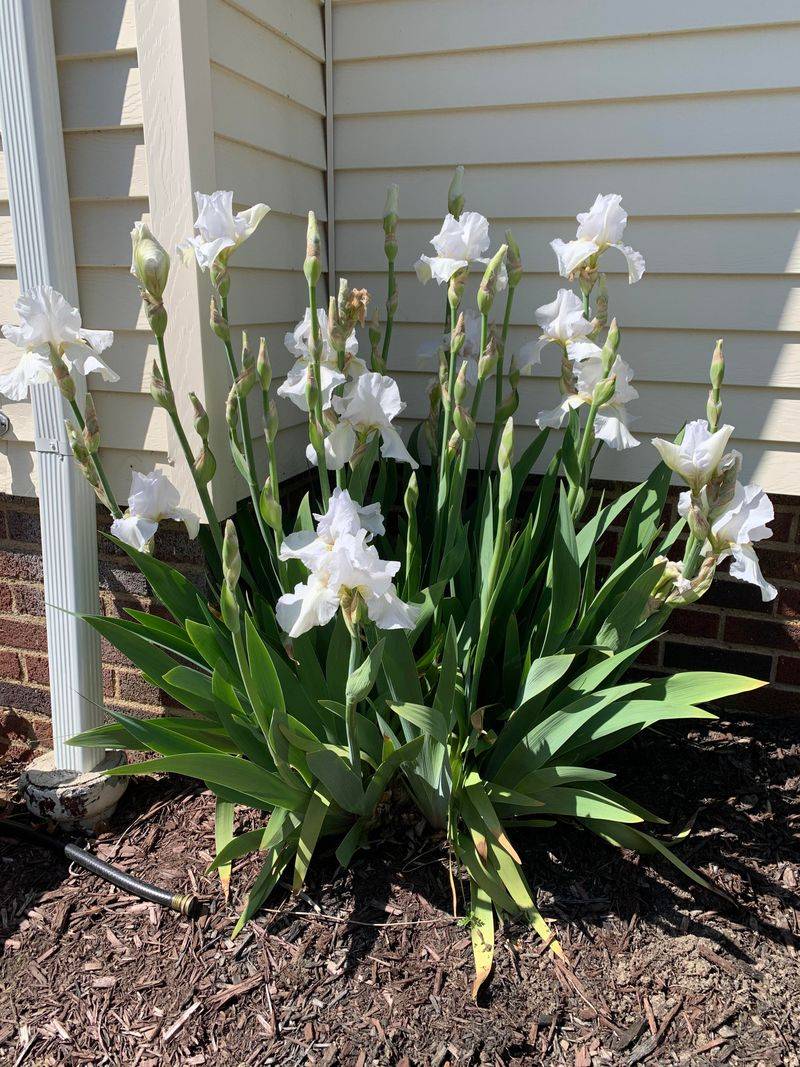
What happens in a Michigan iris bed during June sets the tone for what the garden will look like the following spring.
The weeks right after bloom are when the rhizomes are actively working to store energy for the next growing cycle, and the small steps taken during this window can have a real effect on how the planting performs in the months ahead.
Removing spent stalks, leaving green foliage intact, preventing seed pod formation, and using clean tools are all pieces of the same straightforward approach to after-bloom care. None of these steps requires special skills or expensive supplies.
Most Michigan home gardeners can work through a small iris bed in a single afternoon, and the results in terms of tidiness and plant health are usually noticeable right away.
Thinking of June iris care as an investment in next May’s flowers makes the work feel more purposeful. Bearded irises are reliable, long-lived perennials that reward a little seasonal attention with years of consistent blooming.
Michigan gardens that include well-maintained iris clumps tend to have a lush, established look that takes time to build and is worth protecting.
A gentle, informed approach to post-bloom care, one that respects the plant’s natural rhythm rather than rushing it, is what keeps those clumps thriving season after season in perennial borders, cottage beds, and sunny front-yard plantings across the state.