What Really Happens To Yellowjacket Nests In Michigan After The First Hard Frost
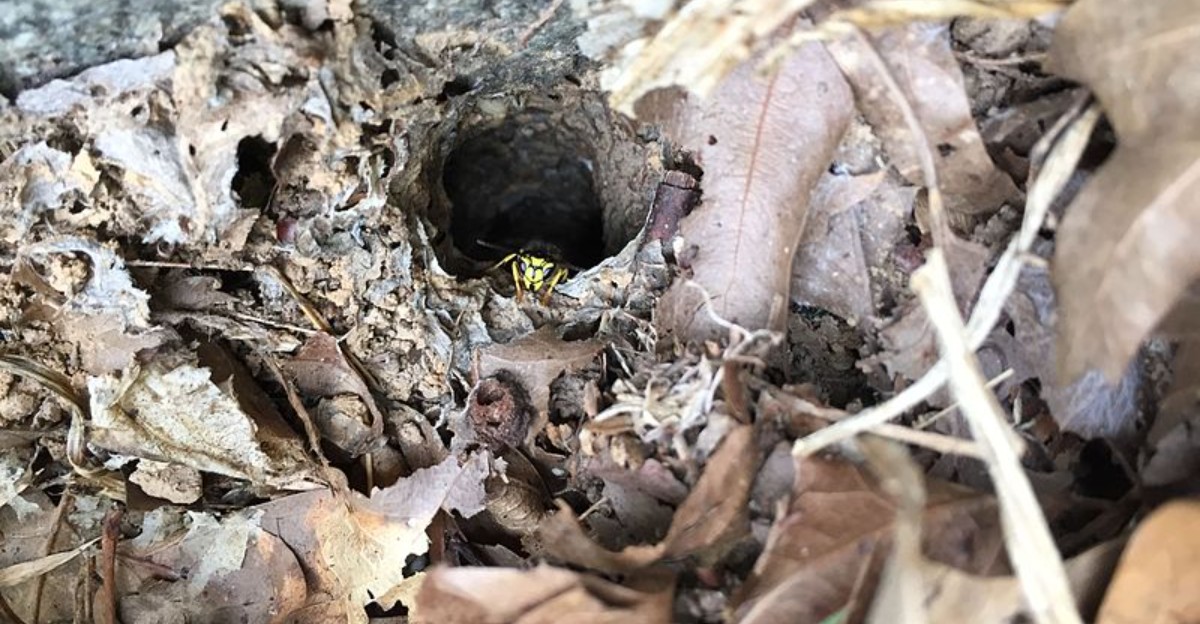
Yellowjackets seem to be everywhere in September, and then they are suddenly gone. The first hard frost explains why. Cold weather ends the life of the workers that fill the nest.
The colony slowly fades out, and the busy buzzing stops. Only the new queens survive. They leave the nest, find a sheltered spot, and wait out winter alone.
The old nest is almost never used again. This surprises many homeowners, who expect the same nest to return each year. Knowing the cycle helps you decide what to do and when.
It also explains why late-season stings are so common, since the colony is at its largest and most irritable just before the cold arrives.
1. The Colony Collapses For The Season
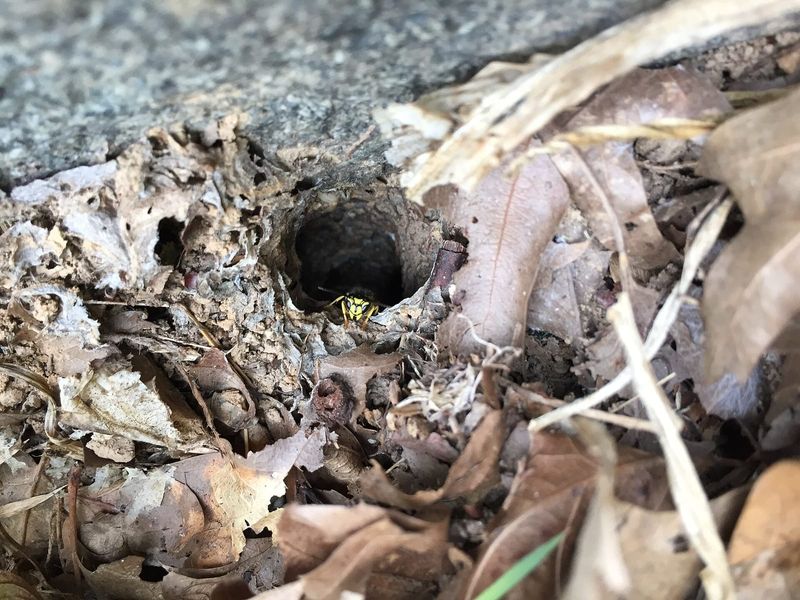
Unlike honeybees, yellowjackets do not settle in for a long winter together. Their colonies are annual, which means each nest only works for a single season. Once the year ends, the whole operation shuts down.
Why does it happen so fast? The workers, the males, and the old queen are simply not built to handle winter. Their bodies cannot store enough energy or resist freezing temperatures for months.
When hard freezes arrive and food sources like insects and sweet fruit run out, the colony declines quickly.
You will notice the change if you keep an eye on a nest. A few cold nights might slow things down, but the wasps can still fly on warm afternoons. After several hard freezes, though, activity drops sharply.
By late fall, most nests sit empty and silent, with no guards at the entrance and no traffic coming or going. Timing matters a lot in Michigan.
Hard freezes usually show up in October and November across much of the state. In the Upper Peninsula and the northern Lower Peninsula, that cold often arrives earlier, so nests there may quiet down weeks before those near Detroit or Grand Rapids.
Here is a smart tip for homeowners. Track the weather and count the hard freezes in your area. When the temperature has dipped well below 28 degrees a few times, the nest is very likely finished for the year.
Patience pays off, because waiting for nature to do the work is safer than poking around a busy nest in September. Your local weather app can become your best pest control helper.
2. Only The New Queens Survive Winter
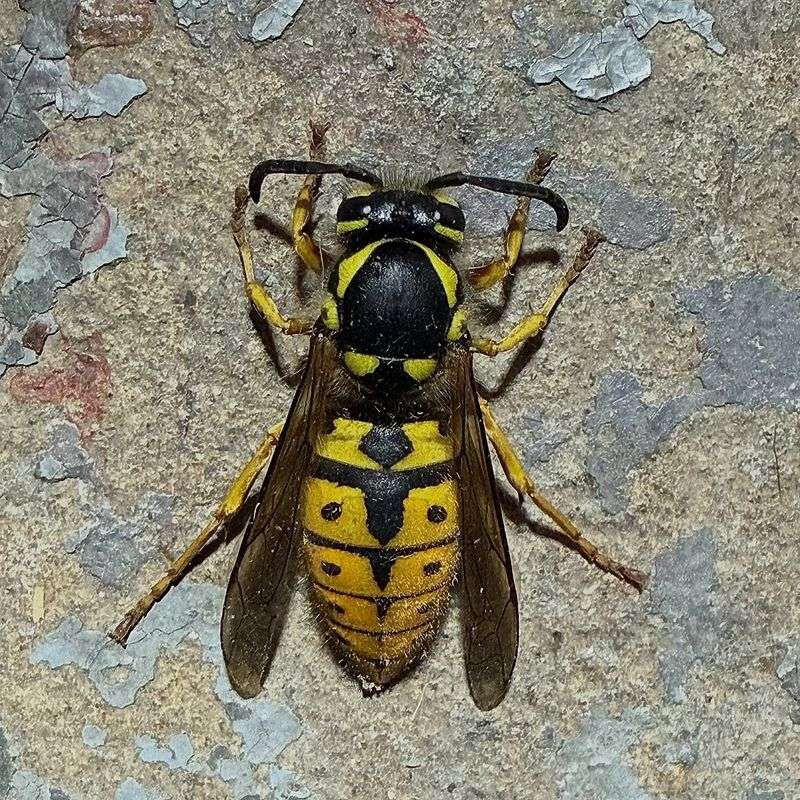
Out of thousands of yellowjackets buzzing around in summer, only a small group makes it to spring. Those lucky few are the newly mated queens. Everyone else in the colony fades away as the cold settles in.
Late summer is when the plan starts. Colonies switch from raising workers to raising new queens and males. These young queens are larger than the workers, and they spend their time eating and building up fat reserves.
After they mate with males, the queens leave the nest for good. Each queen now carries everything she needs inside her body. The stored energy lets her rest in a dormant state, a bit like a long, deep nap, all on her own. She does not eat or fly during this time.
Your Michigan Garden Changes Every Week. Your Plan Should Too.
Gardening in Michigan changes quickly throughout the season. Every Friday you’ll receive a simple weekly plan showing exactly what to plant, prune, fertilize, harvest, and protect so you never miss the right timing.
Her body slows way down so she can wait out the cold. Spring is when her real job begins. A single queen that makes it through winter can start a brand new colony by herself. She lays the first eggs, raises the first workers, and soon has a whole crew helping her.
So next year’s yellowjackets do not come from the old nest at all. They come from these hardy queens.
Michigan winters make the challenge tough. Queens must hold on through months of snow, ice, and below-zero nights before warm weather returns in April or May. Many do not make it, which is good news for gardeners.
Still, the ones that do can each launch a colony, so keeping an eye out for big, slow queens in early spring is a clever way to stay ahead.
3. Queens Hide In Sheltered Spots Over Winter
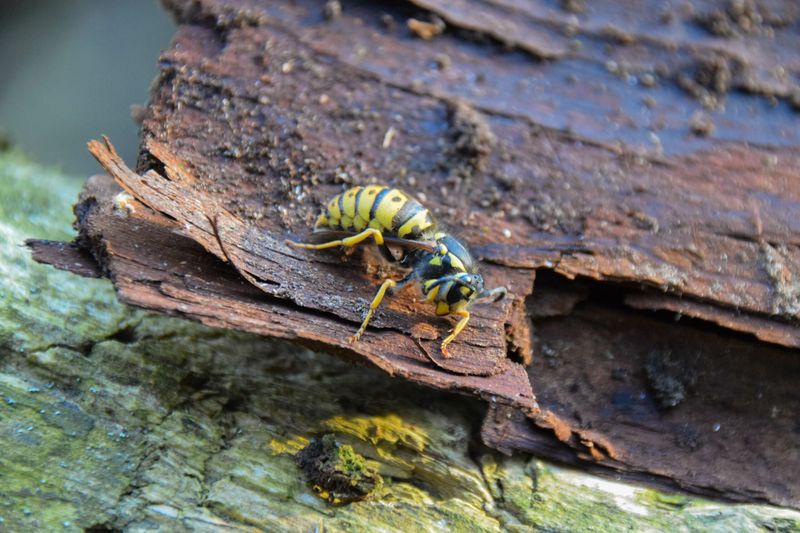
Ever pulled back a piece of loose bark in November and found a sleepy wasp tucked inside? That was probably a queen settling in for the long cold season. She picked that spot on purpose.
Queens look for places that stay cool and protected from the worst weather. Common hideouts include spaces under loose bark, inside rotting logs, and deep in piles of leaf litter.
Plenty of queens also find their way under siding, into wall spaces, or up in attics. A steady, sheltered spot keeps them from waking too early or freezing solid.
Sometimes that choice leads them indoors. On a warm winter day or in early spring, a queen hiding in your walls may wander into a room by mistake. She will usually be slow and sluggish, crawling more than flying.
Calm down, because she is in no shape to put up much of a fight. Removing her is simple. Place a cup over her, slide a stiff piece of paper underneath, and carry her outside or seal her in a container.
Wearing gloves adds a little extra safety, especially for anyone with a sting allergy. Michigan homes and garages make attractive winter shelters for many insects, not just yellowjackets.
Cozy gaps around windows, vents, and siding act like open doors. A quick fall check of your house can keep these uninvited guests outside where they belong.
Seal small cracks with caulk, fix torn screens, and close up openings in the garage before the cold arrives.
4. Old Nests Are Not Reused
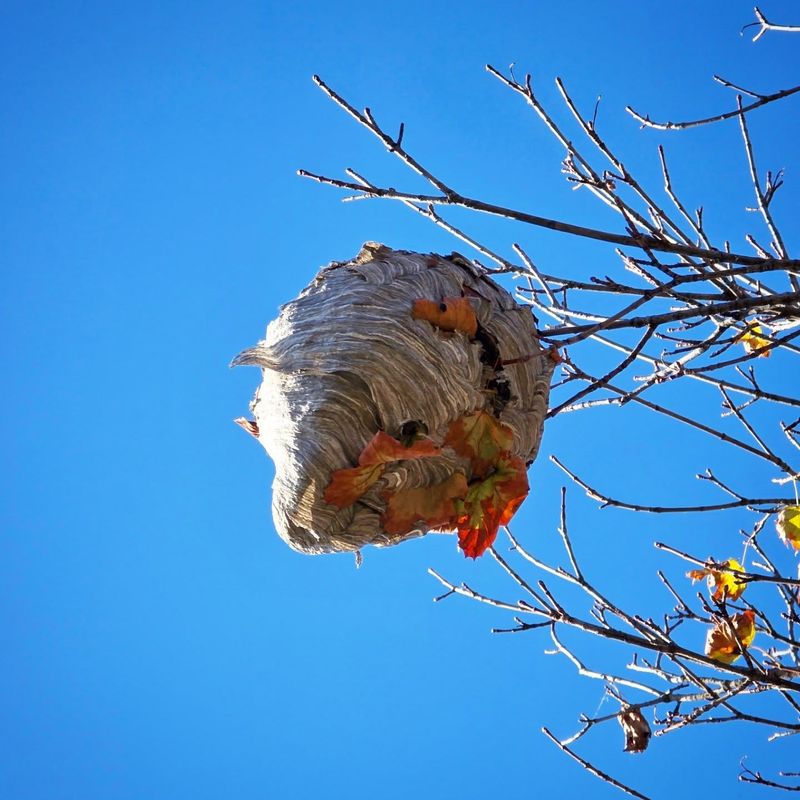
Yellowjackets are builders, not movers. A queen never moves back into last year’s home, even if it looks perfectly fine. Every season, she starts fresh.
In spring, the queen gathers wood fibers by scraping them off fences, decks, and dry branches.
She chews the fibers and mixes them with saliva to create a paper-like material. With that homemade paper, she builds a tiny new nest from scratch, often no bigger than a golf ball at first.
Meanwhile, the old nest just sits there, empty and forgotten after the colony collapses. So what does finding an old nest in winter really mean? It does not mean yellowjackets will come back to that exact nest.
However, queens often pick similar sites in the same general area, because those spots offered good shelter before. The location may still be attractive, even if the old paper structure is not.
Homeowners in Michigan can use this to their advantage. Once several hard freezes have passed and the nest shows no activity, it is safe to remove it. Knock it down with a long stick or pull it off while wearing gloves, then toss it in the trash.
Some people even keep old nests as a nature display, since the layered paper is pretty amazing up close.
Just remember one more thing. Removing the old nest helps tidy up, but it does not stop a new queen from choosing a nearby spot next spring.
Combine cleanup with a quick inspection for gaps and openings, and you will have a much better shot at a calm summer.
5. Late Fall Yellowjackets Become Pests Before Frost
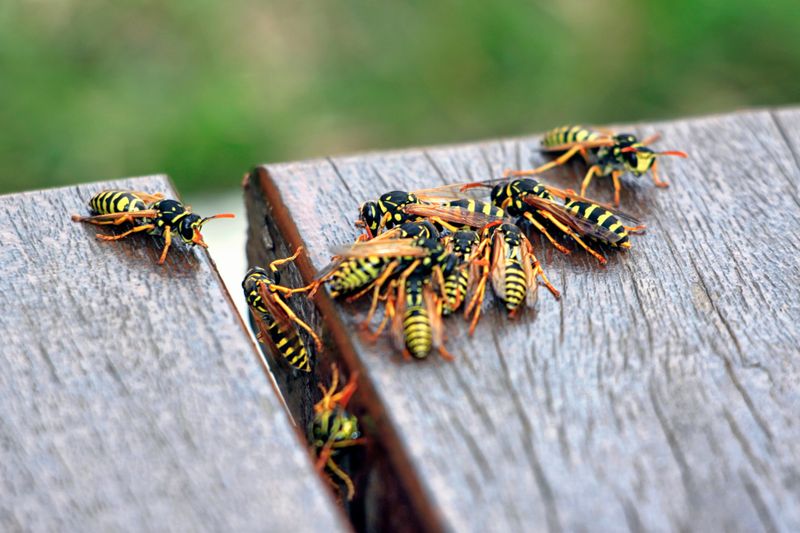
Cider and donuts on a crisp September afternoon sound perfect, right up until a yellowjacket lands on your cup. That buzzing visitor is not just being rude. It is hungry and running out of options.
By late summer, colonies reach their biggest size of the year. Thousands of workers need to eat, yet the insects and other foods they normally gather start to disappear. So the workers go looking for sugar.
Fallen fruit, soft drinks, juice, and picnic foods become irresistible, pulling them right into the middle of our outdoor fun.
A few easy habits can keep you from getting stung. Cover drinks outside with lids, and use cups instead of open cans, since wasps can crawl inside where you cannot see them. Pick up fallen apples, pears, and plums from the yard every few days.
Keep garbage cans and recycling bins sealed tight, and rinse out sticky containers before tossing them.
Nests deserve extra care during this busy stretch. Avoid mowing over, kicking, or spraying a nest while the colony is at full strength. An angry colony in September can be dangerous.
Waiting until hard freezes have ended the activity is a much safer choice for most families.
Michigan lovers of fall know exactly where yellowjackets show up most. Orchards, cider mills, football tailgates, and backyard barbecues are hot spots every year.
Stay calm, move slowly, and never swat, because swatting can make them more defensive. A little planning lets you enjoy every caramel apple and cider without unwanted company.
6. Abandoned Nests Break Down Or Get Dug Up
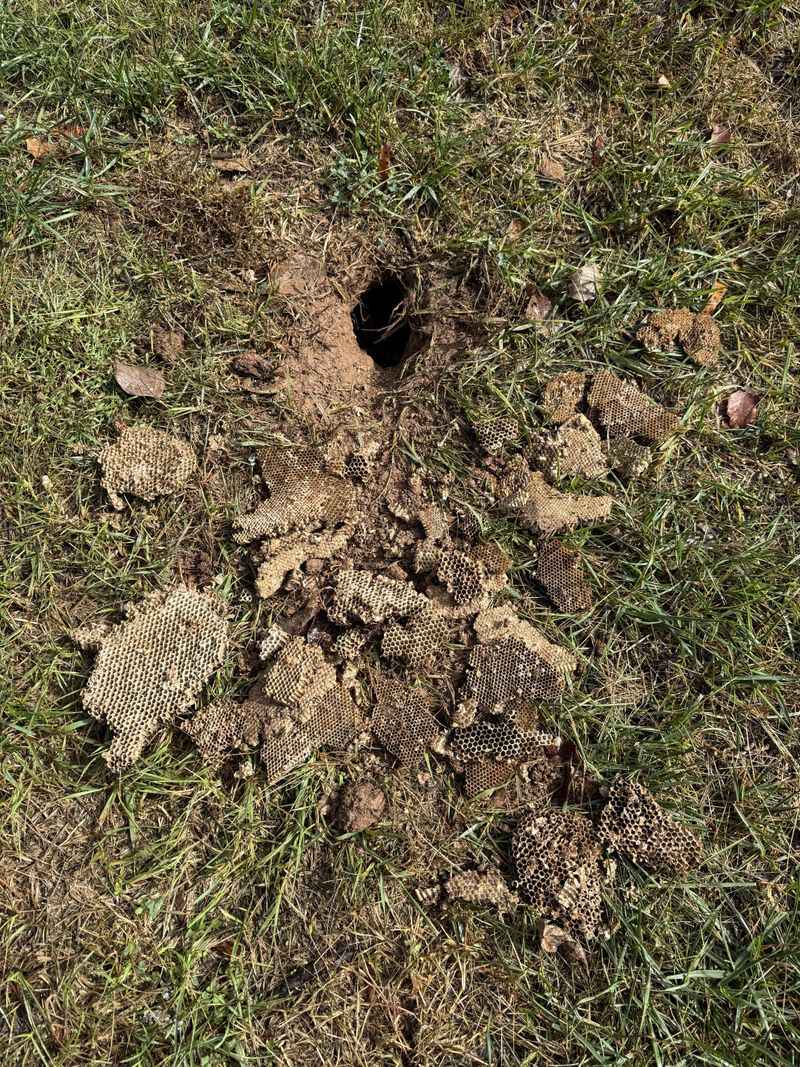
Winter is rough on an empty yellowjacket nest. Without workers to repair it, the papery walls start to fall apart almost right away. Nature handles much of the cleanup.
Paper nests in trees, shrubs, and under eaves slowly break down from wind, rain, and snow. Bits of gray paper may flutter to the ground over several weeks. Underground nests face a different fate.
Skunks, raccoons, and other hungry animals often dig them up, hunting for any leftover larvae inside the comb.
Spotting a torn-up patch of lawn with scattered paper pieces is a strong clue. It usually means a wildlife visitor found an old ground nest and had a snack. The mess looks alarming, yet it is often a sign the nest is truly finished.
Want to help the process along? Wait until after several hard freezes, then remove abandoned nests from eaves, sheds, and other structures if you like. Gloves are a smart precaution, since a few stragglers could still be hanging around on a mild day.
For ground nests, fill in the holes with soil and pack it down so the spot is level and less inviting later.
Michigan weather gives exposed nests a real beating. Snow piles up, ice coats every surface, and freeze and thaw cycles crack and soften the paper again and again. By spring, many outdoor nests are little more than scraps.
That makes winter a great time for a relaxed walk around the property, checking for old nests to clear away.
7. Next Year’s Nests Often Start Nearby
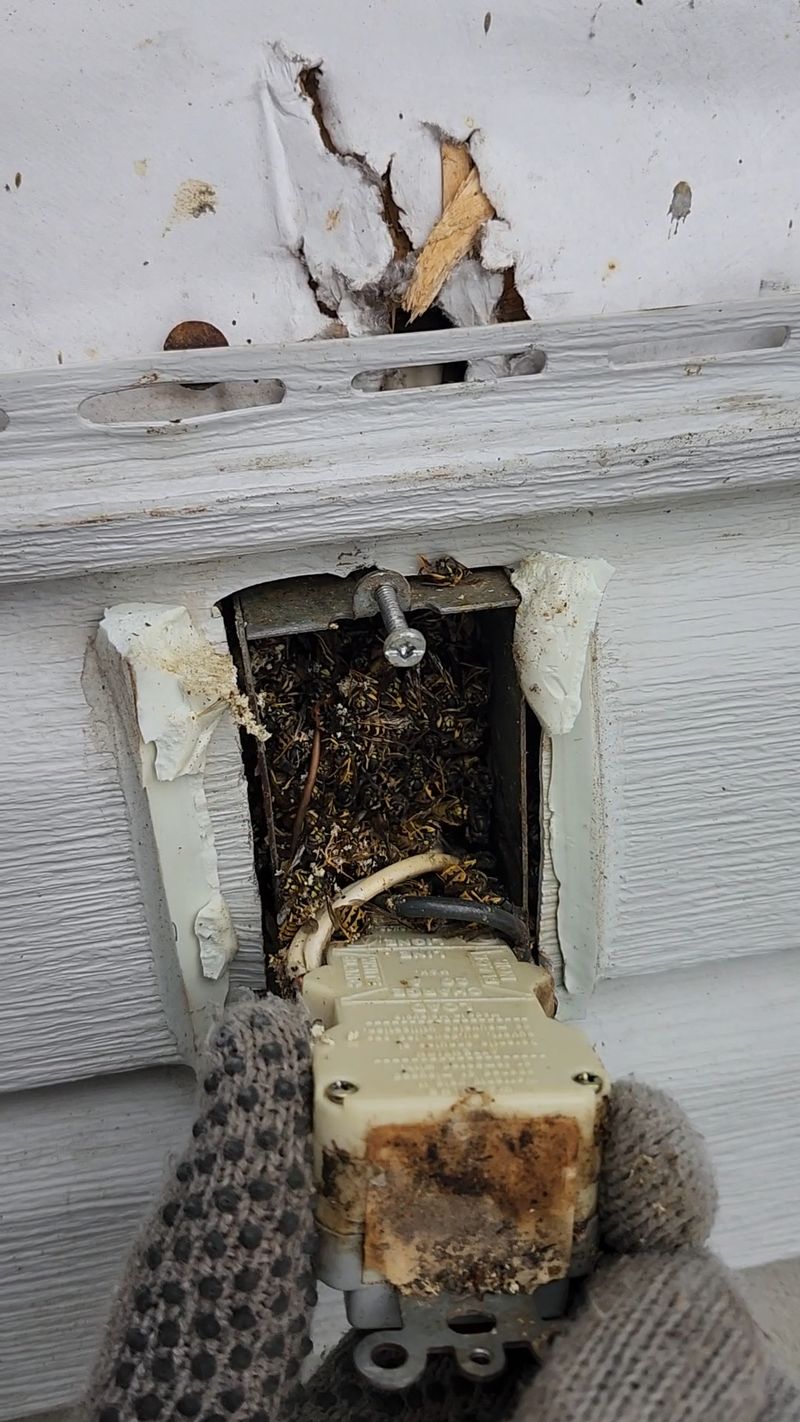
Some yards seem to have a yellowjacket problem every single summer. That is not bad luck. The same features that attracted one queen tend to attract another.
Queens hunt for certain kinds of places to start a nest. Old rodent holes in the lawn, gaps in siding, empty wall spaces, and sheltered eaves are all favorites. If your property had a nest before, those spots still offer the shelter a queen wants.
So new nests often pop up close to where the old ones sat. Prevention is where you can really make a difference. Seal gaps in siding, soffits, and around utility lines and pipes with caulk or foam.
Fill in rodent holes in the lawn so queens cannot move underground. Repair loose boards on sheds and fences, and close up openings in garages and outbuildings.
Spring checks are your secret weapon. Walk around your home, shed, and deck every week or two once the weather warms up. Look under eaves, porch ceilings, and railings for small paper nests.
A young nest holds only the queen and maybe a handful of workers, so it is much easier and safer to deal with than a big one later.
Michigan’s season follows a clear pattern. Nests start small in May and June, then grow quickly through July. By late summer, a nest can hold thousands of wasps.
Catching them early saves you stress, keeps your garden peaceful, and helps every family member enjoy the outdoors all summer long.