What Rhododendron Owners Should Do Before Snow Season In New York
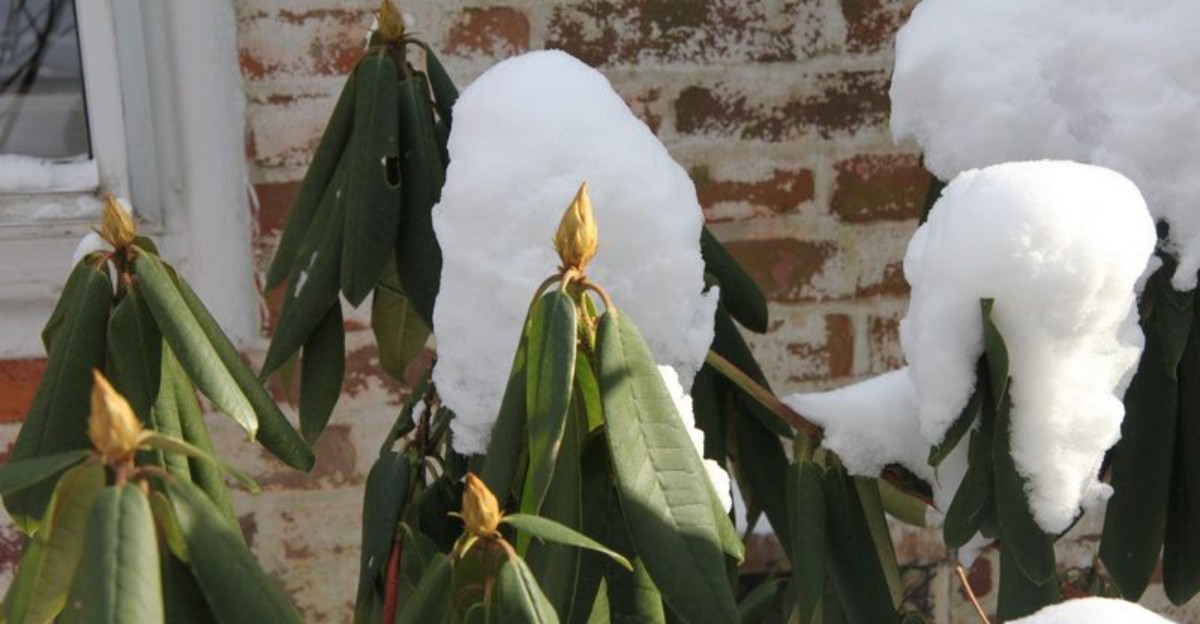
Snow can make a rhododendron look like a giant frosted cupcake. Under that pretty coating, though, heavy snow, icy wind, and dry soil can put real stress on the shrub.
Branches can bend or snap, leaves can scorch, and next spring’s flower buds can suffer quietly. Across New York, a little care before winter protects all of it.
Some of the best steps are surprisingly simple and take only minutes. Others matter mainly for shrubs near rooflines, driveways, or windy corners.
The guide below covers what to do now and what to leave alone once the snow arrives. A few smart moves can mean a full, glossy shrub covered in blooms next spring.
1. Water Deeply Before The Ground Freezes
A thirsty rhododendron can enter winter looking fine, then show brown leaf edges months later. Its evergreen leaves keep losing moisture even after frozen ground blocks the roots from taking up water.
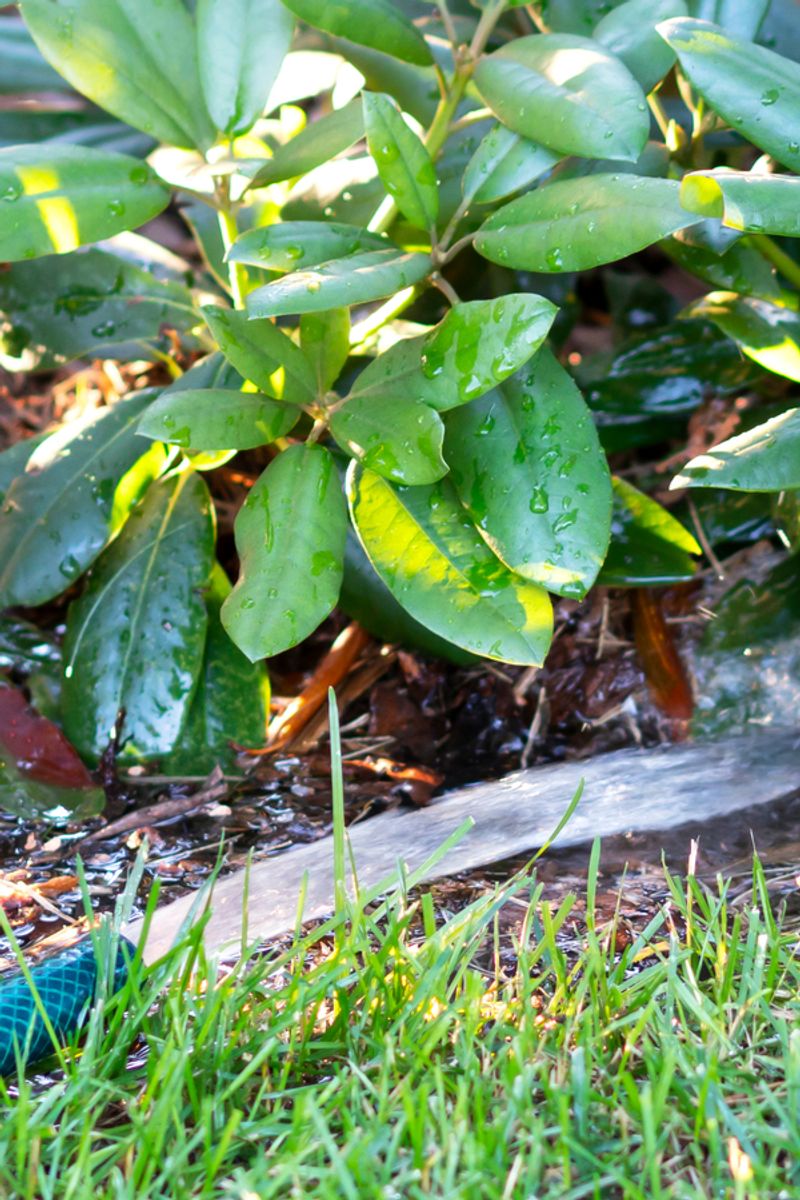
During a dry fall, check the soil beneath the outer branches with your finger. If it feels dry several inches down, water slowly around the root area rather than splashing the leaves.
A soaker hose makes the job easy because water sinks in instead of running away. Move it around the plant if needed, and aim to moisten the soil deeply without leaving puddles.
About one inch of water per week, including rain, is a useful starting point. Newly planted shrubs may need closer attention, while established plants in damp soil may need less.
Morning watering gives any damp leaves time to dry before the evening chill arrives. Skip watering when the ground is frozen, since water cannot soak into the roots properly.
In New York, fall weather can swing between soaking rain and long, dry stretches. Let the soil guide you instead of following a fixed calendar or watering after every chilly night.
Pay extra attention to plants under roof overhangs, where rain may miss the soil. A simple rain gauge can show how much water the garden received that week.
Before a lasting freeze, give dry soil one final, slow soaking on a mild day. Then leave the hose drained and stored, ready for spring rather than caught in freezing weather.
2. Mulch The Shallow Roots
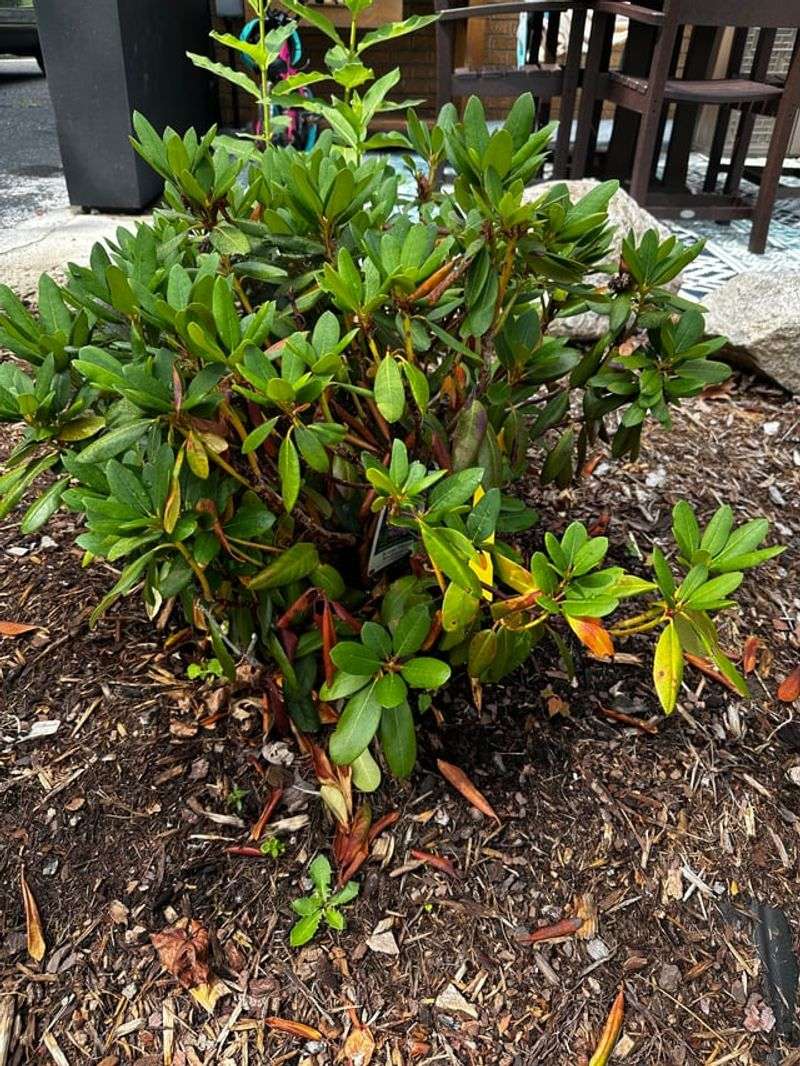
Rhododendron roots sit close to the surface, where winter temperature changes reach them quickly. A loose mulch blanket helps the soil stay more even as cold nights follow sunny days.
Wait until after a light frost, while the ground is still workable. Spread pine bark, pine needles, or shredded leaves across the soil beneath the shrub’s branches.
A layer about three inches deep usually gives good coverage without becoming a heavy pile. Extend it toward the outer edge of the branches, where many feeder roots grow.
Keep a small bare ring around the main stems, roughly two inches wide. Mulch pressed against bark can hold too much moisture and offer pests a sheltered hiding spot.
Picture a wide doughnut, not a volcano piled against the plant. That shape protects the roots while leaving the center open to air and easy inspection.
Your New York Garden Changes Every Week. Your Plan Should Too.
Gardening in New York changes quickly throughout the season. Every Friday you’ll receive a simple weekly plan showing exactly what to plant, prune, fertilize, harvest, and protect so you never miss the right timing.
In a New York yard, repeated freezing and thawing can shift shallow soil. Mulch helps reduce those swings and also slows moisture loss during a dry autumn.
Avoid digging around the roots to tidy the bed before adding mulch. Pull large weeds gently, then lay the material on top without packing it down.
After strong winds, check whether the layer has blown into a corner. Rake it back into place, and remove any thick clumps that cover low branches or stems.
3. Tie Loose Branches Gently Together
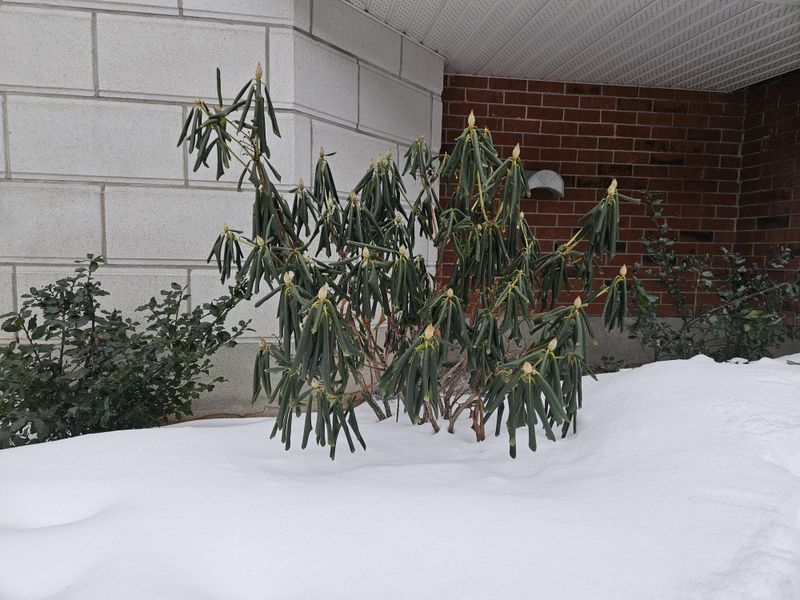
Wet snow can turn a loose rhododendron into a set of bent green umbrellas. Bringing widely spreading branches slightly closer together may help them share the load during a storm.
Start by looking for long branches that stick far beyond the rest of the shrub. Gently lift them toward the center, and stop if a branch resists or creaks.
Use soft garden tape or wide fabric strips rather than thin wire. Fasten each tie loosely enough to avoid cutting into bark as the branches move.
A few separate loops often work better than one tight band around the whole plant. Leave room for air and for the shrub to keep its natural shape.
Check that each loop rests on sturdy wood, not tender leaf clusters or flower buds. Buds are easy to overlook now, but they hold much of next spring’s color.
Small, compact plants may not need tying at all. Focus on shrubs with open centers, floppy limbs, or a history of bending after heavy snowfall.
Before snowstorm, inspect the ties once more from every side. Adjust any loop that has slipped, and remove loose ends that could catch in the wind.
After winter, take the ties off so new growth has space. Mark the calendar if needed, because a forgotten loop can become too snug as branches thicken.
4. Build A Simple A-Frame Over Shrubs Near Rooflines
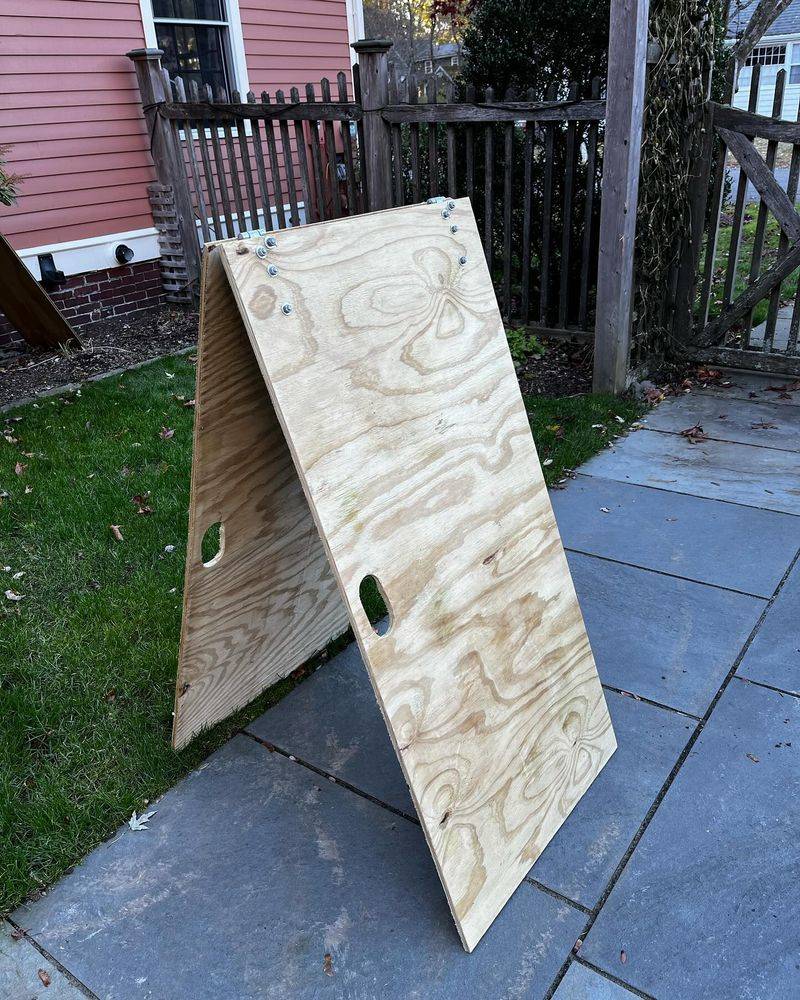
A roof can unload a surprising pile of snow in one noisy slide. If a rhododendron sits below that landing spot, branch ties alone may not offer enough protection.
Set two sturdy sides above the shrub to form an A-frame. The sloped top should guide falling snow toward the ground beside the plant, not onto its crown.
Place the frame before snow arrives, while you can see the soil and branches clearly. Anchor its legs securely so winter wind cannot tip the structure into the shrub.
Leave space between the frame and the tallest branches. Crowded supports can rub against buds or press on leaves when the plant bends.
Choose materials strong enough for the likely load, such as sturdy lumber or well secured poles. A flimsy cover may collapse under the same snow it was meant to catch.
Watch where snow will fall after sliding off the frame. Keep that landing area clear of walkways, doors, and other plants that could be buried.
Homes with steep roofs deserve extra attention after a heavy storm. Stay away from falling ice and snow, and ask a professional about serious roof hazards.
Once the weather warms, remove the frame and check the shrub for rubbing marks. Store reusable pieces in a dry place, ready for the next snowy season.
5. Shield Windy Spots With A Burlap Screen
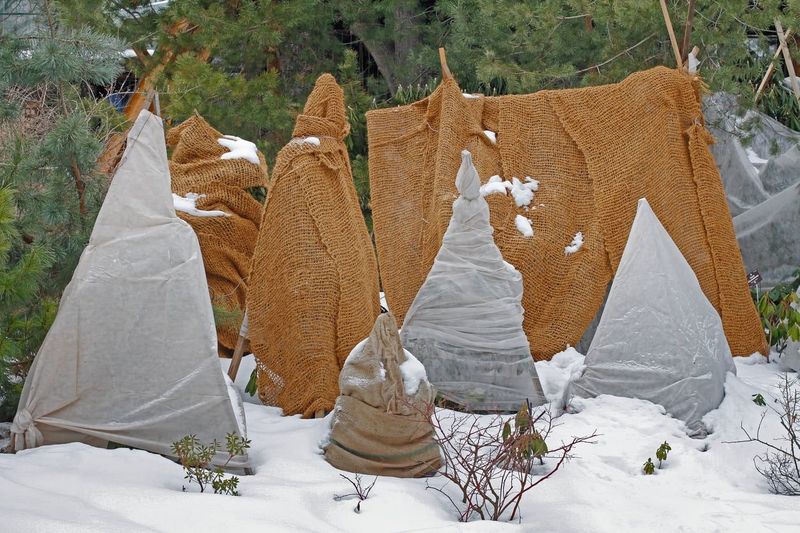
Cold wind can leave rhododendron leaves dry and brown, even when the shrub looks sheltered. A nearby burlap screen softens that wind without shutting the plant inside a damp cover.
Find the side that catches the strongest winter gusts. A sunny south or southwest exposure may also need help because bright light increases moisture loss from leaves.
Drive sturdy stakes into the ground before it freezes. Attach burlap to the stakes, leaving at least a foot between the fabric and the nearest foliage.
Keep the top open so light and air can reach the shrub. If you screen several sides, leave gaps rather than wrapping the plant like a package.
Burlap should break the force of the wind, not press against wet leaves. Fabric rubbing on branches during storms can create its own set of problems.
Skip plastic sheeting, which traps moisture and may heat up in direct sun. Choose breathable material, and replace torn sections before a windy forecast arrives.
In exposed gardens, a simple screen can be especially useful for young plants. Watch the stakes after the first storm and tighten loose ties when conditions are safe.
Take the screen down when harsh winter weather has passed. While you work, note whether a fence or a better planting spot might offer lasting shelter.
6. Skip Fall Pruning To Save Next Spring’s Buds
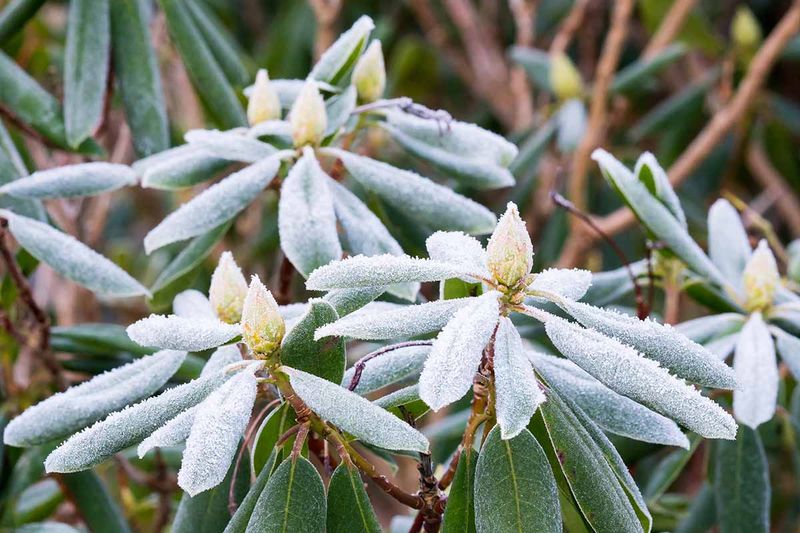
Those plump buds at branch tips are next spring’s flower show waiting backstage. Cutting branches in fall can remove the blossoms before you ever get to enjoy them.
Take a close look at the tips when you walk past your shrub. Rounded flower buds often look fuller than leaf buds, which tend to be slimmer.
Put major shaping work on your spring calendar instead. After flowering, you can trim for size or shape while giving new buds time to develop.
Late pruning may also encourage soft new growth before freezing weather. Tender shoots are less prepared for cold than branches that have had time to firm up.
If one branch blocks a path, consider whether a gentle tie can move it temporarily. Save the larger cut for the right season unless safety calls for action now.
Resist the urge to make every shrub look neat before snow season. Rhododendrons have a naturally uneven shape, and a little winter untidiness can protect next year’s flowers.
In New York, the first hard freeze may arrive before the garden feels finished. Let the plant follow its own schedule, and avoid late feeding that pushes fresh growth.
There is one sensible exception: a clearly broken branch may need careful removal. Handle damage separately from routine shaping, then leave healthy, bud covered growth alone until spring.
7. Clear Out Broken Or Damaged Branches Now
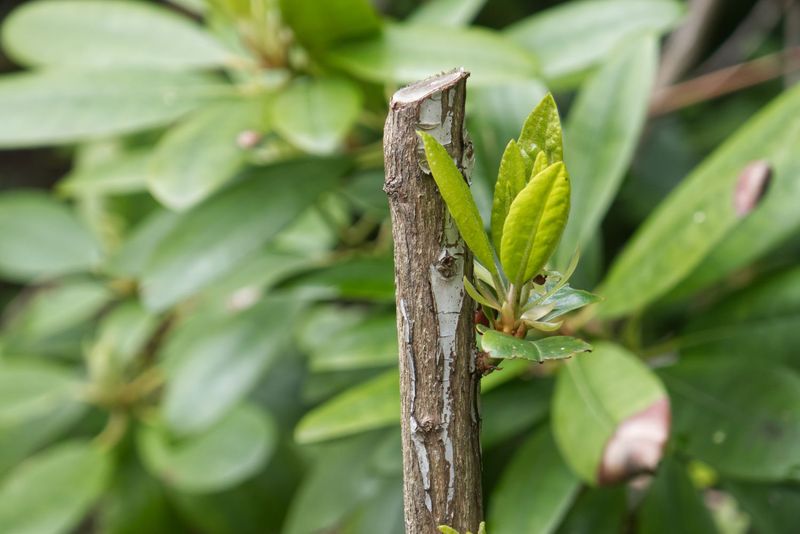
One split branch can snag another when snow piles up. Before winter, walk around your rhododendron and look for obvious breaks, loose wood, or branches rubbing together.
Use clean, sharp pruners for small pieces you can reach safely. Cut just beyond the branch collar, the slight swelling where a branch joins larger wood.
Avoid cutting flush against the trunk or leaving a long stub. Either mistake can make it harder for the shrub to seal the cut.
For a larger branch, use a suitable saw and support its weight while cutting. Ask a professional for help if the limb is heavy or awkward to reach.
Do not turn this inspection into a full fall haircut. Removing clear damage is different from trimming healthy branches for a tidier outline.
Some bent wood may recover once its load is gone. If you are unsure whether a branch needs removal, mark it and check again after winter.
Bag visibly diseased material rather than leaving it under the shrub. Clean your cutting tools afterward, especially when you have worked on a branch showing unusual spots.
A quick check can prevent small problems from becoming harder jobs after storms. Finish by looking at the shrub from several angles for overlooked splits.
8. Brush Off Heavy Snow With Gentle Upward Sweeps
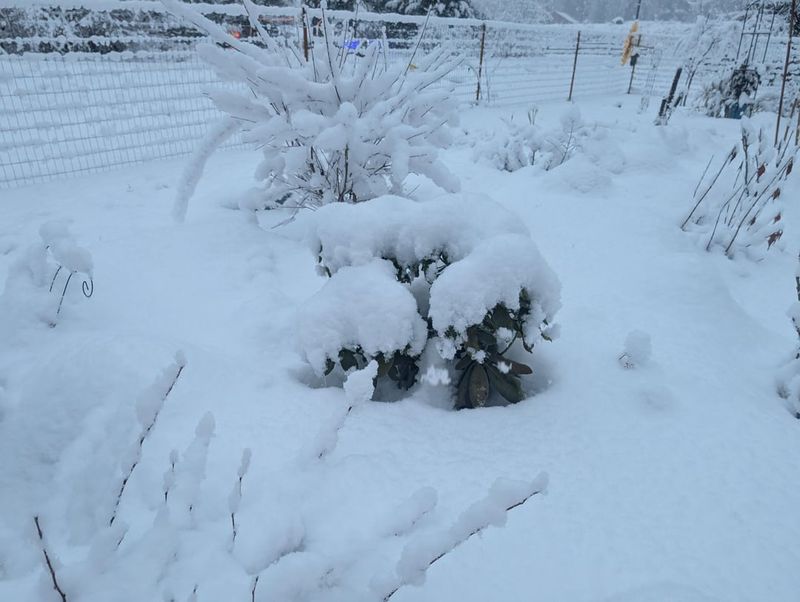
Fluffy snow looks charming on broad leaves, but wet snow can feel like a stack of blankets. When branches start sagging, careful snow removal may prevent lasting bends or breaks.
Stand on safe, firm ground and use a soft broom within easy reach. Lift the snow with light upward sweeps, starting near the outer edges of each branch.
Work in small layers instead of trying to move a whole mound at once. Heavy clumps can shift suddenly and pull a branch farther down.
Do not push from above or shake the shrub. Frozen branches can be stiff, and a rough motion may cause more harm than the snow.
A thin layer of light snow can help insulate the plant. Focus on thick, wet buildup or branches that appear bent under unusual weight.
Stay away from roof edges where another load might slide down. Your safety comes first, especially when ice, deep drifts, or hidden steps make footing uncertain.
After storm, check several sides of the shrub rather than only the front. Snow often collects unevenly, particularly beside fences or beneath drifting rooflines.
If branches are already coated in ice, put the broom away. Snow and ice need different treatment, and waiting for a thaw is safer than forcing frozen wood.
9. Let Ice Melt On Its Own Instead Of Knocking It Off
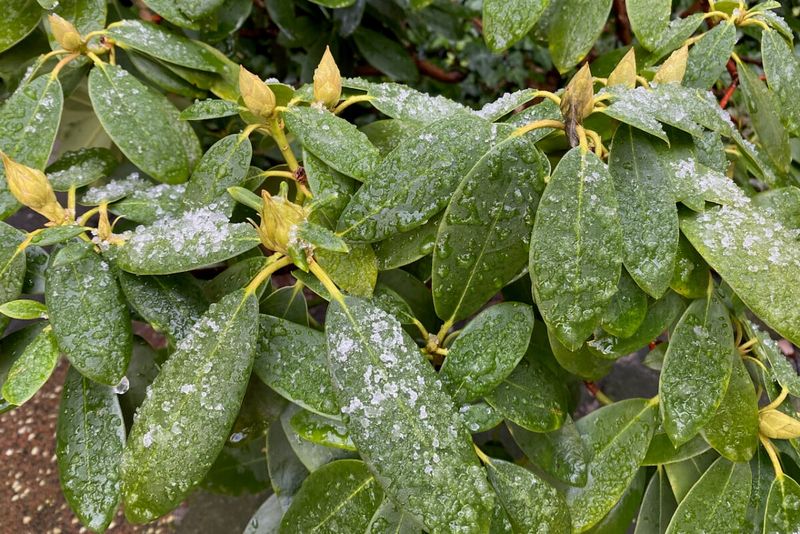
An ice coated rhododendron can look like a glass sculpture. It may be tempting to crack that coating away, but frozen leaves and branches are easy to damage.
Leave the ice alone and wait for warmer weather whenever possible. Knocking or shaking a limb can break it, even when you use a soft tool.
Do not pour hot water over the shrub. Sudden temperature changes and extra water can create more ice around the plant or on nearby paths.
If a branch is frozen to the ground, avoid pulling it free. Let the ice loosen naturally before checking how well the branch has held up.
Keep people and pets away from heavily iced shrubs near walkways. Falling chunks can surprise someone standing beneath a branch during a thaw.
Watch from a safe distance for limbs under serious strain. If a large branch threatens a building or path, contact a qualified tree professional.
Ice storms can leave a New York yard looking strange for several days. Patience is useful here because forced cleanup often causes avoidable injury to the shrub.
After the thaw, inspect for splits and remove only clearly damaged wood you can reach safely. Give uncertain branches time to show how they respond when spring arrives.
10. Don’t Panic When Leaves Curl In The Cold
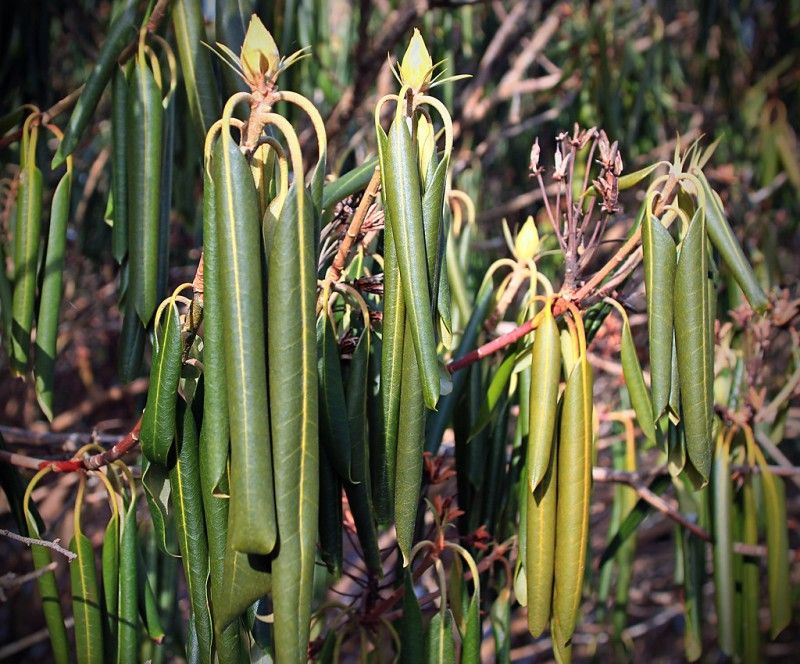
On a freezing morning, a rhododendron may look as though someone rolled its leaves into tiny tubes. That dramatic change is often a normal response to cold.
Leaves may droop and curl as temperatures fall, then open again during a mild spell. Watch how the plant changes over several days before assuming something is wrong.
Curling helps reduce the leaf surface exposed to chilly air and bright winter sun. It is one of the shrub’s built in ways of handling rough weather.
Take a photo on a frosty morning and another after temperatures rise. Comparing the pictures can make this natural movement easier to recognize next winter.
Do not try to straighten curled leaves with your hands. Cold foliage is less flexible, and handling it offers no benefit to the plant.
Some signs deserve a closer look once spring settles in. Leaves that remain brown or dry after warmer weather may point to winter moisture loss.
In New York, rapid shifts from sunny afternoons to bitter nights make leaf changes easy to notice. Keep an eye on soil moisture before freezing, but let cold leaves be.
When the next frosty morning arrives, enjoy the shrub’s curious shape from the window. With sound winter care, its leaves can greet warmer days looking familiar again.