What To Do In October If Your California Poinsettia Is Still Green
Some holiday traditions depend on timing more than most people realize. A plant that looked festive last winter can spend the following fall looking healthy yet stubbornly plain.
Nothing has gone wrong. The missing color simply reflects a signal that modern homes rarely deliver on their own.
That signal has everything to do with the changing season, and California living rooms tend to blur it without anyone noticing.
The good news is that the calendar still leaves room for a turnaround this month.
A few routines, built around a calendar and a bit of discipline, can set the stage for a dramatic change.
With a little patience, a plain green plant can become the centerpiece of the season once again.
1. Start A Nightly Blackout Now
October 1 sits circled on many gardeners’ calendars for good reason. Poinsettias need roughly eight to ten weeks of long nights before their bracts turn red, and counting backward from mid-December lands right at the start of the month.
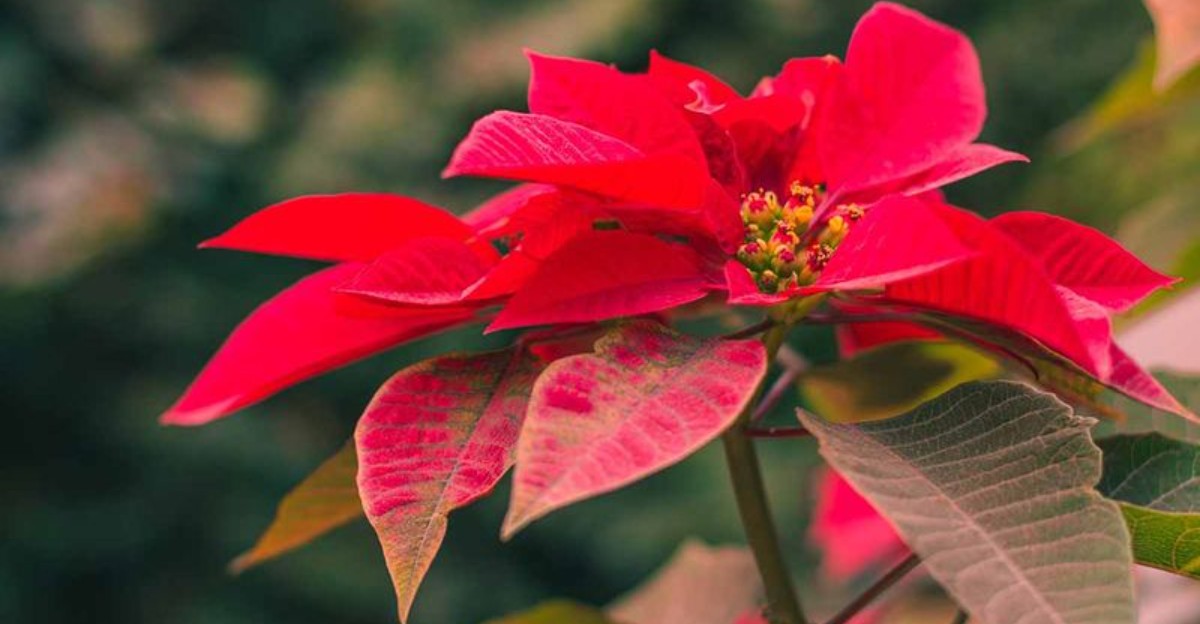
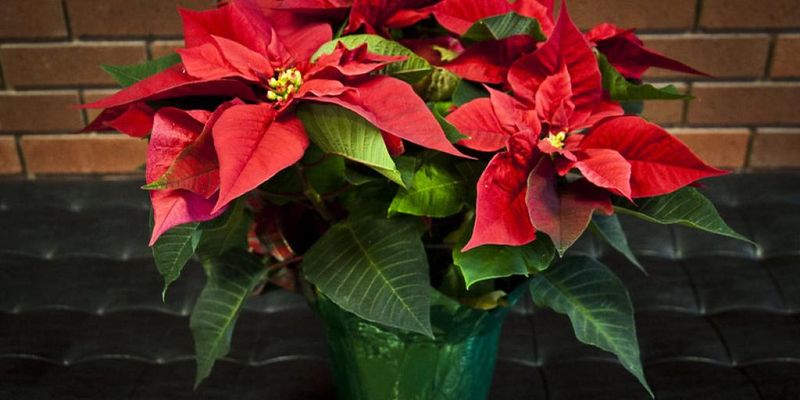
Those colorful parts aren’t flowers at all. They’re specialized leaves called bracts, which change color when the plant senses winter approaching.
Poinsettias are short-day plants, meaning color develops only when nights grow long and stay long. Outdoors, shrinking fall days deliver that cue naturally.
Indoors, kitchen lights and living room lamps stretch the day, so the plant rarely receives the message.
Creating winter artificially solves the problem. Each evening, the plant moves into a dark closet or under a large cardboard box, then returns to its bright window each morning.
A set routine, such as 5 p.m. for darkness and 8 a.m. for light, works best when followed like a school bell. Consistency matters more than perfection on any single night.
Skipping a few evenings can reset the clock and push color later into the season. A phone reminder keeps busy weeknights on track.
A quick checkup before starting helps, too. Yellow leaves come off easily, and a glance under the foliage reveals pests such as whiteflies.
A healthy plant handles the nightly shuffle far better. The daily commute from window seat to closet and back takes only seconds, while the plant does all the hard work.
2. Give Fourteen Hours Of Darkness

Fourteen hours of complete darkness each night forms the core of the plan for the next couple of months. University sources generally recommend a range of roughly 14 to 15 hours of uninterrupted dark.
The plant measures night length, not day length. Once nights pass a certain threshold, hormones inside the plant shift, and the top leaves start building red, pink, or cream color.
Short nights simply keep it in leafy summer mode.
A simple schedule suits most households. Covering the plant around 5 or 6 p.m. and uncovering it around 7 or 8 a.m. leaves the rest of the day for sunshine, which the plant also needs.
Total darkness truly means total. A closet with a crack of light under the door may fall short, so a towel along the gap or a sturdy box without holes works better.
Your California Garden Changes Every Week. Your Plan Should Too.
Gardening in California changes quickly throughout the season. Every Friday you’ll receive a simple weekly plan showing exactly what to plant, prune, fertilize, harvest, and protect so you never miss the right timing.
Black plastic trash bags can work, too, but they trap heat and moisture, making a box the safer choice.
A quick check helps confirm conditions. Standing inside the closet with the door closed for a minute, while eyes adjust, reveals any light leaks. Visible hands mean the plant can sense that light as well.
The darkness needs to stay steady seven days a week, weekends included. Plants don’t take Saturdays off.
A family member or neighbor can cover nights away from home, so the streak stays unbroken through the busy fall calendar.
3. Keep It Away From Lamps And Streetlight Glow
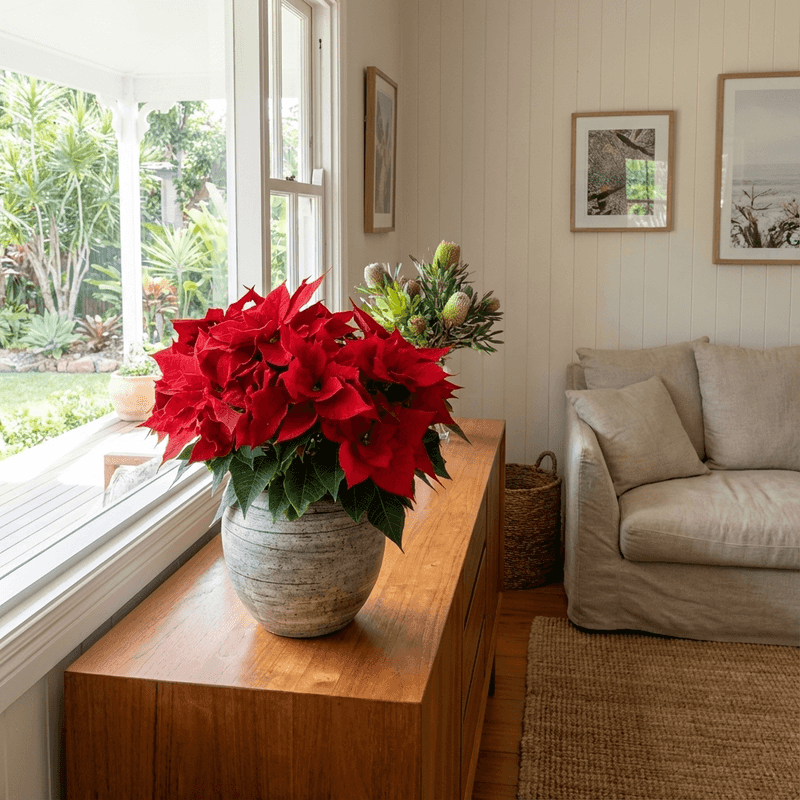
One flick of a hallway switch at midnight can undo a week of careful work. Even brief light during the dark period can delay color or leave it patchy, since poinsettias react surprisingly strongly to stray glow.
Common troublemakers hide in plain sight. Table lamps, television screens, night lights, and phone screens can all leak enough light, and a streetlight shining through a bedroom window counts, too.
Outdoor plants face their own challenges. Many Southern California yards stay mild enough for poinsettias to grow in the ground as shrubs.
Yet a porch light, security light, or nearby streetlight can keep those shrubs green well into winter. Garden plants near bright lights often color late or unevenly, with red appearing only on the shaded side.
For potted plants, a closet remains the easiest fix. One that nobody opens at night, such as a spare bedroom closet rather than the coat closet by the front door, works best.
A pantry that gets raided for bedtime snacks won’t do.
In-ground shrubs call for a look at controllable lights. A porch light on a timer, angled away, or switched to a motion sensor helps considerably.
A lightweight frame draped with blackout cloth can also shade a small shrub each evening.
A bit of detective work pays off. A walk past the plant after dark reveals any glow touching its leaves, and catching a light leak early keeps the color plan on track for December.
4. Keep Nights Around 60 To 65 Degrees

Warm nights can slow the show. Poinsettias color best when nighttime temperatures stay cool, roughly 60 to 65 degrees Fahrenheit, according to university horticulture guidance.
Daytime temperatures in the upper 60s to low 70s keep them comfortable.
Many California homes stay warmer than that in fall, especially during a heat wave. Too much warmth at night can delay coloring and weaken the plant.
Too much cold causes trouble as well, since poinsettias come from warm parts of Mexico.
The low end deserves careful attention. Temperatures below about 50 degrees can damage leaves and stall growth, and frost quickly harms tender bracts.
Inland valleys and desert towns can see chilly October nights, so outdoor pots may need to come inside sooner than expected.
Location inside the house makes a big difference. Heater vents, fireplaces, and ovens blast dry heat, while drafty doors and windows let in cold gusts. Sudden temperature swings often lead to dropped leaves.
An inexpensive thermometer makes a smart tool here. Placed in the closet or room where the plant spends its nights, it reveals within a few days whether a different room would work better.
The plant’s name honors Joel Poinsett, the first U.S. minister to Mexico, who introduced it to American gardens in the 1820s. Nearly two centuries later, cool fall nights still play a central role in its holiday transformation.
5. Give Six Hours Of Bright Light By Day
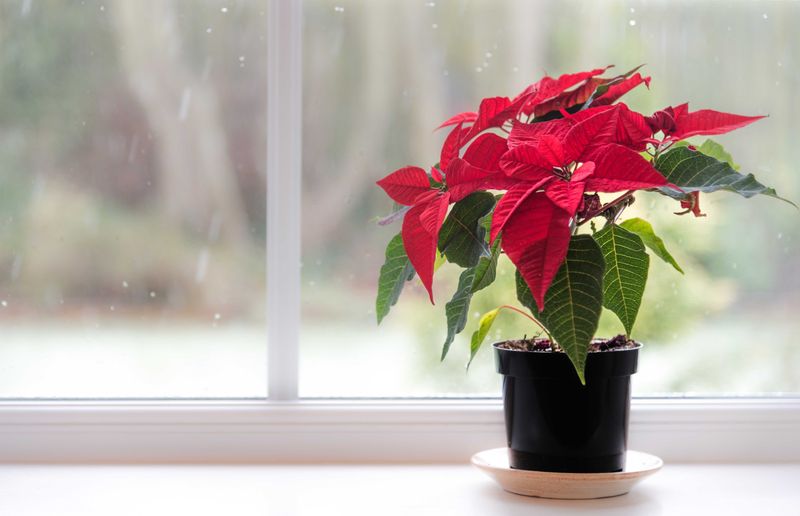
Darkness gets most of the attention, yet daylight fuels the color. A poinsettia uses sunlight to make the energy it needs to build bright bracts, and too little light can mean weak color or dropped leaves.
At least six hours of bright, indirect light each day works well, and university sources often suggest six to eight hours. A south, east, or west window suits the plant in fall.
California sun can stay strong even in October. Faded or scorched leaves signal a need to move the plant a few feet back or add a sheer curtain.
Soft but bright light keeps leaves deep green.
The morning half of the routine matters as much as the evening. Bringing the plant out of its closet, or lifting off the box, at the same time each day protects precious hours of sunshine that a late start would steal.
A quarter turn of the pot every few days keeps growth even and full, since plants lean toward the window. A lopsided poinsettia can look a bit as though it’s trying to escape.
Outdoor container plants can enjoy morning sun on a patio, with afternoon shade helping in hot inland areas. They still need to come inside for their dark period each evening.
The leaves offer helpful clues. Stretched, pale stems signal a need for more light, while crispy brown spots point to too much direct sun.
Small adjustments keep the plant strong through the weeks of transformation ahead.
6. Water When The Surface Feels Dry
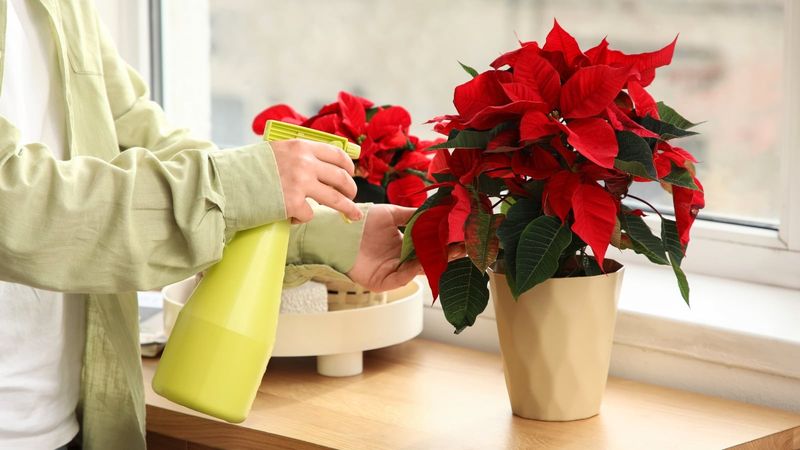
Soggy roots rank among the most common reasons poinsettias lose their leaves. Many people water on a strict schedule, rain or shine, though letting the soil signal its needs works far better.
A finger pressed into the top of the soil offers the simplest test. A dry surface signals time to water, while damp soil means waiting another day and checking again.
Thorough watering works best when the time comes. A slow pour until some water runs out the drainage holes, followed by an emptied saucer after about fifteen minutes, keeps roots out of a puddle.
Decorative foil wrappers look festive but cause trouble. They trap water around the pot like a tiny swimming pool.
Poking holes in the foil, or lifting the pot out before watering, solves the issue.
The plant’s needs shift through fall. Cooler nights mean soil dries more slowly, while a sunny window or Santa Ana wind can dry it faster.
Checks every day or two keep watering in tune with those changes.
Warning signs deserve attention. Wilting with dry soil means the plant is thirsty, while wilting with wet soil often signals root rot, which is much harder to fix.
Room-temperature water treats roots more gently than icy tap water. A jug filled the night before stays ready to use.
Steady, sensible watering keeps leaves firm for the color change ahead.
7. Feed Lightly During Color Change

A hungry plant can’t put on a full holiday outfit. Building colorful bracts takes energy, and nutrients help supply it, though poinsettias prefer a light snack over a giant buffet.
A balanced, water-soluble houseplant fertilizer works well. Mixed at about half the strength listed on the label, it can go on every two to four weeks during the dark-night routine.
Watering first, when the soil feels very dry, protects roots. Fertilizer poured onto parched roots can burn them, while moist soil helps nutrients spread evenly.
Too much fertilizer brings its own problems. Salts can build up in the soil and brown leaf edges.
A deep watering about once a month, allowed to drain fully, flushes out extra salts.
The leaves offer useful feedback along the way. Pale, yellowing older leaves may signal a need for a bit more food, while dark, lush leaves show things are on track.
Feeding can ease off once the bracts reach full color. Around mid-December, fertilizer can pause until spring, since the plant slows during the holidays and needs no extra boost.
Fertilizer bottles belong in a high cabinet, out of reach of children and pets, after each use, since concentrated products aren’t meant for curious hands or paws.
Feeding works best as a gentle nudge rather than a shove. Patience pays off with steady, healthy growth, and that steady growth sets up the richest possible color by December.
8. Expect Color In Eight To Ten Weeks
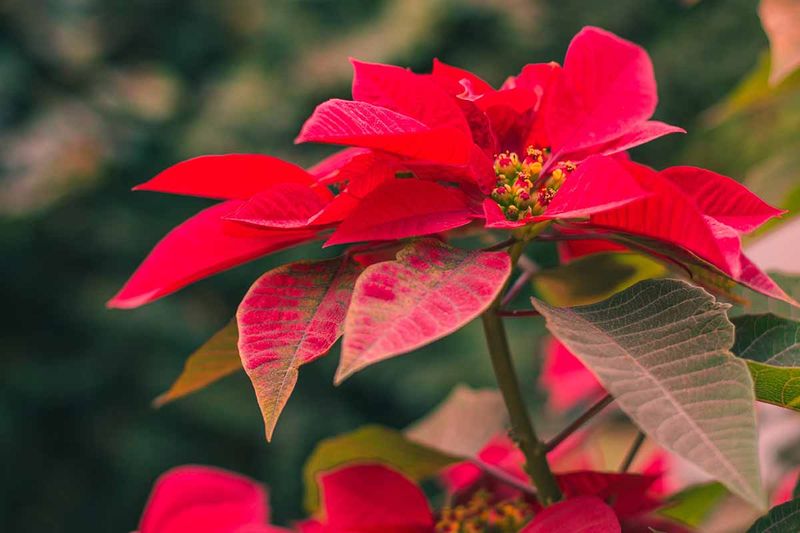
Around week five or six, many gardeners spot the first sign. A faint blush appears on the newest leaves at the tops of the stems, a small change that shows the effort is paying off.
Full color usually takes about eight to ten weeks of long nights. A start in early October typically brings strong color by early to mid-December, though some varieties move faster while others need extra time.
The routine continues until the bracts look fully colored. Stopping too early can leave a plant half green and half red.
Once the color looks rich and complete, the blackouts can end, and the plant can go on display anywhere.
The center of the bracts deserves a closer look, too. Those tiny yellow buttons are the true flowers, called cyathia, and plants with fresh cyathia tend to hold their color longer.
A simple journal on a phone helps for future seasons. Notes on the start date, any missed nights, and the first sign of color reveal exactly how a particular plant and home behave.
After the holidays, the plant can stay in bright light with watering as before. In spring, a cutback encourages fresh summer growth, and the cycle begins again next October.
Getting a poinsettia to rebloom counts as a genuine small victory. Few sights feel as merry as a plain green plant blushing right on cue for the holidays.