What To Do With Texas Bougainvillea In July So It Doesn’t Drop Every Leaf Before September
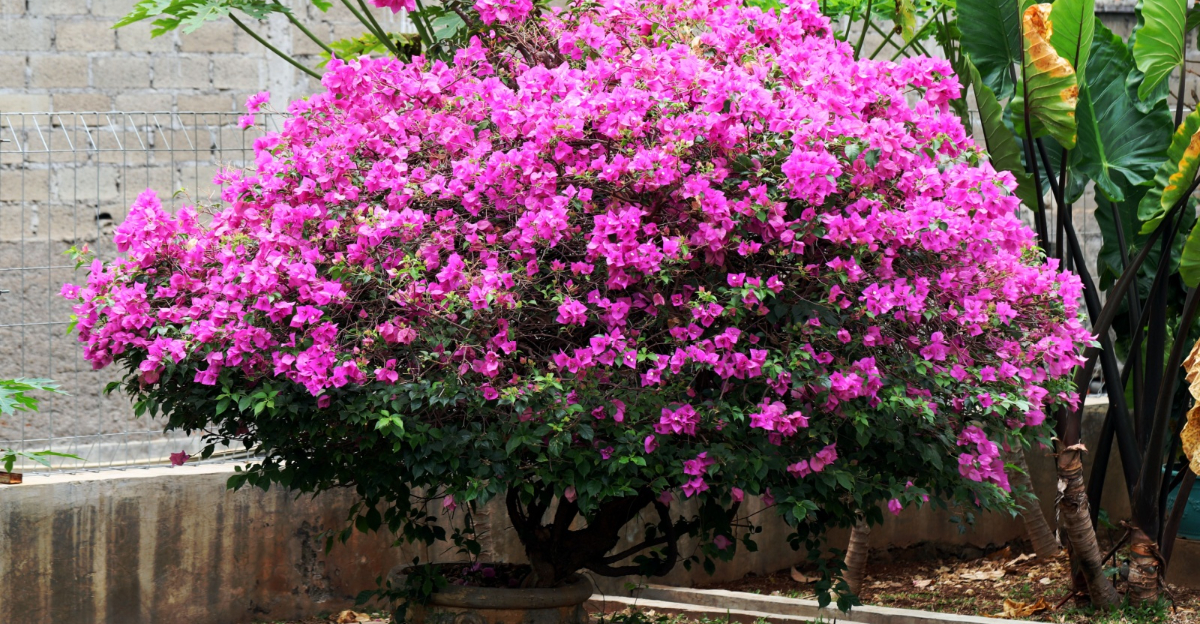
Bougainvillea is supposed to be the tough one. The plant that handles heat, laughs at harsh conditions, and keeps delivering color when everything else in the garden is struggling.
So when July rolls around and yours starts dropping leaves faster than you can sweep them up, it feels a little personal.
Texas July does not mess around though, and even the toughest container bougainvillea can hit a rough patch when heat, inconsistent watering, poor drainage, sneaky spider mites, or one too many applications of fertilizer push it into stress mode all at once.
The encouraging part is that a few targeted adjustments in July can genuinely help your plant hold onto more foliage and keep looking decent through August and into September.
No single fix is a guarantee, but the right care habits make a noticeable difference during the toughest stretch of the Texas summer.
1. Check Whether The Pot Is Too Dry Or Staying Too Wet
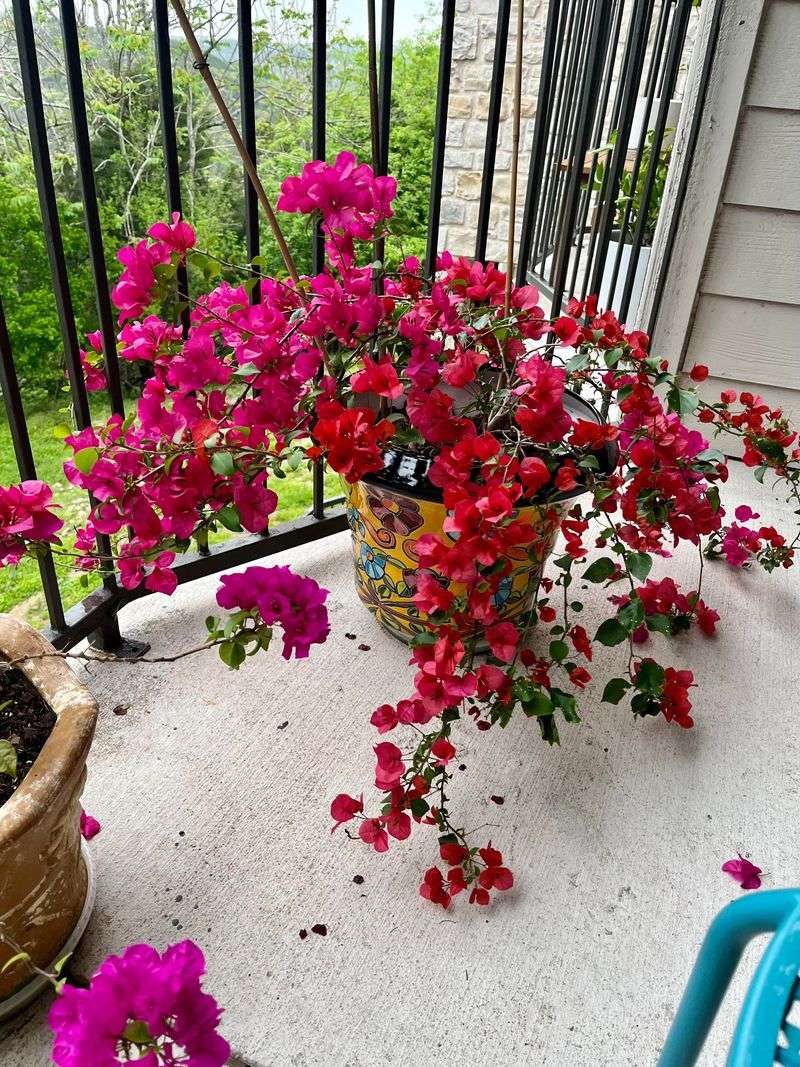
A patio pot in Texas can go bone dry by early afternoon in July, and most gardeners don’t realize it until the bougainvillea starts dropping leaves in handfuls. The tricky part is that both extremes, too dry and too wet, can trigger the same response.
Leaf drop is a stress signal, not a diagnosis, so the first step is actually checking the soil before assuming you know what’s wrong.
Push a finger two inches into the potting mix. If it feels completely dry, the plant is likely thirsty and stressed from heat.
If it feels soggy or smells musty, the roots may be sitting in water longer than they should, which is equally hard on bougainvillea.
Texas July heat speeds up evaporation dramatically, but overcast days or a shaded corner can slow drainage enough that the mix stays wet for days. Container size matters too, since a large pot holds moisture longer than a small one.
Checking the soil every day or two gives you real information instead of guesswork.
Once you know whether the issue is dryness or excess moisture, you can adjust your watering routine in a way that actually fits what the plant needs rather than what a general schedule suggests.
2. Water Deeply, Then Let The Mix Dry Down
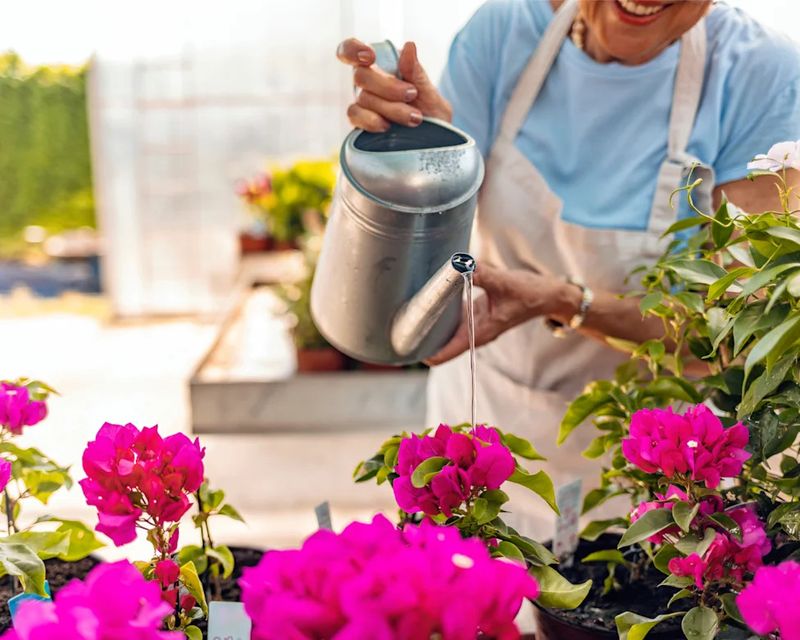
Leaves dropping after a week of daily watering is one of the most frustrating experiences Texas gardeners have with bougainvillea in July. The plant looks like it needs more water, so you water again, and the problem gets worse.
Bougainvillea actually prefers a cycle of deep watering followed by a period where the top portion of the mix dries out before the next watering.
When you water, do it thoroughly so water runs freely out of the drainage holes. This pushes moisture through the entire root zone rather than just wetting the top inch of the mix.
Shallow watering encourages shallow roots and leaves the lower portion of the pot dry even when the surface feels damp.
After a deep watering session, resist the urge to water again until the top two or three inches of mix feel dry to the touch. In Texas July heat, that cycle might happen every one to three days depending on pot size, sun exposure, and wind.
Your Texas Garden Changes Every Week. Your Plan Should Too.
Gardening in Texas changes quickly throughout the season. Every Friday you’ll receive a simple weekly plan showing exactly what to plant, prune, fertilize, harvest, and protect so you never miss the right timing.
Smaller containers dry out faster than larger ones, and black or dark pots absorb more heat and speed up moisture loss.
Getting this cycle right reduces root stress and gives bougainvillea the conditions it generally prefers, which tend to favor lean watering over constant moisture.
3. Keep Bougainvillea In Strong Full Sun
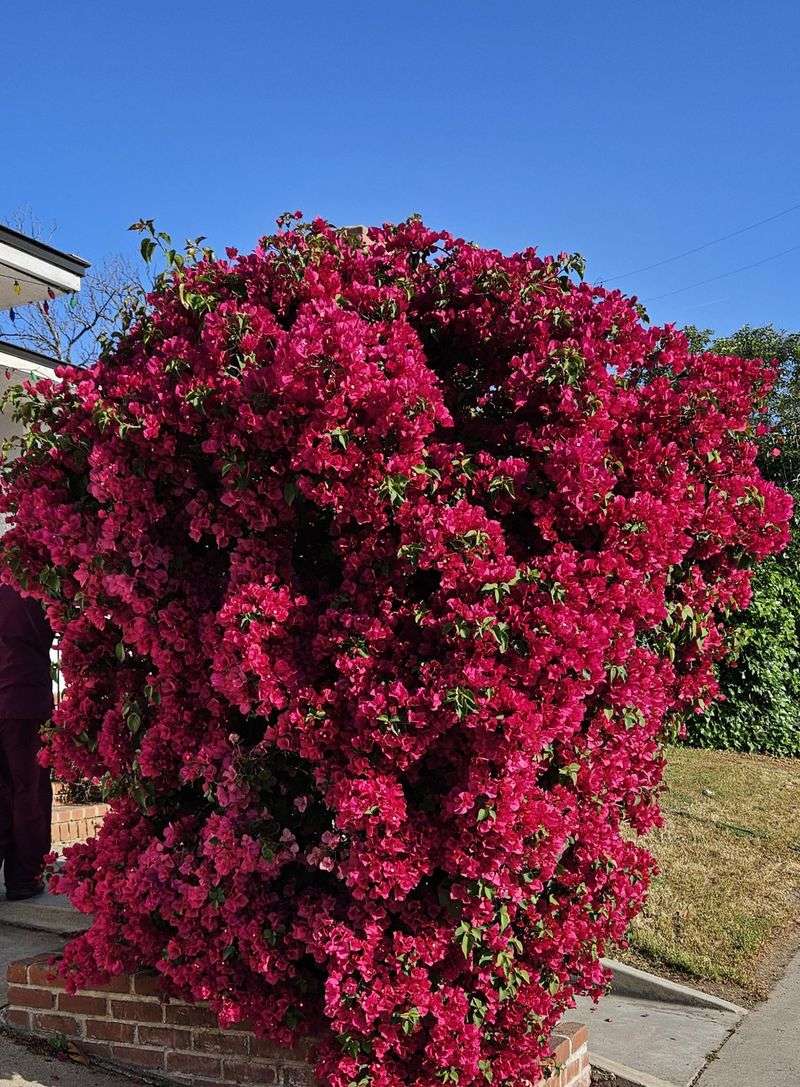
Bright bracts fading and leaves going limp or yellow sometimes come down to one simple issue: the plant isn’t getting enough direct sunlight.
Bougainvillea is a sun-loving plant that performs best with six or more hours of strong, direct sun each day, and in Texas, July sun is about as strong as it gets.
Moving a bougainvillea to a shadier spot to protect it from heat can backfire quickly. Less sun means less photosynthesis, which means less energy for the plant to hold its leaves and push new growth.
A bougainvillea sitting in partial shade or bright indirect light will often look worse over time, not better, even if the temperatures feel more comfortable in that spot.
Sunny courtyards, south-facing patios, poolside planters, and front entries that get full afternoon exposure are generally good locations for bougainvillea in Texas.
If your plant has been sitting in a spot that gets shaded out by a fence, overhang, or nearby tree, July is a reasonable time to evaluate whether that location is actually giving it enough light.
A plant that gets strong sun and is watered appropriately tends to hold foliage more reliably than one sitting in comfort shade with inconsistent light.
4. Make Sure Containers Drain Fast
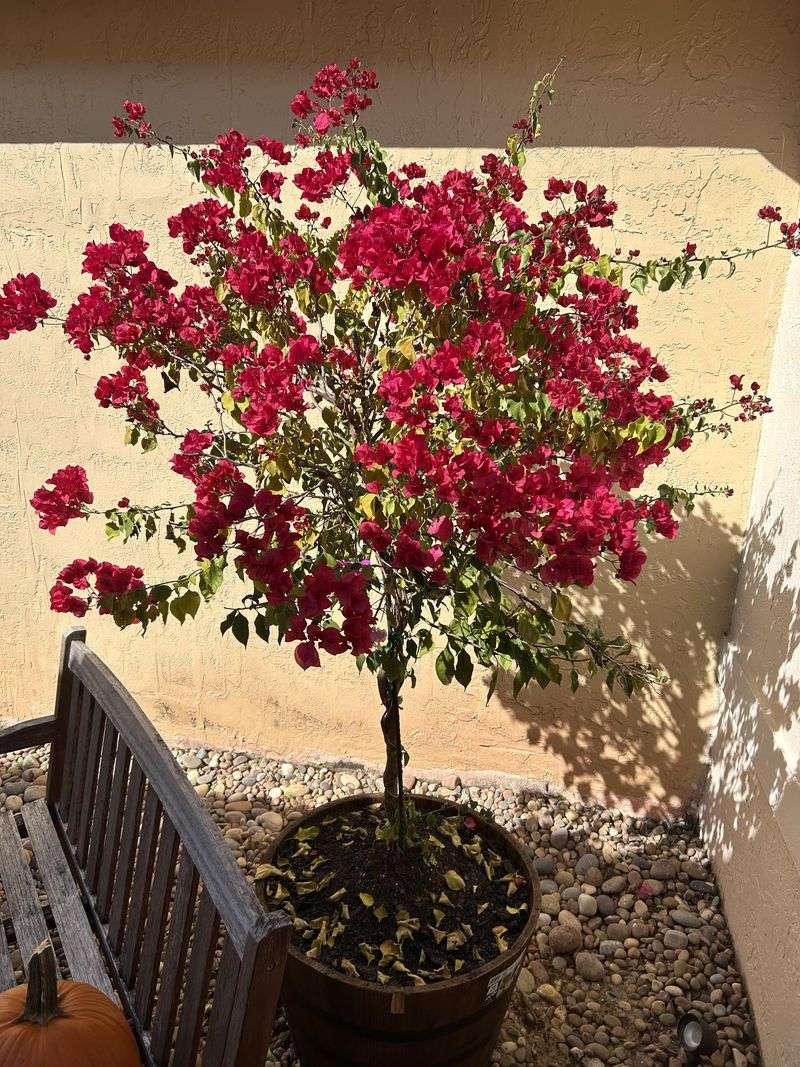
Water sitting in a saucer under a bougainvillea pot is one of the quieter problems that causes big trouble in Texas July heat. It looks harmless, but when roots sit in standing water, they can become stressed and lose their ability to take up oxygen properly.
Bougainvillea is particularly sensitive to wet feet, and a pot that doesn’t drain quickly enough can cause leaf drop that looks a lot like drought stress.
Check that your container has at least one large drainage hole, and ideally several. If you’re using a saucer to protect a porch or deck surface, empty it within an hour or two after watering so roots aren’t sitting in pooled water.
Elevating the pot slightly on pot feet or bricks can also help water drain freely rather than getting trapped against the surface below.
The potting mix itself matters just as much as the drainage hole. A mix that stays dense and compacted after watering holds moisture too long for bougainvillea’s liking.
A fast-draining mix that includes perlite, coarse sand, or bark tends to work better because it allows water to move through quickly while still holding enough moisture for the roots to absorb what they need.
Fast drainage and deep watering work together to create the conditions bougainvillea generally responds well to in Texas summer heat.
5. Avoid Moving The Plant Around In July
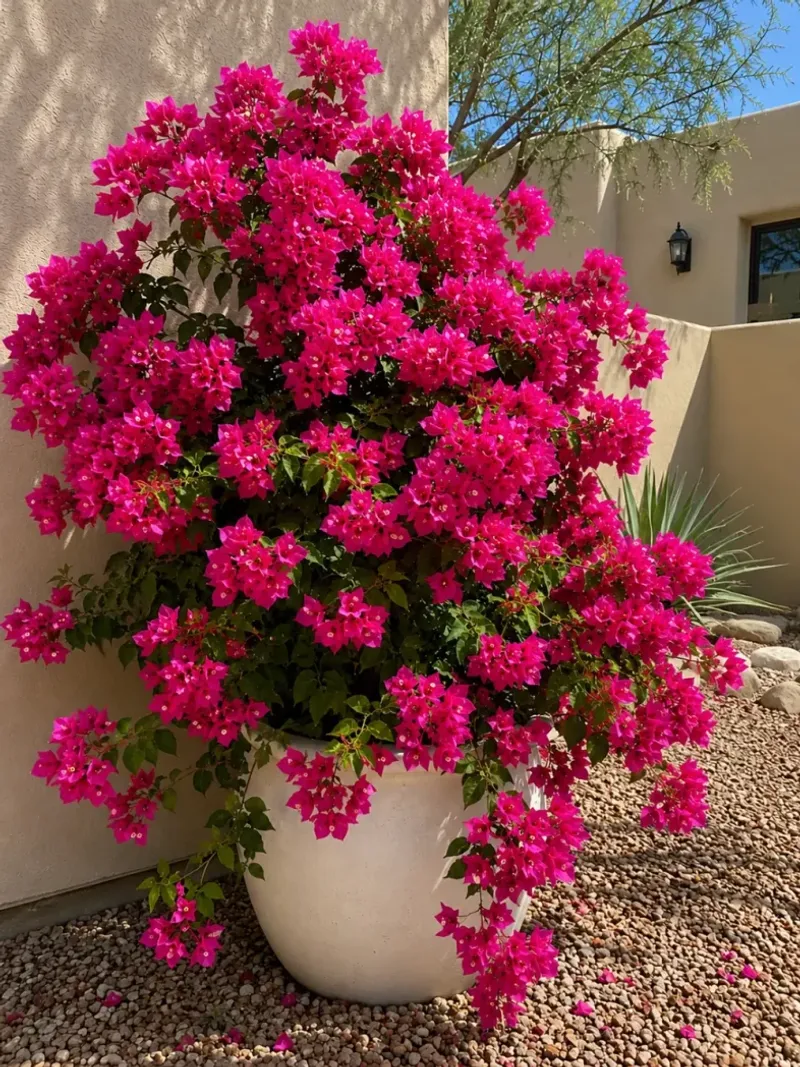
A bougainvillea that looked perfectly happy on the porch last week can drop a surprising number of leaves after being shifted to a new spot, even if the new location seems similar.
Plants adjust to their specific light angle, temperature patterns, and air circulation over time, and moving them disrupts that adjustment.
In Texas July heat, that disruption hits harder because the plant is already managing significant stress from high temperatures.
Even moving a container a few feet can change how much direct afternoon sun it receives, how much reflected heat it picks up from a wall or pavement, and how much wind passes over the leaves.
Any of those changes can push a bougainvillea into a temporary stress response that shows up as leaf drop within a few days.
If you need to reposition a plant, early morning is a better time than midday. Keeping the move minimal and avoiding spots with dramatically different light or heat exposure reduces the shock.
The best approach in July, though, is to leave the plant where it’s been doing reasonably well and focus on watering and drainage adjustments instead.
A bougainvillea that’s been sitting in one location for several weeks has already adapted to that microclimate, and July is not the ideal time to ask it to start over somewhere new.
6. Skip Heavy Feeding That Pushes Soft Growth
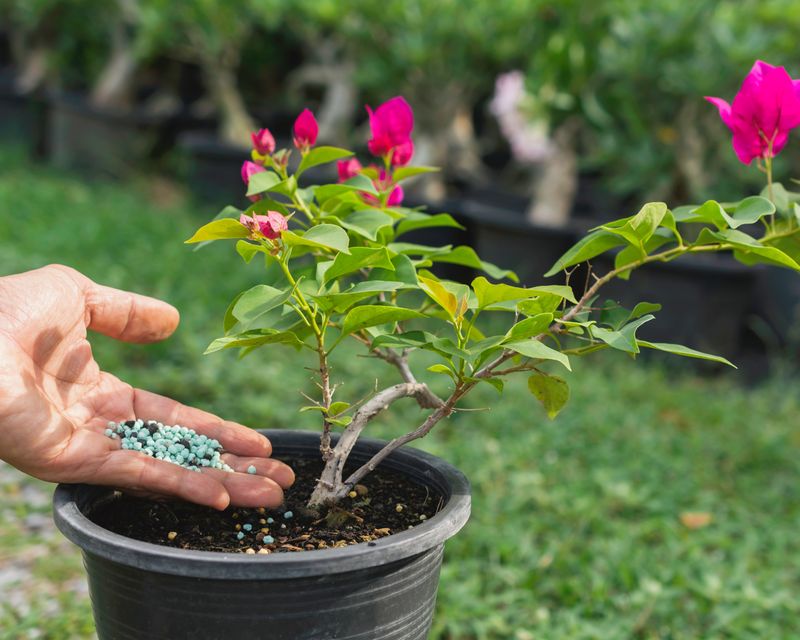
Lush green growth with fewer bracts and more soft, tender stems is often a sign that a bougainvillea has been fed too heavily, especially with a high-nitrogen fertilizer.
In July, that kind of growth is a problem because soft new stems are more vulnerable to heat stress, sunscald, and pest pressure than mature, hardened growth.
Heavy feeding during Texas summer heat can push a plant to put energy into fast, soft leafy growth rather than holding onto existing foliage and maintaining healthy roots.
That new growth can wilt quickly in afternoon heat, which stresses the plant further and sometimes leads to more leaf drop rather than less.
If you’ve been fertilizing regularly with a general-purpose fertilizer through the spring and into summer, it’s reasonable to back off in July.
Some Texas gardeners switch to a low-nitrogen or bloom-boosting fertilizer in smaller amounts to encourage color without pushing excessive leafy growth.
Others skip feeding entirely during the hottest weeks and resume in late summer when temperatures begin to ease.
Bougainvillea doesn’t need heavy feeding to perform well, and in containers during July heat, a lighter touch with fertilizer is usually a safer approach than continuing a heavy schedule that was designed for cooler or more moderate growing conditions.
7. Prune Lightly Instead Of Cutting It Back Hard
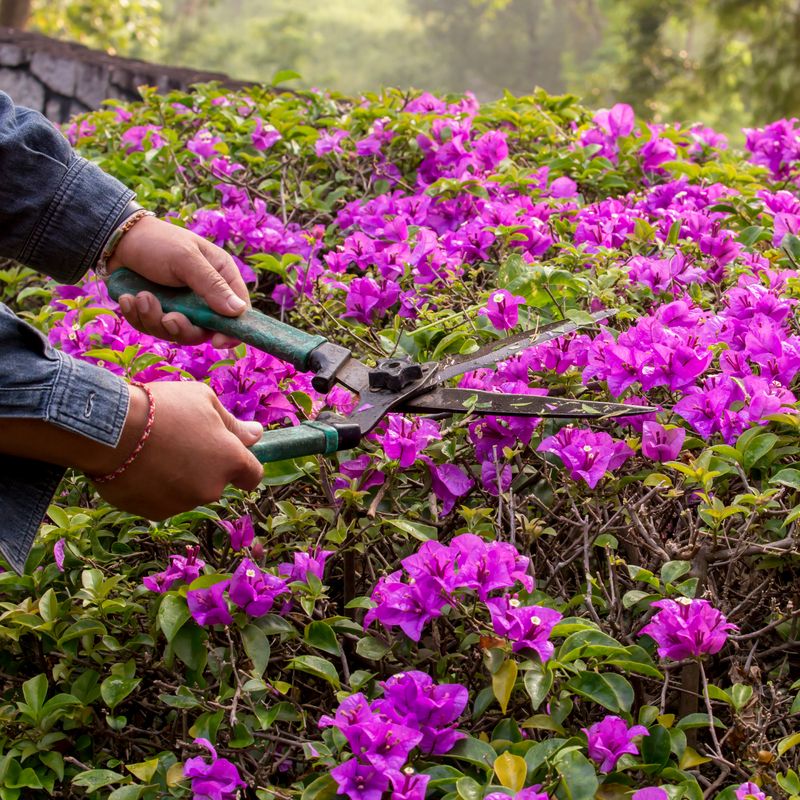
Long stems reaching across a walkway or hanging over a railing might make it tempting to grab the pruning shears and cut the whole plant back significantly.
In July, that kind of heavy pruning puts a lot of stress on a bougainvillea that is already working hard to manage Texas heat.
A hard cutback removes a large portion of the plant’s leaf surface, which reduces its ability to photosynthesize and recover quickly.
Light pruning, on the other hand, can be done in July without causing major setbacks. Trimming back a few of the longest stems, removing any damaged or struggling growth, and tidying up the overall shape is generally manageable for a healthy plant.
Keeping cuts minimal and clean, using sharp pruners to avoid tearing stems, reduces the chance of additional stress.
The goal in July is maintenance rather than transformation. If the plant needs a significant reshape or reduction, late summer or early fall, when Texas temperatures begin to moderate, is a more forgiving time to do it.
Bougainvillea blooms on new growth, so some light pruning can encourage fresh stems that will carry color into fall.
But in the middle of a Texas July, less is more when it comes to cutting back, and protecting existing foliage matters more than reshaping the plant for appearance.
8. Watch For Spider Mites, Aphids, Or Mealybugs
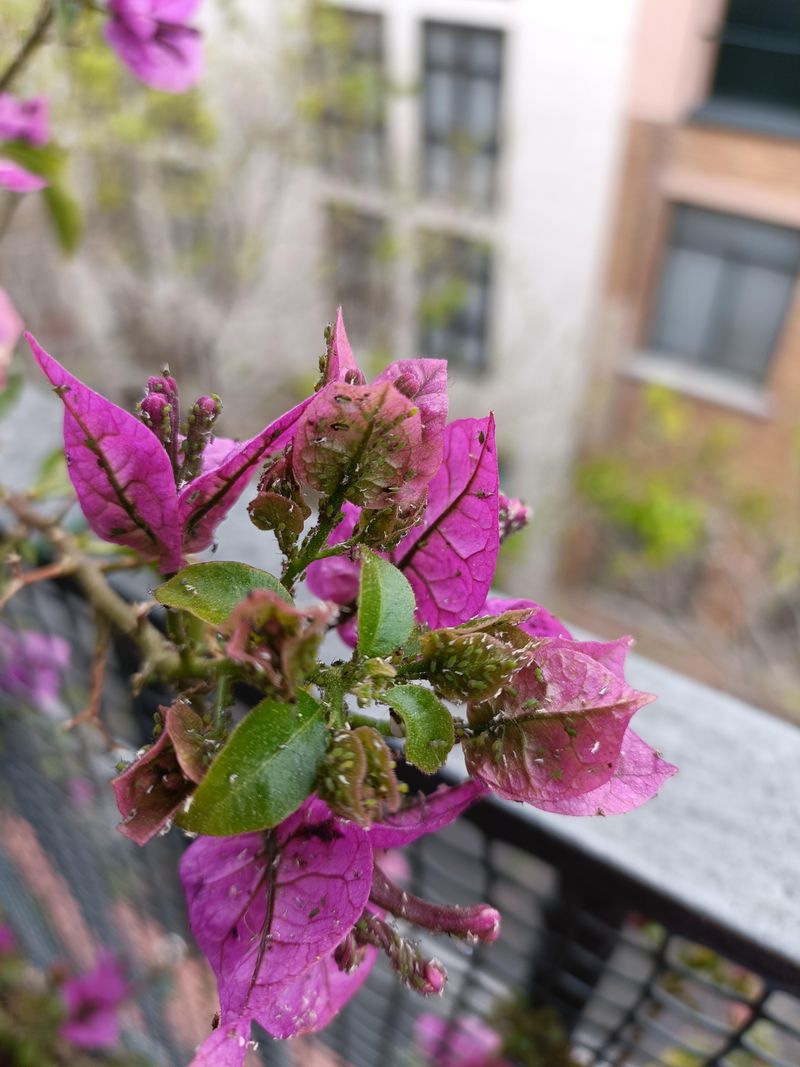
Tiny pests hiding under leaves are easy to miss until the damage is already visible, and July is one of the more active months for spider mites, aphids, and mealybugs on Texas bougainvillea.
Hot, dry conditions in July favor spider mite populations in particular, and a plant under heat or drought stress is more attractive to pests than one that’s growing steadily in good conditions.
Spider mites leave a dusty, stippled look on leaves and sometimes produce fine webbing on the undersides of stems and foliage. Aphids tend to cluster on new growth and leave behind a sticky residue.
Mealybugs show up as white cottony patches, usually in stem joints or where leaves attach to the plant. Catching any of these early makes management much more straightforward.
Checking the undersides of leaves every week or so during July gives you a chance to spot problems before they spread. A strong spray of water from a hose can knock back small aphid or mite populations without needing anything stronger.
Insecticidal soap or neem-based sprays are options for more persistent infestations, though applying them in the heat of the day or in full afternoon sun can cause additional leaf stress.
Early morning applications tend to be easier on the plant while still addressing the pest pressure that can make leaf drop worse throughout the summer.