What To Do With Your Florida Okra In July Before The Heat Peaks
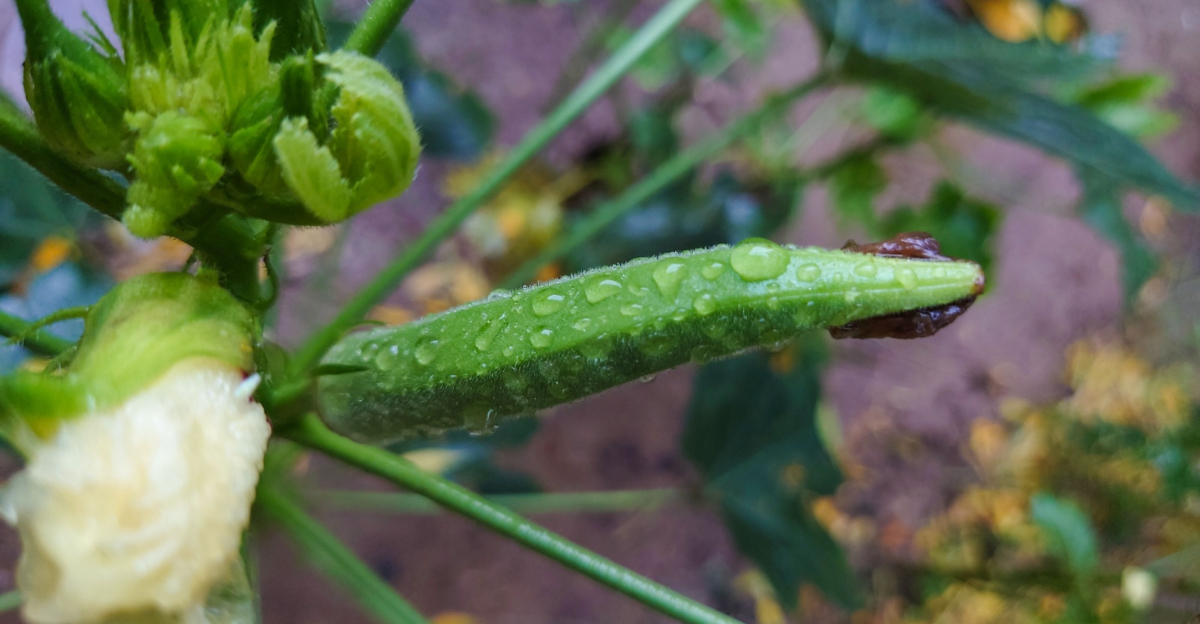
Okra is about as close to a perfect Florida summer vegetable as it gets, but July has a way of reminding even the toughest plants who is really in charge.
Intense sun, afternoon storms that seem to appear out of nowhere, stretches of dry heat between rain events, and pest pressure that quietly builds as the season rolls on can all add up fast if nobody is paying attention.
The encouraging part is that okra genuinely loves Florida’s hot, humid summers and is more capable of bouncing back from stress than most vegetables in the garden.
A little focused care in July goes a long way toward keeping plants productive well into the season.
Full sun, smart watering, good drainage, fresh mulch, consistent harvesting, and regular pest checks are really all it takes to keep an okra patch working hard through the heat.
1. Keep It In Full Sun
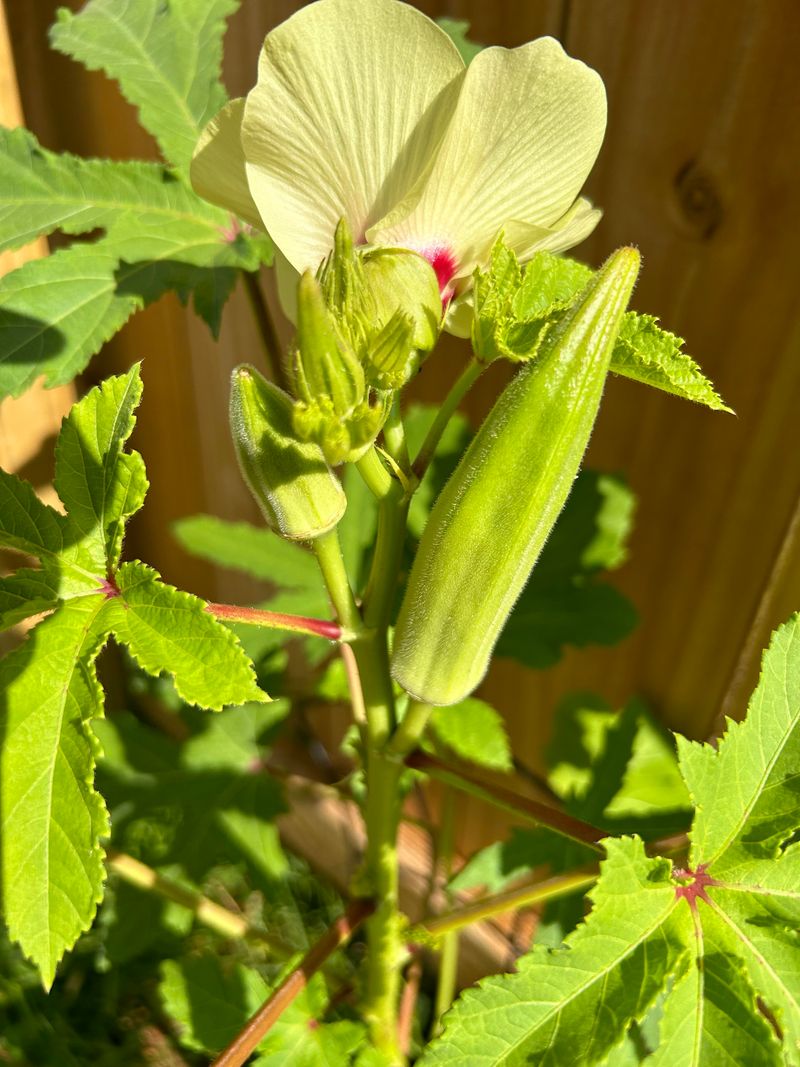
Tall okra stems reaching toward a wide-open Florida sky are a pretty good sign your plants are getting what they need most: full sun. Okra is a warm-season crop that genuinely thrives in direct sunlight, and July in Florida gives it plenty of that.
Most vegetable gardeners find that okra planted in a sunny spot outperforms plants tucked near fences, hedges, or taller crops that cast afternoon shade.
When sunlight is reduced, okra tends to slow down. Flowering becomes less consistent, and pod production can drop off noticeably, which is frustrating when you are hoping for a steady summer harvest.
Even partial shade from a nearby tree or overgrown shrub can make a difference over several weeks.
Before heat peaks in late July or August, take a walk around your garden and watch how sunlight moves across your okra bed throughout the day.
If you notice shading from a fence post, a taller plant nearby, or even a container that has been moved too close, repositioning what you can will help.
In-ground rows and raised beds both benefit from open sky above and on the south-facing side. Florida’s summer sun is intense, but okra handles it well as long as moisture and drainage are also managed properly.
Giving your plants the brightest, most unobstructed spot in the garden is one of the simplest ways to support steady growth and consistent flowering through the hottest stretch of the year.
2. Check Soil Moisture Before Watering
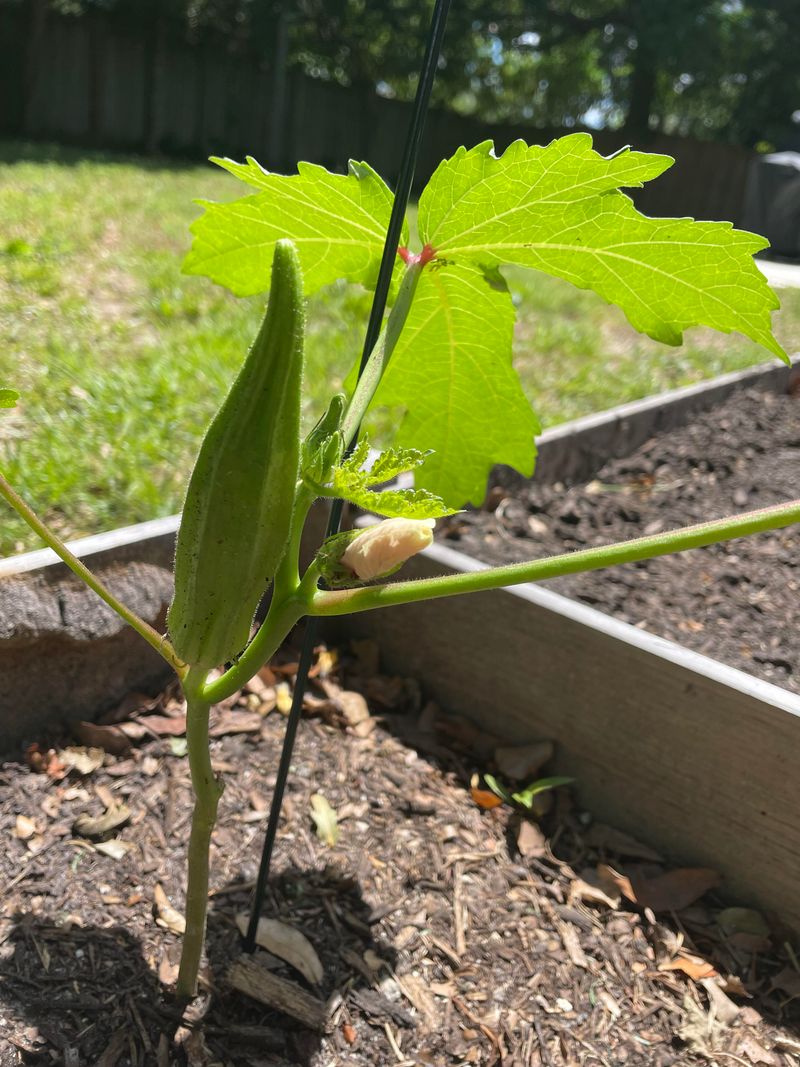
Hot vegetable beds in July can be deceiving. The surface of the soil might look bone dry by mid-morning, but a few inches down, near the active root zone, there could still be plenty of moisture from the previous night’s storm.
Florida’s rainy season means afternoon showers are common, and they can deliver more water than it seems at first glance.
Before reaching for the hose or turning on drip irrigation, push a finger or a small wooden dowel a couple of inches into the soil near the base of your okra plants. If the soil feels moist at that depth, the plant likely does not need more water yet.
Your Florida Garden Changes Every Week. Your Plan Should Too.
Gardening in Florida changes quickly throughout the season. Every Friday you’ll receive a simple weekly plan showing exactly what to plant, prune, fertilize, harvest, and protect so you never miss the right timing.
If it feels dry and powdery even a few inches down, that is a clearer sign that watering is needed.
Sandy soils, which are very common across Florida, drain quickly and can go from saturated to dry faster than heavier soils in other states. That means checking the root zone regularly gives you a much more accurate picture than looking at the surface alone.
Overwatering is a real concern in Florida vegetable gardens, especially when the rainy season is delivering moisture inconsistently. Soggy conditions around okra roots can lead to stress, poor growth, and drainage problems that take time to correct.
Building the habit of checking before watering helps you respond to what the plant actually needs rather than what the calendar or a watering schedule suggests.
3. Water Deeply When Rainfall Is Limited
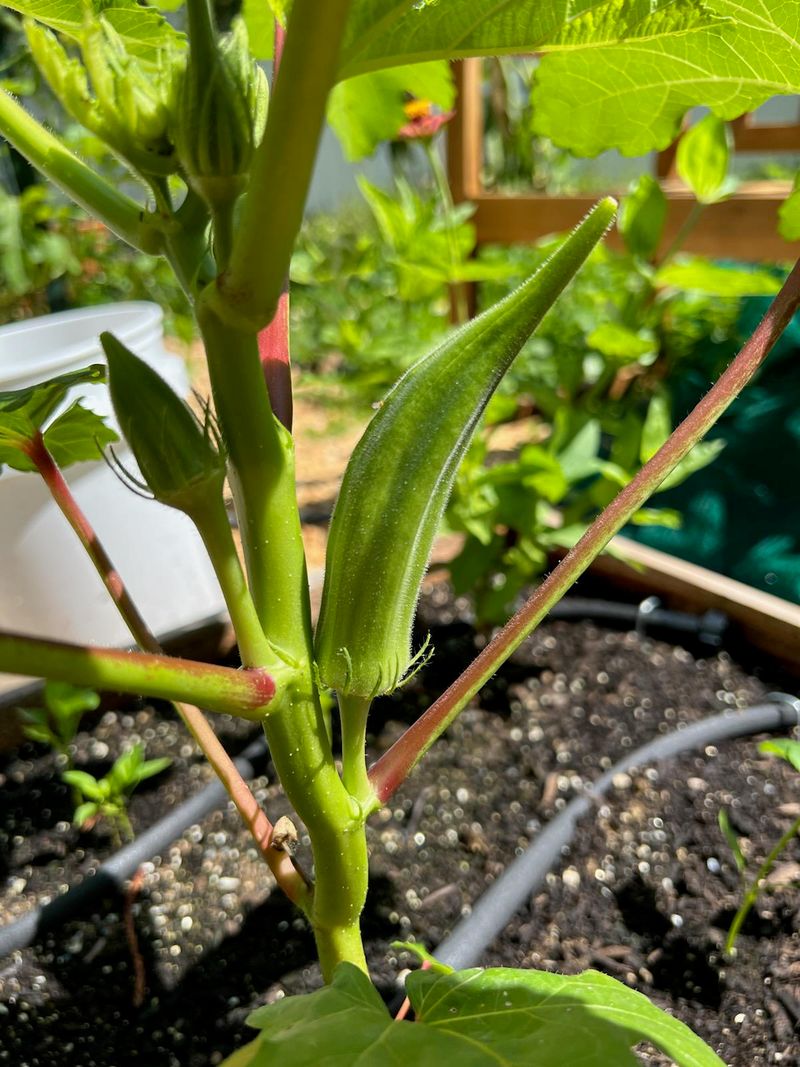
Between Florida’s afternoon storms, there are stretches when the sky stays clear and the heat just sits on the garden. During those dry spells, okra benefits from watering that reaches down into the root zone rather than just wetting the top inch or two of soil.
Quick, shallow splashes might cool the surface briefly, but they do not support the deeper root activity that keeps plants steady during hot weather.
When rainfall has been limited for several days and your soil check confirms the root zone is dry, watering slowly and deeply gives moisture time to move down through the soil profile.
Drip irrigation, soaker hoses, or a slow stream from a hose held near the base of the plant all work well for this.
Overhead sprinklers can work too, but wetting foliage during Florida’s humid summer months can encourage fungal issues, so watering at the base is generally a better approach.
Sandy soils common across much of Florida drain quickly, so you may need to water more frequently than gardeners in other regions. The goal is to keep the root zone consistently moist but not waterlogged between rain events.
Mulching around plants helps slow moisture loss after watering, which stretches the benefit of each deep watering session.
Paying attention to the forecast and adjusting your watering schedule around expected rain helps avoid both under-watering during dry stretches and overwatering when storms are on the way.
4. Keep The Soil Well Drained
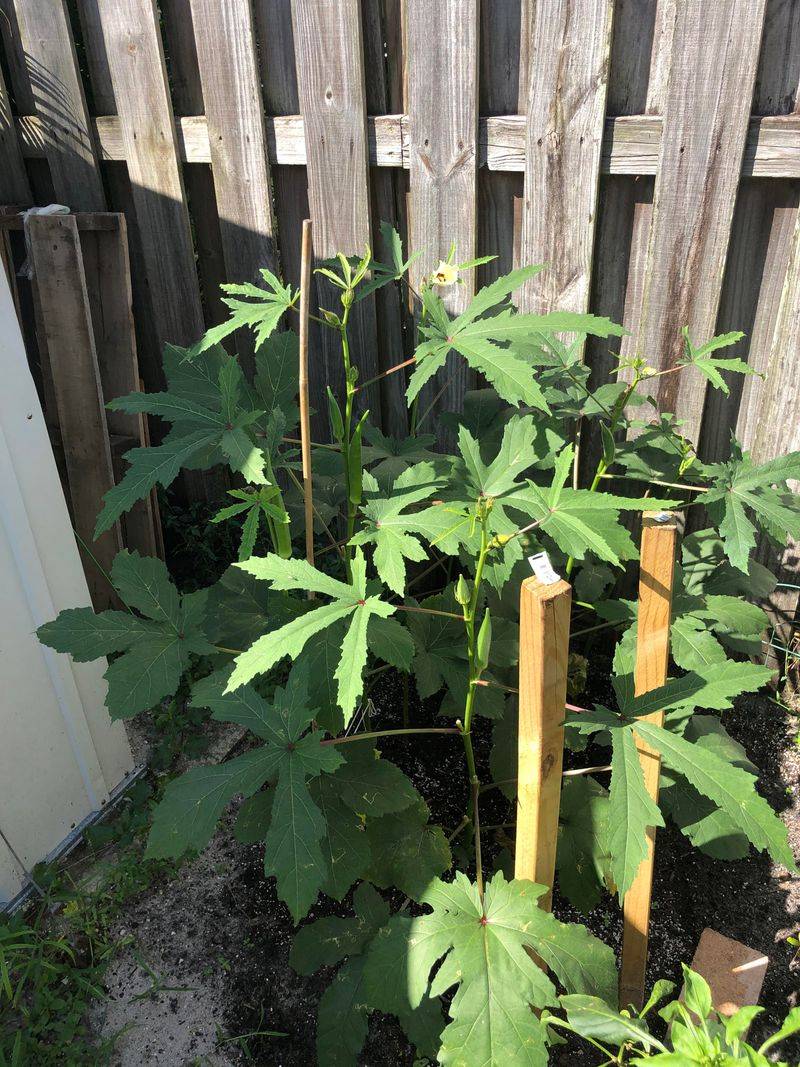
Okra handles Florida’s heat and humidity better than most vegetables, but it does not do well sitting in waterlogged soil.
Low spots in the garden, compacted bed edges, and containers without enough drainage holes can all create root-zone conditions that stress plants during the rainy season, even when the tops of the plants look fine for a while.
July in Florida often brings heavy afternoon rain that can drop a significant amount of water in a short time. If your okra bed does not drain that water away reasonably quickly, the roots end up sitting in saturated soil longer than they should.
Over time, that kind of moisture stress can reduce vigor and make plants more vulnerable to other problems.
Raised beds generally drain better than flat in-ground rows, especially in areas with naturally dense or clay-heavy soil.
If you are gardening in sandy Florida soil, drainage is usually less of a concern, but low-lying spots and beds that have been amended with heavy materials can still hold water unexpectedly.
Checking that your beds have a slight slope or that water moves away from the root zone after a storm is worth a few minutes of observation.
For container gardeners, making sure drainage holes are clear and that containers are not sitting in saucers full of standing water is equally important.
Good drainage is one of those foundational details that supports everything else you do to keep okra productive in July.
5. Mulch To Hold Moisture And Reduce Weeds
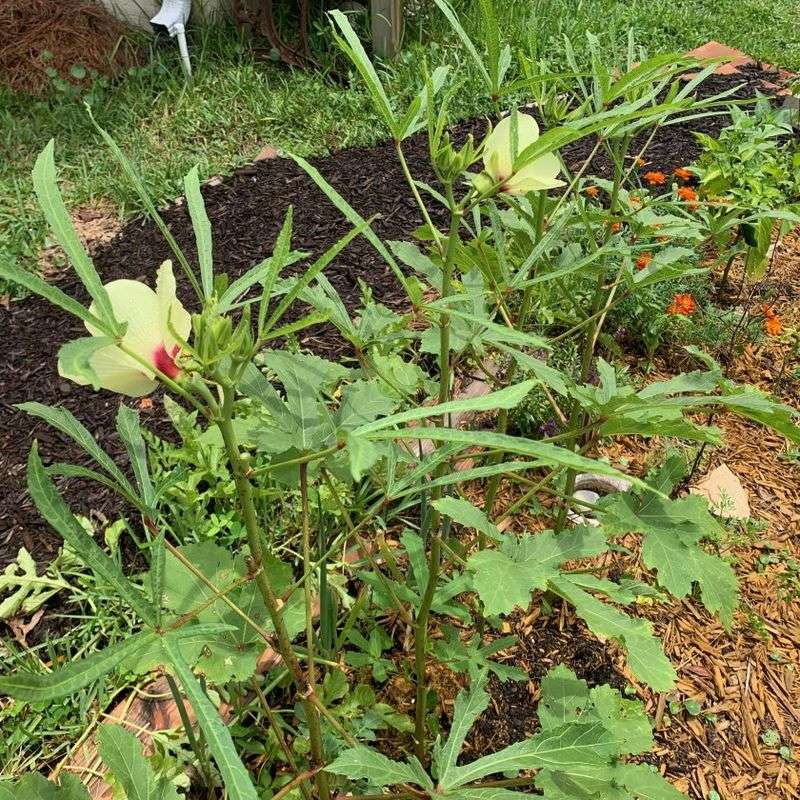
Dry mulch spread around the base of your okra plants does a quiet but steady job throughout July. It slows moisture evaporation from the soil surface, which matters a lot on the hot days between Florida’s afternoon rain events.
It also creates a layer that makes it harder for weeds to sprout and compete with your okra for water and nutrients.
Straw, wood chips, and shredded leaves are all commonly used mulch materials that work well in Florida vegetable gardens.
A layer about two to three inches deep is generally enough to provide meaningful moisture retention without creating a habitat that stays too wet against the stem.
One thing to keep in mind is that mulch should be kept a small distance away from the base of the okra stem itself. Packing mulch directly against the stem can trap moisture in a way that may encourage rot or pest activity near the soil line.
Weeds are a real competitor in Florida summer gardens because the same warm, moist conditions that support okra also support fast weed growth.
Pulling weeds by hand or with a small cultivator is easier and less disruptive when mulch has already slowed their establishment.
Refreshing your mulch layer if it has thinned out or decomposed since spring planting is a simple mid-season task that pays off in reduced weeding time and more stable soil moisture for the rest of the summer growing window.
6. Harvest Pods While They Are Small
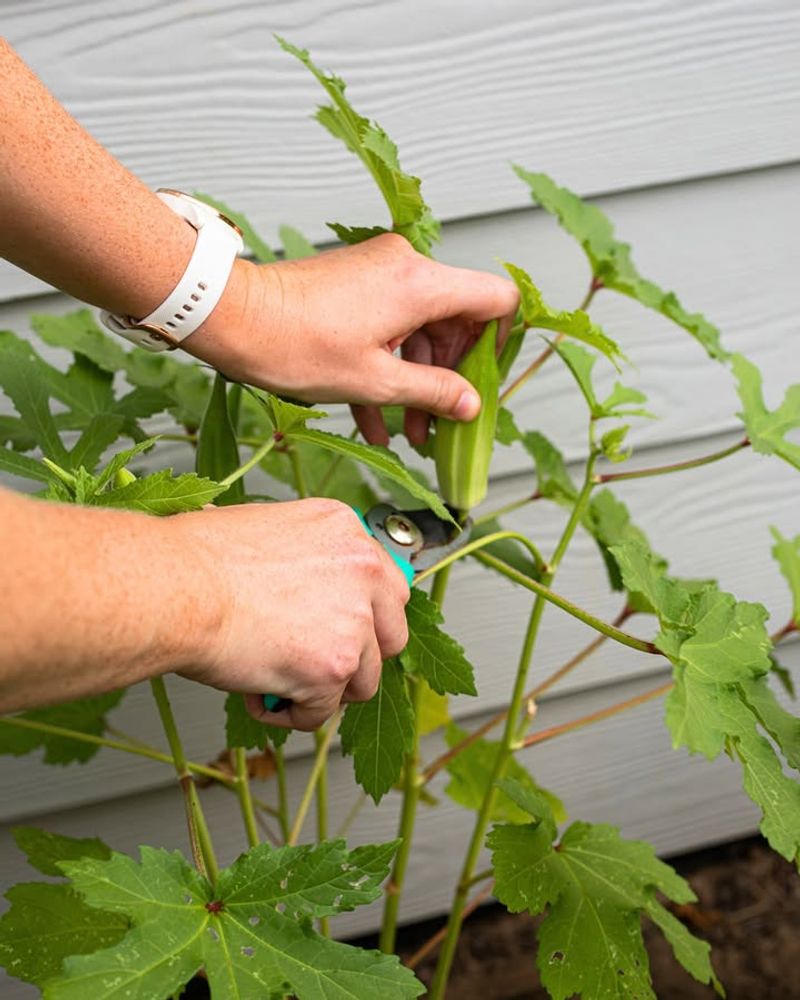
Fast-growing okra pods in Florida’s July heat can go from the right size to way too tough in what feels like just a day or two.
The warm temperatures that make okra so productive in Florida also speed up pod development, which means harvesting on a regular schedule is one of the most practical things you can do to keep the plant useful and productive.
Small pods, generally around two to four inches long depending on the variety, tend to be tender, flavorful, and easy to cook. Once pods are left on the plant too long, they become fibrous and woody, and most gardeners find them unpleasant to eat at that stage.
Leaving overgrown pods on the plant also signals to the plant that it has already completed part of its reproductive cycle, which can slow down new flower and pod production.
Getting into a harvesting rhythm of every one to two days during peak production keeps pods at their best and encourages the plant to keep flowering.
A small pair of garden snips or pruning scissors makes harvesting easier and cleaner than pulling or twisting pods off by hand.
Some gardeners wear light gloves during harvest because okra stems and leaves have small spines that can irritate skin.
Checking the entire plant from bottom to top during each harvest pass ensures you do not miss pods that have grown quickly in the lower parts of the plant where they are sometimes harder to spot.
7. Check Leaves And Pods For Pests
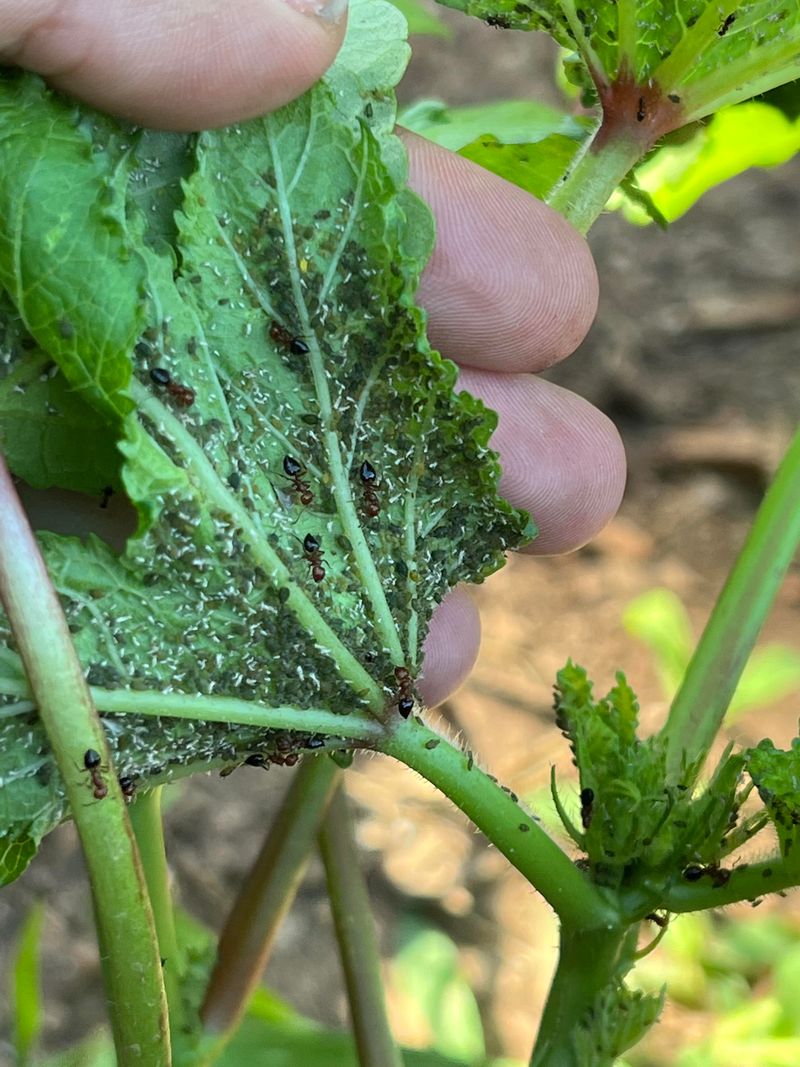
Turning over a few okra leaves during your regular garden walk in July can reveal a lot about what is happening beneath the surface of your crop.
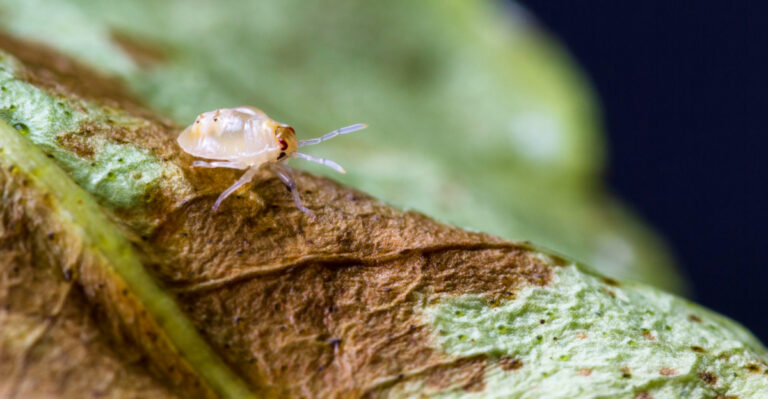
Pest pressure tends to build as the Florida summer season progresses, and catching a small population of aphids, whiteflies, or thrips early gives you far more management options than waiting until the infestation is well established.
Aphids cluster on tender new growth and the undersides of leaves, often leaving behind a sticky residue. Whiteflies are tiny and tend to scatter in a small cloud when you brush the foliage.
Thrips are harder to see but can cause silvery or streaked damage on leaves and pods. Stink bugs and leaffooted bugs are larger and easier to spot, and they tend to feed on pods directly, leaving behind damage that affects both appearance and quality.
Before taking any action, careful identification is worth the extra minute it takes. Not every insect on your okra plant is a pest, and some are actually beneficial.
Spraying without knowing what you are targeting can reduce populations of helpful insects that would otherwise help keep pest numbers in check naturally.
Checking plants in the morning when temperatures are cooler and insects are less active makes scouting easier and more thorough.
Focusing your inspection on new growth, flower buds, undersides of leaves, and the surface of developing pods gives you the most useful picture of what is happening across the whole plant.
8. Give Plants Enough Space For Airflow
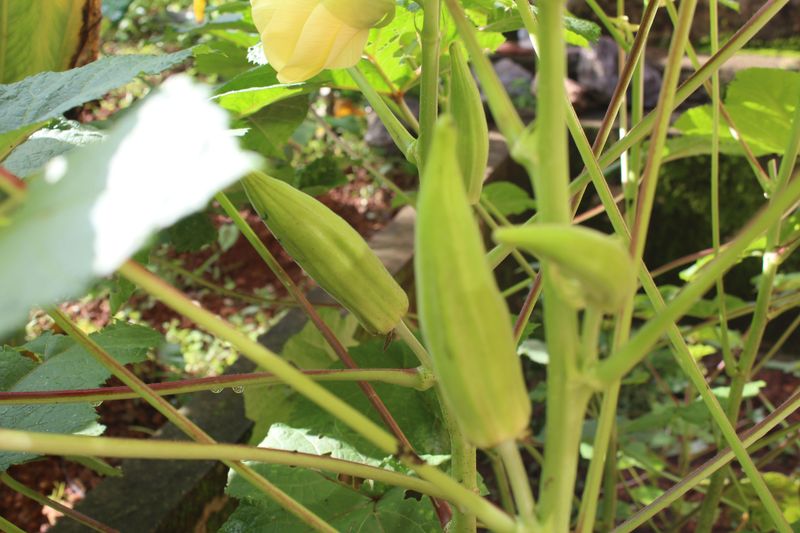
Crowded okra rows in a Florida summer garden can create more problems than most gardeners expect.
When plants are too close together, the space between them stays humid longer after rain or irrigation, and that kind of persistent moisture inside the canopy can encourage fungal issues and make pest scouting much harder.
Airflow through the row helps foliage dry faster and keeps conditions less favorable for problems to develop.
Proper spacing also makes harvesting easier and more thorough.
When you can move between plants comfortably, you are less likely to miss pods that are ready to pick, and you are less likely to accidentally snap stems or damage flowers while reaching through a dense row.
Okra can grow quite tall in Florida’s long, hot summers, and crowded plants may also compete for root space, moisture, and nutrients as the season progresses.
If you planted okra a little closer together earlier in the season to get more plants in, July is a reasonable time to evaluate whether thinning or pruning lower leaves might help open up the row.
Removing a few of the oldest, lowest leaves that are no longer contributing much to the plant can improve airflow without significantly reducing the plant’s overall health or productivity.
In community gardens and backyard rows alike, giving okra plants the room they need to breathe is a small investment that supports easier maintenance, better harvesting access, and a healthier growing environment through the rest of Florida’s summer season.