Where Potato Leafhoppers Damage Michigan Beans First Before Leaf Edges Turn Brown
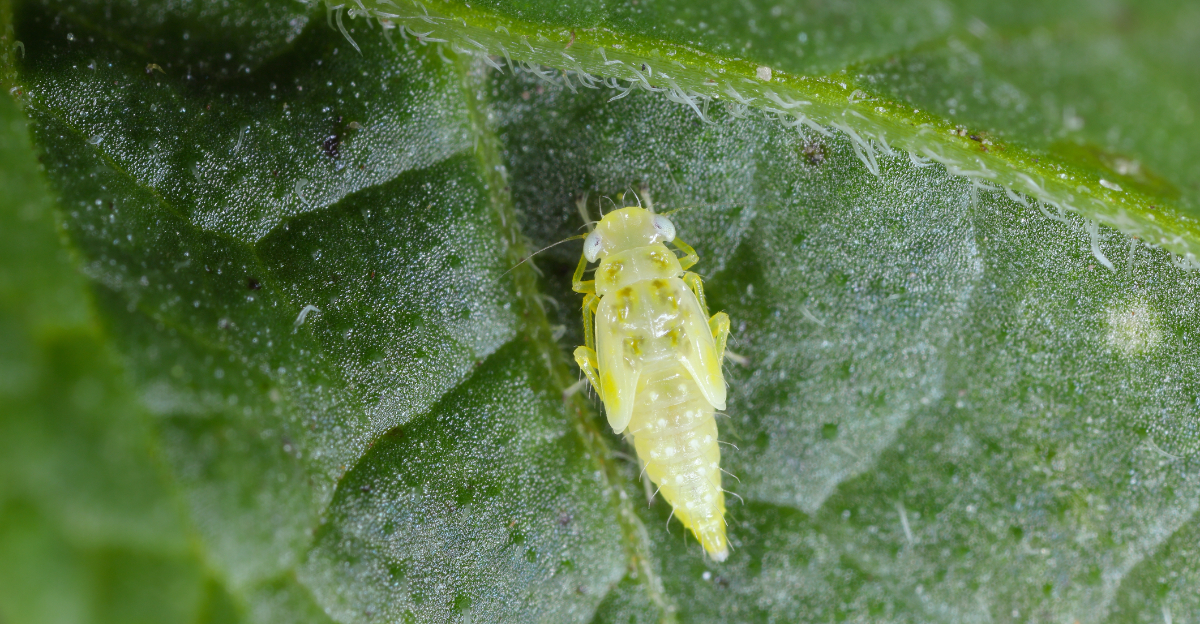
Potato leafhoppers typically begin feeding along the undersides of bean leaves, well before the browning damage becomes visible from above.
These small, wedge shaped insects pierce plant tissue to feed on sap, injecting a toxin that eventually causes leaf edges to brown and curl.
Checking leaf undersides early in the season often reveals leafhoppers or their pale, immature nymphs before serious damage sets in.
Younger leaves near the top of the plant tend to show symptoms first, since leafhoppers prefer feeding on tender, actively growing tissue.
Left unchecked, heavy feeding can significantly reduce a bean plant’s ability to photosynthesize, ultimately lowering overall yield.
A strong spray of water can help dislodge leafhoppers, disrupting their feeding without relying on chemical treatments.
Row covers offer additional protection for young plants during the most vulnerable early growth stages. Catching this early feeding pattern protects bean plants before browning spreads across the entire leaf.
1. Check The Youngest Bean Leaves First
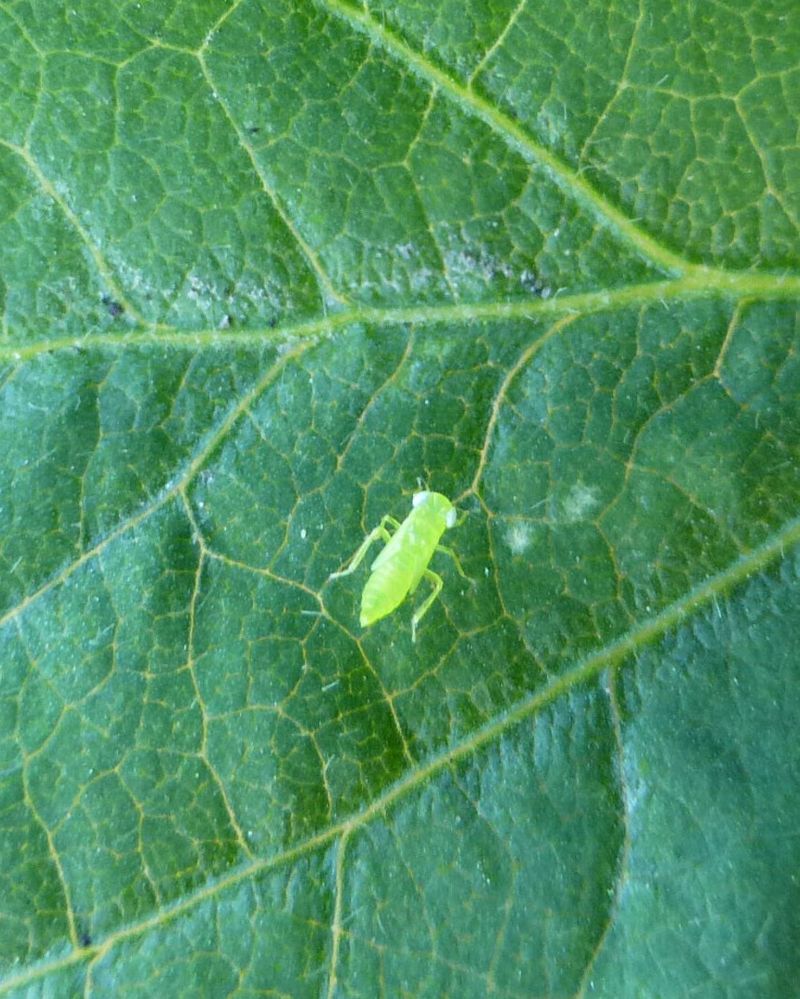
Young bean leaves grow fast, and that speed makes them the first stop for potato leafhopper feeding injury. Rapidly growing tissue is softer, thinner, and more vulnerable than older, tougher leaves lower on the plant.
Leafhoppers actively seek out these tender new leaves because they are easier to pierce with their needle-like mouthparts.
When a leafhopper feeds, it injects a toxic saliva into the plant tissue. This saliva blocks the flow of nutrients and water through the leaf veins.
The youngest leaves at the top of the plant feel this disruption first because they depend most heavily on a steady supply of nutrients to keep growing.
Michigan bean growers sometimes notice that the top of the plant looks slightly off before anything else appears wrong. The new growth might seem a little pale, slightly stunted, or just not as vibrant as expected.
That subtle change is easy to miss if you are only glancing at the plant from a distance.
Getting up close and checking the newest leaves carefully is one of the smartest habits a gardener can develop. You do not need any fancy equipment, just a curious eye and a willingness to look closely.
Early detection on young foliage gives you a real chance to manage leafhoppers before symptoms spread downward to older leaves and become much harder to reverse.
2. Look Under The Leaves For Leafhoppers
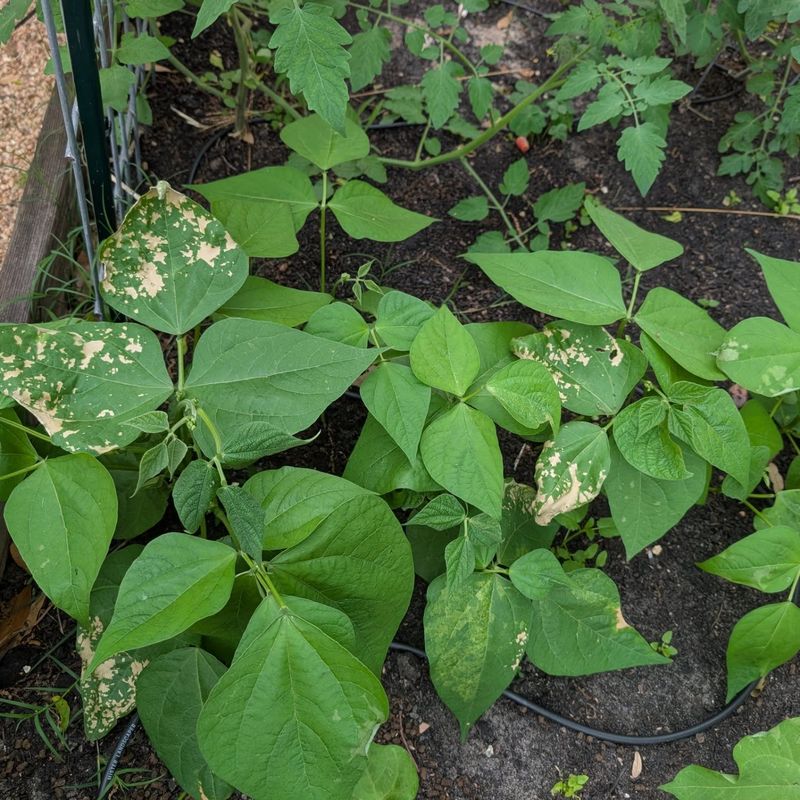
Flipping a leaf over might seem like a small thing, but it can completely change how you understand what is happening with your bean plants. Potato leafhoppers, both adults and nymphs, spend most of their time on the undersides of leaves.
That shaded, protected surface gives them cover from predators and direct sun while they feed.
Adult potato leafhoppers are bright green, wedge-shaped, and only about an eighth of an inch long. They move fast and jump sideways when disturbed, which is actually one of the easiest ways to spot them.
Nymphs are even smaller and paler green, and they tend to move in quick sideways bursts across the leaf surface.
Many Michigan gardeners walk through their bean rows and never see a single leafhopper because they only look at the tops of leaves. The insects hide well and blend into the green leaf tissue surprisingly easily.
Your Michigan Garden Changes Every Week. Your Plan Should Too.
Gardening in Michigan changes quickly throughout the season. Every Friday you’ll receive a simple weekly plan showing exactly what to plant, prune, fertilize, harvest, and protect so you never miss the right timing.
Checking undersides regularly, especially during warm summer months, is the only reliable way to know whether leafhoppers are present before visible damage appears on the upper leaf surface.
A good scouting habit involves gently turning over several leaves from different parts of the plant and different spots in the garden. Even finding just a few leafhoppers per leaf is worth paying attention to.
Populations can build quickly in hot, dry Michigan summers, and a small number of insects today can become a much larger problem within just a couple of weeks.
3. Pale Veins Can Be An Early Warning
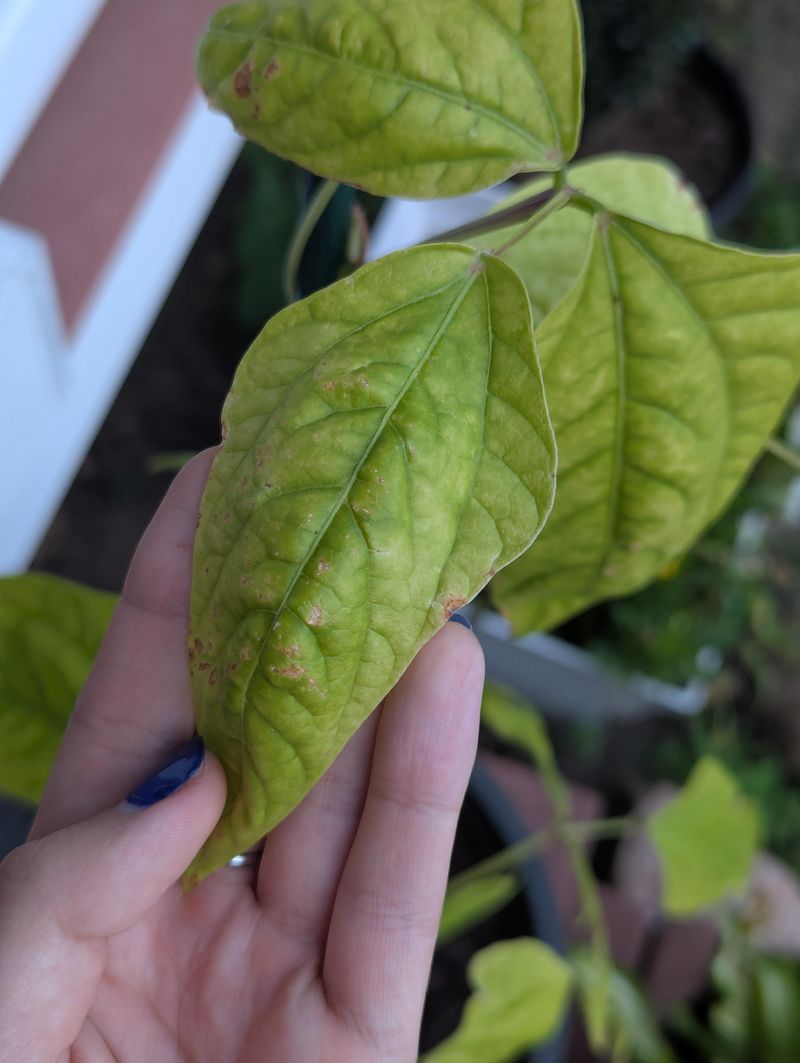
Before brown edges ever appear on a bean leaf, something quieter is already happening inside the plant. The veins, which carry water and nutrients through the leaf, begin to lose their deep green color.
They turn slightly pale or yellowish, and the tissue right around them may look a little washed out compared to a healthy leaf.
Potato leafhoppers cause this by injecting toxic saliva as they feed. That saliva physically clogs the phloem, which is the tissue responsible for moving sugars and nutrients around the plant.
When the phloem gets blocked, the leaf cannot feed itself properly, and the first place that shows up is often along the veins where transport is most active.
Pale veins are easy to overlook, especially if you are not specifically looking for them. The change is gradual and subtle at first, and it can look a lot like normal variation in leaf color.
Holding a leaf up to the light or comparing it directly to a healthy leaf from an unaffected plant makes the difference much easier to see.
Spotting this symptom early is genuinely valuable. At this stage, the plant has not yet suffered the full impact of hopperburn, and there is still time to respond effectively.
Michigan gardeners who train themselves to notice pale veins and slight yellowing around leaf tissue gain a meaningful head start on protecting their bean crop from more serious injury later in the season.
4. Curling Leaves Can Appear Early
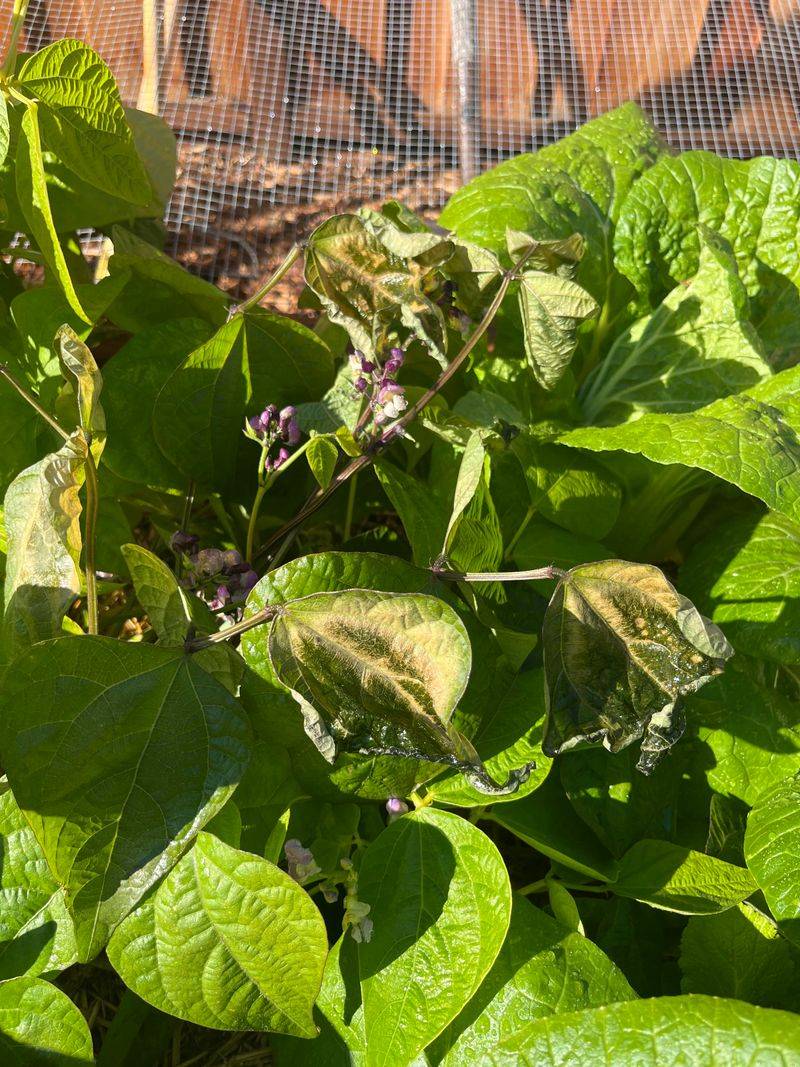
Curling or wrinkling bean leaves can catch a gardener’s eye quickly, but the cause is not always obvious at first glance. Potato leafhopper feeding can trigger leaf curling well before any brown or yellow discoloration becomes noticeable.
The leaf edges may roll slightly downward or the whole leaf surface might develop a subtle wrinkled texture that looks out of place on an otherwise healthy plant.
The reason this happens comes back to that toxic saliva. As leafhoppers feed and block nutrient flow, cells in the leaf tissue do not develop evenly.
Some areas grow normally while others are restricted, and that uneven growth creates physical stress in the leaf structure. The result is curling, cupping, or wrinkling that looks almost mechanical, as if the leaf was pinched or squeezed from underneath.
Curling leaves are sometimes blamed on too much water, not enough water, or even a fungal issue. Those guesses are understandable because the symptoms can look similar.
The key difference is that leafhopper-related curling usually starts on the youngest leaves at the top of the plant and is accompanied by the presence of the insects themselves on the leaf undersides.
Catching curling at this stage is a real advantage. The plant is telling you something is wrong, and the message is still early enough to act on.
Michigan bean gardeners who respond to curling leaves with a thorough scouting check, rather than assuming it is just a watering issue, often catch leafhopper populations before they grow large enough to cause widespread hopperburn.
5. Brown Tips And Edges Mean Injury Has Progressed
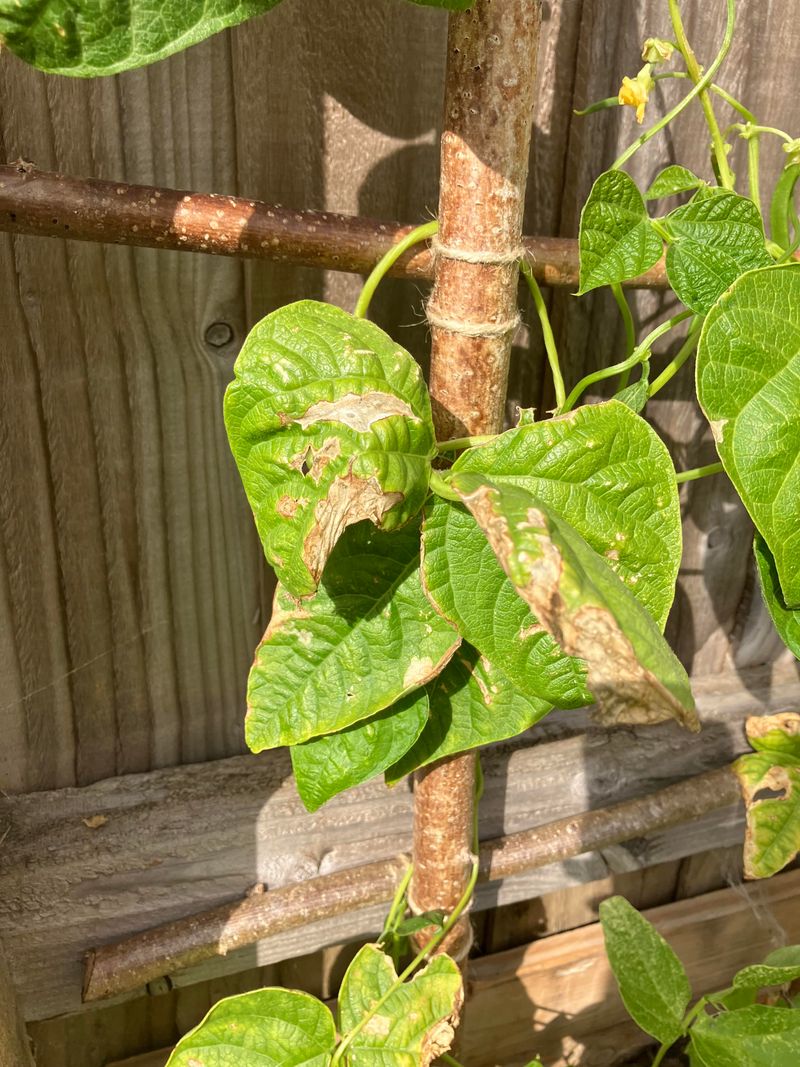
Once the leaf tips and edges start turning yellow and then brown, the injury has moved past the early stage. This symptom is called hopperburn, and it is the most recognized sign of potato leafhopper damage in beans.
The browning typically starts at the very tip of the leaf and works inward along the edges, leaving the center of the leaf green for a while longer.
Hopperburn happens because the phloem blockage caused by leafhopper saliva has now become severe enough to starve the outer portions of the leaf.
The edges and tips are the furthest from the main vein, so they are the last to receive water and nutrients. When that supply gets cut off long enough, those tissues break down and turn brown.
Seeing hopperburn on your bean plants is a clear signal that leafhoppers have been feeding for some time without being noticed or managed. The damage at this point is permanent.
Brown tissue does not recover, and the plant has already lost productive leaf area that it needed for photosynthesis and pod development.
Michigan gardeners sometimes see hopperburn and assume the plants got too dry or had a nutrient problem. That kind of misdiagnosis can cost valuable time.
If you see brown edges and tips on your bean leaves, flip them over immediately and look for leafhoppers. Finding them confirms the cause and tells you that management action is needed right away to protect the remaining healthy leaf tissue on the plant.
6. The Damage Can Look Like A Water Problem
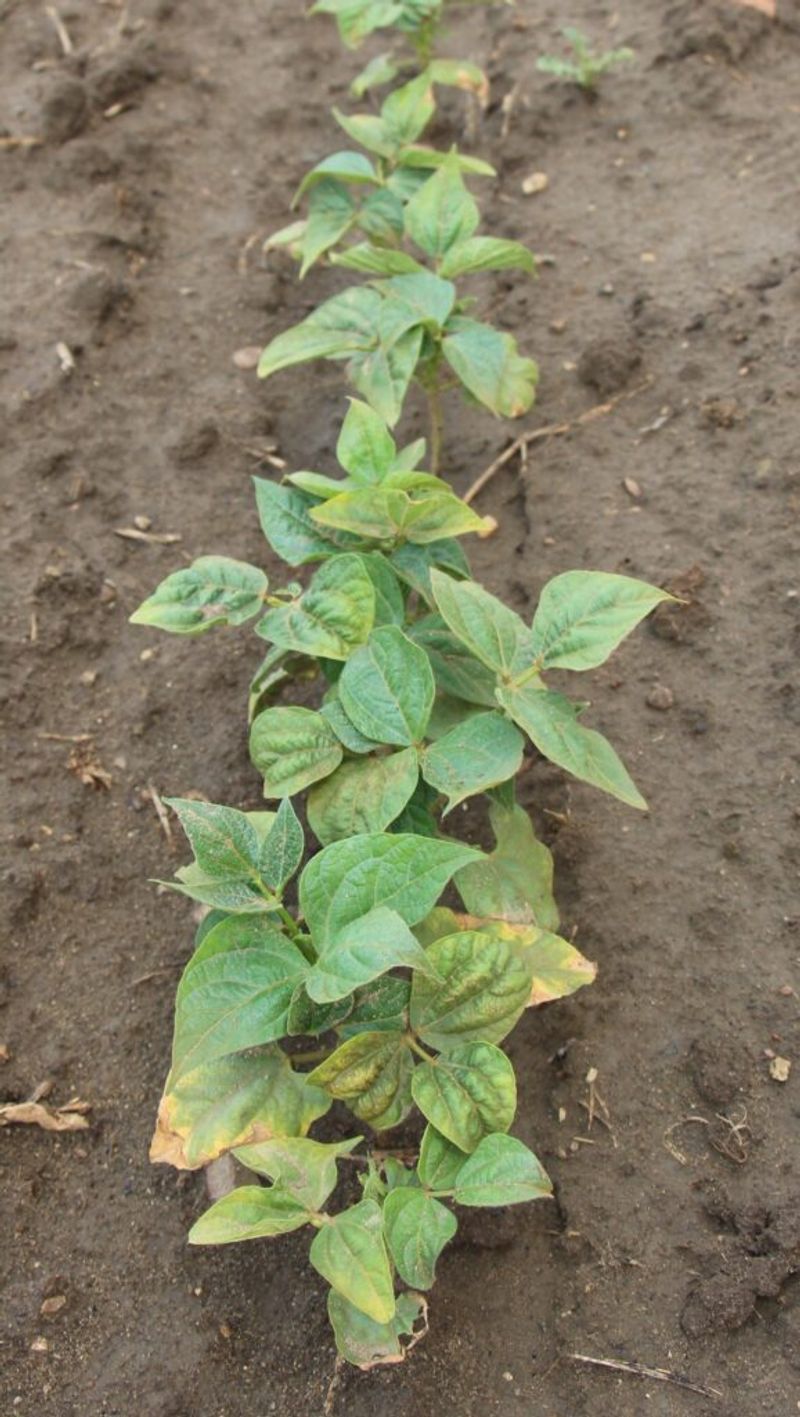
One of the trickiest things about potato leafhopper injury is how much it can look like something else entirely. Hopperburn on bean leaves closely resembles drought stress, heat scorch, or even certain nutrient deficiencies.
The browning edges, yellowing tissue, and wilted appearance can send a gardener straight to the hose or the fertilizer bag when the real answer is somewhere entirely different.
Drought stress tends to affect the whole plant more evenly, and the soil around the roots will feel dry. Leafhopper injury, on the other hand, can show up on plants that have been watered properly and are growing in moist soil.
That inconsistency is a clue worth following. If the soil moisture seems fine but the leaves still look stressed, insects are a much more likely explanation than water shortage.
Nutrient deficiencies can also cause yellowing and browning, but those symptoms usually follow predictable patterns related to which nutrients are missing. Leafhopper injury tends to be more scattered across the plant and more concentrated on younger growth.
Checking the undersides of leaves for tiny green insects is the fastest way to settle the question.
Michigan gardeners who automatically assume a water or fertility problem when they see brown edges can spend weeks trying to fix something that was never broken. Scouting for insects before making any other diagnosis saves time, effort, and money.
A quick look under a few leaves can confirm or rule out leafhoppers in under a minute, and that one minute can completely change how you respond to what you are seeing.
7. Hot Dry Weather Can Make Symptoms Worse
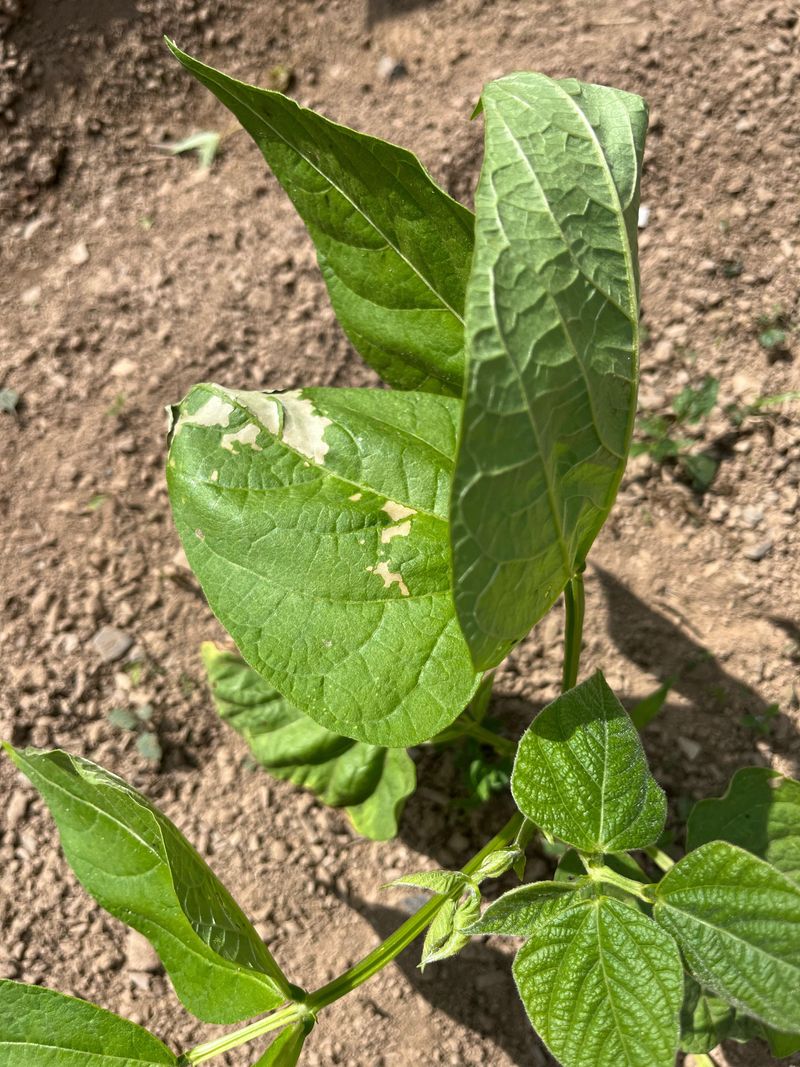
Michigan summers can bring stretches of heat and low rainfall that push potato leafhopper populations into overdrive. Leafhoppers actually thrive in warm, dry conditions, and their feeding activity increases significantly when temperatures climb.
At the same time, bean plants under heat and moisture stress are already working harder to survive, which makes them less able to handle the additional burden of leafhopper feeding.
The combination of heat stress and leafhopper toxins creates a kind of double pressure on the plant. Hopperburn symptoms that might develop slowly under mild conditions can appear and spread much faster during a hot dry spell.
What starts as pale veins on Monday can become brown edges by the weekend when temperatures are consistently high and rainfall is scarce.
Leafhopper populations also build faster in dry weather because the conditions favor their reproduction and survival. Predators and natural checks on their numbers tend to be less effective when the environment is hot and dry.
That means scouting frequency should go up during these periods, not down, even though it is tempting to spend less time in the garden during a heat wave.
Watering bean plants consistently during dry Michigan summers helps reduce heat stress, but it does not stop leafhoppers from feeding.
Keeping plants well-hydrated gives them a better chance of tolerating some leafhopper pressure without showing severe symptoms as quickly.
Still, irrigation alone is not a substitute for actually checking your plants and knowing how many leafhoppers are present on the leaves at any given time.
8. Scout Before The Leaf Edges Turn Brown
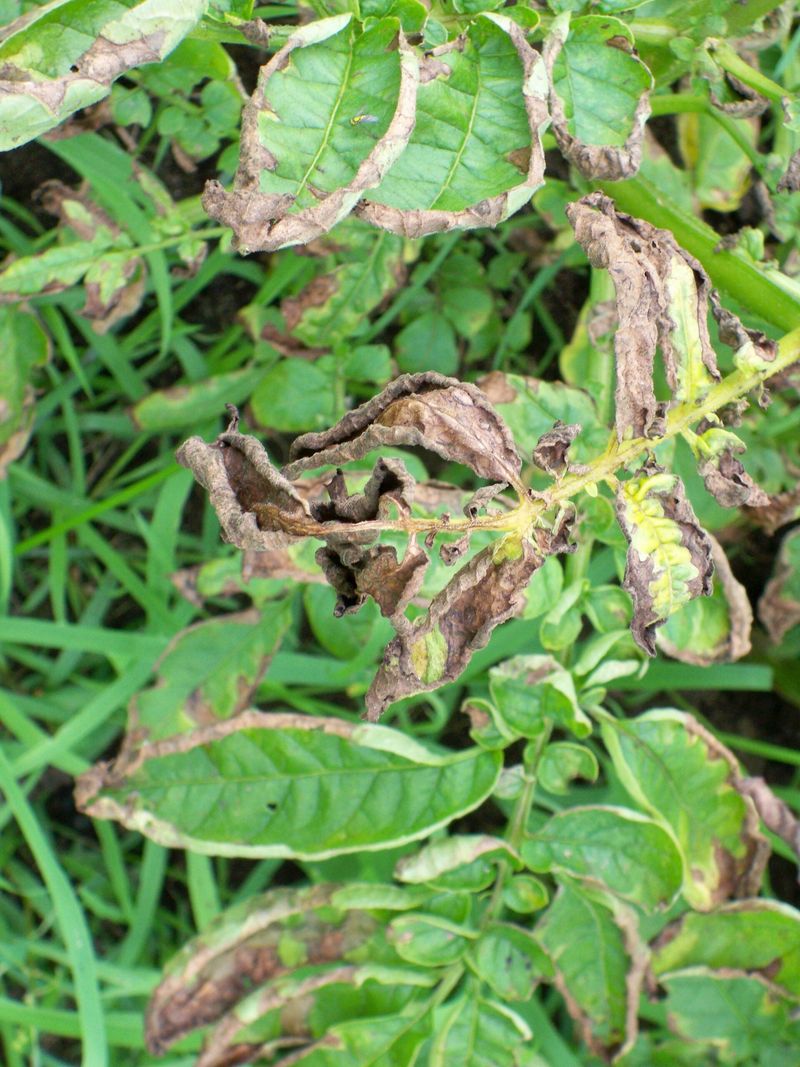
Waiting until leaf edges turn brown before checking for leafhoppers is a little like waiting until a small fire gets big before grabbing a bucket. By the time hopperburn is clearly visible, the insects have already been feeding long enough to cause lasting damage.
Scouting early and often is the strategy that actually protects your bean crop instead of just documenting the injury after it happens.
Michigan State University Extension recommends checking bean plants at least once a week during peak leafhopper season, which typically runs from late June through August.
The threshold for concern in snap beans is generally around one nymph per leaf, though this can vary depending on the growth stage of the plant and how quickly conditions are changing. Knowing your numbers lets you make smarter decisions.
Scouting does not require special training or equipment. Walk through your bean rows, pick leaves from different parts of the plant and from different locations in the garden, and flip them over.
Count the leafhoppers you see. Keep a simple record so you can track whether numbers are going up or holding steady from one week to the next.
Early action, when leafhopper populations are still small, gives you more options and better results than reacting to a full-blown infestation.
Catching the problem on young leaves and leaf undersides, before pale veins appear and long before edges turn brown, is the goal every Michigan bean gardener should aim for each growing season. Consistent scouting is the single most powerful tool you have.