Why a Screech Owl Sits in Its Box Doorway on Sunny Ohio Winter Days
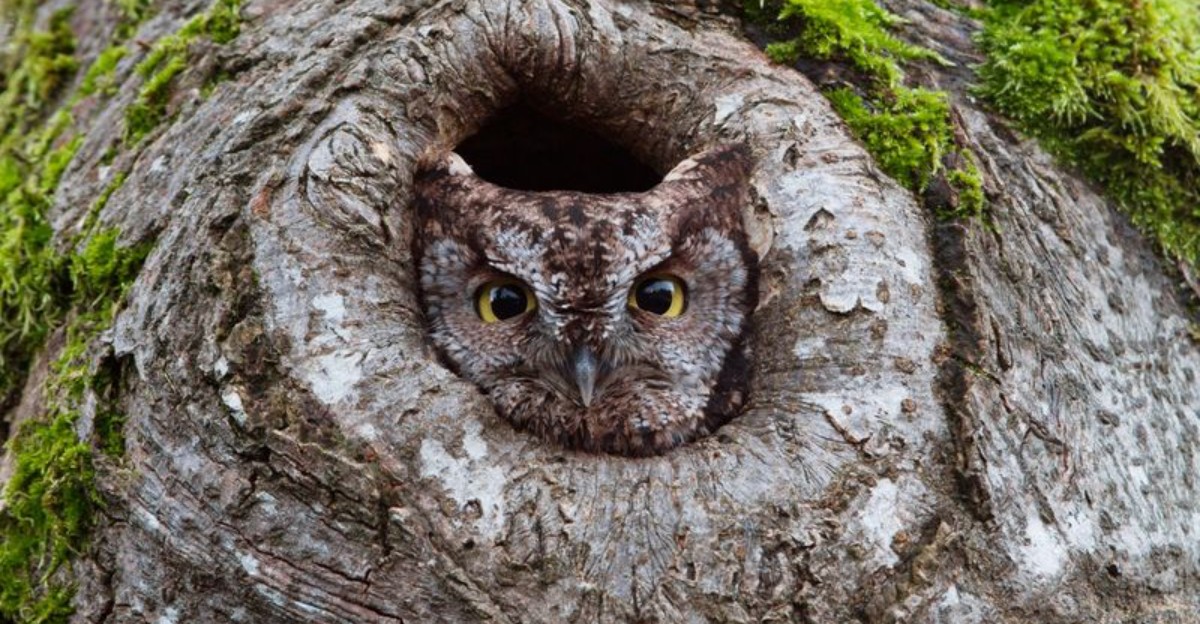
A wild owl the size of a soda can might be napping in your backyard right now. On bright winter afternoons, it sometimes pokes its whole face out of a wooden box and just sits there, eyes half closed.
I nearly spilled my coffee the first time I saw one. Its feathers looked exactly like gray tree bark, and it never moved a single tuft. Folks across Ohio report this same quiet doorway pose every year from December through February.
You would expect a night hunter to stay tucked deep inside. Yet this little bird seems to enjoy an audience, or at least it tolerates one. Some days it shows up gray, and some days it shows up rusty red.
Ever wonder what it’s actually doing up there in the cold sunshine? The answer is smarter, and a lot cozier, than I first guessed.
1. That Little Gray Face in the Box Hole Has a Plan
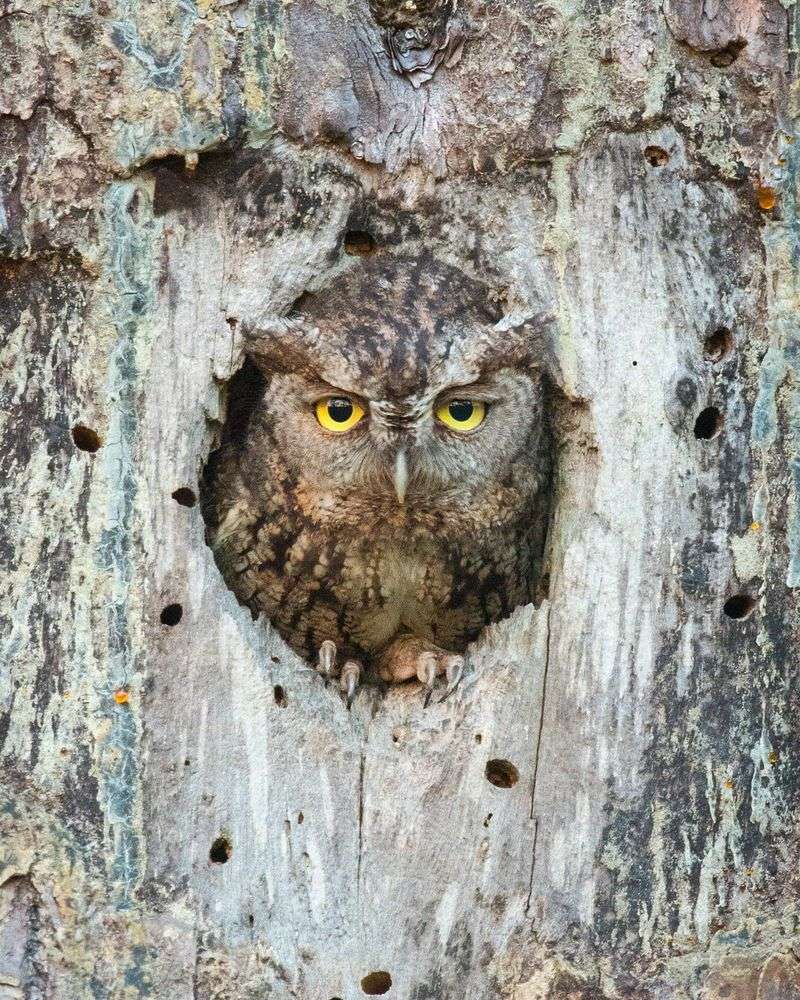
Most backyard birders in Ohio spot their first screech owl exactly like this, as a fuzzy face filling a box hole on a quiet January afternoon. It looks like the bird is posing for you.
In truth, it is going about its normal daytime routine.
Eastern Screech-Owls are cavity roosters. They do not build nests or sleep out on open branches like many birds.
Instead, they spend daylight hours inside old woodpecker holes, hollow trees, or wooden boxes that people put up.
The entrance hole is the one spot where the owl gets air, light, and a view without fully leaving its shelter. Biologists and bird watchers have noted for decades that roosting screech owls often sit in the opening on mild or sunny days.
On stormy or bitter days, they usually stay hidden deeper inside.
So the doorway pose is not random, and it rarely means trouble. The owl is choosing between comfort and safety, minute by minute.
Sunshine, temperature, and nearby activity all seem to shape how far it leans out.
Once you know this, every peek becomes a little weather report from a very small, very serious neighbor.
2. Winter Sunshine Works Like a Free Heater for a Screech Owl
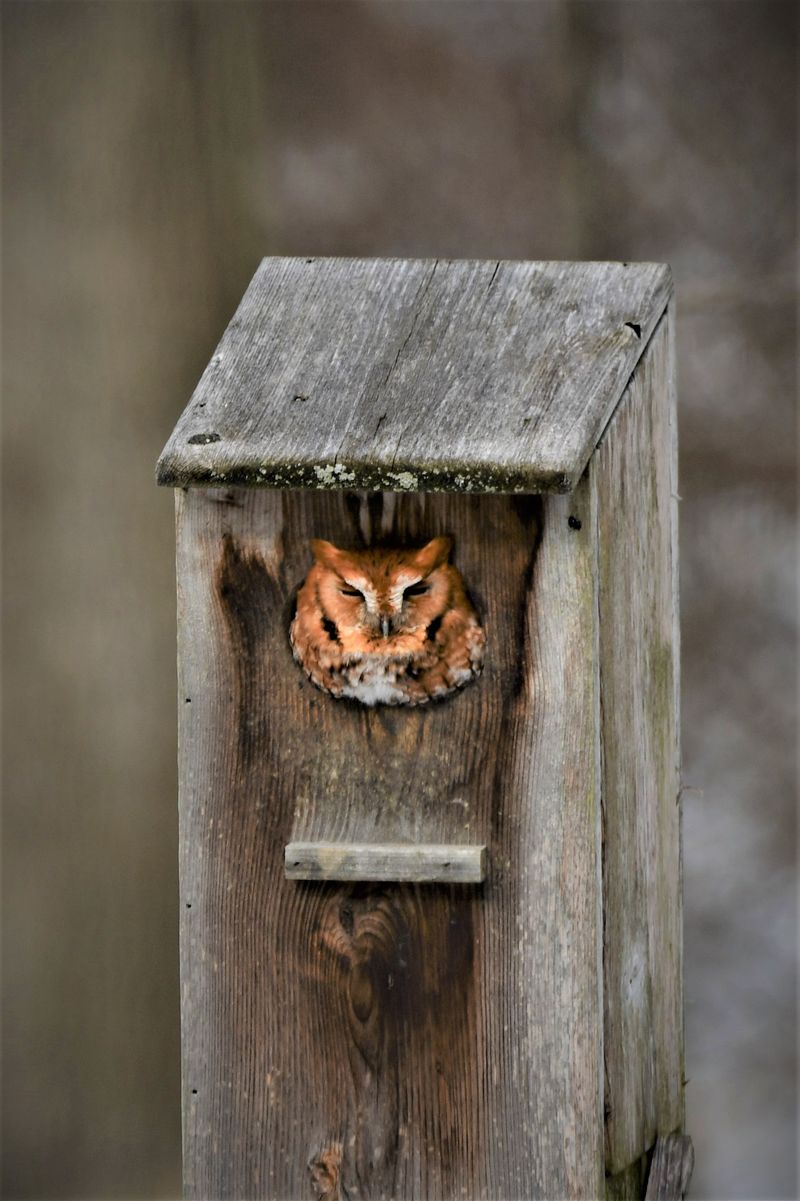
Sunbathing is the strongest explanation for that doorway habit. A screech owl weighs only about six ounces, roughly the same as a deck of cards plus a few coins.
Small bodies lose heat fast, especially on frosty Ohio days.
When the owl sits in a sunny opening, its dark-patterned feathers soak up warmth. That outside heat means the bird burns a bit less of its own fuel to stay warm.
Over a long winter, those saved calories really add up.
Food can be harder to catch when snow covers the ground and insects are gone. Every bit of energy the owl does not waste shivering is energy it keeps for the night hunt.
That is a smart trade for a predator living on a tight budget.
You will often notice the owl’s eyes nearly shut while it basks. It is relaxed, but not fully asleep.
Many birds, from hawks to songbirds, use sunlight the same way on chilly mornings.
Personally, I love checking my box on the first clear day after a cold snap. That is when the little owl seems most eager to catch some rays.
3. Bark-Patterned Feathers Let the Owl Hide in Plain Sight
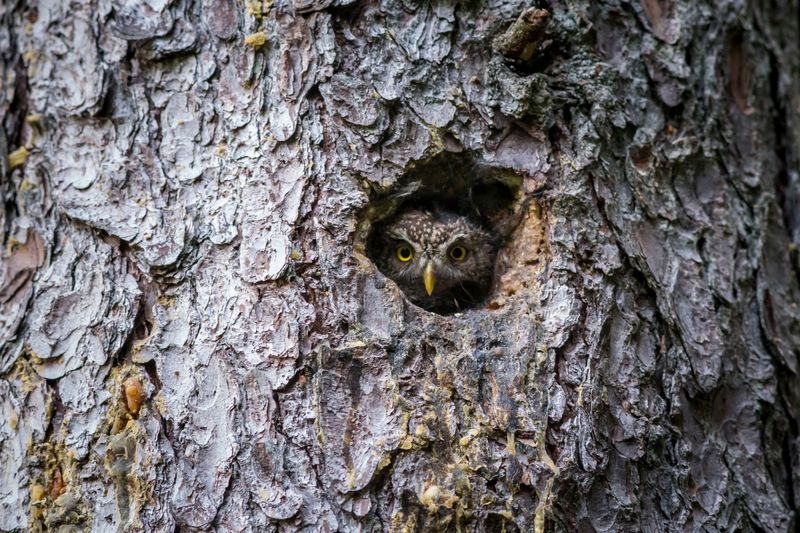
Sitting in an open doorway sounds risky for a bite-sized owl. Hawks, crows, and blue jays are all active during the day.
Still, the screech owl has a clever trick on its side.
Its feathers are streaked and speckled to match tree bark almost perfectly. Gray birds blend with oak and maple trunks, while reddish birds melt into rusty leaves and wood.
When nervous, the owl stretches tall, raises its ear tufts, and squints its eyes into slits.
That pose turns a living bird into what looks like a broken stub of wood. I have stared right at one for a full minute before my brain finally saw the beak.
Many people walk past box owls daily without noticing them.
From the doorway, the owl can also watch for danger. If a hawk lands nearby or a dog runs too close, it simply slides back inside.
Songbirds sometimes spot it anyway and gather to scold it loudly, a behavior called mobbing.
Listen for a noisy crowd of chickadees and titmice around a tree. That racket is often your best clue an owl is sitting quietly in plain view.
4. Dusk Brings the Owl From Doorway Perch to Hunting Flight
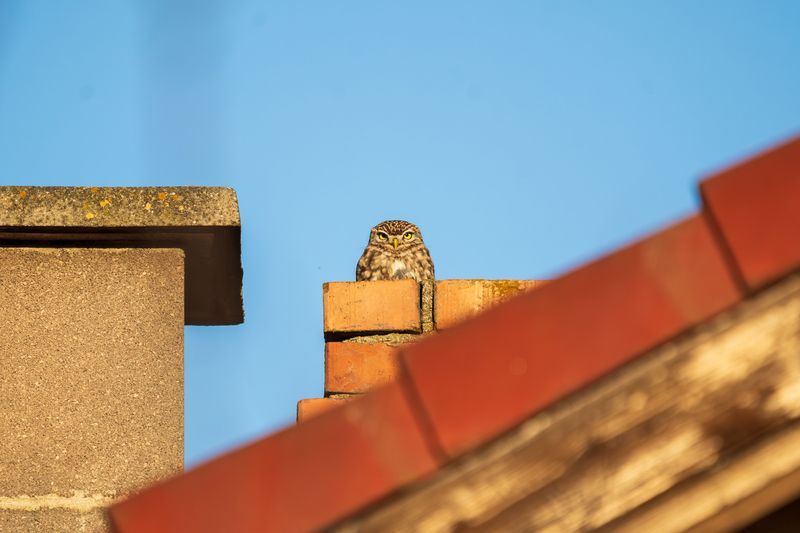
Late afternoon is prime time for doorway viewing. As the light fades, the owl often shifts from a sleepy slouch to an alert, wide-eyed stare.
You can almost watch it wake up.
Screech owls are mostly nocturnal hunters. They usually leave their roosts shortly after sunset to search for food.
Sitting in the opening beforehand lets the bird adjust to the light, stretch, preen, and check the neighborhood.
Watch closely and you might see it turn its head nearly backward, bob up and down, or fluff its feathers. Head bobbing helps owls judge distance, since their eyes are fixed in place.
It is a little like a pitcher warming up before a game.
Then, without a sound, it simply drops out and glides away on soft-edged wings. Those special feather edges muffle noise, so prey rarely hears it coming.
Winter meals often include mice, voles, and small birds.
If you want to see this moment, settle in about 20 minutes before sunset. Keep still, keep quiet, and skip the bright flashlight.
Your patience may earn you a front-row seat to the evening takeoff.
5. Gray or Red, Ohio Screech Owls Stay Put All Winter
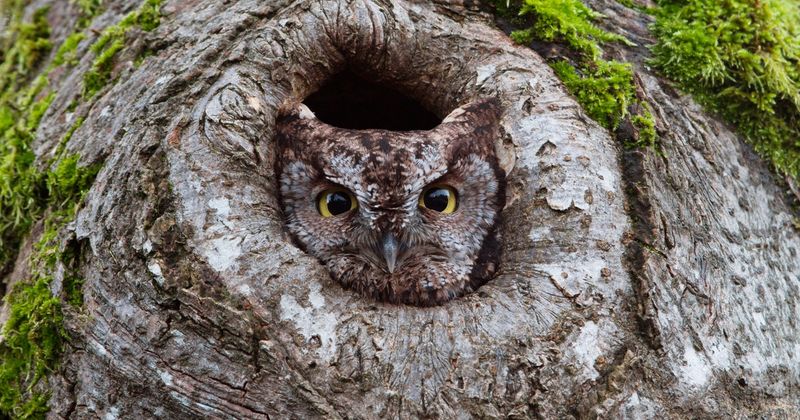
Plenty of birds head south when Ohio gets cold, but this owl sticks around. Eastern Screech-Owls are year-round residents across the state, from city parks to farm woodlots.
The Ohio Division of Wildlife lists them among the most common owls in the state.
They come in two main color forms. Gray birds are more common in much of the range, while red, or rufous, birds also show up often in Ohio.
Both are the same species, much like people with brown or blond hair.
Some studies suggest gray birds may handle severe cold a little better. That idea is still being studied, so treat it as an interesting possibility rather than settled science.
Either way, both colors use sunny doorways the same way.
Staying put means one owl may use the same box for many seasons. Pairs often begin courting in late winter, and you may hear their soft whinny and long trill calls.
Nesting usually starts in March or April.
Did you know? Despite the name, these owls rarely screech.
Their real song sounds more like a tiny horse or a gentle, wobbly whistle in the dark.
6. Give Your Box Owl Space and a Respectful Distance
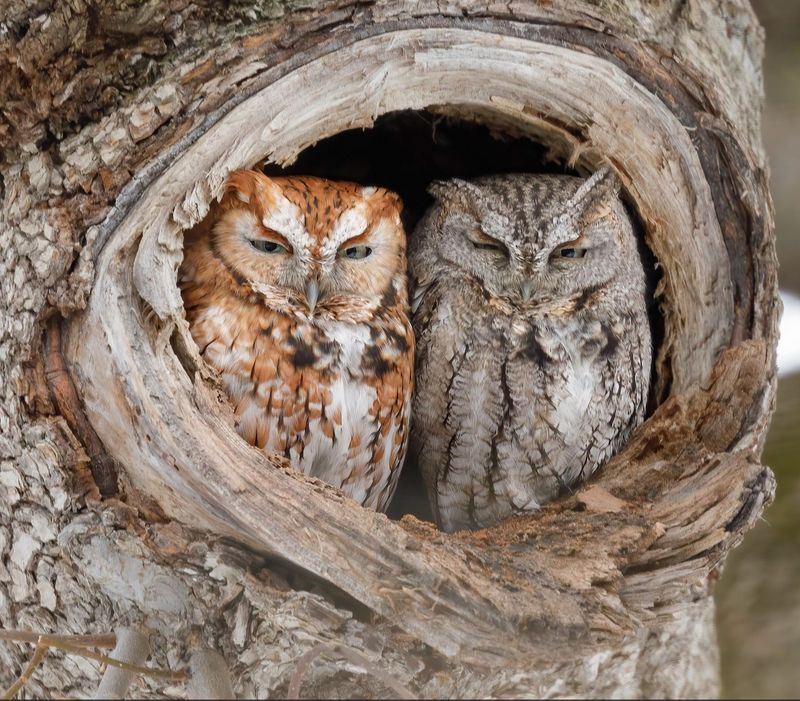
Spotting a resident owl feels like winning a small prize. The temptation to walk right up for a photo is real.
Please resist it, because stress costs this tiny bird precious energy.
Watch from a window or from at least 30 to 50 feet away. Binoculars or a zoom lens give you great views without crowding the box.
If the owl stretches tall and squints at you, it is uneasy, so back off.
Do not tap the box, open it in winter, or shine lights into the hole at night. Avoid playing recorded owl calls over and over, since it can pull the bird away from rest or hunting.
Keep pets indoors around dusk when the owl heads out.
Owls are protected under the federal Migratory Bird Treaty Act. That means you cannot capture, handle, or keep one, even if it seems friendly.
If you find an injured owl, contact a licensed wildlife rehabilitator in Ohio.
I keep a little notebook by the window, jotting dates and weather when my owl shows up. After a few weeks, you start to notice patterns that feel personal and surprisingly fun.
7. A Well-Placed Screech Owl Box Can Bring This Show Home
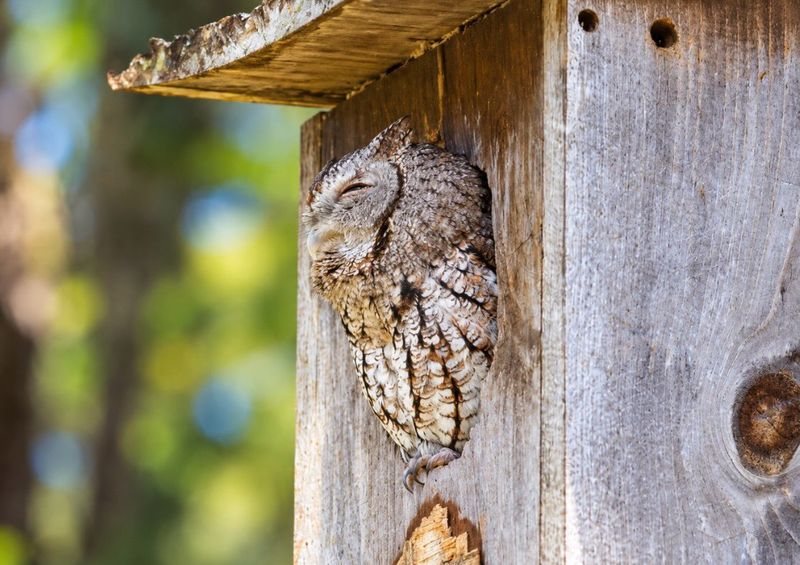
Want your own doorway owl next winter? A simple wooden box can do the trick.
Screech owls readily move into human-made boxes, especially where old hollow trees are scarce.
Choose a box with an inside floor about 8 by 8 inches and an entrance hole close to 3 inches wide. Mount it 10 to 30 feet high on a sturdy tree trunk near woods, a creek, or a leafy yard.
Facing the hole toward the south or east helps it catch sun.
Add 2 to 3 inches of wood shavings to the bottom, since owls do not bring nesting material. Skip sawdust and cedar.
A metal predator guard on the trunk helps keep raccoons and snakes away.
Fall is a great time to hang a box, giving owls months to discover it before spring nesting. Clean out old material in late summer or early fall, after any young have left.
Some boxes sit empty for a season, so be patient.
Native trees, leaf litter, and a few brush piles also help by supporting the mice and insects owls eat. Build a healthy yard, and the owl may decide your box is worth calling home.