Why Ants Cover Missouri Peonies And What It Actually Means For The Plant
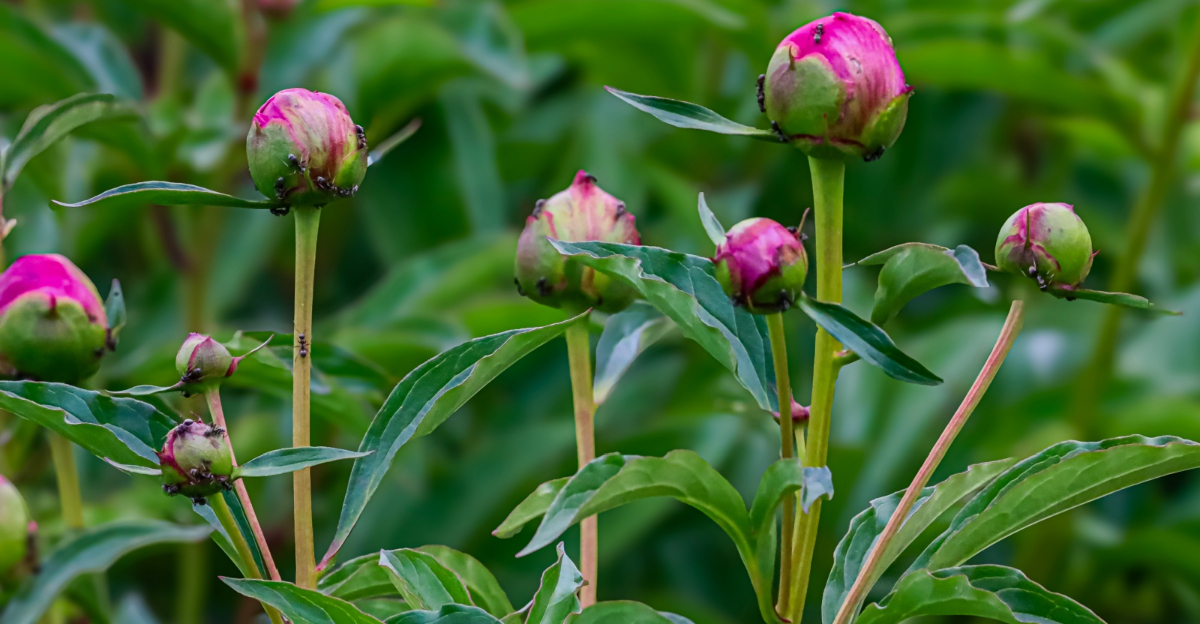
Every May in Missouri, someone walks out to check on their peonies. They stop cold. The buds are covered in ants. Dozens crawl over every surface.
It looks unusual at first glance. Questions start forming. Questions start racing. Did a fungus take hold overnight?
Is some invasive pest affecting the blooms before they even open? Here’s the part nobody tells new gardeners. Those ants aren’t harming anything. They’re not even mildly interested in the plant’s wellbeing.
What looks like a serious problem is actually a long-standing, harmless partnership in the garden world. It happens on schedule every single year across Missouri backyards.
Once you know what those ants are really doing on the buds, and why peonies practically depend on this ritual, you’ll never worry at the sight again. You’ll start watching for it instead.
Buds Ooze Sugary Nectar Before Blooming
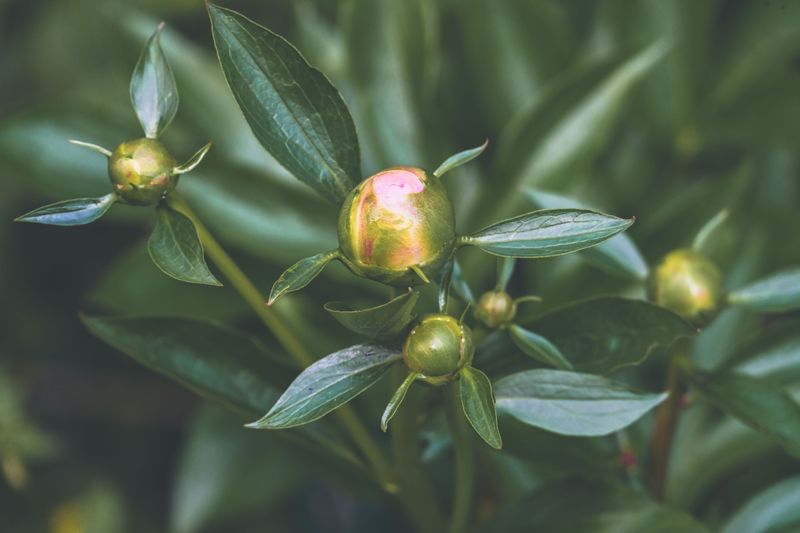
Peony buds are basically nature’s candy dispensers. Before a single petal opens, the bud starts leaking a sweet, sticky substance that smells faintly of sugar and flowers.
This sugary liquid is called nectar, and peonies produce it in surprising amounts. The plant pushes this sweet stuff out through tiny pores right on the outside of the bud.
Gardeners often assume the stickiness means something is wrong. Actually, it means the plant is working exactly as designed.
The nectar production starts weeks before blooming and ramps up as the bud swells. You can sometimes see the droplets catch the morning light like tiny jewels.
Touching the bud yourself proves the point fast. Your finger comes away sticky and faintly sweet-smelling, the same way it would if you touched a piece of hard candy.
This nectar serves a biological purpose that goes back thousands of years. Plants evolved this trick long before humans started growing peonies in Missouri backyards.
The sugar concentration is rich enough to make the bud a preferred food source. Ants pick up the scent trail and follow it straight to the source.
Knowing about ants covering Missouri peonies starts right here, with understanding what the bud produces.
Extrafloral Nectaries Sit Right On The Bud Surface
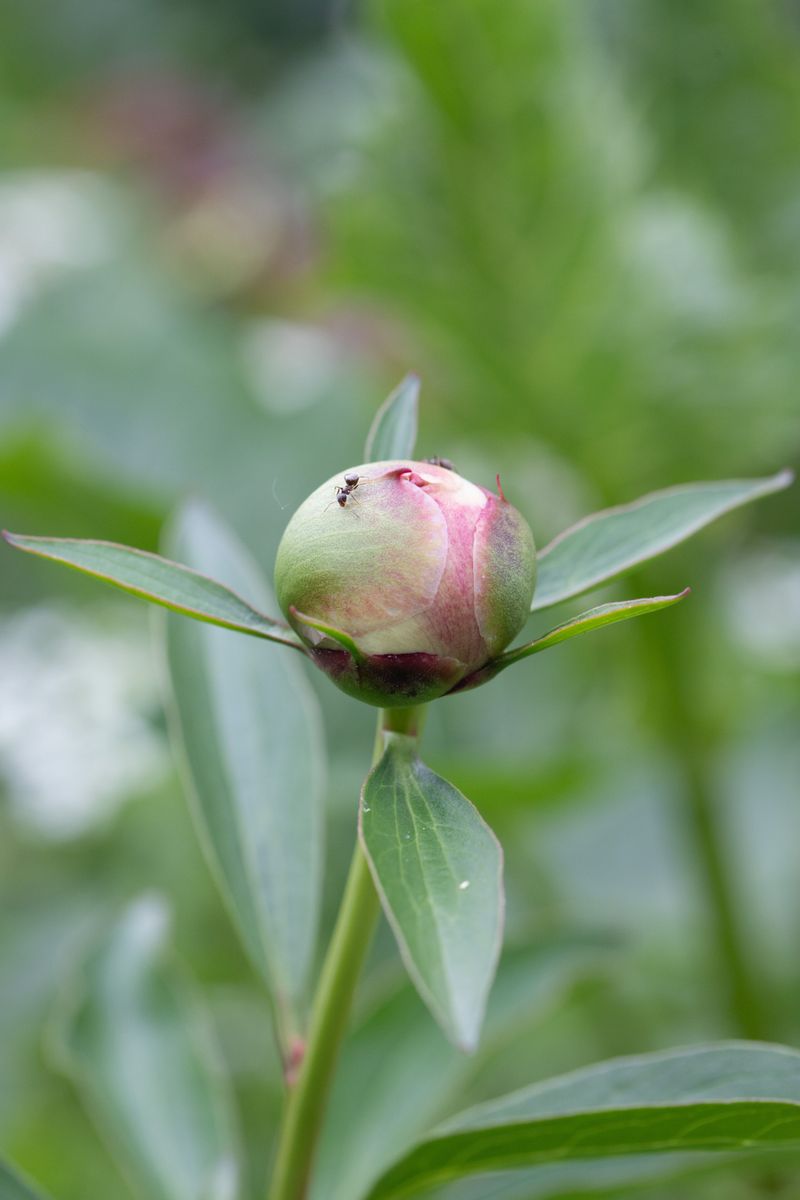
Most flowers hide their nectar deep inside the bloom. Peonies break that rule completely. Peonies have special structures called extrafloral nectaries, which sit on the outside of the bud.
The word extrafloral literally means outside the flower. These tiny glands look like miniature pores or bumps on the bud surface.
They secrete nectar constantly during the bud stage, making the whole exterior feel tacky to the touch.
Botanists have studied extrafloral nectaries across hundreds of plant species worldwide. Peonies are one of the most well-known examples in home garden settings.
The placement is strategic from an evolutionary standpoint. Putting nectar on the outside of the bud attracts insects before the flower even opens.
This matters because open flowers need pollinators inside them. But closed buds need protection from insects that chew through petals.
By offering nectar on the outside, the peony attracts sugar-eating insects that tend to linger nearby, which can incidentally deter other pests.
Your Missouri Garden Changes Every Week. Your Plan Should Too.
Gardening in Missouri changes quickly throughout the season. Every Friday you’ll receive a simple weekly plan showing exactly what to plant, prune, fertilize, harvest, and protect so you never miss the right timing.
Many gardeners have never heard the term extrafloral nectary before. Once you know it exists, you start noticing it on other plants in your yard too.
Understanding ants covering Missouri peonies means understanding these glands first. They are the source of everything that follows in this fascinating plant-insect relationship.
Sweet Secretions Signal An Easy Food Source
Ants are always hunting. Every scout ant that leaves the colony is looking for one thing: food worth reporting back about.
When a scout finds something sugary, it lays down a chemical trail called a pheromone path. Other ants follow that invisible road straight to the source.
Peony nectar is exactly the kind of high-reward find that triggers this response. The sugar concentration is rich enough to make the bud a top-priority target.
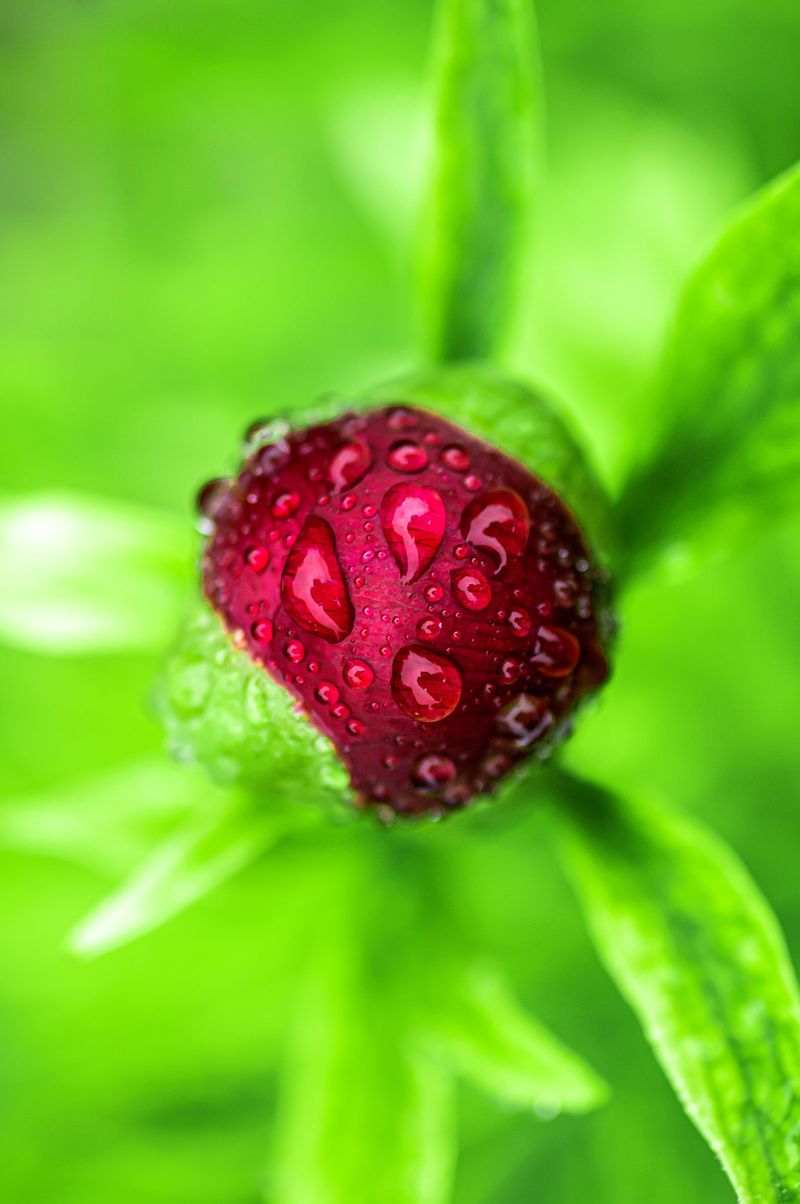
Within hours of a scout discovering a peony bud, dozens of workers can arrive. Within a day, the bud can look completely covered in a black or reddish carpet of ants.
From a distance, this looks chaotic. Up close, each ant is methodically licking nectar from the bud surface and carrying energy back to the colony.
The plant is not harmed during this process at all. The nectar is produced specifically to be consumed, the same way a fruit tree produces fruit to be eaten and spread.
Ants covering Missouri peonies every spring is not a random event. It is a predictable, repeatable response to a consistent food signal the plant sends out on purpose.
Some gardeners try to wash ants off before cutting flowers for a vase. That is fine for indoor use, but outside in the garden, there is no reason to intervene.
The plant is feeding the ants intentionally, and the ants are responding exactly as nature intended them to.
Ants Detect Sugar Scent From A Distance
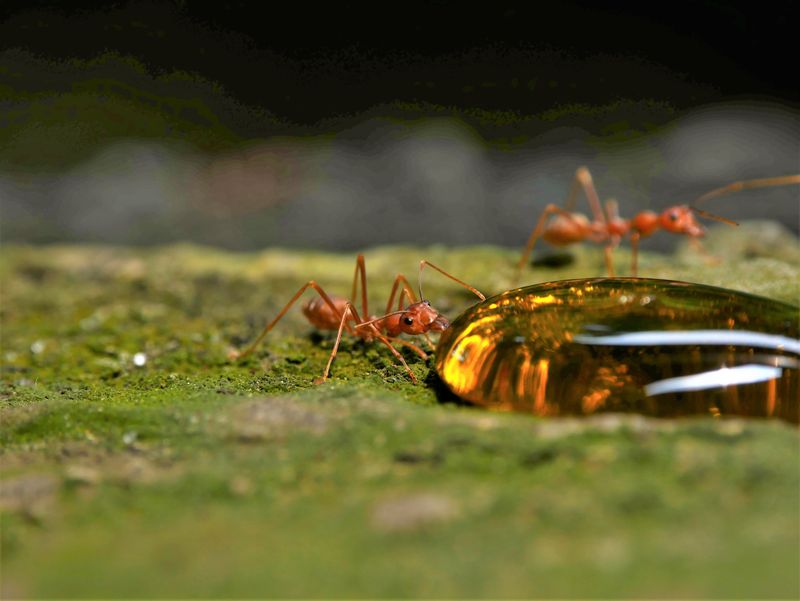
An ant’s sense of smell is one of the most powerful in the insect world. Ants are known to have an unusually high number of odor receptors compared to many other insects.
Those receptors can detect sugar compounds from several feet away in the right conditions. A peony bud in full nectar production is basically broadcasting a dinner invitation.
The chemical signal travels on air currents and along the ground. Scout ants moving through the garden pick it up and shift direction almost immediately.
This is why you often see ants approaching a peony from a surprising angle. They are not wandering randomly; they are following a scent gradient toward the strongest point.
Once the first ant reaches the bud and confirms the food source, the pheromone trail goes down fast. The communication system ants use is remarkably efficient for creatures with no verbal language.
Missouri gardens in spring offer ants many competing food sources. Peony buds stand out because the nectar is accessible, concentrated, and predictably located year after year.
Ants learn the layout of a garden over a season. Colonies near established peony beds often head straight to the buds with very little scouting time needed.
Watching an ant trail form on a peony reveals a lot once you understand what is happening. Each ant is a tiny data point in a living navigation system.
The plant sends the signal, the ants answer the call, and ants covering Missouri peonies becomes one of spring’s most reliable garden rituals.
Nothing Harmful Happens To The Peony Itself
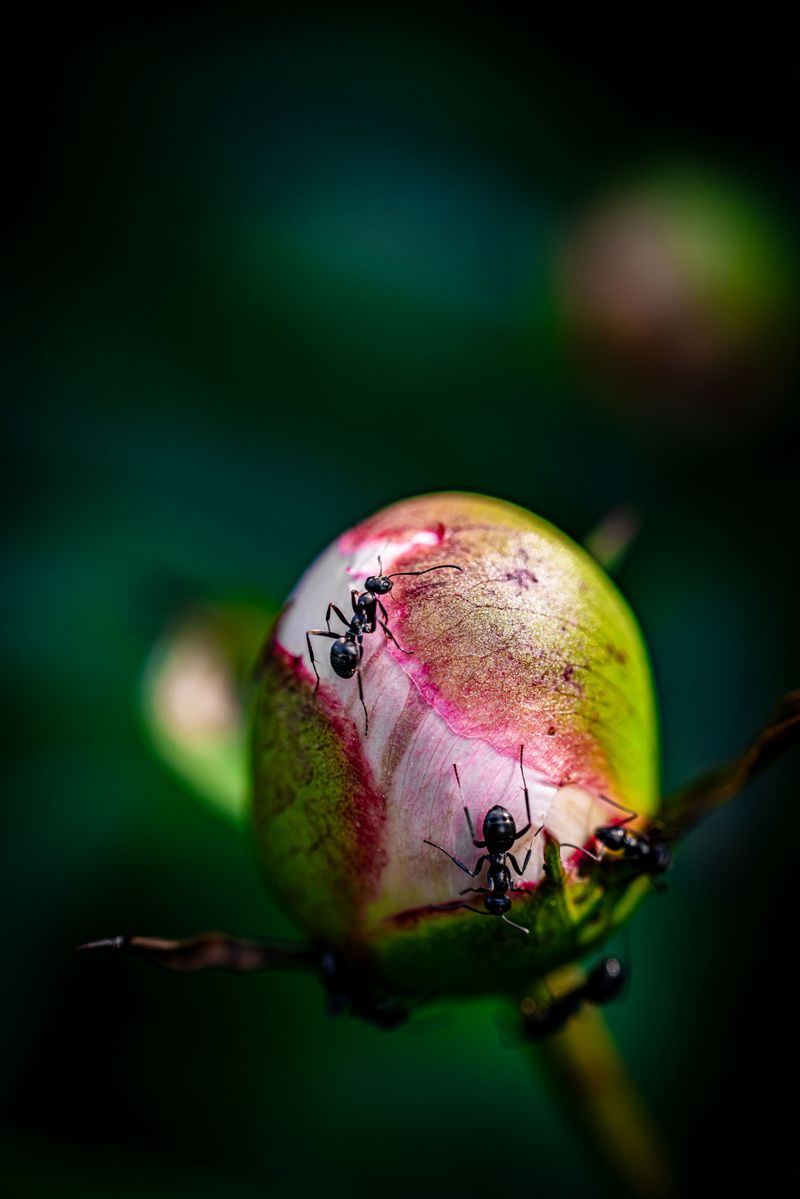
Here is the part that surprises most gardeners: the ants do not hurt the peony at all. Not even a little.
Ants are not chewing the petals, tunneling into the stem, or damaging the roots. They are licking nectar off a surface the plant produced specifically to be licked.
Think of it like a dog eating from a bowl you set out. The bowl is not being destroyed; it is fulfilling its purpose.
Peony growers in Missouri have documented this for generations. Plants that host large ant populations every spring bloom just as fully as plants that host none.
There is no evidence that ant activity delays blooming, reduces flower size, or weakens the plant over time. The nectar the plant spends is a small metabolic cost with potential benefits.
Some gardeners worry that ants introduce disease or spread fungal spores. Research does not support this concern in any significant way for healthy, well-maintained peony plants.
The bud continues developing on its own schedule regardless of ant traffic. Petals push outward, sepals fold back, and the bloom opens in its own time.
If you removed every ant from your peony bed, the flowers would still open. If you let every ant stay, the flowers would still open just as beautifully.
Ants covering Missouri peonies is a neutral event for the plant itself. The peony simply keeps doing what peonies do, unbothered and spectacular.
Ants May Guard Buds Against Harmful Pests
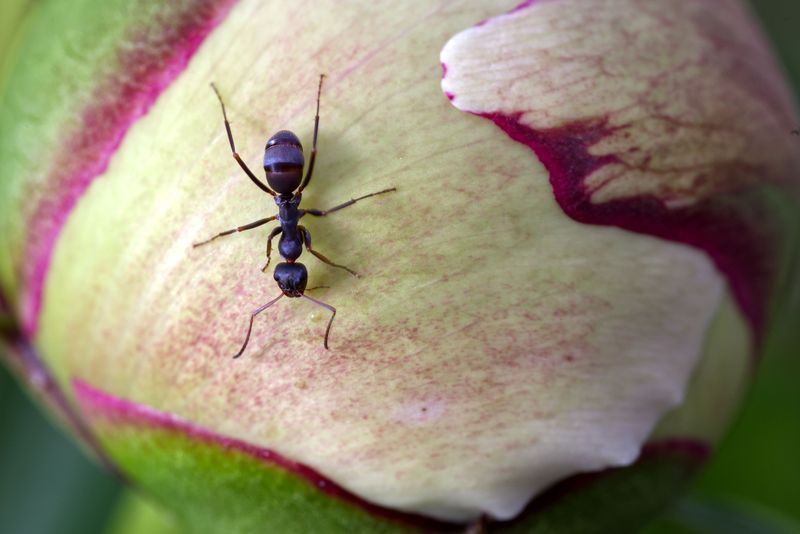
Here is where the relationship becomes more complex. Ants are not just passive nectar collectors; they can be surprisingly aggressive defenders of their food source.
When an ant colony claims a peony bud as a feeding station, they tend to patrol it. Other insects that approach get confronted, bitten, or chased off.
Thrips, aphids, and certain caterpillars sometimes target peony buds. Ants have been observed physically removing or discouraging these pests from bud surfaces.
This behavior is not altruistic; the ants are protecting their food supply. But the peony benefits as a side effect, which is a beautiful example of how nature often works.
Not every ant species behaves this way equally. Some are more aggressive defenders than others, depending on the colony size and the specific pest encountered.
Missouri gardens host several ant species that are known to patrol plants actively. Species such as black garden ants and pavement ants are commonly cited as showing this guarding behavior around food-rich plants.
Researchers have studied similar ant-plant relationships in tropical ecosystems for decades. The dynamic in your Missouri peony bed is a backyard version of those complex partnerships.
You do not need to manage this process at all. The ants handle it on their own terms, without any input from the gardener.
Thinking of ants as a natural pest deterrent shifts the whole picture. Those crawling clusters on your peonies might actually be doing your garden a quiet favor.
Blooming Proceeds Normally With Or Without Ants
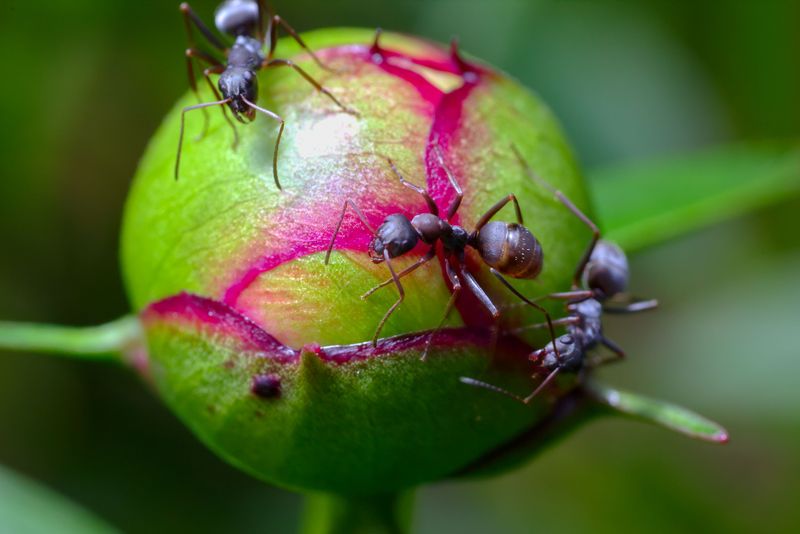
One of the most stubborn gardening myths is that peonies need ants to open. It sounds poetic, but it is simply not true.
Peony buds open through internal pressure, cell expansion, and the plant’s own growth hormones. No ant intervention is required at any stage of that process.
The myth likely started because ants and blooming always happen at the same time. Humans naturally assume that two things happening together must be connected as cause and effect.
But correlation is not causation, as any science teacher would say. The ants arrive for the nectar, and the bloom opens for its own biological reasons.
Observations of buds where ants were excluded suggest they open on a similar timeline to buds with ant activity, supporting the idea that ants aren’t required for blooming.
Missouri peony growers who bring cut stems indoors before ants arrive still get gorgeous blooms in their vases. The flower does not stall without its tiny visitors.
That said, ants covering Missouri peonies is so consistent that the two feel inseparable in the garden. Every spring, they show up together like old friends who always arrive at the same party.
Knowing the bloom does not depend on ants gives gardeners freedom. You can cut buds early, cover plants, or let ants roam freely without worrying about affecting the outcome.
The peony blooms on its own schedule, beautifully and reliably, regardless of what is happening on its surface.
Relationship Counts As Commensalism, Not Harm
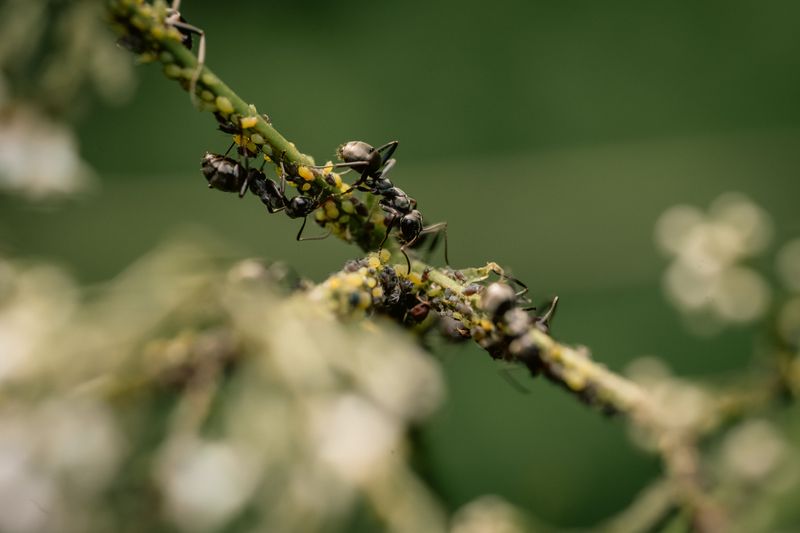
Biologists have a word for what happens between ants and peonies: commensalism. It sounds complicated, but the idea is simple.
Commensalism describes a relationship where one party benefits and the other is neither helped nor harmed. The ants get free food; the peony gets nothing and loses nothing significant.
This is different from mutualism, where both parties gain something clear. It is also different from parasitism, where one party actively hurts the other.
Peonies and ants fall neatly into the commensalism category in most scientific descriptions. Some researchers argue the relationship edges toward mutualism when ant guarding behavior is factored in.
Either way, the classification confirms what observant gardeners already suspected. The ants are guests at a table the plant set out, and the plant does not mind the company.
Understanding this label helps gardeners stop reaching for the insecticide spray. There is no pest problem to solve here; there is only a relationship to observe.
Missouri gardeners who learn about commensalism often report feeling differently about their spring garden. The ant-covered buds shift from looking like a problem to looking like a natural partnership.
Ecology is full of these quiet arrangements that go unnoticed in everyday life. Your peony bed is hosting one of them every single spring.
Ants covering Missouri peonies is not an infestation. It is a living example of how plants and insects have negotiated coexistence over millions of years.
How To Handle Ants When Cutting Peonies For Indoors
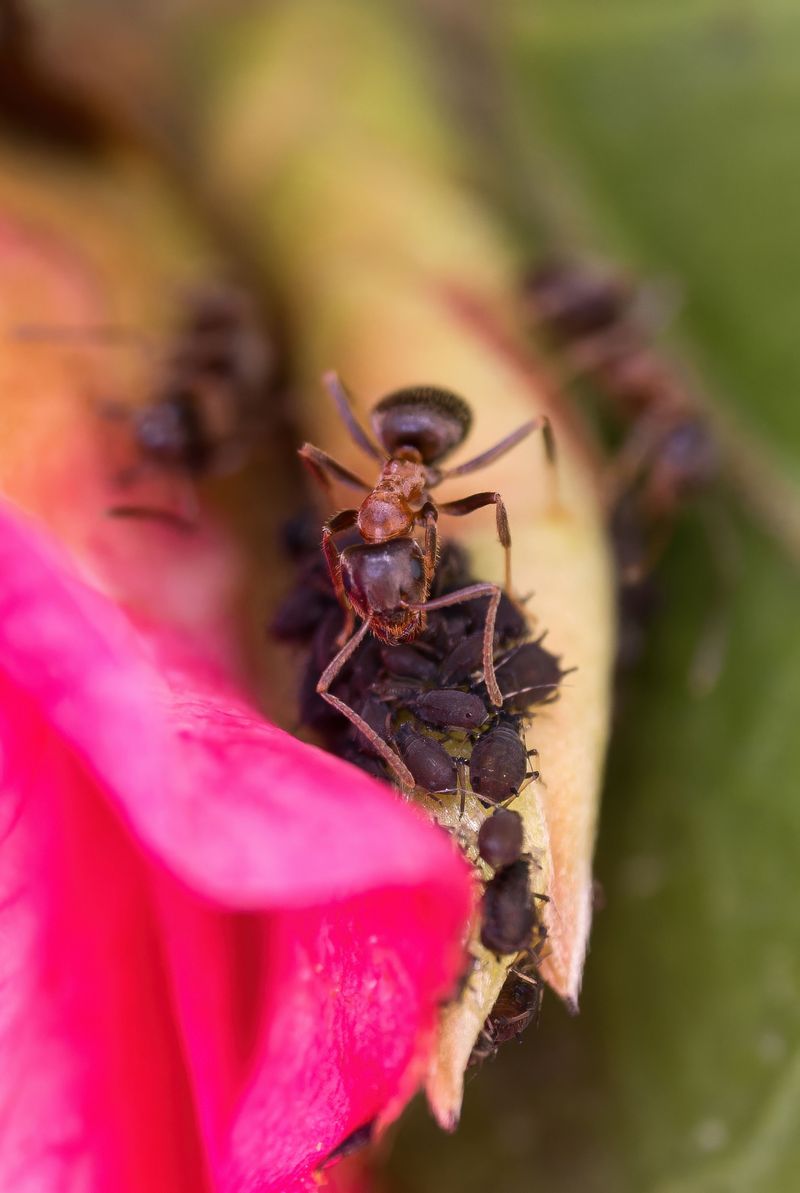
Bringing peonies inside means dealing with hitchhikers. Ants that were happily feeding on a bud outdoors do not belong crawling across your kitchen counter.
The easiest fix takes about ten seconds. Hold the cut stem over the garden and give it a firm, gentle shake before heading inside.
Most ants drop off immediately when the stem moves. A few stubborn ones might need a second shake or a light brush with your fingers.
Do not submerge the whole bud in water to remove ants. That can damage the bud and cause premature petal browning before the flower opens.
Cutting peonies in the early morning works in your favor. Ants are less active in cool temperatures, so fewer will be present on the bud at that hour.
Choose buds that feel soft and squishy like a marshmallow, not rock hard. Buds at that stage will open beautifully in a vase within one to three days.
Once inside in fresh water, the bud continues to develop without any need for ants. The bloom opens on its own, filling the room with fragrance.
Some gardeners lay cut stems on newspaper in the garage for a few minutes. Ants walk off on their own when they realize the food source is no longer active.
Managing ants on Missouri peonies at harvest time is simple. A little patience and a firm shake are all you need for beautiful, ant-free indoor blooms.