Why Arizona Homeowners Shouldn’t Staple Lights Into Tree Bark
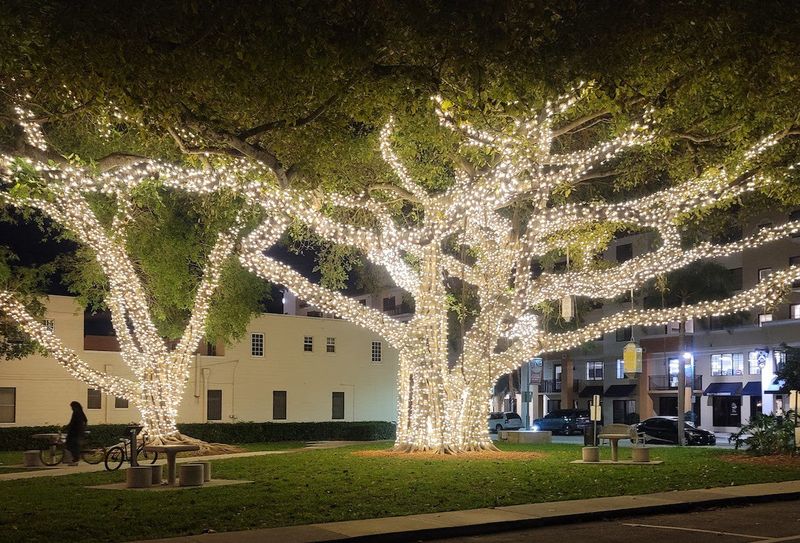
A tree’s bark works a lot like your skin. It guards the soft, living tissue underneath from bugs, fungi, and bumps.
A staple pokes right through that shield. Here is how to hang your holiday lights in a way that keeps both your tree and your cords in good shape.
A Staple Can Wound Bark, But Outcomes Vary
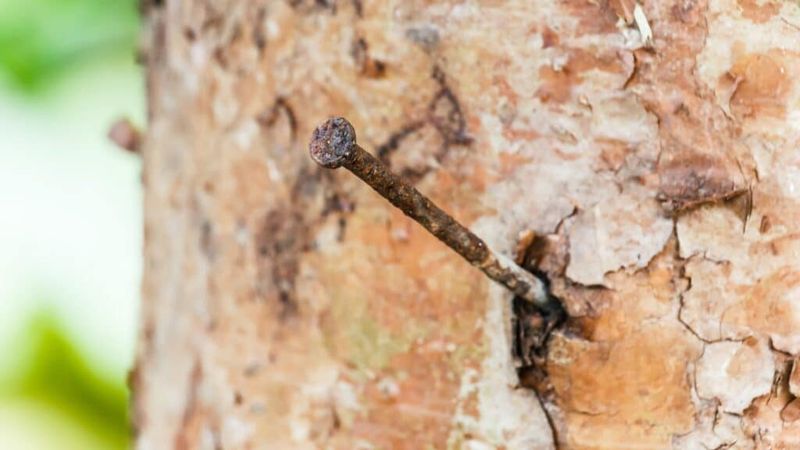
Bark is the tree’s protective outer layer. When a staple goes through it, the break can expose the living tissue underneath.
Tree-wound guidance describes bark breaks as wounds that can open a door to decay organisms such as fungi.
That makes a staple an avoidable wound, since you can hang lights without making one. Still, a small puncture is not a guarantee of trouble, and one staple will not ruin a healthy tree.
Many trees seal off damage on their own by walling it in and growing new wood around it. Extension guidance on tree wounds notes that results depend on the wound size, the species, where the wound sits, and the tree’s overall vigor.
A big, stressed tree and a small, young one may react quite differently to the same hole.
So the goal is not panic. It is simply skipping a step that adds a wound for no good reason, especially when easy alternatives cost only a few dollars.
Secure Lights With Clips Or Hooks
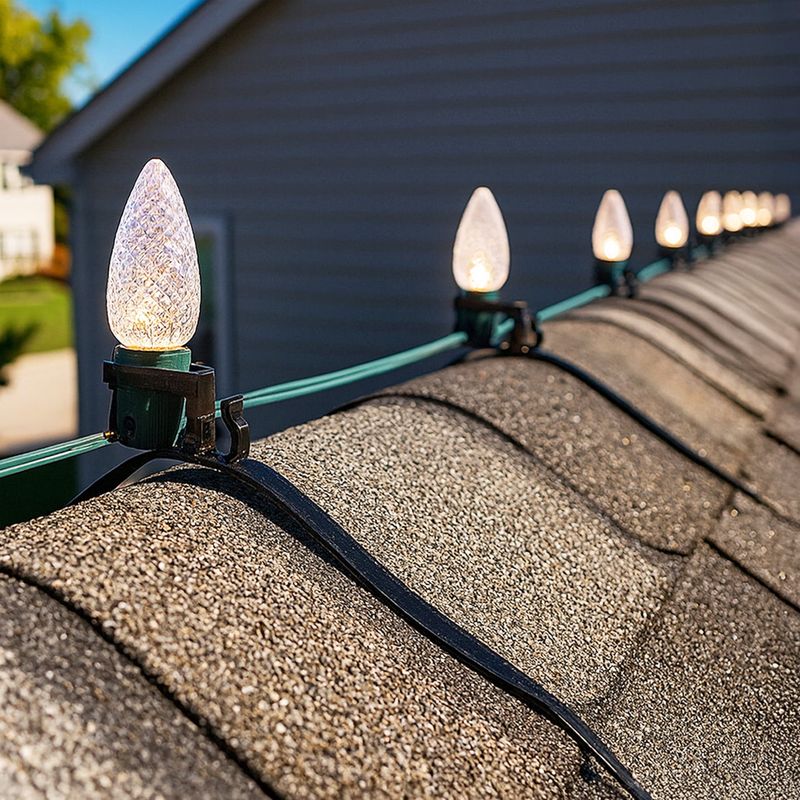
Purpose-made clips and hooks are the simplest fix. They hold a strand in place without driving anything into the trunk.
You can find versions made for gutters, shingles, and branches at most hardware stores.
Fire-safety guidance from Massachusetts suggests insulated holders or hooks outdoors and warns against pushing staples through the wiring insulation. Clips made for lights are shaped to cradle the cord, so they protect the cord as well as the tree.
For a tree, look for clips that rest over a branch or sit on a limb fork. Space them evenly so the strand does not sag or pull on one spot.
If a clip needs a tight squeeze to stay on, pick a different spot or a different clip.
Arizona arborist advice shared by Rosie on the House also steers people away from nailing or stapling lights into trees. Whatever you choose, aim for a method that holds the display securely and leaves the bark untouched.
Keep Temporary Ties Loose And Remove Them
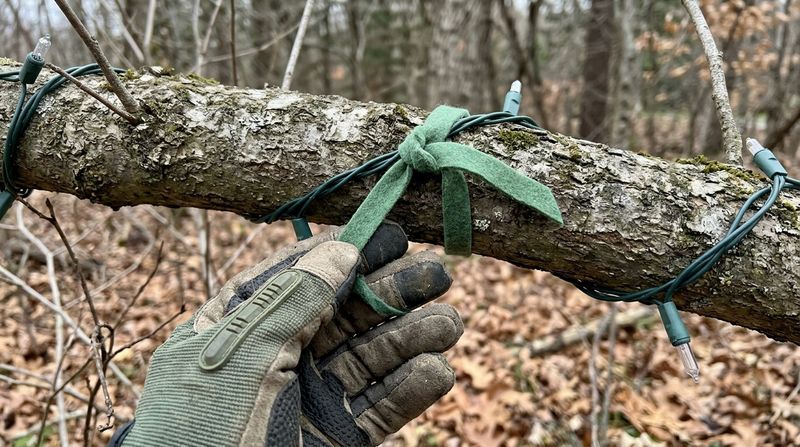
Sometimes a clip will not fit, and a loose tie can fill the gap. The key word is loose.
A tie should leave room for the branch or trunk to grow and move in the wind.
Trees keep getting wider, so a snug wrap can slowly turn into a squeeze. Tree-care guidance from University of Maryland Extension explains that wires and cords left around growing trunks can become embedded and restrict flow inside the tree.
To avoid that, leave visible slack and skip tight zip ties or wire. Check each tie once or twice while the display is up, and loosen or move any that look snug.
Then make removal part of the plan. Arizona arborist advice from Rosie on the House says to take lights down after the holidays.
A quick reminder on your calendar keeps a forgotten tie from turning into a long-term problem.
Separate Tree Wounds From Cord Hazards
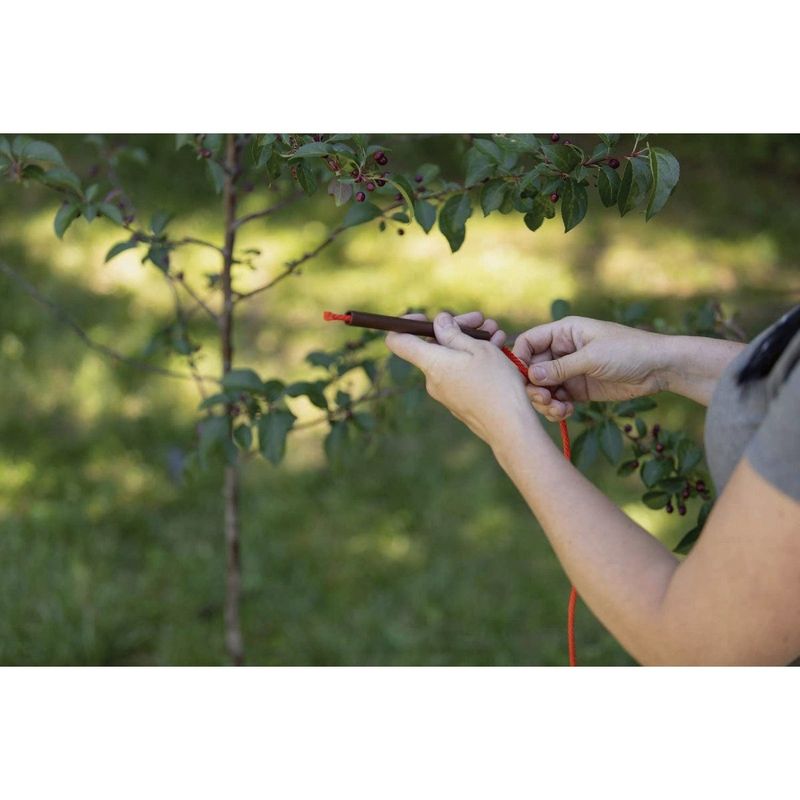
Two different problems can hide inside one staple. A staple in bark is a possible tree wound.
A staple through a cord’s insulation is an electrical hazard.
Fire-safety agencies speak only to the second one. Massachusetts warns against driving staples through wiring insulation.
Texas takes a narrower view, and its State Fire Marshal guidance allows insulated staples hammered into place under particular conditions when securing light strings.
Neither position says that piercing living bark is safe. Those rules are about wires, not about trees.
A staple that passes the electrical test can still leave a hole in the trunk.
The easy way to satisfy both concerns is to use clips or hooks and skip staples on light cords altogether. That keeps the insulation intact and the bark unbroken.
Check Outdoor Lights And Cords
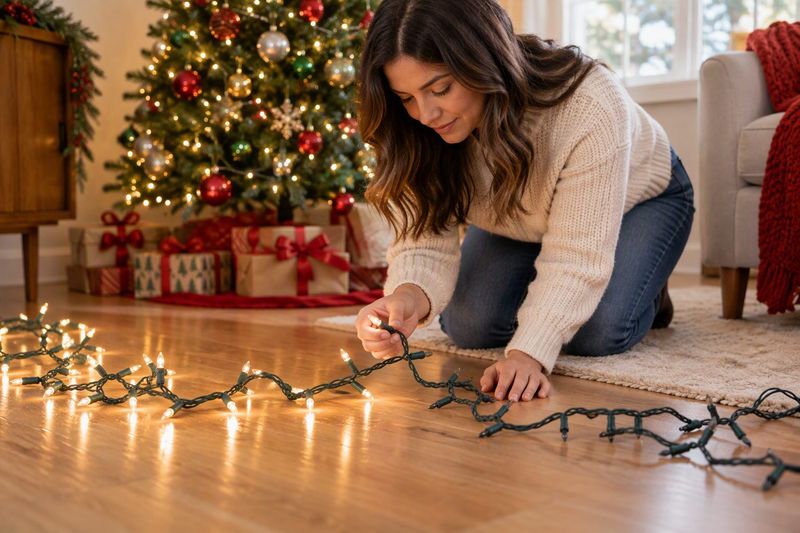
Before any strand goes up, give it a quick once-over. Use lights rated for outdoor use, since indoor-only strings are not built for rain, dust, or sun.
The package will say which setting the lights are made for.
Next, look along the whole cord for damage. The U.S.
Fire Administration recommends inspecting lights and tossing strands with frayed or pinched wires. A damaged cord should not go back into service.
Check sockets and plugs too, and look for cracked bulbs or bare spots. If anything looks off, replace the strand instead of hoping it will hold up.
Finally, follow the manufacturer’s connection limits. The label tells you how many strands can be linked end to end, and Massachusetts fire-safety guidance also points readers to those limits.
Staying under the number keeps the cord from carrying more than it should.
After Removing A Staple, Don’t Automatically Seal The Puncture

If you already stapled a few lights up, relax. A small puncture does not automatically mean severe or lasting damage.
Trees deal with nicks from weather, animals, and lawn gear all the time.
Pull the staple out gently, then resist the urge to grab a paint can. Extension guidance says wound dressings generally do not help trees seal wounds and may interfere with natural responses.
Instead, let the tree do its own work. As noted in University of Kentucky guidance, many trees wall off damage and grow new wood around it.
From there, a simple glance now and then is enough. If you ever see a large or worsening wound, a certified arborist can take a closer look.
The Same Practical Rule Applies In Arizona
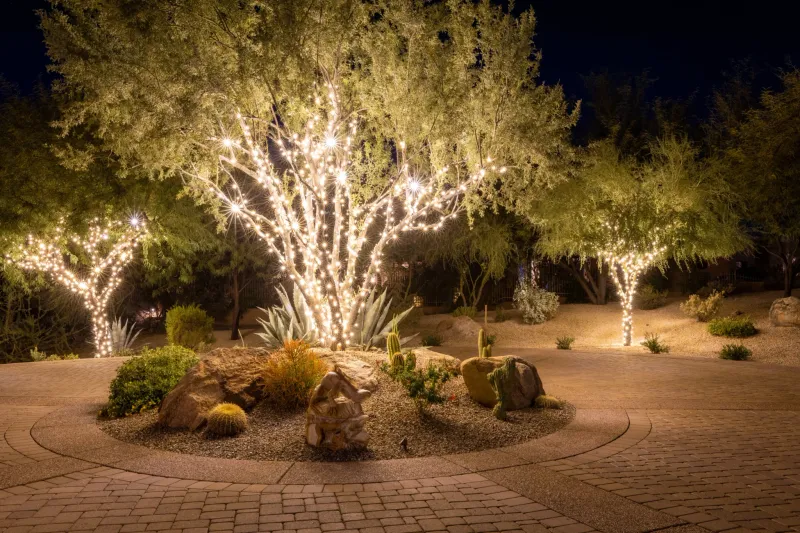
Arizona yards have their own look, with palo verdes, mesquites, and bright winter sun. The basic tree-wound ideas still travel well, though.
Bark protects the tree, and a broken bark layer is a wound anywhere.
Heat and drought can stress landscape plants, as University of Arizona Cooperative Extension explains. The sources reviewed do not show that this makes a staple puncture more harmful, or that Arizona trees need a different fastening rule.
Arizona-focused arborist advice from Rosie on the House says not to nail or staple lights into trees. That is expert guidance, not a comparison study of Arizona trees.
Since wound size, species, and vigor all matter, as the University of Kentucky guidance says, the practical choice is the same here as anywhere. Pick a method that does not pierce the bark.
Choose A Non-Piercing Fastening Method
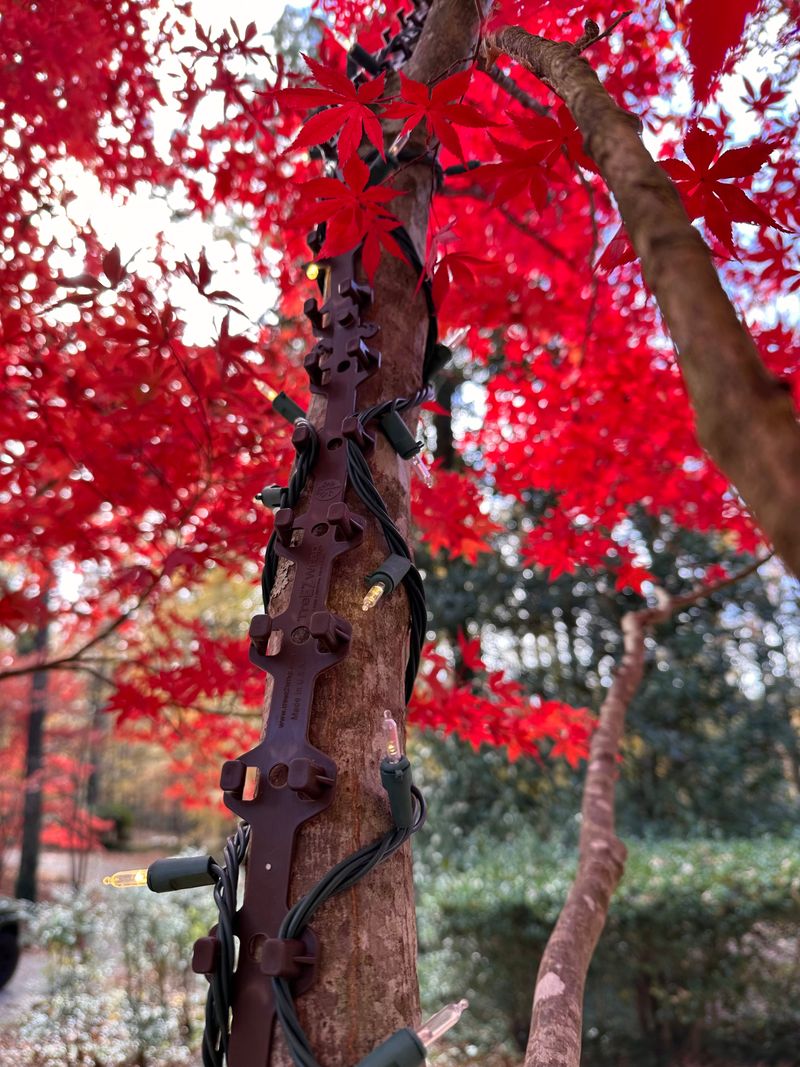
Reach for clips or hooks first, and keep any temporary tie loose, checked, and removed after the display. Give your lights and cords a look before they go up, using U.S.
Fire Administration advice as your checklist.
A few minutes of care now means a glowing tree this season and a healthy one for many more.