Why Arizona Pomegranate Trees May Drop Fruit Before It Ripens
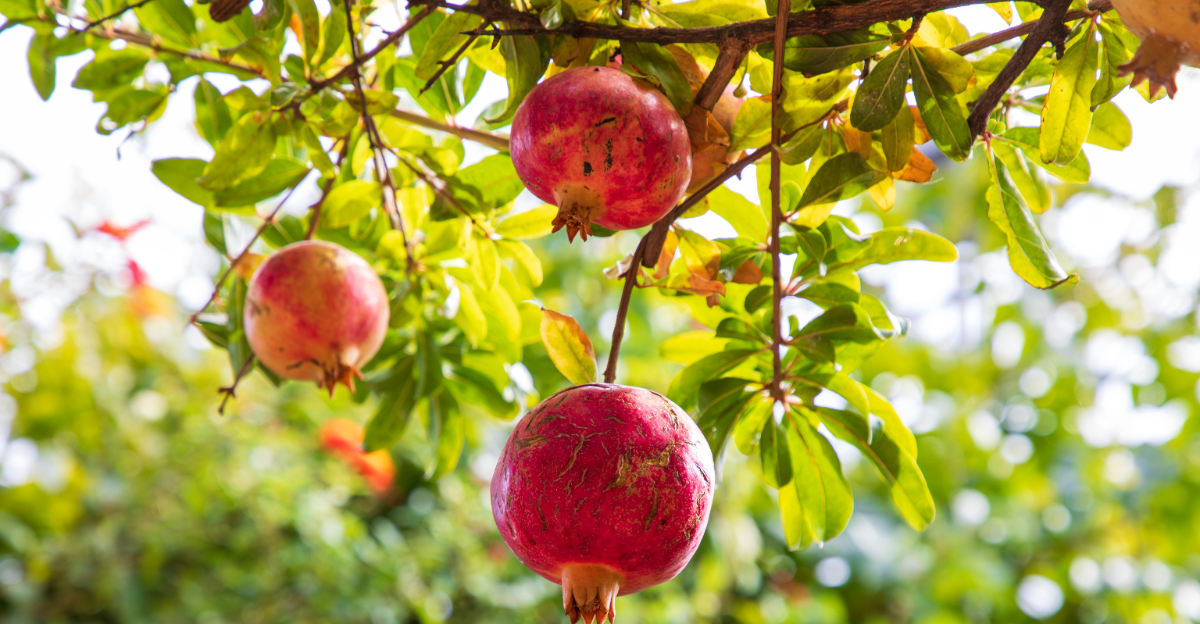
Small pomegranates can disappear long before harvest, leaving many gardeners wondering what went wrong.
Seeing fruit fall early is a common concern in Arizona during the hottest part of the growing season.
Not every dropped fruit signals a serious problem. Trees sometimes shed part of their crop to protect themselves from stress.
Heat, watering habits, and overall tree health all play a role. Several factors can affect how much fruit reaches maturity.
The timing of the drop also provides helpful clues. Early fruit loss often has a different cause than fruit falling closer to harvest.
Making the right adjustments can improve future harvests without adding extra work. Small changes often have the biggest impact.
Understanding why your tree is dropping fruit makes it easier to respond the right way. That gives more pomegranates a better chance to ripen successfully.
1. Heat Stress Can Trigger Early Fruit Drop
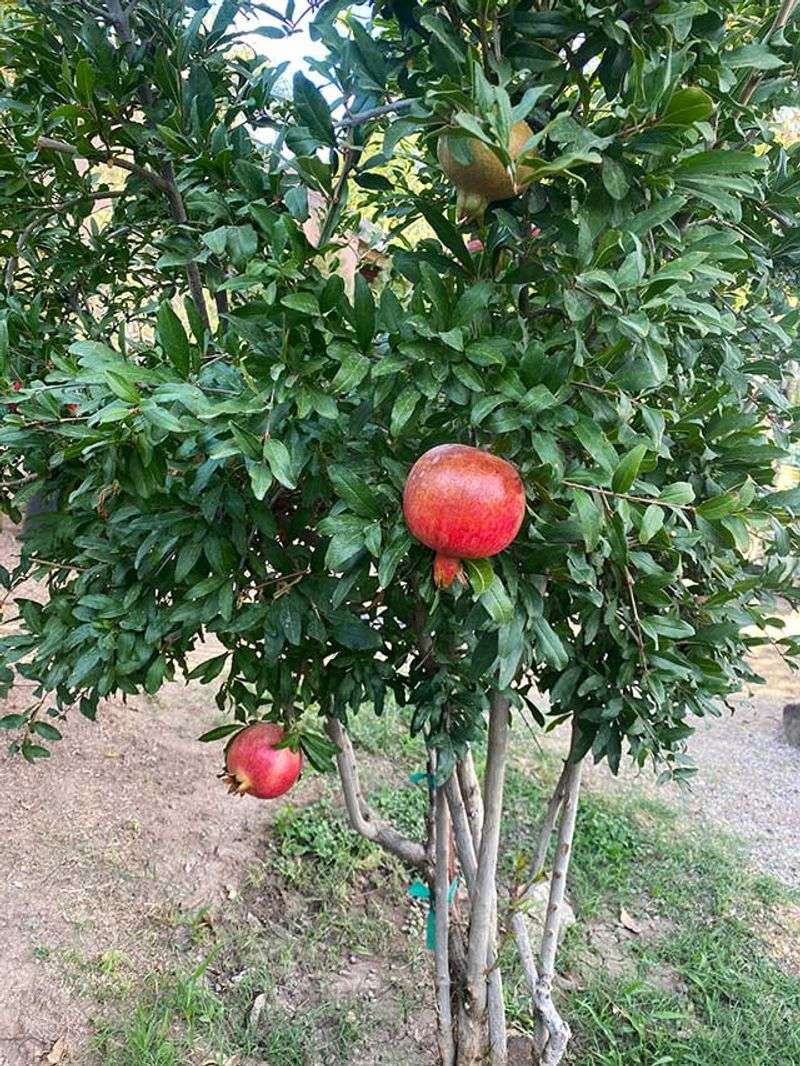
Extreme heat does not just make gardeners uncomfortable. It puts real stress on fruiting trees, and pomegranates are no exception.
Temperatures above 105 degrees Fahrenheit during critical fruit development stages can push a tree into a kind of survival mode. When that happens, the tree may shed young fruit to reduce its energy demands.
Pomegranates are tough plants, but even they have limits. In Arizona’s low desert zones, summer temperatures regularly exceed those thresholds for weeks at a time.
Fruit that formed in late spring may struggle to hold on when July and August arrive with relentless heat. The tree is not being difficult.
It is making a calculated trade-off between holding fruit and keeping itself healthy.
Providing afternoon shade using shade cloth rated at 30 to 40 percent can reduce canopy temperatures noticeably. Even a few degrees of relief during peak afternoon hours can help the tree hold more fruit.
Mulching around the base with a layer of wood chips or straw also helps. It keeps soil temperatures lower and reduces the amount of heat radiating upward toward the root zone.
Consistent care during the hottest months matters more than most people realize.
2. Inconsistent Watering Weakens Developing Fruit
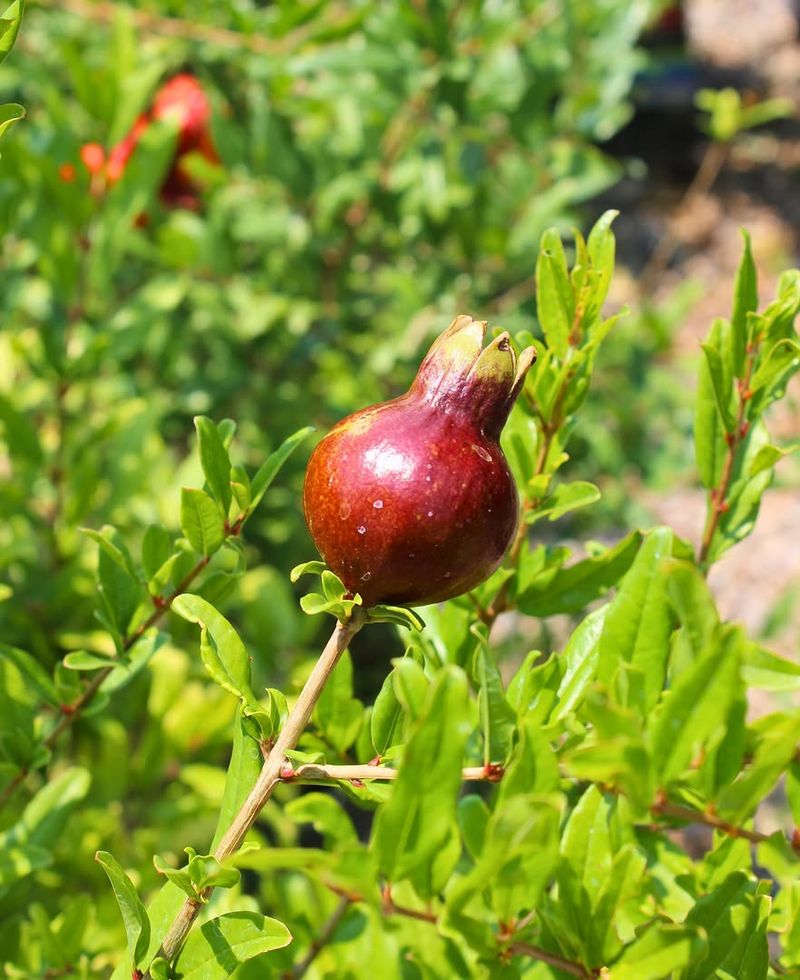
Watering schedules that swing between too much and too little can quietly wreck a pomegranate harvest before it ever gets started.
Young fruit needs a steady, reliable moisture supply to develop properly. When soil moisture levels spike and then crash repeatedly, the tree struggles to deliver consistent nutrition to its developing fruit.
That inconsistency can cause fruit to crack, shrivel, or simply drop before reaching maturity. It is a common pattern in home gardens where watering is done by feel rather than by schedule.
Deep, infrequent watering tends to work better than shallow, frequent sessions. Watering deeply encourages roots to grow further down where soil moisture stays more stable.
Drip irrigation systems set on a consistent timer are a practical solution for many backyard growers. They remove the guesswork and keep moisture delivery predictable week after week.
During fruit development, which typically runs from late spring through early fall, pomegranates generally need water every seven to ten days in hot, dry conditions. That schedule may shift depending on soil type, tree size, and recent rainfall.
Your Arizona Garden Changes Every Week. Your Plan Should Too.
Gardening in Arizona changes quickly throughout the season. Every Friday you’ll receive a simple weekly plan showing exactly what to plant, prune, fertilize, harvest, and protect so you never miss the right timing.
Checking soil moisture a few inches below the surface before watering gives a more accurate picture than checking the surface alone.
3. Poor Pollination Leads To Fruit Loss
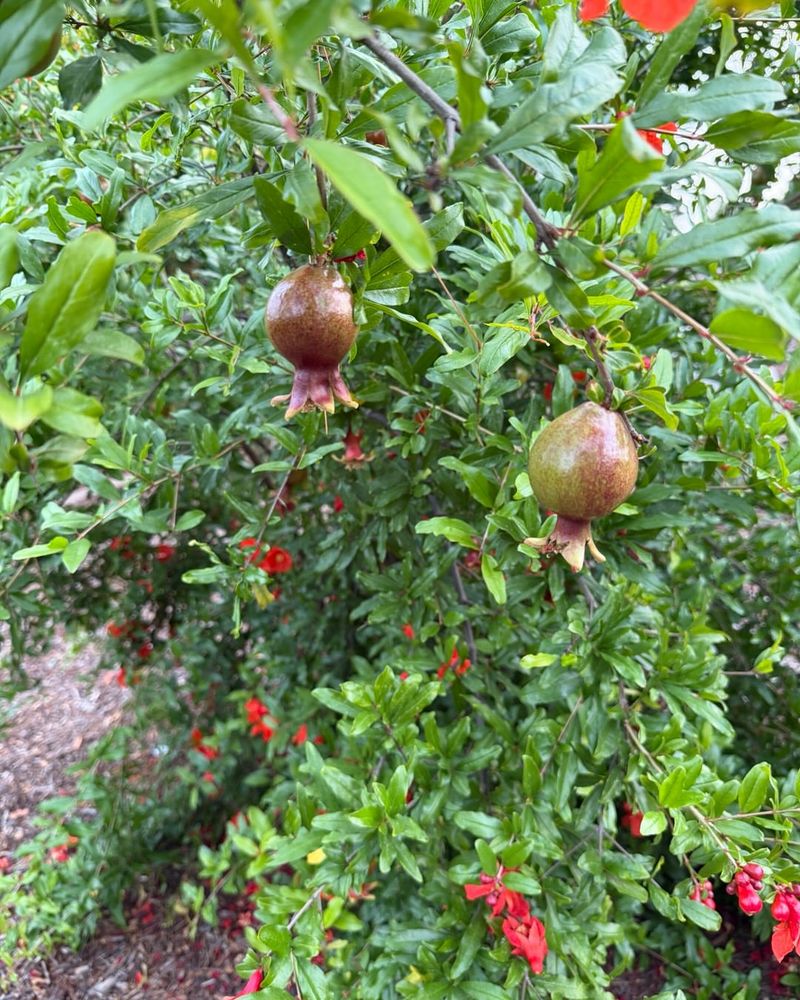
Not every pomegranate flower that opens will turn into fruit. Pollination has to happen first, and when it does not go well, fruit loss follows.
Pomegranate trees produce two types of flowers. Some are designed to produce fruit, while others are essentially non-fruiting blooms that drop naturally.
That is normal.
The problem starts when even the fruit-producing flowers fail to get properly pollinated.
Bees and other pollinators do most of the work. If pollinator activity in your yard is low, fewer flowers will be fertilized, and more young fruit will drop early.
Pesticide use during bloom periods can reduce pollinator visits significantly. Spraying at night or avoiding applications during flowering can help protect the insects that a pomegranate tree depends on.
Planting pollinator-friendly flowers nearby is a practical way to draw more bees to the area. Lavender, basil left to flower, and native wildflowers are all good options that attract beneficial insects without much extra effort.
Hand pollination is also possible if natural pollinator activity seems low. Using a small soft brush to transfer pollen between open flowers takes only a few minutes and can improve fruit set noticeably.
Timing matters too. Flowers that open during extreme heat or strong wind events may not receive adequate pollination even when bees are present.
4. Heavy Fruit Loads Can Cause Natural Thinning
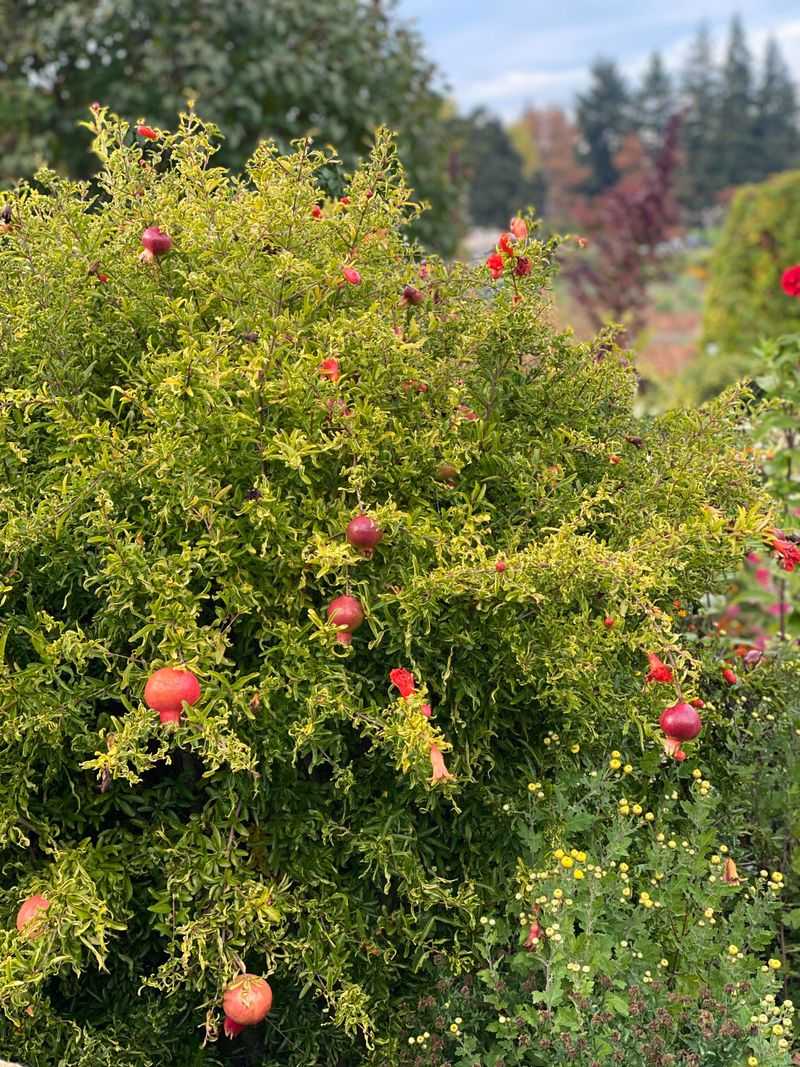
A pomegranate tree loaded with more fruit than it can support will often shed some on its own. It sounds counterproductive, but it is actually a natural balancing act.
When a tree sets more fruit than its root system and canopy can sustain, it starts dropping the weakest ones. The remaining fruit gets more energy and tends to develop better as a result.
Younger trees or trees that had a particularly strong bloom season are most likely to experience this. It can look alarming when fruit drops in clusters, but the tree is essentially editing itself.
Helping the process along with intentional hand-thinning is a strategy some growers use. Removing smaller or misshapen fruit early in the season allows the tree to put more energy into fewer, stronger fruits.
Thinning is generally done when fruit is still small, roughly the size of a golf ball or smaller. At that stage, removing excess fruit causes minimal stress and gives the remaining fruit a better start.
Not every backyard grower chooses to thin manually, and that is fine. Natural thinning usually handles the excess, though the dropped fruit can be disappointing if you were counting on a large harvest.
Feeding the tree appropriately in early spring supports stronger fruit set overall.
5. Nutrient Imbalances Affect Fruit Development
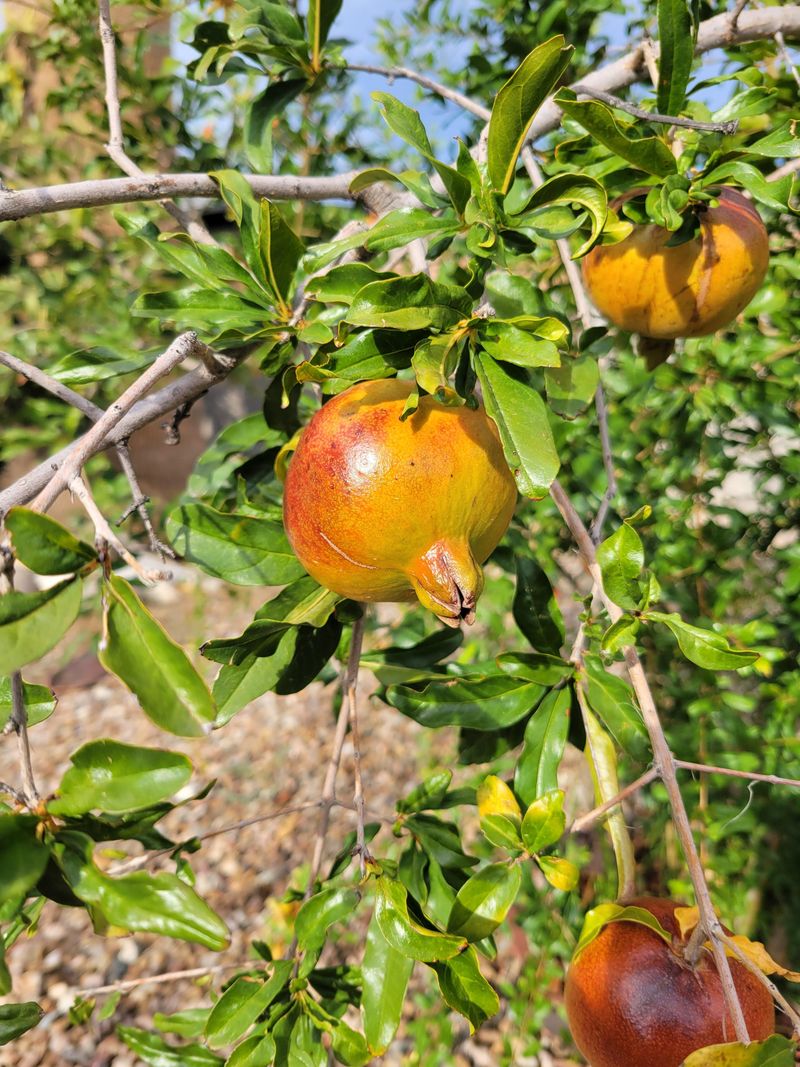
Soil nutrition is one of those factors that often gets overlooked until something goes wrong. Pomegranate trees are relatively low-maintenance, but they still need a reasonable nutrient supply to hold and develop fruit.
Nitrogen, potassium, and zinc are among the nutrients most commonly linked to fruit development issues in desert-grown fruit trees.
A shortage of any of these can show up as early fruit drop, poor fruit sizing, or weak growth overall.
Excess nitrogen is also worth watching. Too much nitrogen pushes vigorous leafy growth at the expense of fruit production and can contribute to fruit drop in some cases.
Soil in many parts of the Southwest tends to be alkaline, which can lock up certain nutrients even when they are present in the soil.
A soil test is the most reliable way to understand what your specific garden actually needs.
Applying a balanced fertilizer formulated for fruit trees in early spring, before bloom, gives the tree a nutritional foundation heading into the growing season. Following the label rate is important since over-application can cause its own problems.
Foliar feeding with micronutrients like zinc or iron can help when soil pH makes uptake difficult. It is a targeted approach that bypasses some of the soil chemistry challenges common in alkaline desert soils.
6. Pest Or Disease Problems Can Play A Role
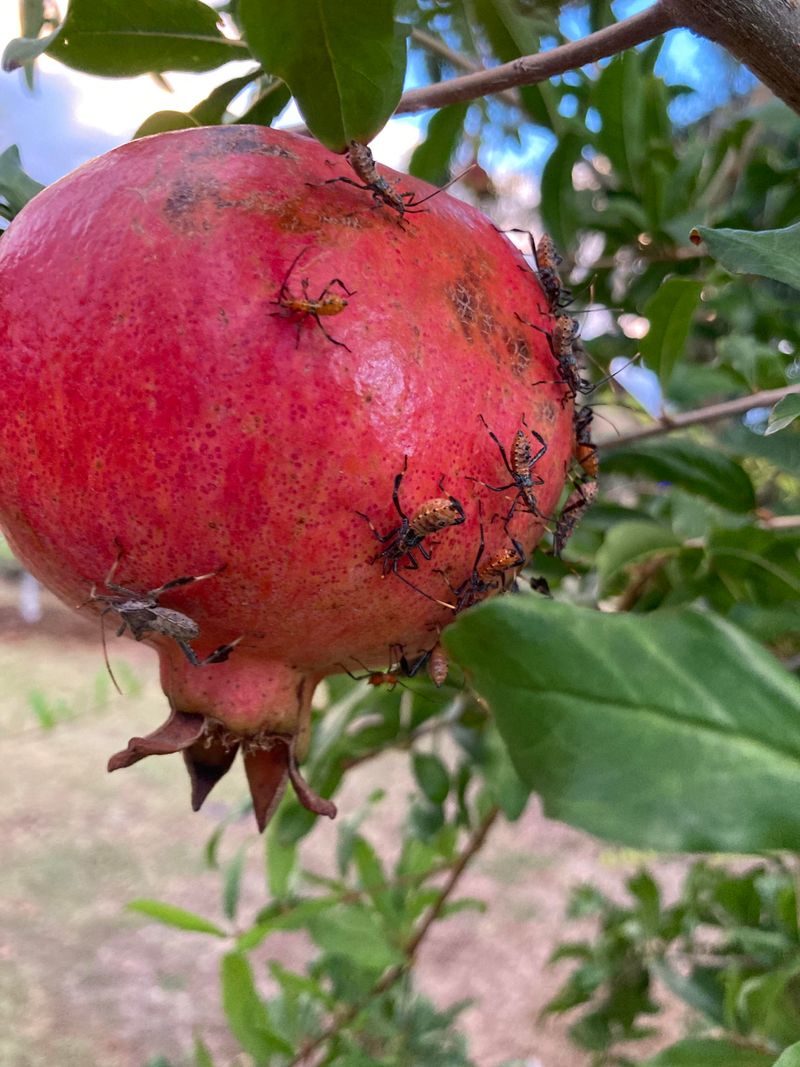
Fruit does not always drop because of weather or water. Sometimes something smaller is to blame.
Certain insects target developing pomegranate fruit directly. Leaffooted bugs are a well-known pest of pomegranates in warm climates.
They pierce the skin of young fruit to feed, and the damage can cause fruit to drop or develop poorly.
Whiteflies and aphids can also stress a tree enough to affect fruit retention, especially on younger or smaller trees. A heavy infestation draws energy away from fruit development.
Fungal issues are less common in dry desert climates but can still occur, particularly during periods of high humidity or after unusual rainfall. Fruit rot or mold on the skin can lead to early drop in affected fruit.
Inspecting fruit and foliage regularly through the growing season makes early detection much more likely. Catching a pest problem early gives you more options and usually requires less intervention than a full-blown infestation.
Removing dropped fruit from the ground promptly helps reduce pest pressure. Fallen fruit attracts insects and can harbor fungal spores that spread back to healthy fruit still on the tree.
Targeted treatments using neem oil or insecticidal soap can address many common pest issues without broad harm to beneficial insects.
7. Strong Winds Can Knock Young Fruit Loose
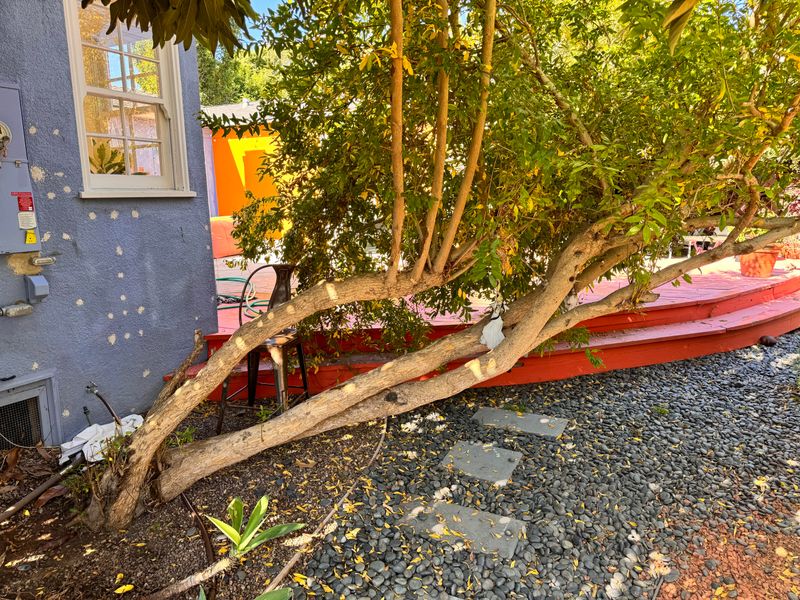
Wind rarely gets the blame for fruit drop, but it deserves more attention than it usually gets. Strong gusts can physically knock young fruit off the tree before it has a chance to mature.
In the desert Southwest, monsoon season brings more than just rain. The wind events that arrive ahead of storms can be intense and sudden.
Young fruit with a weak stem attachment is especially vulnerable during these episodes.
Fruit that is still in early development, with stems that have not fully hardened, is the most likely to drop in high winds. More mature fruit tends to hold on better, though severe storms can affect any stage.
Windbreaks can help reduce the impact of strong gusts on fruiting trees. A row of dense shrubs or a solid fence on the prevailing wind side of the tree can reduce wind speed significantly at the canopy level.
Staking young trees helps them stay upright during windy periods, which also reduces the mechanical stress transferred to developing fruit. A tree that sways excessively in wind puts strain on every branch and stem connection.
Timing of fertilization and pruning can also play a role. A tree that pushes a lot of soft new growth heading into monsoon season may be more prone to wind-related fruit loss than one with more established wood.