Why California Gardeners Keep Losing Rosemary Plants After They Thrive For Years
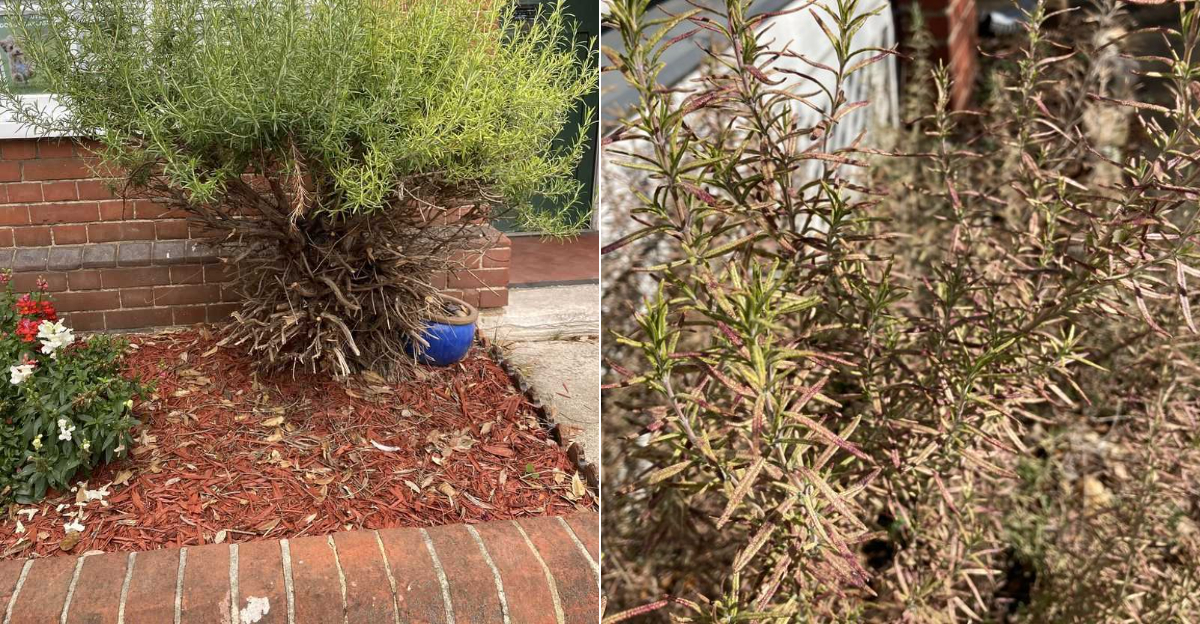
Rosemary has a reputation for being almost impossible to destroy. It handles California sunshine, looks great in the landscape, and can happily grow for years while asking for very little attention.
That is what makes it so frustrating when an established plant suddenly starts struggling after seeming perfectly happy for ages.
One season, a rosemary shrub can be a reliable green anchor in the garden. Then something changes, and the plant begins looking thinner, weaker, or completely different from the sturdy herb you remember planting.
Naturally, that leaves gardeners wondering what went wrong after years of success. The confusing part is that older rosemary plants often reveal problems differently than younger ones.
A small change in the plant’s surroundings, seasonal conditions, or routine can have a bigger impact than expected.
If a rosemary that has always thrived starts declining, do not assume it is simply reaching the end.
The clues are often hidden in the details of where it grows and how conditions around it have changed.
1. Too Much Water Is The Most Common Rosemary Problem
You might assume more water means a healthier plant. With rosemary, that thinking can backfire fast.
This herb comes from the dry, rocky hills of the Mediterranean. Its roots were built for dry conditions, not regular watering schedules.
When rosemary gets watered too often, the roots sit in wet soil for long stretches. They cannot get the oxygen they need.
Over time, the roots start to break down, and the plant loses its ability to pull up nutrients. The leaves may look fine at first, but the damage is happening underground where you cannot see it.
Many gardeners water rosemary the same way they water tomatoes or other thirsty plants. That is a mistake.
Established rosemary plants often survive on rainfall alone in mild climates. If you are watering more than once a week during summer, that may already be too much.
A simple test is to stick your finger two inches into the soil near the plant. If the soil still feels damp, skip watering.
Wait until the top few inches are completely dry before adding more water. Rosemary rewards neglect far more than it rewards attention.
Pulling back on water is usually the single most effective fix for a struggling plant.
2. Older Roots Become More Sensitive To Wet Soil

Here is something California gardeners never think about. As rosemary ages, its roots actually become less tolerant of moisture, not more.
Young plants bounce back from occasional overwatering. Older plants do not have that same flexibility.
Woody roots that have been growing for several years start to lose some of their protective outer layers. The fine root tips that absorb water and nutrients become more fragile.
When those delicate tips sit in soggy soil, they break down quickly. The plant cannot recover as easily as it once did.
This is why a watering routine that worked fine for years can suddenly become a problem. Nothing changed in your schedule, but the plant changed.
Your California Garden Changes Every Week. Your Plan Should Too.
Gardening in California changes quickly throughout the season. Every Friday you’ll receive a simple weekly plan showing exactly what to plant, prune, fertilize, harvest, and protect so you never miss the right timing.
Its roots are older, thicker, and more vulnerable to excess moisture than they used to be.
Reducing watering frequency is a good first step. But you should also check whether your irrigation system is delivering water directly to the base of the plant.
Drip emitters placed too close to the main stem can keep the crown area wet for too long. Moving emitters a foot or two outward, toward the edge of the root zone, helps water reach the roots without soaking the base.
Small adjustments like this can make a real difference for an aging rosemary plant.
3. Poor Drainage Can Catch Up After Years Of Growth
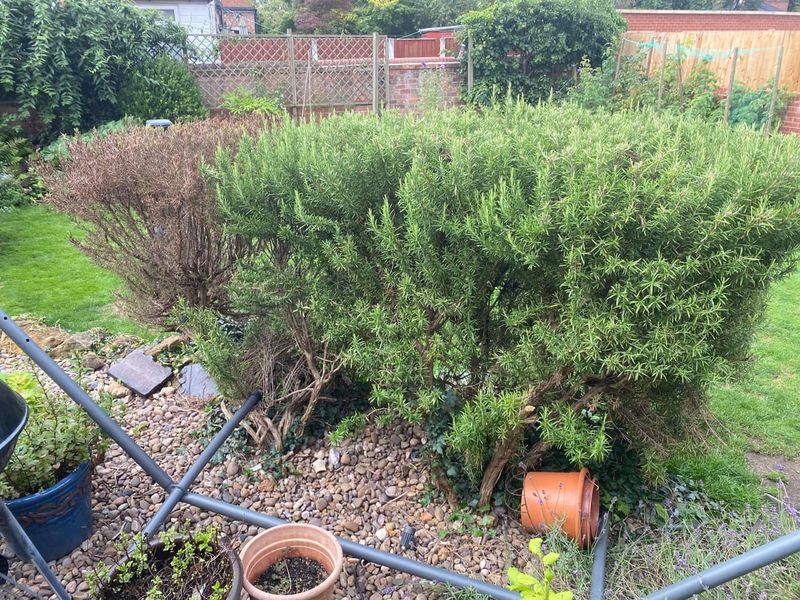
Rosemary can look perfectly happy for years even in less-than-ideal soil. But drainage problems do not go away on their own.
They build up slowly, and eventually the plant runs out of ways to cope.
Clay-heavy soil is a big part of this story. Clay holds water for a long time after rain or irrigation.
When rosemary roots spread into clay layers, they start sitting in moisture far longer than they should. The plant may handle this for a season or two, but the stress adds up.
Compaction is another factor. Foot traffic, heavy rainfall, and even the weight of the plant itself can press the soil down over time.
Compacted soil drains more slowly and holds less air. Roots in compacted ground struggle to breathe, and a struggling root system cannot support a healthy plant above ground.
If drainage is the issue, there are practical fixes. Digging in coarse sand or perlite around the root zone can open up the soil.
Raising the planting area slightly, even by a few inches, helps water move away from the roots faster. For serious drainage problems, a French drain or gravel trench near the plant can redirect water before it pools.
Catching this issue early gives the plant a much better chance of recovering fully.
4. Mulch Around The Base Can Hold Too Much Moisture
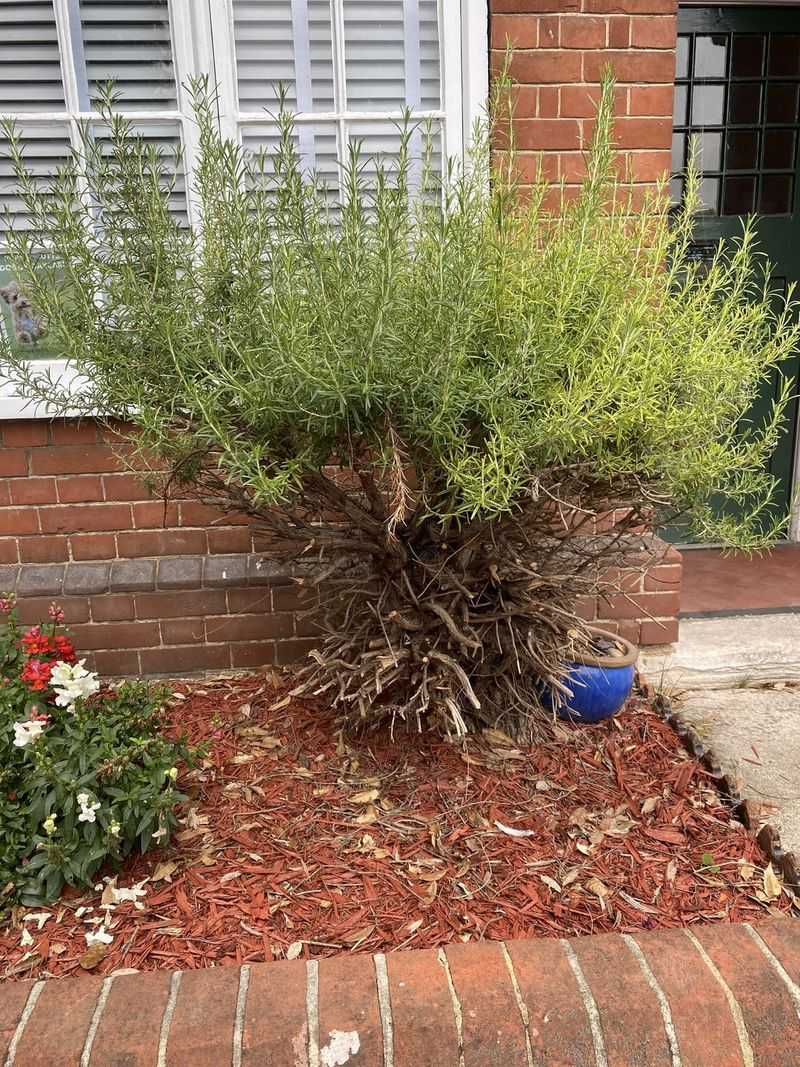
Mulch is great for most plants. It keeps weeds down, regulates soil temperature, and helps retain moisture during dry spells.
But for rosemary, mulch can create more problems than it solves, especially when it is piled up close to the stem.
When mulch sits directly against the base of a rosemary plant, it traps moisture right where the plant is most vulnerable. The crown, which is the area where the stem meets the soil, needs to stay dry.
Constant dampness in that zone encourages fungal growth and root problems that spread quickly through the plant.
Many California gardeners apply mulch generously every spring without thinking about how it affects rosemary specifically. A thick, dense layer of wood chips or bark can prevent the soil from drying out between waterings.
That might be helpful for a rose bush, but rosemary prefers the soil to dry out fully and regularly.
If you use mulch around rosemary, keep it light and pull it back a few inches from the main stem. Gravel or small stones actually work better than organic mulch for this plant.
Stone mulch allows moisture to evaporate quickly, keeps the roots cool without trapping water, and mimics the rocky Mediterranean terrain rosemary naturally grows in. Switching to gravel is a simple change that can protect an established plant for years to come.
5. Heavy Soil Can Slowly Stress The Root System
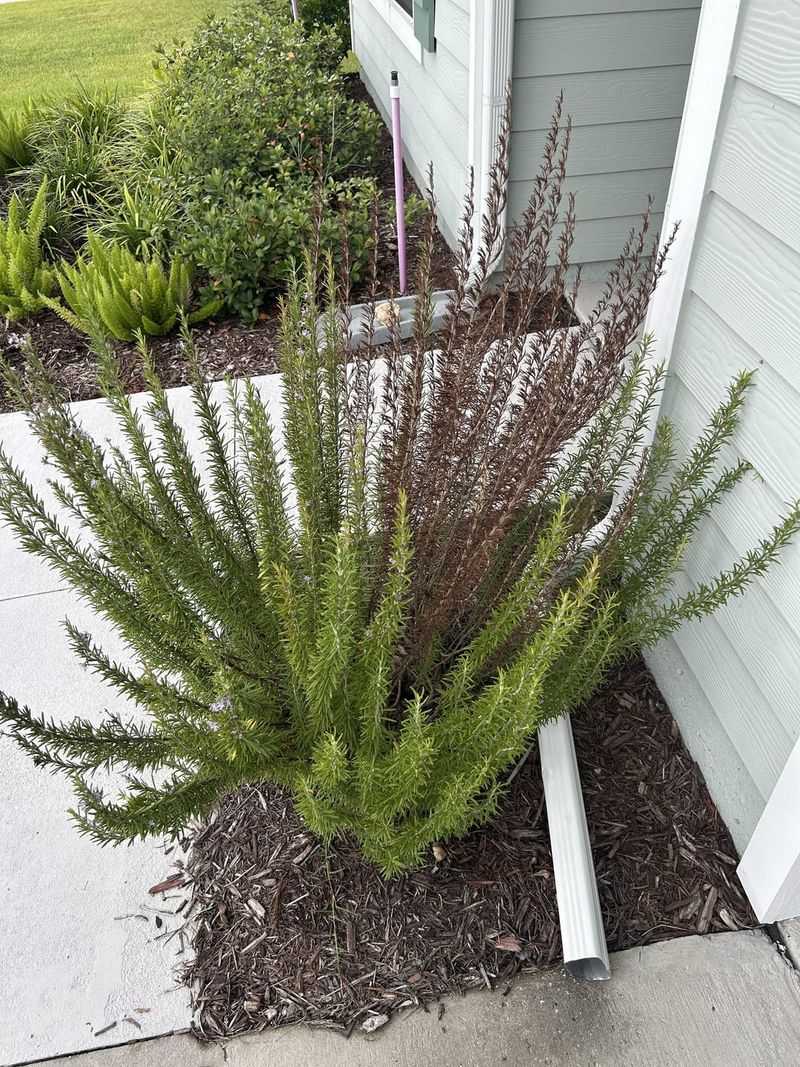
Sandy, well-draining soil is where rosemary truly thrives. When it ends up planted in heavy clay or dense loam, the plant may grow fine at first.
But over time, the soil works against it in ways that are hard to spot from the surface.
Heavy soil stays wet longer after rain or irrigation. It also compacts more easily, which limits the space roots have to spread and breathe.
Rosemary roots need air just as much as they need water. Dense soil cuts off that airflow, and the roots begin to weaken slowly.
Another problem with heavy soil is that it can hold salts and minerals that build up over time. Fertilizers, tap water, and decomposing organic matter all contribute to salt accumulation.
Rosemary is sensitive to high salt levels, and heavy soil traps those salts near the roots instead of letting them flush through with rainfall.
Improving heavy soil takes some effort but pays off. Working in coarse sand, perlite, or fine gravel before planting is ideal.
For an already-established plant, carefully loosening the soil around the outer edge of the root zone and mixing in amendments can help. Avoid digging too close to the main stem.
Even improving a small area of the root zone can reduce stress and give the plant a better path forward over the next growing season.
6. Heat Can Reveal Hidden Root Problems
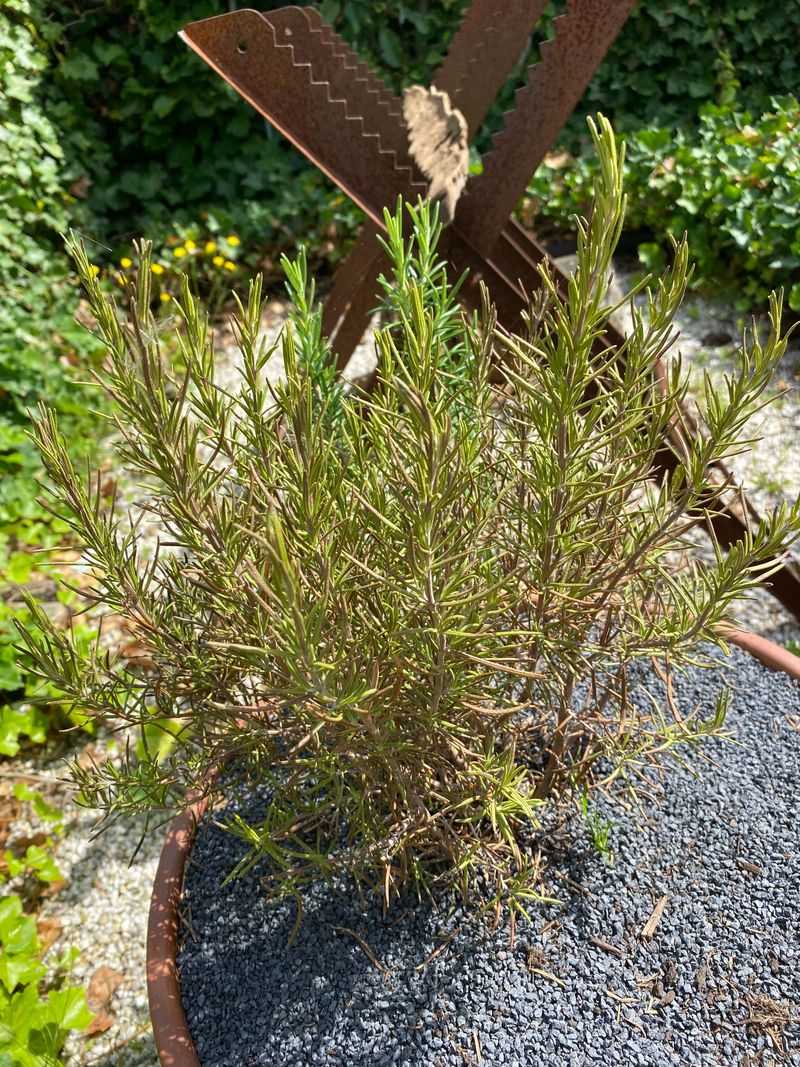
Rosemary loves sunshine and warmth. It is practically built for hot summers.
But extreme heat can expose weaknesses that were hiding just below the surface, especially in plants that already have stressed or damaged roots.
When temperatures spike, plants rely heavily on their roots to pull up enough water to stay cool and hydrated. A healthy root system handles this just fine.
But roots that have been weakened by overwatering, poor drainage, or compacted soil cannot keep up with the demand. The plant starts to wilt, dry out, or drop leaves even if the soil has plenty of moisture.
This is a confusing situation for gardeners. The plant looks thirsty, but adding more water actually makes things worse.
The problem is not a lack of water. The problem is that the roots cannot deliver it efficiently anymore.
During heat waves, check the soil carefully before watering. If the soil is already moist a few inches down, hold off.
Provide some afternoon shade with a temporary shade cloth if temperatures are extreme. Avoid pruning or fertilizing during a heat spike, as both put extra stress on a plant that is already working hard.
Once cooler weather returns, the plant often stabilizes. That recovery window is the right time to address any underlying soil or drainage problems before the next heat event hits.
7. Yellowing Leaves Can Be An Early Warning Sign
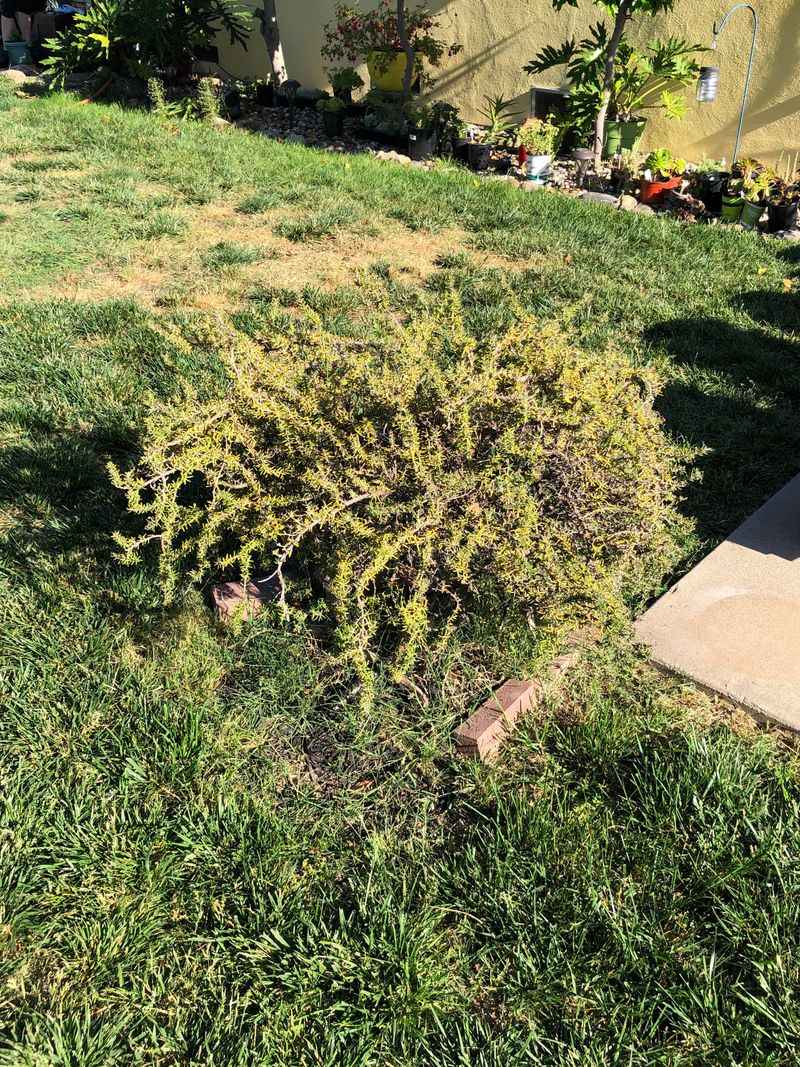
Yellow leaves on rosemary are easy to dismiss. They might look like a minor cosmetic issue or just a sign of normal aging.
But consistent yellowing across multiple branches is usually the plant sending a clear message that something is wrong at the root level.
Overwatering is one of the top causes of yellow rosemary leaves. When roots sit in wet soil for too long, they cannot absorb nutrients properly.
The plant becomes deficient in iron and other minerals even if those nutrients are present in the soil. The leaves turn yellow because the plant simply cannot access what it needs.
Nitrogen deficiency can also cause yellowing, though this is less common with rosemary since it does not need much fertilizer. A light application of a balanced, slow-release fertilizer in early spring can rule this out as a cause.
If the yellowing continues after adjusting watering habits and feeding lightly, the issue is almost certainly related to drainage or root health.
Catching yellow leaves early is a real advantage. At that stage, the plant still has healthy roots that can recover if you remove the stressor.
Pull back on watering, improve drainage, and trim away the worst-looking branches to encourage fresh growth. Rosemary is resilient when problems are caught at this stage, and many plants bounce back surprisingly well with just a few targeted changes.
8. Browning Branches May Point To Root Stress
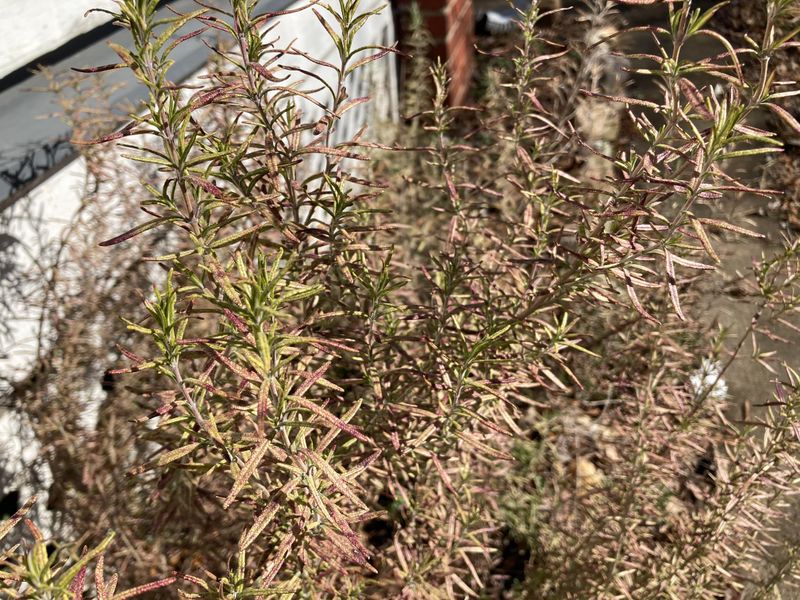
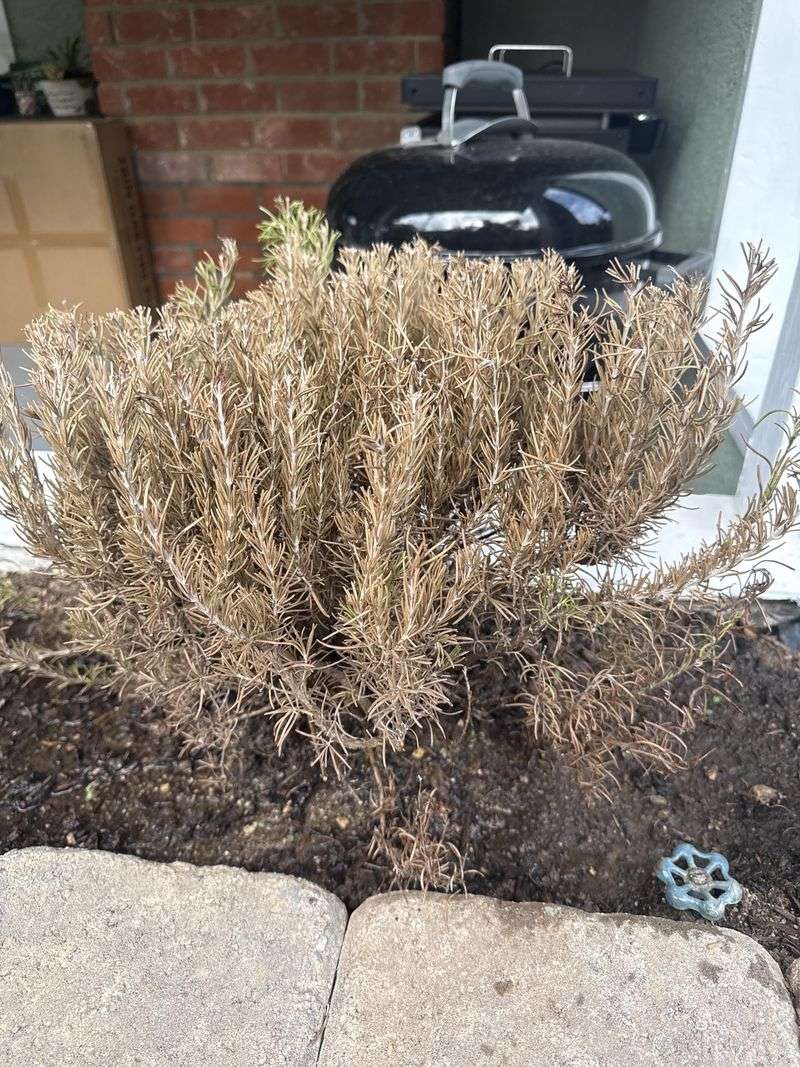
Brown, dry branches on an otherwise green rosemary plant can be alarming. Some browning is normal, especially on the innermost branches where sunlight does not reach.
But when browning spreads outward to the tips and across multiple stems, that is a different story.
Root stress is one of the most common reasons for widespread browning. When the root system is struggling, it cannot supply enough water and nutrients to every branch.
The plant prioritizes its strongest sections and lets the weaker ones dry out. Those brown branches are essentially being cut off from the plant’s supply line.
Fungal disease is another possible cause. Phytophthora and Armillaria root rot are both common in garden soils across the state, and both thrive in wet conditions.
These pathogens attack the root system silently, and browning branches are often the first visible sign above ground. By the time you notice the problem, the infection may already be widespread.
Pruning away brown branches is a helpful first step. Cut back to healthy, green wood and dispose of the clippings rather than composting them.
Then focus on the root zone. Improve drainage, reduce watering, and consider drenching the soil with a copper-based fungicide if root rot is suspected.
Acting quickly when browning appears gives the plant its best chance of recovering and growing strong again in the seasons ahead.