Why Crows Gather In Large Groups At Dusk In Georgia During Fall
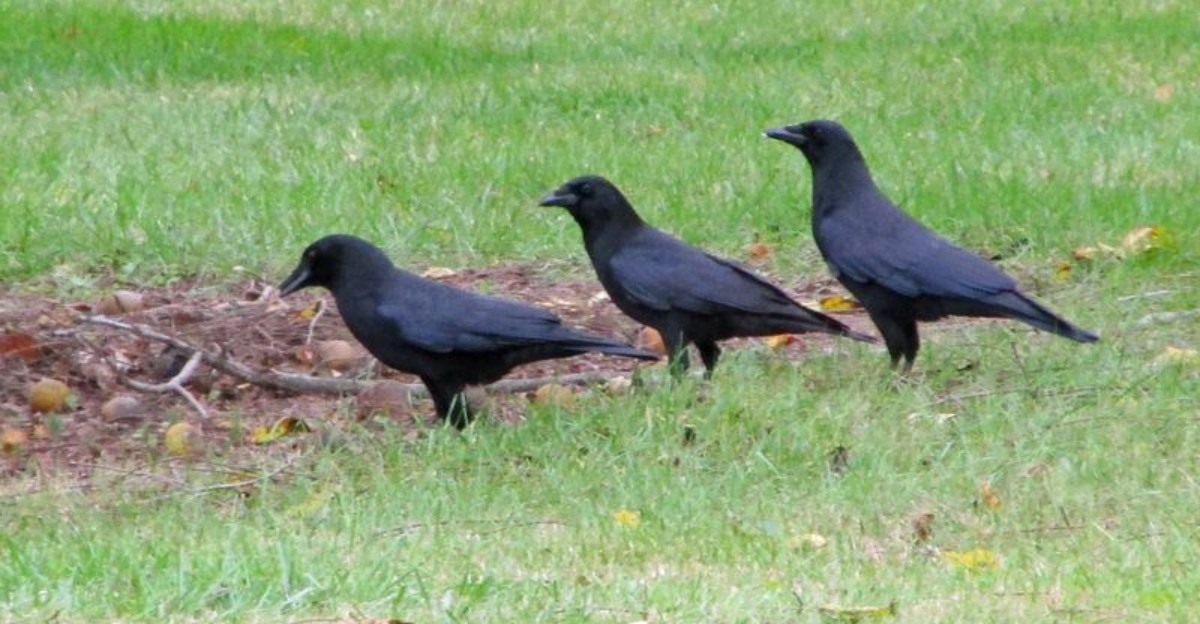
Loud cawing from crows lining rooftops and light poles before sunset is hard to ignore. Within minutes, a few birds can turn into hundreds as more stream in.
Crows spend much of the day in small family groups, so these evening crowds can come as a surprise.
Gatherings like this tend to grow as fall moves toward winter. Some groups settle near shopping centers or wooded edges in town, returning to the same area night after night.
Their timing and location are not random, and researchers have studied these roosts for decades.
Some of the largest gatherings in parts of Georgia can include thousands of birds by midwinter.
Note the direction the flocks head as light fades, since many follow the same path each evening. Several nights of watching often tell you more than one glimpse.
1. Daytime Family Groups Merge Into Big Communal Roosts As Days Shorten
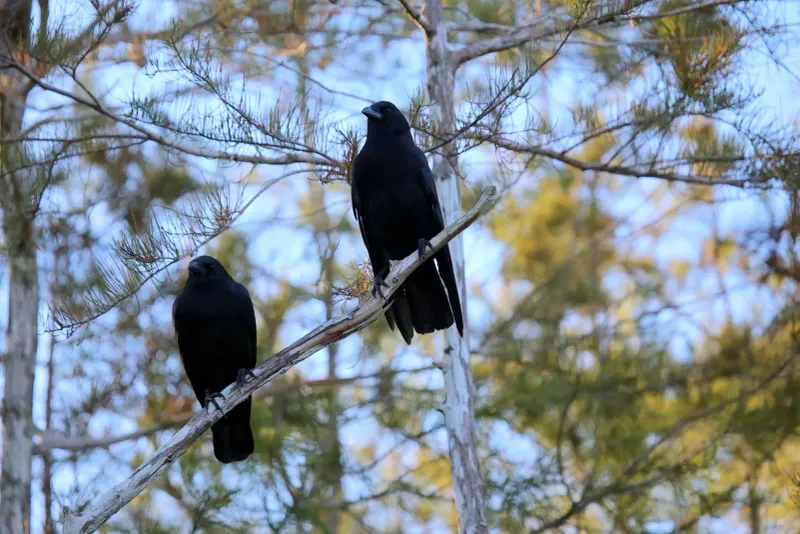
Spring and summer crows live very different lives than fall crows. During nesting season, American crows usually stay close to home in small family groups.
Young birds from earlier years often help their parents raise new chicks.
Once nesting wraps up, those family ties loosen a bit at night. As the days shorten in late summer and fall, crows begin traveling to shared sleeping spots with birds from other families.
Roost sizes can grow through fall and often peak in winter.
In Georgia, you might see a few dozen crows at one roost or many hundreds at another. Numbers vary by location, food supply, and the year, so no two roosts look quite alike.
Families do not fully break apart, though. Many crows still spend daytime hours feeding with relatives or familiar neighbors, then join the larger crowd in the evening.
Watching this shift can tell you a lot about the season.
If you notice more crows flying past at dusk than in July, the roost season has likely started near you. Try noting the date you first see a steady evening flight, then compare it next year.
Keeping simple notes like that turns a passing sight into a personal record of how local crows change with the seasons.
2. Staging Areas Fill Up First Before The Final Move To The Roost
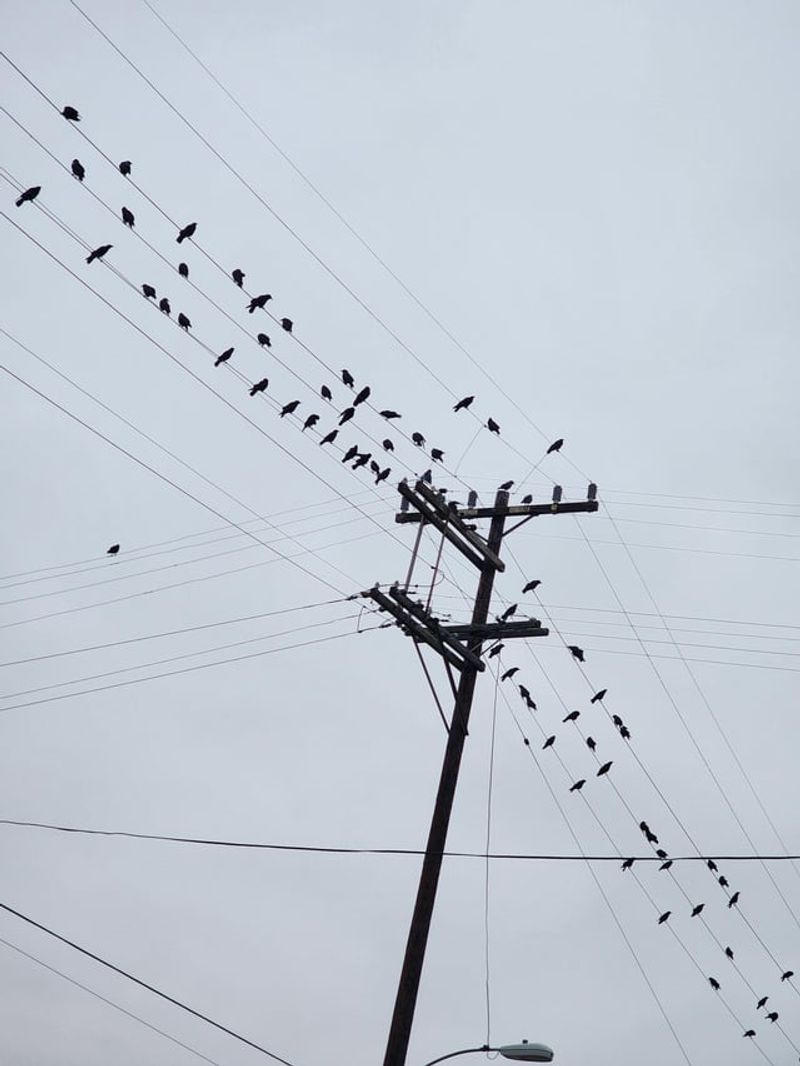
Crows rarely fly straight to bed. Before settling into the main roost, they often gather at nearby spots called staging areas.
Open fields, rooftops, ball fields, and power lines are common choices.
At these places, birds call, preen, poke at the ground, and wait as more crows arrive. The noise can build steadily during the last hour or so of daylight.
Then, often near sunset or a bit after, the group lifts off and heads to the roost trees.
Timing shifts with the weather and light levels. Cloudy evenings may send birds in a little earlier than clear ones, though this pattern is not fixed.
Staging spots can move from week to week, too.
Around Georgia, school fields and shopping center lots sometimes serve as staging areas because they offer wide views and few hiding spots for predators. That openness may help crows feel safer while the group builds.
Your Georgia Garden Changes Every Week. Your Plan Should Too.
Gardening in Georgia changes quickly throughout the season. Every Friday you’ll receive a simple weekly plan showing exactly what to plant, prune, fertilize, harvest, and protect so you never miss the right timing.
Want to watch the process yourself? Look for a few crows landing in the same open space each evening, then return about an hour before sunset.
Stay quiet and keep some distance, since crows notice people and may shift away if disturbed. With luck, you will see the crowd swell and then pour toward the trees in loose, noisy waves.
3. Protection From Nighttime Owl Attacks May Be One Benefit
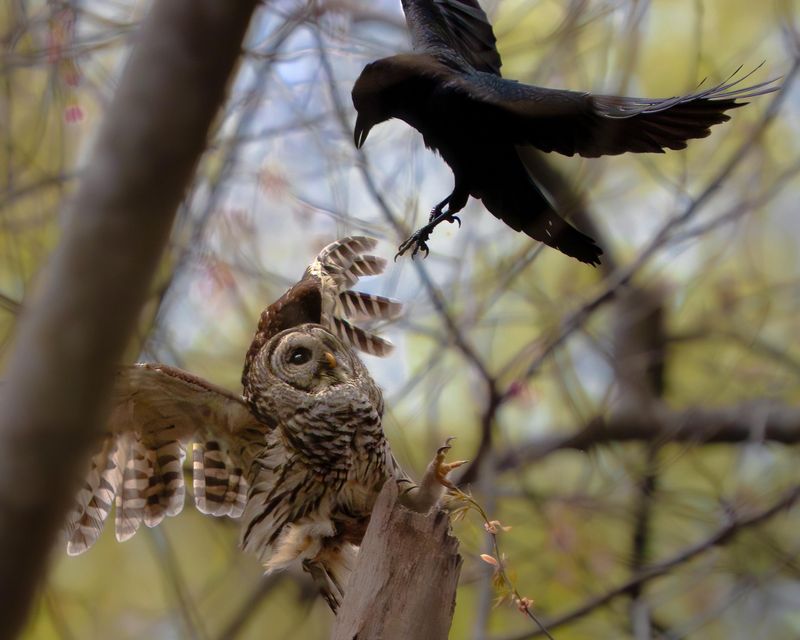
Darkness is when crows feel most exposed. Great horned owls hunt at night, and crows are on their menu.
Sleeping in a big group could make it harder for an owl to approach unnoticed.
More eyes and ears mean a better chance that someone spots trouble early. A sudden alarm call can wake nearby birds and give them time to react.
Biologists consider this safety idea a likely benefit, though it is hard to measure directly at night.
Crows clearly dislike owls. During the day, they often mob owls they find, diving and calling loudly until the owl moves on.
That loud racket in a quiet woodlot may be worth a closer look.
Great horned owls live throughout Georgia, from mountain forests to coastal woods. Their presence could be one reason crows choose roosts with certain tree cover or locations, but other factors matter as well.
Safety in numbers probably works alongside other benefits rather than standing alone.
If you hear a sudden burst of crow calls in a tree line during daylight, scan carefully for a large owl or hawk. Binoculars help, and you may spot a predator hunkered against the trunk while crows circle overhead.
4. Bright Lights And Warmer Temperatures Make Towns Appealing Roost Sites
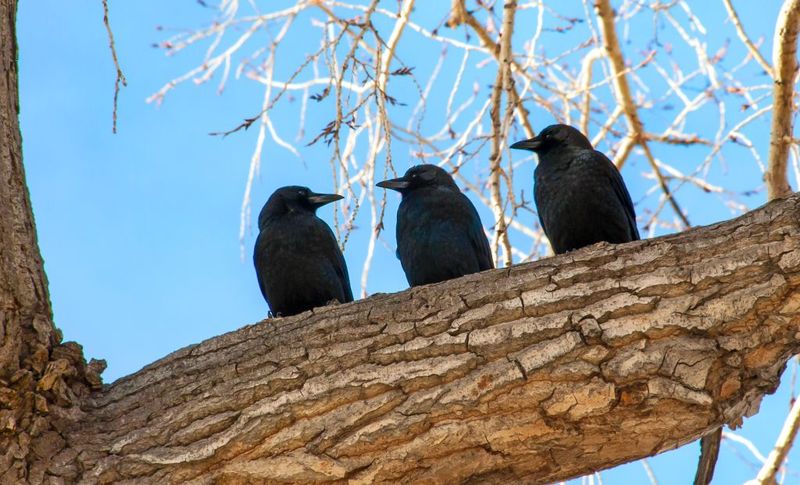
Strange as it sounds, a busy town can feel cozy to a crow. Over recent decades, crow roosts in parts of North America have increasingly shown up in cities and suburbs.
Researchers have offered several possible reasons for that shift.
Street lights and parking lot lamps may help crows see approaching predators at night. Owls might also be less common in heavily lit, busy areas, though that varies by place.
Built-up areas can stay a little warmer than the countryside after dark.
That small boost could help birds save energy on chilly nights. In Georgia, fall nights are usually milder than in northern states, so warmth may matter more during colder snaps or in the north Georgia mountains.
Many town roosts also sit near tall shade trees, which give birds plenty of perches. Parks, hospital grounds, and older neighborhoods often have exactly that kind of canopy.
Homeowners near a roost sometimes notice droppings on cars and sidewalks.
Parking away from roost trees is a simple fix. Crows are protected under federal law, so check with your state wildlife agency before trying any steps to move a roost.
Gentle methods and proper guidance tend to work better than quick, harsh attempts.
5. Communal Roosts May Help Crows Find New Food Sources
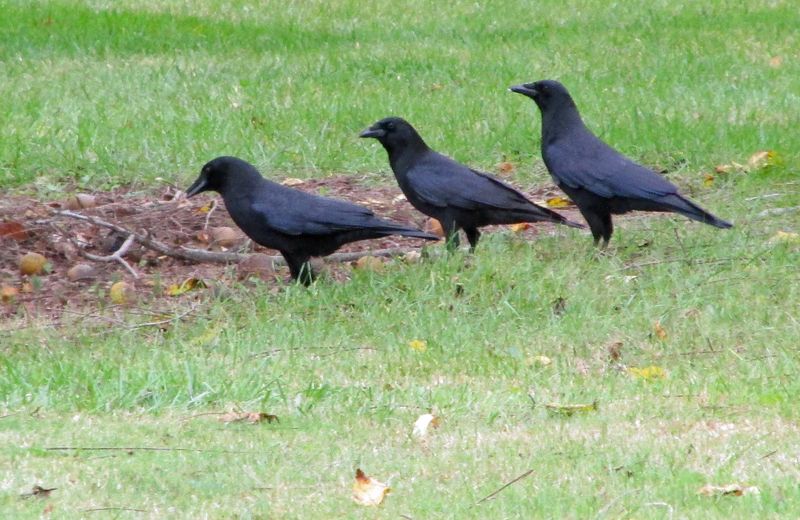
Picture a giant bird bulletin board in the treetops. One older idea suggests roosts could work as information centers, where hungry crows follow successful feeders the next morning.
It is an interesting theory, but it remains debated and is not fully proven for crows.
Still, the idea makes some sense. Crows are clever, social birds that watch each other closely while feeding.
A bird that found a good spot might fly off confidently, and others could tag along.
Fall food in Georgia includes waste grain in harvested fields, pecans, acorns, insects, and plenty of scraps from people. Food can shift from place to place, so learning from neighbors could be useful.
Even so, biologists are careful here.
Crows may simply roost together for safety and then spread out on their own. Without clear proof, it is fair to call food sharing a possible benefit rather than a known fact.
You can do a little backyard observing of your own. Notice where crows feed during the day, such as fields, lawns, or school grounds after lunch.
Then watch which way they fly at dusk. Over time, you may connect daytime feeding spots with the evening flight path toward a nearby roost.
6. Morning Brings A Mass Exit As Birds Spread Out To Feed
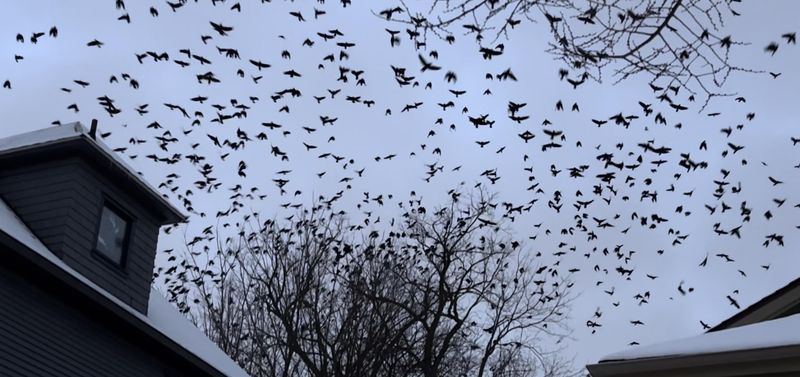
Sunrise sounds a lot different near a roost. Crows usually begin calling in the dim light, and then groups start lifting off around dawn.
Departures often happen in waves instead of one single burst.
Small flocks scatter in several directions, heading back toward daytime feeding areas. Some birds may travel only a short hop, while others fly a few miles or more.
Exact distances depend on the roost and on local food.
Once out, many crows return to familiar ground with family members or neighbors. The huge evening crowd basically dissolves into smaller working groups for the day.
That daily rhythm repeats through fall and into winter.
Early risers in Georgia have a great chance to watch this. Stand somewhere with an open eastern view near a known roost, arrive before sunrise, and listen first.
Calls tend to grow louder just before the first birds leave. Counting flocks as they pass can be a fun challenge, even if your totals are rough guesses.
Bring a warm drink on cool mornings and keep a respectful distance from roost trees. If you visit on several days, you may notice the departure time sliding later as sunrise shifts through the season.
7. Fish Crows Sometimes Join The Crowd Near The Coast And Lakes
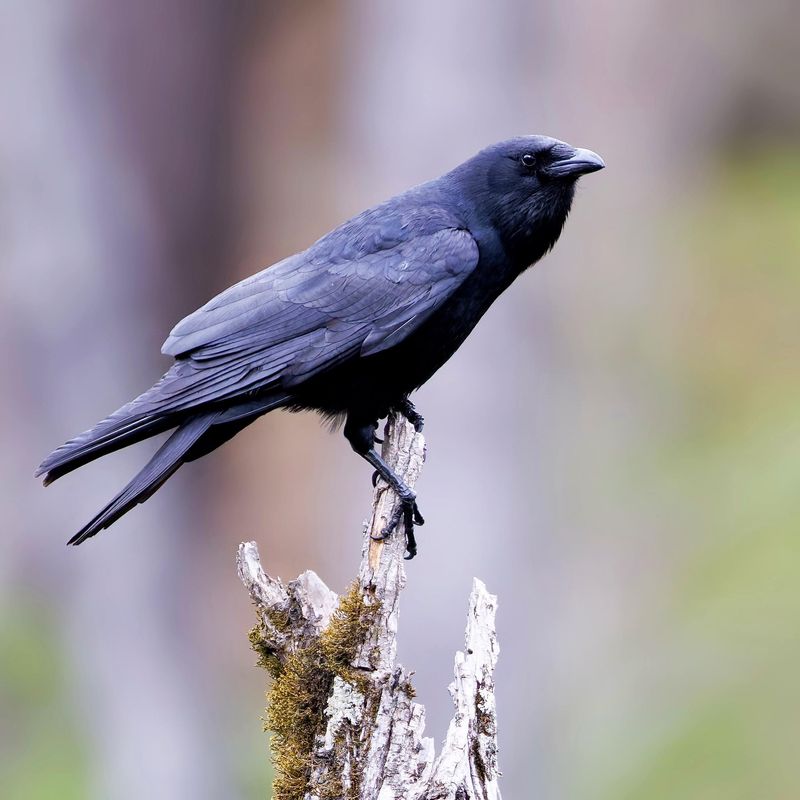
Not every black bird in that flock is the same kind of crow. Fish crows look very similar to American crows, but they are slightly smaller and sound quite different.
Their call is a nasal “uh-uh” instead of the familiar “caw.”
Fish crows are most common near coasts, rivers, lakes, and reservoirs. In Georgia, they are found along the coast and in many inland areas with water, and their range has spread inland over time.
Like American crows, they often roost in groups outside nesting season.
Sometimes the two species share roosts or travel nearby, though they do not always mix. Whether they join together can depend on the location and local numbers.
Sorting them out takes some practice.
Looks alone rarely settle the question, because size differences are small and hard to judge from afar. Listening is the best clue, so pay attention whenever a bird calls clearly.
Free apps and online bird sound libraries can help you learn both voices at home. Then try your new skill near a lake, river park, or coastal town during a fall evening.
Spotting fish crows in the mix adds another layer to the roost show and makes each visit a little more rewarding.