Why Desert Tortoises Sometimes Dig Burrows Under Arizona Patios And Sheds
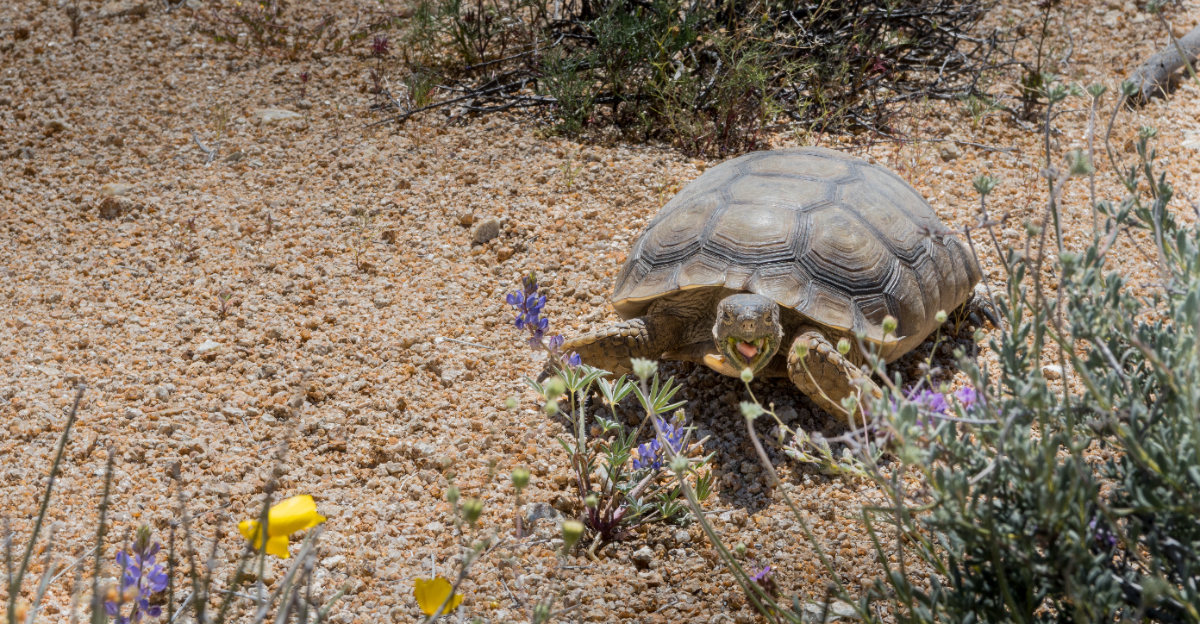
Finding a wide hole beneath your shed can be confusing until you notice who has been moving soil. Desert tortoises are skilled diggers, and sheltered structures can sometimes catch their attention.
That shady space under a patio may offer something your open yard cannot.
In Arizona, extreme temperatures make protected resting places especially important for these reptiles. Burrows help them escape harsh conditions and spend long periods safely below ground.
Do not rush to fill an occupied burrow simply because its location seems inconvenient.
Tortoises are protected by law, so discovering one around your property deserves careful handling. Knowing why that particular spot appealed to the animal can also help you understand its behavior.
Your shed may look ordinary to you, but to a tortoise, the ground underneath can offer valuable shelter.
1. That Burrow Is Really About Finding Safe Shelter
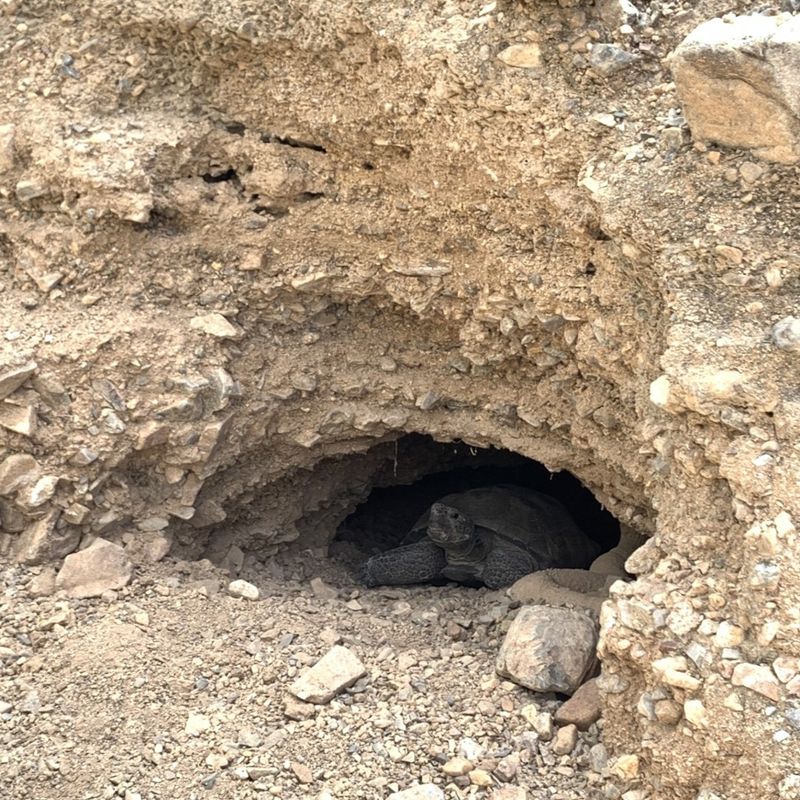
Survival shapes everything a desert tortoise does. Burrows are not just holes in the ground.
They are the main tool these animals use to stay safe from predators, harsh weather, and the punishing conditions of the Sonoran Desert.
A tortoise cannot run from danger. Its shell offers some protection, but a secure underground space is far more reliable.
Burrows give tortoises a place to rest, recover, and wait out threats without exposing themselves.
Wild desert tortoises spend a large portion of their lives underground. During cooler months, they enter a dormant state and rely entirely on their burrows to stay protected.
Without that shelter, surviving the desert would be much harder.
A burrow is not dug randomly. Tortoises tend to choose spots where the soil is workable and where natural cover already exists overhead.
Roots, rocks, and compacted earth can all make a burrow more stable and secure.
Shelter is not optional for these animals. It is central to how they live.
Recognizing that the burrow serves a serious purpose helps explain why tortoises are willing to put real effort into finding and digging the right spot, even when that spot happens to be near a human structure.
2. Extreme Heat Sends Tortoises Underground
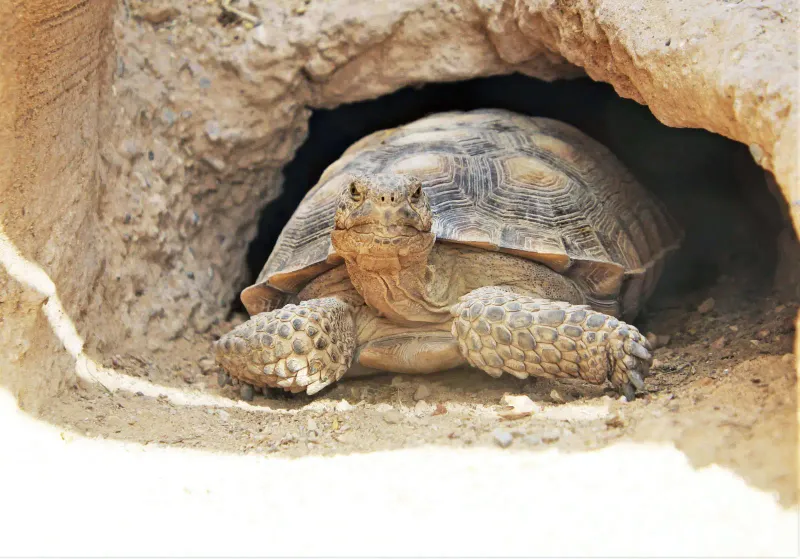
Summer temperatures in the Sonoran Desert can climb well above 100 degrees Fahrenheit. At those levels, staying above ground becomes genuinely dangerous for a cold-blooded animal that cannot regulate its own body temperature.
Underground, temperatures drop noticeably. Even a few inches below the surface, soil holds a much cooler and more stable temperature than the air above.
A tortoise resting in a burrow avoids the worst of the midday and afternoon heat.
Tortoises are most active in the early morning or late afternoon when temperatures are lower. Once the heat peaks, they retreat underground and stay there until conditions improve.
This pattern repeats throughout the hottest months.
Dehydration is also a concern during intense heat. Staying underground reduces moisture loss significantly.
A tortoise that spends too long exposed to direct sun and dry air can weaken quickly.
Burrows do not need to be deep to be effective. Even a shallow burrow tucked under a rock ledge or dense shrub can offer meaningful relief from extreme temperatures.
Your Arizona Garden Changes Every Week. Your Plan Should Too.
Gardening in Arizona changes quickly throughout the season. Every Friday you’ll receive a simple weekly plan showing exactly what to plant, prune, fertilize, harvest, and protect so you never miss the right timing.
Tortoises are practical about where they dig, choosing spots that offer the most benefit with reasonable effort.
Heat management through burrowing is one of the most important survival strategies these animals have. It is not unusual behavior.
3. Patios And Sheds Can Create Ready-Made Cover
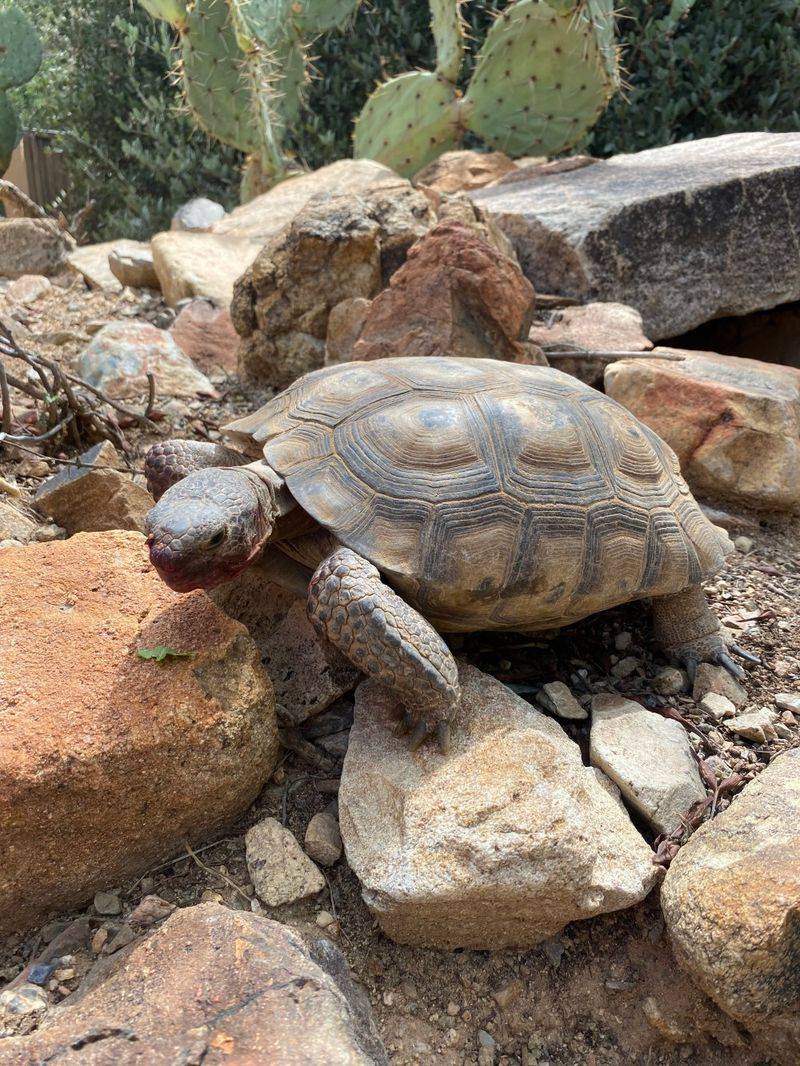
Shade matters a great deal to a tortoise looking for shelter. Structures like patios and sheds cast consistent shade and can lower the ground temperature beneath them noticeably compared to open, sun-exposed soil nearby.
From a tortoise’s perspective, the shaded edge of a patio or the dark space beneath a shed may feel similar to the natural cover provided by rocky outcroppings or dense desert shrubs. Both offer overhead protection and cooler ground.
Soil beneath a structure is often softer and more sheltered from rain compaction and sun baking. That combination can make it easier to dig and more stable once a burrow is started.
Tortoises notice these conditions.
Not every tortoise will seek out a human structure. Many find perfectly suitable natural shelter nearby.
But when a yard happens to offer conditions that mimic what a tortoise naturally looks for, some individuals will take advantage of it.
Concrete edges and wooden skirting can also block wind and hold in cooler air at ground level. These small details add up.
A tortoise exploring a yard may pause near a structure and decide that spot works well enough to settle into temporarily.
Calling this behavior unusual misses the point. Tortoises are responding to real physical conditions in their environment.
4. Monsoon Weather Can Change Where They Seek Refuge
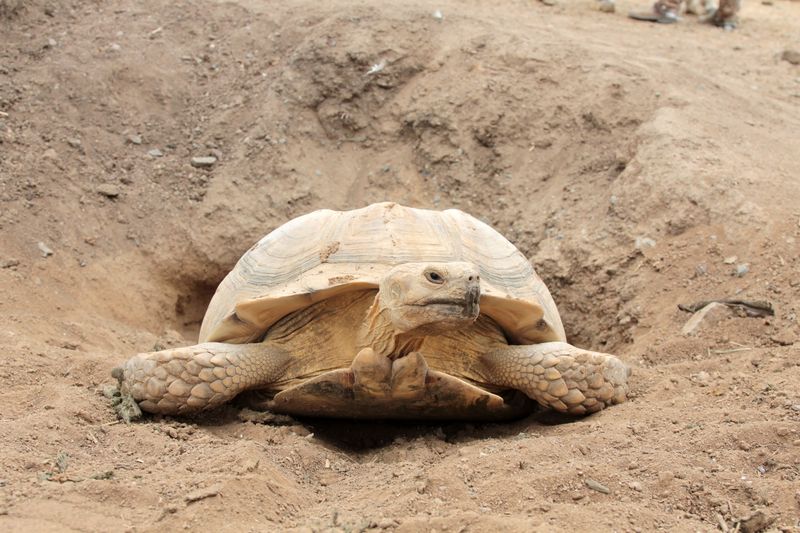
Monsoon season brings a dramatic shift to the desert. Heavy rains arrive between roughly late June and September, and the landscape transforms quickly.
Dry washes fill with water, soil becomes saturated, and some low-lying areas flood temporarily.
Tortoises that had settled into a burrow in one spot may find that location suddenly wet or unstable. Flooding can make a burrow unusable, and a tortoise will move to find drier ground rather than stay in a compromised shelter.
Monsoon rains also trigger increased activity. Tortoises often emerge after storms to drink from puddles and forage on plants that sprout quickly after rain.
More movement means more chances of ending up near a human structure.
A yard with a raised patio or elevated shed foundation may stay drier than surrounding ground during heavy rain events. That relative dryness can make it an appealing spot for a tortoise searching for stable ground.
Monsoon season is one of the more active periods for tortoises. Spotting one in your yard or near your home is more likely during these months than at other times of year.
The combination of increased movement and changing shelter conditions explains a lot of that activity.
Weather drives behavior in ways that are not always obvious.
5. One Tortoise May Use The Same Area Again
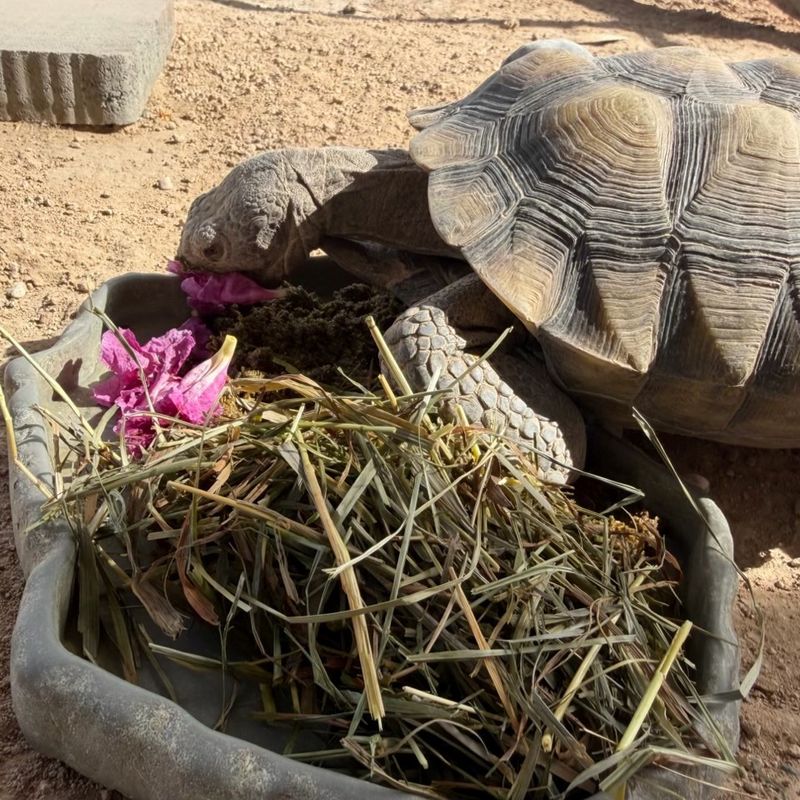
Wild desert tortoises tend to occupy relatively small home areas. They do not roam widely the way some other desert animals do.
Over time, an individual tortoise may return to the same general area repeatedly across multiple seasons.
A burrow that worked well once is likely to be revisited. Tortoises remember locations that offered good conditions.
If a spot under your patio provided cool, stable shelter during a hot stretch, the same tortoise may return when conditions call for it again.
Returning to familiar spots is practical, not sentimental. Digging a new burrow takes effort.
Reusing a known location saves energy, especially when the tortoise is already managing heat or recovering from activity.
Not every burrow is occupied at all times. A tortoise may use several shelter spots within its home area depending on the season, weather, or time of day.
Finding a burrow entrance does not necessarily mean an animal is currently inside.
Home area size varies between individuals. Factors like food availability, water sources, and terrain all influence how far a tortoise ranges.
Some individuals stay within a very small patch of land for years.
If you spot a tortoise near your property more than once, it may well be the same individual.
6. Finding One Does Not Mean You Should Move It
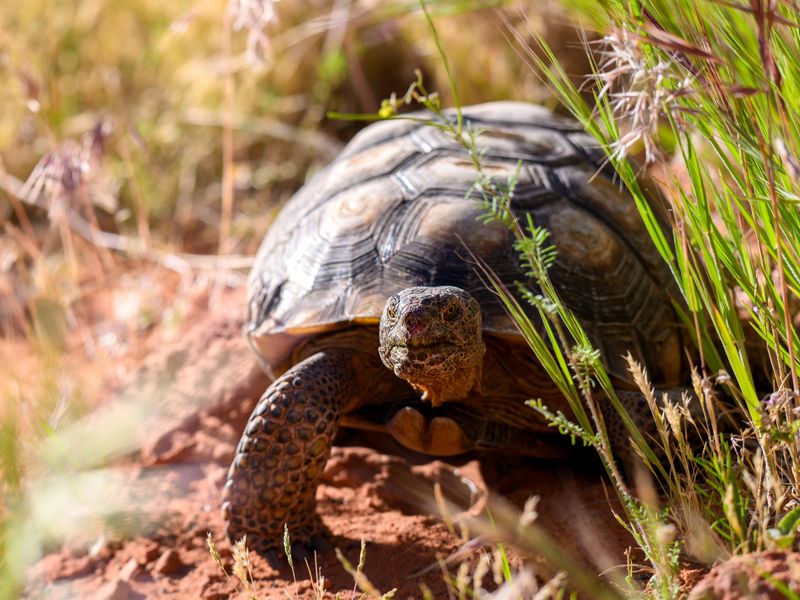
Desert tortoises are protected under Arizona state law and federal regulations. Moving, harassing, or harming one without proper authorization is illegal.
That applies even if the tortoise is on your private property.
Relocating a wild tortoise can cause real harm. Tortoises build familiarity with their home area over years.
Moving one to an unfamiliar location separates it from food sources, water spots, and shelter sites it has learned to depend on.
A tortoise dropped into unfamiliar terrain must start over. Finding food, locating water, and identifying safe shelter all take time and energy.
During that adjustment period, the animal is more exposed and more vulnerable than it would be in its familiar area.
Disease transmission is another concern. Wild tortoises can carry pathogens that captive or relocated tortoises have no immunity to.
Moving animals between populations can spread illness in ways that are difficult to predict or control.
If you find a tortoise on your property and feel uncertain about what to do, contact the Arizona Game and Fish Department. They can offer guidance specific to your situation and let you know whether any action is appropriate.
Leaving the tortoise alone is usually the right call. Most of the time, it will move on when it is ready.
7. Give The Burrow Space Instead Of Disturbing It
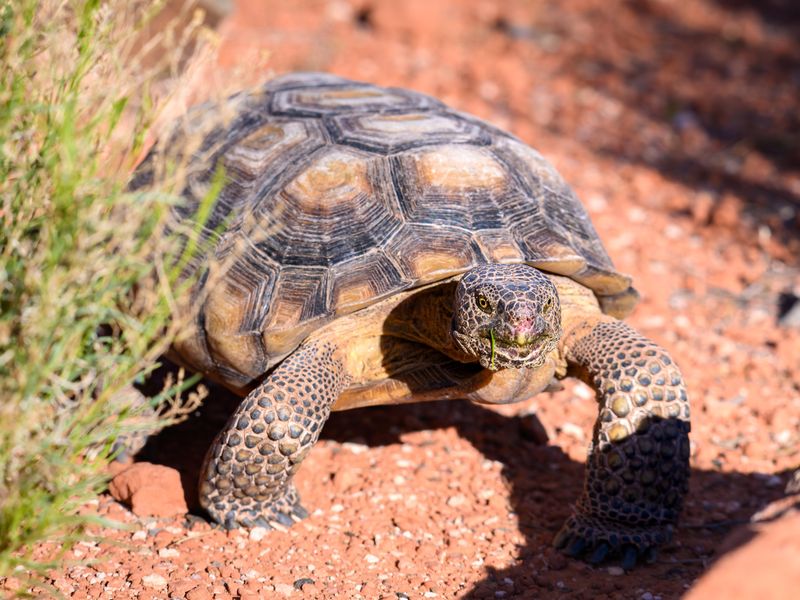
Curiosity is natural when you spot a tortoise near your home. Getting too close, though, can stress the animal and cause it to retreat deeper or abandon a burrow it had started.
Watching from a distance is genuinely the better approach.
Pets pose a real risk. Dogs, even calm ones, can frighten or injure a tortoise quickly.
Keep pets leashed or indoors if a tortoise is resting near your patio or shed. A single stressful encounter can cause the tortoise to flee into open, exposed ground.
Avoid pouring water into the burrow or placing food nearby. Well-intentioned gestures like these can disrupt the tortoise’s behavior and may attract other animals to the area.
Let the tortoise manage its own needs.
Do not block the burrow entrance. A tortoise that cannot return to its shelter has no backup plan readily available.
Blocking access, even temporarily, can put the animal in a difficult position during peak heat hours.
If the tortoise appears injured, stuck, or in immediate danger from a hazard like a pool or fence, contact the Arizona Game and Fish Department at that point. They can advise on whether hands-on assistance is appropriate in that specific case.