Why Fall Color Peaks Later In Southern California Than Most Gardeners Expect
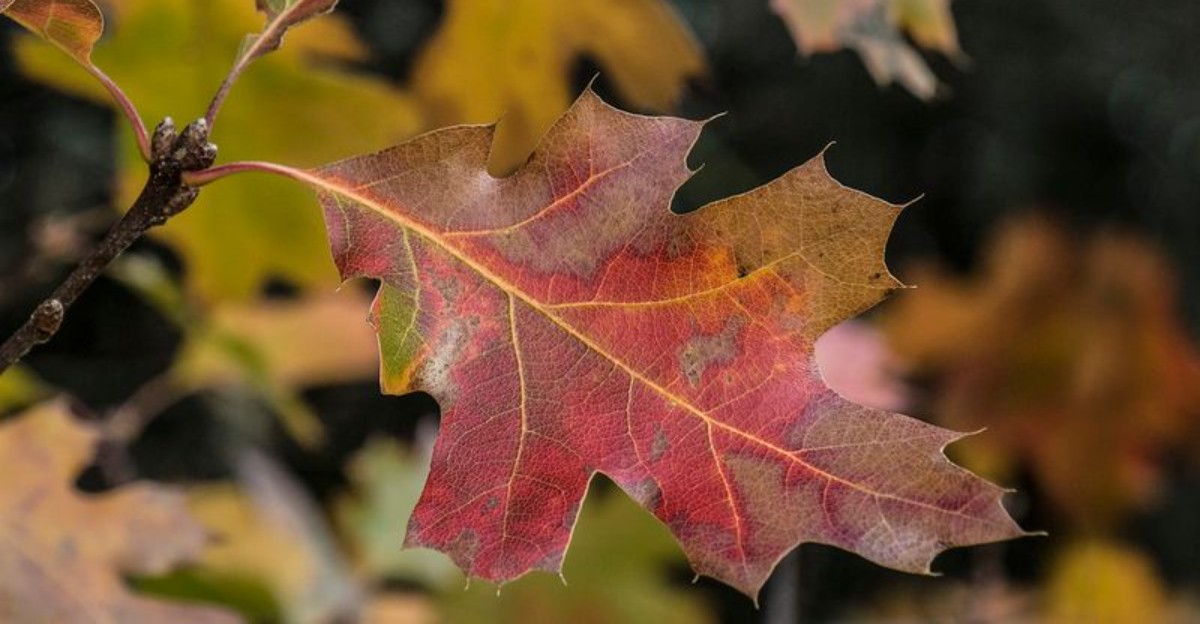
The best leaf color at the Los Angeles County Arboretum often shows up in late November, weeks after New England has raked its yard clean. I didn’t see this coming the first time I visited.
Every fall, I used to scan my street in early October for a single red leaf. Nothing. I assumed our trees just skipped the season and moved on.
Truth is, the show here runs on a different clock. Warm nights, mild air, and a long dry summer all push the timing back. Mountain towns get their turn first, and the lowlands wait patiently.
In Southern California, our flashiest trees hold their summer green while the rest of the country is already sweeping up leaves. So when does the real color arrive, and what can you plant to enjoy it right in your own yard?
Those Stubborn Green Sweetgum Leaves Are Waiting For A Signal
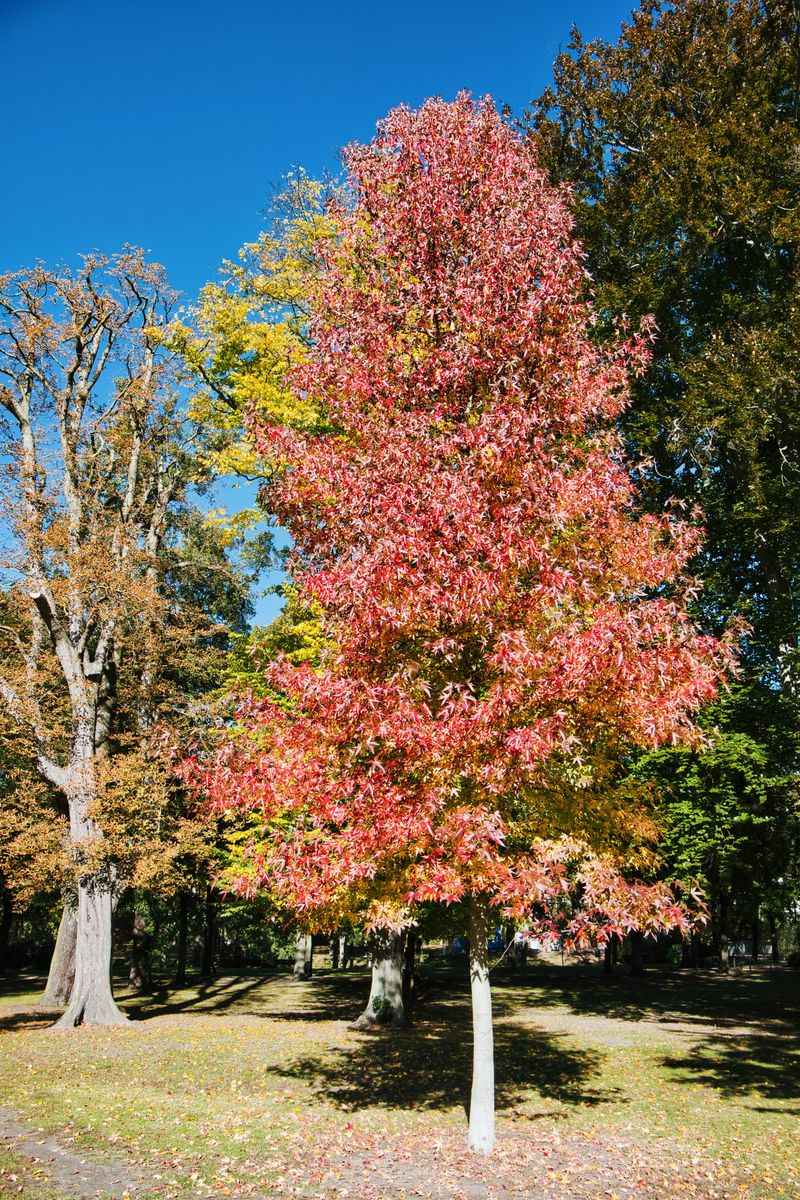
Ever stared at a sweetgum in mid-October and wondered if it forgot what month it is? I have, more than once. The tree is not confused at all.
Leaves change when green chlorophyll breaks down and stops being replaced. Shorter days start that process everywhere, but temperature speeds it up or slows it down. In a warm autumn, trees keep making chlorophyll longer, so the green hangs around.
Once the green fades, yellow and orange pigments called carotenoids show through. They were in the leaf all summer, just hidden. The reds and purples are different, since trees make those fresh in fall from trapped sugars.
Here in coastal and inland valleys, fall days often stay in the 70s and 80s. Santa Ana winds can even bring heat waves in October and November. All that warmth tells trees the growing season is not over yet.
So that green canopy is simply following local weather, not the calendar on your wall. Give it a few more weeks. Many lowland trees hit their stride in late November, and some hold color into early December.
Keep a quick photo log of one tree each week. You’ll learn its real schedule in a single season.
Chilly Nights And Sunny Days Make Maple Leaves Turn Red
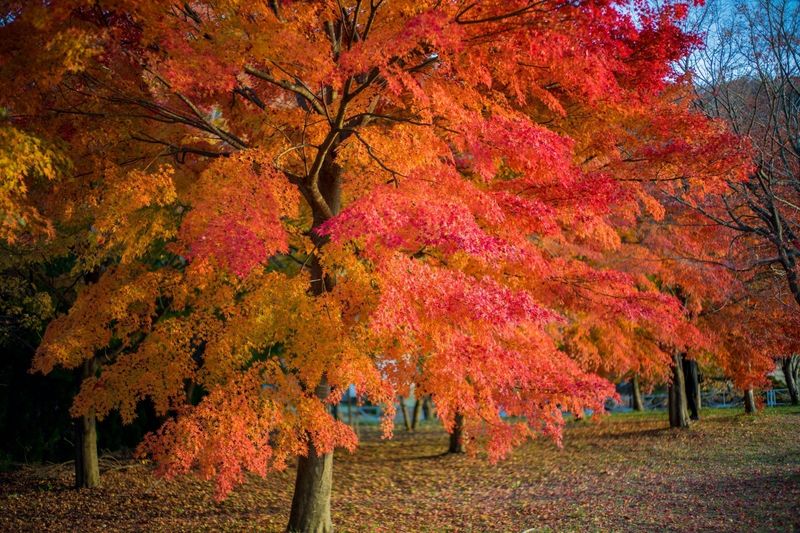
Bright reds need a special recipe. Sunny days let leaves make plenty of sugar, and cool nights keep that sugar trapped inside the leaf.
Trapped sugar is what trees use to build anthocyanins, the pigments behind crimson and purple color. Extension experts note that warm nights let sugars move out of leaves, which dulls the reds. Cool nights in the 40s, without a hard freeze, tend to give the richest show.
Our lowlands often get mild nights well into November, especially near the ocean. Marine air acts like a soft blanket. That means the ingredients for strong red color line up later here than in colder states.
Not going to lie, this is why some years look better than others. A November with clear skies and crisp nights can make an ordinary sweetgum blaze. A cloudy, warm stretch can leave the same tree mostly yellow or muddy orange.
You can’t control the weather, but you can place trees wisely. Plant red-coloring trees where they get full afternoon sun. Low spots in the yard, where cool air settles at night, can also help them color up.
Watch your forecast for the first run of nights in the 40s. Your best color usually follows within a couple of weeks.
Mountain Black Oaks Turn Gold Weeks Before The Valley Trees
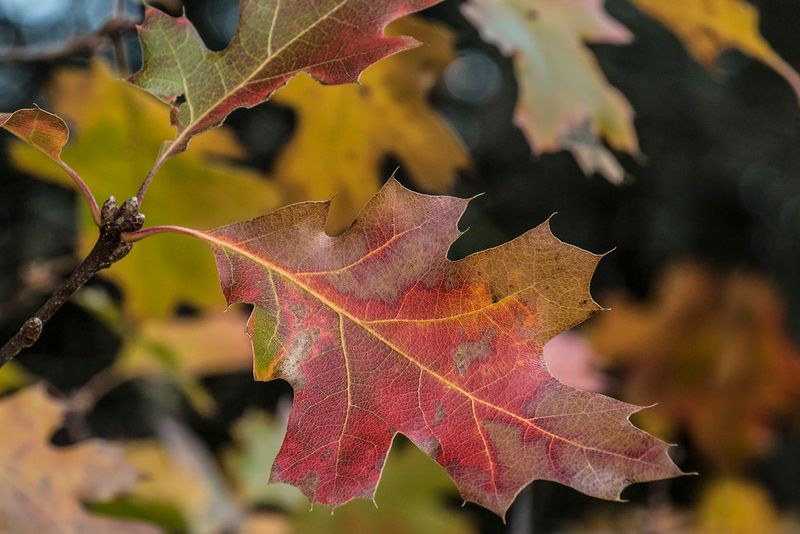
Drive uphill and you can travel through time. Higher elevations cool off sooner, so trees up there change first.
In the San Bernardino Mountains, spots like Big Bear Lake and Lake Arrowhead often color from mid-October into early November. Idyllwild in the San Jacinto Mountains tends to follow in early November. Farther south, California black oaks at Palomar Mountain and Cuyamaca Rancho State Park usually glow gold around mid-November.
Back down near sea level, the timing shifts again. The Los Angeles County Arboretum and many neighborhood street trees often peak from late November into early December. That’s a full month or more after the mountain show begins.
I’m a sucker for this staggered schedule. If you miss one window, another is waiting at a lower elevation. It turns fall into a slow wave rolling down the hills.
Keep in mind these are typical ranges, not promises. A hot fall or early storm can shift them by a week or two. Sites like California Fall Color post updates from local spotters, which helps a lot.
For your own garden, know your elevation. A yard in the foothills may see color noticeably sooner than one near the beach.
Concrete Streets And Ocean Air Keep Your Garden Trees Green
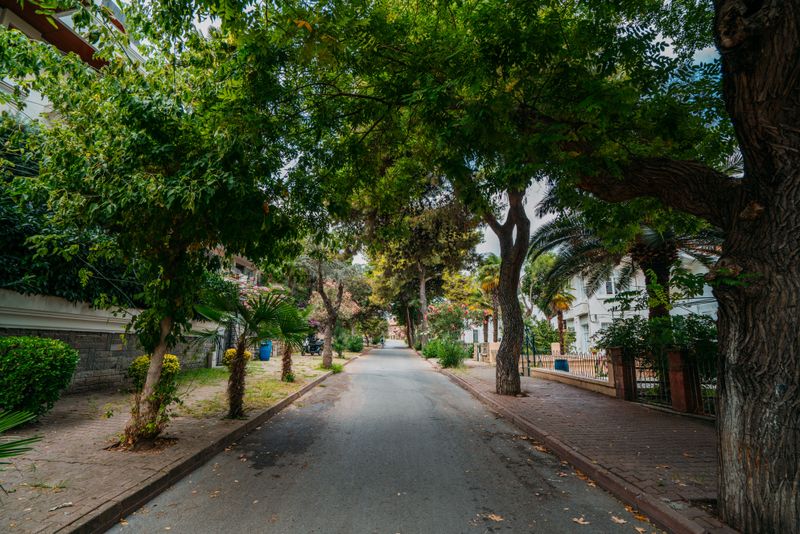
Two identical trees planted ten miles apart can change weeks apart. I learned that comparing my coastal yard with a friend’s inland garden.
Cities stay warmer at night because pavement and buildings soak up heat during the day and release it after dark. Scientists call this the urban heat island effect. Research has linked it to later leaf color and drop in city trees.
Ocean influence plays a big role too. Coastal areas have smaller swings between day and night temperatures. Inland valleys, like parts of the Inland Empire or northern San Diego County, often get colder nights and earlier color.
Your own yard has tiny weather zones as well. A tree next to a south-facing stucco wall stays toasty. One in an open lawn or a low corner may feel cool night air sooner.
Here’s a fun test. Walk your block in late November and note which trees have turned. You’ll probably spot patterns tied to walls, driveways, and open space.
If you’re planting for fall color, pick the coolest open spot you have. Steer clear of tight pockets surrounded by hardscape. A little extra night chill can make a surprising difference.
Thirsty Trees Drop Crispy Brown Leaves Instead Of Color
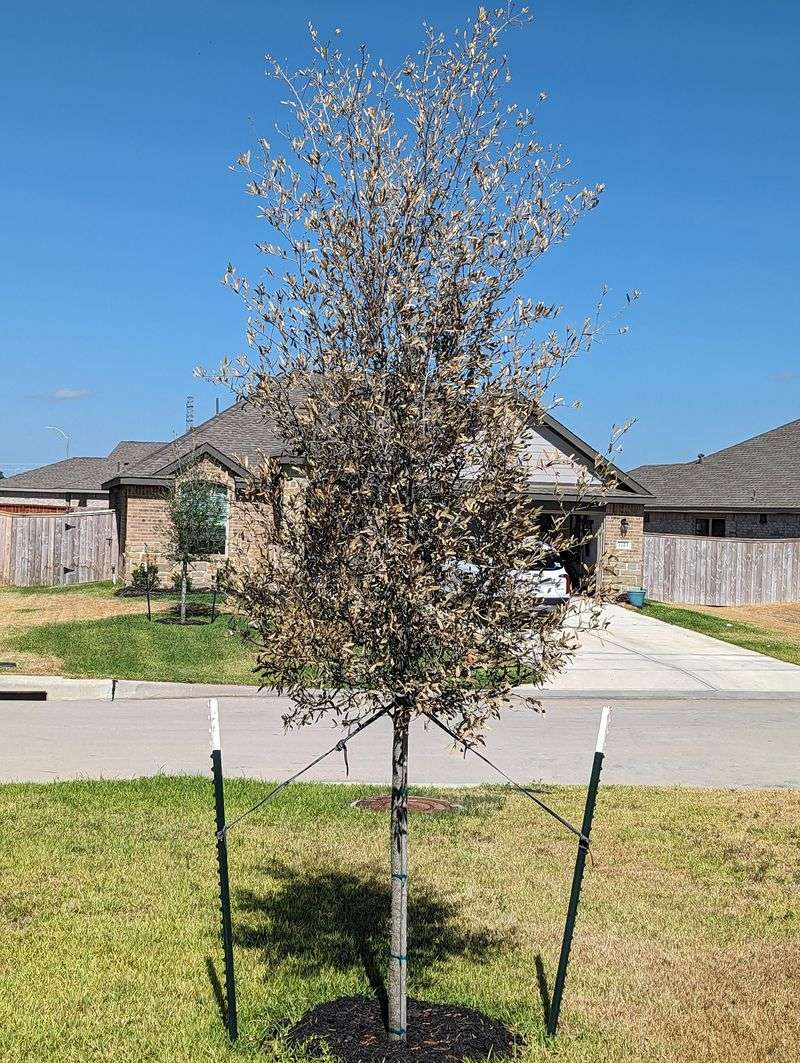
Guilty as charged, I once blamed the weather for a dull fall when my watering was the real problem. Stressed trees rarely put on a good show.
Trees that go through a long dry summer without enough water may scorch, curl, and drop leaves early. Sometimes leaves turn brown and crispy before any color develops. Severe heat waves can do similar harm.
Our rainy season mostly runs from about November through March. That means trees face months of dry soil right before fall color time. Non-native trees like sweetgum and maples usually need regular deep irrigation through that stretch.
UC master gardeners recommend watering established trees slowly and deeply. Aim for moisture spread out toward the edge of the canopy, not just at the trunk. A soaker hose or drip ring works well.
Mulch helps a lot too. Spread two to four inches of wood chips over the root zone, keeping it a few inches away from the trunk. It cools the soil and slows water loss.
Native trees are a different story. Many, like western redbud, are adapted to our dry summers once established. Check your local watering rules too, since restrictions vary by city.
Plant Chinese Pistache Or Ginkgo For Reliable Backyard Color
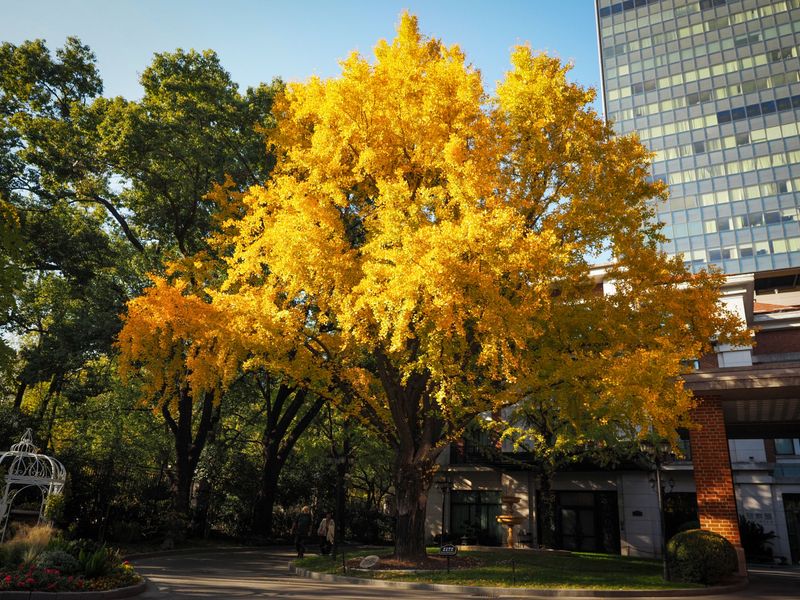
Want color without a mountain road trip? A few trees perform well even in mild lowland gardens.
Chinese pistache is a local favorite for good reason. It handles heat and drought fairly well once established and often turns fiery orange and red. Pick a fruitless male selection if you want less mess.
Ginkgo turns a clear butter yellow and tends to drop its leaves fast, sometimes in just days. Choose a male tree to avoid smelly fruit. Crape myrtle is another easy pick, with many varieties offering orange and red fall leaves.
Sweetgum gives classic star-shaped color, but it grows big and has aggressive surface roots. Give it room away from sidewalks. Look for selections known for good color in warm areas.
Natives deserve a spot too. Western redbud often shows yellow to reddish leaves in fall, and western sycamore turns warm tan and gold. Both support local wildlife.
Trust me on this one, buying in fall is smart. Visit nurseries in November so you can see the actual leaf color before you choose. Fall is also a great planting season here, since cooler weather and winter rain help roots settle in.
Western Sycamores And Cottonwoods Bring Native Gold To Canyons
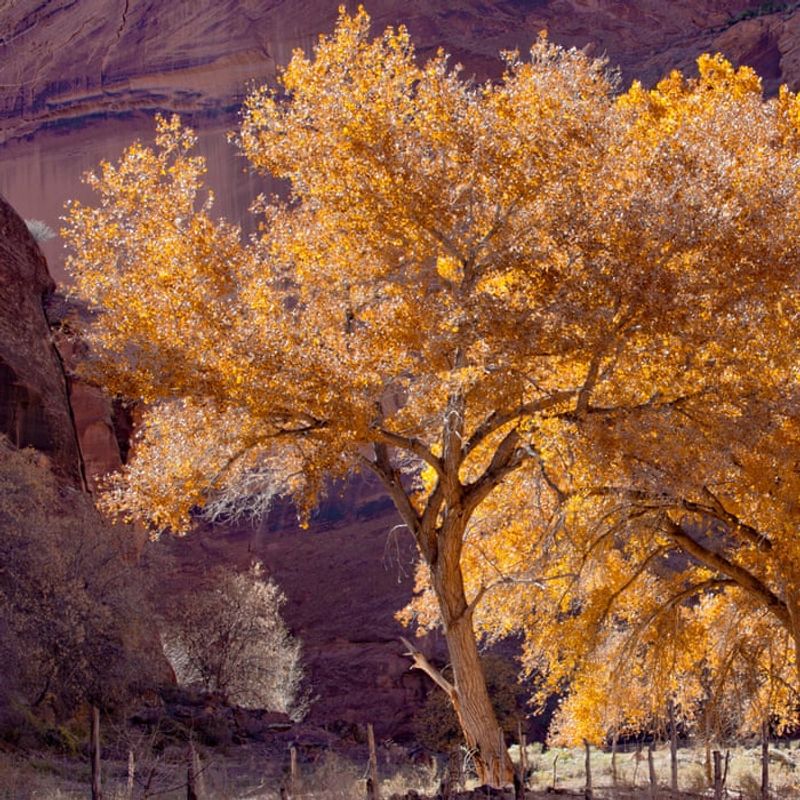
Some of the prettiest local fall color hides in canyon bottoms. Follow a creek in late fall and you’ll often find it lined with gold.
Western sycamores grow along streams across the region. Their big leaves turn tan, gold, and soft orange, and their patchy white bark looks striking against blue sky. Fremont cottonwoods nearby can flash bright yellow.
These natives usually color later in the lowlands, often in late November and December. Water-loving willows and alders join in at some sites. The result is softer than New England, but it has a warm glow all its own.
I’ll say this much, these trees changed how I see our autumn. I stopped expecting fire-engine red and started noticing honey and amber tones. Fall here feels gentler, and it lasts.
Good spots to look include canyon trails in the Santa Monica and San Gabriel mountains and creekside parks across Orange and San Diego counties. Stay on trails to protect sensitive streamside habitat.
If you have space and decent moisture, a western sycamore makes a stunning shade tree. Note that it gets large and can develop a leaf fungus called anthracnose in cool, wet springs. It usually recovers on its own.
Mark Late November On Your Calendar For Peak Arboretum Color
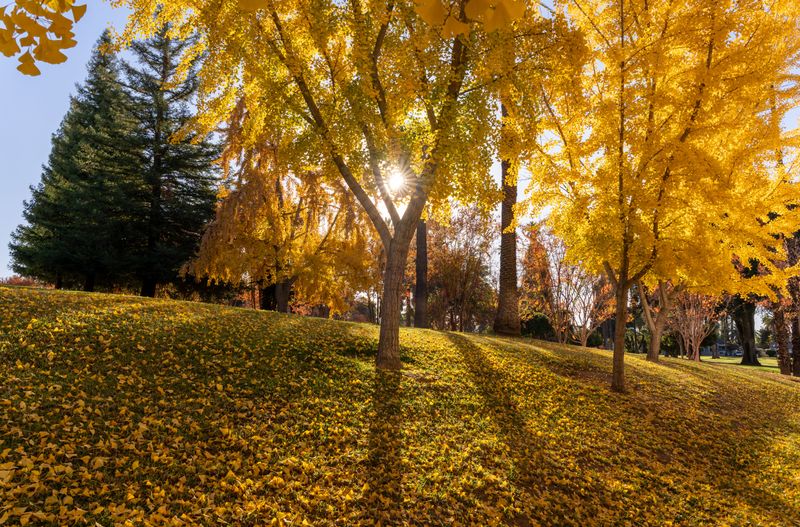
Patience is the real secret to fall color here. Once I shifted my expectations by a month, I stopped feeling cheated.
Start with a simple plan. Head to the mountains from mid-October into early November. Then switch to foothills and canyons, and finish with lowland gardens and city streets from late November into December.
Public gardens make great scouting trips. The Los Angeles County Arboretum, Descanso Gardens, and the San Diego Botanic Garden can show you which trees color well near you. Take notes and photos of anything that catches your eye.
At home, keep a little fall journal. Write down when each tree starts turning, when it peaks, and when leaves drop. After a couple of years, you’ll know your yard’s rhythm better than any chart.
Hold off on heavy pruning of deciduous trees until they’re bare in winter. It’s easier to see the branch structure, and the tree is resting. Rake fallen leaves into compost or use them as mulch.
Fall here is not missing, it’s just fashionably late. Look a little later, plant a tree or two for color, and enjoy a show that often runs right up to the holidays.