Why Florida Palms Grow Huge Flower Stalks – And Whether They Need To Be Removed
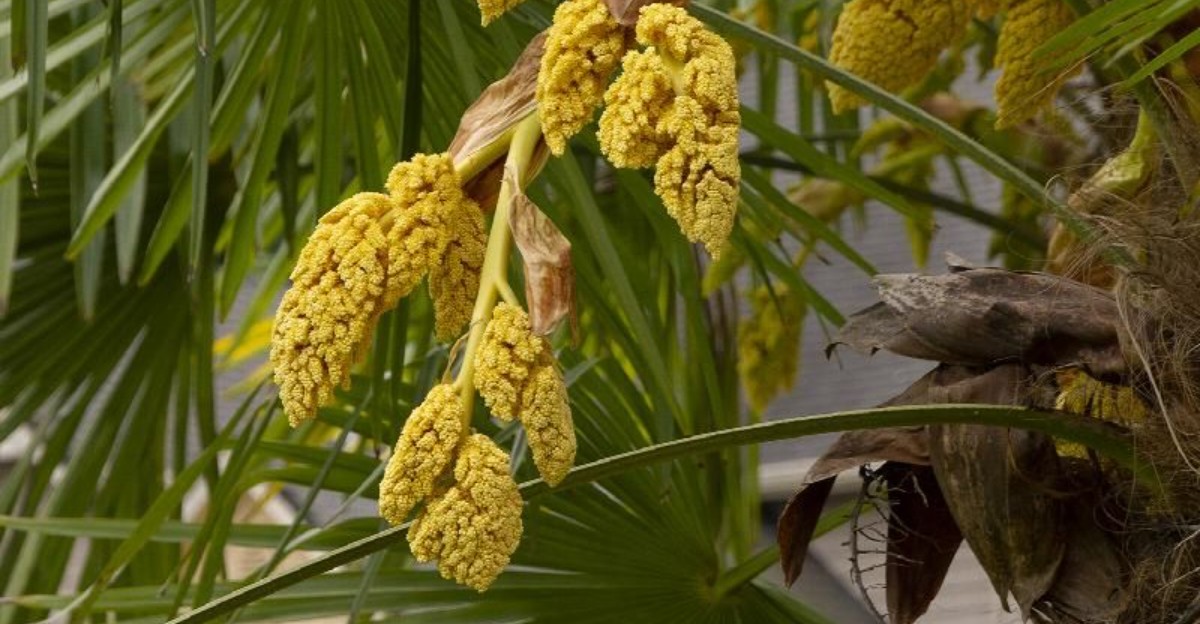
One morning a thick, spiky stalk shoots out of your palm like it’s reaching for the roof, and you start wondering whether the tree is in trouble.
Florida homeowners spot these growths every year, and the reactions split fast. Some grab a saw.
Others take photos and send them to the neighbors. A few call the tree service in a panic, convinced something has gone wrong.
The stalk is doing a job, and what it’s up to is more interesting than most people guess. Some palms put on the show every year without a fuss.
Others spread their blooms out over several months.
Cutting it off can be fine, pointless, or harmful, depending on the situation.
Pause before you grab the pruners. Knowing what you’re looking at saves you from a costly guess.
Flower Stalks Are A Normal Part Of A Palm’s Life
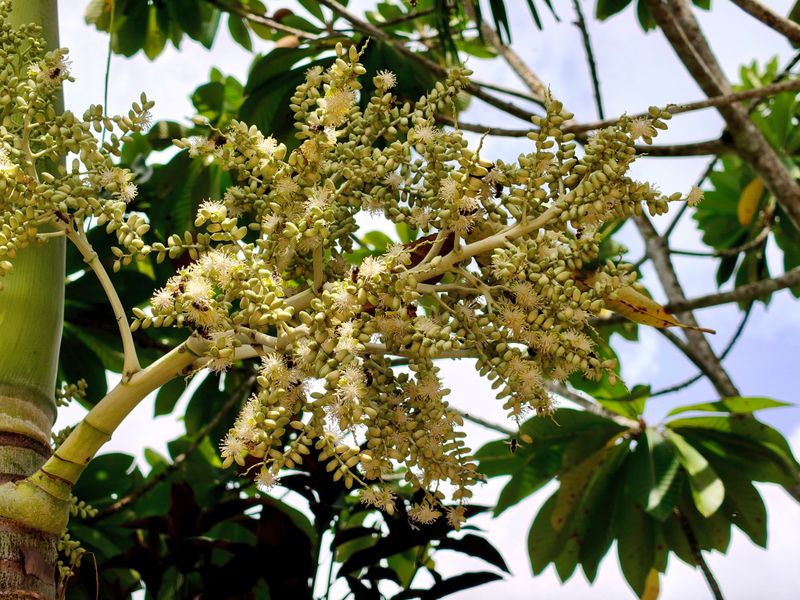
Picture a palm as a quiet neighbor who suddenly throws a party. One day the canopy looks plain, and the next a giant cluster of tiny blooms appears.
Scientists call these structures inflorescences, but you can just call them flower stalks. Palms are flowering plants, so blooming is part of their normal routine.
On most palms, the stalks push out from the spot where a leaf meets the trunk. Palms with a smooth green crownshaft send them out just below that shiny section instead.
Every new leaf and every flower comes from one single growing point at the top of the palm. Gardeners call it the heart, and it handles a lot of work for one small spot.
Timing depends on the kind of palm you own and where it grows. Some bloom once a year, while others put out stalks over several months.
Weather plays a role as well, since warm and sunny seasons tend to bring more flowers. A palm that gets enough water and nutrients will usually bloom more freely.
Seeing a big stalk is generally a sign of a mature, healthy tree. Your palm is simply doing what palms have done for millions of years.
So there is no reason to panic when one shows up overnight. Think of it as your palm saying it feels at home in your yard.
Palm Flowers Feed Bees And Other Pollinators
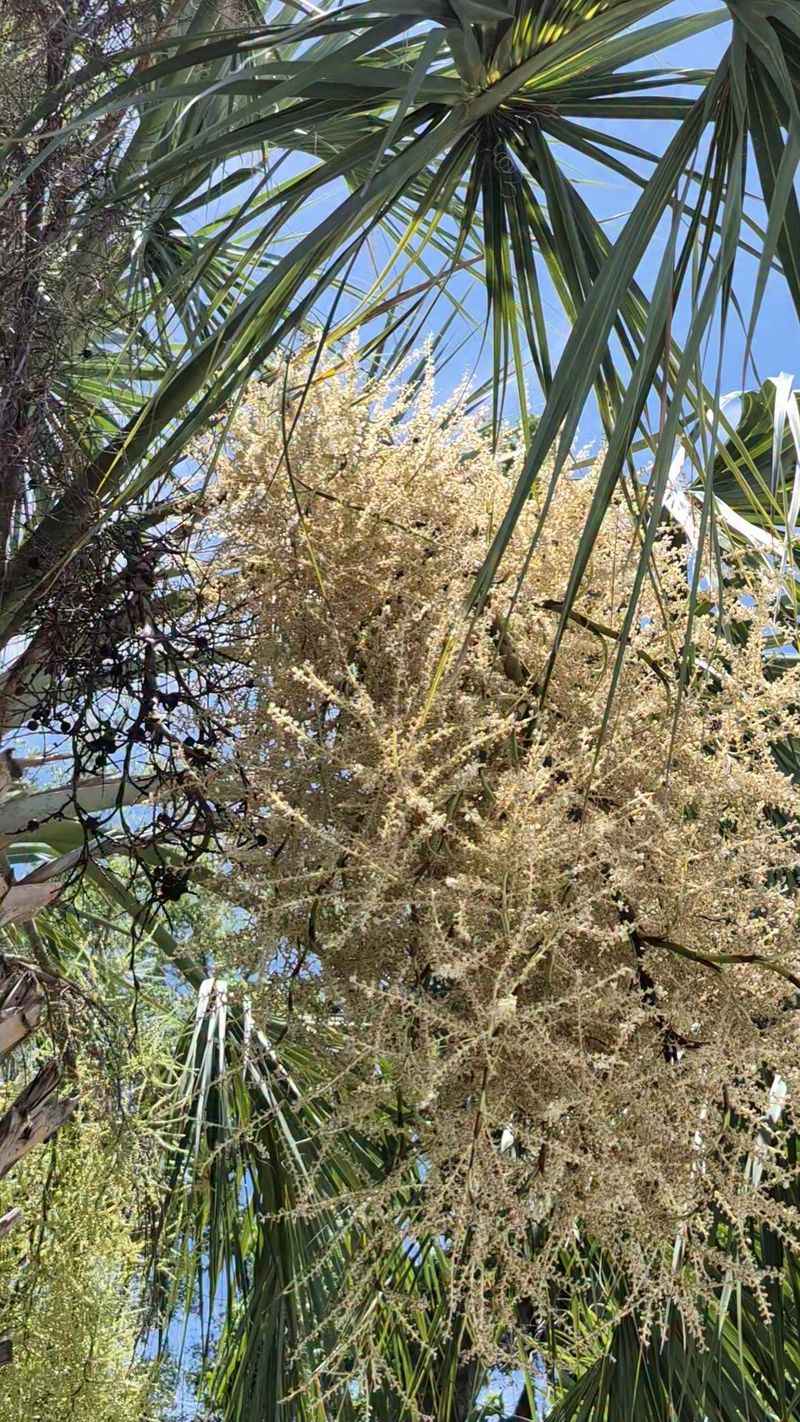
Stand under a blooming cabbage palm in July and listen closely. That buzzing sound is a busy crowd of bees at a free buffet.
Palm flowers often give off a sweet smell that draws in hungry visitors. Bees, butterflies, wasps, flies, moths, and beetles all stop by for a snack.
The cabbage palm, also called the sabal palm, is Florida’s state tree. Beekeepers love it because it offers plenty of nectar for honey bees during summer.
Saw palmetto is another Florida native that pollinators adore. Its blooms are an important nectar source and also support many kinds of moths.
Fun fact: some Florida beekeepers sell honey made mostly from saw palmetto nectar. It has a rich, slightly fruity flavor that many folks enjoy.
Your Florida Garden Changes Every Week. Your Plan Should Too.
Gardening in Florida changes quickly throughout the season. Every Friday you’ll receive a simple weekly plan showing exactly what to plant, prune, fertilize, harvest, and protect so you never miss the right timing.
Native palms do more than feed insects, though. They also give shelter and food to birds, small mammals, and other local wildlife.
When you let a few stalks bloom, your yard becomes a tiny nature preserve. Kids can watch the activity and learn how pollination works up close.
Just be careful not to stand too close if you are allergic to stings. The bees are focused on flowers, so a little distance keeps everyone happy.
Leaving Them Alone Is Perfectly Fine
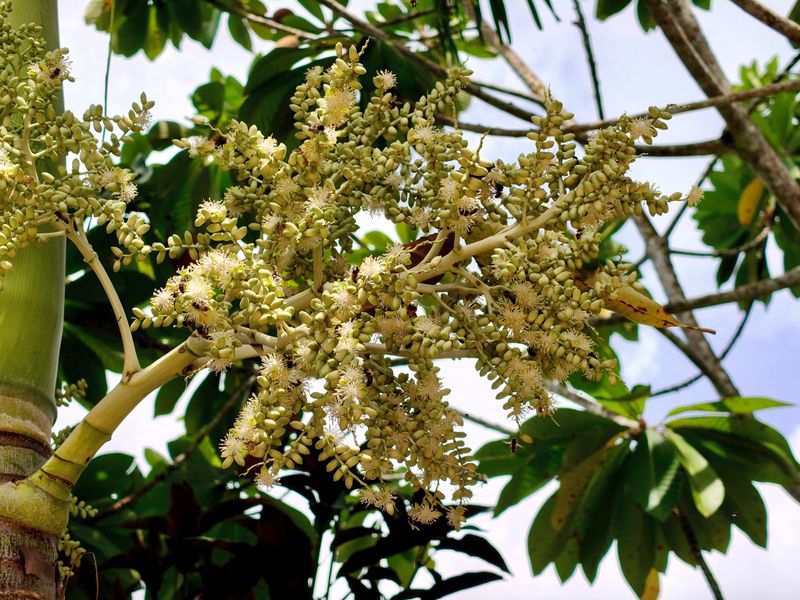
Good news for anyone who dislikes yard chores. You can skip the ladder, leave the stalks in place, and your palm will be fine.
Flower and fruit stalks do not harm the health of the tree. The palm grew them on purpose, and it can carry them without trouble in most cases.
The main question is whether the mess bothers you. Falling flowers and fruit can scatter across patios, cars, and walkways.
If the stalk hangs over a lawn or a garden bed, the drop is usually no big deal. Raking now and then keeps things neat enough for most people.
Leaving stalks also helps wildlife in your area. Pollinators get nectar, and later, birds may visit to nibble on the ripe fruit.
Many palm lovers enjoy watching the colors change over time. Cream flowers turn into green fruit, then orange, red, or dark blue, depending on the species.
Think of it as a slow show that lasts for weeks. Snap a few photos each month to see how much it changes.
Of course, a few exceptions exist, and they come up later in this list. For many Florida yards, though, doing nothing is a smart and easy choice.
Removing Them Won’t Hurt The Palm
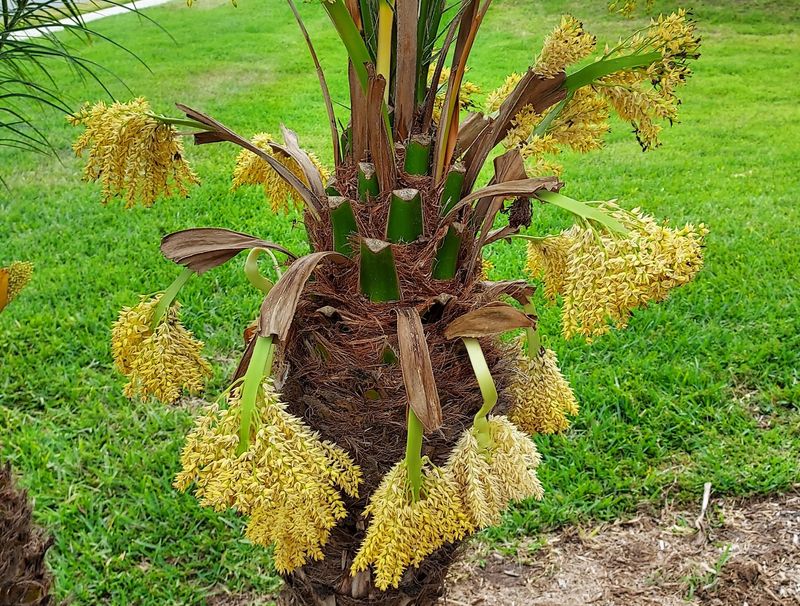
Here is a myth worth clearing up. Some people believe cutting flower stalks weakens a palm, but experts say otherwise.
Current research shows that taking off living flower or fruit stalks will not harm the tree. Your palm will keep growing just as it did before.
The key is knowing the difference between stalks and fronds. Fronds are the leaves, and they act like solar panels that make food for the palm.
Flowers and fruit work the opposite way, since they use up energy instead of making it. Removing them simply means the palm spends a bit less on reproduction.
Green fronds, on the other hand, should stay put whenever possible. Cutting too many healthy leaves can starve a palm and lead to weak growth.
A handy rule is to trim stalks freely but go easy on the leaves. Many arborists warn against the tight hurricane cut that leaves a palm looking like a feather duster.
So if a stalk hangs over your pool or driveway, go ahead and take it off. Your palm will not hold a grudge.
Just make your cuts cleanly and close to the trunk without gouging it. A tidy cut looks better and keeps the bark protected.
Cut Them Early To Avoid Heavy Fruit Stalks Later
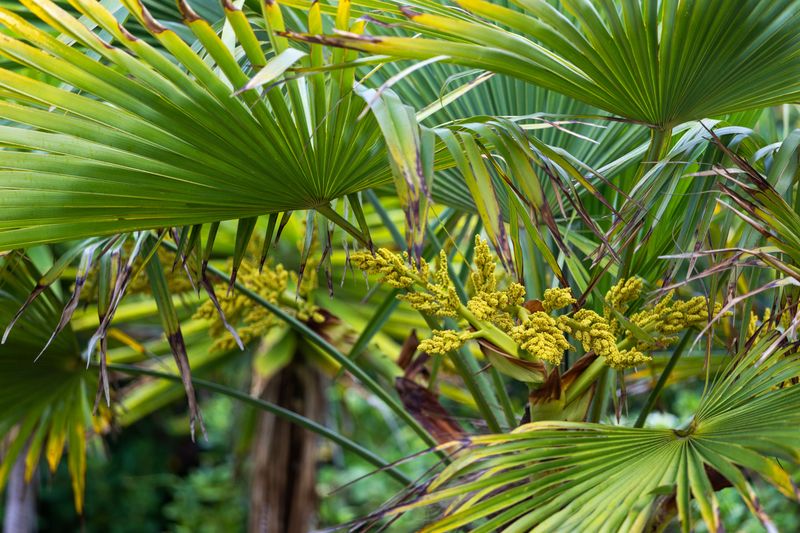
Timing is everything, like catching a cookie before it burns. A small flower stalk is light and easy to remove, but that changes fast.
Once the flowers are pollinated, they turn into clusters of fruit. Those clusters grow bigger and heavier with every passing week.
Queen palms are a classic example in Florida neighborhoods. They pump out huge bunches of orange fruit that drop onto lawns, sidewalks, and cars.
The fallen fruit gets squishy and slippery underfoot. It can stain concrete and draw flies, which nobody wants near the back door.
Chinese fan palms take things even further. A single fruit cluster can weigh up to 20 pounds, and one tree may grow about 12 of them.
That adds up to roughly 240 pounds hanging from the top of the tree. That much weight is about the same as a large adult sitting up there.
Cutting stalks while they are still in flower keeps the job light and simple. You avoid wrestling a heavy, messy bundle later in the season.
Mark your calendar for late spring and early summer, when many palms bloom. A quick check each month helps you spot new stalks before they turn into fruit.
Removing Flowers Means Fewer Unwanted Seedlings
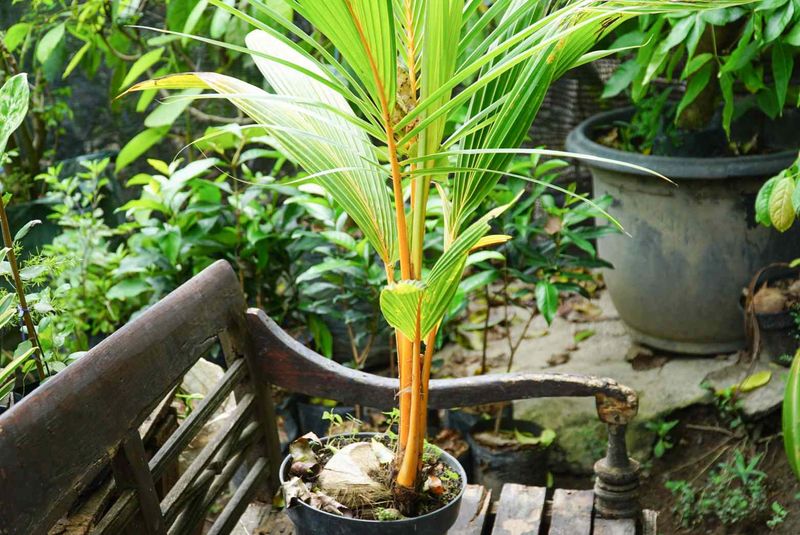
Ever pulled weeds and found a tiny palm hiding in your flower bed? Then you have met the next generation of the tree next door.
When palm fruit falls and sits on the ground, the seeds get to work. Before long, hundreds of little sprouts can pop up in mulch and garden beds.
Pulling them one by one gets old in a hurry. Some seedlings also grow deep roots quickly, making them tough to yank out.
Rotting fruit adds another problem, since the fleshy outer layer can smell pretty sour. It is not the kind of scent you want near a patio.
Chinese fan palm seeds sprout very easily, and birds and small mammals carry them far away. In some parts of Florida, this palm is seen as potentially invasive for that reason.
Sabal palm seeds are tough too and can stay able to sprout for a long time. That means a single fruiting season can cause trouble for years.
Removing flower stalks before they set fruit stops the cycle at the start. No fruit means no seeds, and no seeds means fewer surprise palms.
It is a simple way to protect your garden and nearby natural areas. Your back and your weekends will thank you.
Heavy Fruit Can Split A Chinese Fan Palm’s Crown
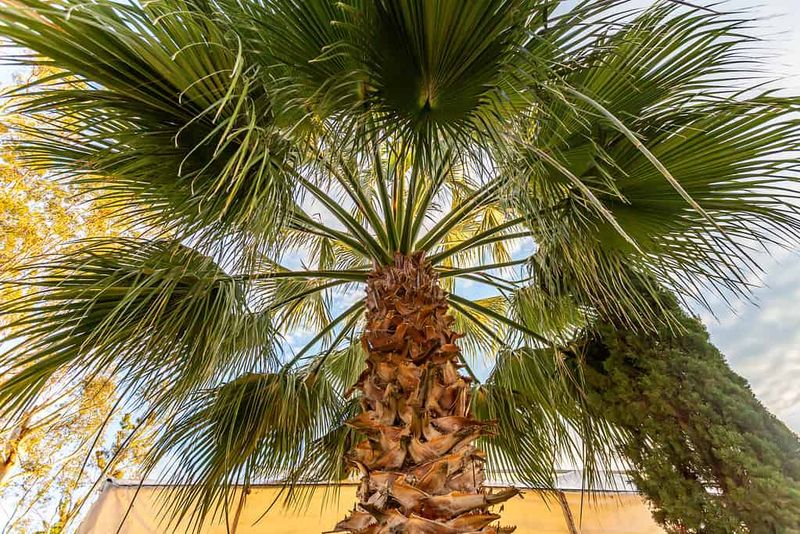
Chinese fan palms are graceful trees with big, droopy, fan-shaped leaves. They also have a hidden weakness that catches many owners off guard.
Their flower stalks can stretch up to six feet long. After blooming, they fill with glossy blue-green fruit that adds up to serious weight.
All that load pulls the lower fronds downward over time. The canopy can end up looking split, with one layer up top and a sagging layer below.
Some folks call this the two-tiered look. It might seem quirky at first, but it often means the crown is under strain.
In bad cases, the heavy fruit can actually split the crown apart. Repairing that kind of damage is hard, and the tree may never look the same.
Prevention is far easier than any fix. Snip the flower stalks before the fruit develops, and the weight problem mostly disappears.
Check your fan palm each spring for new stalks poking out between the leaves. Catching them early keeps the job quick and the tree balanced.
If your palm is too tall to reach safely, call a certified arborist. Paying a pro is a much better plan than taking a risky fall from a ladder.
Use A Hand Saw So You Don’t Nick Nearby Fronds
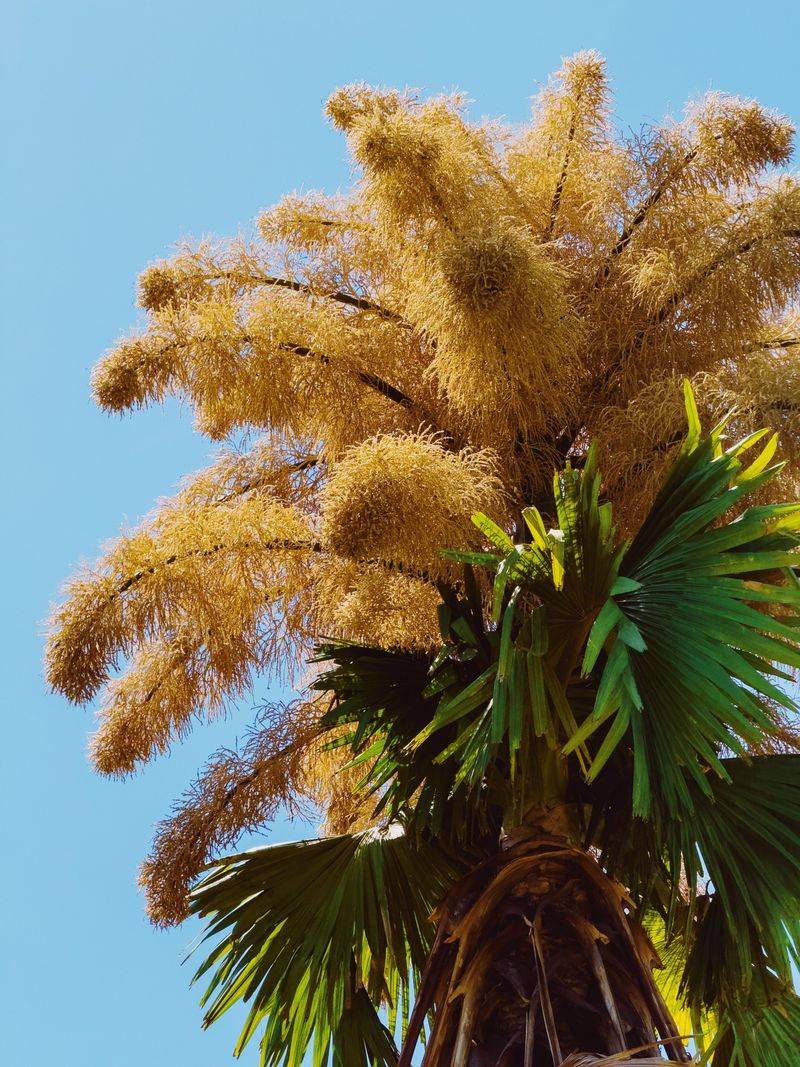
A chainsaw might feel exciting, but it is usually the wrong tool here. For palm stalks, a simple hand saw wins nearly every time.
Hand saws give you control over each stroke. You can guide the blade slowly and keep it away from the green fronds around the stalk.
Nicking a healthy leaf may seem minor, but those leaves feed the whole tree. Every scrape opens a small wound where trouble could start.
Power tools can also bind or tear the tough fibers inside a palm. Ragged cuts look messy and heal poorly compared to clean ones.
Another plus is that hand saws are easy to clean thoroughly. Chainsaws have lots of hidden spots where sap and debris can hide.
Pick a sharp pruning saw with a curved blade for the best grip on thick stalks. Wear gloves, since some palms have sharp spines along their stems.
Cut close to the trunk without digging into it. Support the stalk with your free hand if possible, so it does not swing into your face.
For stalks higher than you can safely reach, use a pole saw or call a pro. Safety matters more than saving a few dollars.
Sanitize Your Tools Between Palms
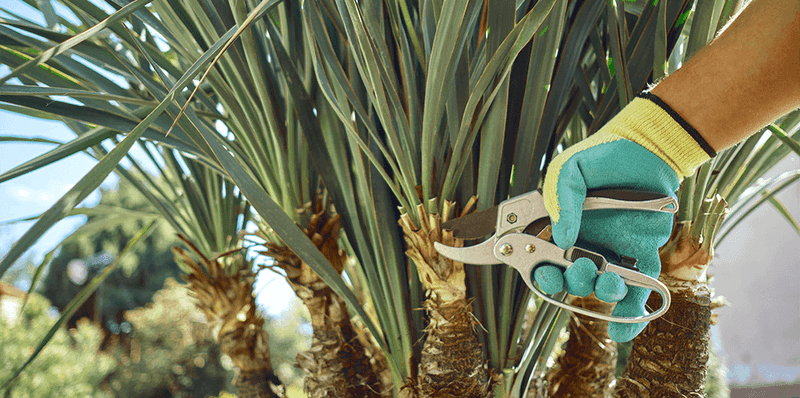
Germs do not only spread in classrooms. Dirty pruning saws can carry palm diseases from one tree to the next.
Fusarium wilt is a serious fungal disease that can wipe out queen, Washingtonia, and Canary Island date palms. Thielaviopsis trunk rot can also strike Chinese fan palms and may cause the trunk to collapse.
Start by wiping off dirt, sap, and bits of plant. Disinfectants work much better on a clean blade.
Next, soak your tools for 5 to 10 minutes in a cleaning solution. One option is 1 part bleach to 3 parts water, followed by a rinse to stop rust.
Pine-Sol mixed 1 part to 3 parts water also works well. Many home gardeners prefer rubbing alcohol of at least 70 percent, since it is gentler on metal.
You can use alcohol straight or mix it half and half with water. Some pros even heat saw blades with a small butane torch.
Clean your tools after each job, and ideally between palms. That step matters most if any tree looks sick.
Swap out your soaking solution every two hours or after about 10 palms. Fresh liquid keeps it strong enough to do its job.