Why Georgia Gardeners Shouldn’t Remove Praying Mantis Egg Cases
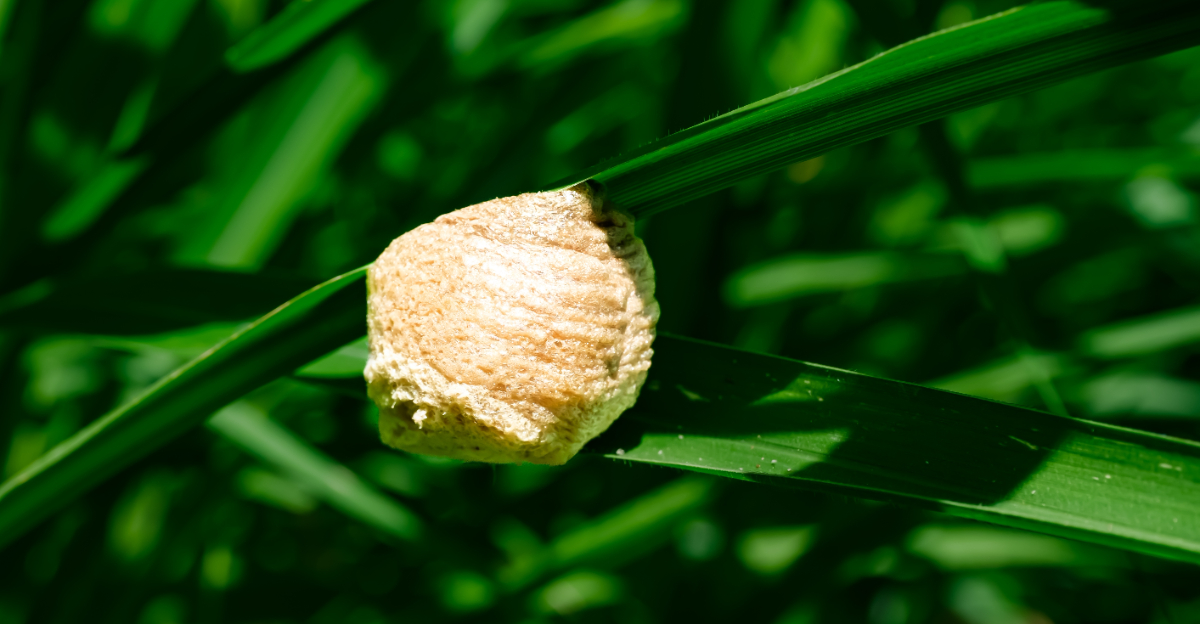
Spotting a strange brown case attached to a branch can make cleanup tempting. Before removing it, take another look because something useful may be inside.
Praying mantises leave behind egg cases that can easily resemble dried plant material. Tossing one away during seasonal cleanup means removing the next generation too.
Your first instinct may be to tidy every stem and twig before fall settles in. Some garden finds, however, deserve to remain exactly where you discovered them.
In Georgia, mantises are familiar visitors that feed on many insects they encounter. Their egg cases can remain outdoors through changing weather until hatching time arrives.
Knowing what these cases look like helps you avoid removing them by mistake. Identification only takes a little attention.
Leave that unusual case alone until you know exactly what you have found.
1. Those Brown Cases On Twigs Are Easy To Mistake For Debris
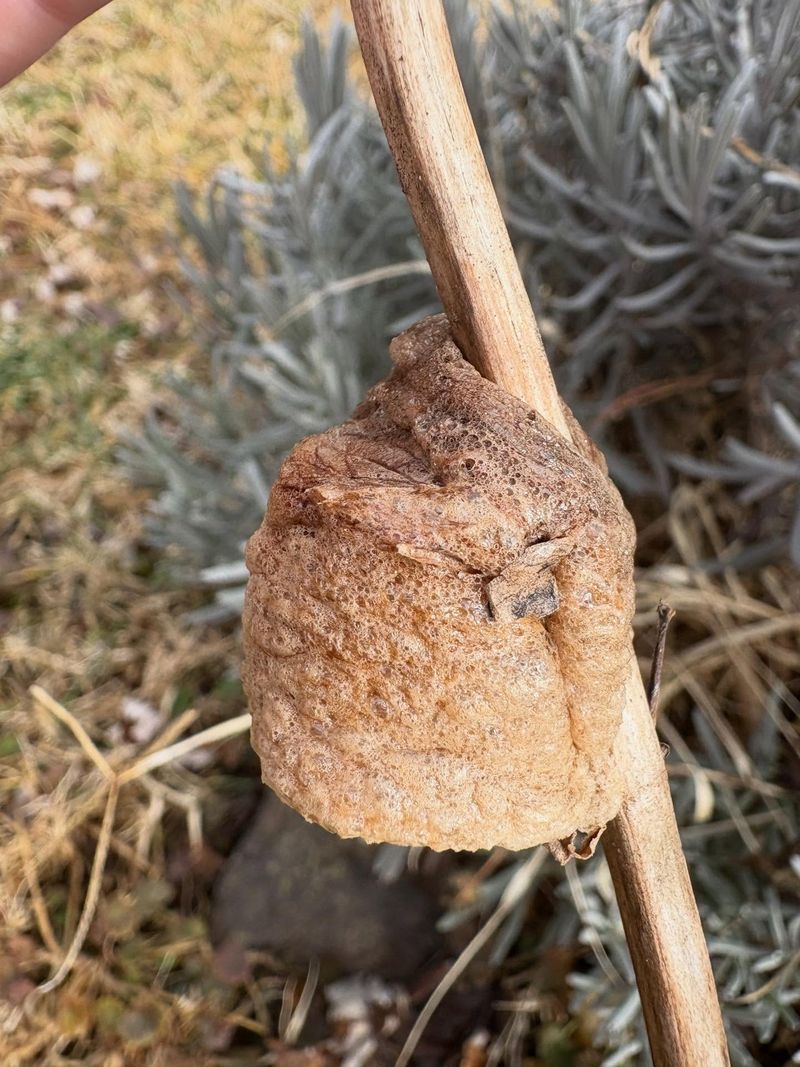
Spotted something crusty and tan clinging to an old stem? Before you snap it off, take a closer look.
Praying mantis egg cases, called oothecae, look almost exactly like a small blob of dried foam or hardened mud.
Most people toss them into the yard waste bin without realizing what they just removed.
The texture is papery and lightweight, with a slightly ridged surface. Attached to thin twigs or woody plant stems, they blend right into the background of a winter garden.
Gardeners in Georgia often spot them while pruning in late fall or early winter. At that point, the branches are bare, and anything attached stands out.
The problem is that “standing out” does not always mean it looks important.
A quick habit worth building: before removing anything from a stem or branch during a garden cleanup, pause and look closely. If it feels lightweight and papery rather than soft or slimy, there is a good chance it is an egg case.
Praying mantis oothecae are usually between one and two inches long. They are attached firmly and do not crumble easily when touched.
Once you know what to look for, identifying them becomes second nature pretty quickly.
2. Each Egg Case Can Hold Many Young Mantises
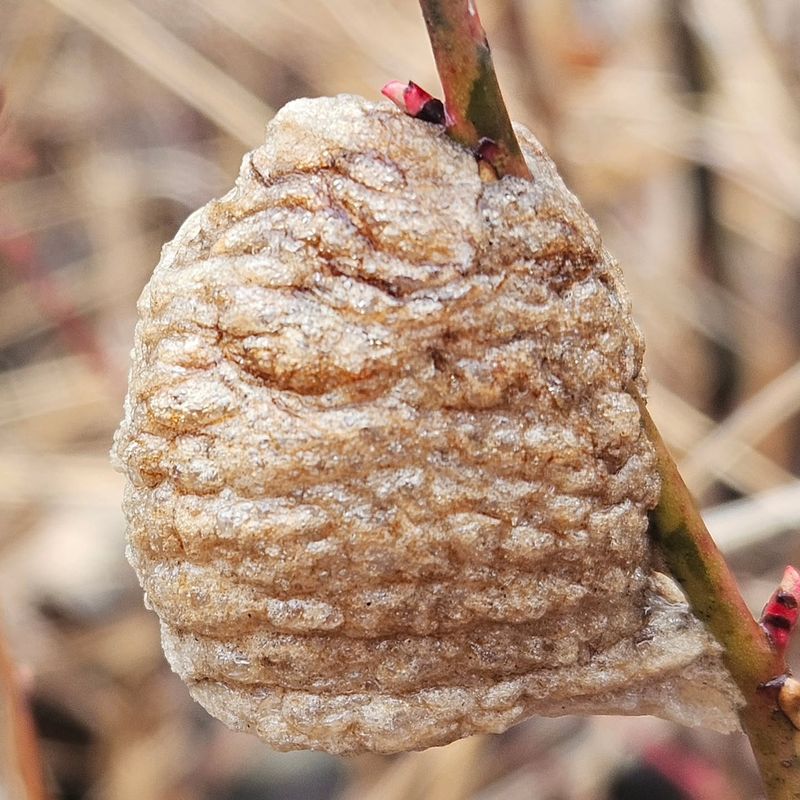
One single egg case holds far more life than most gardeners expect. Depending on the species, a single ootheca can contain roughly 50 to 200 eggs packed inside its foam-like structure.
That is a significant number of potential garden helpers waiting inside something barely bigger than a walnut. Each egg is nestled in a separate chamber within the hardened foam, giving it protection from both cold and moisture.
Praying mantises found across the southeastern United States include species like the Chinese mantis and the Carolina mantis.
Both produce oothecae that are commonly seen clinging to garden plants and shrubs through the colder months.
Not every egg in a case will hatch, and survival rates for young mantises vary depending on weather conditions and predator pressure. Still, even a fraction of a full case hatching brings a meaningful number of beneficial insects into the garden.
Removing just one egg case could mean losing dozens of predatory insects before they ever get started. When you multiply that across a larger garden with several cases, the impact adds up fast.
Your Georgia Garden Changes Every Week. Your Plan Should Too.
Gardening in Georgia changes quickly throughout the season. Every Friday you’ll receive a simple weekly plan showing exactly what to plant, prune, fertilize, harvest, and protect so you never miss the right timing.
Keeping those cases in place gives your garden a head start on natural pest management. No sprays, no traps, no effort required on your part at all.
3. The Eggs Stay Inside Through The Winter
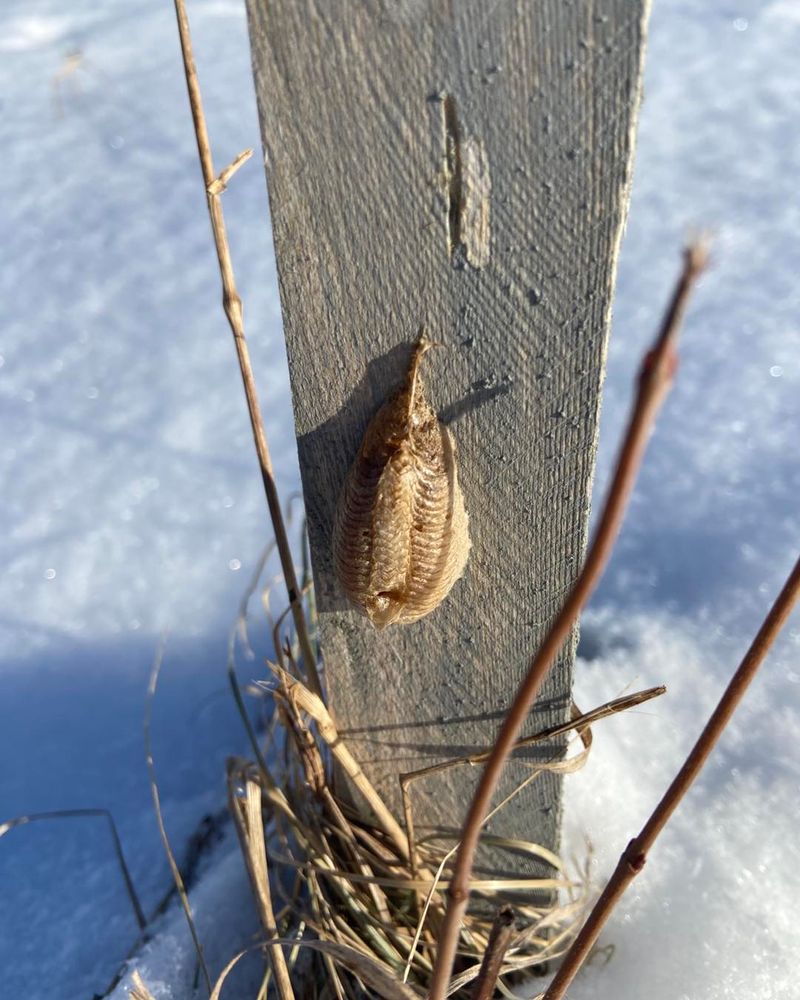
Freezing nights do not phase these cases at all. Praying mantis oothecae are built to handle winter conditions, and the foam-like material surrounding the eggs acts as natural insulation.
Across much of Georgia, winters are mild enough that egg cases face relatively low risk from extreme cold. Even during occasional cold snaps, the protective coating of the ootheca keeps internal temperatures stable enough for the eggs to survive in reasonable numbers.
Gardeners sometimes worry that leaving cases outside through winter will harm them. In most situations, the opposite is true.
Bringing a case indoors can actually cause problems, since the warmer indoor temperatures may trigger hatching too early, long before outdoor conditions can support the young mantises.
Outdoors, the eggs follow natural temperature cues. Cold slows development, and warming spring temperatures signal that it is time to hatch.
That timing is critical for the young mantises to find food right when they emerge.
Moisture and airflow around the case matter too. Cases attached to stems in open garden areas tend to fare better than those left in sealed containers or brought inside.
Leaving them right where they are, attached to the plant, is the simplest and most effective approach for supporting healthy development through the colder months.
4. Removing The Case Means Losing The Mantises Inside
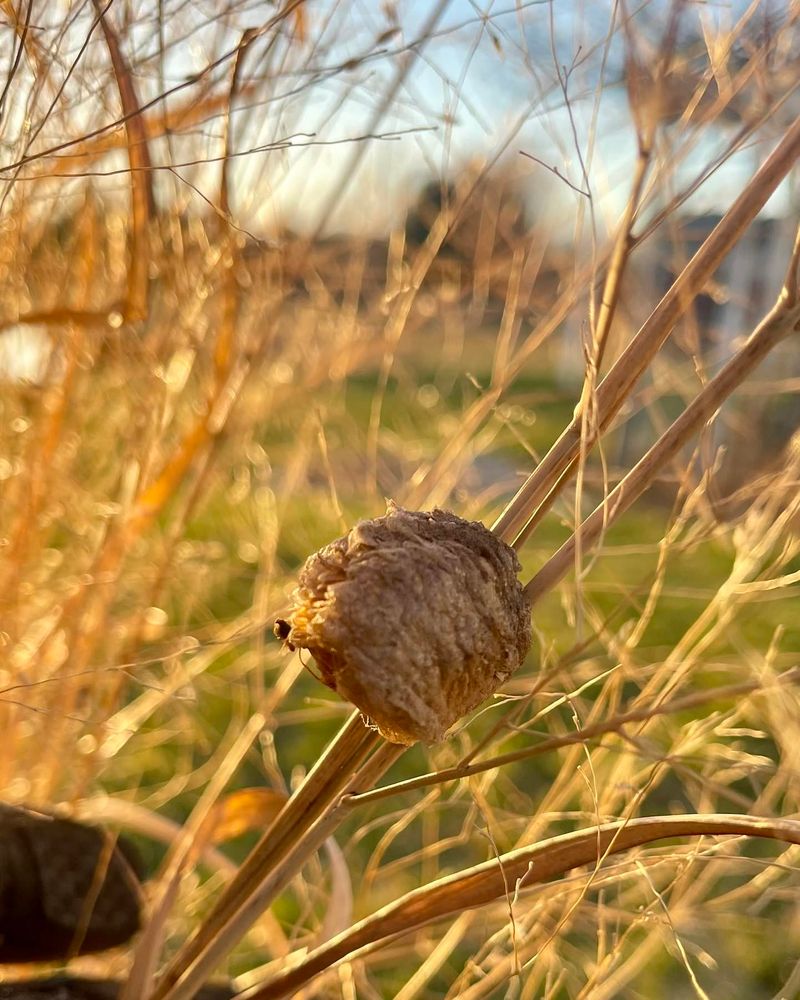
Pulling an egg case off a plant seems harmless in the moment. However, once it is removed and tossed away, every egg inside it goes with it.
If the case ends up in a trash bag or compost pile, the eggs rarely survive long enough to hatch under useful conditions. Young mantises that do hatch inside a sealed bag have no way to reach the garden where they are actually needed.
Even moving a case to a different spot in the yard can disrupt its development.
Cases are positioned by the female mantis in locations that offer some protection from wind, rain, and direct sun. Relocating them removes that natural advantage.
For gardeners who rely on minimal pesticide use, losing a batch of praying mantises means losing a reliable predator from the pest control lineup.
Aphids, caterpillars, beetles, and other problem insects have fewer natural checks when beneficial predators are not present in the garden.
Accidental removal during fall cleanup is one of the most common ways egg cases are lost.
Aggressive pruning, clearing old stems, or bundling brush too quickly can take out cases that were hidden in plain sight.
Slowing down during garden cleanup, especially between October and March in the South, makes a real difference in how many beneficial insects make it to spring.
5. Young Mantises Come Out When Warmer Weather Returns
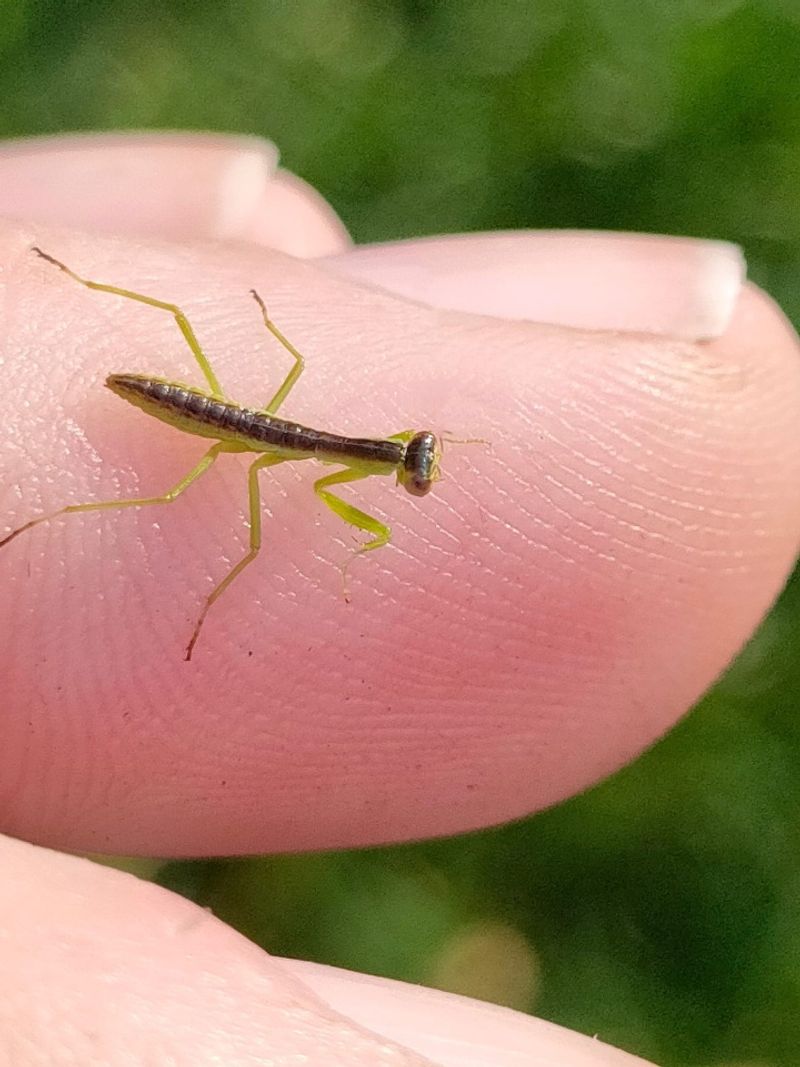
Come spring, something remarkable happens right on the stems of your garden plants. Hundreds of tiny mantis nymphs begin pushing out from the egg case in a slow, steady stream.
Hatching typically begins when daytime temperatures warm consistently and overnight lows stay above freezing. In most parts of the Southeast, that window falls somewhere between late March and May, depending on the year and local conditions.
Newly hatched mantises are minuscule, often no bigger than a grain of rice.
They look like perfectly formed miniature versions of adult mantises, with long legs and triangular heads already in place.
Right after hatching, the nymphs scatter quickly across nearby plants. Each one begins hunting almost immediately, targeting small insects like aphids, gnats, and tiny caterpillars that are active in early spring.
Watching this happen in a garden is genuinely impressive.
A single egg case can release a wave of nymphs that spreads across several nearby plants within hours of hatching.
Not all nymphs survive to adulthood. Predators, weather, and food availability all play a role in how many make it through the season.
Still, even a modest number reaching maturity adds meaningful predator pressure to a garden through summer and into fall.
6. These Predators Feed On Many Insects Around The Garden
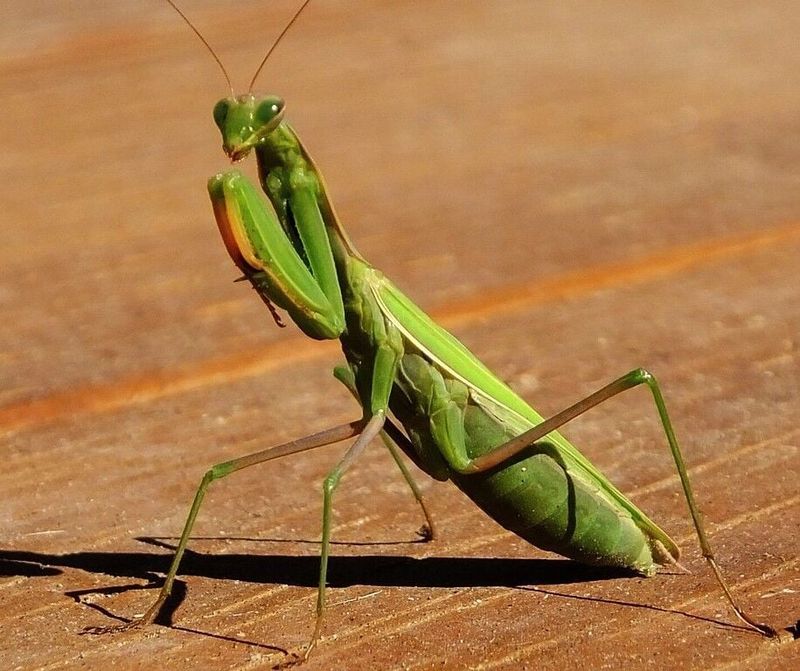
Praying mantises are not picky eaters. Young nymphs start with tiny soft-bodied insects, while adults take on much larger prey as the season progresses.
Common garden pests that mantises consume include aphids, grasshoppers, beetles, flies, small moths, and caterpillars. Having a healthy mantis population in the garden means natural pressure on several pest groups at once.
Adult mantises can grow quite large, with some species reaching four inches or more in length. At that size, they are capable of catching and consuming insects that smaller beneficial predators would not be able to handle.
Mantises hunt by staying very still and waiting for prey to come within striking range. Their front legs snap forward with impressive speed, giving prey little chance to escape.
No chemicals, no effort from the gardener required.
One thing worth noting: praying mantises are not selective about what they catch. They will occasionally capture beneficial insects like bees or small butterflies.
A balanced garden with diverse plantings tends to support enough insect variety that this is rarely a significant concern.
Across Georgia gardens, where warm summers bring intense insect pressure, having resident mantises adds a layer of pest management that works around the clock.
They are active day and night, hunting continuously through the growing season.
7. Leaving Egg Cases In Place Lets Nature Take Its Course
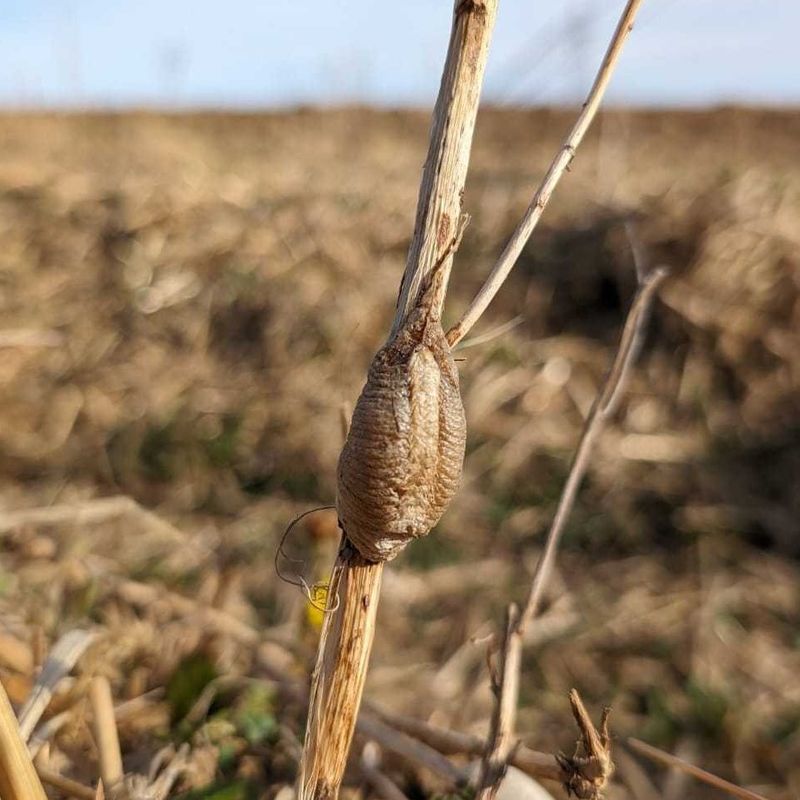
Sometimes the best gardening decision is simply doing nothing. Leaving egg cases where the female mantis placed them costs zero effort and requires zero maintenance.
Gardens that support natural predator cycles tend to have fewer pest outbreaks over time.
Praying mantises are one piece of that larger ecological picture, working alongside spiders, ground beetles, lacewings, and birds to keep insect populations in a manageable range.
Gardeners across the Southeast who practice low-intervention gardening often report fewer dramatic pest problems season to season.
That outcome is not guaranteed, and local conditions vary, but reducing unnecessary disruptions to beneficial insect populations is a reasonable step toward a more balanced garden environment.
Marking egg cases with a small flag or piece of bright tape during fall cleanup helps prevent accidental removal. A two-second identification step before cutting any stem can preserve an entire season’s worth of natural pest control.
Educating kids about egg cases is another easy win. Children who learn to recognize oothecae are less likely to remove them out of curiosity, and they gain early appreciation for how garden ecosystems function.
Backyard gardens in Georgia can support several praying mantis species across a single season.
Protecting egg cases through winter is one of the simplest ways to encourage those populations to return and grow year after year.