Why Green Anoles Gather Around North Carolina Porch Plants In August And What They’re Hunting
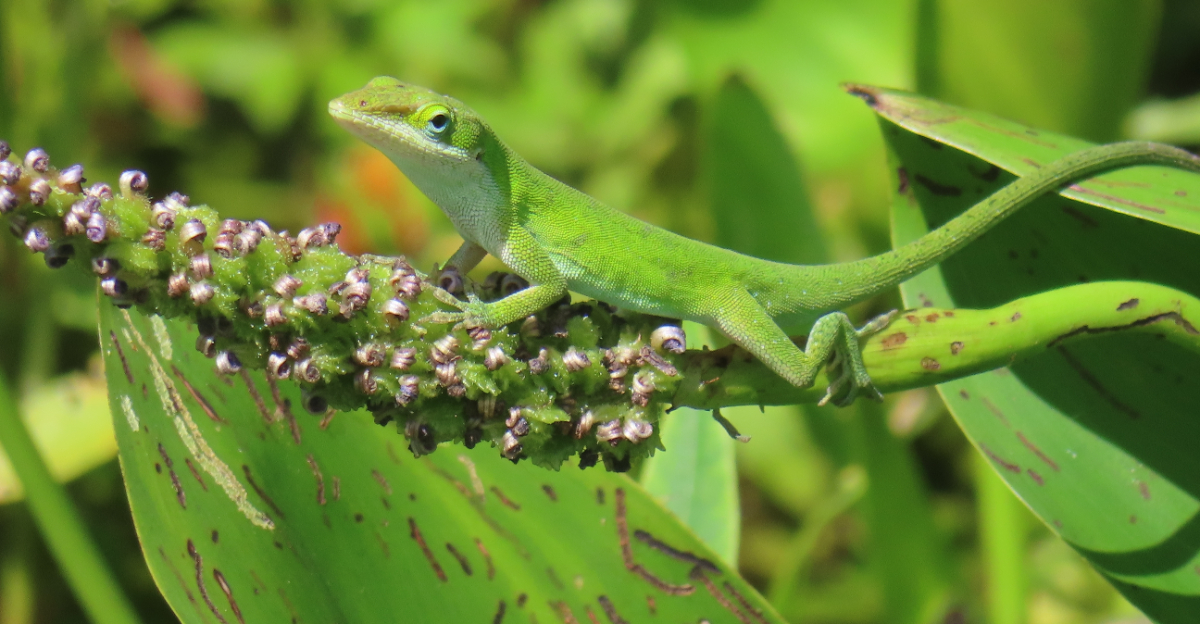
Green anoles show up around North Carolina porch plants in August for one simple reason, an abundance of insects drawn to the same greenery.
These small lizards are natural predators, feeding on mosquitoes, gnats, and other tiny pests that gather around moist, shaded plant leaves.
Porch plants often create a perfect microhabitat, offering shade, humidity, and plenty of hiding spots for both anoles and their prey. August heat pushes insect activity higher, which in turn draws more anoles looking for an easy meal.
Watching anoles perch motionless on leaves is usually a sign they’re waiting to ambush passing insects. Their presence actually benefits gardeners, since anoles help keep pest populations naturally in check.
Avoiding pesticide use near porch plants helps protect these helpful visitors. A few anoles hanging around is a good sign your garden ecosystem is working as intended.
1. Porch Plants Create Elevated Hunting Perches

Picture a tiny hunter scanning the yard from the top of a potted fern, completely still, eyes moving in every direction. That is exactly what a green anole does when it climbs your porch plants.
Their specialized toe pads are covered in microscopic structures that grip leaves, stems, plastic pots, wooden railings, and even smooth painted walls without any effort at all.
Once an anole finds a good perch, it does not need to chase prey all over the yard. Instead, it waits patiently on a branch or broad leaf, watching for movement below and around it.
When something small and edible moves within range, the anole closes the gap quickly and precisely. Plants with multiple layers of foliage are far more useful than a single bare pot because they offer several different vantage points at once.
A taller plant gives the lizard a higher view of the surrounding area, while lower leaves offer spots closer to where ground insects might climb up. Your potted hibiscus, elephant ear, or ornamental grass is essentially a hunting tower.
The anoles gathering around your porch plants are not nibbling on the leaves or roots at all.
They are using the plant as a platform, drawn entirely by the combination of habitat structure and the steady supply of small arthropods that plants naturally attract throughout the warm summer months.
2. August Keeps Green Anoles Highly Active
August in North Carolina is prime time for green anoles, and if you pay attention, you will notice them moving around more than almost any other month.
Warm daytime temperatures fuel their metabolism, which means they need to eat more, move more, and defend their favorite spots more aggressively.
Anoles are ectothermic, meaning the outside temperature drives how active they can be, and August delivers exactly the warmth they need.
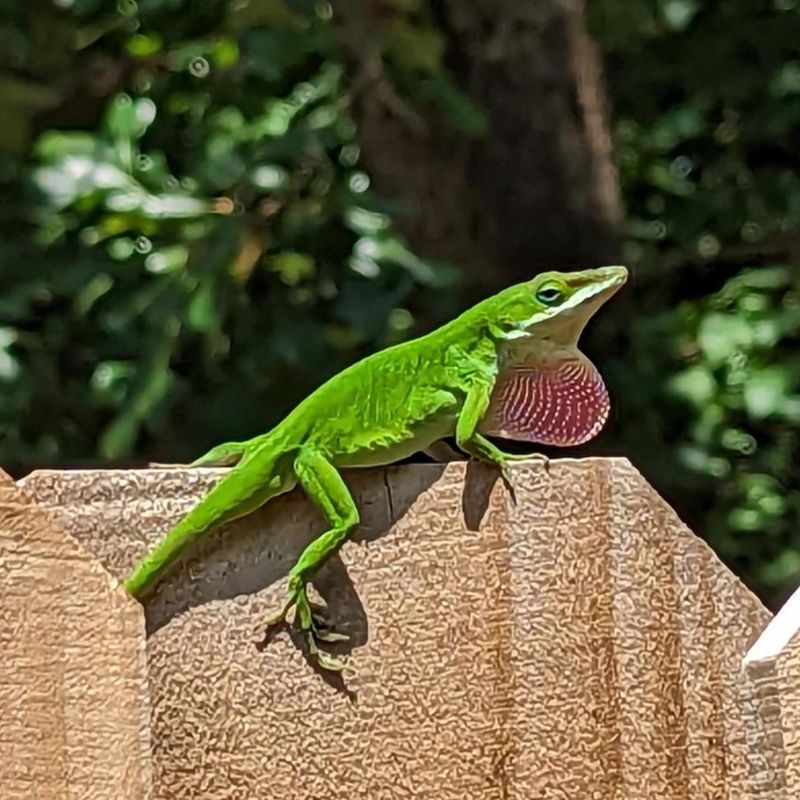
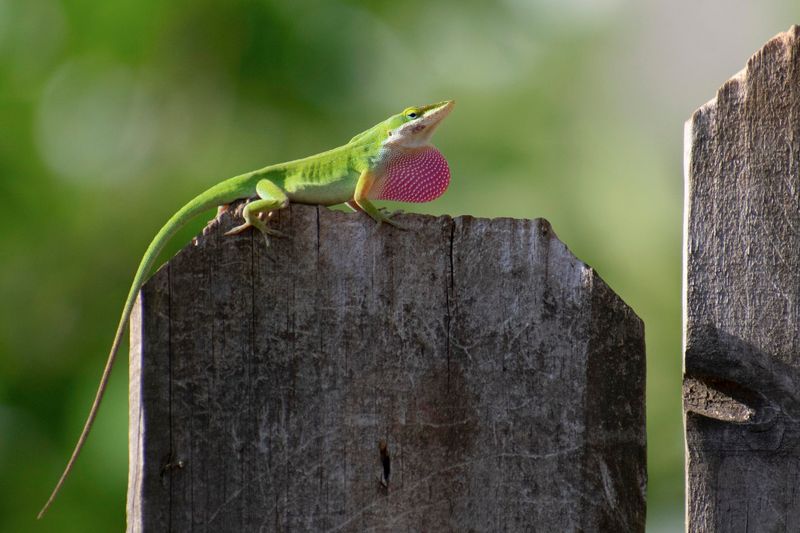
You might catch a male doing rapid push-ups and flashing his bright pink dewlap from a sunny leaf. That display is territorial behavior, a signal to rival males that the perch is already claimed.
Females may also be present nearby, since the breeding season stretches from spring all the way through late summer.
Your North Carolina Garden Changes Every Week. Your Plan Should Too.
Gardening in North Carolina changes quickly throughout the season. Every Friday you’ll receive a simple weekly plan showing exactly what to plant, prune, fertilize, harvest, and protect so you never miss the right timing.
Young anoles hatched earlier in the season start appearing too, so the overall number of lizards around a productive porch can feel noticeably higher.
Rain, cloud cover, and the time of day all shift anole behavior as well. On overcast mornings they may bask longer before hunting, and during the hottest midday hours they often retreat into shade.
Early morning and late afternoon tend to be the busiest windows for watching them hunt around your plants.
Although local conditions vary each year, the combination of heat, humidity, available prey, and ongoing reproduction makes late summer peak lizard season.
As a result, August remains one of the most reliably active times to spot them on North Carolina porches.
3. They Are Watching For Flies And Small Moths
Flies are everywhere on a summer porch, and green anoles know it. These lizards are sharp-eyed daytime hunters, and a fly resting on a leaf, pot rim, or screen door is exactly the kind of target they watch for.
Porch lights left on overnight can attract small flying insects, and by morning many of those insects have settled onto nearby surfaces, making them easy targets for an anole starting its hunting rounds after sunrise.
Small moths behave similarly. Some species rest on walls, screens, and foliage after a night of flying toward lights, and an anole patrolling the porch in the early morning can pick them off one by one.
Fungus gnats are another common find around porch plants specifically. These tiny flies breed in consistently moist potting soil, and a container that stays wet can produce steady numbers of them throughout the summer.
Anoles have clearly figured out that potted plants are reliable gnat territory. Worth noting is that while anoles do consume flies and gnats regularly, they cannot completely eliminate any insect population on their own.
They hunt what is available and what fits comfortably in their mouth, choosing prey based on size and movement rather than any particular preference for pest species.
Still, having a few anoles patrolling your porch plants means a real reduction in the number of small flies buzzing around your containers, which is a genuinely useful side effect of their presence throughout the warm months.
4. Beetles Crickets And Ants Also Become Prey
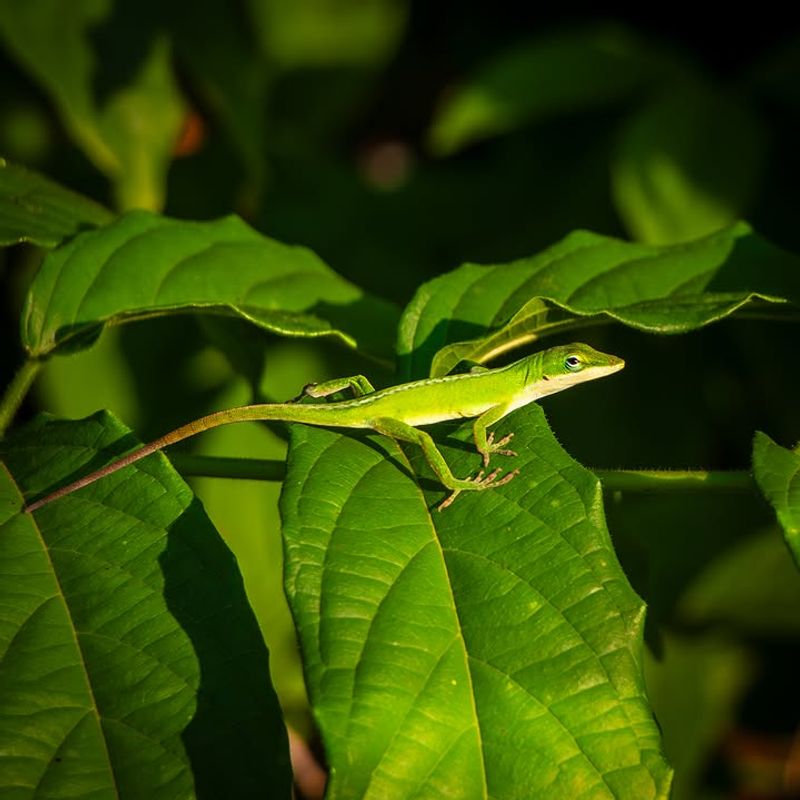
Green anoles are impressively flexible eaters, and they do not limit themselves to flying insects.
Small beetles that crawl along stems, crickets that wander onto the porch at night and linger into the morning, and ants marching across a pot rim are all fair game.
The variety of prey a single anole can encounter on a well-planted porch in August is surprisingly wide, and that variety is a big part of what keeps them coming back.
Insects climb onto porch plants for their own reasons. Beetles may be feeding on leaf tissue, aphids, or other soft insects.
Crickets seek shelter under broad leaves or within dense foliage. Ants follow scent trails up container walls in search of honeydew from aphids or other food sources.
Each of these behaviors brings small arthropods directly into the hunting range of an anole waiting quietly nearby. Termites that swarm after rain events can also appear briefly on porches and become temporary prey.
Prey selection is heavily influenced by what happens to be available within the anole’s immediate territory on any given day. If beetles are numerous, beetles get eaten.
If ants are trailing across a particular pot, the anole will investigate. However, prey that is too large, moves too fast, or carries strong chemical defenses tends to get ignored.
Anoles are practical hunters who avoid unnecessary risk, sticking to targets they can handle confidently. That smart selectivity is part of what makes them such successful year-round survivors across the Southeast.
5. They May Take Spiders From Leaves And Railings
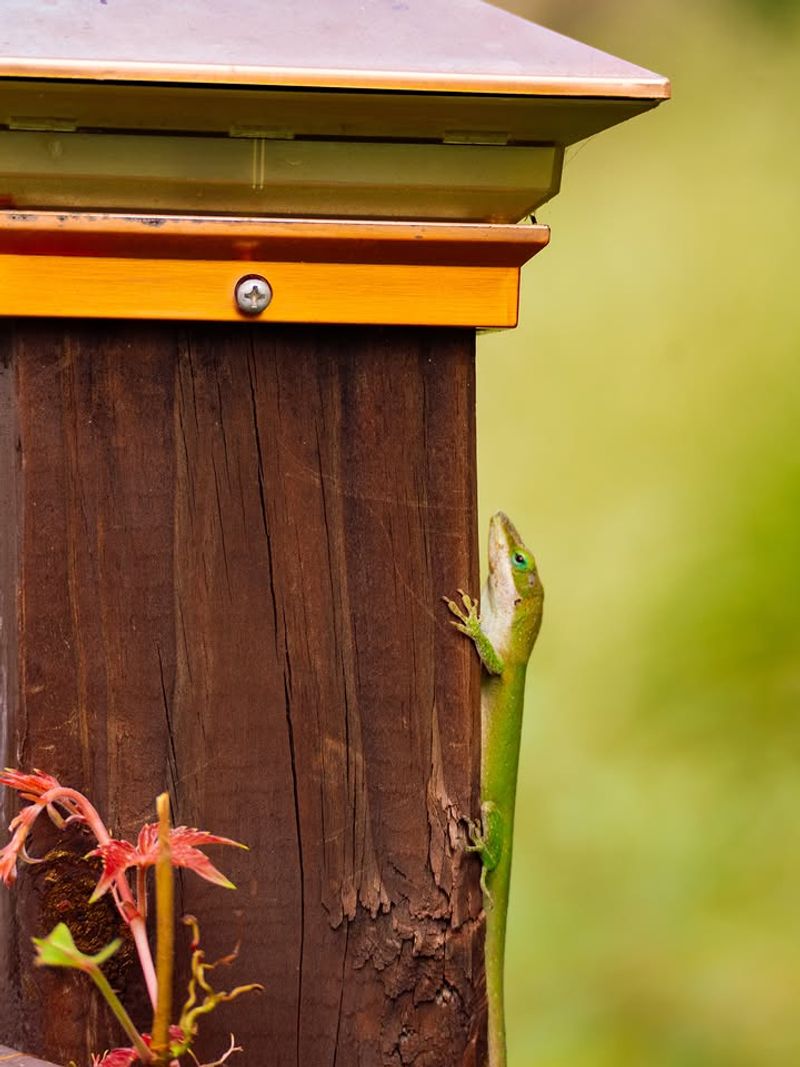
Spiders might seem like predators, but on a porch full of plants, they can quickly become prey themselves. Green anoles regularly eat small spiders, and a porch environment is one of the best places to find them.
Railings, window frames, outdoor light fixtures, water spigots, and the undersides of plant leaves all tend to host small spiders because those spots attract the insects spiders rely on for their own meals.
An anole hunting through a potted plant may flush a small spider from a web tucked between stems or spot one resting on a smooth leaf surface. The chase is usually short and decisive.
Smaller spider species, particularly those that do not have strong defensive behaviors, are taken readily.
Larger spiders, especially orb weavers that build prominent webs, are more likely to be avoided because of their size and the risk involved in approaching a web structure.
What makes this fascinating is that your porch is functioning as a compact food web. The plants attract insects, the insects attract spiders, and both the insects and spiders attract anoles.
Multiple predators may use the same small area simultaneously, each one targeting slightly different prey and occupying slightly different spaces.
Watching this play out on a single porch railing or among a cluster of potted plants is a genuine glimpse into how ecosystems work at a small scale.
Your container garden is not just decoration. For the wildlife using it, the space is a fully functioning and very productive hunting ground.
6. Dense Leaves Provide Shade And Concealment
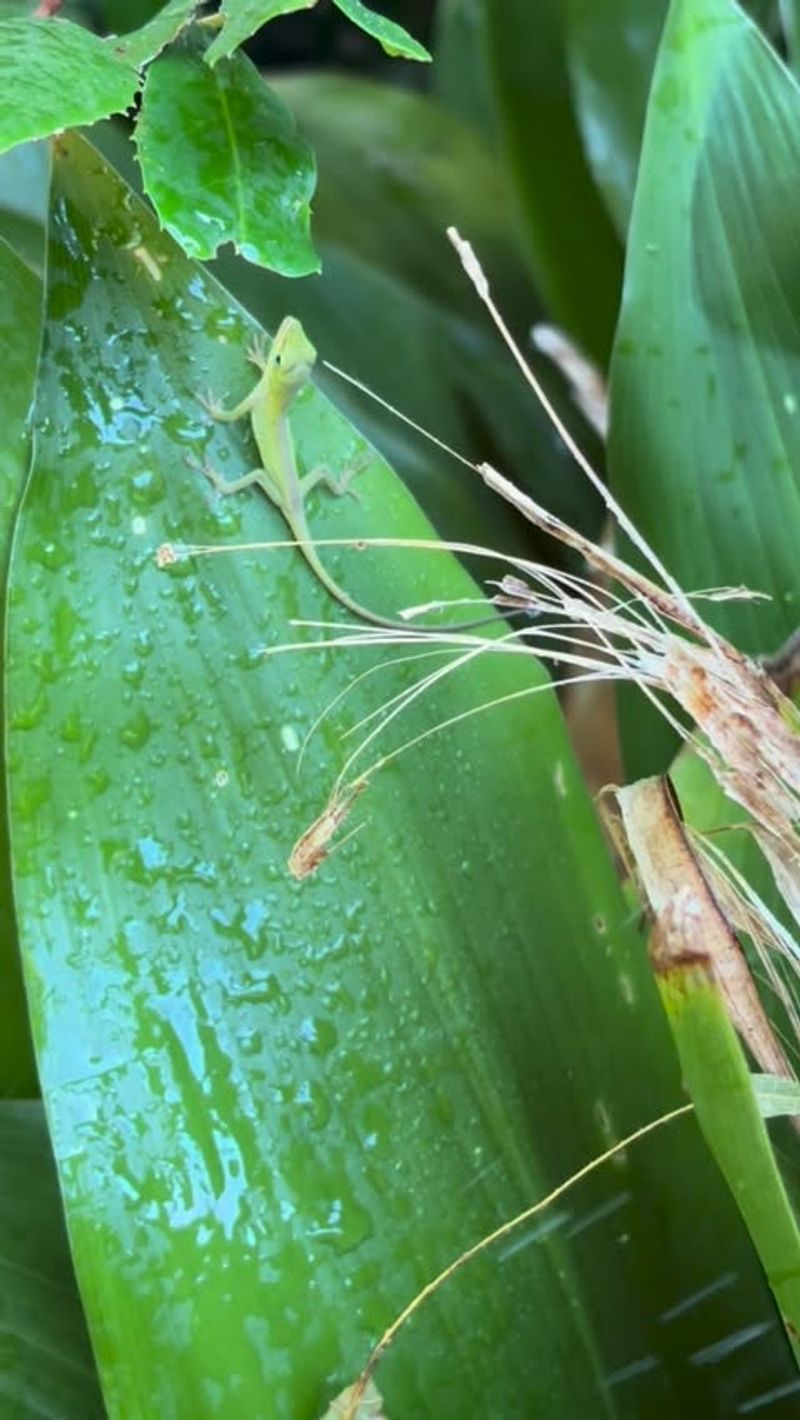
Not everything a porch plant offers an anole is about food. Dense, leafy plants give these lizards somewhere to disappear when the world feels threatening.
People walking by, dogs sniffing around the porch, birds perching on the railing, and even sudden loud noises send anoles retreating into the thickest part of the nearest plant.
A full, bushy container gives them cover that an empty pot or bare railing simply cannot provide.
Temperature regulation matters just as much as safety. An anole can move from a sun-warmed outer leaf where it basks and heats up its body, to a cooler shaded interior when it gets too warm.
This back-and-forth between sun and shade happens multiple times throughout the day, and a plant with varied light exposure across its surface makes that process easy and efficient.
August containers that have been watered recently also hold some humidity within their foliage, creating a slightly cooler microclimate that is noticeably more comfortable than exposed concrete or hot metal railing.
You might also notice your anole changing color between bright green and brownish tones throughout the day. This is completely normal and healthy.
Color shifts in anoles relate to temperature, light levels, stress, and activity rather than being a sign of illness. A brown anole resting in shade is simply a warm lizard taking a break.
Providing your porch with several full, leafy plants at different heights gives these small visitors the range of microclimates they need to stay comfortable, active, and well-fed through the long, hot August days.
7. Water Droplets Make The Plants More Useful
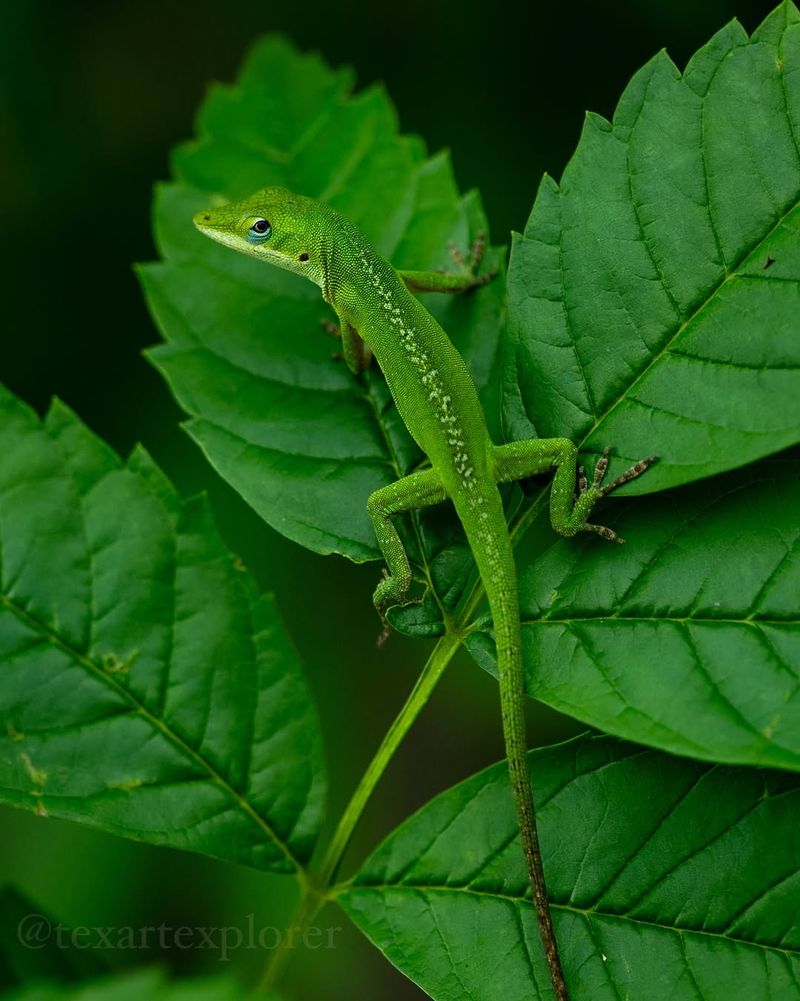
On a hot August afternoon in North Carolina, finding a drink of water is not always simple for a small lizard. Green anoles solve this problem by licking water droplets directly from leaf surfaces.
After you water your porch plants, after a rain shower, or in the early morning when dew collects on broad leaves, anoles will move deliberately across the foliage and lap up individual droplets with their tongue.
It is a surprisingly methodical behavior to watch up close. A recently watered plant becomes more than a hunting perch because it also serves as a temporary water source during the hottest stretches of summer.
This combination of food, cover, and moisture in one location is exactly why certain porch plants seem to attract anoles so reliably.
That said, keeping containers constantly saturated to attract wildlife does more harm than good.
Soggy potting mix suffocates plant roots and creates ideal breeding conditions for fungus gnats, which ironically can become a nuisance even as the anoles work to reduce them.
Water your plants according to their actual needs, and let the natural cycle of watering and drying provide incidental moisture for visiting anoles.
If you genuinely want to support small wildlife on your porch, consider placing a very shallow dish or tray with a rough surface or a few pebbles for grip, filled with just a small amount of fresh water in a shaded spot.
Anoles can access it safely, and it costs almost nothing to maintain while making your porch noticeably more welcoming for these helpful little reptiles.
8. Careful Porch Gardening Helps Them Remain
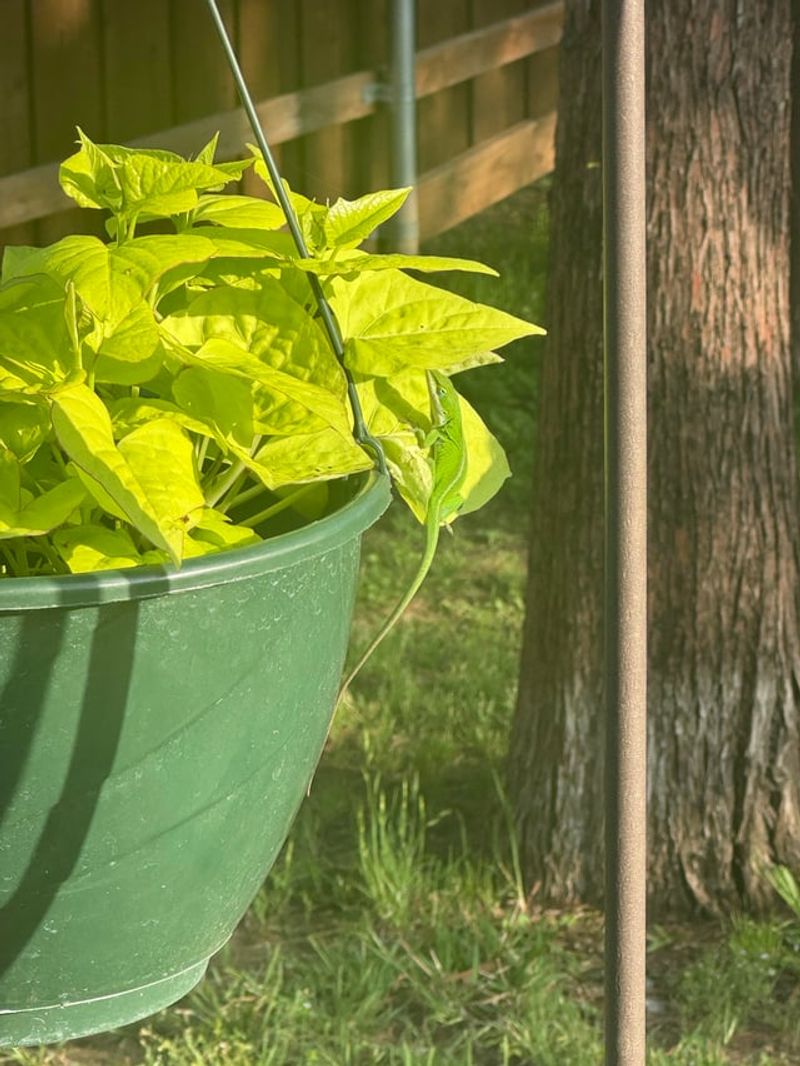
Keeping green anoles around your porch is mostly about not driving them away. A few simple choices in how you garden and manage your outdoor space can make a meaningful difference in whether these lizards stay through the season or quietly disappear.
Growing several leafy plants at different heights is the single most effective step because it provides the layered structure anoles use for hunting, basking, and hiding.
Native plants like coral honeysuckle, beautyberry, or native ferns are especially useful because they also support the local insects anoles depend on for food.
Reducing broad insecticide treatments across your porch plants is equally important. Spraying all your foliage with a general pesticide does not just affect the insects you are targeting.
It reduces the overall prey available to anoles, and it can leave chemical residues on surfaces where lizards regularly walk, rest, and hunt.
Spot treatments for specific problems are far less disruptive than blanket applications, and many minor insect issues on porch plants resolve on their own when natural predators like anoles are present and active.
Keeping cats indoors makes a real difference too, since outdoor cats are one of the most significant threats to small lizard populations in residential areas. Give anoles space when you see them, and resist the urge to grab or handle them.
Grabbing by the tail can cause it to detach, which is stressful for the animal even though it eventually regrows.
Green anoles are completely harmless, genuinely useful, and a sign that your porch is offering exactly what healthy summer wildlife needs: warmth, cover, moisture, and a reliable supply of small arthropods.