Why Moving A Box Turtle You Find In Your North Carolina Yard Can Sharply Worsen Its Odds
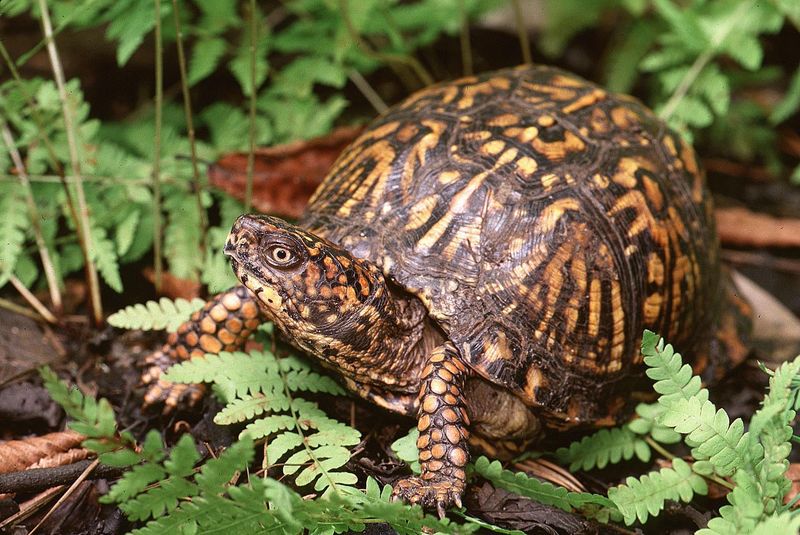
Plenty of North Carolina homeowners have spotted a domed, orange-flecked turtle making its slow way across the lawn and felt the urge to scoop it up and carry it somewhere safer. That instinct comes from a good place, but for eastern box turtles it can turn a routine afternoon stroll into a dangerous ordeal. The turtle you see crossing your yard may already be home, and moving it even a short distance can send it on a hazardous journey through unfamiliar territory. Understanding why that matters is the first step toward actually helping.
The Yard May Already Be Part of Its Home
Spotting a box turtle near your azalea border or along a weedy fence line is not a distress signal. The eastern box turtle, Terrapene carolina carolina, is North Carolina’s official state reptile, and the 2025 North Carolina Wildlife Action Plan identifies it as the only terrestrial turtle species native to the state. That turtle plodding through your yard may be using ground it has known for years.
Eastern box turtles generally occupy small home territories. North Carolina Wildlife Resources Commission notes that those territories are usually under 2 acres, though individual ranges vary quite a bit from one turtle to the next. Some turtles use a tighter patch of ground, others roam a bit wider, especially during nesting season or after a dry spell pushes them toward moisture.
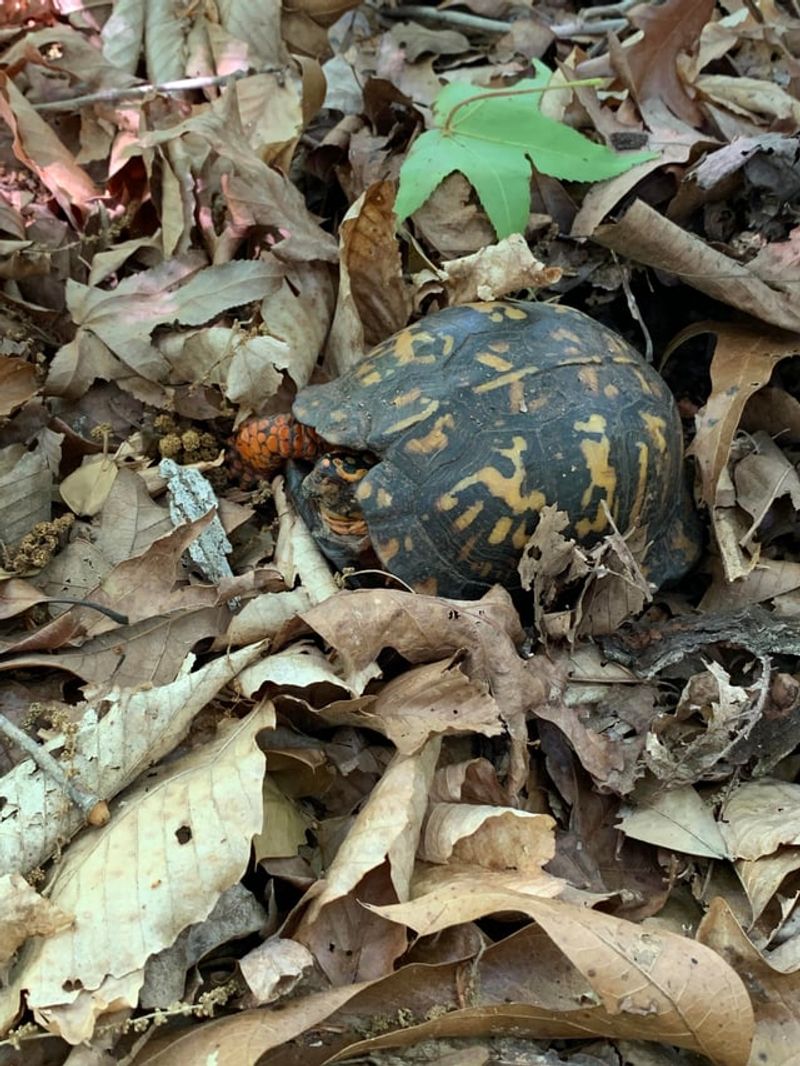
A turtle moving through leaf litter, nosing along a shrub border, or resting near a downed log is behaving exactly as it should in suitable habitat. Moist woodland edges, brushy fence rows, and grassy yard margins are all places a box turtle might use as part of its normal day. Watching from a comfortable distance is usually the right call, not rescuing an animal that does not need rescuing.
The temptation to relocate comes from a genuinely caring place, but the turtle’s small territory is the reason that impulse can backfire. What looks like a lost animal wandering through your yard may actually be an animal right where it belongs.
Why A Short Drive Can Create A Dangerous Journey
Box turtles have something researchers call site fidelity, which means they form a strong attachment to the specific patch of ground where they live. Plain English version: your yard’s turtle knows its own neighborhood the way you know the inside of your house in the dark. Move it somewhere new, and it loses that map entirely.
When a box turtle is placed in unfamiliar territory, it often tries to return to its original range. Research on eastern box turtle movement patterns shows that displaced turtles may travel considerably farther than they normally would, crossing roads and open ground they would never encounter in their home range. A study on site fidelity in box turtles found that homing behavior is a consistent and meaningful part of how these animals navigate their world.
That extra travel comes with real costs. An unfamiliar area may lack the sheltered spots the turtle uses to ride out heat, the overwintering sites it has used for years, or the food sources it has learned to find reliably. A review of box turtle home range studies found that home range size varies considerably among individuals and study sites, so outcomes after displacement are not identical for every turtle. Some seasonal movements, especially by females heading toward nesting areas, are naturally broader than a turtle’s everyday range.
Your North Carolina Garden Changes Every Week. Your Plan Should Too.
Gardening in North Carolina changes quickly throughout the season. Every Friday you’ll receive a simple weekly plan showing exactly what to plant, prune, fertilize, harvest, and protect so you never miss the right timing.
It is worth being honest about what the research actually shows. Translocation studies involving eastern box turtles are conducted by trained professionals with habitat assessments, monitoring equipment, and long-term tracking. Those studies reveal serious risks, but they do not provide a specific mortality rate for a turtle carried from one North Carolina yard to another. The honest summary is this: relocation can sharply worsen a turtle’s odds, and the evidence does not support doing it casually.
When A Short Emergency Move Makes Sense
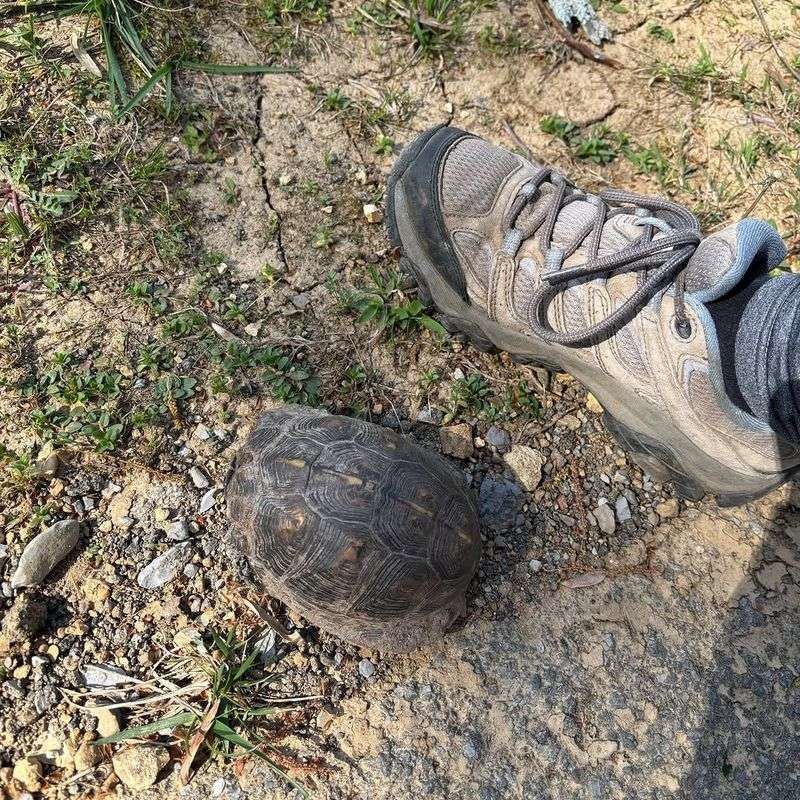
There are moments when doing nothing is not an option. A turtle sitting in a driveway while a car backs out, resting against a mower blade, or caught in a storm drain needs a hand. The key is keeping that help brief and direct.
Personal safety comes first, always. If a turtle is in a roadway and stopping your car or stepping out would put you or other drivers at risk, do not intervene. No turtle is worth a collision, and a car moving at highway speed does not leave room for a safe rescue.
When it is safe to act, North Carolina Wildlife Resources Commission recommends moving the animal only the shortest distance necessary to get it out of immediate danger, ideally less than 50 feet. That is a limit on an emergency move, not permission to carry the turtle across the neighborhood to a spot that looks more suitable to you.
Road crossings are the clearest example of when a brief move is warranted, but another immediate hazard can justify one too. A turtle about to be run over by a riding mower, stuck in a window well, or cornered by a dog qualifies as an emergency. U.S. Fish and Wildlife Service guidance reinforces that the goal is removing the immediate threat, not choosing a new home for the animal.
Move it the shortest safe distance, set it down facing the direction it was already going, and let it continue on its way.
Cross The Road In Its Original Direction
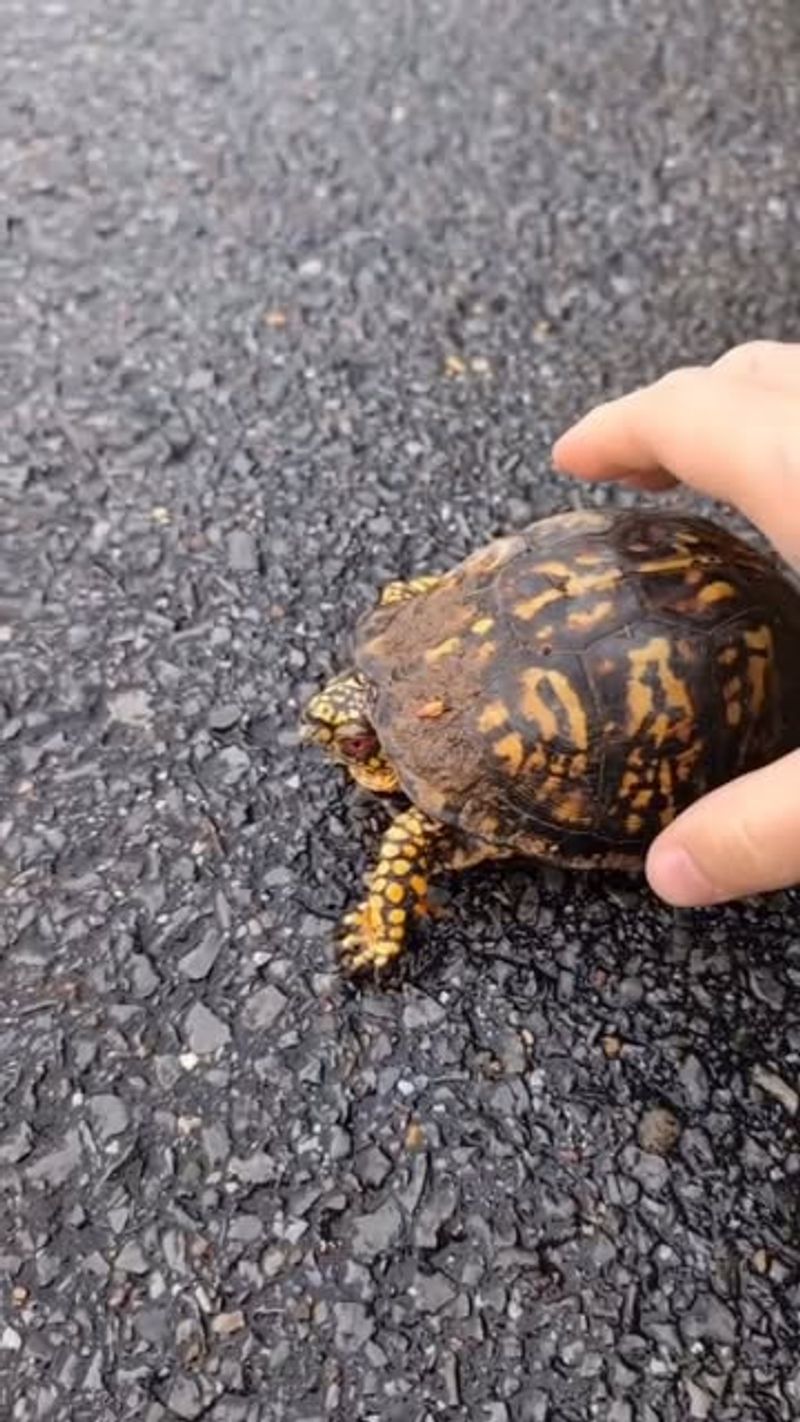
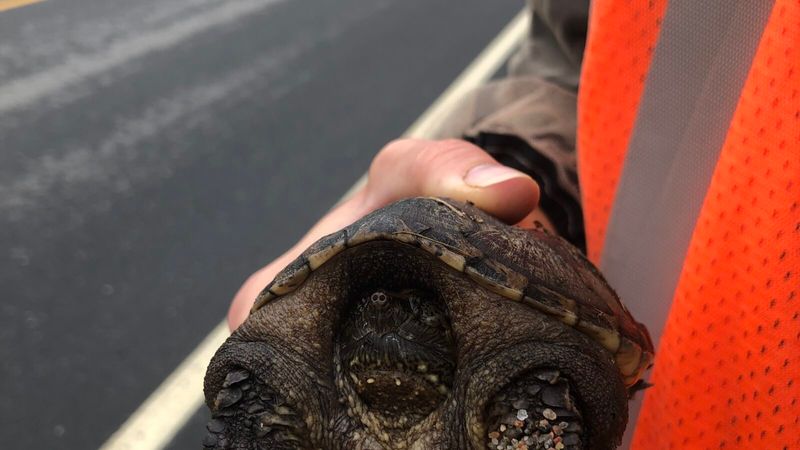
A box turtle in the road is a surprisingly common sight on North Carolina back roads in late spring and summer, when females are moving toward nesting sites and turtles are more active overall. Knowing exactly what to do in those 30 seconds can make a real difference.
If traffic is light and you can pull safely off the road, carry the turtle directly across to the side it was already heading toward. U.S. Fish and Wildlife Service guidance on road crossings is clear: move the turtle in the direction it was facing, as directly across as possible. Do not turn it around and send it back the way it came.
Do not carry it down the road to a spot that looks better. Do not place it in a ditch or set it beside a pond.
The reason this matters is that the road may cut right through the turtle’s normal range. North Carolina Wildlife specifically notes that a moved turtle may continue toward its intended destination anyway, which is why sending it across in its original direction addresses the collision risk without forcing the animal to start over from the wrong side. Turning it around does not redirect its intentions, it just adds distance and another road crossing to its day.
Set the turtle down on the shoulder or in the grass, step back, and watch it move off on its own. That is genuinely the whole job. A turtle that reaches the other side under its own power is in a far better position than one driven somewhere new with the best of intentions.
Water And Woods Are Not Rescue Destinations
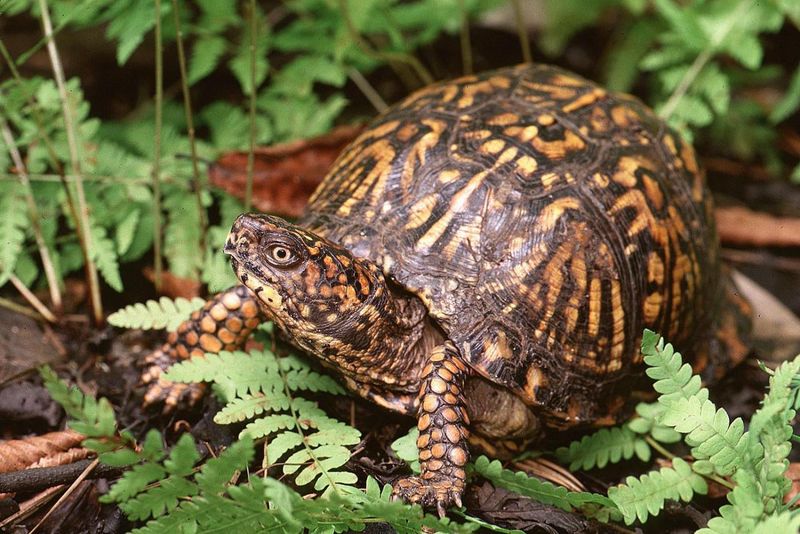
Two of the most common impulses when finding a box turtle are to carry it to the nearest water or walk it into the woods out back. Both feel like obvious upgrades. Both are actually the wrong call.
Eastern box turtles are terrestrial animals. They are not pond turtles, and a turtle found near a birdbath or a backyard creek does not automatically need to be placed in or beside water. North Carolina Wildlife’s eastern box turtle species profile describes their preferred habitat as moist forest, leaf litter, brush piles, downed logs, and grassy woodland edges, none of which require a person to assign a destination.
Carrying a turtle into the woods behind your house puts it in unfamiliar territory just as surely as driving it across town. NC State Extension guidance on reptiles and amphibians in your backyard supports leaving wild animals undisturbed rather than relocating them to habitat that seems better from a human perspective. The turtle’s yard-side territory may already include brushy edges, damp soil, and shelter, even if your lawn does not look like prime wildlife habitat to you.
Along those same lines, do not leave food out, set up a water dish, mark the shell, or try to fence an area around the turtle. U.S. Fish and Wildlife Service advises against interfering with a healthy wild turtle’s movement. A yard sighting is not evidence that the animal is lost, hungry, abandoned, or in need of anything beyond being left alone to continue wherever it was headed.
Visible Injury Changes The Decision
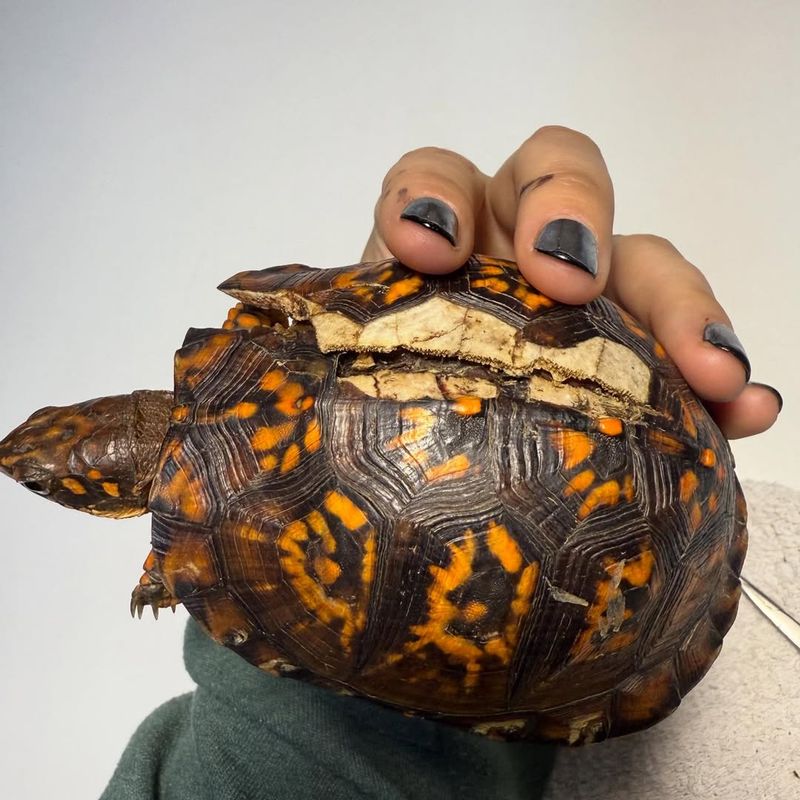
A healthy box turtle moving through your yard needs space, not intervention. An injured one is a different situation entirely, and the two are easy to tell apart once you know what to look for.
Cracked or broken shell, active bleeding, a dragging limb, or obvious trauma from a mower or pet attack are all signs that the animal needs professional care. North Carolina Wildlife Resources Commission’s injured wildlife guidance directs people to contact a licensed wildlife rehabilitator before attempting to provide care themselves. A rehabilitator has the training, equipment, and legal authority to treat a wild turtle properly. Home treatment for a cracked shell is not a safe substitute.
Identification is worth a careful second look before you reach down, especially near water. North Carolina Wildlife describes eastern box turtles as highly domed, terrestrial turtles with four toes on each hind foot and very little webbing. A flatter turtle near a pond or creek may be a common snapping turtle, which has a long neck, a much more aggressive disposition, and a genuinely powerful bite. Picking up an unidentified turtle casually is not a great idea, particularly when the animal is near water or partially submerged.
For a healthy, uninjured box turtle, the decision stays simple: observe from a comfortable distance and let it move on its own schedule. When something looks clearly wrong, skip the guesswork and call a rehabilitator. That split is the whole decision tree.
Handle Briefly, Then Wash Your Hands
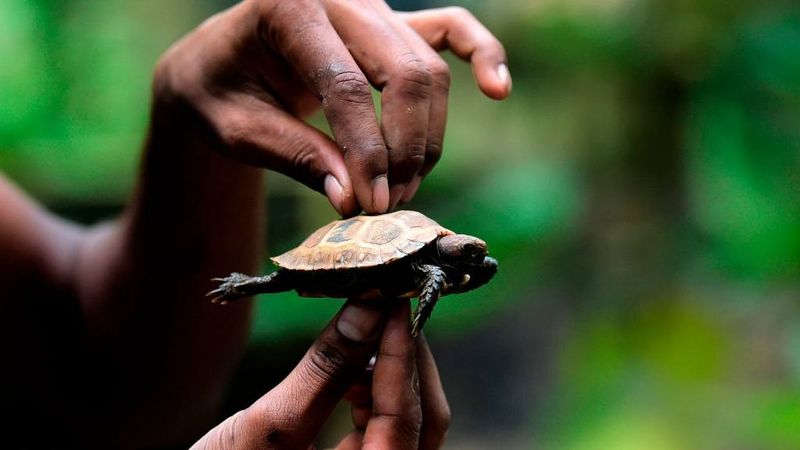
Most box turtle encounters do not require any handling at all. When one does, such as lifting a turtle out of immediate danger, the contact should be brief and followed immediately by washing your hands with soap and running water.
Reptiles can carry Salmonella bacteria even when they look completely healthy, and a turtle that appears clean and normal can still transmit it. CDC guidance on reptiles and amphibians recommends thorough handwashing after any contact, and notes that the bacteria can spread through surfaces the animal has touched, not just through direct handling. This is a routine precaution, not a reason to panic about a turtle crossing your yard.
CDC guidance on higher-risk groups identifies children younger than 5, adults 65 and older, and people with weakened immune systems as facing a greater chance of serious illness from Salmonella. Household members in those groups should not handle reptiles, and young children especially should not be handed a turtle to hold, even briefly.
On the question of keeping a turtle you find: do not. North Carolina Wildlife possession and collection regulations classify the eastern box turtle as a nongame species with no open season, and commercial take of five or more is unlawful. Beyond the legal question, removing an individual from the wild takes it out of the local breeding population, even if the intent is to give it a good life. The safest, clearest guidance is simply this: do not collect or keep a wild box turtle.
Make The Yard Safer Without Redirecting The Turtle
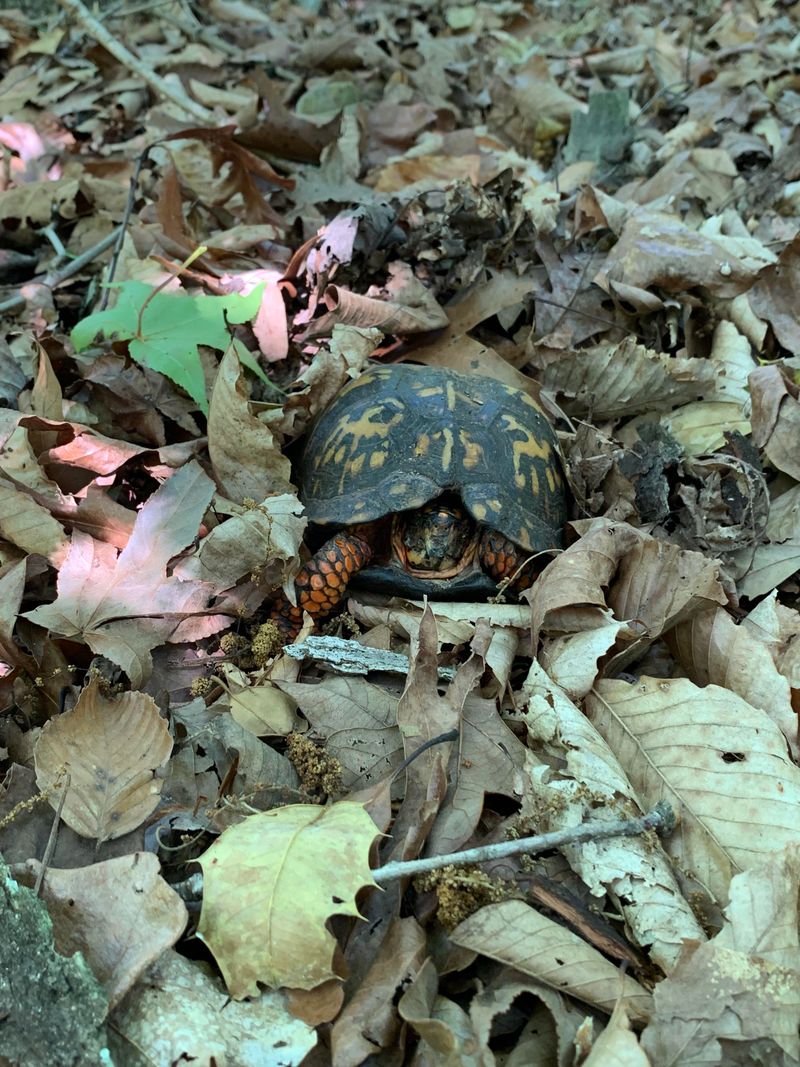
The most lasting thing you can do for a box turtle is not a single rescue, it is making the ground it already uses a little less dangerous over time. That starts with paying attention before you fire up equipment.
Box turtles use soil and leaf litter for dormancy during colder months, and they rest under brush piles, logs, and dense vegetation throughout the active season. North Carolina Wildlife’s species profile specifically warns that habitat fragmentation, roads, and development are among the biggest pressures on box turtle populations. Checking a leaf pile before raking it out or scanning a brushy corner before clearing it takes about 20 seconds and can prevent a real problem.
Slow down before mowing anywhere with dense ground cover, especially in late spring and early summer when turtles are most active across the Piedmont and Coastal Plain. NC State Extension recommends leaving leaf litter, shrubs, downed logs, snags, and brush piles in place as cover for reptiles and amphibians. It also advises keeping cats indoors and restricting dogs from areas where you have created or preserved natural habitat.
North Carolina Wildlife notes that roads and development fragment the small territories these turtles depend on, which is a larger problem than any single homeowner can solve alone. Your piece of that puzzle is modest but real: reduce yard hazards, leave natural cover in place, and resist the urge to tidy every corner of the yard into a clean, mowed surface. A slightly shaggy fence line is more useful to a box turtle than a perfectly edged one.
The Best Help Leaves Its Route Intact
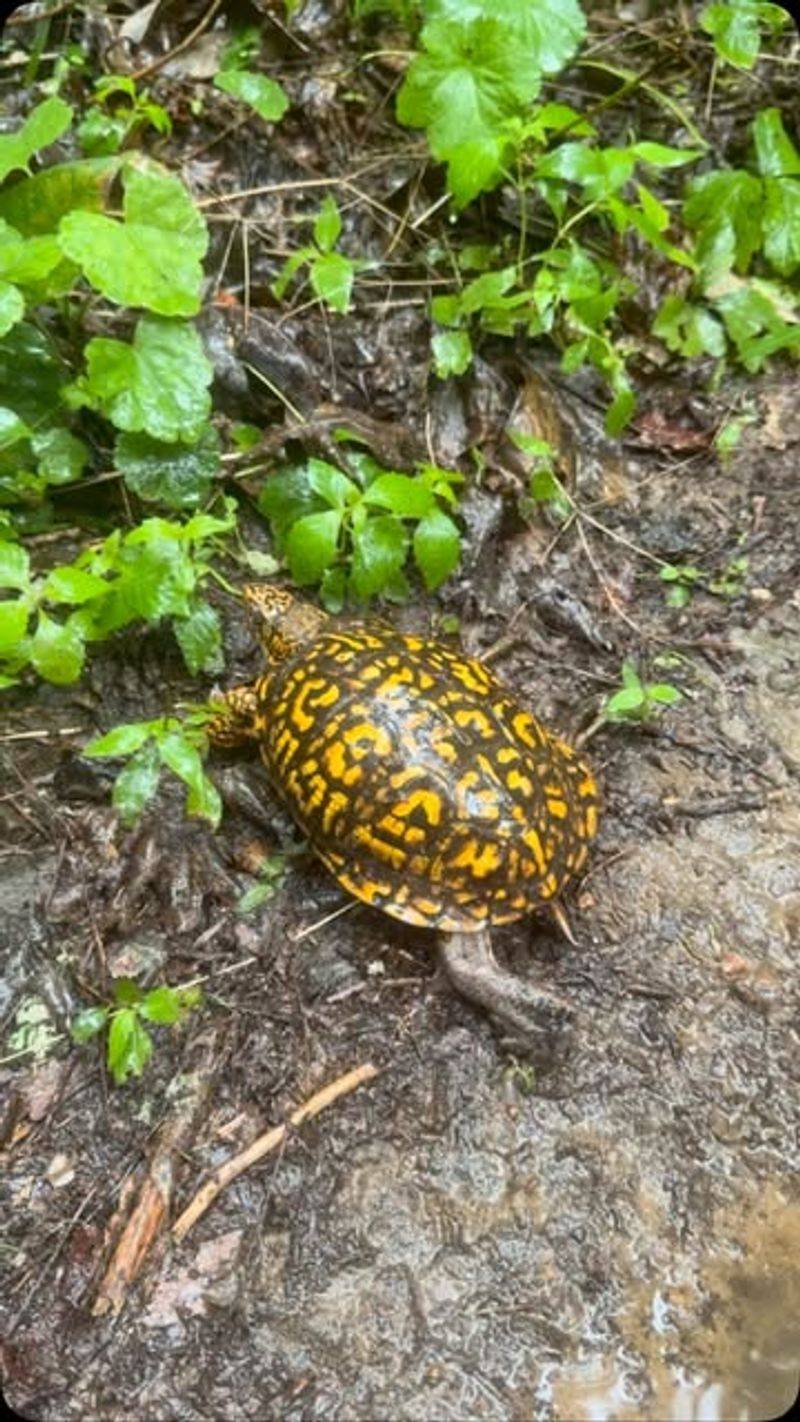
A healthy eastern box turtle moving through a North Carolina yard usually needs exactly one thing from you: room to keep going. The decision path for most encounters is genuinely short.
If the turtle is in a safe spot, observe it from a distance and let it move on. North Carolina Wildlife Resources Commission is consistent on this point: a turtle in a yard is almost always fine where it is, and the most helpful response is to leave it undisturbed. Do not pick it up, carry it to water, walk it into the woods, or relocate it to what looks like better habitat.
If the turtle faces an immediate hazard, move it only the shortest distance needed to remove that danger, ideally less than 50 feet, and set it down facing the direction it was already traveling. For a road crossing, carry it directly across in its original direction when it is safe to do so, and do not place it in a ditch or beside a pond.
If the turtle has a cracked shell, visible bleeding, or obvious trauma, skip home treatment and contact a licensed wildlife rehabilitator. North Carolina Wildlife’s injured wildlife page can help you find one. Wash your hands with soap and water after any necessary handling, and keep young children and higher-risk household members from handling reptiles at all.
Protecting the familiar ground a box turtle already uses, by mowing carefully, leaving natural cover in place, and keeping pets away, does more lasting good than choosing a new destination for an animal that already knows exactly where it is going.