Why Pennsylvania Bee Balm Gets Leggy And Blooms Less By Mid Summer
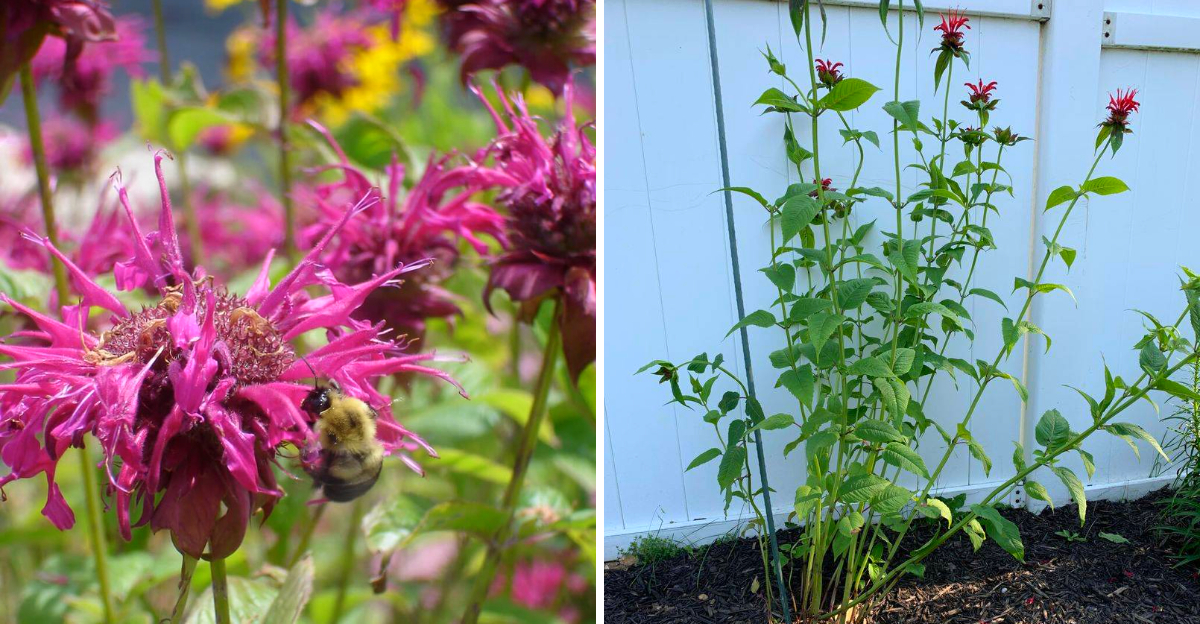
Bee balm comes out of the gate looking incredible.
Those bold red, pink, and purple blooms show up in early summer like they own the garden, hummingbirds appear out of nowhere, and the whole planting has this lush, full energy that makes you feel like you really figured something out.
And then July happens. Suddenly the plants are stretching awkwardly, the blooms are thinning, and that gorgeous early summer moment feels like it packed up and left without much warning.
Sound familiar? You are definitely not alone on this one.
Bee balm has a reputation for this kind of midsummer slump in Pennsylvania gardens, and it usually comes down to a handful of very fixable things.
A little troubleshooting goes a long way with this plant, and the turnaround can be faster than you might expect.
1. Too Little Sun
Shaded garden beds might look cool and inviting during a hot Pennsylvania summer, but bee balm planted in low-light spots tends to show its struggle by mid season.
As surrounding trees and shrubs leaf out fully in late spring and early summer, what once felt like a partly sunny spot can shift into something much closer to full shade.
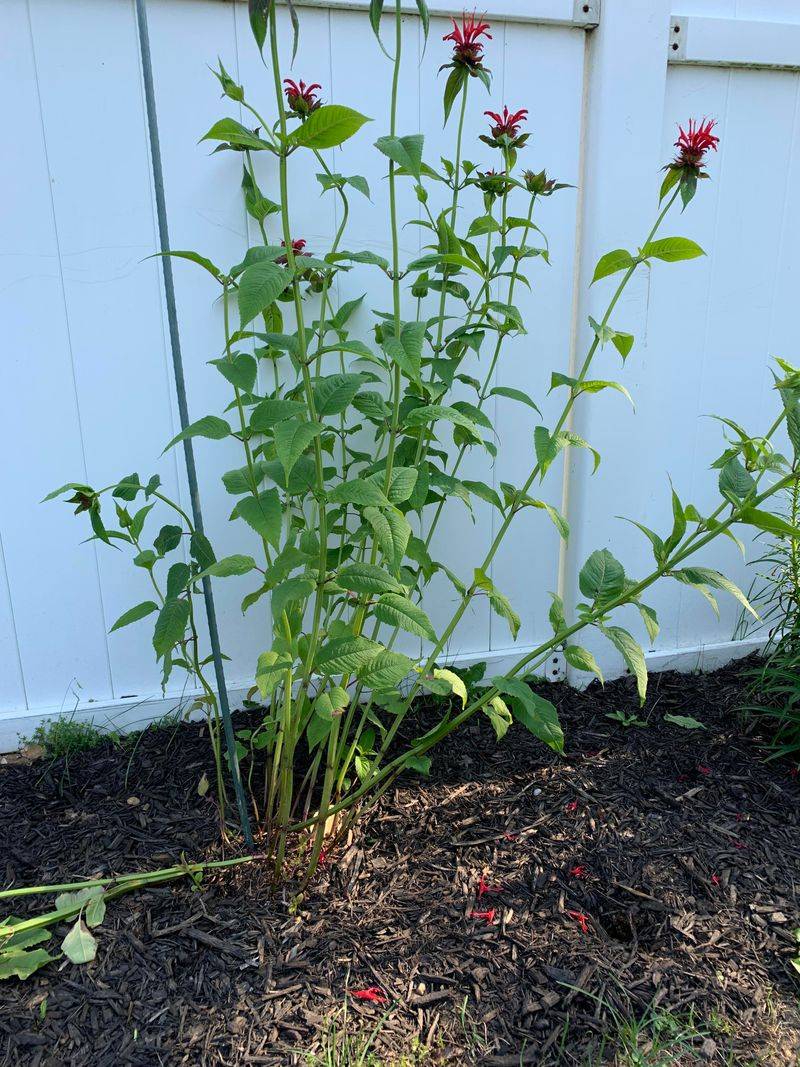
Bee balm responds by reaching upward, stretching its stems toward whatever light it can find.
That stretching is exactly what causes the leggy look so many gardeners notice. The stems get tall and thin, the foliage thins out along the lower portion of the plant, and blooming slows down noticeably.
A plant that flowered well in May or June may produce very little color by July if it is not getting enough direct sunlight each day.
Bee balm generally performs best when it receives around six hours of direct sun daily. In Pennsylvania gardens where shade has gradually increased over the years due to tree growth, it may be worth moving clumps to a sunnier location in early fall or early spring.
Choosing a spot with consistent morning sun and some afternoon shade can also help in areas where summer heat gets intense. Giving bee balm the light it needs is one of the most straightforward ways to support stronger, longer-lasting blooms.
2. Crowded Clumps
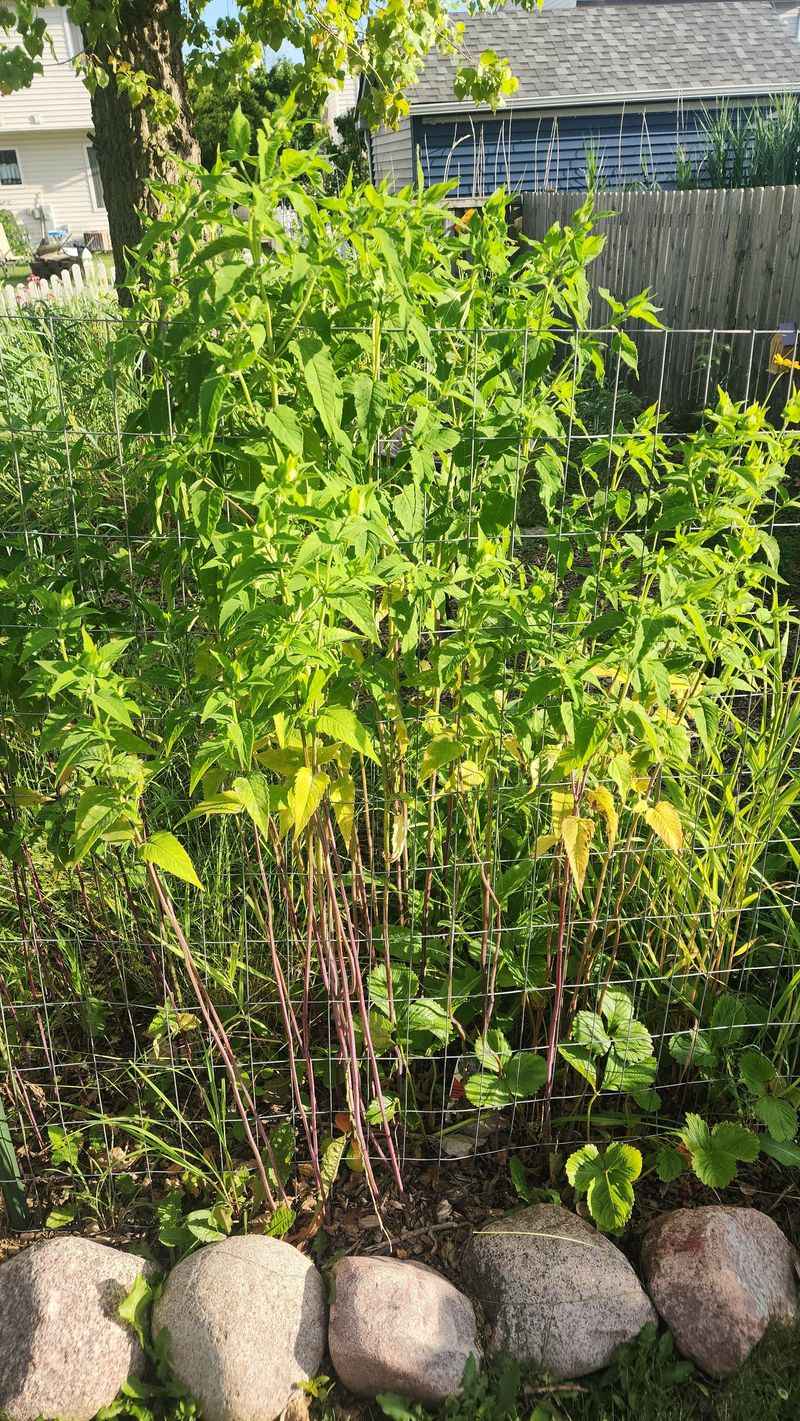
Bee balm spreads enthusiastically through underground rhizomes, and in Pennsylvania gardens where it has been growing for several years, those clumps can become surprisingly dense.
What starts as a small, manageable planting can expand into a thick mass of stems and roots competing for the same water, nutrients, and light.
By mid summer, that competition often shows up as weaker stems, fewer flowers, and a generally tired-looking plant.
The center of an old bee balm clump tends to be the most affected. Over time, the central portion can become woody and less productive while the outer edges continue spreading.
Gardeners sometimes notice that the middle of the clump looks bare or produces almost no blooms while the edges still look reasonably healthy. This uneven growth is a reliable sign that the clump has outgrown its space.
Your Pennsylvania Garden Changes Every Week. Your Plan Should Too.
Gardening in Pennsylvania changes quickly throughout the season. Every Friday you’ll receive a simple weekly plan showing exactly what to plant, prune, fertilize, harvest, and protect so you never miss the right timing.
Dividing bee balm every two to three years can help keep plantings more vigorous and productive.
Early spring, just as new growth begins to emerge, is generally a good time to dig up the clump, separate the healthiest outer sections, and replant them with more space between each division.
Giving divisions room to breathe encourages better air movement and reduces competition at the roots. Pennsylvania gardeners who divide regularly often find their bee balm blooms more reliably and stays healthier through the full summer season.
3. Powdery Mildew Stress
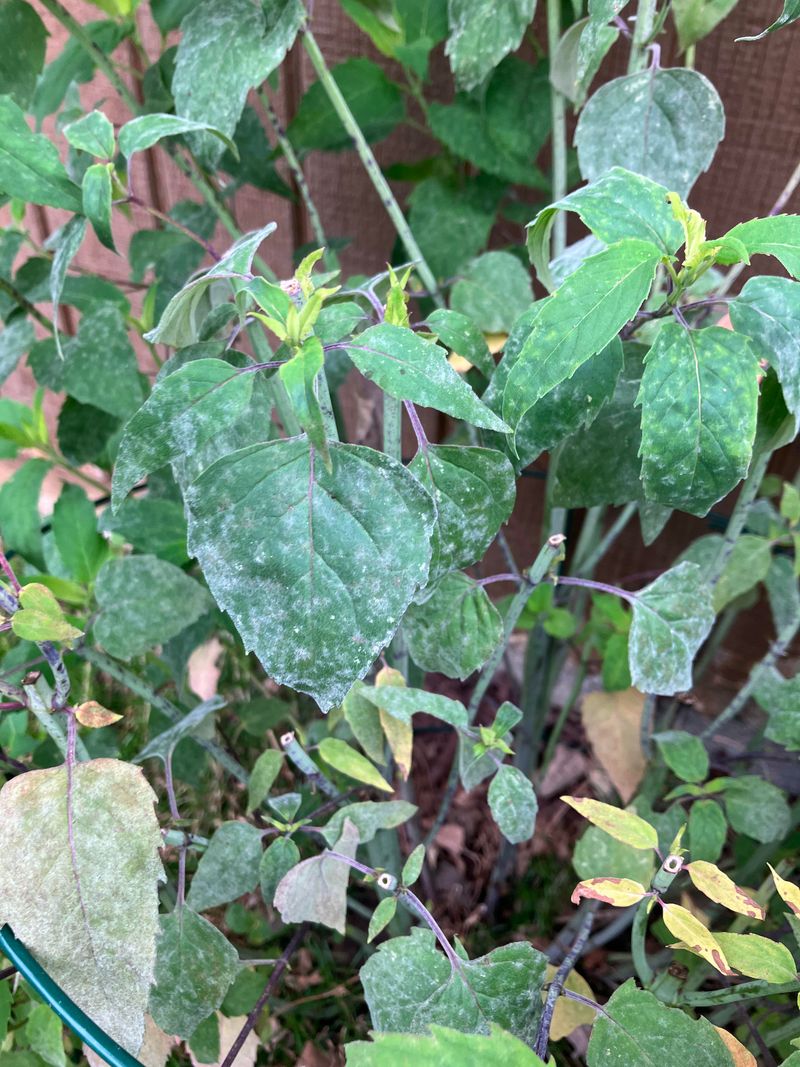
Walk through a Pennsylvania garden on a warm, humid July morning and you might notice a white, powdery coating spreading across bee balm leaves.
Powdery mildew is one of the most common and recognizable issues affecting bee balm in the mid-Atlantic region, and it tends to peak right around the time summer heat and humidity settle in for good.
The fungal growth does not just look bad – it genuinely stresses the plant.
When powdery mildew spreads across the foliage, it interferes with the plant’s ability to absorb sunlight and carry out normal growth functions.
Leaves may yellow, curl, or drop early, and the plant redirects energy toward managing that stress rather than producing new blooms.
By mid summer, a heavily mildewed bee balm planting can look far worse than it did just a few weeks earlier, with faded flowers and declining foliage.
Choosing mildew-resistant bee balm varieties is one of the most practical steps Pennsylvania gardeners can take to reduce this problem. Varieties bred for resistance tend to stay cleaner through humid stretches.
Avoiding overhead watering, improving air circulation around plants, and not crowding clumps together can also reduce mildew pressure. Removing and disposing of heavily affected leaves – rather than composting them – can help slow the spread.
Catching the early signs before mildew covers most of the foliage gives the plant a better chance of finishing the season with some blooms remaining.
4. Poor Air Circulation
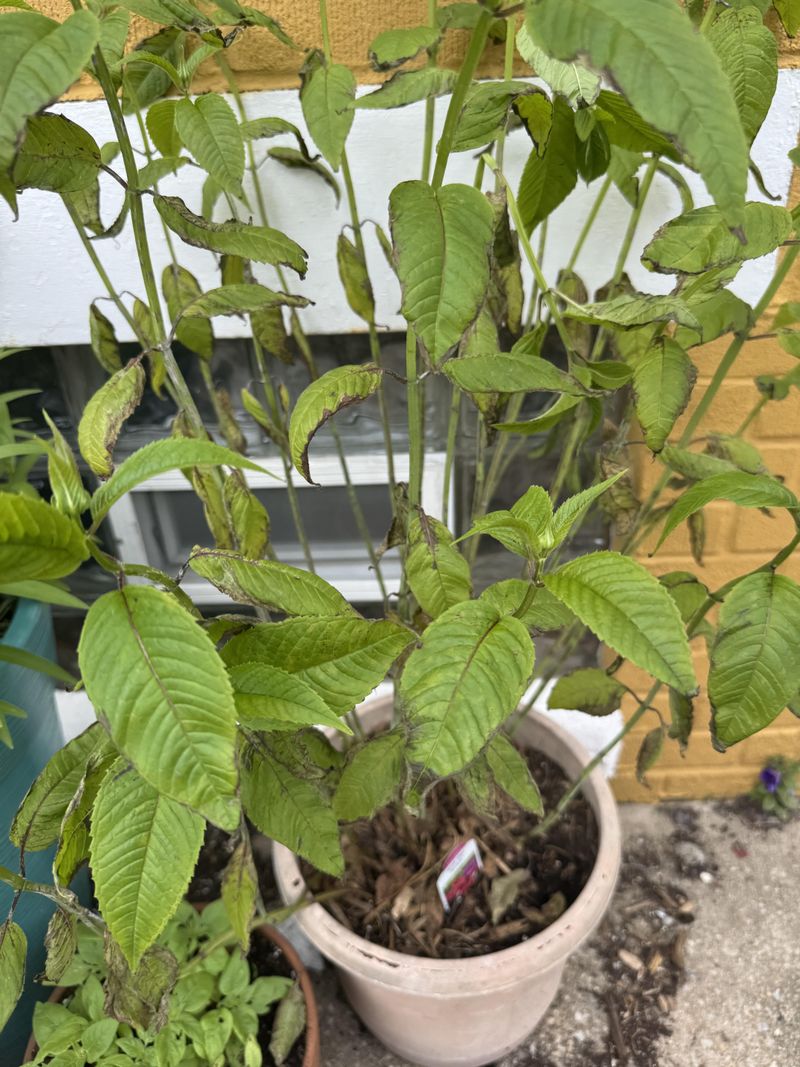
Pennsylvania summers bring a combination of heat and humidity that can make even well-established perennial beds feel stifling.
When bee balm is planted too closely together or surrounded by other tall perennials without enough open space between them, air movement through the planting slows down significantly.
That lack of airflow creates the kind of warm, moist environment where fungal problems thrive and overall plant health starts to decline by mid summer.
Poor air circulation does not just encourage powdery mildew – it can also cause foliage to stay wet longer after rain or irrigation, which puts additional stress on the plant over time.
Stems may become weaker, lower leaves may drop, and the overall structure of the planting can start to look loose and open at the base while remaining top-heavy above.
That combination contributes directly to the leggy appearance gardeners often notice by July.
Spacing bee balm plants at least 18 to 24 inches apart at planting time gives each one room to breathe as it matures.
In established beds where plants have grown together over multiple seasons, selectively thinning stems in spring can open up the center of the planting and improve airflow.
Removing about one-third of the stems from a crowded clump can make a noticeable difference without removing too much of the plant.
Pennsylvania gardeners who pay attention to spacing tend to see healthier foliage and stronger bloom production later into summer.
5. Skipped Deadheading
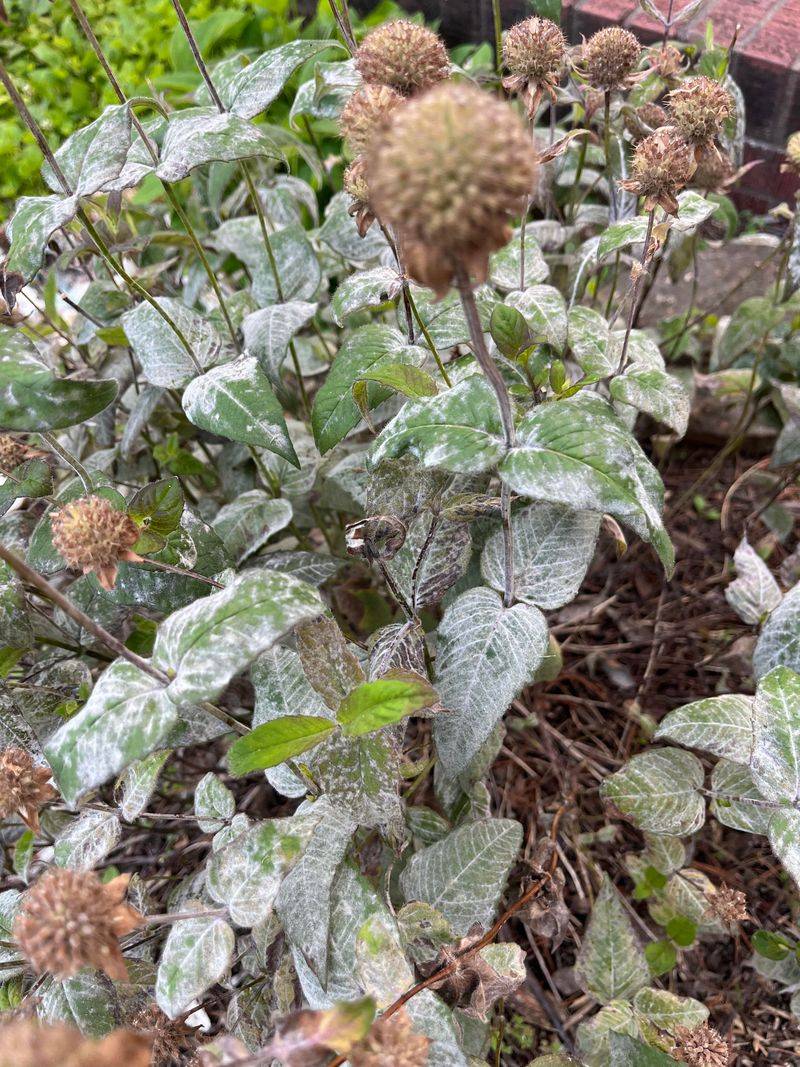
Faded flower heads left on bee balm plants are easy to overlook during a busy summer, but skipping deadheading is one of the more common reasons bloom production slows down by mid season.
Once bee balm flowers finish and the plant begins forming seeds, it naturally shifts energy away from producing new blooms.
In Pennsylvania gardens where bee balm is in full swing by late June, that transition can happen surprisingly fast without regular attention.
Deadheading – removing spent flower heads before seeds fully form – encourages the plant to keep putting energy into new flower development.
It does not always produce a dramatic flush of new blooms, but it can meaningfully extend the overall bloom period compared to plants where spent flowers are left in place.
Even a few extra weeks of color in a pollinator bed makes a real difference for bees, butterflies, and hummingbirds moving through Pennsylvania gardens in summer.
Using clean, sharp scissors or pruning shears to snip spent blooms just above a set of healthy leaves is a simple and quick process.
Checking plants every week or two during peak bloom season and removing fading flowers as they appear keeps the planting looking tidier and supports continued flowering.
If seed production for wildlife is a goal, some gardeners choose to leave a portion of the spent heads in place toward late summer while still deadheading earlier in the season to extend blooming first.
6. No Early-Season Pinching Or Cutting Back
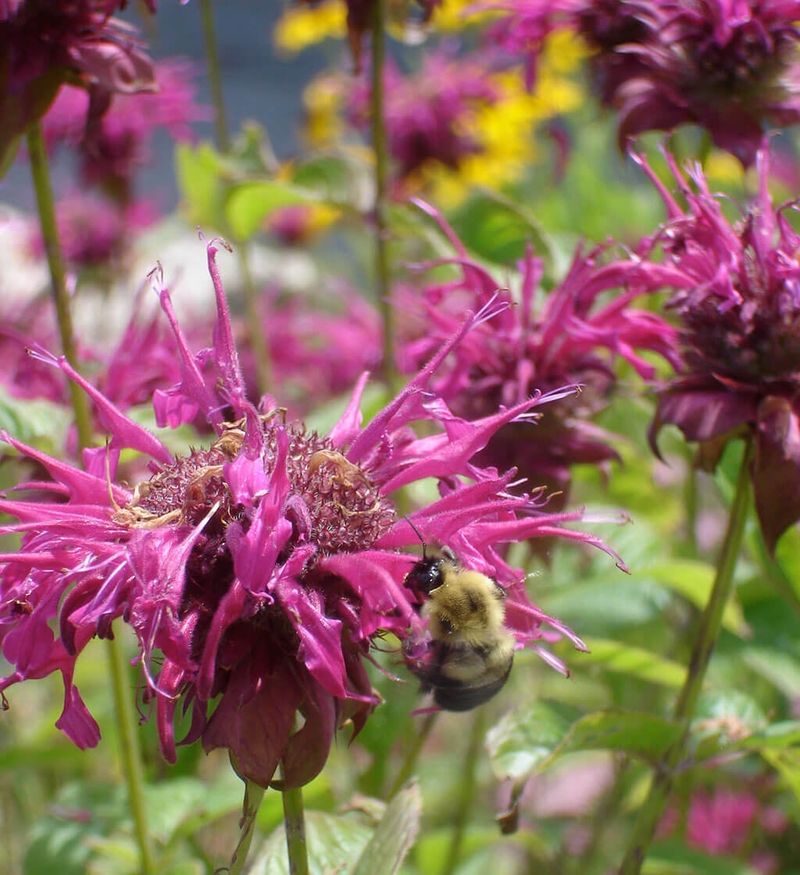
By the time mid summer arrives in Pennsylvania, bee balm plants that were never pinched or cut back in late spring often look noticeably stretched.
The stems can reach impressive heights quickly, especially in rich soil with plenty of moisture, but that rapid upward growth does not always come with the branching and fullness that makes a planting look lush.
Without some early-season intervention, the result is often tall, thin stems with blooms concentrated only at the very top.
Pinching or cutting back bee balm in late spring – typically when stems are somewhere between six and twelve inches tall – can encourage the plant to branch more and develop a fuller overall shape.
Some gardeners cut the entire planting back by about one-third in late May or early June.
This delays bloom time slightly, but the resulting plant tends to be shorter, bushier, and more floriferous than one left to grow unchecked.
Cutting back is especially useful in Pennsylvania gardens where bee balm has a history of getting too tall and flopping over by mid summer.
Taller plants are more vulnerable to wind and heavy rain, which can push stems sideways and make the planting look disheveled.
A modest trim in late spring takes only a few minutes and can meaningfully improve the appearance and bloom quality of the plant later in the season. It is a low-effort technique worth trying in any perennial border or cottage-style planting.
7. Moisture Stress During Hot Weather
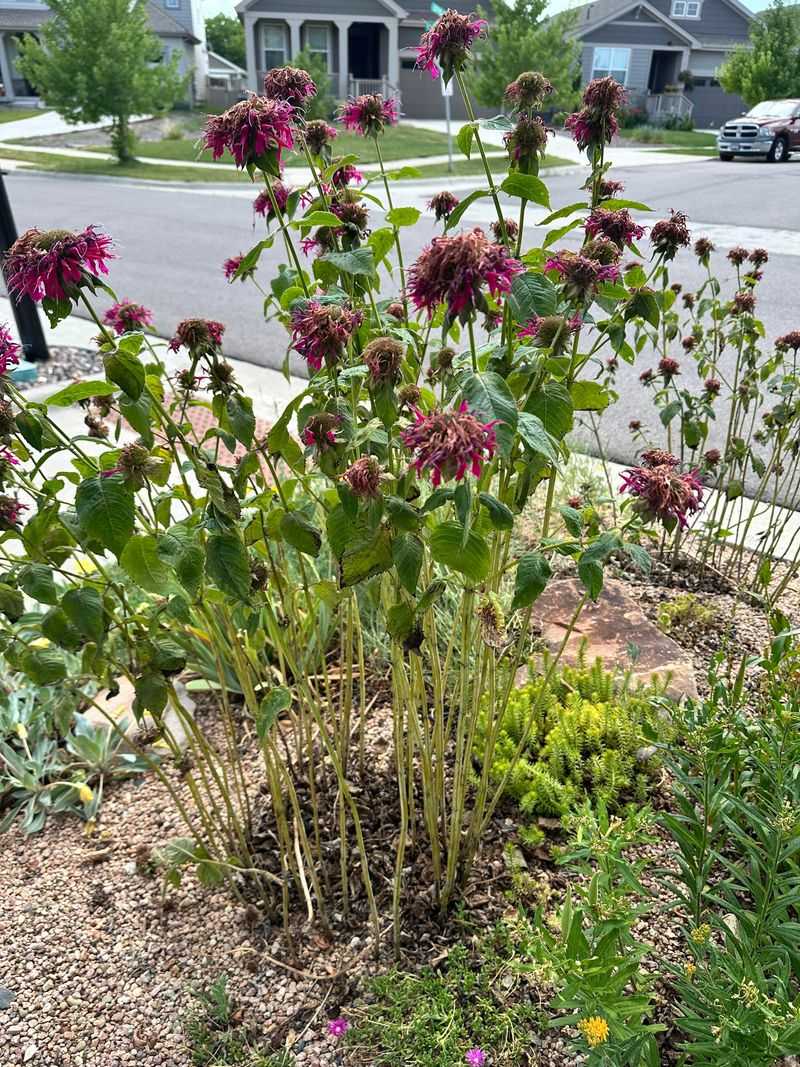
Hot, dry stretches hit Pennsylvania gardens hard in July and August, and bee balm – despite its reputation as a tough native perennial – can show real signs of stress when soil moisture drops for extended periods.
The plant prefers consistently moist, well-draining soil, and when that moisture disappears during a heat wave, the foliage may wilt, the lower leaves may drop, and bloom production often slows or stops almost entirely.
Moisture stress does not always look dramatic at first. Early signs include slightly drooping leaves in the afternoon heat and a dull, less vibrant appearance to the foliage.
Over time, if soil stays dry for too long, the plant may shed lower leaves and put all remaining energy into survival rather than flowering.
Pennsylvania summers with irregular rainfall can push bee balm into this stressed state more quickly than gardeners expect, especially in sandy or fast-draining soils.
Mulching around the base of bee balm plants with a two to three inch layer of organic material can help retain soil moisture and moderate soil temperature during hot spells.
Watering deeply at the base of the plant rather than overhead helps get moisture to the roots without wetting foliage unnecessarily.
Checking soil moisture an inch or two below the surface before watering gives a more accurate picture of what the plant actually needs.
Consistent moisture management through summer keeps bee balm more resilient and better able to continue blooming.
8. Variety Differences
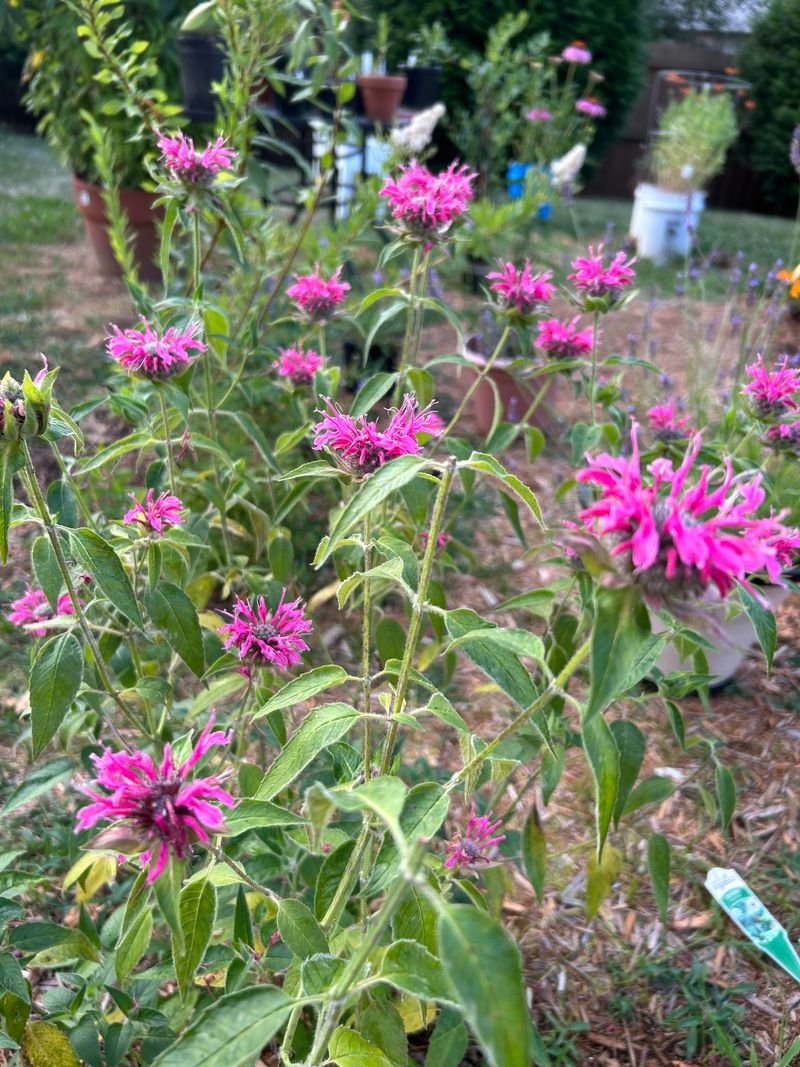
Not every bee balm variety handles Pennsylvania’s mid summer conditions the same way, and variety selection can have a bigger impact on mid-season performance than many gardeners realize.
Older, straight species varieties of Monarda didyma tend to be vigorous and fragrant but are also more prone to powdery mildew and can get quite tall, which contributes to the leggy, faded look that shows up in many established Pennsylvania beds by July.
Over the past few decades, plant breeders have introduced a range of bee balm cultivars developed specifically for improved mildew resistance, more compact growth habits, and extended bloom periods.
Varieties in this group tend to stay shorter and fuller through the season and hold their color longer before fading.
Some also rebloom more readily after deadheading than older types, which helps maintain visual interest in pollinator plantings through late summer.
For gardeners who have struggled with leggy, mildew-prone bee balm in the past, exploring newer cultivars can be a worthwhile step.
Local nurseries and extension resources sometimes carry or recommend varieties that have performed well in regional trials under Pennsylvania growing conditions.
Mixing a mildew-resistant, compact variety with a taller heirloom type can also give a planting visual variety while balancing some of the mid-season performance differences.
Reading plant tags carefully and noting mature height, bloom time, and mildew resistance ratings before purchasing helps set realistic expectations for how a variety will look by mid summer.