Why Pennsylvania Gardeners Should Plant Serviceberry Instead Of Another Ornamental Tree
It happens every April at garden centers across Pennsylvania. A homeowner loads a flowering ornamental tree into the trunk, picked mostly because it looked pretty on the sales lot that weekend.
A few rows over, sitting quietly with a plain tag, is serviceberry, a native small tree that flowers earlier, grows fruit you can actually eat, and feeds local birds and bees.
Most shoppers walk right past it because the name sounds unfamiliar, reaching instead for something recognizable from a magazine photo.
That instinct costs them more than they realize, trading a whole season of benefits for a tree chosen on looks alone.
Once you know what this tree does across all four seasons, that decision starts looking very different indeed.
1. Serviceberry Blooms Before Most Trees Wake Up
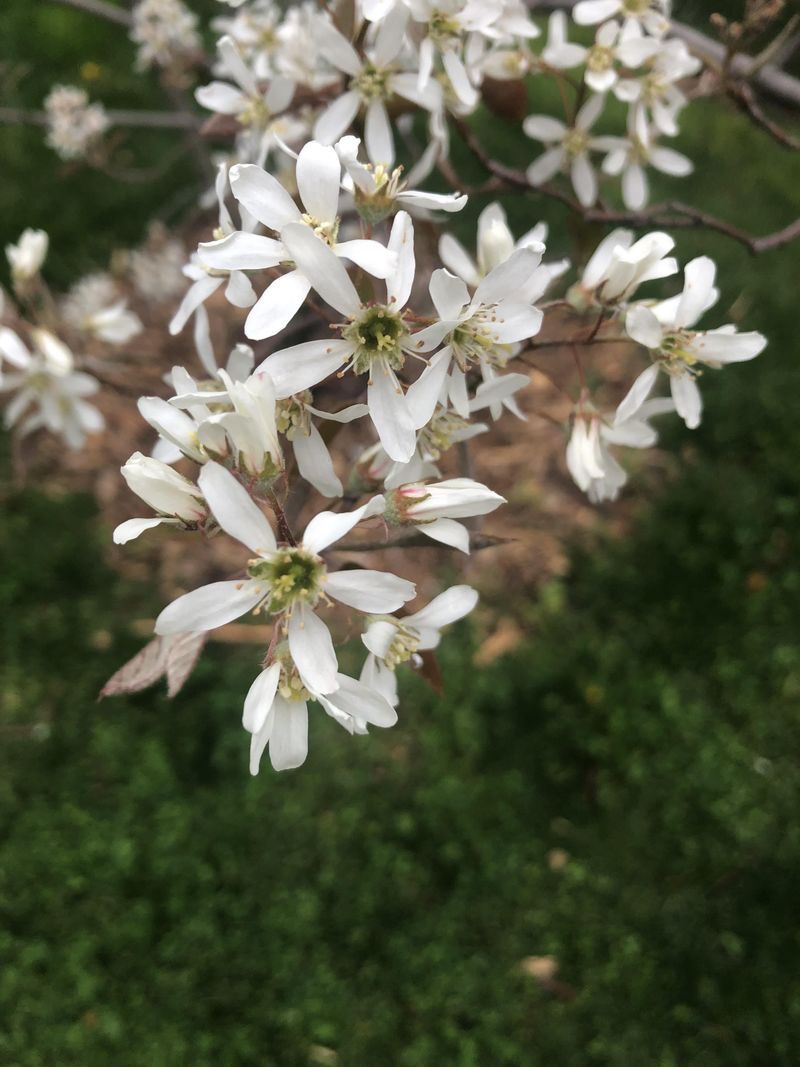
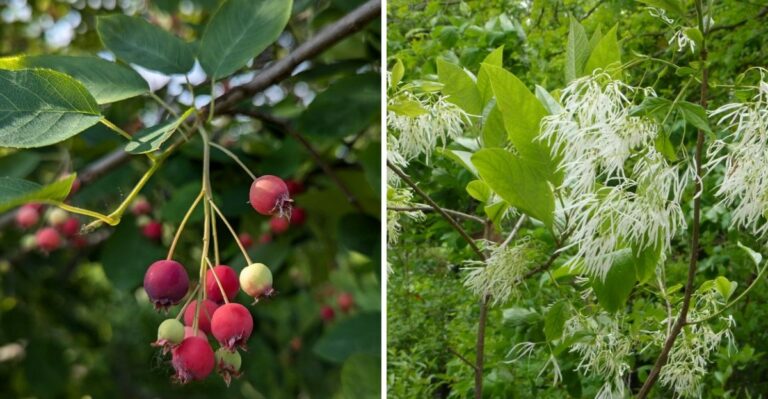
Most Pennsylvania yards still look brown and sleepy in early April, which is exactly when serviceberry decides to show off completely. Delicate white flowers open along the branches before the leaves fully expand.
Penn State Extension lists Amelanchier among the earliest native trees to flower in spring, well ahead of most garden favorites.
Timing matters more than you might think here. Native bees, mining bees especially, and early-flying butterflies are hunting for nectar and pollen weeks before most garden plants offer anything.
The show is short, usually a week or two depending on temperature, but it arrives when you need it most. Old-timers along the Susquehanna called the tree shadbush because it flowered when shad swam upstream.
For planting, pick a spot with full sun to part shade and soil that drains reasonably well throughout the year.
Blooms are heaviest in sunnier locations, though woodland edges suit the tree beautifully too if that fits your yard better.
Few ornamental trees hand you flowers that early. Consider pairing it with daffodils below for a layered early-spring picture worth showing off.
2. Edible Berries Beat Purely Ornamental Fruit
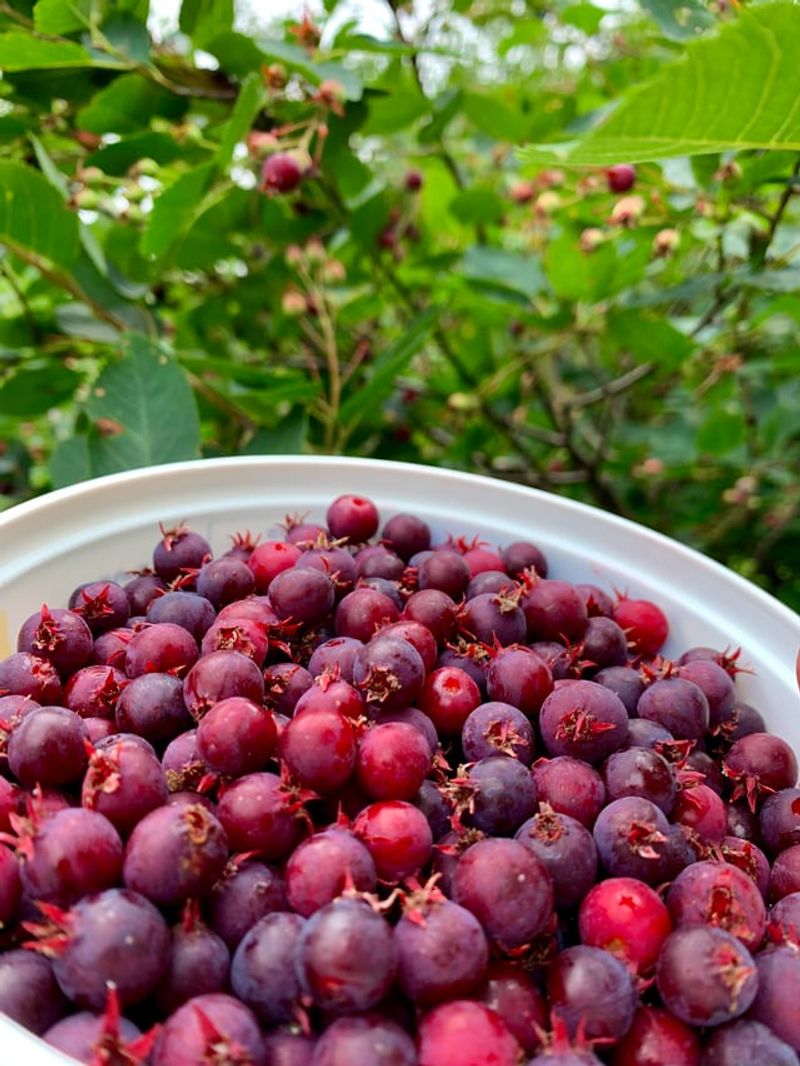
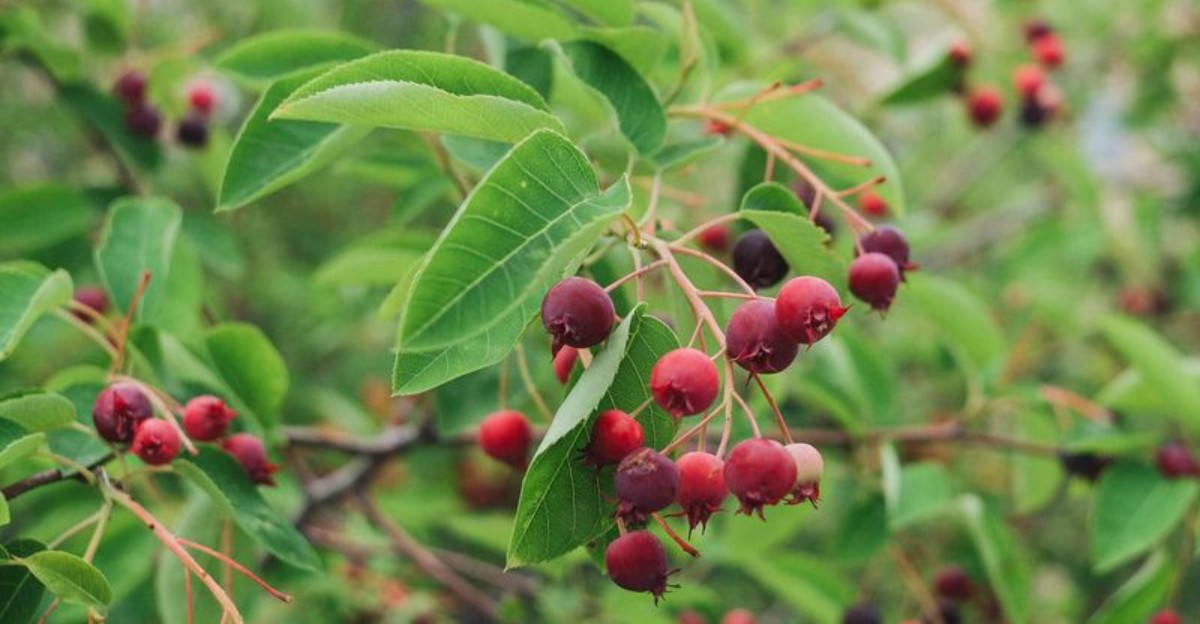
Here is the part that surprises people the most. You can eat the fruit, and it tastes good too. Serviceberries ripen in June, which earned the plant its other common name, Juneberry.
Flavor lands somewhere between a blueberry and a sweet cherry, with a faint almond note from the tiny seeds tucked inside.
Many popular flowering ornamentals produce fruit that is purely decorative, mealy, or simply not worth picking at all. Serviceberry fruit is genuinely useful in the kitchen instead.
Pennsylvania gardeners bake it into pies, muffins, and pancakes, simmer it into jam, or freeze it like blueberries for later.
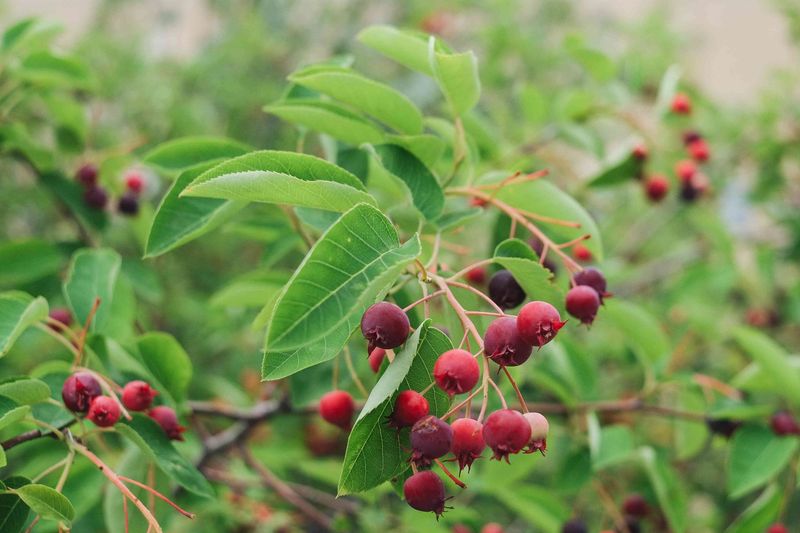
Harvest when the berries turn deep purple and slip off easily, since red ones are not ready to pick yet. Birds will happily take a share too.
If you want more for yourself, drape lightweight netting over a branch or two for about ten days at ripening time.
A shrubby, multi-stemmed form keeps fruit within arm’s reach, while a single-trunk tree sends much of the crop high overhead instead.
Growing something that decorates the yard and also fills a bowl at breakfast makes a small lot work harder. Kids tend to become instant fans of this feature.
Your Pennsylvania Garden Changes Every Week. Your Plan Should Too.
Gardening in Pennsylvania changes quickly throughout the season. Every Friday you’ll receive a simple weekly plan showing exactly what to plant, prune, fertilize, harvest, and protect so you never miss the right timing.
3. Fall Color Rivals Any Non Native Choice
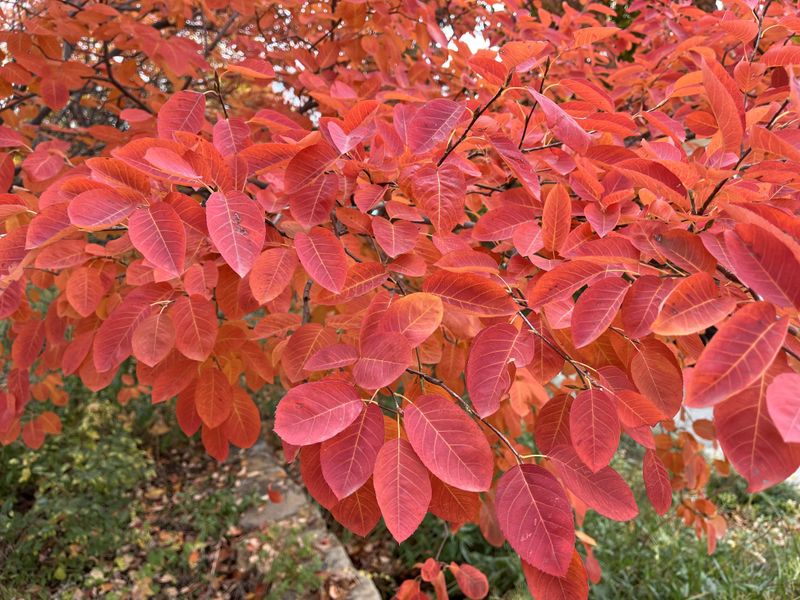
Autumn is where serviceberry quietly wins arguments with the tree in the neighbor’s yard. Leaves shift through warm yellow, glowing orange, and deep red, often on the same branch.
Penn State Extension describes the fall foliage of Amelanchier as one of its strongest ornamental features by a wide margin.
Color holds for a couple of weeks in a normal October, and because the leaves are small and fine-textured, the whole canopy seems to glow.
Plenty of imported ornamentals are sold on fall color, and some deliver reasonably well. The honest comparison is that serviceberry matches them without the baggage of seedlings sprouting everywhere.
Sun exposure drives intensity here. Trees in full sun color up more reliably than those tucked into deep shade, where foliage may drop closer to plain yellow.
Soil that stays soggy or droughty during late summer can also dull the finish, so steady moisture through August pays off in October.
Planting near evergreens gives the warm colors a dark green backdrop, which makes a small tree look twice as dramatic from the street.
4. Native Roots Support More Local Wildlife
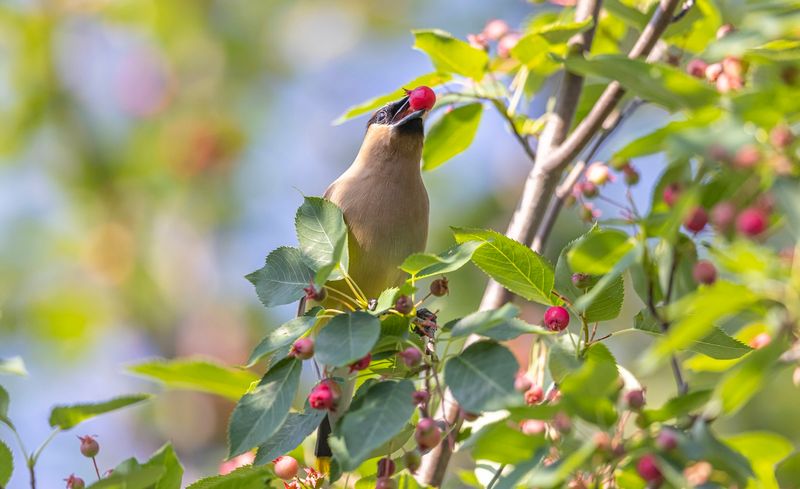
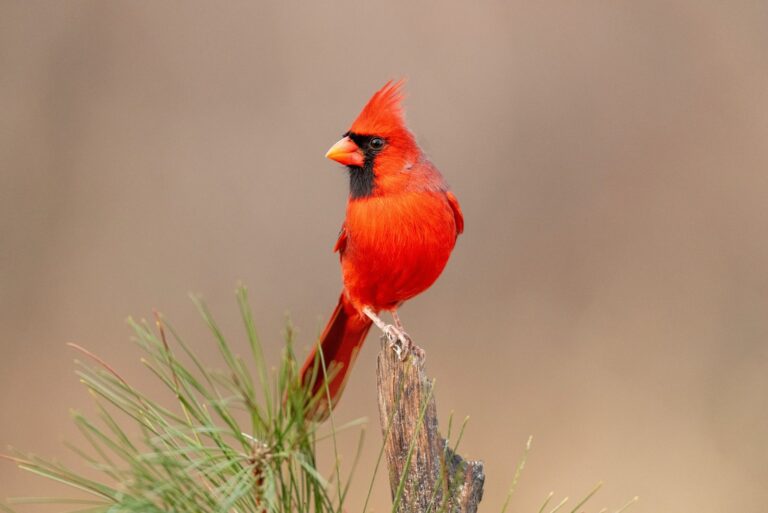
Sit near a ripening serviceberry in June, and you will meet the neighborhood. Robins, catbirds, cedar waxwings, and thrushes all come for the fruit hanging there.
That popularity is not an accident at all. Amelanchier species are native to Pennsylvania, so local wildlife evolved alongside them and recognizes them as food.
Many imported ornamentals support far fewer native insects, which matters because insects, especially caterpillars, are what parent songbirds stuff into nestlings.
Serviceberry hosts a respectable list of native caterpillars, including several hairstreak butterflies and the striking red-spotted purple.
A single nesting pair of chickadees needs hundreds of caterpillars a day, so plant choice has real consequences in a small yard.
Early flowers also feed pollinators reliably. Mason bees, mining bees, and hoverflies work the blossoms during a stretch when few other options exist.
If you would rather keep some berries for yourself, remember that birds usually work from the top down and outside in first.
5. Multiple Seasons Of Interest In One Tree
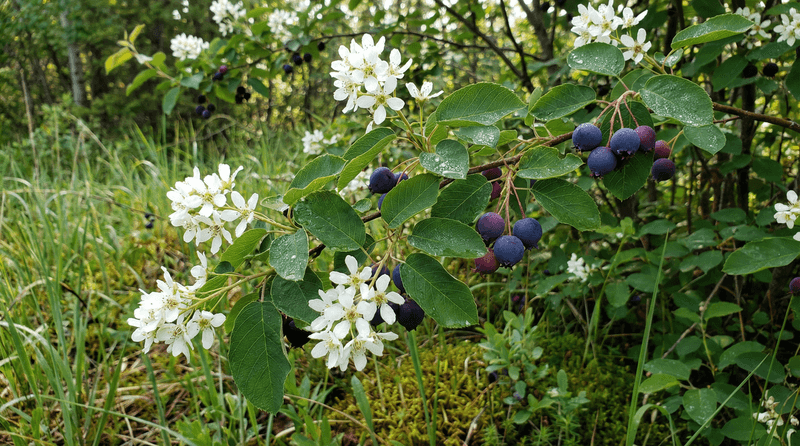
Think of serviceberry as four plants packed into one modest footprint. April brings white flowers, June brings edible purple fruit, October brings orange and red foliage.
Winter deserves more credit than it gets from most gardeners. The bark has a silvery, muscled look that reads well against snow all season.
Multi-stemmed specimens show off a sculptural cluster of trunks too. Prune lightly in late winter to open that structure up and the tree becomes a focal point.
Size cooperates with real yards nicely. Most garden forms mature somewhere between fifteen and twenty-five feet tall, which fits under utility lines comfortably.
Because interest rotates through the year, one serviceberry can carry a spot where you might otherwise plant two or three separate things.
Place it where sightlines matter, such as near a patio or at the corner of the house. Underplant with shade-tolerant natives such as wild ginger for a finished look.
Maintenance is modest overall. Water deeply during the first two summers, mulch a wide ring while keeping it off the trunk, and skip heavy fertilizing entirely.
6. Fewer Pest Problems Than Popular Imports
Nobody wants to spend July spraying a tree they planted for fun. Serviceberry generally earns a reputation as a low-trouble small tree in Pennsylvania landscapes.
Honesty helps here though. The tree is not bulletproof at all. It belongs to the rose family, so it can pick up cedar-serviceberry rust or fire blight occasionally.
The difference is severity and frequency compared to other options. Most of those problems are cosmetic on a well-sited tree, and Penn State Extension guidance leans on cultural fixes.
Good air circulation, full sun, and soil that drains cut rust and mildew pressure dramatically without needing chemical intervention.
Compare that with certain widely sold non-native ornamentals that come with their own recurring headaches, from weak branch structure to invasive spreading.
Practical steps go a long way here. Buy a healthy plant from a reputable nursery, plant at the right depth with the root flare visible, and avoid piling mulch against the trunk.
Small habits like those keep the tree looking sharp for decades to come without much ongoing effort required.
7. One Tree Replaces Several Reasons To Wait
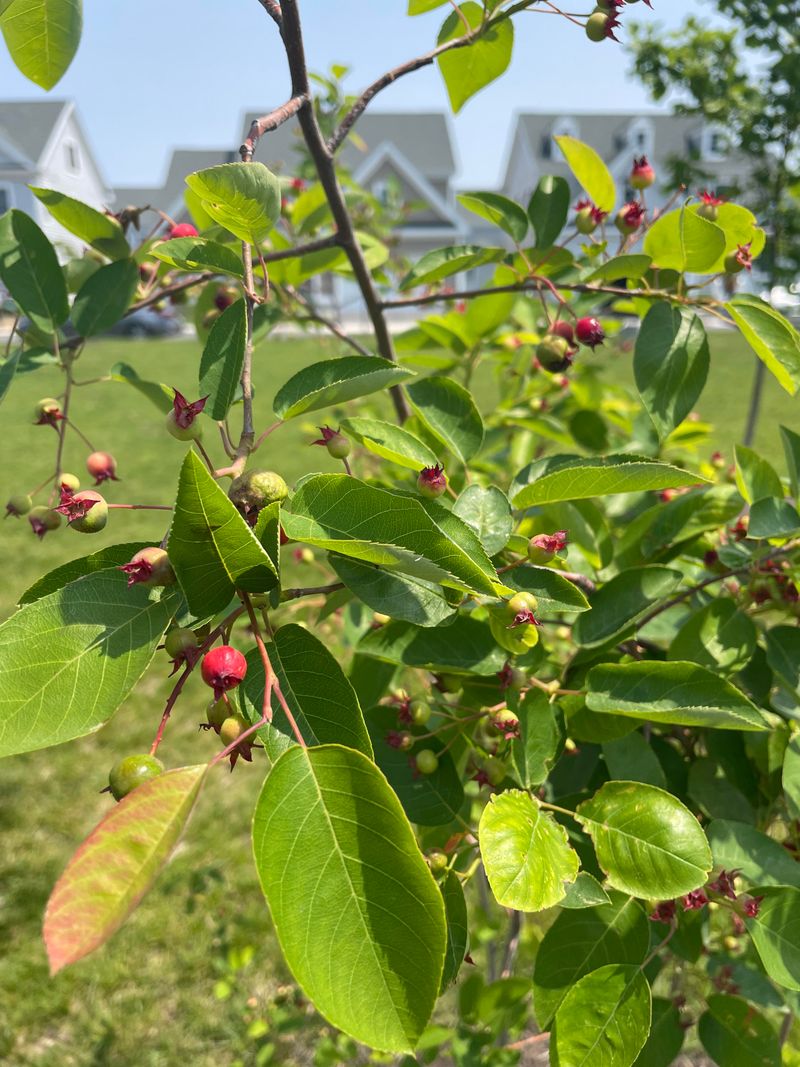
Standing in a nursery aisle in spring, it is easy to grab whatever is blooming in the closest pot without much thought given to the choice.
Serviceberry rewards a little patience and a little research instead. Add up what it offers, and the case gets hard to argue with honestly.
Flowers arrive before almost anything else in the yard, and they feed early bees while they are at it too. Fruit ripens in June and actually tastes good.
Fall foliage competes with imported favorites directly, and winter bark keeps the planting from looking empty during the coldest months.
Add native status, real value to birds and pollinators, a size that fits ordinary lots, and generally manageable pest issues on top of everything else.
Choosing well is the last step in this whole process. Downy serviceberry, Allegheny serviceberry, and the widely sold garden hybrids all perform well in Pennsylvania.
Plant in fall or early spring, water through the first couple of summers, and give the tree room to reach its mature spread. Then let it settle in.
8. Serviceberry Adapts To A Wide Range Of Sites
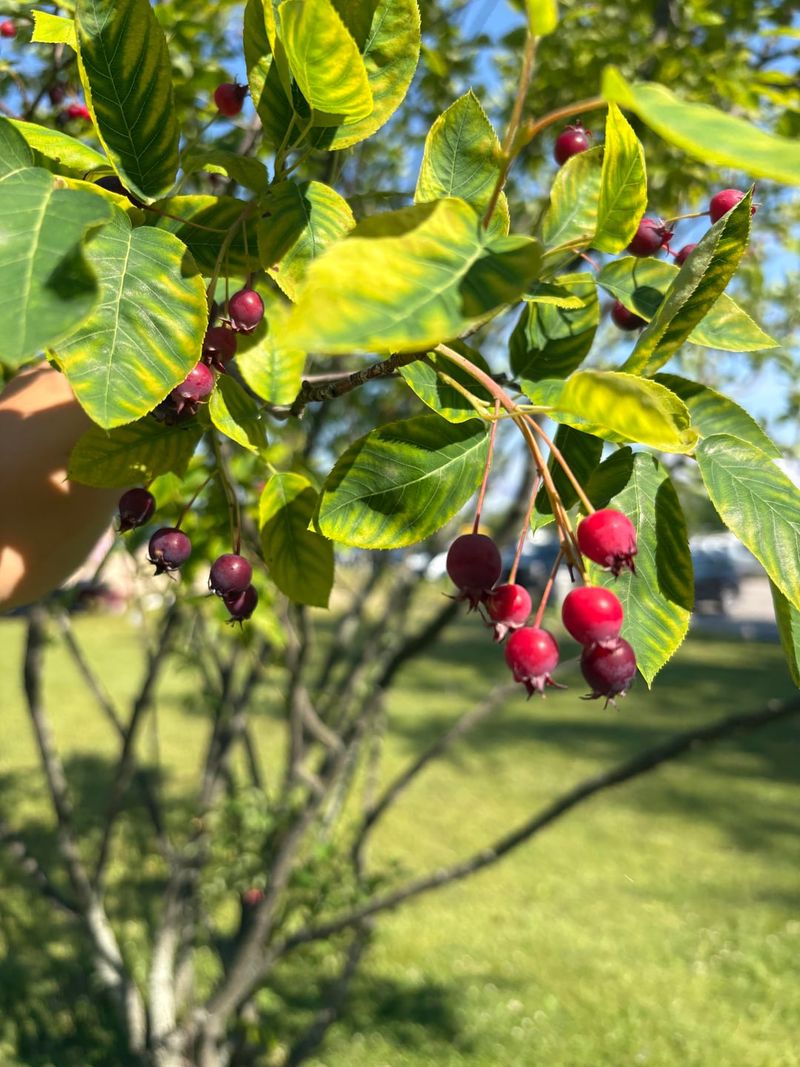
One reason serviceberry works for so many Pennsylvania yards comes down to flexibility that few ornamental trees can match across such varied conditions.
The genus spans several native species, each with slightly different site preferences, which means gardeners with wet, dry, sunny, or partly shaded spots can usually find a form that fits without fighting the landscape.
Downy serviceberry tolerates the moist, well-drained soil found along many woodland edges and stream banks, making it a natural fit for yards backing up to a creek or a low, damp corner that struggles with other ornamentals.
Allegheny serviceberry handles drier, rockier ground reasonably well once established, a useful trait for homeowners dealing with thin soil over shale or the compacted fill common around newer construction sites.
Both tolerate a range of soil pH without much fuss, unlike blueberries or other acid-loving plants that demand careful chemistry before they will even survive, let alone thrive in a home landscape.
Partial shade suits the tree nearly as well as full sun, though flowering and fall color both intensify with more light, giving gardeners real flexibility to work around existing trees or structures already shading part of the yard.
This adaptability also means a mistake in placement rarely spells disaster the way it might with fussier ornamentals, since a serviceberry planted in slightly less than ideal conditions usually still survives and produces a respectable show.
For anyone unsure whether their yard can support a particular native tree, serviceberry offers a forgiving starting point, one that rewards reasonable care without demanding the precise conditions many other native and non-native options require.
9. It Works Well In Small Yards And Tight Spaces
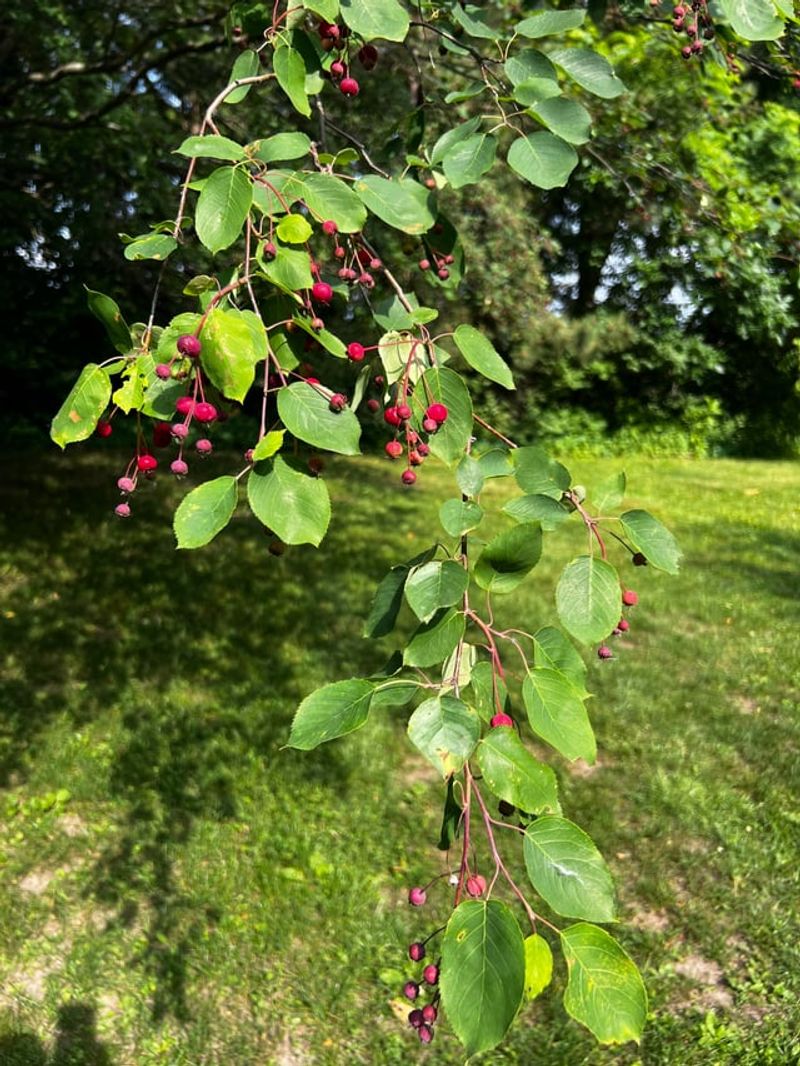
Not every Pennsylvania homeowner has room for a sprawling shade tree, and serviceberry fills a gap that many other flowering trees simply cannot manage in a compact urban or suburban lot.
Its mature size, typically fifteen to twenty-five feet depending on the species and form, fits comfortably in yards where a full-sized oak or maple would eventually crowd the house, overhang the roofline, or interfere with utility lines overhead.
Multi-stemmed forms take up a similar footprint to a large shrub while still delivering the height and structure of a small tree, making them a practical choice for foundation plantings or narrow side yards where width matters more than anything else.
Container growing is even possible for a few years while a homeowner decides on a permanent location, since young serviceberries tolerate root confinement reasonably well before eventually needing a spot in the ground to reach full size.
Placement near a patio or deck lets residents enjoy the spring flowers and fall color up close, while the modest mature size means the tree never grows into an overwhelming presence that blocks light from windows or dominates a small outdoor living space.
Urban and suburban lots with utility lines running overhead benefit particularly from this tree, since its height rarely requires the aggressive topping or removal that taller species eventually face once they grow into power lines.
Homeowners association rules that restrict tree size or require native plantings often list serviceberry as an approved option specifically because of this manageable scale, sidestepping conflicts that larger native trees sometimes create in planned communities.
For a Pennsylvania yard too small for a shade tree but large enough for something more substantial than a shrub, serviceberry occupies that middle ground effectively, delivering four seasons of interest without ever outgrowing its welcome.