Why Pygmy Rattlesnakes Hide In Florida Leaf Piles More Than People Realize
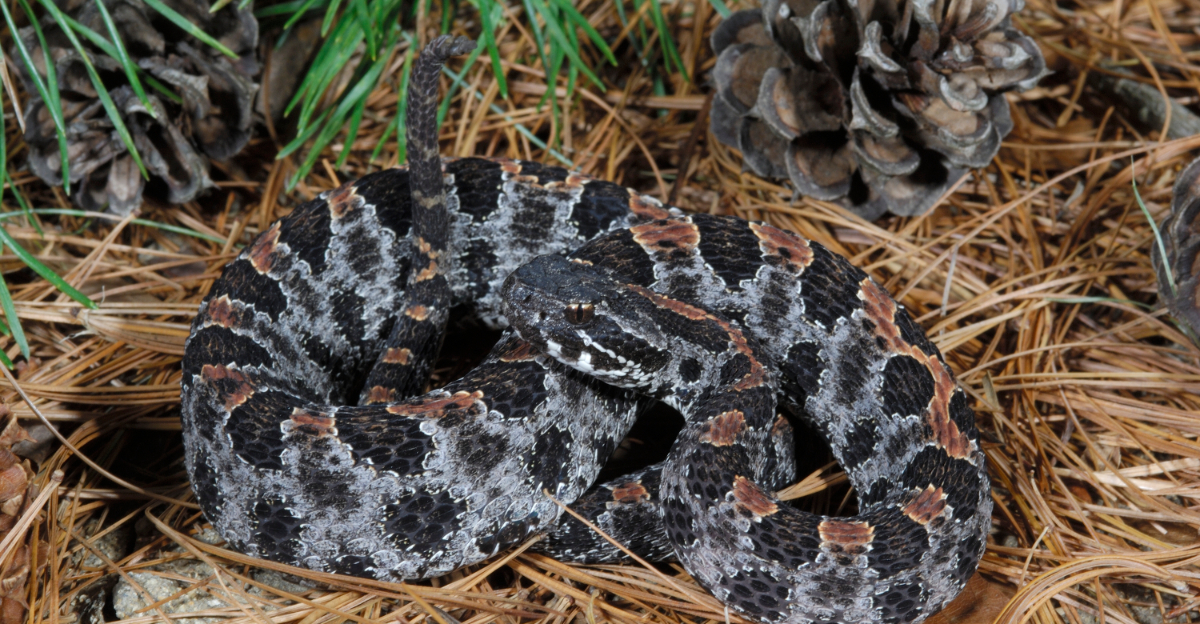
Two feet long. Silent.
Nearly invisible against fallen leaves. This snake has probably been closer to your hands than you’d like to know.
Pygmy rattlesnakes don’t rattle the way people expect. Some barely try to warn anyone before they strike.
Their coloring blends into leaf litter so well that landscapers get bitten reaching into piles they’ve cleared a hundred times before. Their venom rarely turns life-threatening for a healthy adult.
But the bite hurts. It happens often enough that experienced yard crews across Florida stopped grabbing leaf piles bare-handed years ago.
Florida’s leaf litter hides more than bugs and moisture. Cooler mornings push these snakes to seek cover in exactly the kind of debris pile sitting in your yard right now.
That routine cleanup you’ve done a dozen times just got a lot more interesting.
1. Leaf Litter Makes Their Camouflage Almost Too Good
Spend a few minutes staring at a pile of fallen leaves and you will start to see just how many patterns are hiding in plain sight. Brown patches sit beside gray ones.
Curled edges cast small shadows. Bits of pine needle and bark dot the surface.
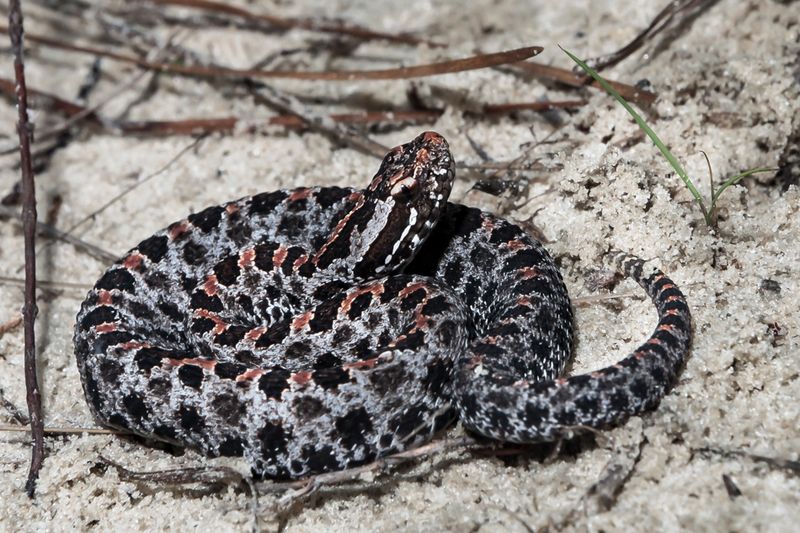
Now add a small snake whose back is covered in dark blotches on a gray or brownish background, often with a faint reddish or orange stripe running down the center. The match can be striking.
The Florida Museum of Natural History notes that the dusky pygmy rattlesnake has this type of body patterning. It helps the snake blend easily with leaf litter, sandy soil, pine straw, and plant debris.
The snake does not need to do anything clever to disappear. Remaining perfectly still is usually enough.
A person can look directly at the ground near one of these snakes and still struggle to separate its outline from the surrounding material. The blotches break up the snake’s shape the same way military camouflage breaks up a soldier’s silhouette.
Edges become harder to trace. Colors overlap with background tones.
Add a little shadow from overlapping leaves, and the snake can seem to vanish entirely. Camouflage this effective is the main reason close encounters happen more often than most people expect.
2. A Small Snake Can Vanish Under Very Little Cover
Size matters a lot when a snake is trying to stay out of sight. Most people associate rattlesnakes with the eastern diamondback, a species that can reach impressive lengths and is hard to miss.
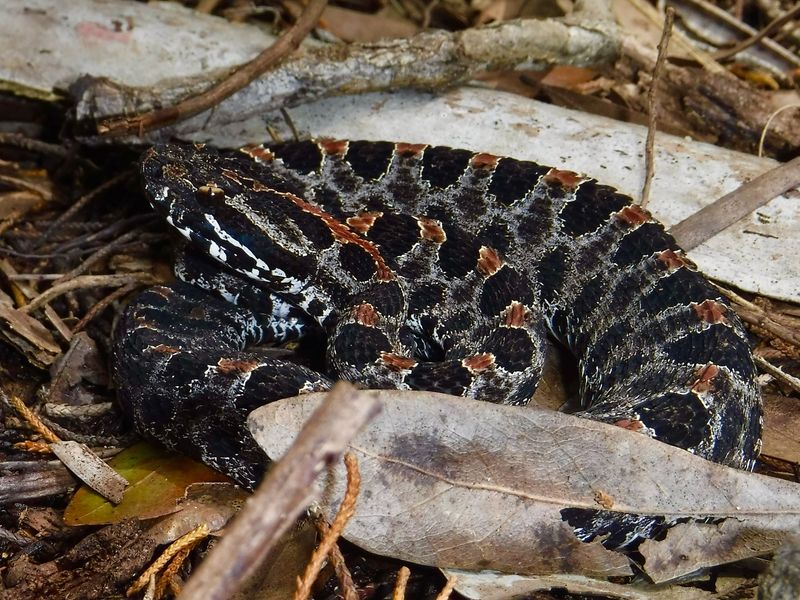
The dusky pygmy rattlesnake is a completely different story. Adults typically measure between 14 and 22 inches in total length, according to the Florida Museum of Natural History.
That is roughly the length of a standard ruler to a little longer than a sheet of printer paper.
A snake that compact does not need a thick brush pile or a dense shrub to become difficult to see. A shallow layer of leaves, a scattering of pine needles, or a low clump of ground-level vegetation can be enough to break up its outline and hide it from casual view.
Your Florida Garden Changes Every Week. Your Plan Should Too.
Gardening in Florida changes quickly throughout the season. Every Friday you’ll receive a simple weekly plan showing exactly what to plant, prune, fertilize, harvest, and protect so you never miss the right timing.
Even a modest accumulation of yard debris can provide enough visual disruption to make the snake easy to step past without noticing.
That small size also means the snake fits into spaces that would never hide a larger animal. Gaps beneath garden tools left on the ground, spaces under a thin layer of mulch, and the edge of a raised garden bed can all offer enough concealment.
The compact body of this species is one of the main reasons accidental encounters happen so close to places where people regularly work or walk.
3. Pygmy Rattlesnakes Spend Plenty Of Time Close To The Ground
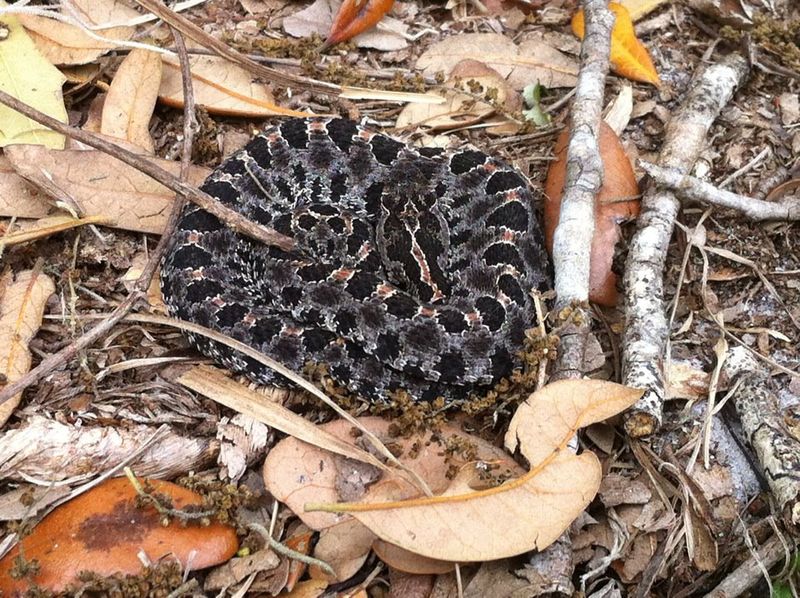
Ground level is where this snake lives most of its life. According to UF/IFAS Extension, the dusky pygmy rattlesnake occupies many Florida habitats.
These include flatwoods, scrubby areas, floodplain forests, and the edges of wetlands and ponds. It tends to stay low, moving through leaf litter, along the bases of shrubs, and beneath low-growing plants rather than climbing or traveling through open areas.
Some of those same habitat features appear in residential landscapes. A yard that backs up to a scrubby lot, a retention pond, or a strip of natural vegetation may share conditions with places this snake already uses.
Dense ground cover, scattered debris, low shrubs, and moist areas near drainage features can all overlap with the natural settings where this species is found.
That does not mean every yard with leaves on the ground is snake habitat. Some residential properties border or contain pockets of suitable cover.
In those places, the snake may already be present before a pile of leaves ever enters the picture.
Its ground-level habits mean it travels through the same low spaces that people use when gardening, moving hoses, stacking firewood, or clearing out corners of the yard.
Awareness of those overlapping zones is more useful than worrying about any single pile of leaves.
4. Frogs And Lizards Can Make That Cover More Useful
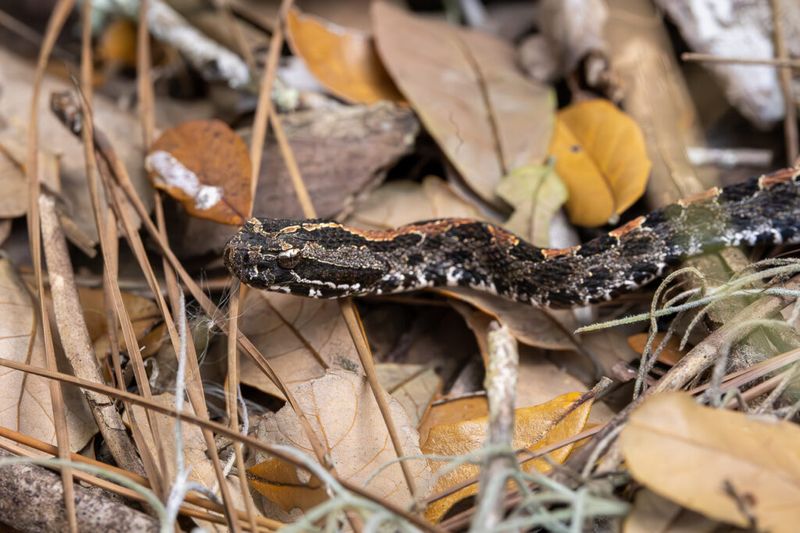
A snake does not stay in a spot just because it is hidden. Cover becomes especially useful when it also puts the snake near a meal.
Dusky pygmy rattlesnakes eat a variety of small animals, including frogs, lizards, mammals, and arthropods. This diet is documented by the Florida Museum of Natural History and UF/IFAS resources.
Prey selection can shift depending on the snake’s age and the animals available in its immediate area.
Leaf litter and low vegetation happen to support many of these same animals. Frogs shelter in moist leaf accumulations.
Lizards forage along the edges of debris piles and low plant growth. Small invertebrates move through the same ground-level spaces the snake uses.
A spot that offers both cover and nearby prey has obvious value to a foraging animal.
None of that means a pile of leaves in a yard will automatically draw a snake in from somewhere else. Prey animals are distributed across the landscape, not concentrated in any single spot.
The ecological connection is more subtle. Ground cover that shelters both a small snake and the animals it may hunt creates conditions where the snake has reason to linger rather than move on.
Removing one pile of leaves does not necessarily change what prey is available nearby. The relationship between cover, prey, and snake presence is part of a much larger landscape picture.
5. Their Tiny Rattle May Not Give You Much Warning
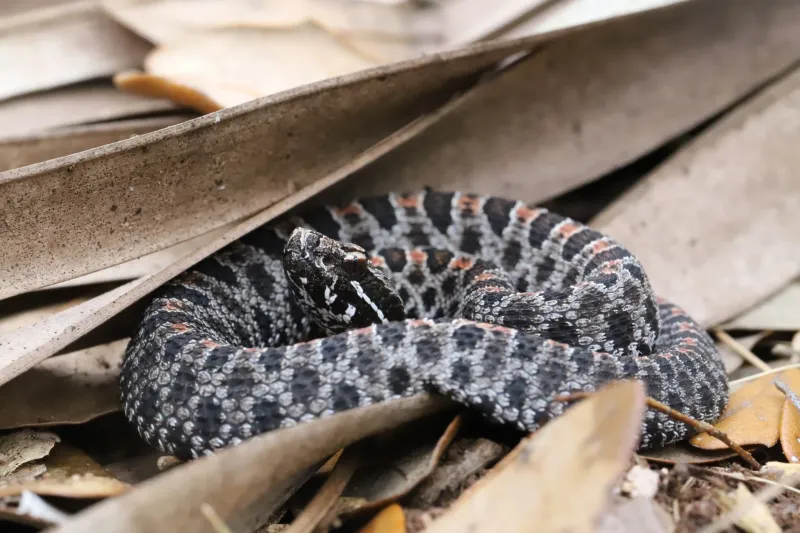
Most people expect a rattlesnake to announce itself loudly before anyone gets close. That expectation works reasonably well for large species with well-developed rattles.
For the dusky pygmy rattlesnake, it can be a misleading assumption. This species has a notably small rattle that often produces only a faint buzzing sound.
It can resemble a large insect rather than the sharp rattling most people expect. The Florida Museum of Natural History notes that the pygmy rattlesnake’s rattle is small and produces a sound that may not carry far.
A person working outdoors with background noise from wind, a lawnmower, or nearby traffic might not hear it at all even at close range. The snake may also rely more on stillness and camouflage than on rattling as a first response to a nearby disturbance.
Correcting the assumption that every rattlesnake gives a clear, unmistakable warning is genuinely useful. A person who believes the rattle will always alert them may approach dense ground cover with less caution than the situation calls for.
A quiet warning combined with excellent camouflage and a compact body means the snake can be very close before a person realizes it is there.
Slowing down and looking carefully before reaching into any concealed outdoor space is a far more reliable safety habit than waiting for a sound.
6. Reaching Into A Leaf Pile Creates The Real Risk
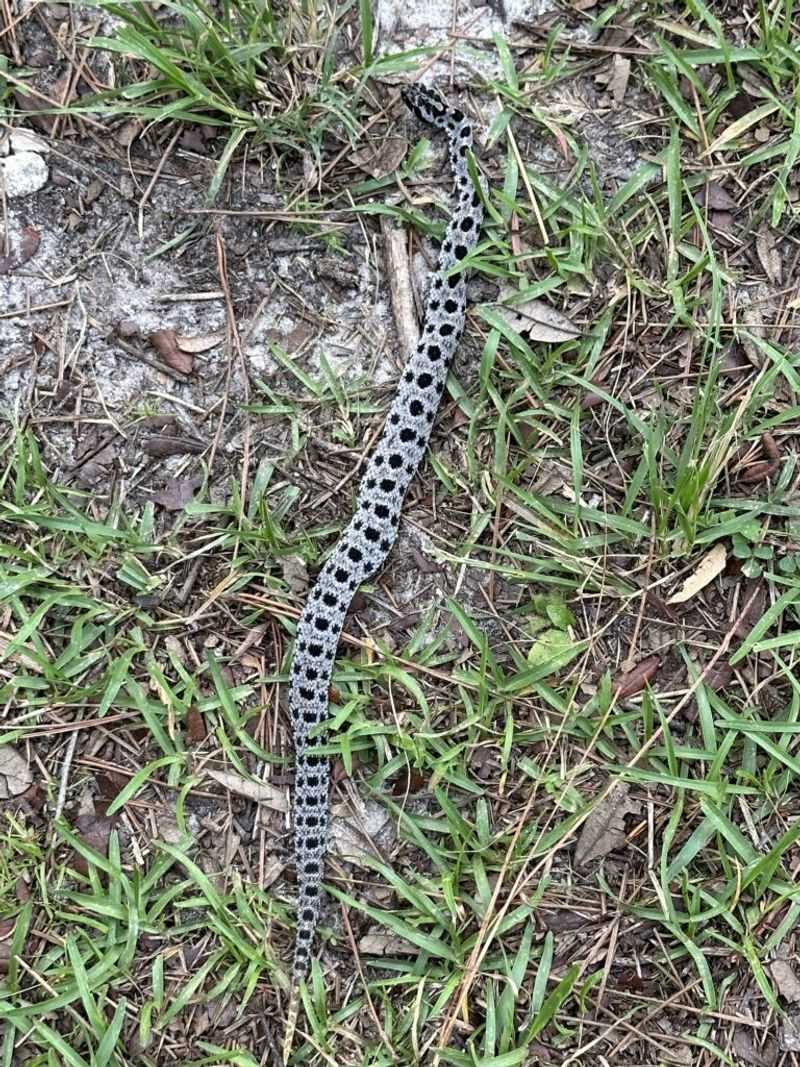
Accidental contact is the situation that creates the most risk with this snake. Dusky pygmy rattlesnakes do not pursue people.
They are not searching for confrontation. A defensive bite can happen when a snake is suddenly touched, trapped, or stepped near without warning.
It can also happen when someone deliberately handles a snake they do not recognize. Most of those situations involve a person placing a hand or foot into a space they cannot fully see.
Several common yard tasks can bring a hand unexpectedly close to a hidden snake. These include reaching into leaf piles, moving boards or pots, and picking up debris without looking first.
The snake’s camouflage and stillness mean it may not move until contact is nearly unavoidable. By the time the snake responds, the person’s hand may already be very close.
A few simple habits reduce that risk considerably. Look carefully at any dense or concealed outdoor material before reaching into it.
Use a rake or long-handled tool to shift debris before getting close with bare hands. Wear gloves when moving yard material, and check what is underneath before committing your hand to the space.
Give any snake you cannot identify plenty of room. Do not attempt to move, handle, or pin an unidentified snake.
Step back, give it space, and let it move away on its own.
7. Cleaning Up Does Not Mean Stripping The Yard Bare
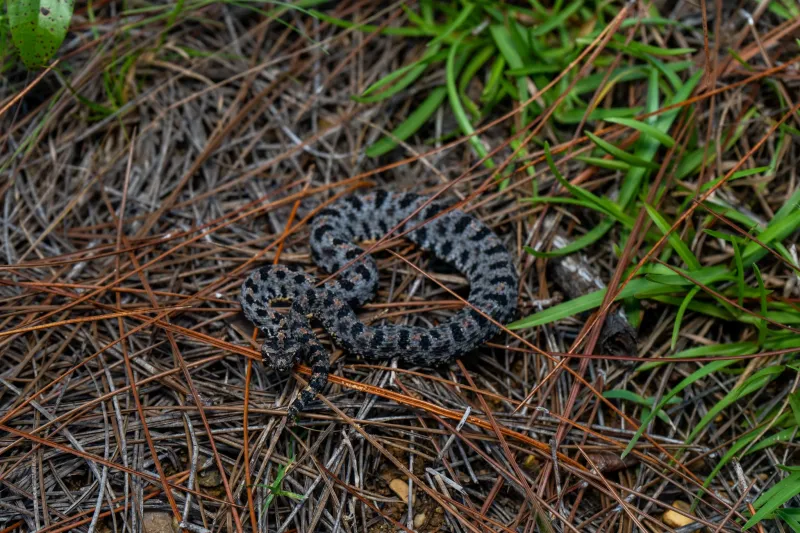
Fallen leaves are not simply yard waste. They insulate plant roots, hold moisture in the soil, support beneficial insects, and provide shelter for small wildlife.
Removing every leaf from a property does more harm than good in most cases. The goal is not to create a barren landscape but to manage accumulations thoughtfully in places where they could create problems.
Dense leaf buildup is worth clearing from frequently used areas. Pay particular attention to doors, walkways, children’s play areas, sheds, and patio walls.
Those are spots where people routinely place their hands and feet without looking carefully. Keeping those zones open and visible reduces the chance of an unexpected encounter in a high-traffic area.
Low-traffic areas do not need to be stripped bare to be managed responsibly. Naturalized beds, leaf layers beneath shrubs, and composting areas can remain in appropriate parts of the yard.
The difference between a hazard and a habitat feature often comes down to location and awareness. Leaves near a back gate that children use every afternoon deserve more attention than leaves beneath a stand of trees at the far edge of the property.
Thoughtful placement and regular awareness of what is accumulating near busy areas is a more balanced approach than removing all ground cover.
8. Give Any Hidden Snake Room Before You Start Moving Leaves
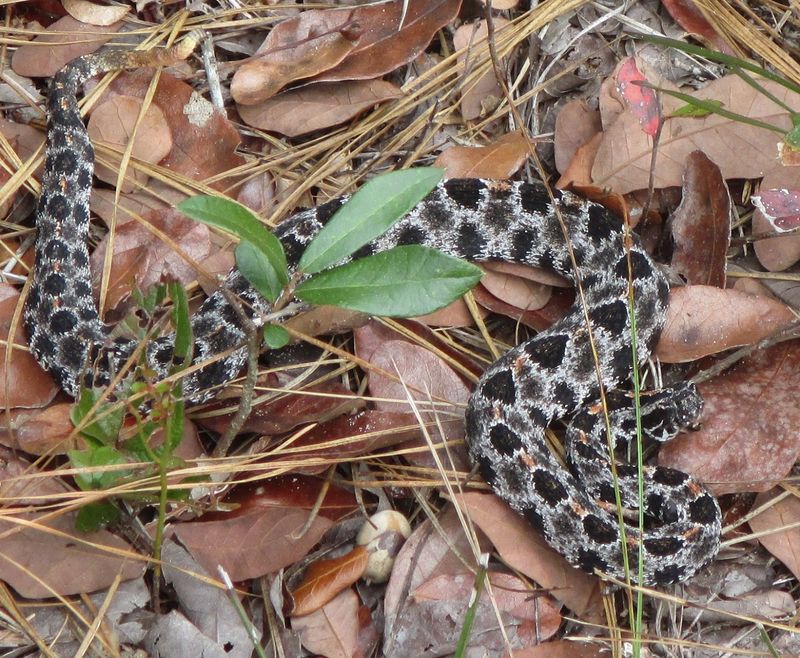
Finding a small patterned snake beneath leaves or yard debris can catch anyone off guard. The first instinct is often to lean in for a closer look.
Resist that instinct. A quick glance is not enough to identify a snake confidently.
Several harmless species can initially show patterns similar to those of a dusky pygmy rattlesnake. Corn snakes, juvenile water snakes, and other non-venomous species can cause confusion for someone trying to identify a snake quickly from a short distance.
Trying to inspect a snake’s pupils, head shape, or rattle from arm’s length is not a safe approach. Those features are hard to assess accurately without getting dangerously close.
Observe from a safe distance instead. If the snake is in a spot where it genuinely needs to be moved, contact a local wildlife professional or your county’s animal services for guidance.
The main takeaway from all of this is straightforward. Leaf litter does not magically summon pygmy rattlesnakes into a yard.
Several traits make these snakes remarkably easy to overlook. Their small size, subtle coloring, ground-level habits, available cover, and nearby prey all contribute.
Awareness is the most practical tool available. Slow down near dense ground cover, look before you reach, and give any unidentified snake the space it needs to move away safely on its own.