Why Rose of Sharon Is In Every Ohio Yard (And The Native Shrubs That Do It Better)
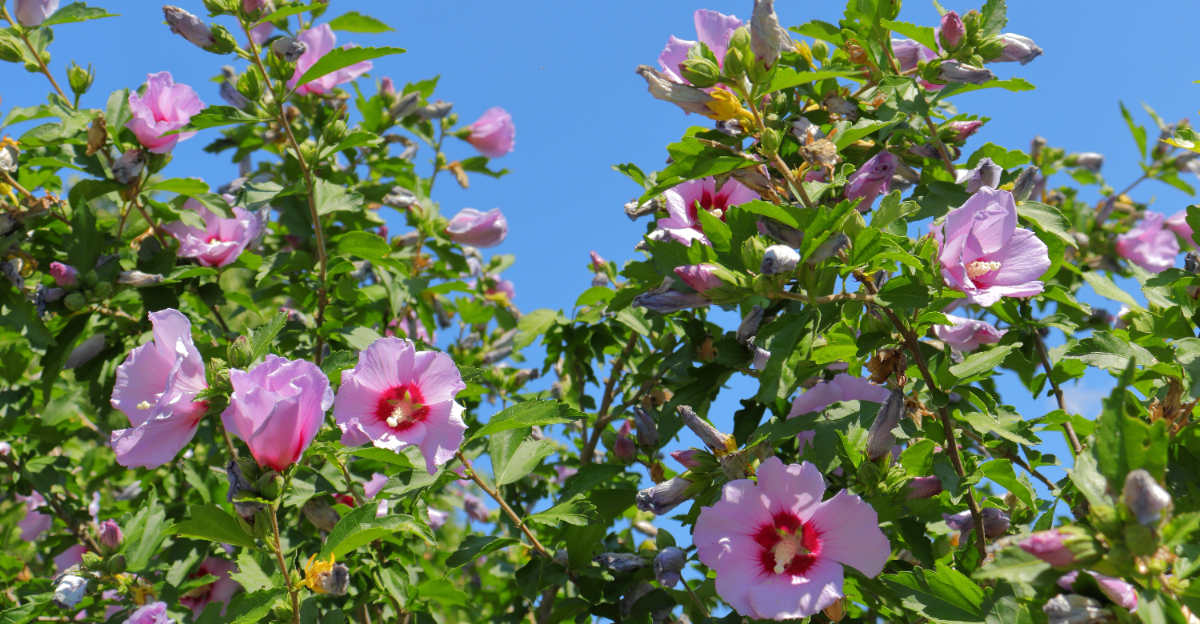
Rose of Sharon earned its place in Ohio yards the old fashioned way. It blooms in late summer when almost nothing else does, it grows without much fuss, and it fills a spot that other shrubs struggle to own.
Generations of homeowners have planted it for exactly those reasons and never questioned whether something better existed. Something does.
Ohio native shrubs that bloom in the same late summer window bring everything Rose of Sharon offers and add what it never could. Wildlife value, ecological fit, and a growth habit that does not drop seedlings into every bed within a twenty foot radius.
Rose of Sharon self-seeds with an enthusiasm that stops feeling charming around year three. The natives that fill the same role do not come with that particular side effect.
Late summer bloom is not exclusive to one shrub. Ohio’s native palette has been holding better options quietly in reserve.
1. Know Why Rose Of Sharon Took Over The Block
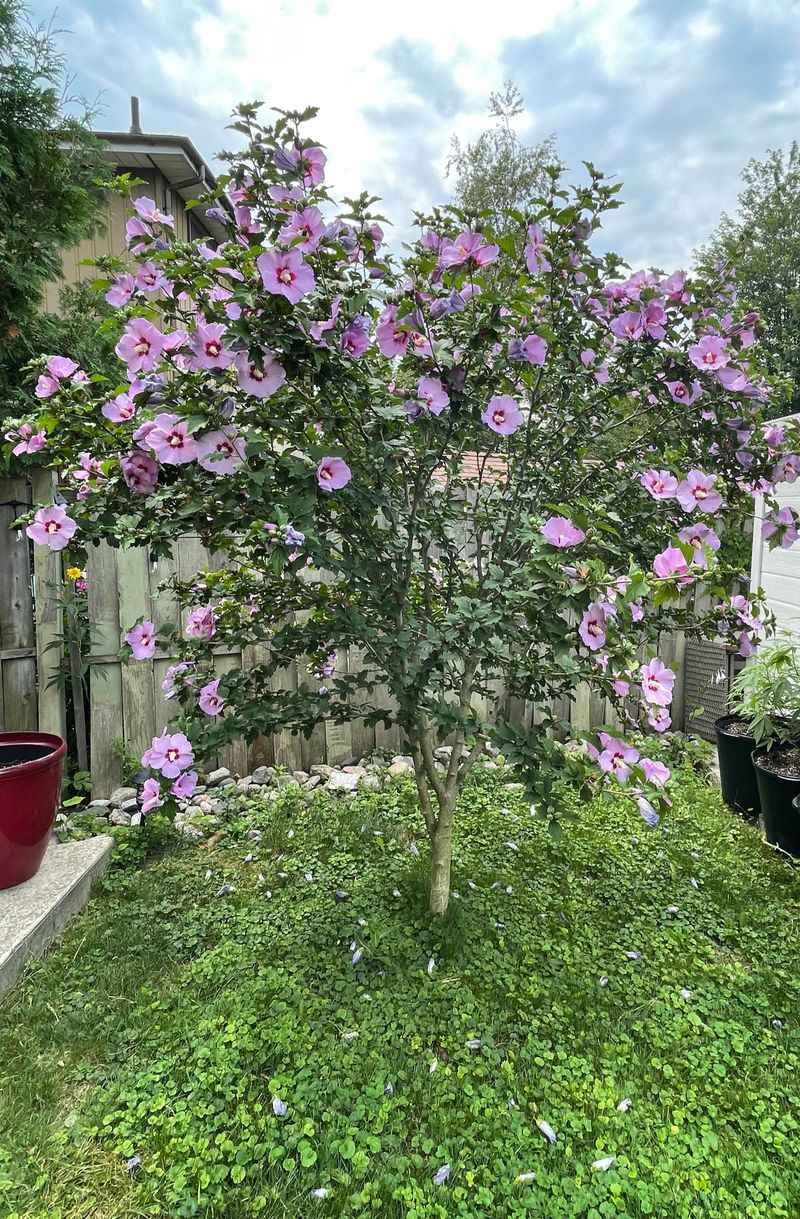
A pink shrub by an old fence with dozens of blooms in August is hard to ignore. Rose of Sharon earned its place in local yards through a combination of reliable performance and generous neighbors.
For decades, gardeners passed rooted cuttings and seedlings to friends, family, and anyone who admired the flowers. That informal sharing network helped spread Hibiscus syriacus across neighborhoods faster than any nursery catalog could.
Nurseries also made it widely available at low cost. It tolerates poor soil, summer heat, and periods of drought once established.
It blooms from midsummer into early fall, which is a window when most other shrubs have already finished. OSU Extension resources note that late-summer bloom time is one reason it remains a popular landscape choice.
Hummingbirds and some bees do visit the flowers, though native hibiscus species may offer stronger native pollinator connections.
Recognizing why a plant became popular is a useful first step before deciding to replace it. Rose of Sharon is not a bad plant.
It is a nonnative plant that became a default choice because it performed consistently and was easy to find. Popularity and native habitat value are not the same thing.
Understanding that difference helps you make an informed decision without dismissing gardeners who have grown it for years.
2. Admit The Flowers Are Pretty But Not Native
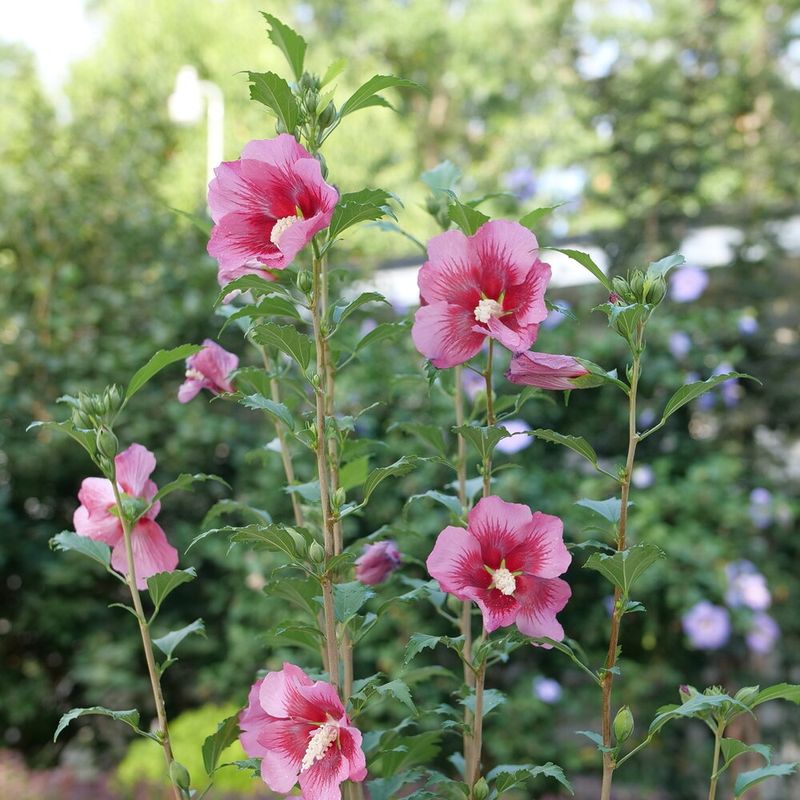
Lavender petals with a deep red center are genuinely attractive, and there is no reason to pretend otherwise. Hibiscus syriacus produces flowers that photograph beautifully and brighten a late-summer border.
Appreciating that does not mean ignoring the full picture. The plant originates from Asia, not North America, and it is not part of the ecological history of this region’s plant communities.
Ohio Invasive Plants Council guidance does not currently list Hibiscus syriacus as an officially invasive species in the state. However, it can self-seed freely in some yards, especially in disturbed or open soil near the base of the shrub.
Those seedlings may pop up in garden beds, lawn edges, and gravel paths, requiring seasonal cleanup. Some sterile or low-seed cultivars are available, which can reduce that management burden if you choose to keep an existing plant.
Your Ohio Garden Changes Every Week. Your Plan Should Too.
Gardening in Ohio changes quickly throughout the season. Every Friday you’ll receive a simple weekly plan showing exactly what to plant, prune, fertilize, harvest, and protect so you never miss the right timing.
Nonnative does not automatically mean illegal or ecologically harmful in every setting. But native shrubs often support local food webs in ways that nonnative plants may not.
Native insects, birds, and pollinators evolved alongside native plants, and that relationship tends to produce stronger habitat connections. If you have a healthy Rose of Sharon that is not spreading aggressively, keeping it can be reasonable.
Gradually adding native shrubs nearby is practical too. Check the origin of any new shrub before planting, and always watch for unwanted seedlings each season.
3. Choose Buttonbush For Wet Yards And Pollinators
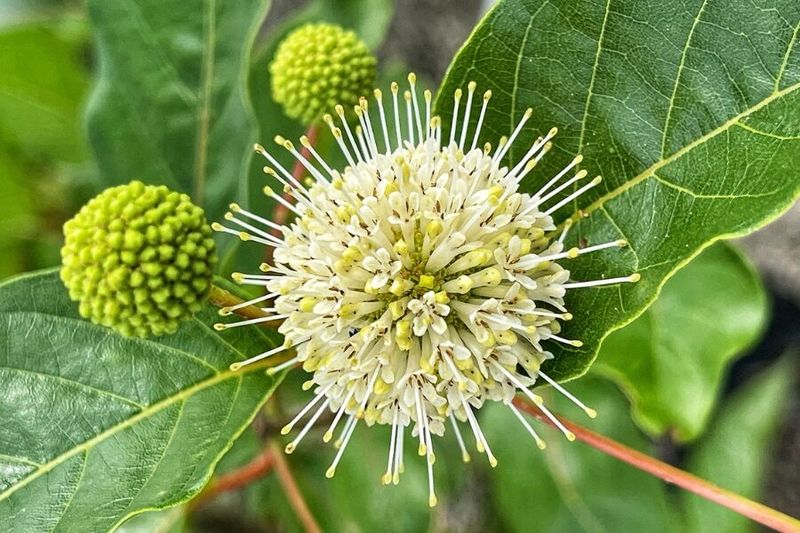
A damp low spot in the yard that stays soggy after rain is not a problem for every native shrub, but buttonbush was practically built for it.
Cephalanthus occidentalis is a native shrub found naturally along stream banks, pond margins, and wetland edges throughout Ohio and much of eastern North America.
Ohio Department of Natural Resources plant records confirm its native status in the state.
The flowers are unmistakable: round, creamy white spheres that bloom in midsummer and attract a wide range of pollinators. Bees, butterflies, and hummingbirds visit the blooms.
University extension sources note that buttonbush offers strong wildlife value, including seed heads that attract waterfowl and songbirds in fall and winter.
That combination of pollinator flowers and wildlife food makes it a genuinely productive native shrub for the right site.
Buttonbush can grow quite large, reaching six to twelve feet in height and spread under good conditions, so give it adequate space. It performs best in consistently moist to wet soil and is not well suited to dry foundation beds or raised borders.
Rain gardens, pond edges, bioswales, and low-lying yard corners are ideal placements. If your yard has a spot that stays damp most of the season, buttonbush is one of the strongest native shrub choices you can make for that location.
Purchase nursery-propagated plants from a reputable native plant nursery rather than collecting from the wild.
4. Plant Summersweet For Fragrance And Shade
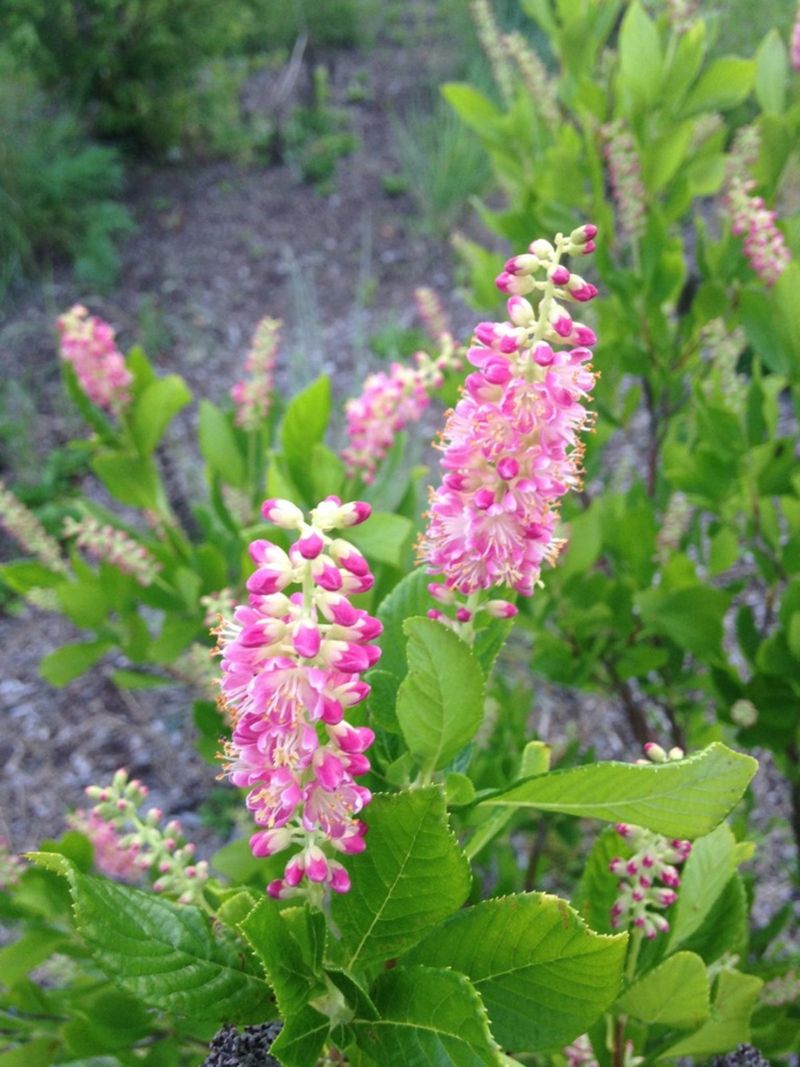
Few native shrubs announce themselves with fragrance the way summersweet does. Walk past a blooming Clethra alnifolia on a warm July morning and the sweet, spicy scent is impossible to miss.
That alone makes it worth planting near a patio, path, or outdoor seating area where you spend time during summer evenings.
Summersweet is native to the eastern United States and is well documented in native plant guidance from sources including the Lady Bird Johnson Wildflower Center. It produces upright white or pale pink flower spikes in midsummer, which overlap with or follow Rose of Sharon’s bloom window depending on the season.
Bees and butterflies visit the flowers regularly, and the plant offers genuine pollinator value during summer months.
One of summersweet’s most useful traits is its tolerance for part shade and moist soil. It performs well along woodland edges, shaded borders, and rain garden margins where many flowering shrubs struggle.
OSU Extension resources and native plant guidance note that it can spread by suckers over time, forming loose colonies in favorable conditions. That spreading habit can be managed by removing unwanted shoots, or it can be used intentionally to fill a naturalistic border.
Summersweet is not a good fit for hot, dry, exposed sites. Match it to a moist, partly shaded spot and it will reward you with fragrant flowers, reliable growth, and attractive foliage through the season.
Choose nursery-propagated plants for best results.
5. Use Virginia Sweetspire For Blooms And Fall Color
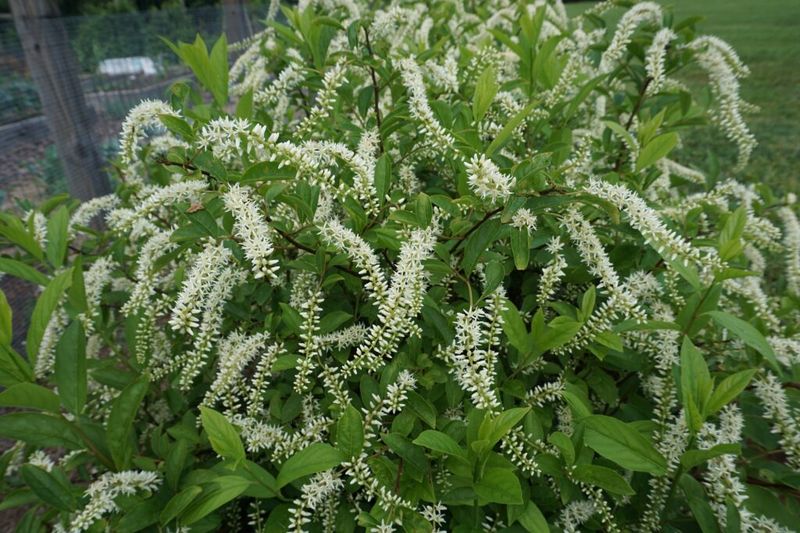
Some shrubs earn their place in the yard twice: once in summer with their flowers and again in fall with their foliage. Virginia sweetspire, Itea virginica, is one of the most reliable native shrubs for delivering both in a compact, manageable form.
The arching white flower clusters appear in early to midsummer and have a light, pleasant fragrance that pollinators find appealing.
The Lady Bird Johnson Wildflower Center and university extension sources confirm Itea virginica as a native species in the eastern and southeastern United States.
Its natural range extends into parts of this region, and it has become a well-regarded native option in midwestern and mid-Atlantic landscapes.
Fall color is one of its strongest features, with foliage shifting to shades of red, burgundy, and orange-purple depending on the site and cultivar.
Virginia sweetspire handles moist to average soils and performs well in part shade to full sun. It works nicely in rain garden edges, moist borders, shaded slopes, and low-maintenance naturalistic plantings.
The shrub does spread by suckers and can widen over time, so check the mature size of the cultivar you choose before planting in a tight space. Some cultivars stay under four feet, while others spread more broadly.
Do not assume it will stay small without any attention. Pruning by removing older stems at the base keeps it tidy and encourages fresh growth each season.
6. Try Shrubby St Johns Wort For Sunny Borders
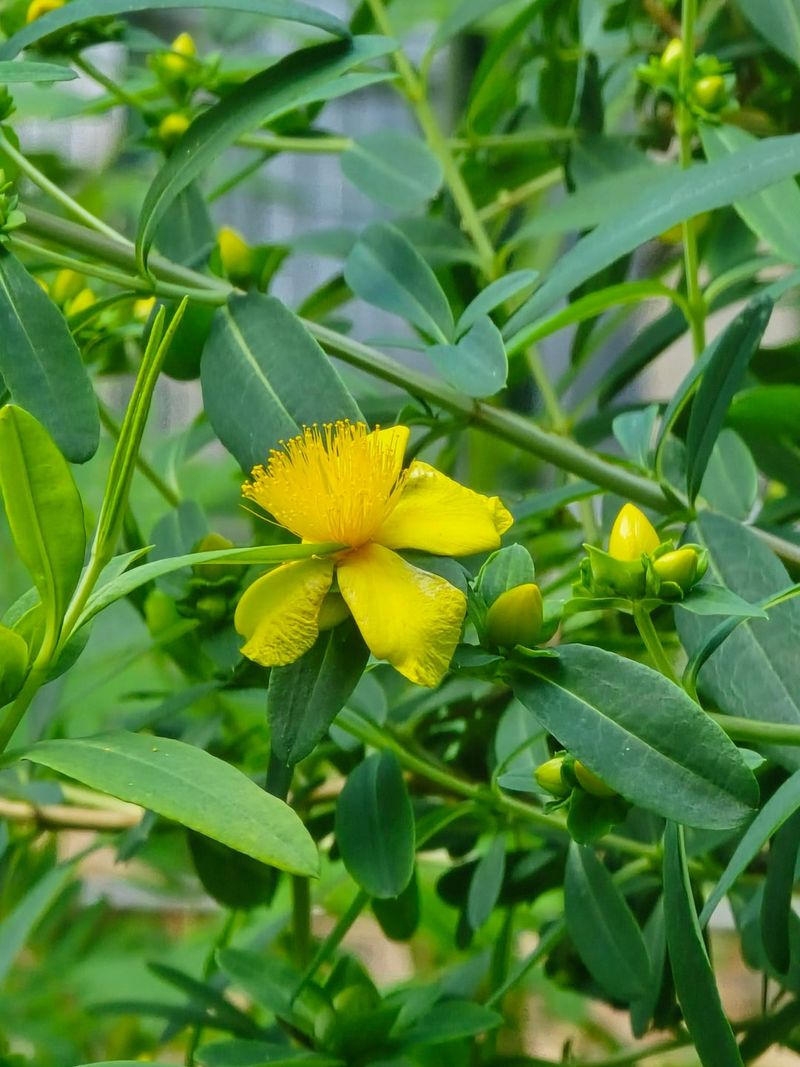
Bright yellow flowers in a sunny border during midsummer are exactly what Hypericum prolificum delivers, and it does so with far less fuss than many gardeners expect.
Shrubby St Johns wort is a native species with a documented range across Ohio and much of the central and eastern United States.
It is distinct from the common medicinal St Johns wort and from any introduced or weedy Hypericum species, so the exact plant name matters when you shop.
Ohio Department of Natural Resources plant records confirm Hypericum prolificum as a native species in the state.
It produces clusters of small, bright yellow flowers with prominent stamens during summer and offers some value to native bees that visit the blooms.
The foliage is neat and narrow, and the plant maintains a tidy, rounded form in the right conditions.
Shrubby St Johns wort performs best in full sun and tolerates dry to average well-drained soils once established. That makes it a genuinely useful option for sunny, drier borders where buttonbush or summersweet would struggle.
It typically grows three to five feet tall and wide, fitting neatly into a mixed native border without overwhelming neighboring plants.
Use it at the front or middle of a sunny bed, along a driveway edge, or in a low-maintenance foundation planting with good sun exposure.
When purchasing, confirm you are buying Hypericum prolificum or another verified native shrubby species, not an ornamental hybrid or an invasive relative.
7. Add Ninebark For Tough Native Structure
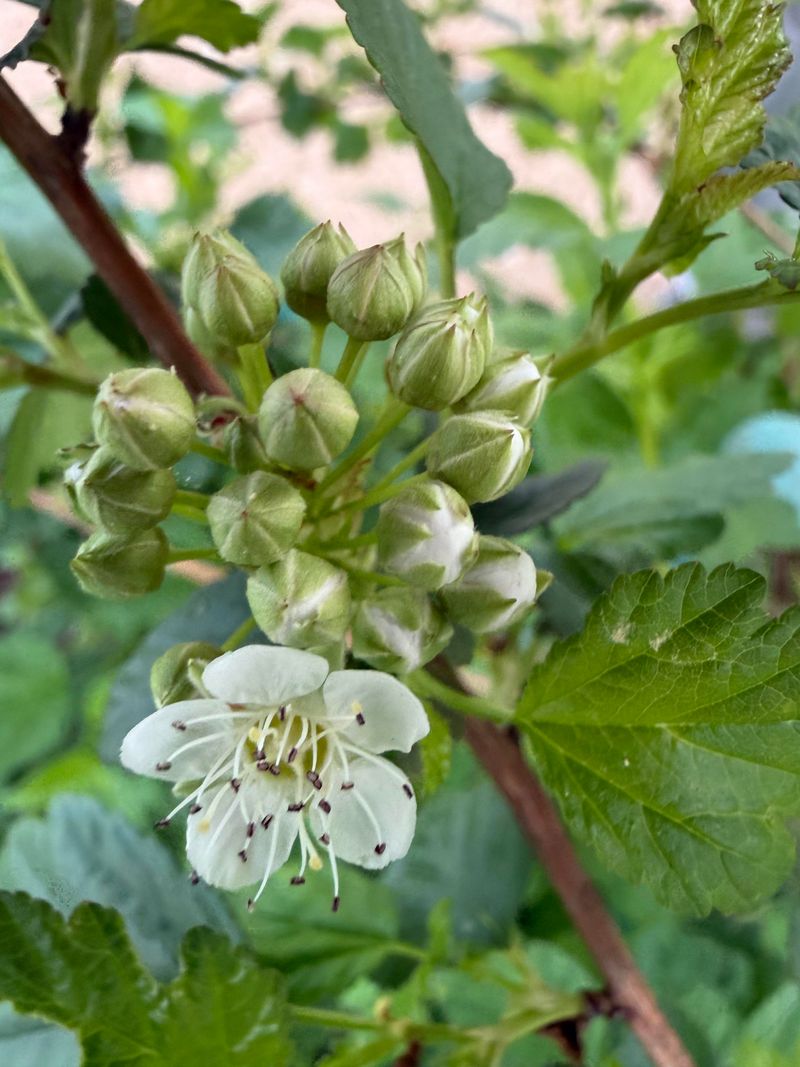
Peeling bark reveals layers of cinnamon, tan, and cream beneath. Most shrubs do not offer that detail in winter, but ninebark delivers it quietly all season.
Physocarpus opulifolius is native across Ohio and much of North America. Ohio Department of Natural Resources records and university extension sources confirm its range.
In late spring to early summer, ninebark produces clusters of small white or pale pink flowers that attract native bees and other pollinators. The papery seed capsules that follow provide some wildlife interest and add texture to the fall and winter garden.
The peeling, multi-layered bark is the plant’s most distinctive feature outside of bloom time, giving the yard structure and visual interest even when leaves are gone.
Ninebark is genuinely tough. It tolerates a wide range of soil types, handles part shade to full sun, and adapts to both moist and moderately dry conditions once established.
It can grow six to ten feet tall and wide in good conditions, so give it room. Prune by removing older stems at the base rather than shearing the whole plant, which keeps the natural form and encourages fresh stems with better bark character.
Many popular cultivars feature dark purple or golden foliage, which can be striking but may offer slightly different ecological value than the straight native species. Choose based on your site goals and design priorities.
8. Replace The Neighborhood Default With Better Habitat
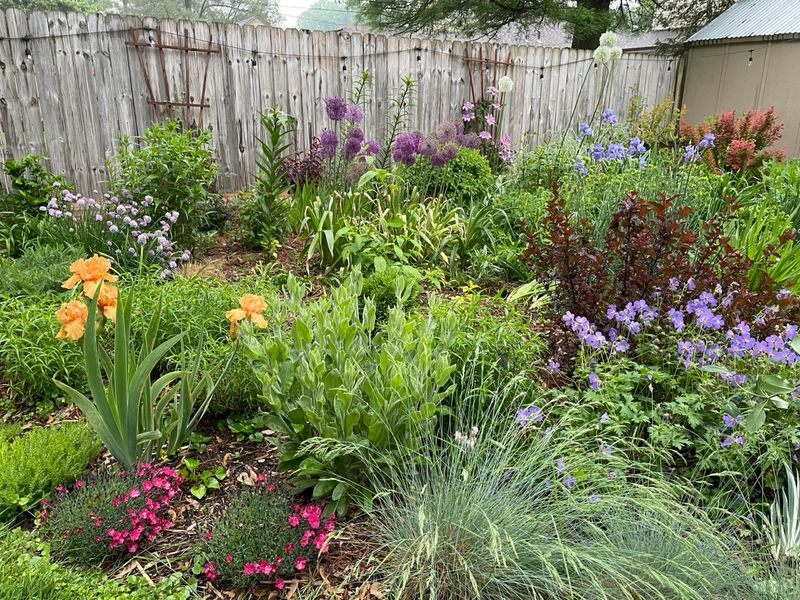
Replacing a yard full of Rose of Sharon does not have to happen in a single weekend. A gradual approach works well and feels less overwhelming.
Start by identifying one spot where a native shrub would fit better based on your site’s sun, soil moisture, and available space. That single plant can be the beginning of a more layered, wildlife-friendly yard without requiring a complete overhaul.
When shopping for native shrubs, look for nursery-propagated plants from reputable native nurseries. Native plant sales hosted by botanical gardens or native plant societies can also be good sources.
Wild collection removes plants from natural areas and can damage local ecosystems, so it is not a recommended practice. OSU Extension and native plant guidance consistently advise purchasing propagated stock for home landscape use.
Layering shrubs with different bloom times adds value across the whole season. Ninebark blooms in late spring, and summersweet and buttonbush follow in midsummer.
Virginia sweetspire and shrubby St Johns wort carry color into late summer. If an existing Rose of Sharon is healthy, not spreading aggressively, and filling a useful spot, keeping it is reasonable.
Planting natives nearby is still a good step. The goal is not perfection but progress.
A yard with even a few well-placed native shrubs offers more seasonal food, shelter, and habitat connection than one planted entirely with nonnative defaults. That shift, even a small one, makes the yard more alive.