Why Ohio Tomato Plants Get Leggy In July And What To Do About It
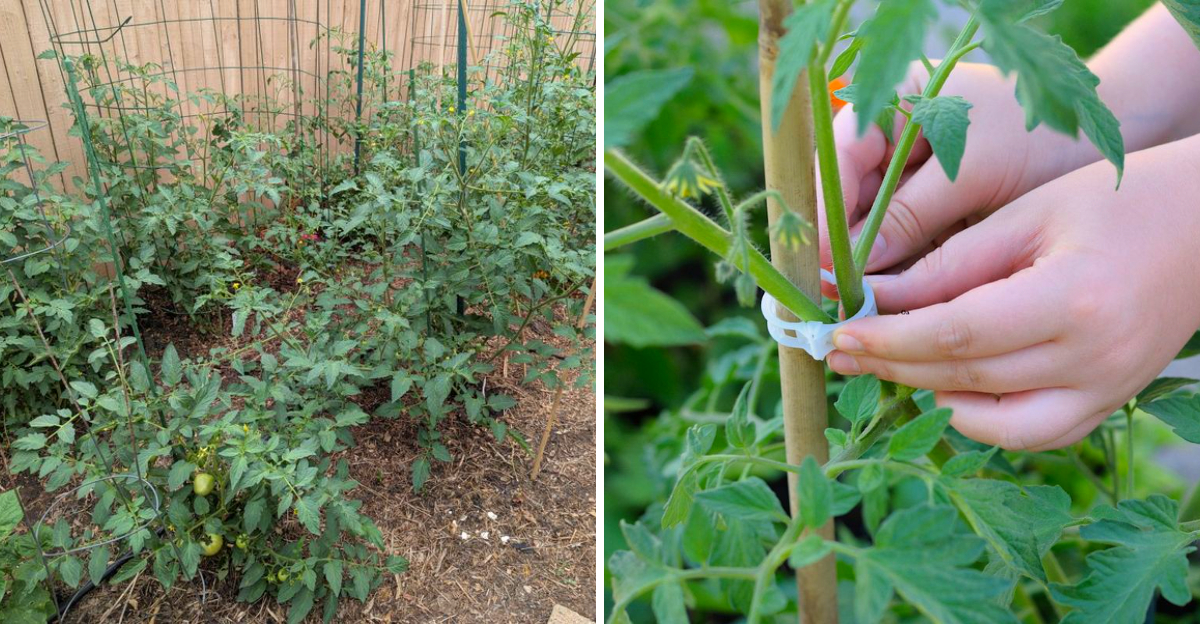
July in an Ohio vegetable garden has a way of producing some genuinely surprising tomato situations.
You planted everything carefully, the season started strong, and now you have got what can only be described as a tomato situation: tall, floppy, spindly plants that have outgrown their cages and look like they are auditioning for a role in a jungle documentary.
Relatable, honestly. Leggy tomato growth is one of the most common July complaints Ohio gardeners deal with, and the frustrating part is that it rarely has just one cause.
Fast summer growth, crowded rows, inconsistent pruning, too much nitrogen, not enough sun: any combination of these can push tomato plants into full chaos mode before you even realize what happened.
The good news is that most of it is fixable, and the rest of the season can still be really productive.
1. Too Little Sun Leads To Stretchy Growth
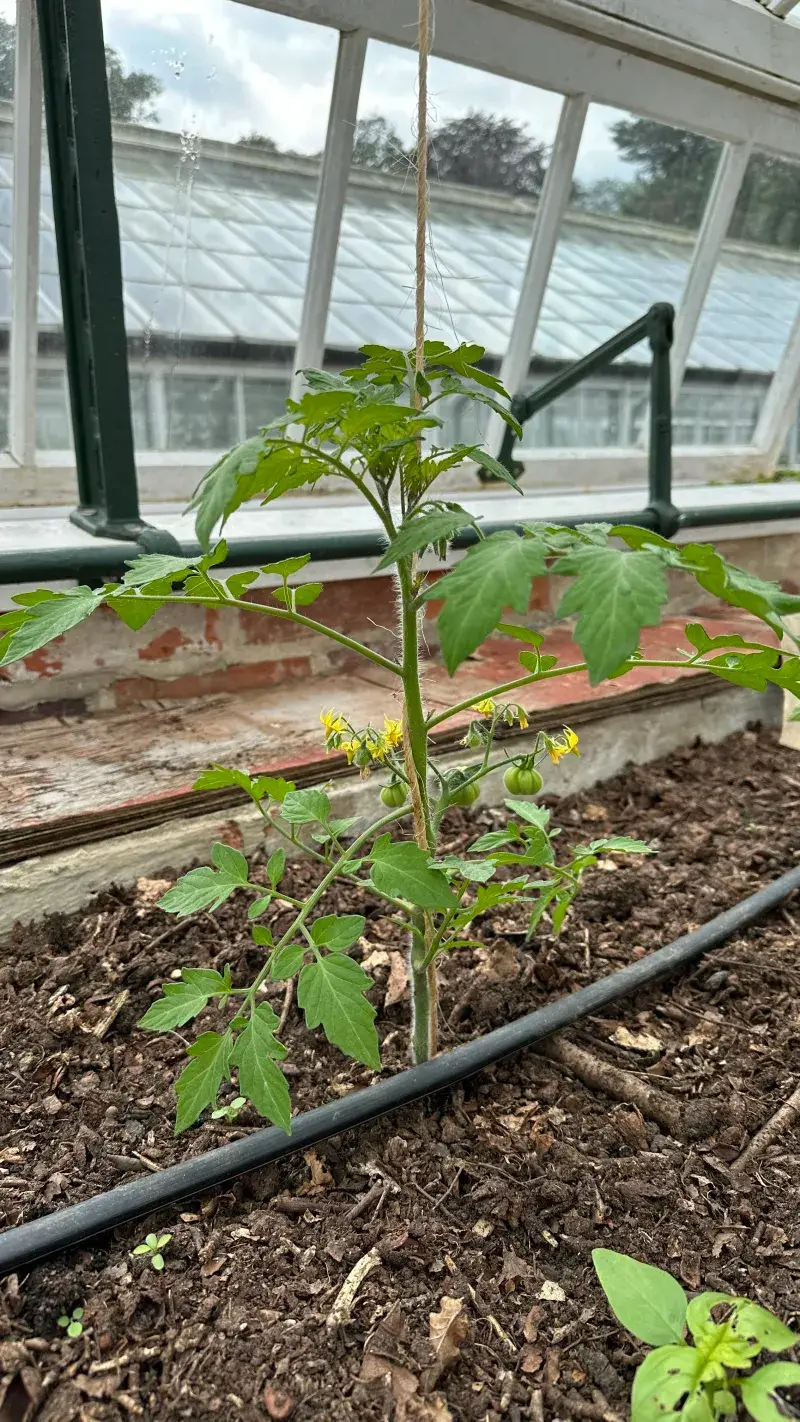
Tall, stretched-out stems on a tomato plant are often the garden’s way of saying it is not getting enough sunlight.
When a tomato plant in an Ohio backyard receives fewer than six to eight hours of direct sun each day, it responds by reaching upward in search of more light.
The stems grow longer between leaf nodes, the plant looks lanky, and fruit production often slows down as a result.
Ohio summers are warm and bright, but shade from nearby trees, fences, or neighboring structures can quietly block more sun than gardeners realize.
A spot that looked sunny in early spring may become partially shaded by July when surrounding trees are fully leafed out.
Walking around the garden at different times of day helps identify which areas are getting full sun and which are not.
If shading is the problem, trimming nearby branches or relocating containers can help. For in-ground beds, the fix is less immediate, but improving plant spacing and removing lower leaves can allow more light to reach the middle of the plant.
Choosing a sunnier garden spot next year is often the most effective long-term solution for Ohio tomato growers dealing with stretchy growth.
2. Crowded Plants Compete For Light
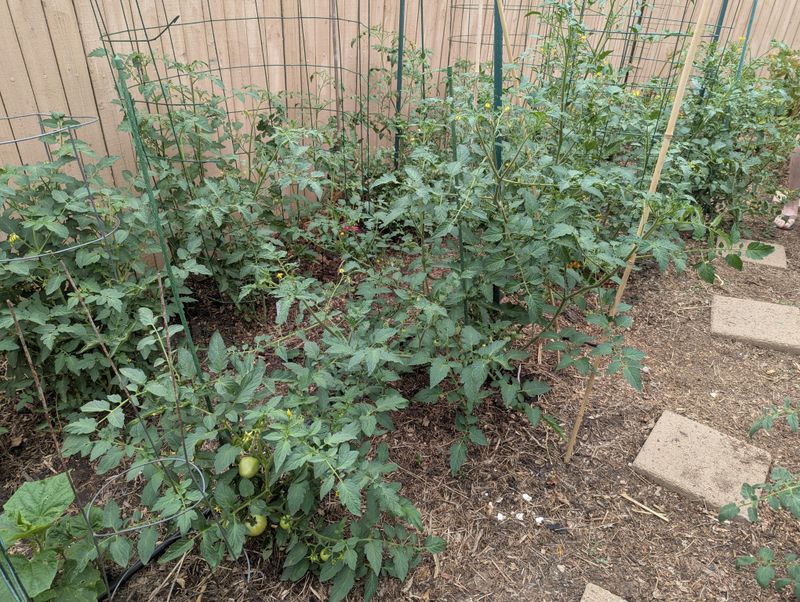
Standing at the edge of a crowded Ohio tomato bed in July, it is easy to see why plants start stretching when they are packed in too tightly.
Each plant reaches upward trying to get above its neighbor, and the result is a tangle of tall stems with fewer leaves near the base and most of the growth concentrated at the top.
Tomatoes generally need about two to three feet of space between plants, depending on the variety.
In raised beds, the temptation to squeeze in extra plants is understandable, but crowding reduces airflow, limits sunlight penetration, and encourages leggy upward growth.
Plants that cannot spread outward will keep pushing upward, making support and pruning more difficult as summer goes on.
If Ohio gardeners notice crowding mid-season, removing a plant or two can open up the remaining plants to better light and airflow. Thinning out some of the dense interior foliage can also help sunlight reach the lower parts of surviving plants.
Your Ohio Garden Changes Every Week. Your Plan Should Too.
Gardening in Ohio changes quickly throughout the season. Every Friday you’ll receive a simple weekly plan showing exactly what to plant, prune, fertilize, harvest, and protect so you never miss the right timing.
Going forward, planning bed layouts with proper spacing before transplanting in spring can prevent this pattern from repeating. Fewer plants with more room often produce better yields than a crowded row of stretched vines.
3. Weak Support Lets Stems Sprawl
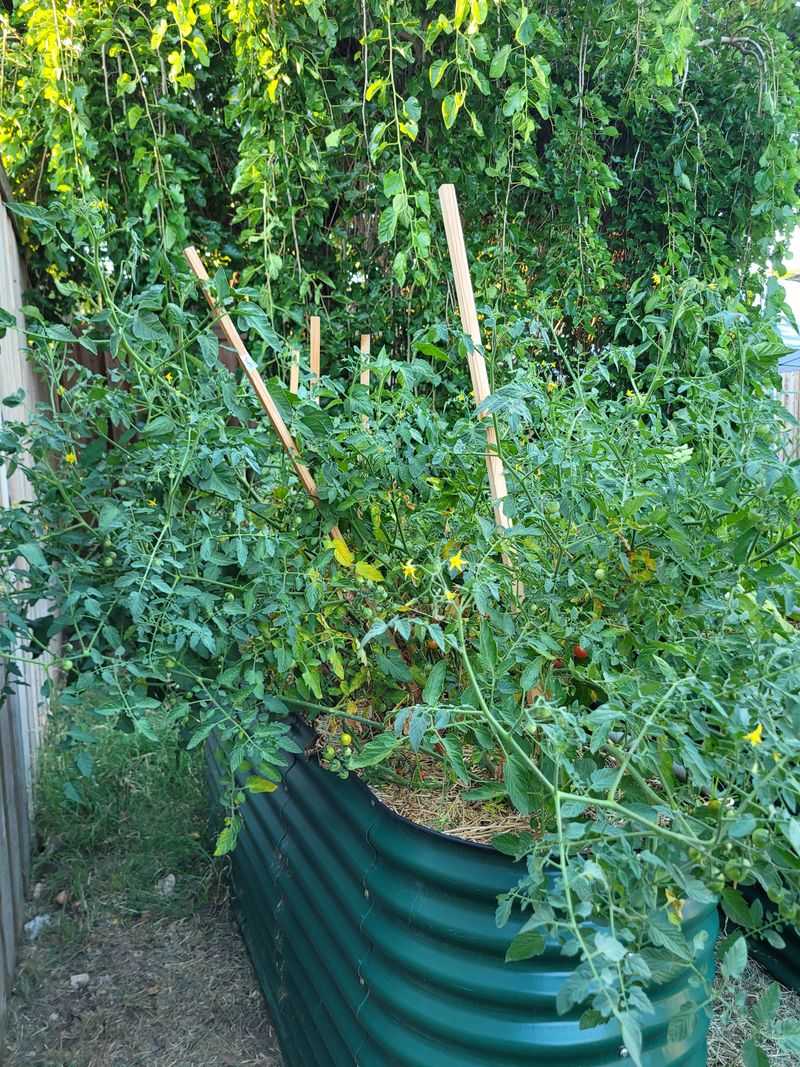
Flimsy tomato cages sold at many garden centers were not designed for the kind of vigorous July growth that indeterminate tomatoes put on in Ohio.
By midsummer, vines can weigh several pounds, and a small wire cage that worked fine in June may be completely overwhelmed by late July.
When support fails, stems bend, sprawl outward, and the plant loses its upright structure.
Sprawling stems are more than just an eyesore. Stems that rest on the soil are exposed to moisture and can develop disease more easily.
Fruit that hangs close to the ground is harder to spot and more likely to rot before it ripens. A plant that has lost its upright form also becomes harder to manage as the season continues.
Sturdier support options for Ohio backyard gardens include heavy-gauge wire cages, wooden stakes, metal T-posts, and DIY trellis systems made from wire fencing.
Tying stems loosely to stakes with soft garden ties or strips of cloth gives vines the support they need without cutting into the stem.
Checking and reinforcing supports every week or two through July and August helps Ohio gardeners stay ahead of fast-growing vines before they become unmanageable sprawls.
4. Too Much Nitrogen Pushes Leafy Growth
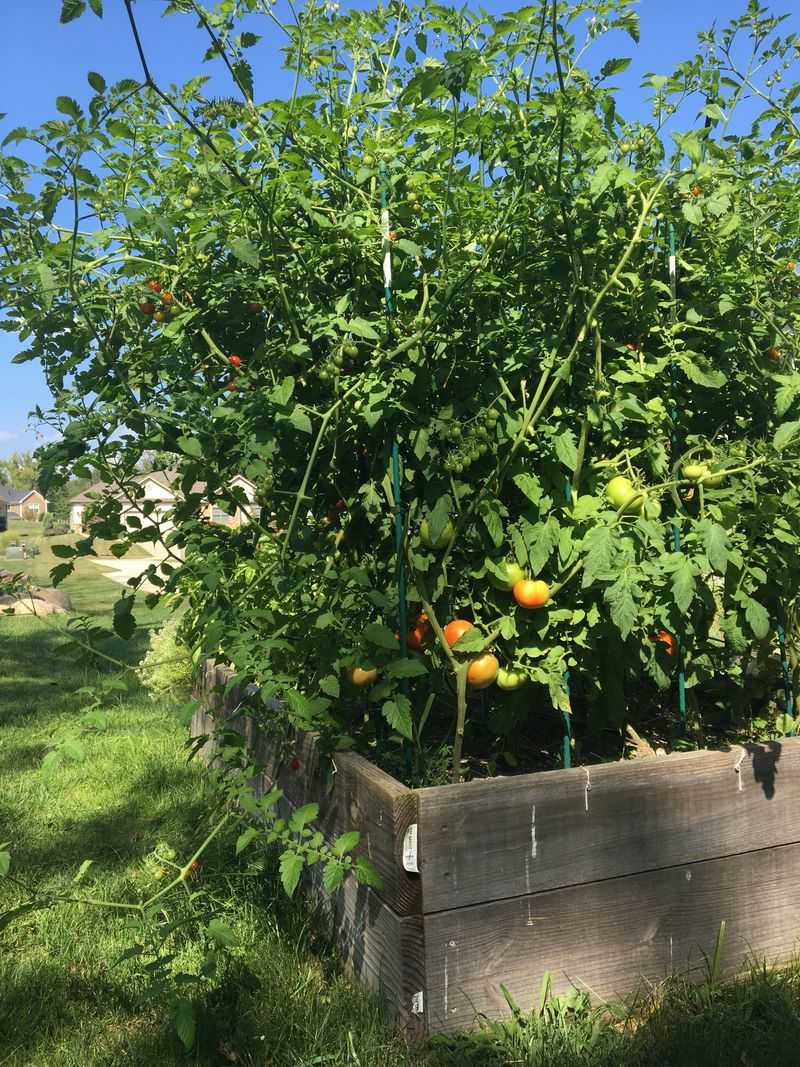
Rich, dark green tomato plants with lots of leaves and very little fruit showing up by July can be a sign that the soil has too much nitrogen.
Nitrogen is an essential nutrient for tomatoes, but when it is applied in excess, the plant channels most of its energy into producing lush, leafy growth rather than setting fruit.
The stems grow fast and the plant looks full, but that fullness can work against fruiting.
Ohio gardeners who added heavy amounts of compost, manure, or high-nitrogen fertilizer in spring may notice this pattern by midsummer. Fertilizers labeled for lawns are especially high in nitrogen and should not be used on vegetable beds.
Using a balanced fertilizer with lower nitrogen and higher phosphorus once plants begin flowering helps shift the plant’s energy toward fruit development rather than vine growth.
Cutting back on nitrogen feeding through July and August is usually the right move for Ohio tomato beds that are already growing vigorously.
Switching to a fertilizer with a lower first number on the label, such as a 5-10-10 blend, can help redirect plant energy.
Healthy soil with good organic matter often provides enough background fertility that heavy supplemental feeding is not needed once summer growth is well underway.
5. Indeterminate Tomatoes Need More Guidance
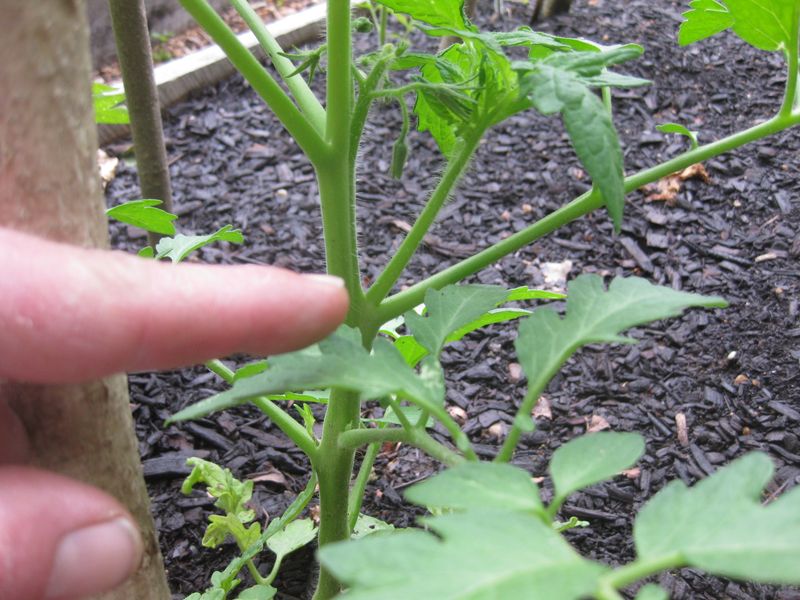
Some tomato varieties keep growing all season long, and Ohio gardeners who planted indeterminate types in spring may be surprised by how much vine they are managing come July.
Unlike compact bush-type tomatoes, indeterminate varieties produce new stems, leaves, and fruit clusters continuously until cooler fall temperatures slow them down.
Without regular guidance, they can easily outgrow their support and become a tangled, leggy mess.
Suckers, which are the small shoots that sprout in the joint between the main stem and a side branch, are a key part of managing indeterminate tomatoes.
Leaving every sucker to grow creates a multi-stemmed plant that quickly becomes difficult to support and may reduce airflow through the canopy.
Many experienced Ohio gardeners choose to train indeterminate plants to one or two main stems and remove suckers regularly through the growing season.
Pruning suckers when they are small, about two to three inches long, makes the job easier and less stressful for the plant. Larger suckers can be pinched or snipped with clean pruners.
Keeping indeterminate tomatoes tied to tall, sturdy stakes or a wire trellis helps maintain their upright form through the rest of Ohio’s summer growing season and reduces the risk of stems bending or breaking under their own weight.
6. Determinate Tomatoes Need Less Pruning
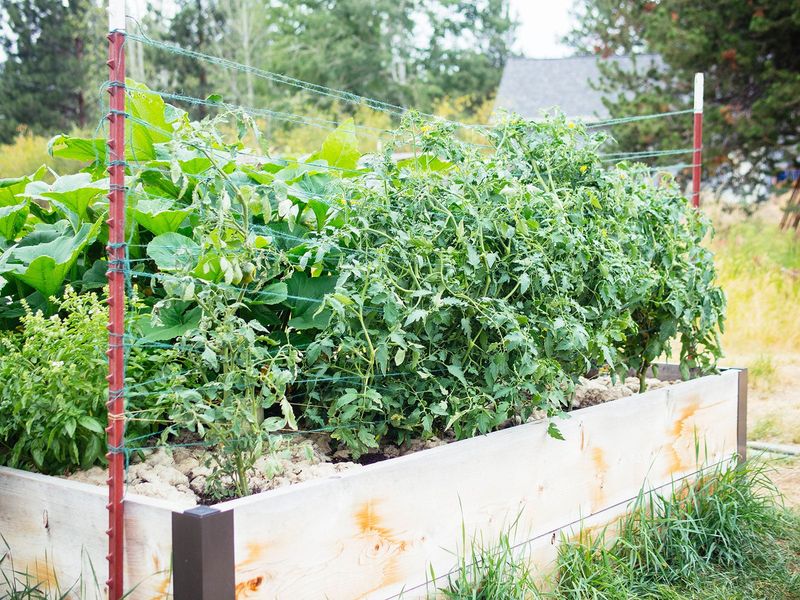
Not every tomato plant in an Ohio garden needs aggressive pruning, and determinate varieties are a good example of why a lighter touch often works better.
Determinate tomatoes are bred to grow to a set height, produce their fruit in a concentrated window, and then slow down on their own.
Heavy pruning on a determinate plant can remove the very growth that carries the season’s fruit load.
Paste tomatoes, many Roma types, and certain compact slicing varieties are commonly determinate. If a gardener is not sure which type they are growing, checking the seed packet or plant tag is the quickest way to find out.
Labels that say “bush” or include a specific compact height are often signals that the variety is determinate.
For determinate tomatoes that look a little leggy or crowded, the safer approach is removing only the lowest leaves that touch the soil, improving air circulation, and making sure the cage or support is holding the plant upright.
Removing large amounts of foliage from a determinate plant mid-season can reduce the number of tomatoes that ripen before Ohio’s summer heat tapers off in late August and September.
Gentle management, good support, and consistent watering tend to produce better results than heavy cutting.
7. Lower Leaves Can Be Removed Carefully
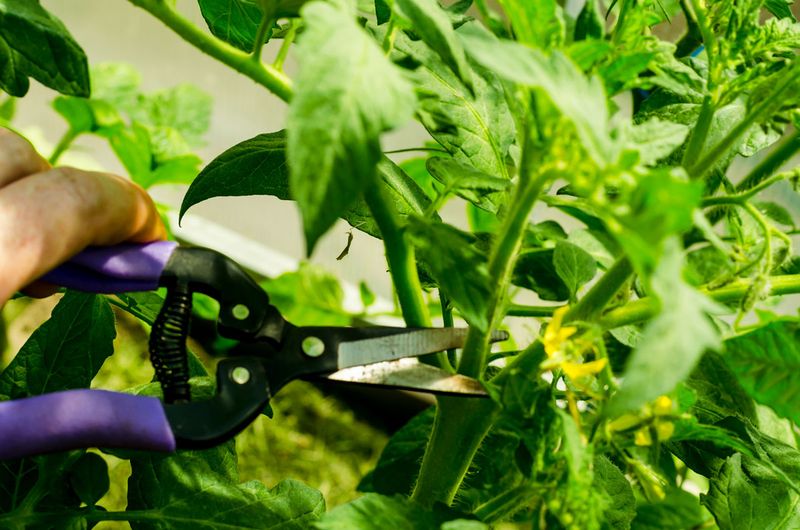
By July in Ohio, the lower leaves on a tomato plant often start to look ragged, yellow, or spotted.
These leaves are the oldest on the plant, receive the least sunlight, and are frequently splashed with soil during watering or rain, which can introduce fungal issues.
Removing them carefully can improve airflow around the base of the plant and reduce the chance of soil-borne problems moving up the stem.
A reasonable guideline for Ohio gardeners is to remove leaves from the bottom of the plant up to the first fruit cluster. This keeps the lower stem clear without stripping the plant of the productive foliage it needs higher up.
Taking off too many leaves at once can stress the plant and reduce its ability to photosynthesize, so working gradually over several sessions is a smarter approach than removing everything at once.
Clean, sharp pruners or scissors work better than pulling leaves off by hand, which can tear the stem and leave rough wounds.
Making clean cuts close to the main stem and working on a dry day helps reduce the chance of introducing problems through the pruning wounds.
Leaving a short stub rather than cutting flush to the main stem is another approach some Ohio gardeners prefer to minimize stem damage.
8. Tying Stems Helps Plants Stay Upright
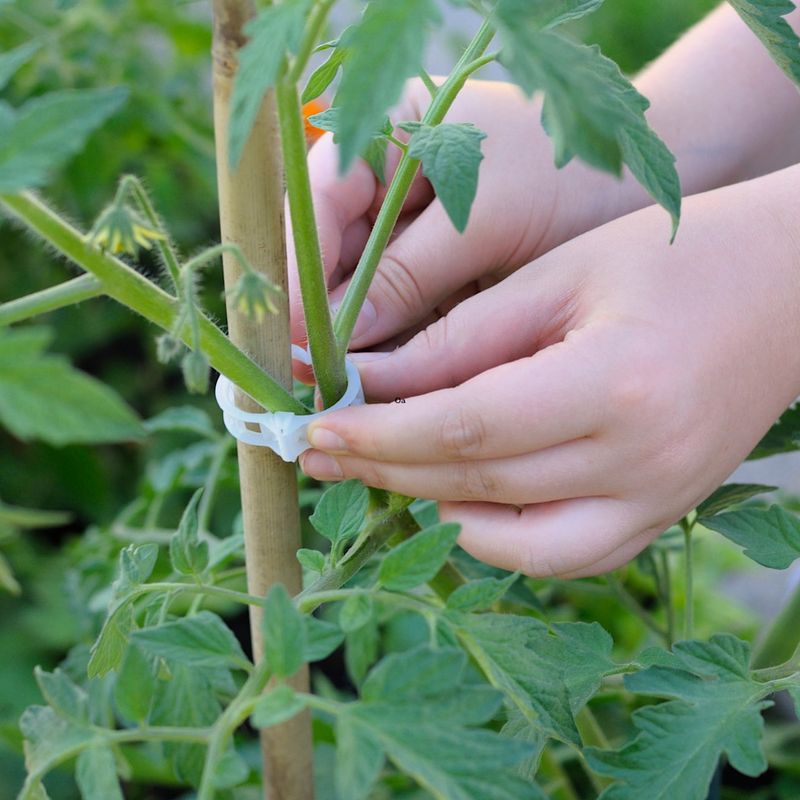
A tomato plant that has started to lean, bend, or flop over its cage by July is sending a clear signal that it needs more support than it currently has.
Tying stems back to a stake or trellis is one of the most practical and immediate fixes an Ohio gardener can make when vines start sprawling.
It costs very little, takes only a few minutes per plant, and can make a noticeable difference in how the plant grows through the rest of summer.
The material used for tying matters more than many gardeners expect. Wire twist ties and plastic clips can cut into a stem that is still actively growing and thickening.
Soft materials such as cotton twine, strips of old T-shirts, or foam garden ties are gentler and allow a little room for the stem to move without being pinched.
A figure-eight tie, where the material loops around both the stem and the stake in a crossing pattern, keeps the stem from rubbing directly against the support and reduces chafing.
Ohio gardeners growing tall indeterminate varieties may need to add new ties every week or two as the plant continues growing upward.
Checking ties regularly and loosening any that have become too tight keeps the plant healthy and well-supported through the end of the season.
9. Better Spacing Improves Airflow And Light
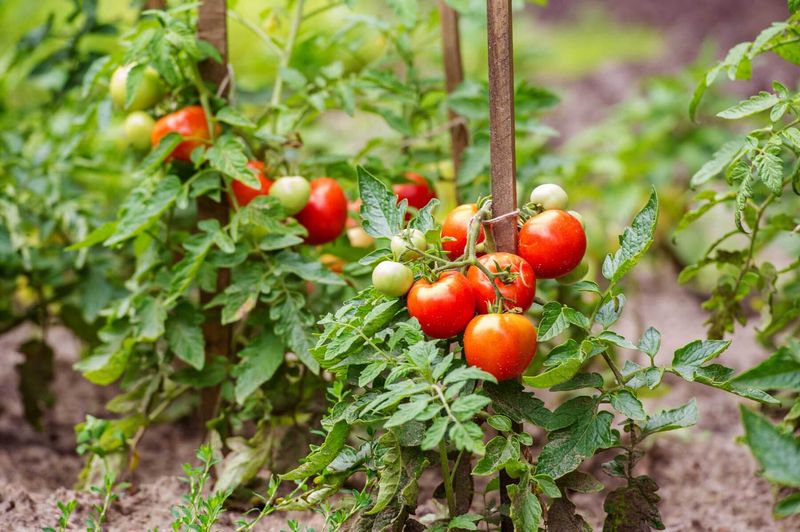
Walking through a well-spaced Ohio tomato bed in July feels very different from squeezing through a crowded one.
When plants have enough room between them, air moves freely through the foliage, leaves dry more quickly after rain, and sunlight reaches more of the plant’s surface area.
All of these factors contribute to healthier growth and a better chance of avoiding the fungal issues that tend to show up in humid Ohio summers.
Good spacing also makes managing leggy growth much easier. When plants are not fighting each other for light and air, they tend to grow more evenly and with stronger stems.
Gardeners who have room to walk between rows can also see their plants more clearly, spot early signs of problems, and tie or prune without wrestling through a tangle of overlapping vines.
For Ohio gardeners planning next year’s beds, writing down which varieties grew tallest and which stayed more compact helps with future spacing decisions.
Indeterminate varieties generally need more room than compact determinate types, and raised bed growers should resist the temptation to plant too densely even when space feels limited.
Giving tomatoes a little more breathing room at planting time is one of the simplest ways to reduce leggy growth before it ever becomes a problem in the first place.