Why Sandhill Cranes Keep Returning To Your Florida Property
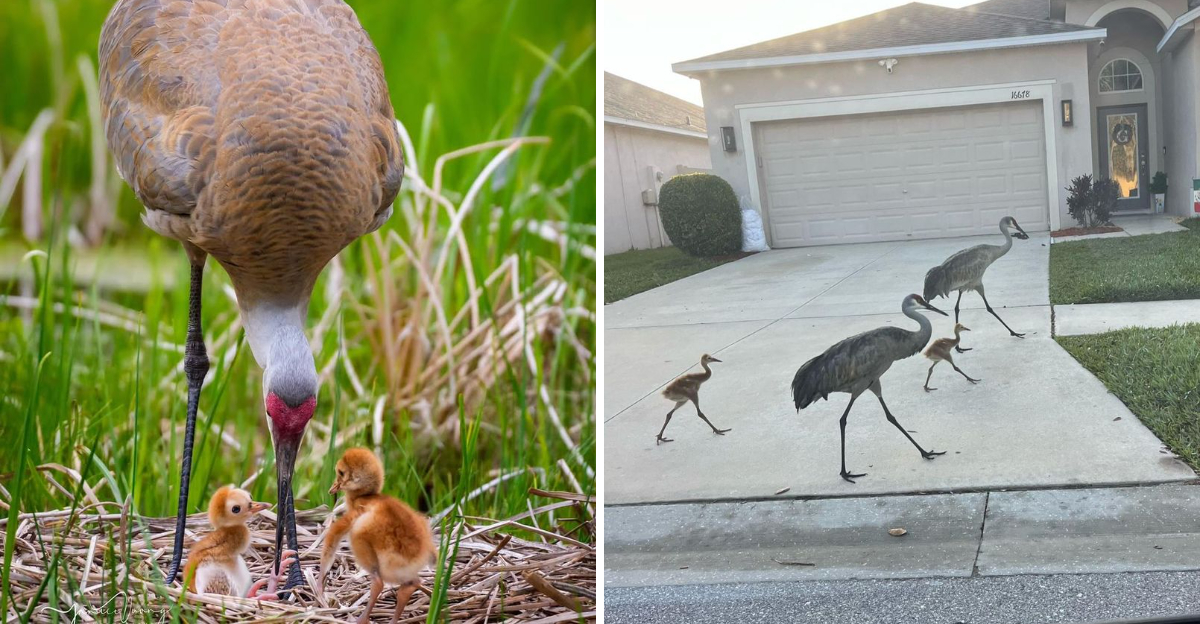
You walk outside one morning, coffee in hand, and there they are again.
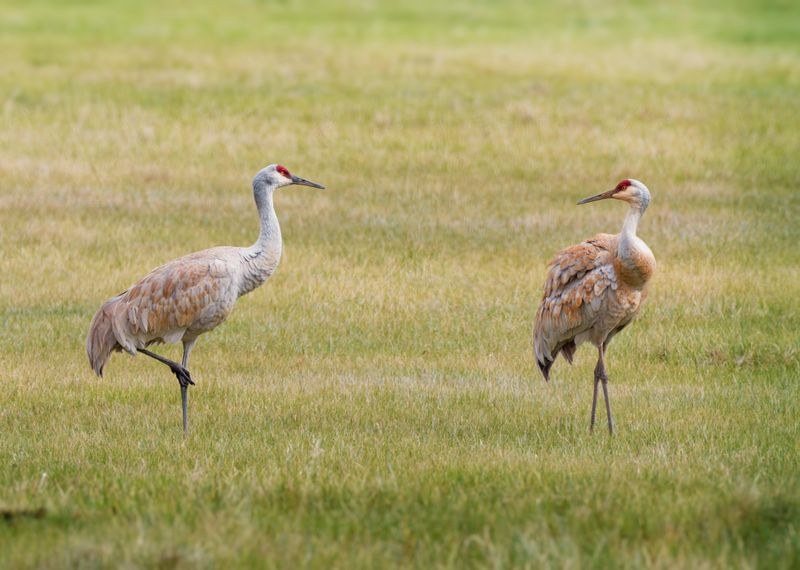
Two tall gray birds stepping slowly across your lawn like they own the place, heads bobbing, red caps glinting in the Florida sun.
Sandhill cranes have a way of making themselves at home in Florida neighborhoods, and once they find a yard they like, they tend to come back.
If you have noticed the same pair or family group showing up season after season, you are not imagining things.
These birds are smart, loyal to familiar territory, and drawn to specific features that many Florida properties offer without the homeowners even realizing it.
Understanding what brings them back can help you enjoy their visits safely, protect them from harm, and keep your yard a place where wildlife and people can coexist without trouble.
From open mowed lawns to shallow water edges, your property may be ticking all the right boxes for a crane that is ready to settle in.
Here are eight reasons sandhill cranes keep returning to your Florida property.
1. Open Lawns Look Like Foraging Ground
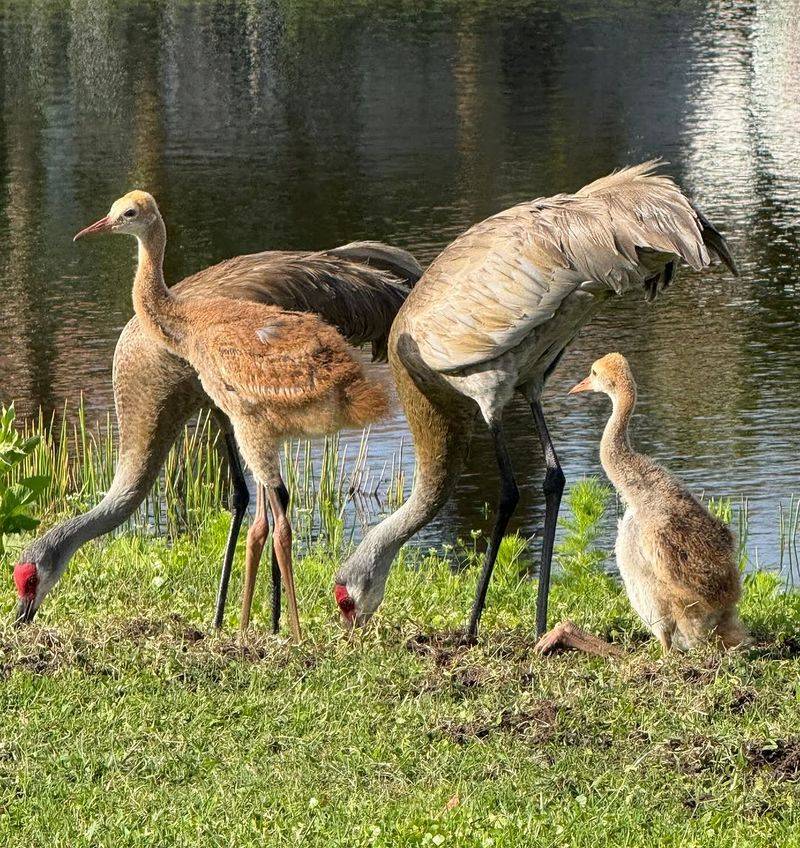
A crane stepping off your driveway and onto your freshly cut grass, head down, eyes scanning, is not random.
Mowed lawns are prime real estate for sandhill cranes looking for a meal.
Open turf gives cranes wide, unobstructed views of the ground and of any approaching predators. Tall grass hides things. Short grass does not.
A bird that stands nearly four feet tall still wants to see what is coming from every direction, and a neat suburban lawn delivers exactly that kind of visibility.
Cranes are omnivores.
They eat insects, earthworms, small reptiles, seeds, berries, and plant material. A Florida lawn, especially one near a garden or natural area, can be surprisingly full of all of those.
After rain, worms come to the surface. Beetles and grubs are easy pickings in soft soil. Seeds from nearby plants fall and collect near the grass line.
Lawns that back up to natural areas or retention ponds are especially attractive.
Cranes move from water to turf and back again throughout the day, using both environments as part of their daily feeding loop.
Your yard may sit right in the middle of a route they have been walking for years.
You do not need to do anything special to attract them. The more natural and undisturbed your yard feels, the more comfortable cranes will be using it as a quiet foraging stop on their daily rounds.
2. Wet Areas Keep Them Nearby
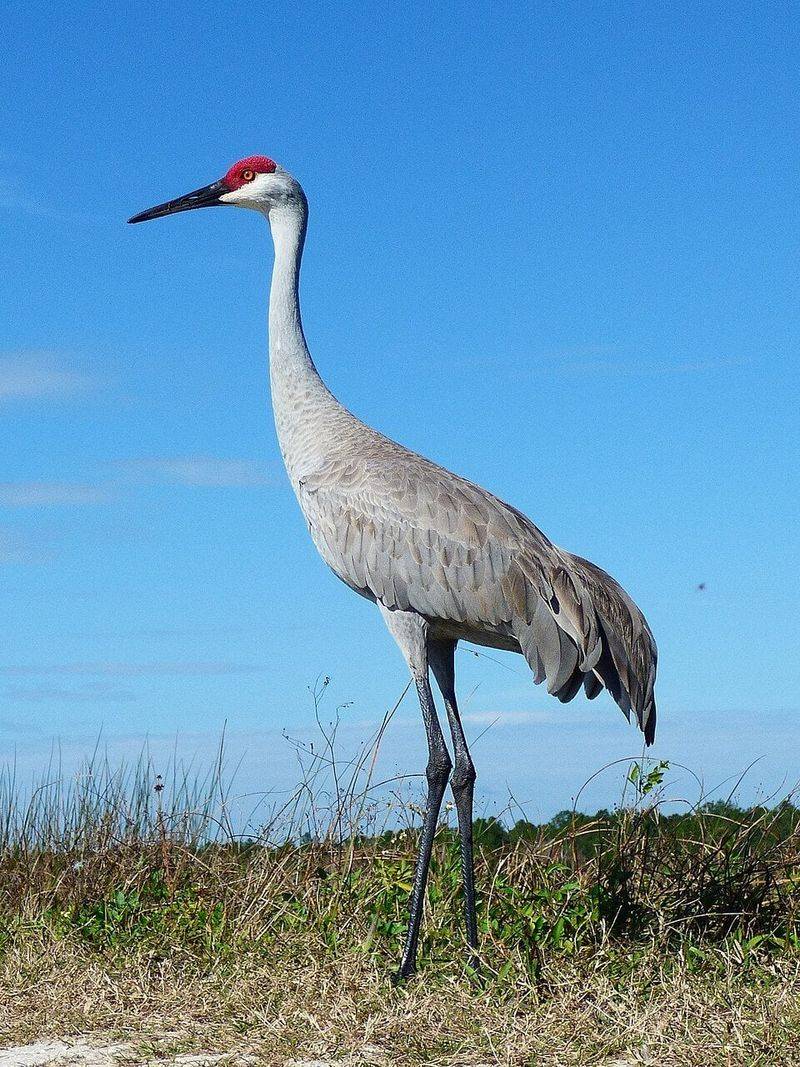
That soggy ditch along your fence line or the shallow retention basin at the edge of your HOA common area is not just a drainage feature.
For sandhill cranes, it is a habitat magnet.
Florida sandhill cranes depend on shallow wetlands for feeding, loafing, and nesting. According to the Florida Fish and Wildlife Conservation Commission, these birds prefer freshwater marshes, wet prairies, and the edges of ponds and lakes.
When those water features exist inside or right next to a residential area, cranes move in and stay.
Your Florida Garden Changes Every Week. Your Plan Should Too.
Gardening in Florida changes quickly throughout the season. Every Friday you’ll receive a simple weekly plan showing exactly what to plant, prune, fertilize, harvest, and protect so you never miss the right timing.
Shallow water lets cranes wade and probe for aquatic invertebrates, small frogs, and plant material.
They do not need deep water. Even a few inches of standing water after a Florida rainstorm can be enough to keep a pair of cranes busy for hours.
Neighborhoods with natural stormwater ponds, lakefront lots, or low-lying wet areas are especially popular crane territory.
Cranes that find reliable water near open lawns have essentially found everything they need in one spot. Why would they leave?
If your yard borders any kind of wet area, even a seasonal one, expect cranes to show up regularly.
They are not lost or confused. They are doing exactly what sandhill cranes have done in Florida for thousands of years, working the edges between water and land.
Your neighborhood just happens to be built right in the middle of their ancient stomping grounds.
3. Easy Food Builds A Habit
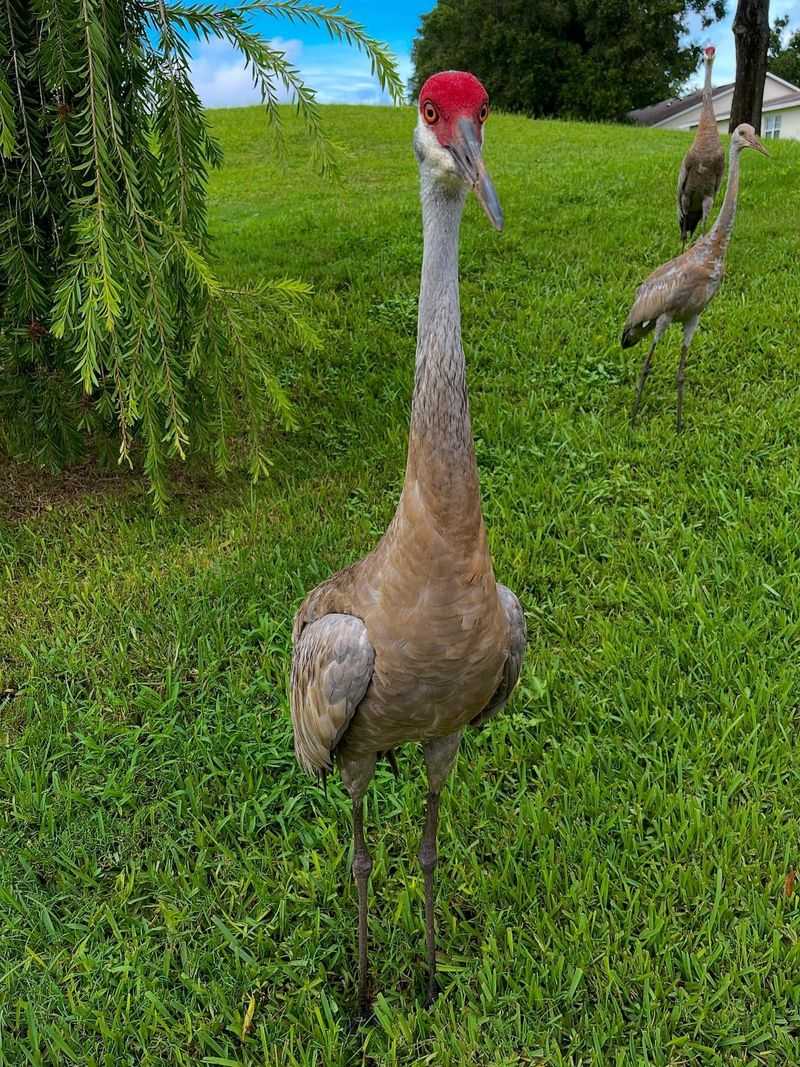
A homeowner tosses some birdseed on the patio for the cardinals. A crane spots it from across the yard and walks over. The next morning, the crane is back at the same time, waiting.
That is how fast a habit forms.
Sandhill cranes are quick learners.
Once they connect a specific location with an easy food source, they return to that spot repeatedly.
Birdseed, spilled grain near a chicken coop, pet food left outside, fallen fruit from a backyard tree, or even compost piles can all become unintentional crane cafeterias.
The problem is not just that cranes come back. It is that they start expecting food and may become bolder about approaching people, cars, or doors.
A crane that has been fed by humans loses some of its natural caution, and that shift in behavior is not good for the bird or for the people living nearby.
UF IFAS Extension and Florida wildlife agencies both note that feeding wildlife, including cranes, can disrupt natural foraging behavior and create dependency.
Cranes that rely on handouts may not forage as effectively on their own, especially when the food source disappears.
Check your yard for accidental food sources.
Secure pet food indoors. Clean up fallen fruit. Move birdfeeders to areas cranes cannot easily access.
Removing those easy meals will not make cranes stop visiting entirely, but it keeps their behavior natural and their relationship with your yard on healthy terms.
4. Nesting Season Makes Them Loyal
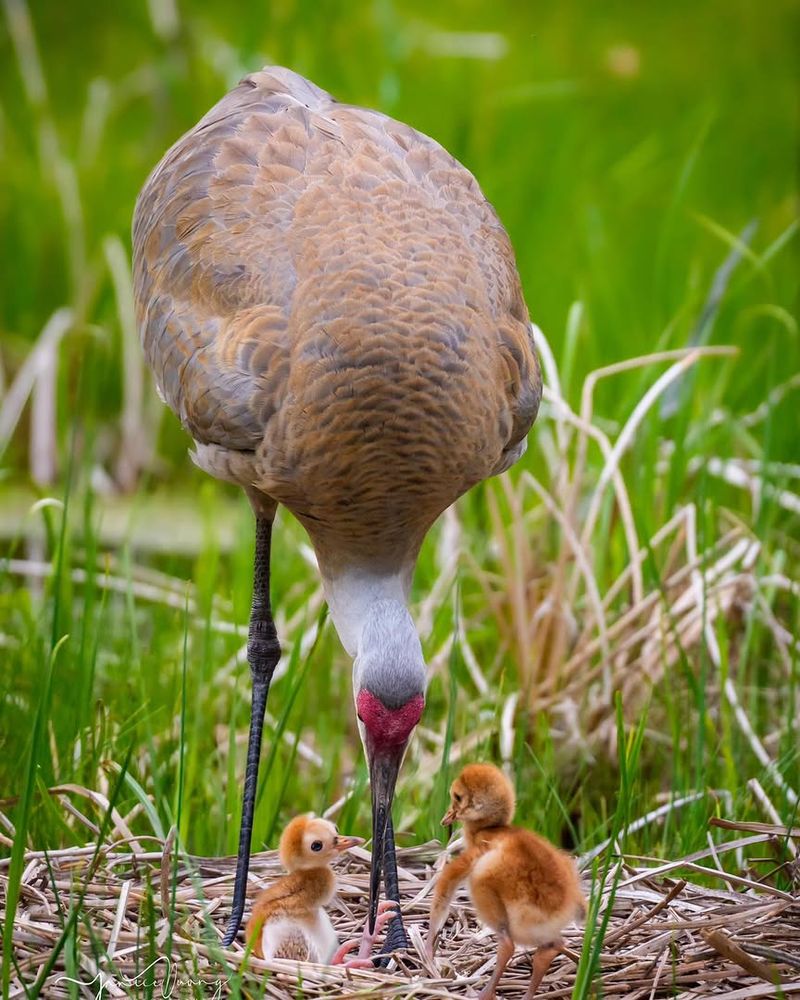
Loyalty is practically baked into a sandhill crane’s personality.
These birds form long-term pair bonds and often return to the same nesting areas year after year, which means if a pair nested near your property once, there is a good chance they will try again.
Florida sandhill cranes typically nest between December and August, with peak activity in late winter and early spring according to the Florida Fish and Wildlife Conservation Commission.
They build low, flat nests from vegetation near or at the water’s edge. Pairs that have successfully nested in an area before tend to favor that same spot the following season.
During nesting season, cranes become noticeably more territorial.
They may call loudly, display their wings, or stand their ground if they feel their nest or chick is being threatened. This is completely natural behavior, not aggression without cause. The bird is simply doing what parents do.
That territorial instinct also means they will patrol the same routes, cross the same driveways, and appear in the same corners of your yard on a near-daily schedule.
Homeowners sometimes think the birds are following them. Really, the cranes are just following the route that has always worked.
If you know a pair has nested near your property, give them extra space during that season.
Keeping dogs leashed and staying back from the nest area helps the birds feel secure enough to complete the process without stress or interruption.
A successful nesting season is the strongest possible signal that the same pair will be back again next year, right on schedule.
5. Family Groups Follow Familiar Routes
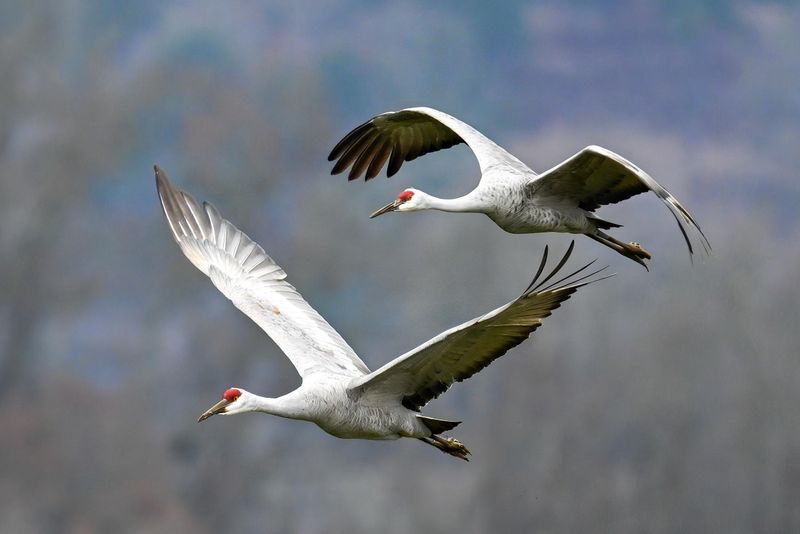
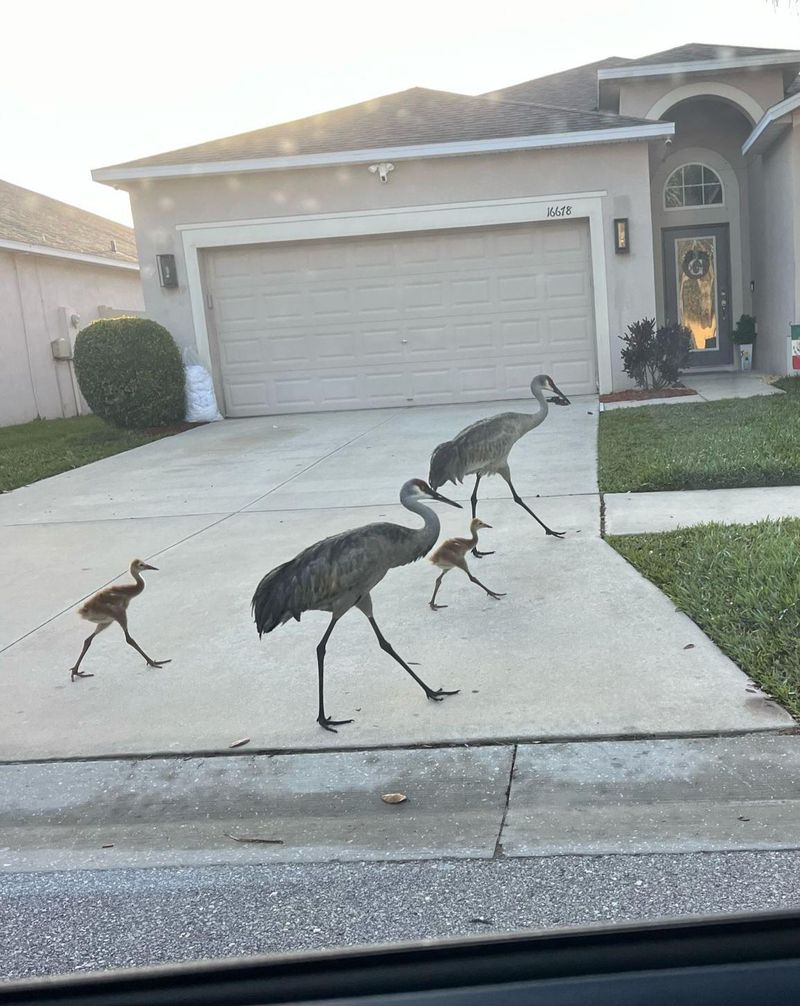
Watching a pair of sandhill cranes cross a street with a tiny rust-colored colt trotting between them is one of Florida’s most charming wildlife moments.
It is also a sign that your property sits inside a route that this family has likely been using for a long time.
Adult sandhill cranes teach their young birds the ropes from day one.
Colts follow their parents constantly during the first months of life. They learn where to forage, where water is, which yards are safe, and which routes connect their key spots. Those early lessons stick.
As the young birds grow and eventually form their own pairs, they often return to the areas where they learned to survive.
That means a neighborhood that raised crane families in the past is likely to keep attracting new generations of cranes who remember it as a safe and productive place.
Sandhill cranes also sometimes travel in loose flocks outside of nesting season.
These non-breeding groups, which can include juveniles and unmated adults, follow movement corridors that experienced birds have established over time. Your yard may sit right along one of those invisible highways.
The cranes showing up on your lawn today might be descendants of birds that have been visiting that same patch of Florida soil for decades.
That is pretty remarkable when you think about it.
6. Feeding Makes Visits Riskier
A crane that knocks on your glass door with its beak is not being friendly. It is being demanding.
And that shift from curious visitor to bold beggar usually traces back to one thing: someone fed it.
Feeding sandhill cranes, even once or twice, can change how the birds interact with people and property.
A crane that expects food from humans may approach cars, follow people across driveways, peck at reflections in windows, or stand in the middle of roads waiting for handouts.
That kind of bold behavior puts the bird in real danger from traffic and creates frustration for neighbors.
Florida Fish and Wildlife Conservation Commission advises against feeding sandhill cranes.
Beyond changing behavior, feeding can also attract cranes to areas with heavy vehicle traffic or near aggressive dogs, placing them in situations they would naturally avoid if their instincts were not being overridden by the lure of easy food.
There is also a community effect.
One person feeding cranes in a neighborhood can make the birds bolder toward everyone on the block, including people who never offered a single cracker.
The cranes do not distinguish between the generous neighbor and the one who wants them to keep their distance.
Enjoying cranes means watching them do crane things: foraging, calling, raising their young, and moving through the landscape on their own terms.
Feeding short-circuits that natural behavior and makes every visit a little more complicated for everyone involved, including the birds themselves.
7. Traffic Turns Visits Complicated
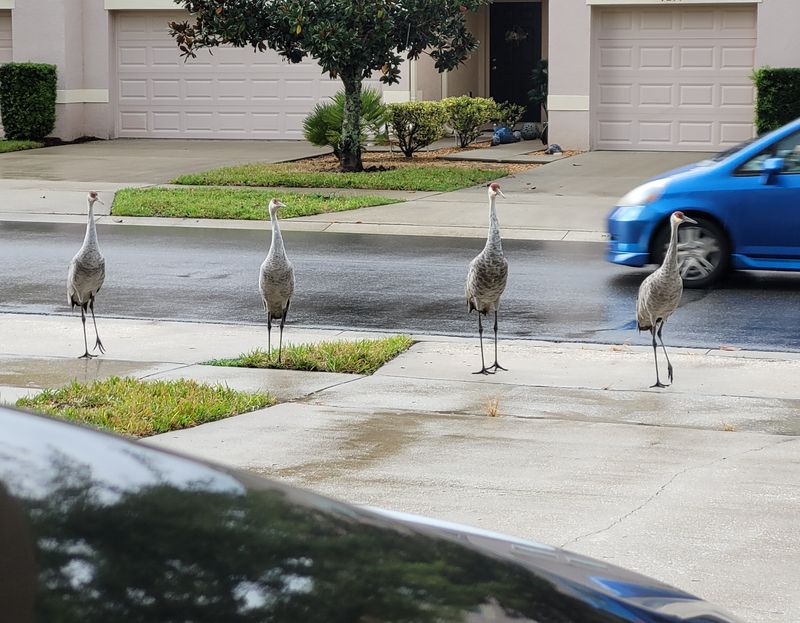
Any Florida driver who has sat behind a sandhill crane crossing a neighborhood road knows the feeling.
The bird is not in a hurry. You are. And somehow, the crane always wins.
Cranes cross roads because their habitat is on both sides.
A pond on one end of the street, a lawn on the other, and a perfectly good foraging route that happens to cut straight through traffic. From the crane’s perspective, the road is just another obstacle in a path it has used for years.
The trouble is that cranes are not fast, and they do not react to cars the way squirrels do.
They tend to hold their ground or move slowly, which puts them at serious risk from drivers who are not watching or who are moving too quickly through residential areas.
Crane injuries from vehicle strikes are a documented concern in Florida communities.
Slow down in neighborhoods where cranes are known to cross. If you see a crane on or near the road, reduce your speed and give it time to move. Do not honk or try to scare it across faster.
Startled cranes can behave unpredictably and may move toward traffic rather than away from it.
Some Florida neighborhoods have posted wildlife crossing signs in areas with regular crane activity.
If your street has frequent crossings and no signage, it may be worth raising that with your local government or HOA. A small sign can make a real difference for birds and drivers alike.
8. Distance Keeps Everyone Safer
Grabbing your binoculars instead of walking over for a closer look is genuinely the best thing you can do for a sandhill crane visiting your yard.
Distance is not just polite. It is protective.
The Florida Fish and Wildlife Conservation Commission recommends keeping a respectful distance from sandhill cranes and avoiding actions that cause them to change their behavior.
If a crane stops foraging and stares at you, you are probably too close. Back up slowly and give it room to relax and continue its natural activity.
Keeping pets away from cranes is equally important.
Dogs, even calm ones, can stress cranes significantly, especially during nesting season when the birds are already on high alert.
A crane that feels cornered by a dog may stand its ground and strike out with its beak or feet. Nobody wants that outcome.
Cats should also be kept indoors or supervised outdoors.
Young crane colts are small and vulnerable during their first weeks, and outdoor cats can pose a serious threat to chicks moving through a yard with their parents.
Observing cranes from a comfortable distance lets you see their real behavior, the foraging, the preening, the pair calling together in that loud, rattling duet that carries across an entire neighborhood.
You get the full show without disturbing it.
Cranes that are left alone tend to be calmer, more predictable, and far more pleasant to share a yard with across many seasons.