Why Some Oregon Hydrangeas Develop Black Spots On Their Leaves
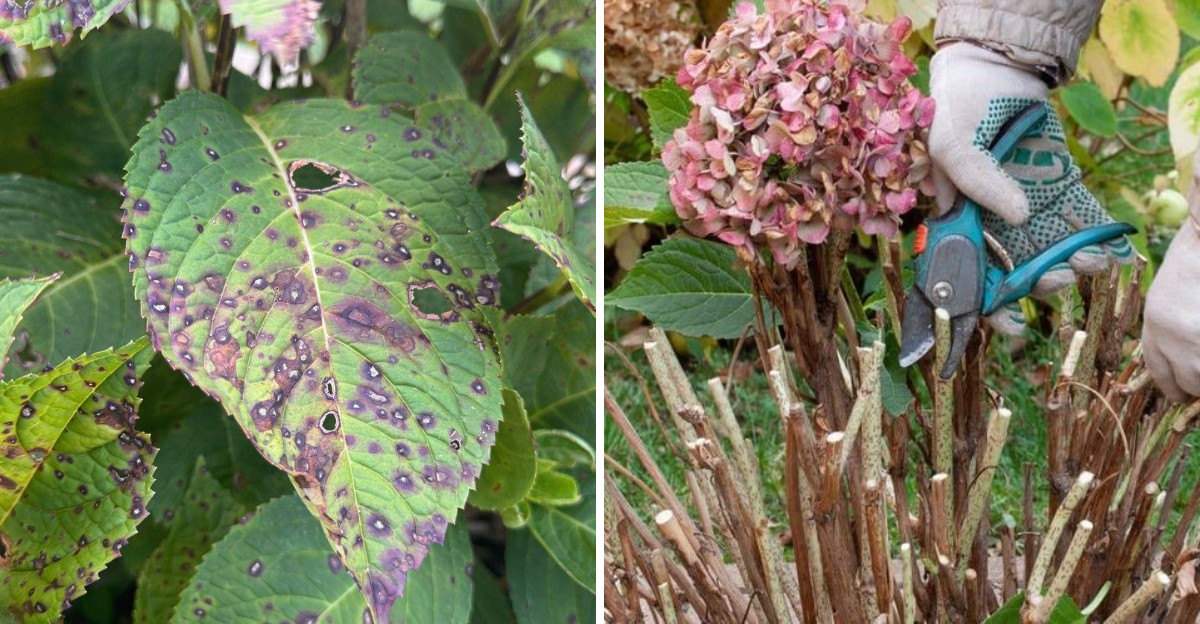
A Willamette Valley gardener steps outside after ten straight days of drizzle, coffee still warm in hand, and spots dark blotches creeping across the lower leaves of a favorite blue hydrangea.
Alarming, right? The first instinct is almost always grabbing a bottle of fungicide off the shelf and spraying first, asking questions later.
That instinct skips over something more interesting though. Oregon’s cool, damp climate does not invite just one culprit here.
Several different organisms can cause the exact same kind of spotting, and they rarely announce which one showed up this time.
Most gardeners never get that far in the investigation. One dark spot, one assumption, one bottle of spray, case closed.
Knowing which culprits actually show up in Oregon, and how little real damage most of them cause, changes that whole reaction completely.
Stick around, because that alarming blotch on your hydrangea might matter a lot less than it looks right now.
1. Several Different Fungi Cause Similar Spots
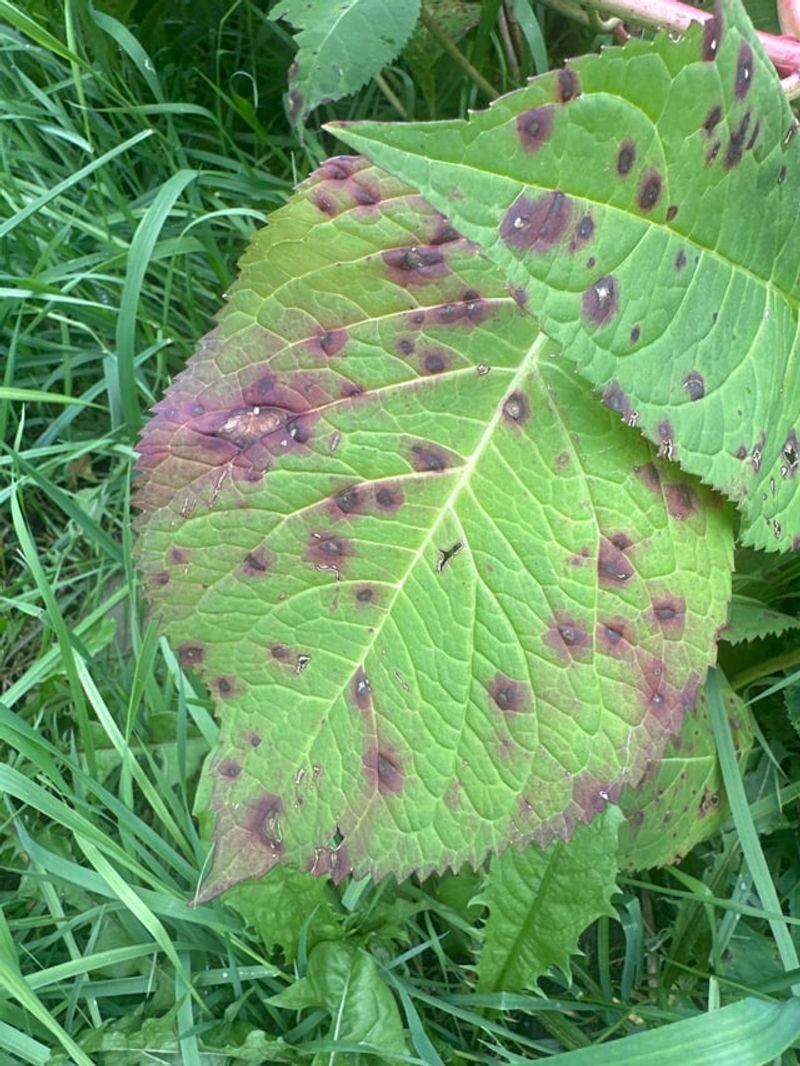
Gardeners often assume one disease sits behind every dark blotch showing up on a leaf. Samples sent to the OSU Plant Clinic tell a messier story than that though.
Cercospora, Phoma, Alternaria, Ascochyta, and Stemphylium have all turned up on hydrangea leaves across the Pacific Northwest at various points.
What makes diagnosis genuinely tricky is that these fungi produce spots looking remarkably alike to the naked eye.
A round, dark lesion with a slightly faded center could belong to any one of them, and two or three species sometimes share the exact same leaf without any visible difference.
Lab identification requires a microscope to examine spore shapes closely, which is exactly why Extension specialists rarely name a pathogen from a photo alone. For home gardeners, the good news is that treatment advice barely shifts from one fungus to the next anyway.
Each of these organisms survives on fallen leaves and old plant debris, then rides moisture back up onto fresh foliage come spring. Each also thrives whenever leaves stay wet for hours at a stretch, something Oregon happens to supply generously most of the year.
Bigleaf hydrangeas, the classic mophead types planted across western Oregon, seem to collect these spots most often overall. Oakleaf and panicle types are not immune either, though many gardeners report noticeably fewer problems with them by comparison.
Rather than chasing an exact name for every spot, focus on the shared conditions instead. Reducing leaf wetness and clearing debris addresses the whole group at once, which is far more practical than trying to match a spot to some species chart.
2. Cercospora Favors Warm Humid Stretches
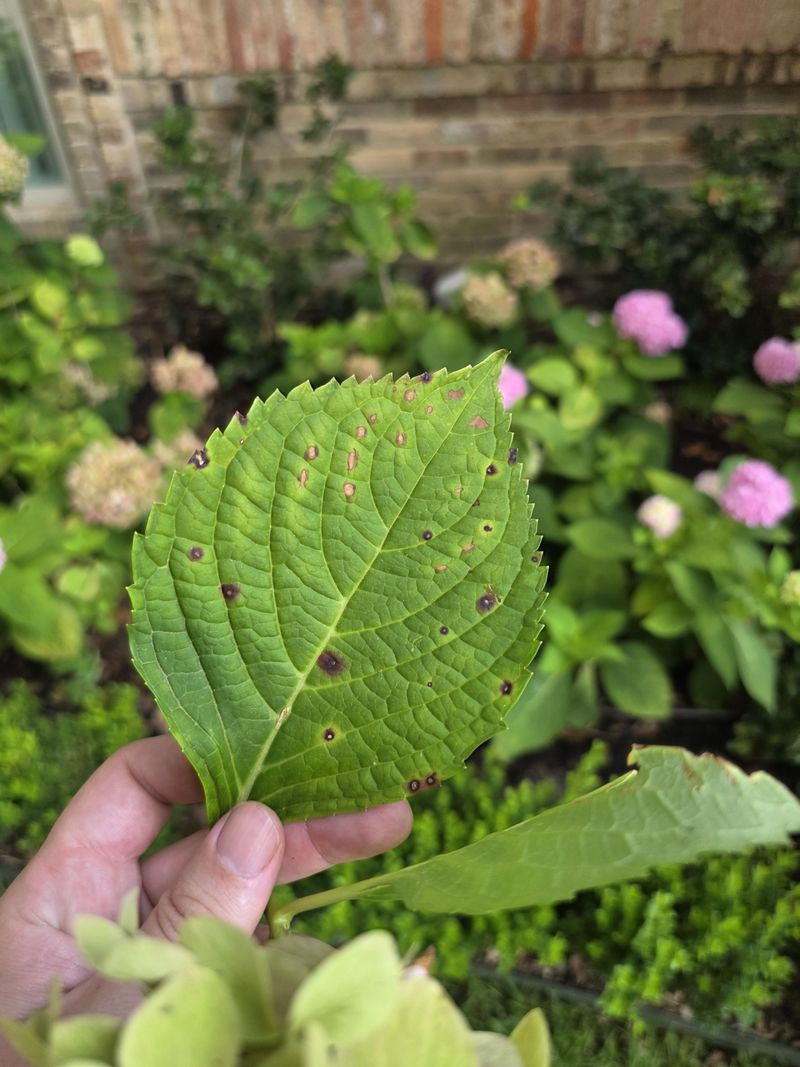
Late summer is when Cercospora usually announces itself, right when Oregon finally warms up and the air turns sticky after an evening watering. Small purple or brown spots appear first on the lowest leaves, closest to the soil.
Over several weeks those spots enlarge into circular lesions with tan or gray centers ringed by a darker purple border. Heavily spotted leaves often turn yellow-green and drop, leaving bare lower stems by September.
Your Oregon Garden Changes Every Week. Your Plan Should Too.
Gardening in Oregon changes quickly throughout the season. Every Friday you’ll receive a simple weekly plan showing exactly what to plant, prune, fertilize, harvest, and protect so you never miss the right timing.
Cercospora is the pathogen most commonly blamed in national gardening articles, and it genuinely does occur here. The difference in Oregon is timing, since our cooler springs delay it until warmer, humid weather arrives.
Spores overwinter in fallen infected leaves lying at the base of the shrub. When rain or sprinklers splash that debris upward, the cycle begins again on new growth.
Plants growing in crowded beds or against a house wall tend to show the worst symptoms, because humidity lingers there long after open areas have dried. Shade that never lets foliage dry adds to the problem.
A helpful detail to remember: Cercospora attacks leaves, not flower buds or roots, so blooms generally continue even on spotted plants. Defoliation late in the season matters less than it looks, since the shrub is already winding down.
Raking those leaves in autumn removes the fungus’s winter hotel and cuts next year’s pressure noticeably.
3. Bacterial Spot Thrives In Cool Wet Spring
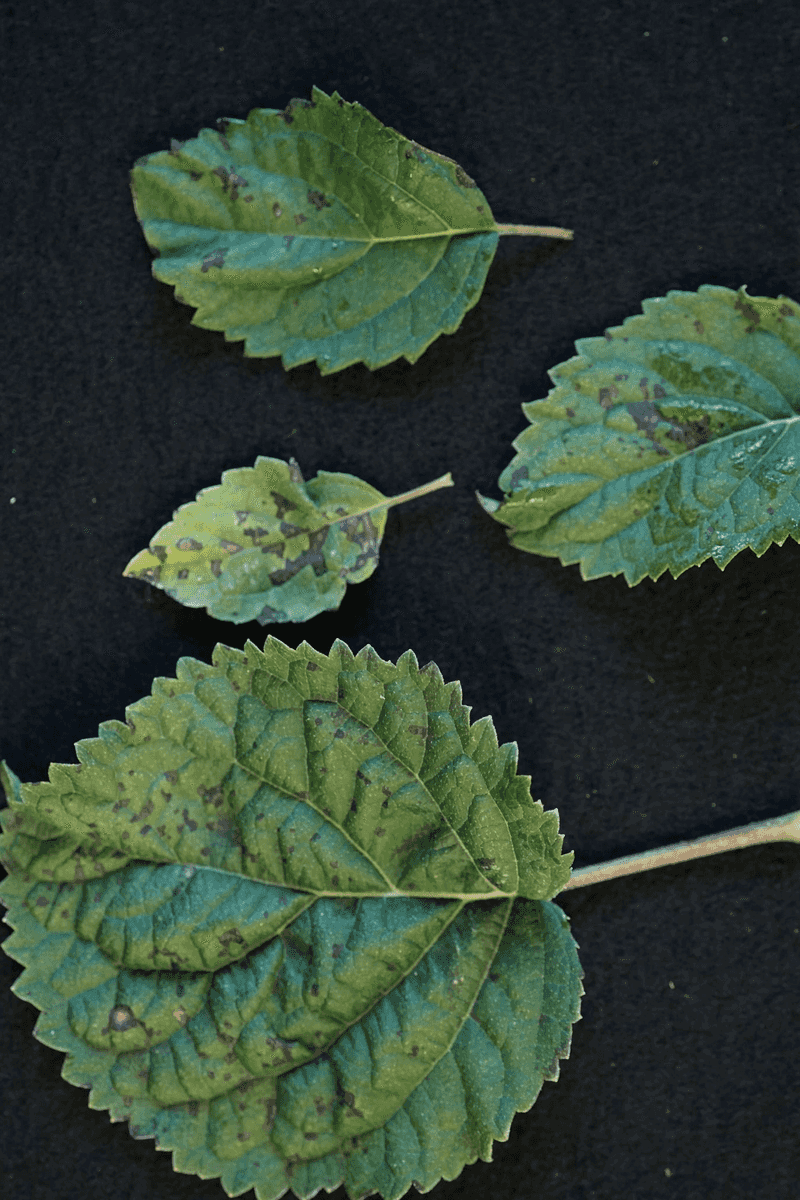
Late summer is when Cercospora usually announces itself, right when Oregon finally warms up and the air turns sticky after an evening watering session.
Small purple or brown spots appear first on the lowest leaves, closest to the soil below.
Over several weeks those spots enlarge into circular lesions with tan or gray centers ringed by a darker purple border running around the edge.
Heavily spotted leaves often turn yellow-green and drop off entirely, leaving bare lower stems by September.
Cercospora is the pathogen most commonly blamed in national gardening articles, and it genuinely does show up here too. The real difference in Oregon comes down to timing, since our cooler springs delay it until warmer, humid weather finally arrives later in the season.
Spores overwinter quietly in fallen infected leaves lying at the base of the shrub. When rain or sprinklers splash that debris back upward, the whole cycle begins again on fresh new growth.
Plants growing in crowded beds or pressed against a house wall tend to show the worst symptoms overall, since humidity lingers there long after open areas have already dried out. Shade that never lets foliage dry properly adds to the problem too.
A helpful detail worth remembering here. Cercospora attacks leaves specifically, not flower buds or roots, so blooms generally continue just fine even on a spotted plant.
Losing leaves late in the season matters less than it looks, since the shrub is already winding down for winter anyway.
Raking those leaves in autumn removes the fungus’s winter hotel completely and cuts next year’s pressure noticeably.
4. Splashing Water Spreads Spores Fast
Watch a heavy rain hit bare soil beneath a hydrangea, and you are essentially watching disease transmission happen in real time.
Each droplet striking an infected fallen leaf launches a fine mist of spores or bacterial cells straight upward onto healthy foliage nearby.
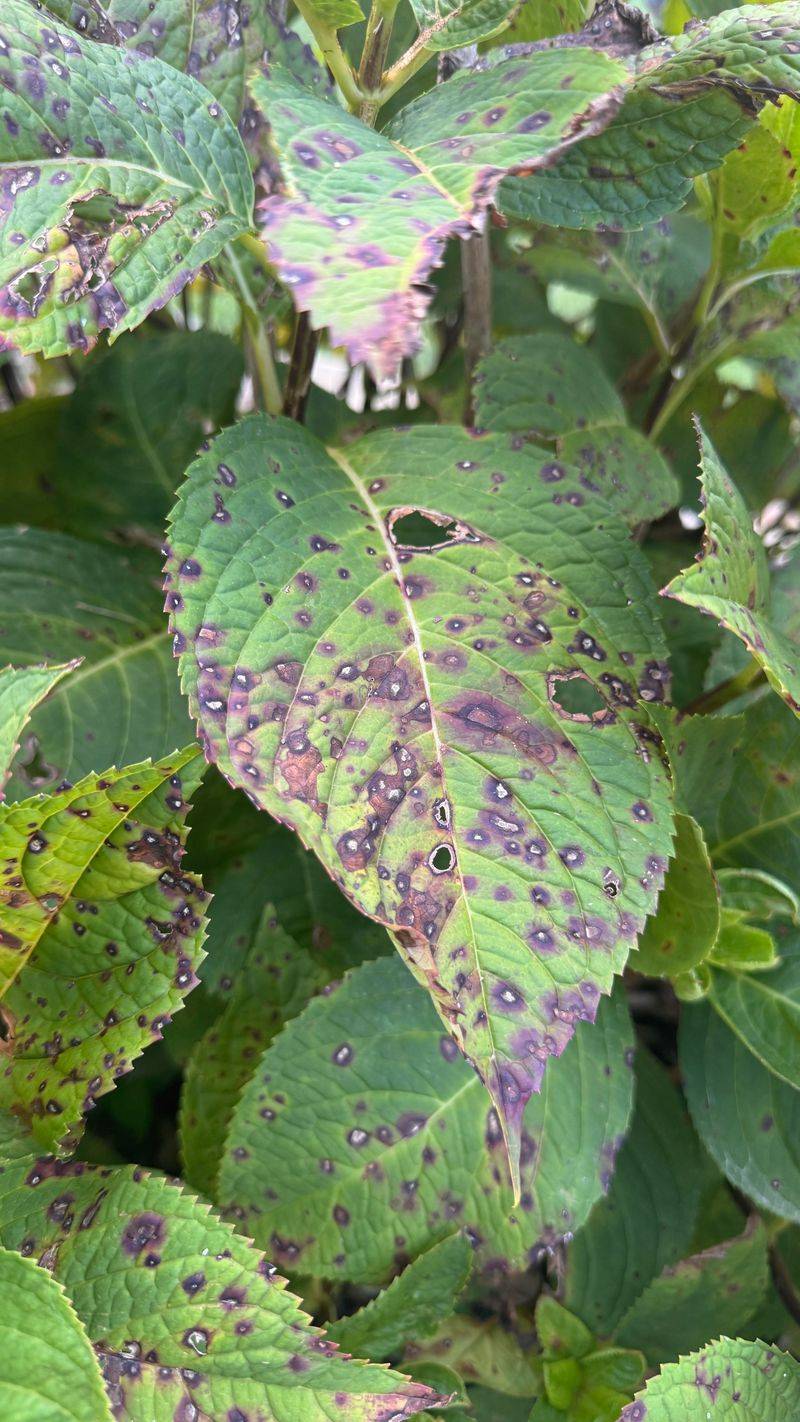
That is exactly why spots almost always start at the bottom of the plant and work their way up over the season.
The lowest leaves sit closest to that whole reservoir of overwintering pathogens waiting in the debris.
Overhead sprinklers do the same job as rain, except gardeners actually control the timing here. Evening watering is especially unhelpful in this context, since leaves then stay wet through the entire night without any chance to dry.
Most of these organisms need several continuous hours of leaf wetness just to germinate and establish themselves. Cutting that window short interrupts infection before it really starts.
Switching to drip irrigation or a soaker hose laid at the base keeps foliage dry while still delivering water right where roots actually need it most.
If sprinklers are the only option available, run them in early morning so sun and breeze can finish the drying job afterward.
A two to three inch layer of mulch under the shrub creates a physical barrier between soil-borne debris and splashing droplets bouncing up. Bark, compost, or shredded leaves all work fine for this purpose.
Handling wet foliage matters here too. Brushing past dripping plants while trimming can carry spores on sleeves and gloves from one shrub straight to the next, so save that particular chore for a dry afternoon instead.
5. Spots Rarely Threaten The Whole Plant
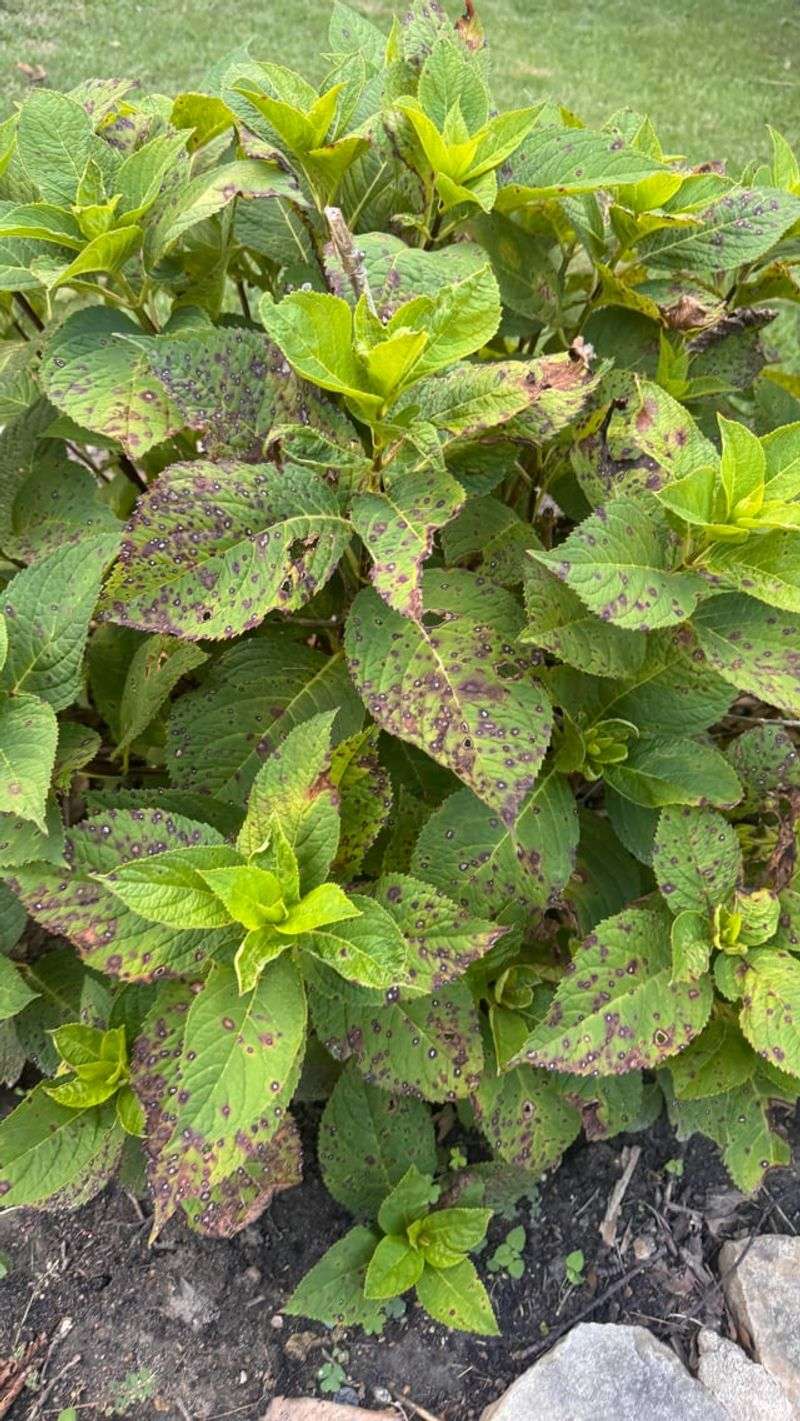
Here is the reassuring part of this whole story. Leaf spot diseases on hydrangeas are overwhelmingly cosmetic in nature.
Extension diagnosticians consistently describe them as rarely serious, even when a shrub looks thoroughly speckled by August.
Roots, crowns, and woody stems are simply not the target of these leaf-dwelling organisms at all. A plant losing spotted foliage in September will almost always push out clean new leaves again the following spring without issue.
That said, severe repeated infection is not entirely harmless either. Leaves are the plant’s food factories, and losing them early cuts into the energy a shrub manages to store up for next season’s growth.
Gardeners with badly infected plants sometimes notice fewer or smaller blooms the following year, along with slower overall growth. Stress from drought, poor soil, or root competition can compound that effect further.
Panic is really the bigger risk sitting in most yards here. Removing a perfectly healthy shrub or dousing it with chemicals just because of some spotted lower leaves is a solution far out of proportion to the actual problem at hand.
Take a step back and assess how much of the canopy is genuinely affected first. If the top two-thirds still looks good and flowers are forming normally, that plant is doing just fine overall.
Keeping the shrub well watered at the roots during dry July and August stretches does more for long-term vigor than any spray ever could. A strong, unstressed hydrangea shrugs off leaf spots year after year without needing much help at all.
6. Better Airflow Reduces Future Outbreaks
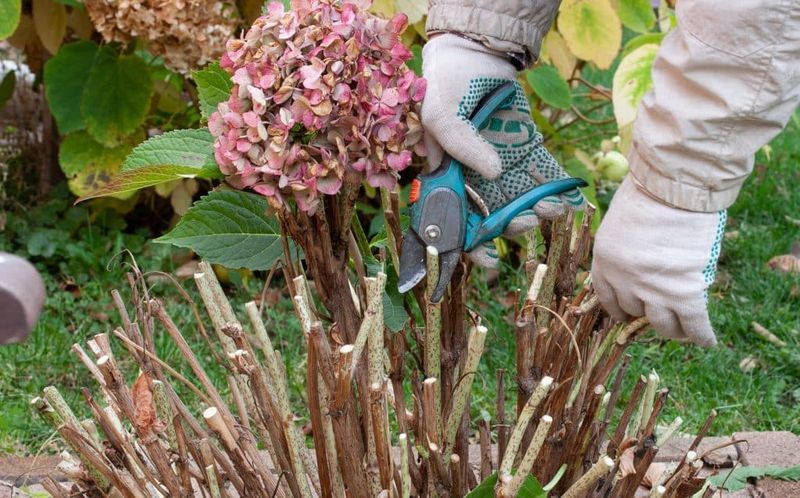
Ask any longtime Northwest gardener about leaf spots, and spacing usually comes up before chemicals ever do.
Air moving through a shrub dries leaves faster, and dry leaves simply do not get infected nearly as easily as damp ones.
Plants jammed shoulder to shoulder along a fence trap humidity for hours at a stretch.
Bigleaf hydrangeas can reach four to six feet across easily, so give each one real room to reach full size without touching its neighbors directly.
Thinning is really the pruning technique that helps most here. Removing a few of the oldest, weakest stems right at ground level opens up the center without sacrificing the outer branches carrying flower buds for next season.
Timing matters a lot for bigleaf types specifically, since they bloom on old wood. Prune right after flowering in summer instead, not in late winter, or next year’s blooms disappear right along with the stems you cut.
Weeds and overgrown perennials crowding the base act like a humidity blanket sitting over everything. Clearing a foot of open space around the crown lets air actually reach the lowest leaves, which happen to be the ones most often spotted.
Overhanging tree limbs contribute to the problem too, dripping condensation onto foliage long after rain has already stopped falling. Limbing up a nearby maple or dogwood can change the whole microclimate around a hydrangea dramatically for the better.
Siting new plants where they get morning sun is another quiet win worth considering. Early light burns off dew before pathogens get their required hours of wetness, and hydrangeas still get the afternoon shade they genuinely prefer anyway.
7. Sanitation Matters More Than Spraying
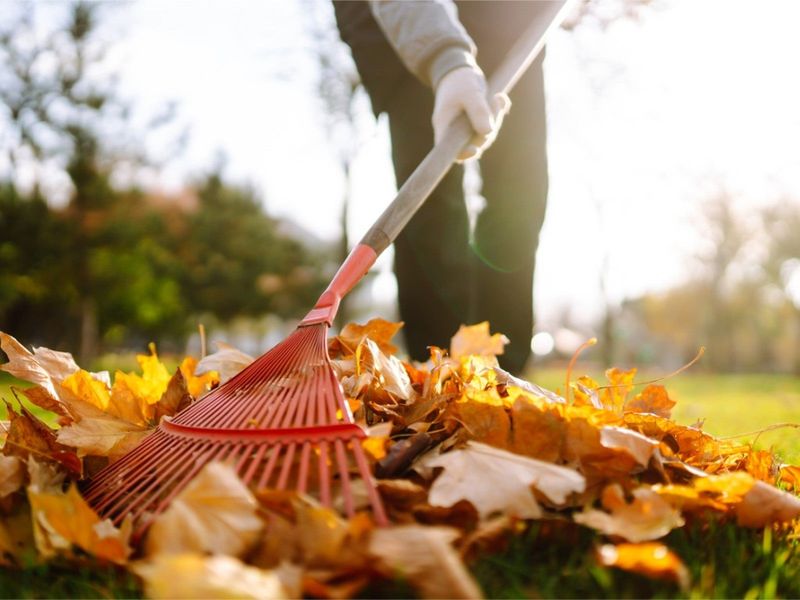
Rake first, spray later, if at all.
Extension guidance for the Pacific Northwest puts fallen leaf cleanup and moisture management ahead of fungicides for hydrangea leaf spot, and the reasoning behind that is fairly straightforward once you think it through.
Nearly all of these pathogens spend winter in old infected leaves sitting right on the ground below the shrub.
Remove that material, and you remove the starting inoculum for next season’s whole outbreak.
Gather spotted leaves as they drop rather than waiting around for a single November cleanup session. Bag them or send them to a municipal compost facility instead of a backyard pile, which rarely gets hot enough to break down spores reliably on its own.
Pair that cleanup routine with the watering changes already mentioned, and most gardens see noticeable improvement within one or two seasons total. No product application is really needed to get that result.
Fungicides, when used at all, work as protectants rather than cures for existing damage.
They must coat healthy tissue before infection ever occurs, which means repeated applications starting early in the season, and they will not erase spots that already exist on the leaf.
They also do nothing whatsoever for bacterial leaf spot, so spraying without knowing the actual cause first is really just a gamble. Gardeners wanting certainty can send a sample to the OSU Plant Clinic for proper identification instead.
For a shrub that will likely be fine either way, the effort is usually better spent on a rake, a soaker hose, and a little patience.