Why You Should Grow American Holly Along Ohio Fences For Privacy
Privacy fences in Ohio have a lifespan problem. Wood rots, vinyl fades, metal corrodes, and whatever went up ten years ago is already having a conversation about replacement.
A living privacy screen does not work that way. It improves instead of deteriorating, and American holly is one of the better arguments for making that trade.
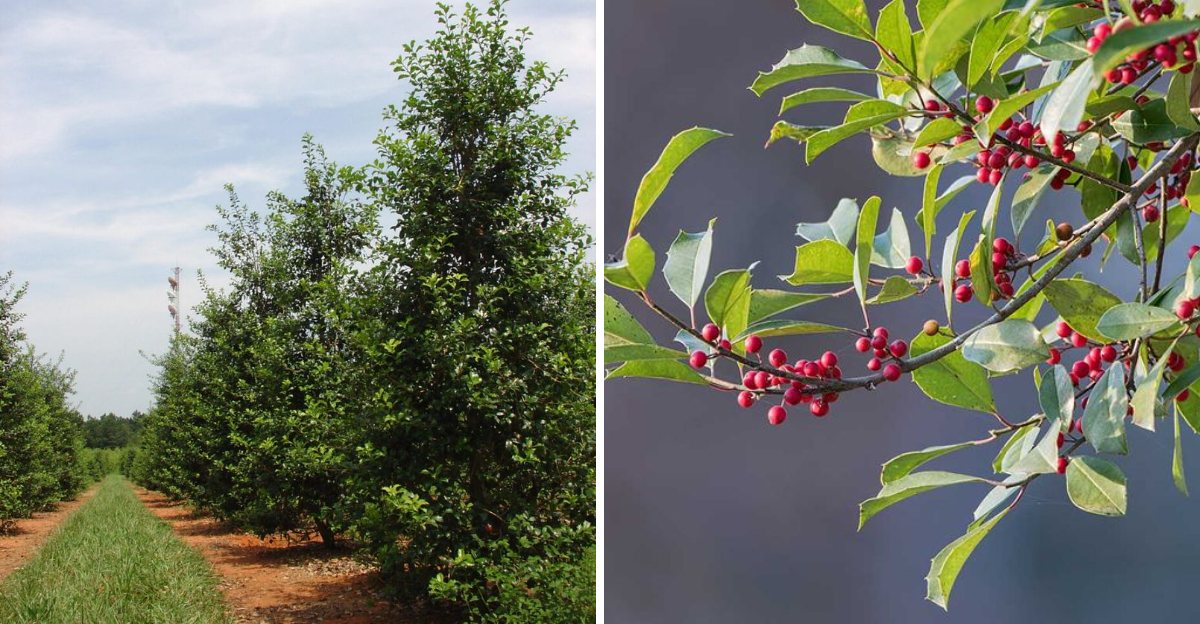
Evergreen through Ohio winters, dense enough to screen effectively, and covered in red berries that birds find worth defending through the coldest months of the year. American holly is not trying to be a fence.
It is doing something a fence never could. The wildlife value alone separates it from every vinyl panel and wooden board it replaces.
Cardinals, cedar waxwings, and mockingbirds treat a mature American holly the way a neighborhood treats a popular restaurant. Busy, territorial, and worth coming back to regardless of the season.
1. Evergreen Leaves Keep The Fence Line Covered All Year
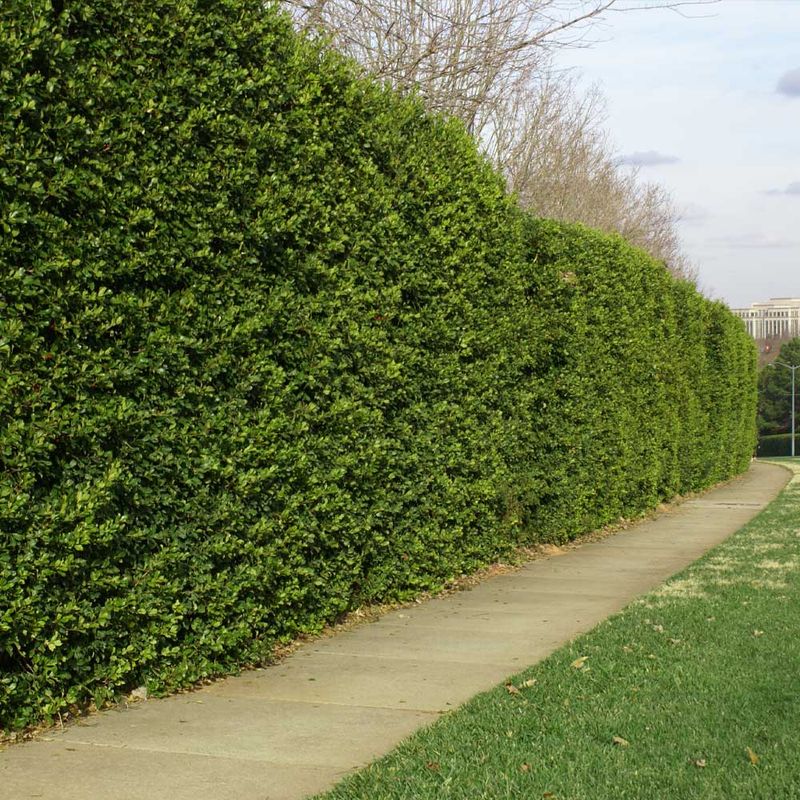
Foliage that stays on the tree through February is one of the most practical features a privacy planting can offer. American holly holds thick, leathery, dark green leaves even when temperatures drop well below freezing.
Those leaves are stiff, with spiny edges, and they look noticeably different from the soft new growth you see on young Ohio nursery trees.
Deciduous shrubs can leave a fence line wide open from late October through April. A row of American holly keeps visual coverage during those same months.
That said, individual trees still shed older leaves gradually, so the canopy is not frozen in time. Replacement foliage fills in steadily, and the overall screen stays green.
Young trees planted several feet apart will look sparse for the first few years. Mature spacing should guide your planting plan from day one, even when the gaps look discouraging early on.
Crowding plants together to close those gaps faster creates a different problem once the canopy expands. Patience is genuinely part of the process here, and the long-term payoff of a full evergreen fence line makes that wait worthwhile.
2. Dense Lower Branches Build A More Complete Privacy Screen
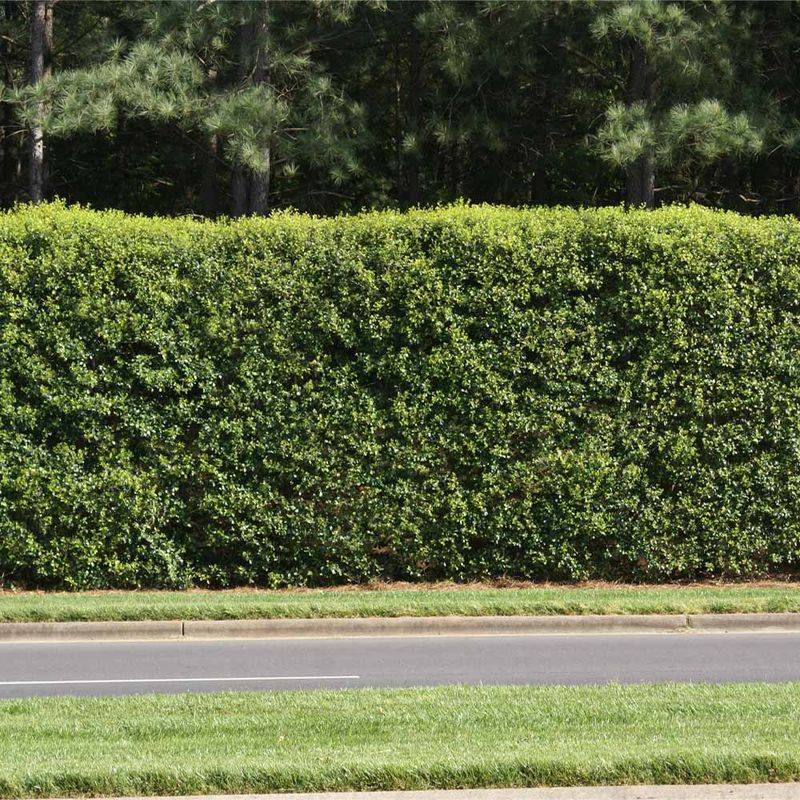
A naturally pyramidal form sets American holly apart from many other large trees used near fences. When given enough light, the straight species can hold branches low on the trunk for many years.
Those lower branches are exactly where fence-line screening matters most, since gaps near the ground are easy to see through.
Adequate sunlight is the biggest factor in keeping the lower canopy dense. Heavy shade from nearby structures or competing trees tends to thin out lower growth over time.
Crowding from neighboring plants can create the same result, even when the trees themselves are healthy.
Avoid removing lower branches on trees that are being grown specifically for screening. Limbing up might look tidy, but it permanently reduces the coverage that makes the planting useful.
Staggered rows can add depth to a screen when enough horizontal space exists. Base that decision on mature canopy width rather than the size of the nursery stock you are buying.
A tree that looks small at planting can eventually spread quite wide, and that spread is what fills the fence line from top to bottom over the long term.
3. Slow Growth Creates A Screen That Lasts For Decades
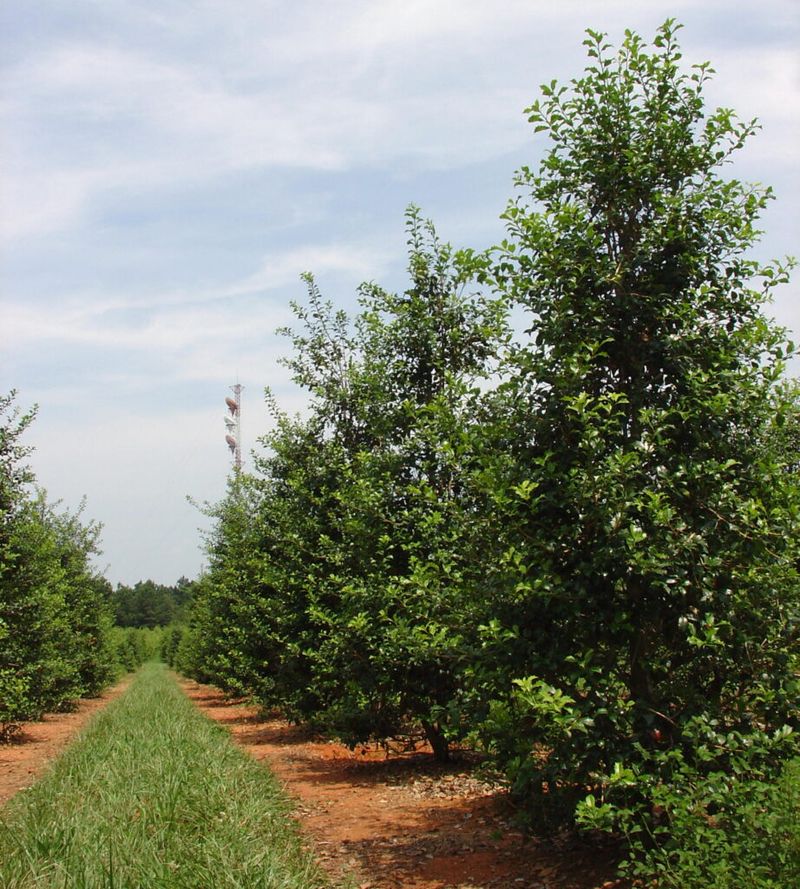
Slow growth is a genuine tradeoff, not a hidden selling point. American holly is widely considered a slow-growing tree, adding roughly one foot or less per year under typical landscape conditions.
That pace means you will not have a solid screen within a season or two. If you need immediate coverage, plan for a temporary solution while the trees establish.
The long-term benefit is real, though. A tree that grows slowly tends to build dense wood and a stable branch structure.
Properly sited American holly can persist for many decades. The privacy planting you start today may still be serving your property long after faster-growing alternatives require replacement or develop structural problems.
Buying larger nursery stock can shorten the wait, but bigger trees cost more and still need careful, consistent watering during establishment. A larger transplant does not automatically root in faster than a smaller one.
Planting too close together to speed up coverage is a common mistake. The straight species can mature to a substantial width.
Trees squeezed together early will compete for light and space before they reach their full potential as a screen.
4. Red Berries Bring Winter Color To Female Trees
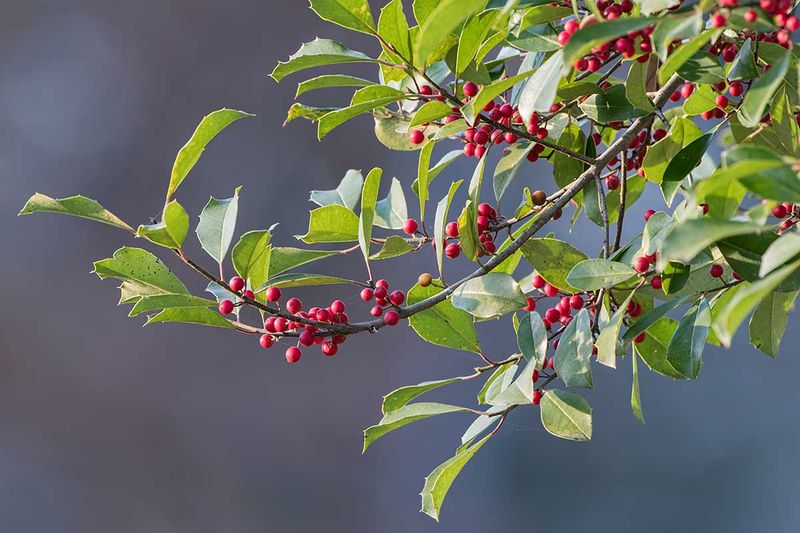
Clusters of red to orange-red fruit on a female American holly are one of the most recognizable sights in an Ohio winter landscape. The color pops against the dark green foliage and can persist through much of the cold season.
Fruit production, though, depends entirely on pollination, and that requires both a male and a female tree.
American holly is dioecious, meaning male and female flowers grow on separate plants. A female tree planted alone will not produce fruit reliably.
A compatible male pollinator needs to be within a reasonable distance, and bloom timing between the two plants must overlap. Not every male cultivar pollinates every female cultivar at the right time, so check compatibility before buying.
Fruit is a bonus feature, not a privacy requirement. A fence-line planting works just as well visually whether or not the trees produce berries.
Birds and other wildlife do use holly fruit as a food source during winter, though the extent varies by location and season. The berries are not safe to eat for people or pets, so keep that in mind if children or animals spend time near the planting.
Plan your male-to-female ratio carefully for reliable fruit display.
5. Full Sun Helps The Foliage Stay Thick And Dense
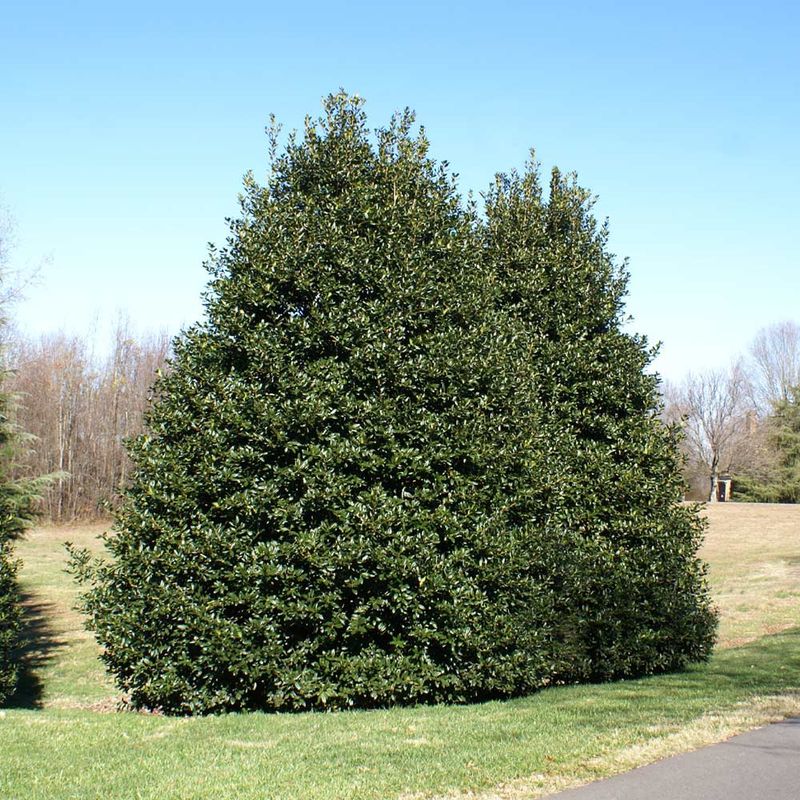
Sunlight has a direct effect on how dense and full an American holly grows. The tree tolerates partial shade, but foliage tends to thin out in spots that receive limited sun.
A fence-line planting that sits in heavy shade for most of the day will likely produce a less effective screen than one growing in open, bright conditions.
Hot afternoon sun and reflected heat from walls or pavement can stress the tree in certain exposures. Winter sun combined with dry wind can increase moisture loss from evergreen leaves.
Keep this concern in mind when choosing the exact placement along the fence. Observing the site through different seasons before planting gives you a much clearer picture than a single afternoon visit.
Keep in mind that the light environment along a fence changes as the landscape matures. Nearby trees that cast little shade today may eventually block significant sunlight.
Buildings added to neighboring properties can do the same. A spot that looks ideal right now might receive much less direct light in ten years.
Choosing the sunniest available position along the fence gives the planting the best foundation for staying dense and visually effective over the long term.
6. Acidic Well Drained Soil Keeps Roots In Better Shape
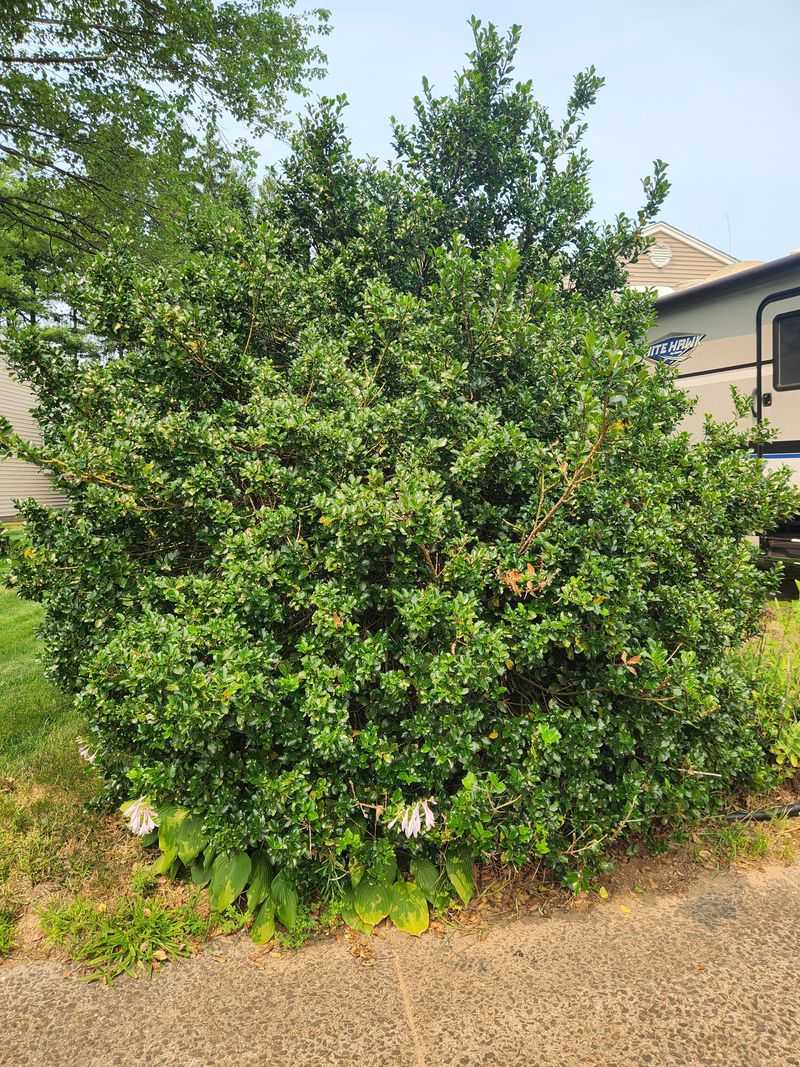
Soil conditions under a fence line are not always ideal, and American holly has specific preferences worth understanding before you plant. The tree grows best in moist, well-drained, acidic soil with a pH generally in the range of 4.5 to 6.0.
Persistently wet or waterlogged soil around the roots leads to poor performance over time.
Clay-heavy soils common in parts of Ohio can hold water longer than the tree prefers. A soil test before planting tells you the actual pH and drainage characteristics of your specific site.
Trying to lower soil pH without a test result to guide you can create new problems rather than solving existing ones. Amendments should match what your soil actually needs.
High pH conditions can contribute to chlorosis, where leaves turn yellowish while veins stay green. That is a sign that the tree is struggling to take up nutrients properly.
Establishment watering matters a great deal during the first two growing seasons. Adjust how often you water based on rainfall, heat, soil drainage, and how the tree looks, rather than following a fixed schedule.
Keep mulch over the root zone to hold moisture, but pull it back so it never rests directly against the trunk.
7. Winter Wind Protection Helps Evergreen Leaves Hold Up
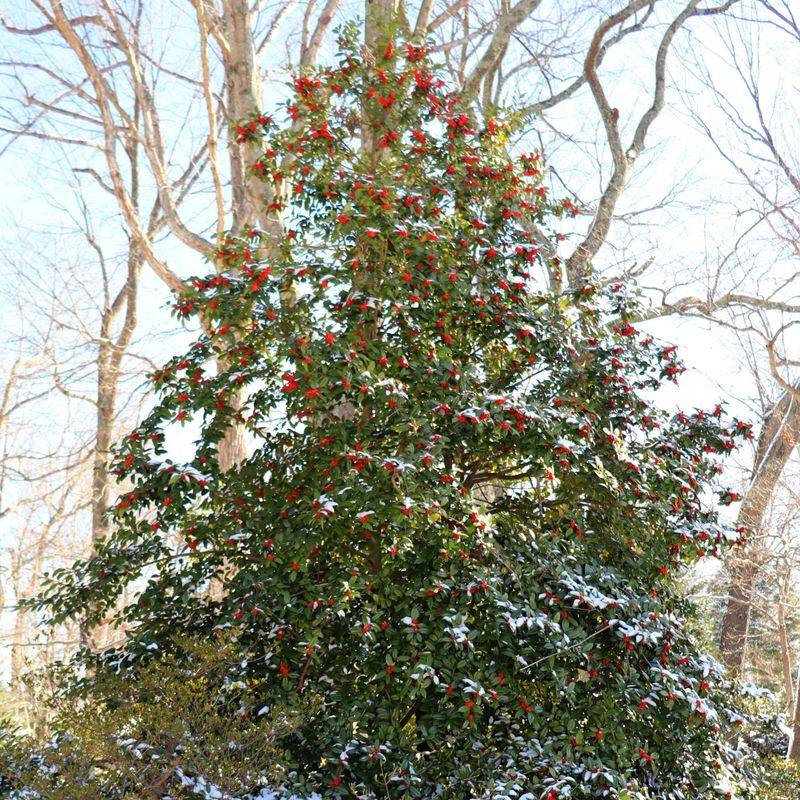
Broadleaf evergreens face a specific challenge in winter that deciduous trees simply avoid. Leaves that stay on the tree keep losing moisture through transpiration even when the ground is frozen and roots cannot replace that water easily.
Strong winter winds speed up that moisture loss and can cause leaf scorch or browning on exposed foliage.
American holly is hardy across most of Ohio, but site selection still matters. A fence line that faces prevailing winter winds without any shelter puts the tree under more stress than a more protected location.
Road salt spray from nearby streets can also damage foliage and roots, and that is worth factoring in when you choose where along the fence to plant.
Newly planted trees deserve extra attention before the ground freezes in fall. Watering thoroughly before freeze-up helps the root zone hold moisture through winter.
Established trees generally handle typical winters without wraps or other protection. However, a tree in a genuinely exposed spot may show more winter injury than one in a sheltered location.
Correcting a poor site choice after the fact is much harder than simply selecting a better position at the start. Practical site selection does more for winter survival than any protective measure applied later.
8. Mature Size Makes Smart Fence Line Spacing Essential
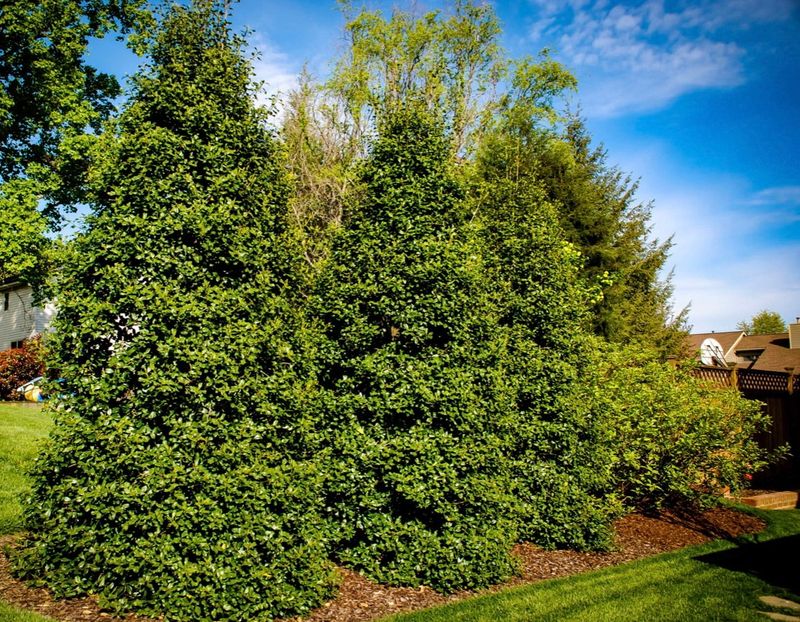
Few things create more long-term Ohio landscape headaches than planting a tree without accounting for its mature size. The straight species of American holly can reach 40 to 50 feet tall and spread 18 to 40 feet wide at maturity.
That is a substantial tree, and a fence line lined with them needs to have room for that eventual canopy.
Consider all necessary setbacks before planting the first tree. These include property lines, sidewalks, driveways, buildings, gates, utility access points, and overhead wires.
Local rules about planting near property boundaries vary, so check with your municipality before placing trees right on a shared line. The mature canopy should stay primarily on your property to avoid future conflicts.
Cultivars with a narrower or shorter habit can be a practical solution when space is limited. Some cultivars stay considerably smaller than the straight species, though dimensions vary, so verify the specific cultivar details before buying.
Squeezing the straight species into a tight spot and relying on constant pruning to manage the size is not a sustainable approach. The best privacy screen begins with plants whose mature form genuinely fits the available space.
Give each tree enough room to grow naturally into that form.