Why Your California Cucumber Plant’s Leaves Are Turning Yellow
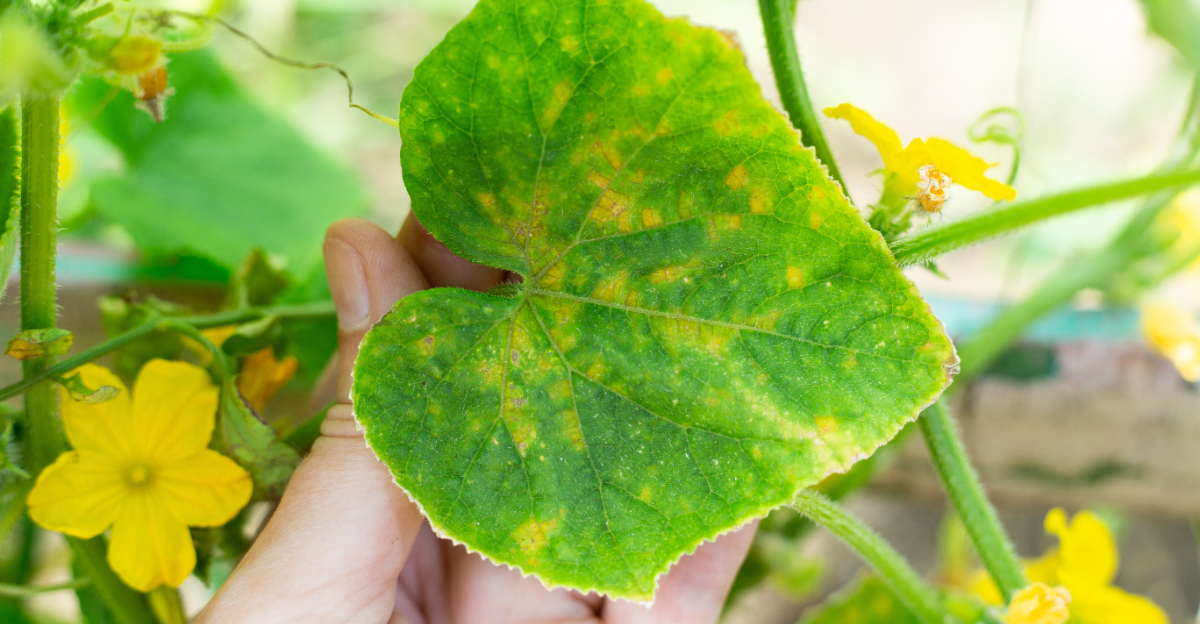
Yellow leaves on a cucumber plant can make an otherwise productive vine look like it is unraveling fast. Sometimes the change begins near the base.
Other times, a few leaves fade while the rest of the plant keeps growing as if nothing is wrong. That uneven pattern is what makes the problem so easy to misread.
California heat can add extra stress, but yellowing can also point to issues that have been building quietly for days. The plant may still be flowering, setting fruit, or sending out new growth while older leaves start losing color.
Instead of reacting to the first yellow patch, it helps to notice where the discoloration begins and how quickly it spreads. Those details can reveal whether the vine is simply showing seasonal wear or signaling that something in its care needs attention.
1. Overwatering Can Turn Leaves Yellow Fast
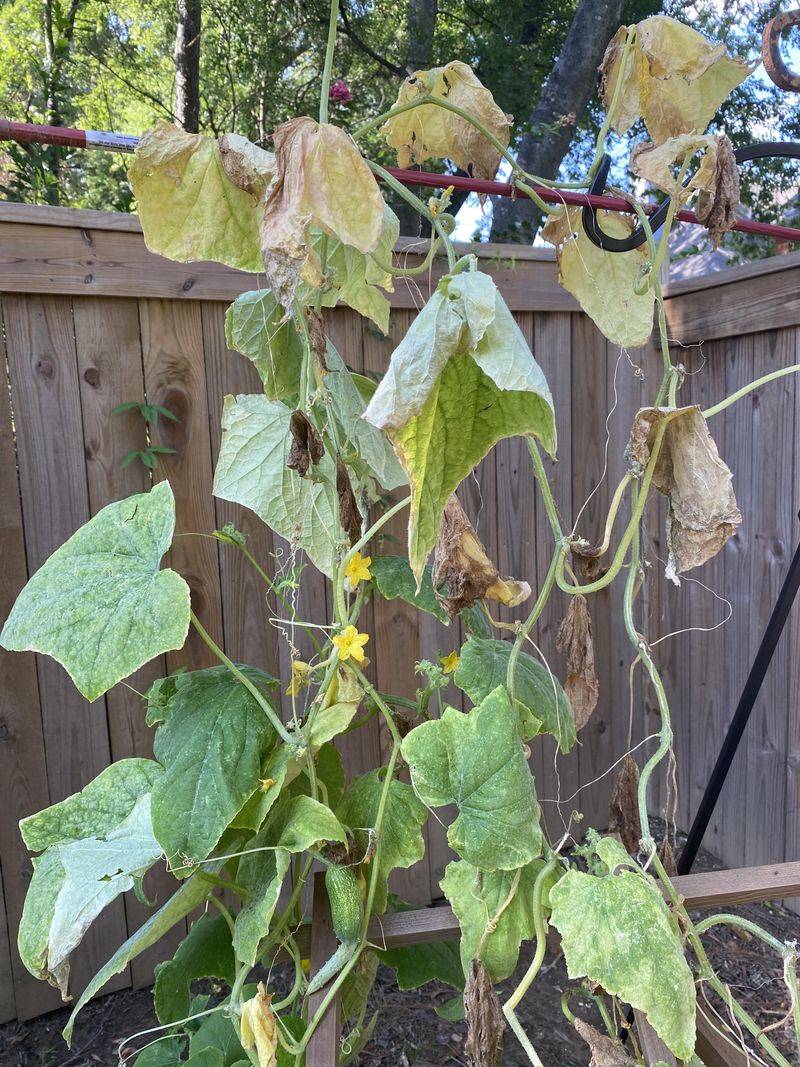
Too much water is one of the fastest ways to cause yellow leaves on a cucumber plant. When the soil stays wet for too long, the roots cannot get the oxygen they need.
Without enough oxygen, the roots begin to struggle, and the plant cannot absorb nutrients properly.
Many California gardeners think that more water means a happier plant, but that is not always true. Cucumber plants actually prefer soil that dries out a little between waterings.
A good rule of thumb is to stick your finger about an inch into the soil before watering. If it still feels damp, wait another day.
Overwatered plants often show yellowing that starts at the lower leaves and spreads upward. The leaves may also look soft or limp instead of firm and healthy.
Yellowing from overwatering can look a lot like a nutrient problem, so checking your soil moisture first is always a smart move.
To fix the issue, cut back on how often you water and make sure your garden bed has good drainage. Water deeply but less frequently, aiming for about one inch of water per week.
Morning watering is best because it gives the soil time to dry before evening. Adjusting your watering schedule can make a noticeable difference within just a few days.
2. Dry Roots Can Cause The Same Tired Look
Not enough water can cause yellow leaves just as easily as too much. When cucumber roots stay dry for too long, the plant goes into stress mode.
That stress shows up quickly in the leaves, which begin to fade, curl, or turn yellow at the edges.
Cucumbers are made up of mostly water, so they need a steady and consistent supply to stay healthy. During hot summer days, the soil can dry out faster than you might expect.
Checking the soil every day during a heat wave is a smart habit to build.
Underwatered leaves often look a little crispy or feel dry to the touch. The yellowing usually starts at the tips or edges and works its way inward.
You might also notice the whole plant looking droopy or tired, especially in the afternoon heat.
Your California Garden Changes Every Week. Your Plan Should Too.
Gardening in California changes quickly throughout the season. Every Friday you’ll receive a simple weekly plan showing exactly what to plant, prune, fertilize, harvest, and protect so you never miss the right timing.
The fix is straightforward: water more consistently and try to keep the soil evenly moist. Mulching around the base of the plant is a great way to hold moisture in the soil longer.
A layer of straw or wood chips works well and also keeps the soil temperature steady. Deep watering a few times a week is usually better than light watering every day.
With a little adjustment, your plant can bounce back and start looking green again fairly quickly.
3. Older Bottom Leaves Often Fade First
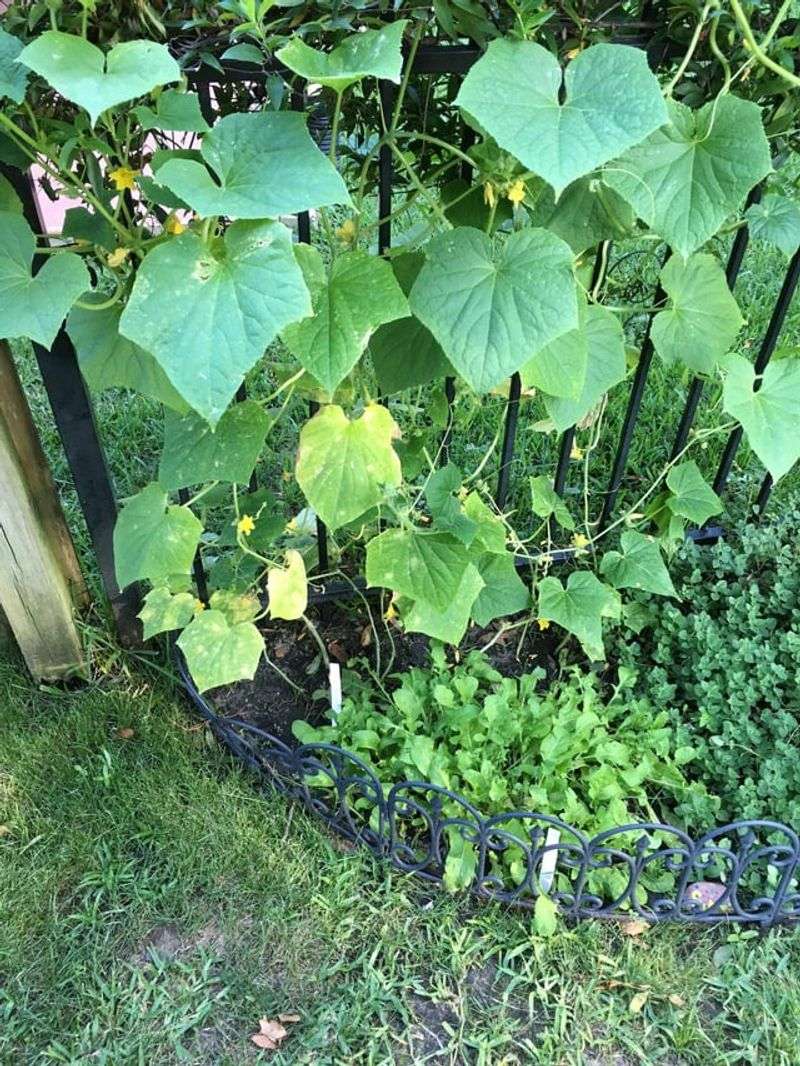
Here is something that surprises a lot of gardeners: not all yellow leaves mean something is wrong. As cucumber plants grow taller and spread out, the older leaves at the very bottom naturally start to turn yellow.
This is a normal part of the plant’s life cycle.
Those lower leaves are the oldest ones on the vine. Over time, the plant redirects its energy toward new growth, flowers, and fruit production.
The bottom leaves get less sunlight because the upper leaves shade them out. When a leaf can no longer contribute to the plant’s energy needs, it starts to fade.
You can usually tell this is normal aging if only the lowest one or two leaves are yellowing and the rest of the plant looks healthy. The yellowing tends to be even across the leaf rather than spotty or blotchy.
There are no bugs, no powdery coating, and no signs of disease.
The best thing to do is simply remove those fading leaves by pinching or snipping them off cleanly. This keeps the garden tidy and helps with air circulation around the base of the plant.
Better airflow can actually reduce the risk of fungal problems down the line. Removing old leaves is a normal part of garden maintenance, so do not stress when you see a few yellow ones near the bottom.
4. Too Much Heat Can Stress The Whole Vine
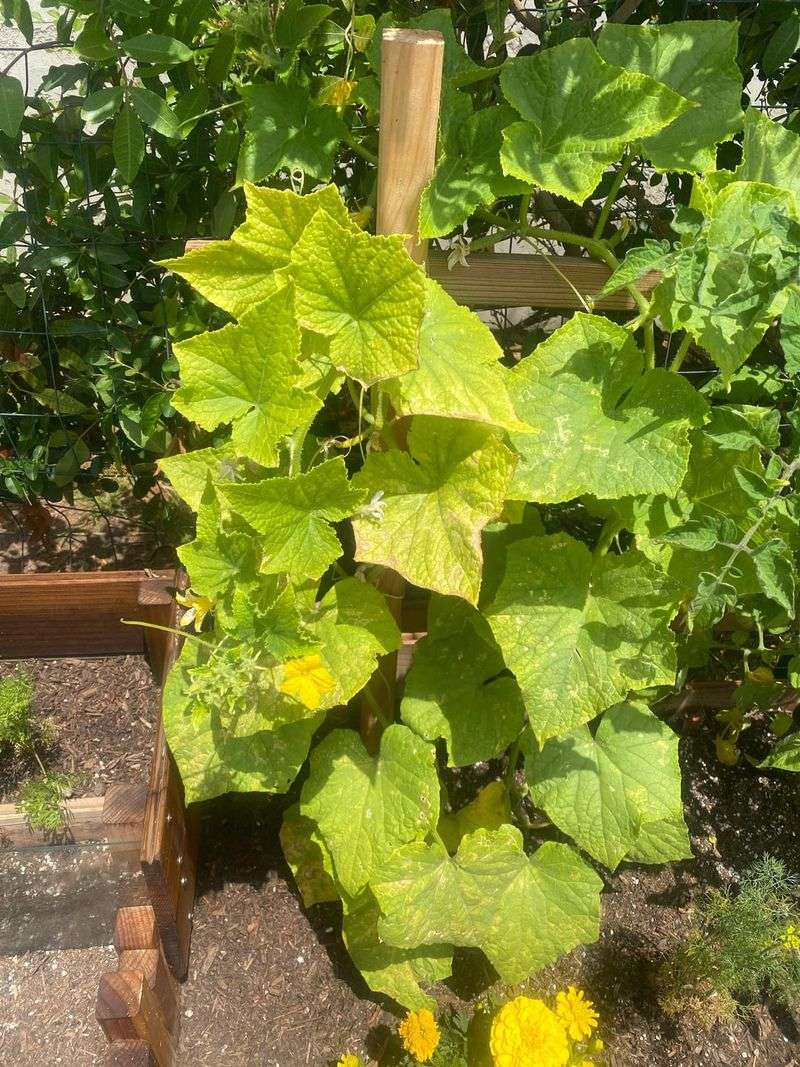
Cucumber plants love warm weather, but there is a point where heat becomes too much. When temperatures climb above 90 degrees Fahrenheit for several days in a row, the plant can go into heat stress.
One of the clearest signs of heat stress is yellowing leaves, especially on the parts of the vine most exposed to direct sun.
In California gardens, summer heat waves can hit hard and fast. The soil dries out quickly, and the plant has a hard time keeping up with water loss through its leaves.
When that happens, the plant pulls resources away from older or more exposed leaves to protect its core growth and fruit.
Heat-stressed plants may also drop flowers or produce bitter-tasting cucumbers. The leaves might look pale or washed out rather than a deep, healthy green.
You might notice the whole plant looking a little defeated by mid-afternoon.
Providing some afternoon shade can make a real difference. A shade cloth that blocks about 30 to 40 percent of sunlight is a practical and affordable option.
Watering early in the morning helps the plant stay hydrated before the hottest part of the day kicks in. Mulching around the base also keeps root temperatures lower.
With a few simple adjustments, your cucumber vine can handle summer heat much better and keep producing through the season.
5. Nitrogen Shortages Show Up In The Foliage
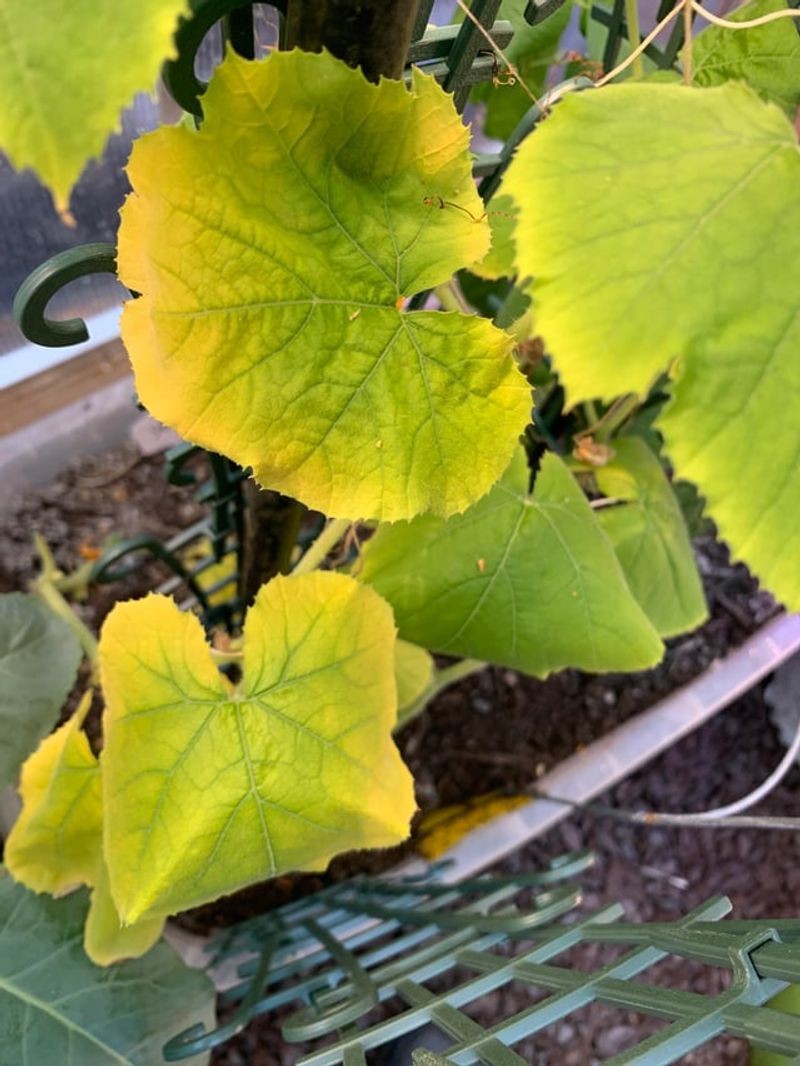
This is one of the most important nutrients a cucumber plant needs to stay green and grow strong. When there is not enough nitrogen in the soil, the plant cannot make enough chlorophyll.
Chlorophyll is what gives leaves their green color, so without it, leaves start turning yellow.
A nitrogen shortage usually shows up in the older, lower leaves first. That happens because the plant moves nitrogen from old leaves to new growth when supplies are low.
The yellowing tends to be uniform across the whole leaf rather than patchy or spotted.
Soil that has been used for growing vegetables season after season can become depleted of nitrogen over time. Sandy soils also tend to lose nitrogen faster because water washes it away more easily.
Adding too much compost without balancing it with other nutrients can sometimes create imbalances too.
A simple soil test can confirm whether nitrogen is the problem. Many garden centers sell easy-to-use test kits that give results in minutes.
If nitrogen is low, a balanced fertilizer or a nitrogen-rich option like fish emulsion can help. Follow the label instructions carefully to avoid adding too much, which can cause its own set of problems.
Regular feeding throughout the growing season keeps nutrient levels steady and your plant looking its best from early summer all the way through harvest.
6. Spider Mites Can Hide Under Yellowing Leaves
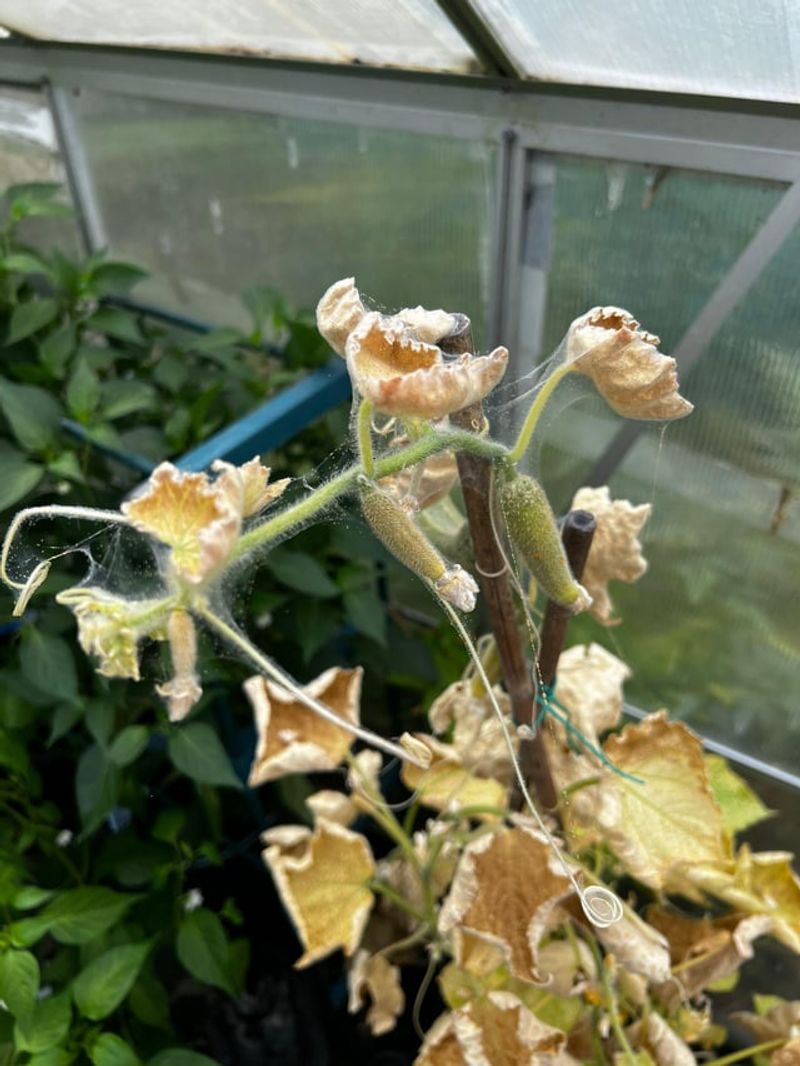
These little creatures are barely visible to the naked eye, but they can cause serious harm to cucumber plants. They feed by piercing leaf cells and sucking out the contents, which leaves behind small yellow or white specks on the surface of the leaf.
One of the sneakiest things about spider mites is where they hide. They live and feed on the underside of leaves, so you have to flip the leaf over to spot them.
Look for tiny moving dots, fine webbing, or a dusty look on the leaf surface. In hot, dry conditions, spider mite populations can grow very fast.
If you catch them early, a strong spray of water from a garden hose can knock many of them off the plant. Make sure to spray the undersides of the leaves where they gather.
For larger infestations, neem oil or insecticidal soap are both effective and safe options for vegetable gardens.
Keeping your garden well-watered and not overly dusty can help prevent spider mites from moving in. They thrive in hot, dry conditions, so maintaining soil moisture and good airflow around your plants makes the environment less welcoming for them.
Check your plants weekly so you can catch any new activity before it gets out of hand.
7. Powdery Mildew Can Start Before You Notice White Spots
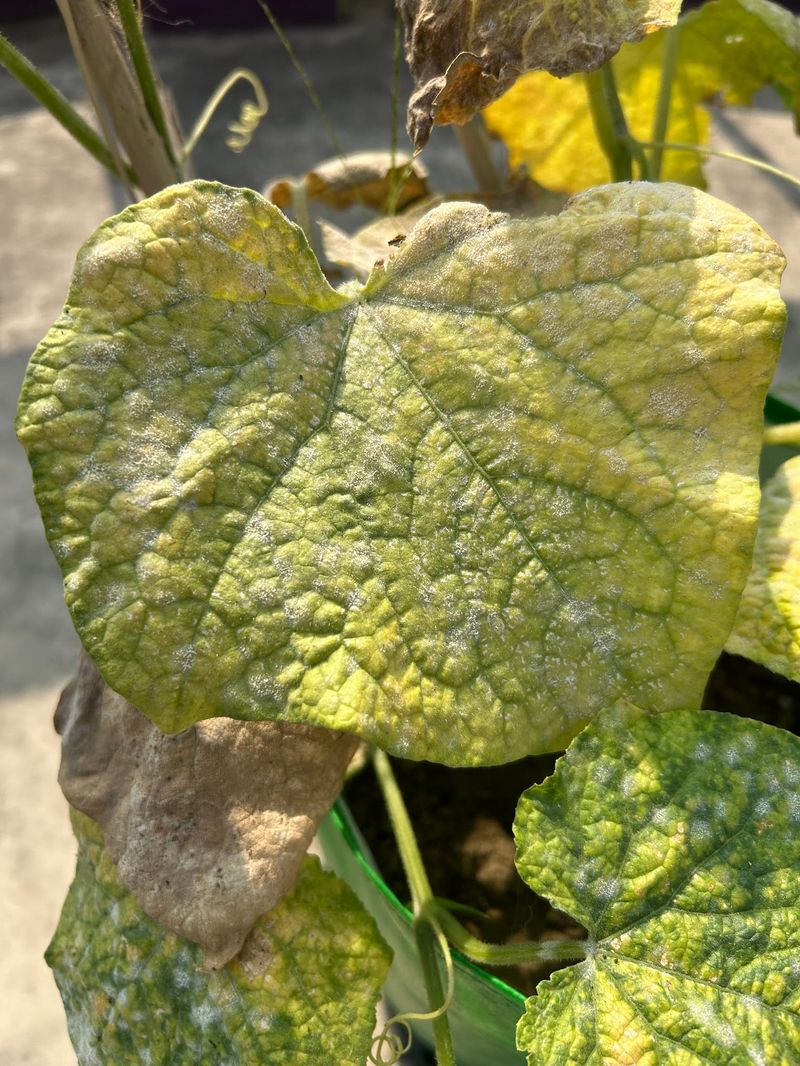
Powdery mildew is a fungal problem that loves warm days and cool nights, which makes it a common issue in many home gardens.
Most people think of it as a white powdery coating on leaves, but the yellowing often shows up before those white spots become obvious.
By the time you see the white, the fungus has already been active for a while.
The fungus spreads through spores that travel on the wind and land on leaf surfaces. Once it takes hold, it spreads quickly from leaf to leaf, especially when plants are crowded together and airflow is poor.
Cucumber plants with dense foliage are especially vulnerable because moisture gets trapped between the leaves.
Early yellowing from powdery mildew often appears as irregular yellow patches on the top side of the leaf. Flip the leaf over and you might already see a faint white or grayish coating forming on the underside.
Acting fast gives you the best chance of slowing the spread.
Removing heavily affected leaves and improving airflow around the plant are good first steps. A spray made from one part milk to nine parts water has been shown to help slow mildew growth.
Baking soda sprays and neem oil are also popular options. Watering at the base of the plant instead of overhead keeps the leaves drier and less inviting for fungal spores to settle and grow.
8. Poor Drainage Keeps Cucumber Roots Struggling
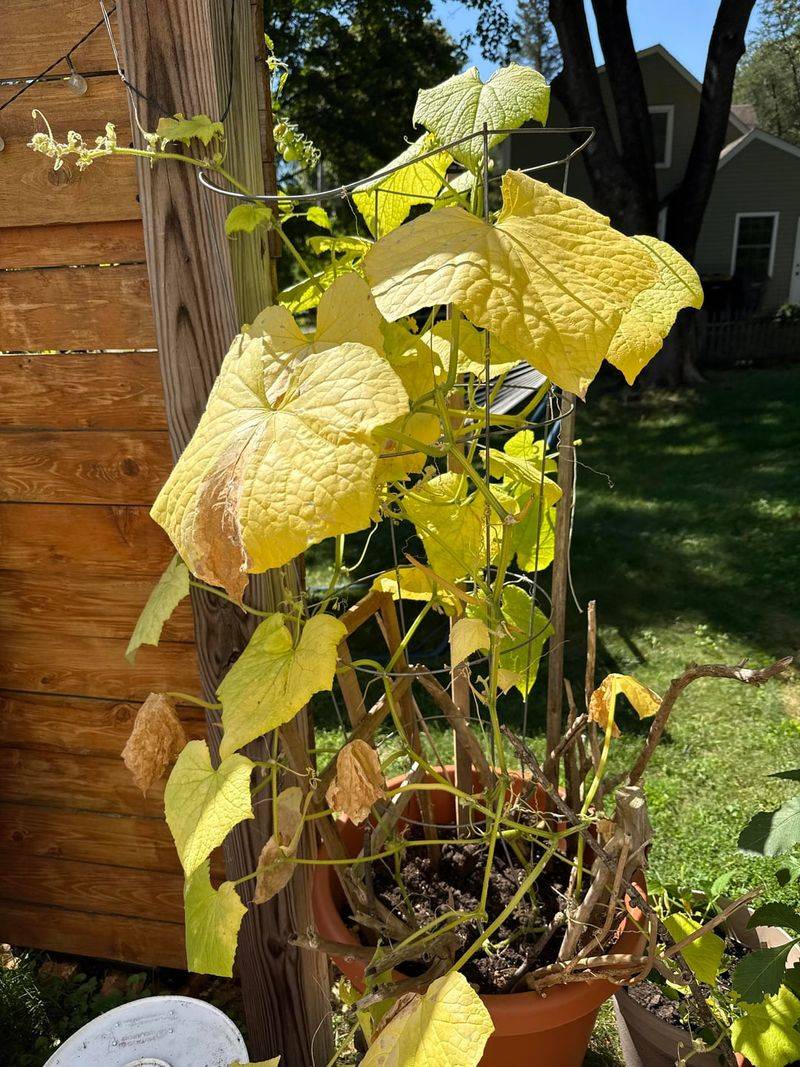
Even if you water your cucumber plant perfectly, poor drainage can undo all of your hard work.
When water cannot move through the soil and drain away, it sits around the roots and creates soggy conditions.
Roots need both water and air to function, and waterlogged soil cuts off the air supply.
Clay-heavy soil is one of the most common drainage problems in California gardens. It holds water for a long time and compacts easily, which makes it hard for roots to spread out and breathe.
Raised garden beds or containers with drainage holes are popular solutions for gardeners who deal with heavy soil.
Signs of poor drainage include soil that stays wet for days after watering, a sour or musty smell near the base of the plant, and leaves that yellow even when you have not been overwatering. Root rot can develop quickly in these conditions, and once it sets in, recovery becomes much harder.
Improving drainage does not have to be complicated. Mixing compost, perlite, or coarse sand into the soil can help break up heavy clay and create better structure.
Raised beds filled with a quality garden mix give roots the loose, well-draining environment they need. If you are growing in containers, always check that the drainage holes are not clogged.
Good drainage is one of the simplest ways to keep your cucumber roots healthy and your leaves looking green all season long.