This Is Where Four-Lined Plant Bugs Leave Damage First In Michigan Herb Gardens
Something is chewing pinprick holes through your herb leaves overnight, and by morning the damage already looks strange. Not quite a fungus, not quite sunscald, just scattered, papery marks that spread fast once the culprit finds your garden.
Michigan herb beds see this exact pattern every spring, when a quick, easy-to-miss insect slips in before most gardeners think to check their plants closely.
The trouble is, this pest doesn’t strike randomly. It moves through your herbs in a fairly consistent order, hitting certain leaves and certain plants first while the rest look untouched.
That order matters. Spot the first signs in the right spot, and you can step in before basil, mint, or your whole herb patch turns into a spotted, unhappy mess.
Young Leaves And Shoot Tips Take The First Hit
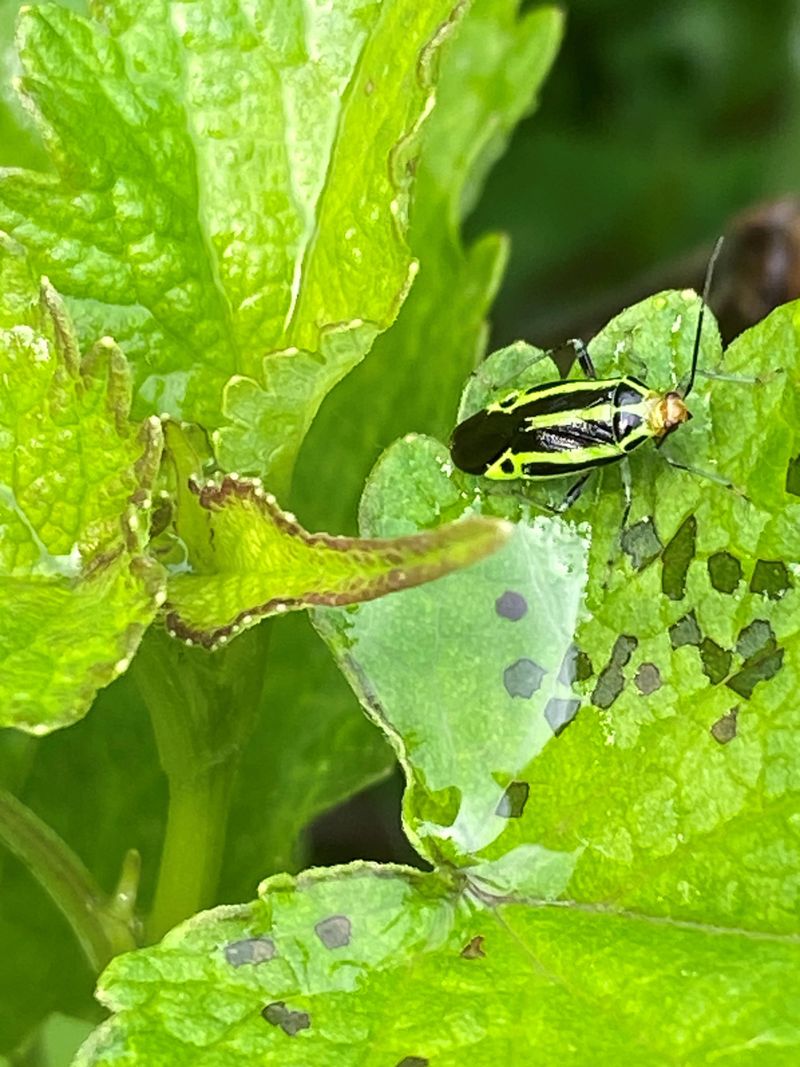
Soft, fresh growth is basically a buffet sign for four-lined plant bugs. The youngest leaves and shoot tips on your herbs tend to be the first targets because the plant tissue there is tender and easy to pierce.
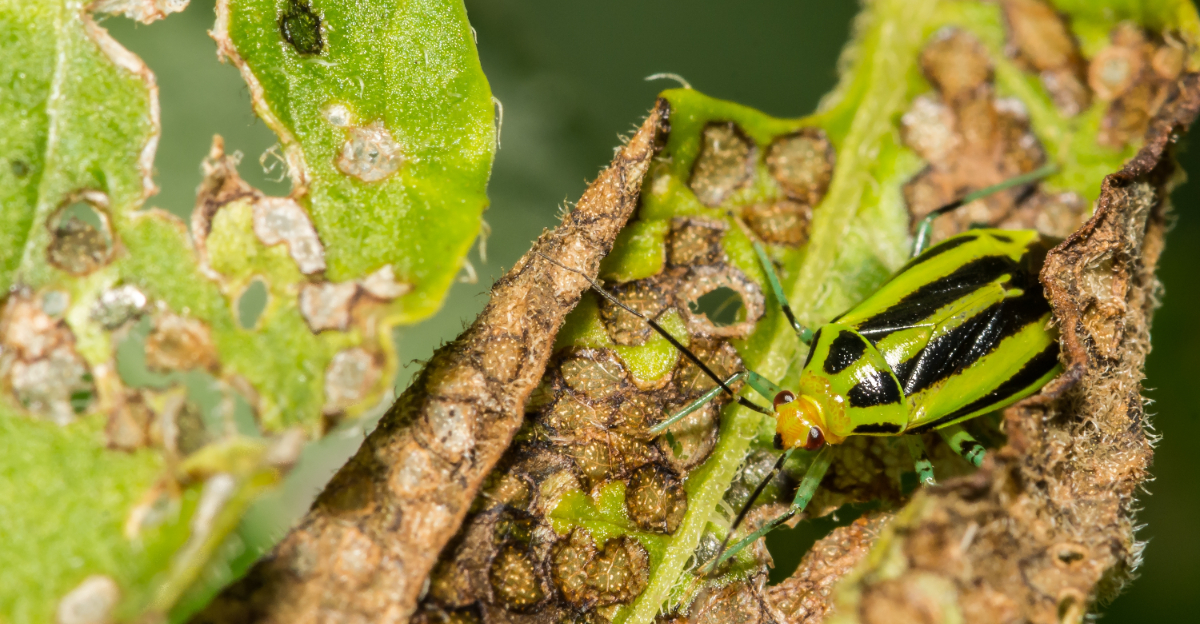
Four-lined plant bugs use a needle-like mouthpart to puncture cells and suck out the contents. Each feeding spot leaves a tiny, dark, sunken circle that looks almost like a freckle on the leaf surface.
These spots show up fast, sometimes overnight, which is part of what makes this pest so frustrating. You water your herbs in the evening, everything looks fine, and by morning the new growth is covered in small dark dots.
The shoot tips matter because that is where your herb plant focuses its energy for new growth. When bugs feed there repeatedly, the plant slows down and can start to look stunted or misshapen.
Catching damage at the shoot tip stage works in your favor. It means the infestation is still fresh and the population is likely small. A quick inspection at this stage can save your whole herb patch from a much bigger problem later in the season.
Look closely at the very top of each herb stem every few days during late spring. That habit alone, checking the tips first, puts you miles ahead of most Michigan gardeners dealing with four-lined plant bug pressure this year.
Mint Family Herbs Take The Hardest Hit

Mint, basil, oregano, and lemon balm share more than a great smell. They all belong to the mint family, and four-lined plant bugs are obsessed with this group above almost any other plant in your garden.
The aromatic oils in these herbs seem to draw the bugs in rather than keep them away. That feels deeply unfair, but it explains why your fragrant herb bed takes the worst beating each season.
Basil tends to show damage most dramatically because its large, smooth leaves make every feeding spot highly visible. Mint, on the other hand, can hide early damage in its dense, leafy clusters until the problem gets serious.
Oregano and thyme often show damage along the upper leaf surface first, with spots that start pale and then darken over a few days. Many Michigan gardeners mistake this progression for a nutrient deficiency or splash damage from watering.
Your Michigan Garden Changes Every Week. Your Plan Should Too.
Gardening in Michigan changes quickly throughout the season. Every Friday you’ll receive a simple weekly plan showing exactly what to plant, prune, fertilize, harvest, and protect so you never miss the right timing.
The reason mint family herbs get hit hardest also comes down to timing. These plants push out lush new growth right when four-lined plant bug nymphs are hatching and feeding aggressively in late spring.
Protecting your mint family herbs means checking them more often than other plants in your garden. Spacing them slightly apart to improve airflow also helps, because bugs prefer crowded, sheltered spots where they can feed without being disturbed by wind or movement.
Early Damage Often Looks Like Disease
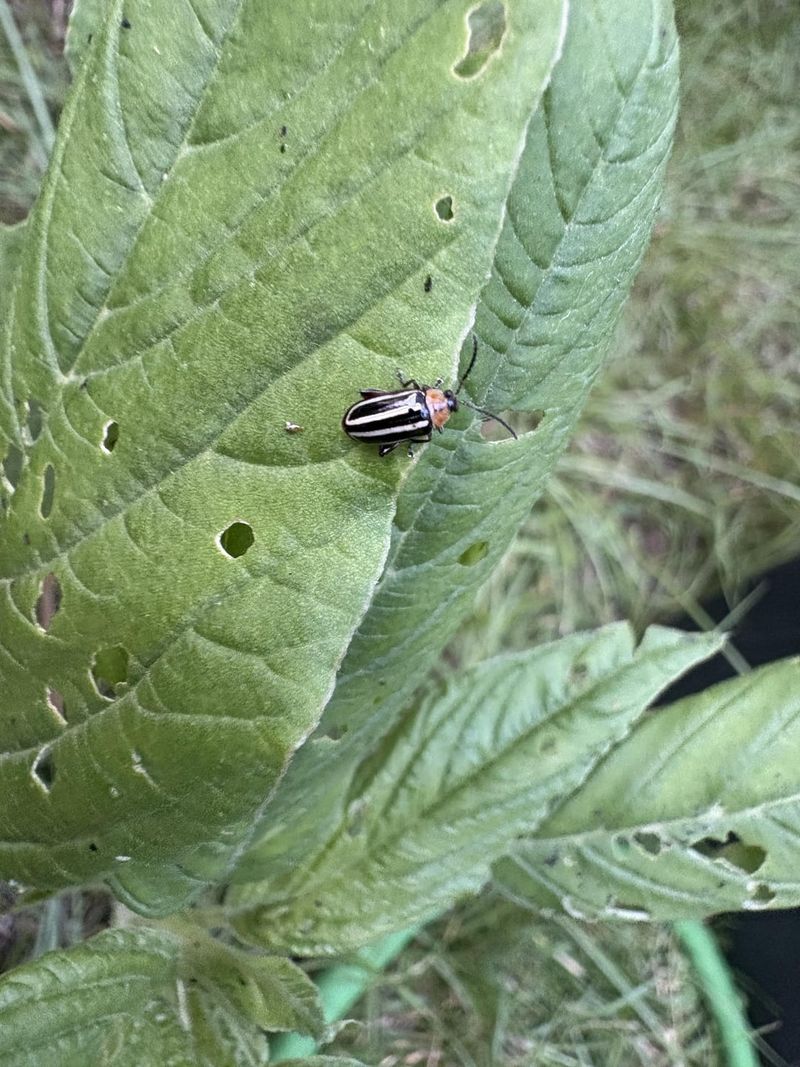
Here is where most Michigan gardeners lose precious time. The small, dark, circular spots left by four-lined plant bugs look almost identical to several common fungal diseases, including leaf spot and downy mildew in early stages.
Grabbing a fungicide when bugs are the real problem does nothing useful. Meanwhile, the insects keep feeding and the damage spreads while you wait for a treatment that was never going to work.
One key difference is pattern. Fungal spots usually appear scattered across older, lower leaves first, while four-lined plant bug damage clusters on the newest growth at the top of the plant.
Another clue is the texture. Bug feeding spots are slightly sunken and crisp-edged, almost like a tiny hole that partially healed. Fungal lesions tend to look waterlogged, fuzzy, or surrounded by a yellow halo.
Timing is also a giveaway. Four-lined plant bug damage in Michigan typically shows up between late May and early July, which lines up perfectly with the nymph feeding period. Fungal problems can appear any time conditions get wet and warm.
Flipping the leaf over is one more useful trick. If you spot tiny, fast-moving yellow or green insects on the underside, you have your answer immediately. Diseases don’t move that fast, and fungus doesn’t scatter when you touch the leaf.
Signs Your Herbs Are Under Active Attack
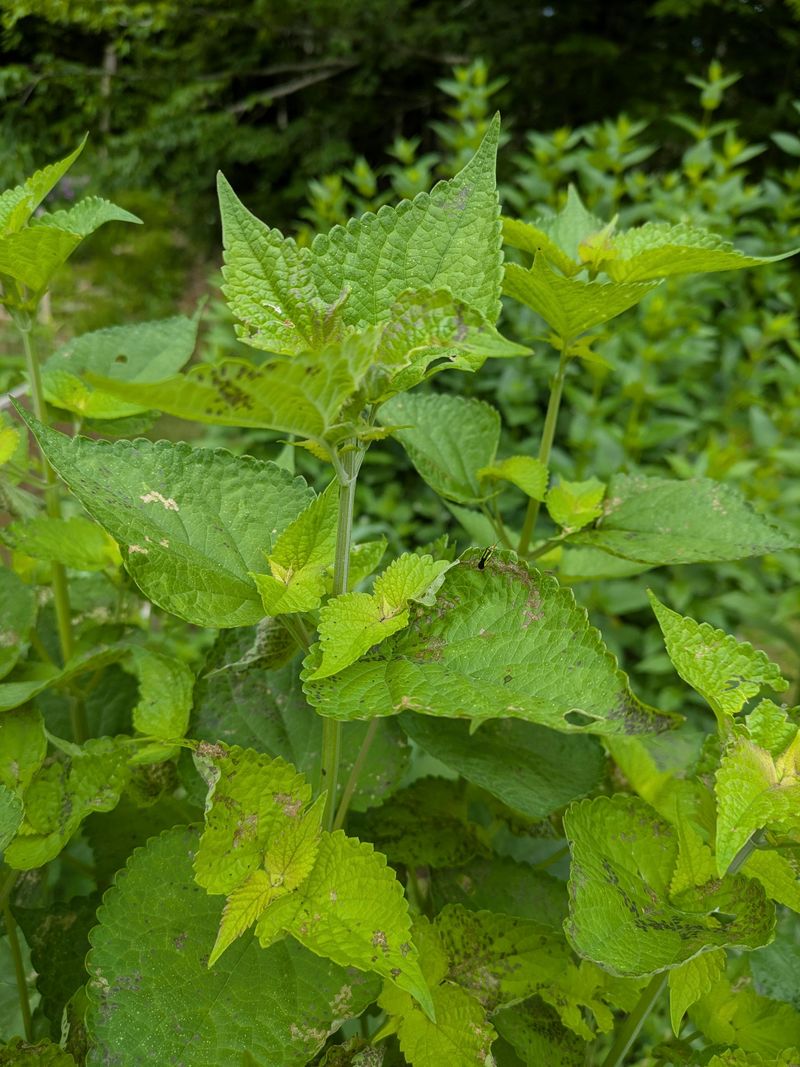
Spotting the damage is one thing, but catching the bugs in the act is a whole different level of satisfying. Four-lined plant bugs are fast and skittish, so they are easy to miss if you are not being deliberate about your search.
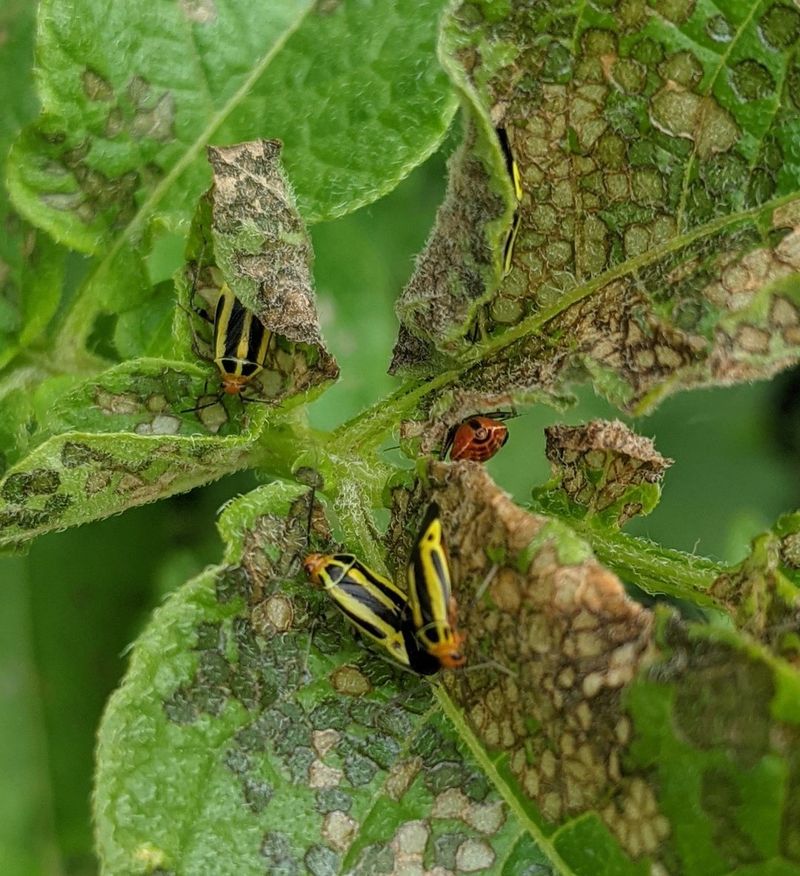
The nymphs are red-orange with black markings on the thorax, and they cluster on new growth in groups during early spring. They are small but bold, and a quick scan of your herb tops in the morning will often reveal them before they scatter.
Adult four-lined plant bugs are greenish-yellow with four distinct black stripes running down their wings. They are about a third of an inch long and can fly quickly when disturbed, which makes them frustrating to catch by hand.
Active feeding usually happens in the morning when temperatures are cooler. Checking your herb garden between 7 and 10 in the morning gives you the best chance of finding bugs still on the plant.
Another sign of active attack is speed. If you brush a stem and see small, fast-moving insects scatter or drop instantly, check that area closely.
Rapid spot multiplication over just two or three days is the clearest signal that feeding is still happening. Stable, unchanged spots suggest the bugs have already moved on, and you caught the aftermath rather than the action.
Simple Steps To Stop Spread To Other Plants
Four-lined plant bugs do not stay in one spot forever. Once they finish feeding on your most vulnerable herbs, they move outward to neighboring plants, including perennial flowers, shrubs, and other garden crops.
The fastest way to slow their spread is to remove heavily damaged shoot tips by hand. Drop them into a sealed bag rather than the compost pile, because eggs can survive in cut plant material for a surprising amount of time.
Row covers made from lightweight fabric can create a physical barrier over your most prized herbs during the peak nymph feeding window. This is especially useful for basil and lemon balm, which tend to suffer the most visible damage.
Keeping your herb garden free of weeds also helps more than most people expect. Four-lined plant bugs use weedy border plants as a launching pad before moving into your cultivated herbs, so a clean edge matters.
Insecticidal soap spray applied directly to nymphs works well when populations are small. The key is coverage and timing, hitting the bugs in the morning before they scatter and repeating every four to five days during the active period.
Avoiding broad-spectrum pesticides protects the beneficial insects that naturally keep pest populations in check. Losing your ladybugs and lacewings to a harsh spray can actually make the four-lined plant bug problem worse over the following weeks.
Treat It Or Let It Run Its Course
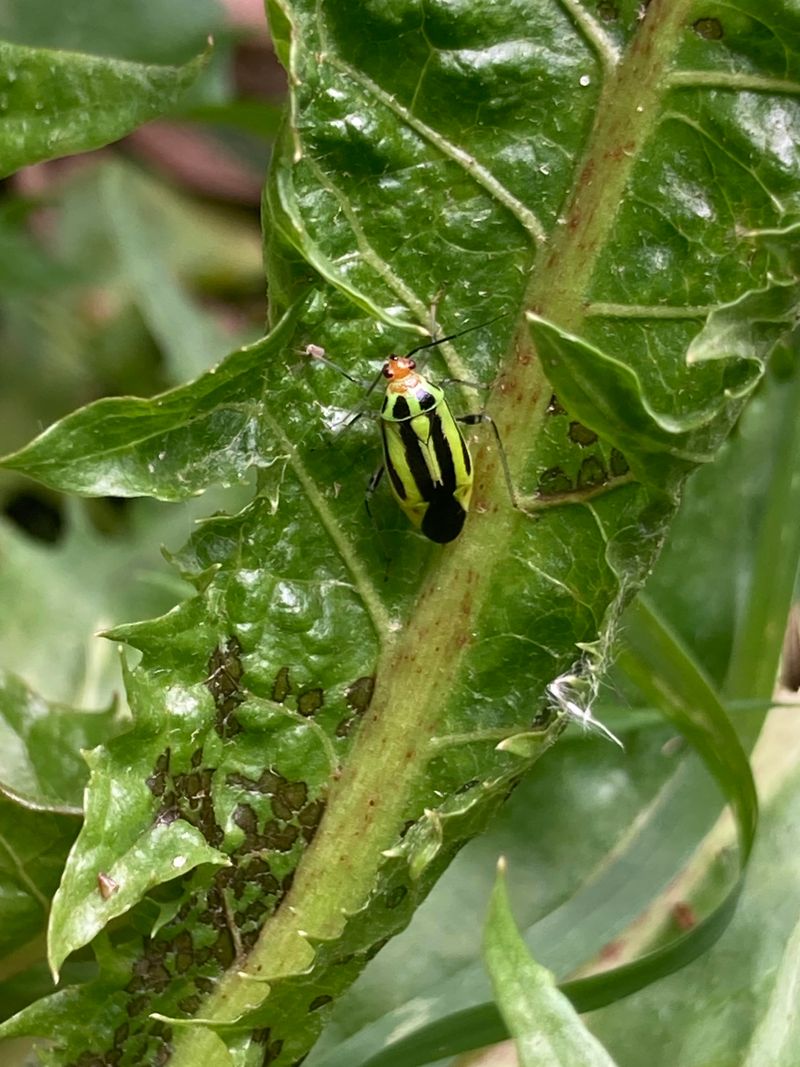
Not every pest sighting needs a treatment plan. Four-lined plant bugs complete only one generation per year, which means their active feeding window is actually pretty short, usually wrapping up by mid-July in most parts of the state.
If you notice the first spots appearing in late June and the population seems small, waiting it out can be a perfectly reasonable choice. The bugs will finish their cycle and the plants will push out clean new growth once feeding stops.
Treatment makes the most sense when you catch the problem early, during the nymph stage in late May or early June. Young nymphs are slower, softer, and much easier to knock back with a simple soap spray than the armored adults.
Plants that are already stressed from drought, poor soil, or overcrowding will struggle to recover from moderate feeding damage. In those situations, acting sooner rather than later protects a plant that does not have extra energy to spare.
Culinary herbs that you harvest frequently actually bounce back faster than ornamental plants. Regular harvesting removes damaged growth and stimulates fresh, clean shoots that come in after the bug season ends.
The smartest long-term approach to four-lined plant bug damage is a combination of early monitoring and patience. Check your herbs weekly starting in May, act fast if nymphs appear, and trust your plants to recover once the season turns.
Your herb garden is tougher than it looks.