Why Your Spider Plant Has Brown Tips In A Pennsylvania Home
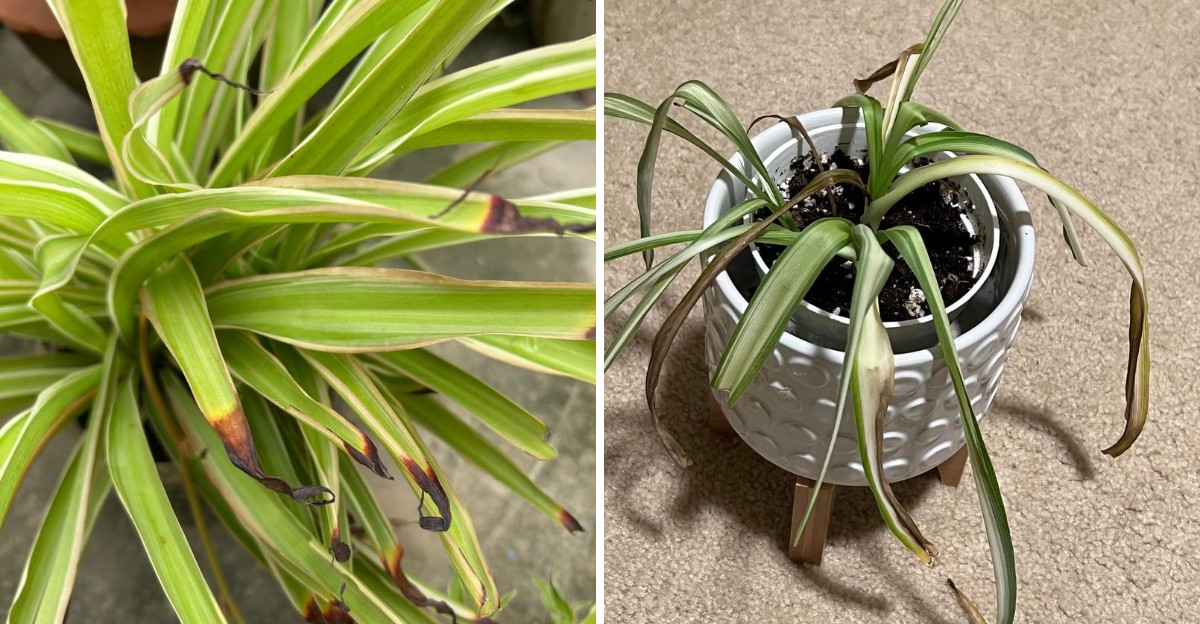
Your houseplant can react to the same fluoride that dentists praise for protecting your teeth. Some leafy favorites are sensitive enough that even small amounts in tap water show up as crispy, tan leaf tips.
That’s oddly fascinating to me. A plant famous for being nearly impossible to kill can still get fussy about a sip of water from the kitchen faucet.
Winter adds another twist here in Pennsylvania. Furnaces run for months, and indoor air can get as dry as some desert climates.
You feel it in your cracked knuckles and staticky sweaters, and the arching green friend on your windowsill feels it too.
I used to snip those brown ends and hope for the best, but they always came right back. What is your plant really trying to tell you?
1. Those Crispy Spider Plant Tips Start With Something In Your Glass
Spider plants come from southern Africa, and they carry a quirky weakness. Their long, thin leaves are sensitive to fluoride, a mineral added to many public water systems.
Many Pennsylvania towns add fluoride to drinking water, and it does good work for your teeth. Your plant, though, pulls that fluoride up with water and pushes it toward the leaf edges.
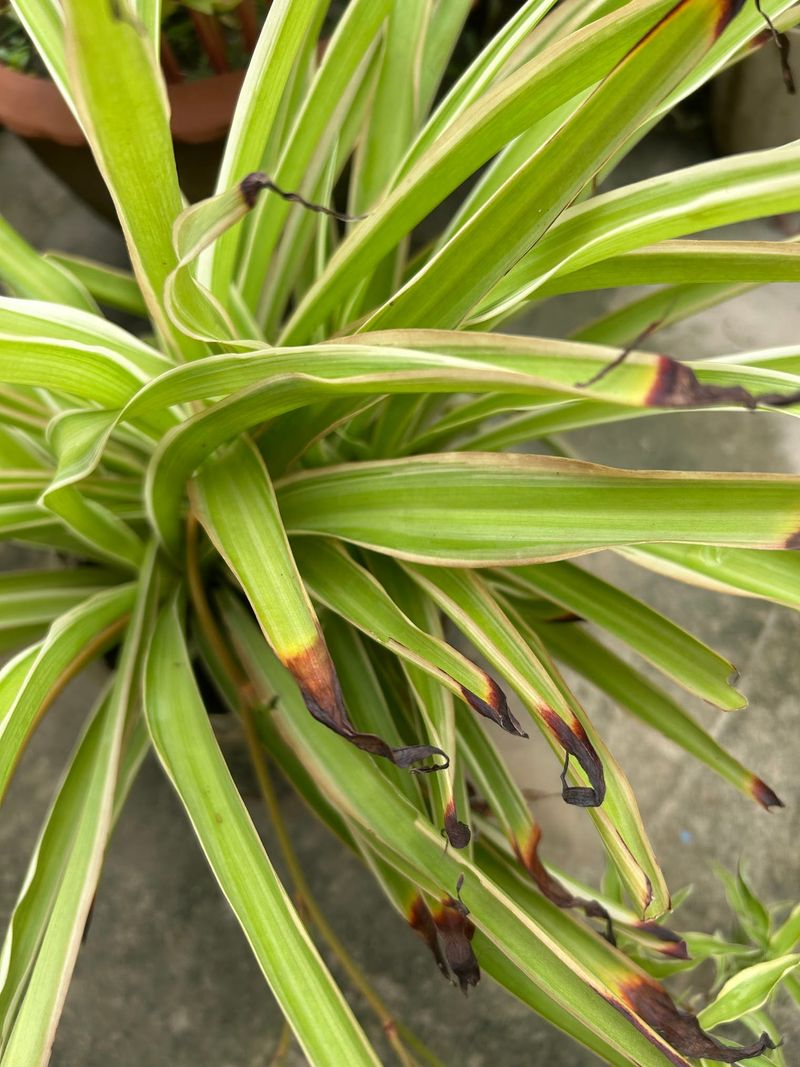
It collects at the very ends of the blades, where the tissue slowly turns tan, then brown.
Extension horticulturists list fluoride sensitivity as a classic cause of tip burn in spider plants, dracaenas, and a few other common houseplants. It rarely harms the whole plant.
Still, those brown ends look rough, and they keep coming back if nothing changes.
A few clues point to water trouble. The browning shows up evenly on many leaves at once, not just one or two.
Older leaves often show it more than new ones, because they have had more time to collect the mineral.
Chlorine and dissolved salts can add to the stress too. Hard water is common across much of the state, especially in areas with limestone bedrock.
I like to think of it as a slow buildup rather than a sudden problem. Your plant has been sipping the same water for months.
The tips are simply where the story finally becomes visible, and that makes it a great place to start your detective work.
2. Switching To Rainwater Or Distilled Water Can Rescue New Spider Plant Leaves
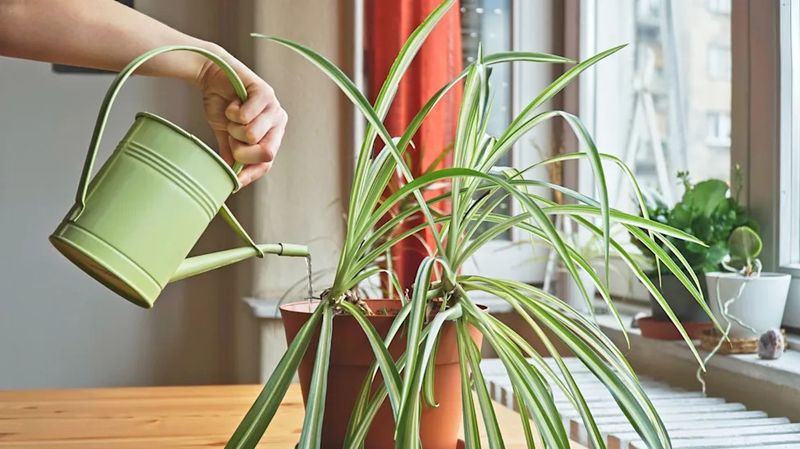
Swapping your water source is one of the easiest fixes you will ever make. Collected rainwater, distilled water, or water from a reverse osmosis filter carries little to no fluoride.
A rain barrel works nicely during the warmer months. In winter, I keep a jug of distilled water near my plants, since it costs very little and lasts a while for a single pot.
Letting tap water sit out overnight is a popular tip. It does help some chlorine escape.
However, it does not remove fluoride, and it will not clear chloramine, which many water systems now use instead of plain chlorine.
Standard pitcher filters vary a lot. Some reduce chlorine well but leave most fluoride behind, so check the label before counting on one.
Here is something worth knowing up front. Brown tips that already formed will not turn green again.
The goal is to protect the fresh leaves growing from the center of the plant.
Give it a few weeks, and you should notice new growth staying cleaner and greener. If you want a tidy look right away, trim the brown ends with clean scissors.
Cut at an angle to mimic the natural pointed shape, and leave a thin sliver of brown so you do not cut into healthy tissue. Your plant will look refreshed, and the new routine handles the rest.
3. Dry Furnace Air Dries Out Spider Plant Leaf Ends All Winter
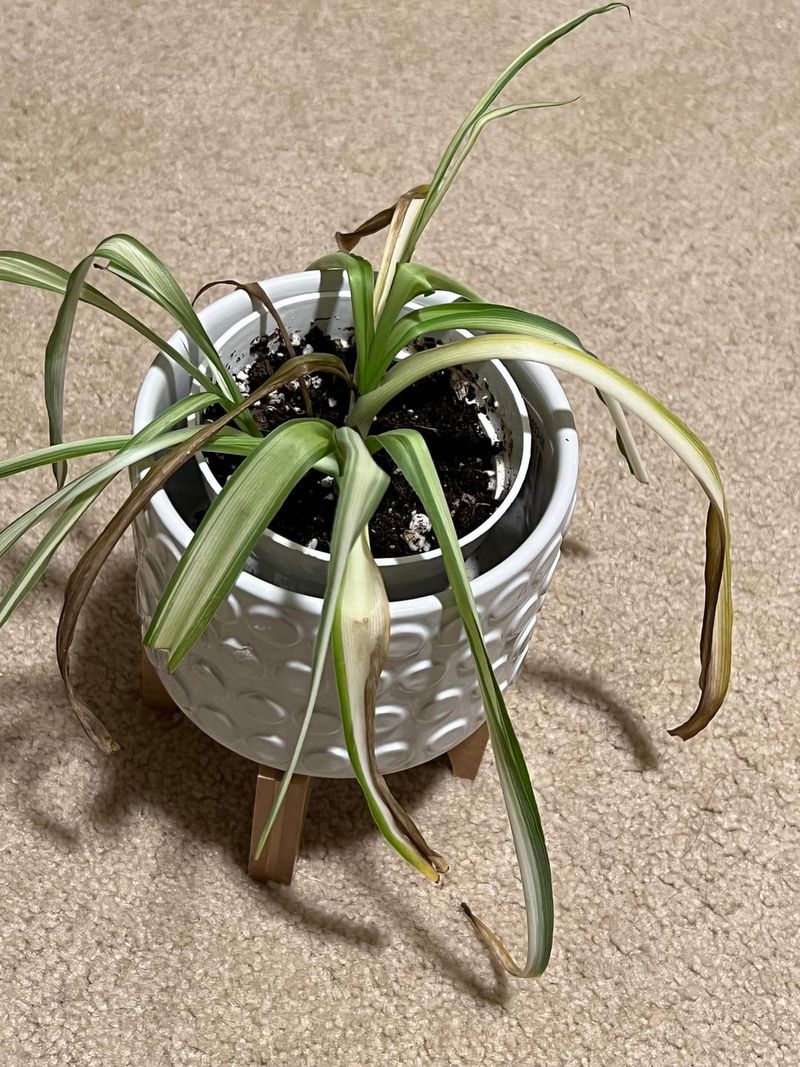
Ever wake up with a scratchy throat in January? That same dry air is tugging moisture from your plant’s leaves.
Pennsylvania winters often run from November into March, and forced-air heating can drop indoor humidity to 20 or 30 percent. Spider plants grow happily in average homes, but they look their best closer to 40 or 50 percent humidity.
When the air is very dry, water leaves the long blades faster than the roots can replace it. The tips sit farthest from the roots, so they dry first.
You end up with that papery brown edge even when the soil feels fine.
Location makes a big difference. A plant sitting right above a heating register or beside a radiator gets blasted with warm, dry air all day.
Moving it just a few feet away can ease the stress.
Drafty windows matter too. Cold glass on one side and furnace heat on the other create a rough spot for any leafy plant.
A cheap digital hygrometer tells you what is really happening in each room. I was surprised the first time I checked mine.
The kitchen and bathroom stayed much moister than the living room, which explained why my bathroom plant looked so much healthier. Little clues like that help you pick the right shelf for your green buddy.
4. A Pebble Tray Or Humidifier Gives Your Spider Plant Some Breathing Room
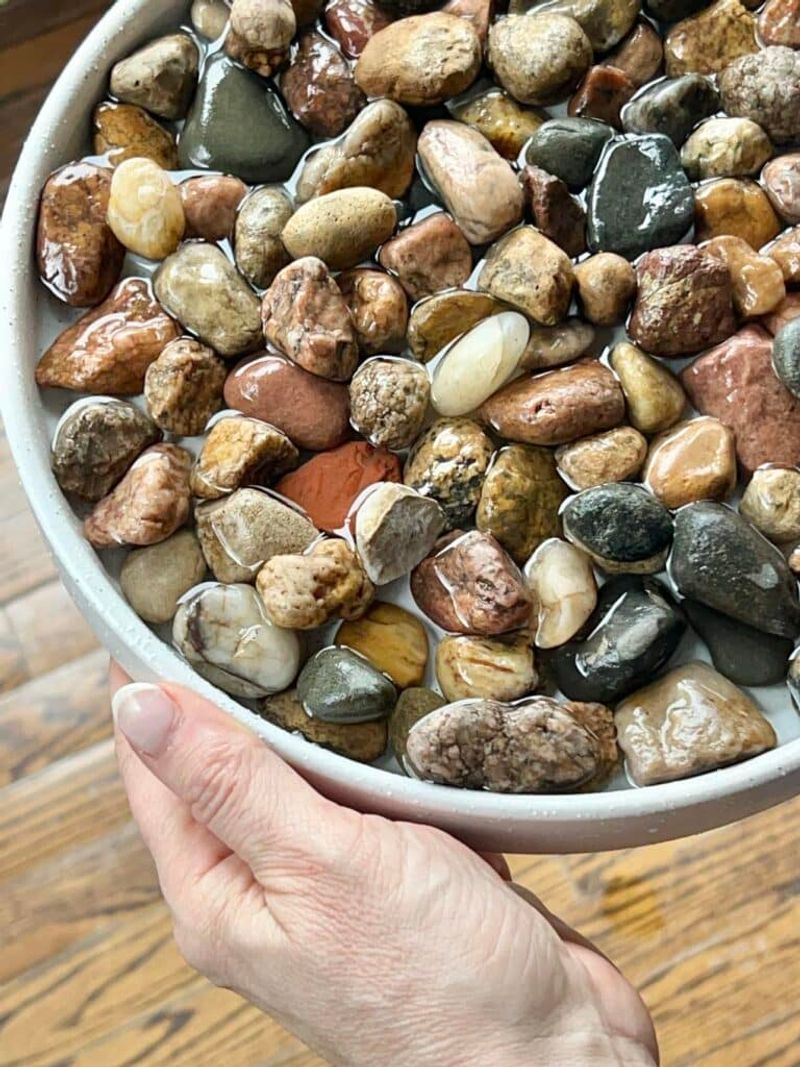
Raising humidity sounds fancy, but it can be wonderfully simple. A few small changes add up quickly.
Try grouping your spider plant with other houseplants. Plants release moisture through their leaves, and a cluster creates a slightly moister pocket of air around everyone.
A pebble tray is another easy trick. Fill a shallow tray with gravel, add water to just below the top of the stones, and set the pot on top.
The pot should stay above the water, so the roots do not soak.
For bigger results, a small room humidifier works best. It can raise humidity across a whole room, and your skin and wooden furniture will appreciate it too.
Clean it often to prevent mold and mineral crust.
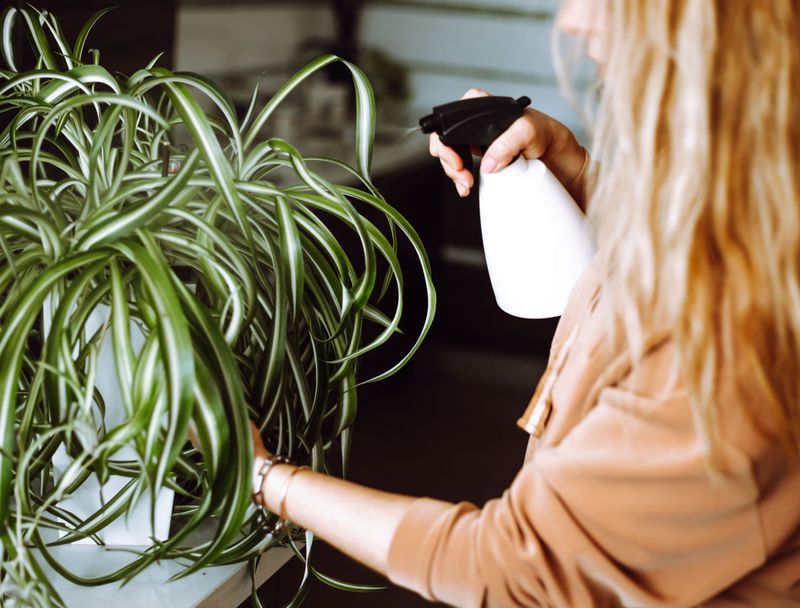
Misting gets a lot of attention online. Honestly, the effect fades within minutes, so it does little for long-term humidity.
I treat it as a fun habit, not a real fix.
Bathrooms with a bright window can be lovely homes for spider plants. The steam from showers keeps the air moist.
Just make sure the room gets enough light, because these plants still want bright, indirect sun to stay lush and striped. A happy spot combines decent light with gentle moisture, and your plant will reward you with fresh green growth.
5. Soggy Or Bone Dry Soil Shows Up First On Spider Plant Tips
Watering mistakes can look a lot like water quality problems. Both overwatering and underwatering can leave brown tips behind.
Spider plants store water in thick, white tuberous roots. Because of those roots, they handle short dry spells better than many houseplants.
Still, if the soil stays dusty dry for too long, the leaves start pulling back moisture from their ends.
Too much water causes a different kind of trouble. Soggy soil squeezes out air, roots begin to rot, and damaged roots cannot deliver water upward.
Ironically, the plant ends up thirsty while sitting in wet soil.
So how do you tell the difference? Overwatered plants often show yellowing leaves, mushy roots, or a sour smell from the pot.
Underwatered ones look limp, pale, and crispy, and the soil pulls away from the pot edges.
A good rhythm is to water thoroughly when the top inch or two of soil feels dry. Let extra water flow out the drainage hole, then empty the saucer.
Seasons change the schedule. During spring and summer, your plant grows quickly and drinks more.
In the shorter, cooler days of a Pennsylvania winter, growth slows, so you may water less often. Your finger is a better guide than any calendar, and checking takes just a few seconds.
6. White Crust On The Spider Plant Pot Means Salt Buildup
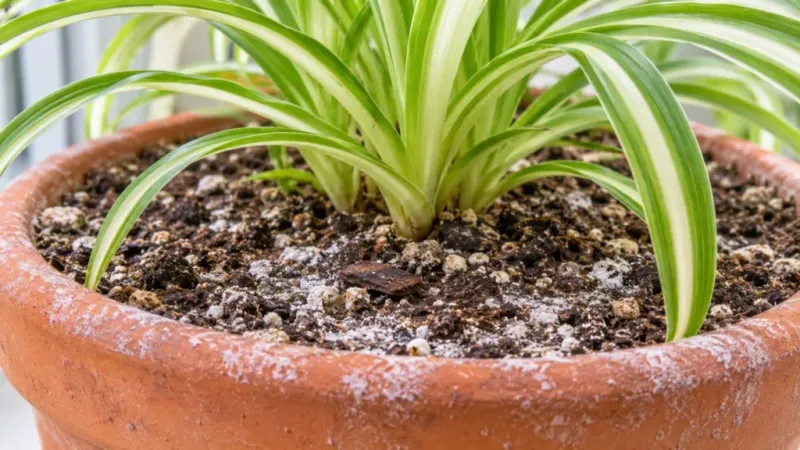
Spotted a chalky white ring around the rim of your pot? That crust is a sign of mineral and fertilizer salts building up in the soil.
Spider plants are light feeders. Too much fertilizer leaves extra salts behind, and those salts make it harder for roots to take up water.
The result looks a lot like drought, complete with brown, burned tips.
I learned this one the hard way. I figured more food meant faster growth, so I fed often.
My plant answered with crispy edges instead of lush new leaves.
A gentle feeding plan works better. During spring and summer, use a balanced liquid fertilizer at half strength about once a month.
In fall and winter, when growth slows, you can skip feeding.
To clear existing buildup, give the soil a good flush. Take the pot to a sink or tub and slowly run plenty of clean water through it, ideally distilled or rainwater.
Let it drain fully.
Doing this every few months keeps the soil fresher. Scrape off any heavy crust on the soil surface too, and wipe the pot rim clean.
If the buildup is severe, repotting into fresh mix may be faster. Healthy roots in clean soil can drink freely, and the tips stay much happier.
7. Thick Spider Plant Roots Circling The Pot Need A Bigger Home
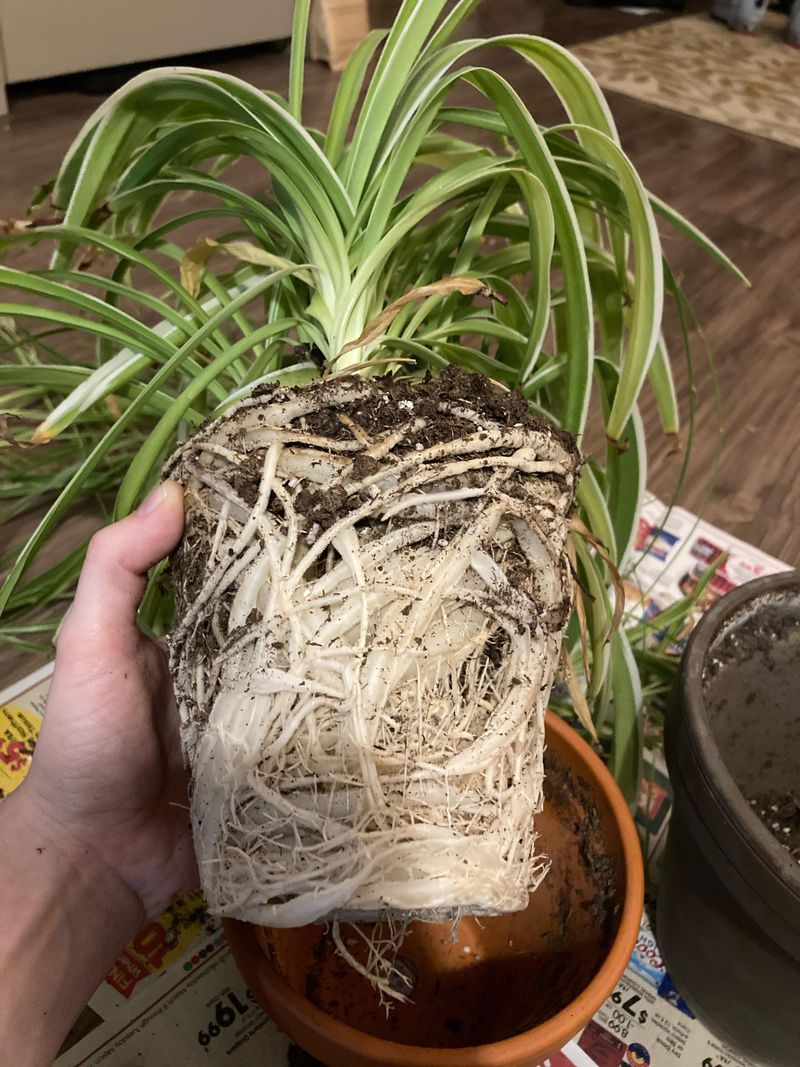
Spider plants grow fast, and their roots are surprisingly bold. Some owners have even seen thin plastic pots bulge or crack from the pressure.
When roots fill every inch of the container, there is little soil left to hold water. The plant dries out quickly after each watering, and the leaf tips often show the stress first.
Signs of a crowded plant are easy to spot. Roots poke out of the drainage holes, water runs straight through, and the soil seems to vanish.
You may also see roots bulging on the surface.
A fun fact here: a slightly snug pot can encourage more of those dangling baby plantlets. So you do not need to repot at the first sign of crowding.
Wait until it truly affects watering and leaf health.
Spring is the best time to repot, when the plant is ready to grow. Choose a pot just one or two inches wider, with a drainage hole.
Use fresh, well-draining potting mix.
You can also divide a large clump into smaller sections. Each piece with roots and leaves can grow into its own plant.
Share the extras with friends, or tuck the plantlets into small pots of their own. Space to stretch out makes it much easier for your plant to keep every leaf green.
8. A Simple Spider Plant Routine Keeps Brown Tips From Coming Back
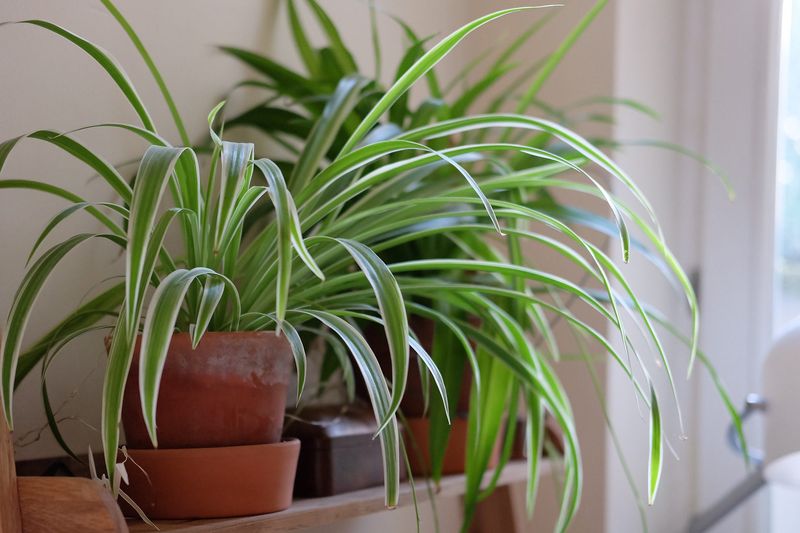
Brown tips usually have more than one cause. In most homes, it is a mix of water quality, dry air, and watering habits working together.
Start with the easiest wins. Use rainwater or distilled water when you can, and check the soil before every watering.
Those two steps alone solve many cases.
Next, look at where the plant sits. Bright, indirect light suits it well, while hot afternoon sun can scorch leaves.
Keep it away from heating vents in winter and cold, drafty glass.
Watch for patterns as new leaves grow. If fresh growth stays clean, your changes are working.
If browning continues, consider humidity, salt buildup, or a crowded pot next.
Pets are another reason to love this plant. The ASPCA lists spider plants as nontoxic to cats and dogs, though some cats enjoy chewing the leaves, which can cause brown, ragged ends too.
Remember that a few brown tips are mostly cosmetic. Spider plants are tough, forgiving, and quick to bounce back.
Older outer leaves will fade naturally over time, and that is normal.
I love how this plant teaches patience. Make one change, give it a few weeks, and watch closely.
Pennsylvania homes swing between humid summers and dry winters, so small seasonal tweaks go a long way. Your plant will show you when you get it right.